



Guardians of the Siang: Inside the Culture, Wisdom, and Modern Struggles of the Adi Tribe
High in the Eastern Himalayas, where the untamed Siang River carves emerald gorges across Arunachal Pradesh, lives an indigenous community whose history is as deep and resonant as the mountains themselves. These are the Adi—a name translating directly to “people of the hills” or “mountain top”.
For centuries, colonial explorers and British records labeled them with the exonym “Abor”—a patronizing term roughly meaning “unruly” or “unsubdued”. While the British intended it as a description of defiance, they inadvertently identified the tribe’s defining trait: an unyielding spirit of independence. The Adi were never conquered by the British Empire; they negotiated from positions of strength, fiercely protected their sacred river valleys, and built one of the most sophisticated self-governing tribal democracies in Asia.
Today, the Adi community stands at a historic crossroads. Caught between the imperative preservation of ancestral heritage and the rapid march of modern Indian infrastructure, their story is not merely one of ethnic intrigue—it is an urgent lens into indigenous rights, ecological stewardship, participatory governance, and the complexities of tribal identity in modern India.

1. Geographical Landscape and Clan Architecture
The ancestral homeland of the Adi spans the rugged terrains of Arunachal Pradesh, primarily concentrated along the fertile yet perilous Siang River basin across East Siang, West Siang, Upper Siang, and Lower Dibang Valley districts.
The Adi are not a single monolithic entity, but a dynamic federation of sub-tribes and clans bound by shared cosmological beliefs, linguistic roots, and common customs. Among their primary divisions are:
-
Padam: Renowned historically for their strategic military organization, vast territorial villages, and leadership in customary diplomacy.
-
Minyong: Famous for their riverine settlements along the Siang, extensive agricultural innovations, and historic resistance against British punitive expeditions.
-
Pangi, Bori, and Bokar: Inhabiting the high-altitude, deeply forested northern mountain folds, balancing trade corridors toward the Tibetan border.
-
Karko, Shimong, and Pasig: Smaller, culturally distinct groups nestled in valleys, each maintaining subtle dialectal variations while adhering to common social codes.
All Adi trace their lineage to Abotani, the mythical common progenitor of the Tani-speaking peoples of Northeast India. In Adi kinship, genealogy is an oral art form known as Agom or Aabang, preserved by village rhapsodists (Miris) who can recite ancestral lineages back dozens of generations without missing a single link.
This clan architecture forms the foundational bedrock of Adi society. Lineage governs land ownership patterns, dictates marriage rules (strictly clan exogamous, tribal endogamous), and provides an organic social safety net that ensures no individual family ever starves or falls behind entirely on its own.

2. Indigenous Governance: The Kebang and Village Democracy
Long before contemporary concepts of decentralization, democratic local councils, or restorative justice were codified into national constitutions, the Adi perfected an egalitarian, participatory governance system: the Kebang.
The Kebang operates not through arbitrary executive power or hereditary chieftainships, but through absolute deliberative consensus. It exists across three primary tiers:
-
Dolung Kebang (The Village Council): Every village maintains its own assembly. Held within the village community hall (Dere or Musup), any adult member has the right to speak, debate, cross-examine witnesses, and propose resolutions.
-
Banggo Kebang (Inter-Village Council): When disputes spill across village boundaries—such as hunting territory conflicts, cattle trespassing, or water sharing—representatives from a cluster of villages assemble to arbitrate under shared customary law.
-
Bogum Bokang Kebang (The Apex Council): The supreme tribal assembly uniting delegates from across all Adi sub-tribes to deliberate on matters of tribal preservation, broad legal reforms, regional peace, and political positions concerning state and national governments.
The Philosophy of Restorative Justice
Unlike the adversarial, retributive nature of Indian penal codes—which centers on state-administered punishment, fines, or incarceration—the Kebang functions on restorative justice and social equilibrium.
Decisions are handed down by Kebang Abus (respected village elders esteemed for their wisdom, eloquence, and memory of customary precedent). The primary objective of a hearing is never to brand someone a permanent criminal, but to heal social fractures.
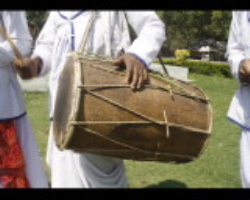
Penalties often take the form of restitution, such as paying compensation in the form of sacred brass plates (Danko), handwoven beads, or Mithun (Bos frontalis), followed by a mandatory ritual meal where the disputing parties drink Apong (fermented rice or millet beverage) together to wash away lingering malice. Once settled by the Kebang, a case is considered closed; holding grudges after a Kebang settlement is considered an affront to communal harmony.
3. Social Institutions: Musup, Rasheng, and the Rhythms of Life
Traditional Adi community life is structurally built around age-grade institutions that historicize education, socialization, and tribal defense.
The Musup (Dere)
The Musup (or Dere) is the beating heart of an Adi village. Functioning as a communal hall, youth dormitory, defense outpost, and deliberative court, this sprawling bamboo-and-timber hall was traditionally occupied by young, unmarried men (Musup Yame).
Here, youth learned the essential skills of adult tribal life:
-
Architecture and the construction of suspension bridges using cane and bamboo.
-
Customary warfare, hunting techniques, archery, and wildlife tracking.
-
The oral memorization of customary laws, folklore, myths, and ancestral genealogies.
-
Community defense, forest patrol, and immediate mobilization for village crises like fires or flash floods.
The Rasheng
The female counterpart to the Musup was the Rasheng—a dormitory where young girls gathered under the guidance of senior female elders. Within the Rasheng, young women learned the intricate, sacred mathematics of backstrap weaving, traditional textile dyeing, folk music, ritual chants, and tribal social etiquette.
The institution was a foundational pillar for female leadership and social autonomy, granting young women collective solidarity and an independent institutional space inside village society.
4. Donyi-Polo: The Philosophy of Nature and Cosmic Balance
The spiritual universe of the Adi is defined by Donyi-Polo, an indigenous, nature-centric worldview frequently categorized as animism, but philosophically rooted in cosmic dualism and moral consciousness.
To the Adi, Donyi (The Sun) and Polo (The Moon) are not merely celestial bodies to be idolized as physical gods; they represent the supreme, omnipresent, all-seeing moral eyes of the universe.
-
Donyi symbolizes the luminous, warming, life-giving truth that watches over human action in broad daylight.
-
Polo represents the cool, quiet vigil that watches human conscience during the dark hours of the night.
Together, Donyi-Polo embodies the ultimate moral arbiter: a cosmic mirror reflecting human integrity, natural balance, and truth (Aane Donyi or Mother Sun). A classic Adi oath taken during a Kebang hearing to assert innocence underscores this worldview: “Under the gaze of Donyi-Polo, who watches all things, I speak the truth.”
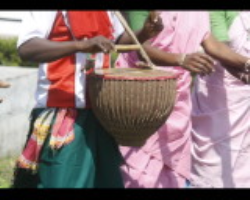
The spiritual ecosystem is populated by numerous forest spirits (Uyu), guardians of rivers, trees, crops, and mountains. The mediator between the metaphysical spirit realm and the mundane human world is the Miri—a shamanic priest or priestess.
During rituals, the Miri enters an altered state of consciousness, chanting epic oral verses (Aabang) that can last through the night, using a sacred bronze-bladed sword (Yoksha) that jingles ritually to call spirits, cure illnesses, appease restless energies, and harmonize human affairs with the wild forces of nature.
5. Cultural Expressions: Festivals, Weaving, and Engineering
Adi society integrates functional art, ecological engineering, and vibrant celebrations into its daily routine.
The Solung and Aran Festivals
The Adi calendar mirrors the lifecycle of nature and agriculture:
-
Solung (Harvest and Paddy Festival): Celebrated in early September, Solung is a multi-day festival dedicated to Kine Nane (the goddess of wealth, fertility, and agriculture) and Doying Bote (the god of heaven). Over several days, the village participates in the ritual sacrifice and dedication of the sacred Mithun, shares vast cauldrons of Apong, and listens as the Miri sings the origin story of crops and civilization. The iconic Ponung dance is performed exclusively during Solung—a hypnotic, circular dance where women move in rhythmic cadence around the chanting Miri, their feet striking the earth in unison to celebrate agricultural life.
-
Aran (Spring and Sowing Festival): Celebrated in early March, Aran marks the clearing of forest plots for shifting cultivation (Jhum). Men venture on collective forest hunts, returning with game to share communally, while youths perform the electrifying Tapu War Dance—brandishing long curved dao swords, shouting battle cries, and jumping to banish lingering malevolent spirits from the village borders.
-
Etor: Celebrated in May, Etor centers on the construction of massive communal fencing to protect farmlands from wandering livestock, accompanied by the vigorous Delong dance performed inside the Dere.
The Mithun: Wealth on Four Legs
In the Adi economy, no creature holds higher cultural and spiritual value than the Mithun (Bos frontalis). Neither fully domesticated nor completely wild, Mithuns roam semi-feral throughout the sub-tropical hill forests, recognized individually by notched ear tags marked by their clan owners.

The Mithun is not utilized for plowing or dairy; instead, it serves as the ultimate store of value, the required currency for matrimonial dowry settlements, the essential restitution fine in major Kebang legal disputes, and the premier sacrificial animal offered during sacred feasts to restore cosmic equilibrium.
Cane Suspension Bridges: Indigenous Engineering Marvels
Before modern steel suspension wires were ever hauled up the Himalayas, the Adi developed one of the world’s most impressive feats of traditional engineering: living cane suspension bridges.
Spanning roaring torrents like the Siang and Yamne rivers—often stretching over 100 to 200 meters wide—these bridges are constructed entirely out of split cane, bamboo strands, and anchored forest timber. Built through collective community labor without a single industrial bolt, the bridges swing delicately over foaming river rapids, demonstrating an intuitive grasp of tensile strength, flexural rigidity, and organic material sciences.
6. Colonial Resistance: The Anglo-Abor Wars
Mainstream Indian historiography often overlooks the anti-colonial resistance mounted along the Northeastern frontier. The Adi fought a documented series of fierce defensive wars against the British Empire, historically recorded as the Anglo-Abor Wars (1858, 1859, 1894, and 1911–1912).
The conflicts arose from British attempts to expand tea plantation boundaries, secure timber leases, and claim territorial sovereignty over the sovereign hill country of the Siang. Utilizing guerrilla combat tactics, the Adi exploited the dense Himalayan topography, devastating British troop columns with poisoned arrows, bamboo rock-shoots (booby traps), and fortified stone stockades known as Bongal Yapgo.
The climactic Poju Mimak (1911–1912) was triggered by the death of Noel Williamson, a British political officer who crossed uninvited into Adi territory in defiance of local warnings. In response, the British deployed the punitive Abor Expedition—a massive imperial force comprising elite Gurkha battalions, mountain artillery, and thousands of laborers.
Despite valiant defenses behind stone stockades at Kikhar and Dambuk, the British utilized machine guns and advanced firepower to breach Adi fortifications. Even then, complete administrative subjugation was never achieved; the British established only loose frontier tracts, leaving the core internal self-governance of the Adi undisturbed.
7. The Modern Dilemma: Development vs. Indigenous Sovereignty
In modern India, the Adi are navigating unprecedented transformations. The challenges facing the community today are not fought with bow and arrow, but across courtrooms, environmental review boards, and rapid cultural shifts.
The Battle for the Siang River: Mega-Dams and Hydro Politics
The single greatest ecological and existential threat confronting the Adi today is the proposed construction of mega-hydroelectric projects along the Siang River.
Envisioned as massive energy projects to power India’s industrial grid and serve as strategic water buffers against Chinese hydrologic infrastructure on the upstream Yarlung Tsangpo, these multi-thousand-megawatt dams threaten to drown ancestral lands.
The Adi have resisted these initiatives:
-
Submergence of Heritage: The proposed reservoirs threaten to submerge dozens of centuries-old Adi villages, along with ancestral burial grounds, ancient orange orchards, and sacred fishing sites.
-
Ecological Destruction: The Siang valley is an ecologically fragile biodiversity hotspot. Large dam impoundments alter river temperature, destroy endemic aquatic species, and increase catastrophic flood vulnerabilities in a geologically volatile, earthquake-prone zone.
-
Cultural Decapitation: For the Adi, the Siang is not an unexploited kilowatt resource; she is Aane Siang (Mother Siang)—the spiritual mother who shaped their mythology, quenched their crops, and sustained their ancestors. The community has organized major anti-dam movements, with youth organizations and village Kebangs repeatedly denying consent for dam survey teams.
Socio-Economic Shifts, Urban Migration, and Youth Dormitories
With the expansion of roads, formal schooling, and administrative hubs like Pasighat, Yingkiong, and Itanagar, the socio-economic structure of Adi villages is changing:
-
Erosion of Dormitory Institutions: The Musup and Rasheng have declined dramatically in urbanized sectors. Young children now attend formal boarding schools and universities outside their native districts. While modern literacy rates have climbed, the practical education once provided by dormitories—customary oratory skills, traditional building techniques, and ecological tracking—is no longer automatically inherited.
-
Agrarian Transitions: While traditional shifting cultivation (Jhum) and wet-rice cultivation (Arik) sustained generations, many younger families are shifting toward commercial monoculture cash crops—principally ginger, mustard, rubber, and high-yield horticulture. While this transition brings liquid income, it introduces market volatility and compromises self-sufficient communal food systems.
Linguistic Identity and the Faith Movement
Language and faith are also navigating a shifting cultural landscape:
-
The Donyi-Polo Institutional Renaissance: Confronted by the spread of institutional global religions, indigenous thinkers like the late Talom Rukbo spearheaded the Donyi-Polo cultural revival movement. Recognizing that purely oral spiritual traditions were vulnerable to erosion, the movement introduced codified scripts, published liturgical prayer books (Tulu), established community worship places (Gangging), and institutionalized weekly collective congregations—adapting indigenous animism into a resilient, organized religious framework.
-
Linguistic Preservation: The Adi language belongs to the Tibeto-Burman family. As young professionals increasingly navigate education in English and colloquial communication in Hindi or Assamese, Adi youth face real language-loss dynamics. In response, the Adi Cultural and Literary Society (ACLS) works tirelessly to standardize an Adi script using the Roman alphabet, draft school textbooks, and publish indigenous dictionaries to ensure their mother tongue remains vibrant in print and digital media.
8. Preserving the Past, Navigating the Future
The journey of the Adi offers a vital case study for tribal self-determination and sustainable development in the 21st century.
The future of the Adi does not lie in choosing between an idealized, static past or unchecked industrialization. It lies in self-directed modernization—a path that respects tribal self-governance, protects their home river basins, and embraces educational advancement without surrendering the ancestral, nature-centric soul of their culture.
As the morning mist lifts over the Siang River and the sound of the Miri’s chanting echoes through the village hall, one truth remains clear: the “people of the hills” have navigated centuries of change without sacrificing their core dignity. In a world racing through climate destabilization, unbridled consumerism, and fractured social connections, the Adi offer enduring wisdom—reminding us that true prosperity is found when community governance is democratic, justice is restorative, and human development flows in harmony with the natural earth.