


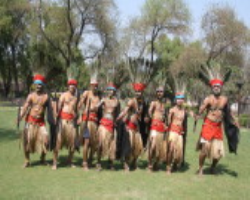
Introduction : Adiyan Tribe
Thank you for reading this post, don't forget to subscribe!Tucked beneath the misty canopy of the Western Ghats lies Wayanad, a region famous across South India for its sprawling tea estates and spice-scented air. Yet behind this lush landscape rests the complex history of its original inhabitants. Among the most historically marginalized indigenous communities of this mountain belt is the Adiyan tribe, an Adivasi community whose past mirrors centuries of bonded labor, cultural perseverance, and an ongoing fight for basic rights.
For generations, the Adiyans carried the weight of feudal agrarian slavery in the hills of northern Kerala and adjoining parts of Karnataka. Stripped of their ancestral soil, sold at temple festivals, and forced into generational servitude, their identity was long defined by what was taken from them. Yet to view the Adiyan people only through the lens of victimization is to miss half their story.
In this comprehensive exploration, you will learn about the origins of the Adiyan tribe, their distinct language and social fabric, the sacred healing ritual of the Gaddika, their historic struggles at places like Muthanga, and how a new generation is blending indigenous knowledge with modern aspirations.
Who Are the Adiyan People? Origins and Identity
The word Adiyan carries painful historical weight. In Malayalam, adiyan literally translates to “slave,” “vassal,” or “one who serves at the feet” (derived from the root adi, meaning feet or base). Historically, when speaking to upper-caste landowners, members of this community were required to refer to themselves as adiyan as a verbal marker of subjugation.
Colonial ethnographers, such as Edgar Thurston in his multi-volume survey Castes and Tribes of Southern India (published in the early 20th century, which researchers should cross-examine for colonial bias), categorized the Adiyans as agricultural laborers indigenous to the Wynad (now Wayanad) plateau.
Anthropologists identify the Adiyans as an indigenous Dravidian tribal group belonging to the Scheduled Tribes (ST) category in India. While the vast majority live in the Wayanad district of Kerala, related kin and settlements extend across the border into Kodagu (Coorg) and Mysore districts in Karnataka, where they are often referred to as Adiya or Yerava.
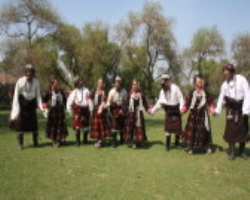
Geographical Footprint of Adiyan Tribe
The Adiyan settlements, known locally as kudis or oorus, are predominantly clustered around specific taluks of Wayanad:
Mananthavady: The historic heartland of Adiyan settlements, closely linked to early feudal plantations and the Kabini river basin.
Sulthan Bathery: Communities bordering forested wildlife sanctuaries and coffee estates.
Vythiri: Pockets around undulating tea garden corridors.
Kodagu District (Karnataka): Dispersed settlements working as plantation hands in coffee and pepper estates.
The Dark History of Bonded Labor: The Valliyoorkavu Connection
To understand the Adiyan tribe today, one must confront the institutionalized labor system that bound them for centuries. Unlike many forest-dwelling tribes who lived as nomadic hunter-gatherers, the Adiyans were systematically tied to settled wet-paddy agriculture.
The Annual Slave Market of Valliyoorkavu
Until the formal abolition of bonded labor in India through the Bonded Labour System (Abolition) Act of 1976, one of the most visible annual labor markets in South India took place at the Valliyoorkavu Bhagavathi Temple near Mananthavady.
During the annual temple festival (Ulsavam), held in the Malayalam month of Meenam (typically March–April), landlords (janmis) gathered to hire agricultural laborers for the upcoming crop cycle.
1.
The Advance Payment (Nalpam): Landlords gave a small token advance, a piece of cloth, and measure of grain to the head of an Adiyan family.
2.
The Binding Contract: Accepting this token meant the laborer and their family were legally and socially bound to work exclusively for that landlord until the next festival season.
3.
The Cycle of Debt: Wages were paid almost entirely in meager grain rations (valli), making it impossible for families to accumulate savings. If a family could not repay debts or needed food during monsoon lean periods, the bond renewed automatically, trapping children into the servitude of their parents.
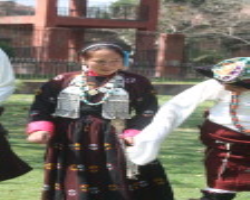
Social Structure, Kinship, and Clan Organization
The Clan System (Mandu)
The Adiyan social universe is structured into matrilineal or descent-based clans, frequently referred to in ethnographies as mandus or chemmas. Lineage traditionally traced through maternal ties, determining inheritance of familial roles, ritual obligations, and marriage eligibility.
Exogamy: Marriage within the same mandu is strictly forbidden, as members regard one another as siblings.
Community Leadership: Each settlement has traditional leaders known by titles such as Nattumanikkan or Mooppan. The leader acts as arbitrator in domestic disputes, supervises community marriages, and coordinates traditional religious observances.
Language and Oral Traditions: The World of Adiya Bhasha
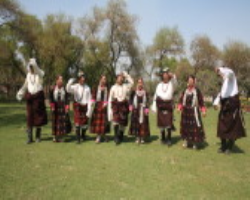
The mother tongue of the community is often called Adiya Bhasha (or Yerava in Karnataka). Linguists categorize it as an unwritten South Dravidian dialect that shares deep grammatical affinities with archaic Kannada, Malayalam, and Tulu.
Because the language lacks an independent writing script, its preservation has relied entirely on an immense body of oral literature.
Folk Songs and Work Laments
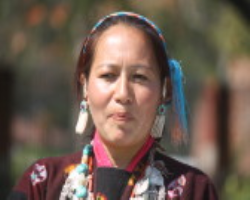
Adiyan oral history is stored in memory and song. Elders pass down pattukal (ballads) that capture:
- Paddy Field Laments: Rhythmic work songs sung during planting and weeding, lamenting back-breaking labor under scorching sun and monsoon downpours.
Origin Myths: Folk narratives describing how their ancestors were brought down from the mountains to till the soil for feudal masters.
Lullabies and Tales: Stories populated by regional forest spirits, birds, wild elephants, and guardian ancestors.
In 1975, the Kerala state legislature passed the Kerala Scheduled Tribes (Restriction on Transfer of Lands and Restoration of Alienated Lands) Act. The law aimed to restore indigenous lands that had been encroached upon or bought up by non-tribal settlers over the decades.
However, enforcement faced continuous legal delays, political opposition from settled agricultural lobbies, and subsequent amendments that weakened original restitution provisions. Frustration brewed for decades across Wayanad’s indigenous hamlets.
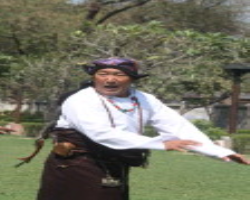
Because formal schooling is conducted in standard Malayalam, younger generations speak the state language fluently, which has inadvertently placed Adiya Bhasha at risk of gradual linguistic decline.
The Sacred Healing Theatre: Understanding the Gaddika
Perhaps the most famous cultural expression of the Adiyan tribe is the Gaddika, an elaborate ritual performance that combines shamanic trance, community theater, social satire, and spiritual healing.
The Dual Dimensions of Gaddika
The Gaddika serves two distinct purposes: spiritual healing (Pooja Gaddika) and political storytelling (Naattu Gaddika).
1. Spiritual Exorcism and Healing
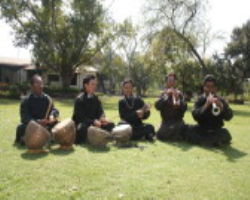
Traditionally conducted over several days by a ritual master known as the Gaddikkaran, this ceremony is held to rid a settlement of sickness, epidemics, bad luck, or perceived demonic afflictions. Armed with a sacred cane (chambu) and accompanied by traditional percussion (tudi and kuzhal), the Gaddikkaran enters an altered state of consciousness to bargain with spirits and seek the blessing of regional deities such as Lord Shiva (often invoked as Muthappan or Malakkari) and Mariamman.
2. Social Protest and Feudal Critique
What makes the Gaddika unique in Indian folklore is its element of theatrical resistance. During the performance, participants wear masks and enact satirical sketches depicting:
a) The ruthless feudal landlord demanding his dues.
b) Corrupt officials and forest guards exploiting laborers.
c) Quack doctors and outsiders who cheat tribal villagers.
Through these dramatized interactions, the community historically used the sacred stage to mock their oppressors in a public space where open rebellion would otherwise have brought severe retribution. The late P.K. Kalan, a revered Adiyan artist and cultural leader, famously popularized the Gaddika across cultural forums in India, transforming it from a localized ritual into a celebrated symbol of subaltern theater.
Traditional Dwellings and Relationship with Nature
Historically, Adiyan homes were built entirely from materials gathered in the surrounding forests and bamboo brakes:
1. Wattle and Daub Walls: Bamboo splits woven into mats, plastered with red mud and cow dung to keep interiors cool during the dry season and insulated against damp mountain cold.
2. Thatch Roofs: Bundles of wild grass (kadu pul) layered over bamboo rafters, engineered to withstand the ferocious southwest monsoon.
3. Settlement Layout: Small courtyards arranged facing inward, encouraging collective cooking, child-rearing, and shared evening gatherings around central fires.
While concrete government-funded houses have largely replaced these traditional huts under modern tribal resettlement programs, the architectural simplicity of the traditional kudi reflected deep harmony with the forest microclimate.
Health, Food Systems, and Indigenous Knowledge
The traditional Adiyan diet was seasonal, hyper-local, and heavily supplemented by forest foraging:
1) Wild Greens (Cheera): Dozens of edible wild plants, ferns, and tubers gathered along stream beds and forest edges.
2. Crabs and SModern Dietary and Health Transitionstream Fish: Protein sourced from paddy-field bunds, small wetlands, and mountain rivulets.
3) Millets and Coarse Grains: Ragi (finger millet) porridge was historically consumed alongside broken rice, providing steady nutrition during long workdays.
Modern Dietary and Health Transitions
Over the past four decades, the community has undergone a severe nutritional shift. Encroachment on forests, the proliferation of cash-crop monocultures (like tea, rubber, and eucalyptus), and chemical pesticide usage on surrounding commercial plantations have sharply curtailed foraging areas.
Consequently, many Adiyan households rely heavily on public distribution system (PDS) polished white rice. Health researchers in Kerala have noted high incidences of anemia, sickle-cell trait anomalies, and lifestyle diseases among Wayanad tribes, highlighting the need for culturally sensitive public health programs that revive traditional nutritional diversity.
The Core Struggle: Landlessness, Rights, and the Muthanga Agitation
No discussion of the Adiyan tribe is complete without addressing the defining question of their modern existence: land.
Unlike some Adivasi groups who retained communal patches of forest, centuries of bonded labor left the Adiyan community almost entirely landless. When the Bonded Labour System was outlawed in 1976, laborers were technically freed from their masters, but they were given virtually no agricultural land of their own. Freedom without economic self-sufficiency meant that most had to return to the very same landlords as casual daily-wage laborers.
The 1975 Tribal Land Act and Broken Promises
In 1975, the Kerala state legislature passed the Kerala Scheduled Tribes (Restriction on Transfer of Lands and Restoration of Alienated Lands) Act. The law aimed to restore indigenous lands that had been encroached upon or bought up by non-tribal settlers over the decades.
However, enforcement faced continuous legal delays, political opposition from settled agricultural lobbies, and subsequent amendments that weakened original restitution provisions. Frustration brewed for decades across Wayanad’s indigenous hamlets.
The Muthanga Struggle (2003)
In early 2003, this pent-up desperation led to a watershed moment in modern Indian social movements: the Muthanga Agitation.
Led by the Adivasi Gothra Maha Sabha (AGMS), under leaders like C.K. Janu and M. Geethanandan, hundreds of tribal families—including many landless Adiyans—entered the Muthanga range of the Wayanad Wildlife Sanctuary, erected thatched huts, planted crops, and declared self-rule on ancestral forest grounds.
The confrontation culminated in February 2003 in a violent police action involving tear gas, firing, the deaths of a policeman and a tribal protestor, and mass arrests.
Significance: Muthanga permanently shifted the discourse around Adivasi welfare from mere poverty alleviation to constitutional land ownership, self-determination, and forest rights.
The Forest Rights Act (FRA) of 2006: In subsequent years, the passage of the national Scheduled Tribes and Other Traditional Forest Dwellers (Recognition of Forest Rights) Act, 2006 provided a legal basis for community and individual land claims, though implementation remains a work in progress on the ground.
Modern Realities: Education, Challenges, and New Paths Forward
Today, the Adiyan tribe stands at an important crossroads between traditional identity and rapid socioeconomic integration.
Educational Advancements and Roadblocks
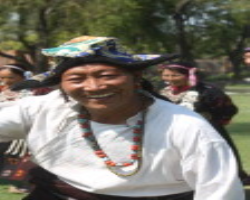
Literacy rates among the community have risen significantly over the past two decades thanks to government initiatives like the Single Teacher Schools (Eka Adhyapaka Vidyalayas) and dedicated tribal residential schools (Model Residential Schools or MRS).
The Language Barrier: Young Adiyan children enter an education system taught entirely in standard Malayalam, creating early comprehension barriers.
High Dropout Rates: Economic pressure pushes teenagers into low-paying agricultural or construction labor before completing secondary school.
Higher Education Gaps: Very few members have secured seats in professional or technical colleges, though affirmative action (reservations) is beginning to produce the first wave of community teachers, police officers, and civil service aspirants.
The Role of Tourism and Cultural Commodification
Wayanad has transformed into one of South India’s premier eco-tourism hubs. While this has generated income opportunities in hospitality, it presents complex cultural questions:
Authenticity vs. Spectacle: The sacred Gaddika is now sometimes staged as an entertainment item for resort guests, divorced from its spiritual and subversive roots.
Community-Led Initiatives: Projects like En Ooru—a tribal heritage village in Wayanad—aim to place cultural presentation directly into tribal hands, offering artisans and performers fair compensation and educational outreach.
Preserving Adiyan Heritage: What Needs to Happen
Ensuring a fair future for the Adiyan people requires practical steps grounded in respect for their agency:
Expediting Land Titles: Accelerating individual and community land allotment under the Forest Rights Act (FRA) so families can achieve genuine agrarian independence.
Mother-Tongue Early Education: Introducing bilingual primary learning materials that bridge Adiya Bhasha with standard Malayalam to reduce early school dropouts.
Reviving Traditional Crop Diversity: Supporting community kitchen gardens that blend ancestral millet and tuber cultivation with modern organic farming methods.
Documenting Oral Histories: Encouraging tribal youth to record, digitize, and translate the songs, medicine lore, and genealogies held by community elders.
The journey of the Adiyan tribe—from the slave-trading grounds of Valliyoorkavu to the democratic frontlines of Muthanga—is an enduring chapter in South India’s social history. Honoring their heritage means seeing beyond scenic hill-station panoramas and recognizing the indigenous stewards whose sweat, culture, and songs helped shape the Western Ghats.0