


The Aka Tribe of Arunachal Pradesh: Culture, Identity, and the Struggle for Survival in Modern India
Deep within the mist-clad gorges and subtropical forests of West Kameng in Arunachal Pradesh resides the Aka tribe—known natively as the Hrusso. For centuries, this indigenous community guarded ancient trade routes linking the Tibetan plateau with the fertile plains of Assam. They engineered intricate cane bridges across rushing rivers, governed through participatory village democracies, preserved oral epics, and lived in ecological balance with the Eastern Himalayas.
In twenty-first-century India, the story of the Aka is at a crossroads. As asphalt highways cut through ancestral hills, digital connectivity penetrates remote valleys, and the cash economy eclipses traditional barter, the Hrusso confront questions shared by many of India’s indigenous peoples: How do you embrace education, modern healthcare, and infrastructure without severing the umbilical cord to your ancestral heritage, language, and forest sovereignty?
Aka women in ceremonial attire. Source: Arunachal Pradesh
Who Are the Aka? Origins, Etymology, and Geographic Landscape
The term “Aka” is an exonym derived from an Assamese word meaning “painted” or “adorned,” referencing the community’s historical custom of applying black resin and charcoal facial tattoos (tsip/silot) and intricate markings. The people call themselves Hrusso (or Hruso).
Geographically, the Aka inhabit the southeastern ridges of the West Kameng district of Arunachal Pradesh. Their settlements are clustered around the valleys of the Bichom (Tenga), Kheyang, and Tengapani rivers. The main administrative blocks housing Aka villages include:
- Bhalukpong (the gateway plains on the border with Assam)
- Thrizino (the cultural heartland of the Hrusso people)
- Jamiri
- Buragaon
- Palizi
Bordered by the Miji (Sajolang) to the north, the Bugun (Khowa) and Monpa to the west, and the Nyishi to the east, the Aka historically served as intermediaries in trans-Himalayan commerce. Their territory transitions from subtropical lowland jungles to temperate pine and oak ridges, shaping an agrarian and foraging way of life.
Linguistic Identity: The Mystery of the Hrusso Language
Linguistically, the Hrusso language is an enigma. While conventionally cataloged under the Tibeto-Burman branch of the Sino-Tibetan family, linguists—including George van Driem—classify Hrusso (alongside its neighboring isolate Miji) as an endangered linguistic isolate or a deeply divergent branch with substrate remnants of a pre-Tibeto-Burman language family.
Language Family: Sino-Tibetan (Debated isolate / divergent branch)
Native Speakers: Approximately 4,000–6,000
Endangerment Status: Vulnerable (UNESCO Atlas of the World’s Languages in Danger)
Script: Historically oral; contemporary documentation uses modified Latin script
Because Hrusso lacks a historical script, the entire cultural memory of the tribe—its genesis myths, cosmologies, medicinal plant formularies, legal maxims, and genealogical trees—has been transmitted orally through chants, ballads, and ritual idioms. Today, this linguistic vessel is under severe pressure from Hindi, English, and Assamese.
Social Structure, Clan Kinship, and Village Governance
The social fabric of the Aka is structured around patriclans (sub-divisions or ku) that trace lineage back to mythical common ancestors. Despite a strictly patrilineal descent system, the Aka social order maintains relative gender balance and community solidarity.
Clan Dynamics and Kinship
The tribe is bifurcated into primary groupings and sub-clans, such as the Kovatsun, Katsun, and Paryu. Clan exogamy is absolute: one cannot marry within one’s own clan. Cross-cousin marriage has historically been favored, strengthening diplomatic and economic bonds between disparate hill settlements.
Polygyny was practiced in pre-modern times, primarily by wealthy chieftains and village leaders (Nimas) as a means of building alliances and expanding agricultural labor, but monogamy is now the standard among younger generations.
Traditional Governance: The Village Council
Before the introduction of the Panchayati Raj system and formal statutory courts, justice and administration were administered by the village council, known as the Mele or Mellao.
The Mele functions on deliberation and consensus:
- The Gaon Burah / Nima: The elder or chief presides over assemblies.
- Collective Jurists: Household heads congregate in the village council hall or headman’s house.
- Restorative Justice: Rather than retributive incarceration, penalties are restorative. Fines (dan) are paid in mithuns (Bos frontalis), sacred Tibetan bronze bells (daan), endi silk cloths, or silver ornaments.
- Oaths and Ordeals: In cases lacking eyewitness proof, priests invoke nature deities through spiritual oaths (soh) to reveal guilt.
While the modern state administration operates through District Commissioners, magistrates, and local police, the Mele remains an active arbitrator for domestic disputes, boundary contests between clans, and customary violations.
Material Culture, Architecture, and Traditional Livelihoods
The material life of the Aka is shaped by mountain ecology and bamboo craft.
Architecture: The Traditional Pile House
Aka villages sit on hillside slopes, positioned defensively against historical raids and designed to withstand torrential monsoon downpours.
- Architecture: Houses (Ulley) are elevated pile dwellings constructed on stout wooden stilts and bamboo piles, thatched with wild banana leaves, cane leaves, or slate shingles.
- Layout: A traditional house is long and partitioned into private family chambers, a communal hearth (Khumloo), and storage areas for grain and smoked game.
- The Central Hearth: The hearth is both a cooking area and a sacred space. A three-tier wicker hanging shelf suspended over the fire smokes and cures meats, seeds, corn, and bamboo shoots, protecting them from mold and pests.
Sustenance: Jhum Cultivation and Foraging
The foundational economy of the Aka combines shifting agriculture (jhum) with gathering, hunting, and small-scale livestock rearing.
| Livelihood Element | Traditional Practice | Modern Transition |
| Agriculture | Slash-and-burn (Jhum); multi-cropping of maize, millet, upland rice, pulses, and tubers. | Terraced wet-rice farming, cash crops (kiwi, apple, ginger, tomato, cardamom). |
| Animal Husbandry | Mithun (Bos frontalis) as wealth, prestige, and ritual currency; pigs, poultry, and hill cattle. | Stall-fed livestock, poultry farming, commercial dairy ventures. |
| Craft & Weaving | Splitting bamboo/cane for baskets, fish traps (sip), mats; backstrap-loom weaving of cotton coats. | Factory-made textiles, plastic products, modern building materials (CGI sheets). |
| Hunting & Gathering | Bows, poisoned arrows (Aconite poison); gathering wild edible ferns, tubers, mushrooms, and herbs. | Restricted hunting under wildlife laws; foraging retained for dietary diversity. |
Sacred Ecology: Religion, Animism, and Festivals
The native religion of the Aka is animistic, grounded in nature reverence and ancestral communion. While recent decades have seen religious shifts, the core belief structure centers around a dynamic cosmos populated by benevolent spirits, protective ancestors, and volatile nature deities.
The Pantheon and the Priesthood
The Supreme Creator or divine cosmic dualities are venerated alongside deities governing rivers, mountains, forests, and winds:
- Nechi Phasai: One of the most revered guardian deities, invoked for village prosperity, disease prevention, and abundant harvests.
- The Priest (Mugou): The spiritual backbone of Aka society. The Mugou performs divination (often by examining the liver of chickens or the yolk patterns of eggs), conducts exorcisms, negotiates with forest spirits, and chants sacred epics during communal rites.
The Sacred Mithun
The Mithun (Bos frontalis) is central to indigenous northeast Indian tribal life, and for the Aka, it is more than an economic asset. It represents an intermediary between the mundane and supernatural realms. Mithuns are used as bride price (mida), legal restitution payments, and sacrifices during major tribal rites.
Bride Price Ritual Cleansing Symbol of Nobility
(Mida) (Nechi Phasai) & Wealth (Nima)
The Sarok Festival: A Celebration of Earth and Harmony
Celebrated annually in January, Sarok is the principal community festival of the Aka people.
Sarok centers on thanksgiving, reconciliation, and ecological harmony:
- Ritual Cleansing: Prayers are made to appease earth and sky deities, asking for communal health, protection from epidemics, and fertile soil.
- Community Feasting: Rice beer (Lao pani or Poh) brewed from fermented millet and rice is shared, alongside roasted meats and maize.
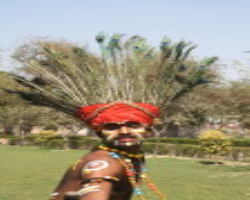
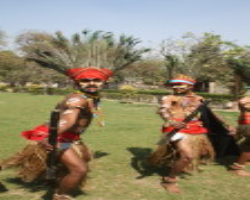
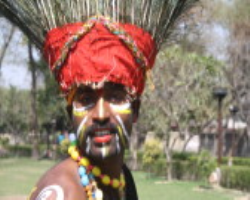
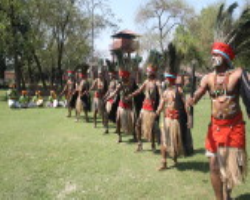
- The Royal Dance: Dancers in traditional red, black, and white tunics adorned with heavy bead necklaces, silver fillets, and boars’ tusk headgear perform slow, rhythmic circular dances reenacting agricultural cycles and hunting expeditions.
Another notable festival is Nyethidow, held to ensure communal protection, bountiful crops, and the welfare of children.
The Human Development Realities: Education, Health, and Infrastructure
Evaluating the condition of the Aka requires looking beyond traditional ethnography to examine human development metrics: health indicators, literacy rates, connectivity, and livelihood stability.
- Educational Attainment and the Literacy Gap
For decades following Indian independence, the rugged terrain of West Kameng left the Aka isolated from the formal educational system. Early schooling depended on poorly staffed single-teacher primary institutions in remote hamlets.
- Progress: Government residential schools, Kasturba Gandhi Balika Vidyalayas (KGBV), and missionary schools in Thrizino and Bhalukpong have steadily raised the literacy rate from single digits in the 1970s to over 60% today.
- The Gender Gap: While young Aka women are attending universities in Itanagar, Shillong, Guwahati, and Delhi, rural drop-out rates remain elevated for girls due to household obligations and agricultural duties.
- Pedagogical Alienation: The medium of instruction is English and Hindi. With no classroom curriculum grounded in the Hrusso language, schooling can accelerate the erosion of native language literacy among younger cohorts.
- Healthcare Realities: Between Traditional Shamanism and Modern Medicine
Healthcare access in Aka territory highlights the tension between indigenous medicine and modern primary care.
Challenge: Remote terrain, rough roads, and supply shortages
- Primary Health Centers (PHCs): Facilities in administrative hubs like Thrizino frequently face personnel shortages, intermittent electricity, and a lack of cold-chain refrigeration for vaccines.
- Maternal and Infant Health: Institutional deliveries are increasing due to the frontline work of Accredited Social Health Activists (ASHAs). However, in remote villages, emergency transport across monsoonal landslides remains a barrier during complicated labors.
- Integration: Rather than abandoning traditional healing, many families consult both the Mugou for spiritual balance and the PHC for pharmaceutical intervention.
- Physical Infrastructure and the Digital Frontier
Connectivity is restructuring life in the Kameng hills:
- Roads: The expansion of the Trans-Arunachal Highway and border road upgrades have reduced travel times to Tezpur and Itanagar, making it easier to bring cash crops to regional markets.
- Electrification: The Saubhagya scheme and micro-hydro projects have brought power lines to villages that once relied solely on pine torches (kichu) and kerosene lamps.
- The Internet: 4G cellular towers in hubs like Bhalukpong and Palizi have introduced social media, online banking, and remote educational tools, bringing new economic possibilities alongside cultural disruption.
Modern Struggles: Ecology, Identity, and Culture in Transition
Integration into regional and national markets has introduced several structural pressures for the Aka people.
- Ecological Transformation and Mega-Projects
The Bichom and Kameng rivers are part of Northeast India’s major hydroelectric initiatives. The commissioning of the Kameng Hydro Electric Project (600 MW) altered local hydrology, submerged agricultural lands, and displaced traditional riverbed fishing:
- Biodiversity Loss: Subtropical forests rich in medicinal plants, hornbills, and clouded leopards are fragmented by quarrying, access roads, and construction camps.
- Land Tenure Disruption: Customary community land tenure (unwritten clan ownership) often clashes with statutory compensation frameworks. When compensations are paid in cash to individual male heads of households, it can disrupt traditional clan distribution networks.
- Language Endangerment and Cultural Assimilation
The most immediate internal challenge facing the Aka is cultural preservation:
- The Language Shift: Younger generations educated in town centers increasingly speak Hindi and Arunachali-accented Assamese as their primary tongues. Hrusso vocabulary tied to shifting cultivation, traditional tools, and spirit realms is falling out of daily use.
- Religious Transitions: While traditional animistic practices remain strong, Christian missions and neo-Hindu organizations have gained followings across the Kameng belt. This shift can complicate customary village obligations, such as contributing labor or animals to traditional communal rituals.
- Erosion of Oral Epics: With the passing of elderly Mugous, sacred chants and historical recitations risk disappearing before they are transcribed or audio-recorded.
- Economic Stratification and Youth Outmigration
The decline of traditional Jhum cultivation has propelled rural-to-urban migration:
- Cash-Crop Vulnerability: Shifting from diversified subsistence crops to monoculture cash crops (such as ginger or rubber) exposes smallholders to market price swings.
- Urban Drift: Educated Aka youths frequently leave their ancestral villages for Itanagar, Guwahati, or metropolitan centers across India in search of employment, creating an aging rural demographic and separating young people from village traditions.
Grassroots Revival: How the Aka Are Protecting Their Future
The story of the Aka is not merely one of loss; it is also one of local agency and cultural reclamation.
Community Language Documentation
Community organizations, such as the All Aka (Hrusso) Students’ Union (AASU) and tribal cultural councils, have launched initiatives to safeguard their heritage:
- Developing a standardized script using the Latin alphabet to publish Hrusso primers, folk stories, and dictionaries.
- Partnering with academic institutions like Rajiv Gandhi University (Itanagar) and linguistic researchers to record oral epics, folktales, and spiritual ceremonies.
Indigenous Conservation Initiatives
Aka communities have increasingly turned to community-based conservation:
- Regulating hunting practices by instituting seasonal bans during wildlife breeding cycles.
- Developing community ecotourism around Bhalukpong and Pakke Tiger Reserve corridors, turning their ecological knowledge into sustainable employment for local youth.