

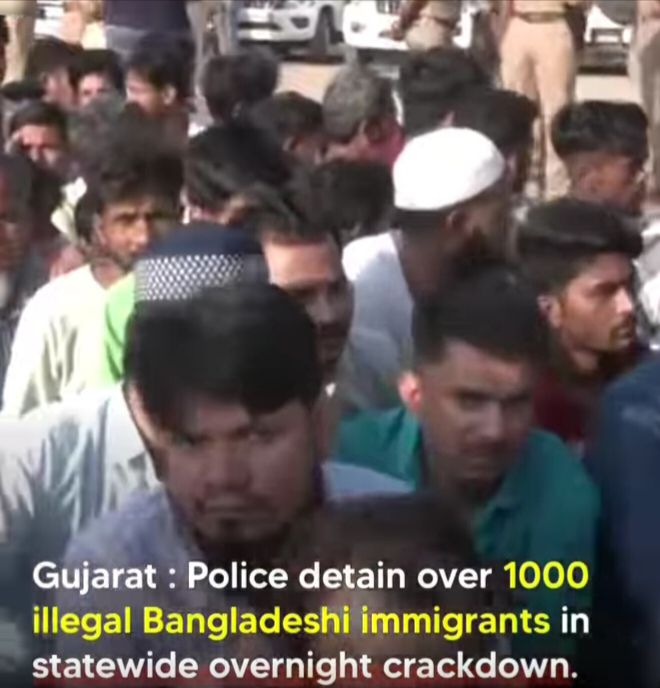

Bangladeshi immigration to India after 1972 is an internal obstacle to the development of an independent country. Ever asked yourself what drives over 15 million people to leave everything behind and cross a border? Not for adventure, but survival.
The story of Bangladeshi immigration to India isn’t just numbers—it’s families fleeing persecution, economic migrants seeking stability, and communities transforming both countries forever.
I’ve spent years studying migration patterns across the Bangladesh-India border, and what’s happening there reshapes South Asian politics, economies, and identities daily.
You might think you understand why people migrate, but the real forces behind this massive population shift will challenge everything you believe about borders and belonging.
What if I told you the biggest factor isn’t what most media outlets claim?
Lesson at a glance
Key Facts
The migration of Bangladeshis to India after 1972 represents one of South Asia’s most complex population movements. After Bangladesh gained independence in 1971, millions fled violence during the liberation war. While many returned home, a steady flow of migrants continued crossing into India for decades.
The primary drivers behind this migration include:
- Economic opportunities in India’s developing regions
- Environmental disasters in Bangladesh (cyclones, flooding)
- Religious persecution of minorities
- Political instability in Bangladesh’s early years
Migration Patterns
The Indian government’s approach evolved from welcoming refugees during the liberation war to increasingly restrictive policies, including:
- Border fencing projects (ongoing since the 1980s)
- The National Register of Citizens in Assam
- Increased border security forces
Social Impact
Both countries continue wrestling with this migration’s legacy. In Bangladesh, it represents a significant brain drain and demographic loss. In India, it’s become a heated political issue with:
- Concerns about resource competition
- Cultural preservation debates
- Security considerations
- Questions about citizenship rights for migrants’ descendants
The story remains unfinished, with millions of people’s lives shaped by these cross-border movements and the policies responding to them.
What can British documents tell us about the creation of Bangladesh?
A. Tasks
Want to dig into how Bangladesh came to be? These British historical documents give us a front-row seat to this pivotal moment in South Asian history. Challenge yourself to analyze these primary sources and consider:
- How did the 1947 partition set the stage for Bangladesh’s eventual formation?
- What role did language and culture play in building Bengali national identity?
- How did natural disasters impact political developments?
- What were British perspectives on the conflict as it unfolded?
B. Partition of British India, 1947
The seeds of Bangladesh were planted back in 1947 when the British sliced up the subcontinent. They created Pakistan as two separate wings—West and East—separated by over 1,000 miles of Indian territory. Talk about an awkward arrangement!
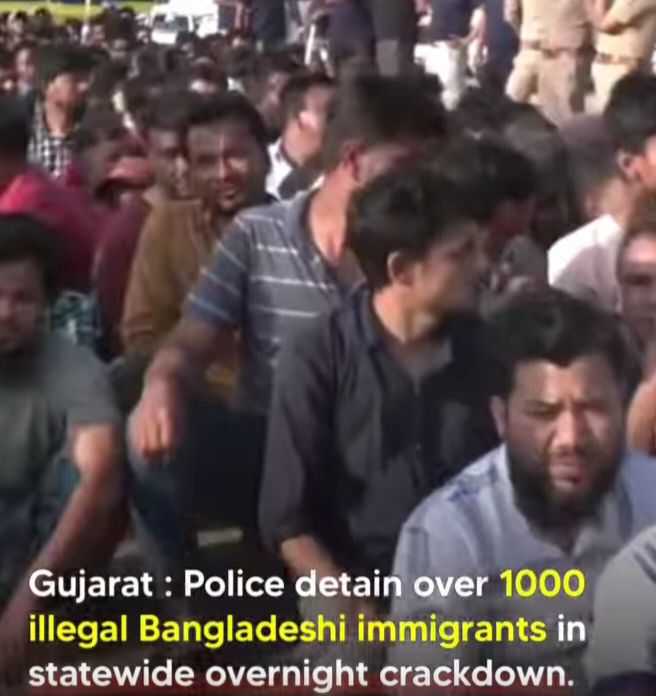

East Pakistan (now Bangladesh) was predominantly Bengali-speaking and culturally distinct from West Pakistan. British documents reveal the hasty nature of this partition, with boundaries drawn by Cyril Radcliffe in just five weeks. Many officials privately questioned the viability of this two-wing nation with nothing in common except religion.
Colonial records show British administrators recognized the cultural differences between the two wings but prioritized rapid decolonization over careful boundary-drawing. This rushed job set up tensions that would simmer for decades before boiling over.
C. The Bengali Language Movement, 1950s
The first major crack in Pakistan’s foundation appeared when West Pakistan tried to force Urdu as the national language. British diplomatic cables from the 1950s tracked rising resistance in East Pakistan, where Bengali speakers saw this as a direct attack on their identity.
The 1952 language movement protests turned bloody when police fired on students demonstrating at Dhaka University. British observers noted this as a pivotal moment when Bengali nationalism began crystallizing.
A British High Commission report from 1954 stated: “The language issue has transformed from an academic debate to a symbol of East Pakistani resistance against West Pakistani domination.”
These documents show British diplomats recognized the language movement’s significance well before many other international observers, predicting it would have lasting implications for Pakistan’s unity.
D. Cyclone Bhola, 1970
When Cyclone Bhola slammed into East Pakistan in November 1970, British diplomatic reports described it as “potentially the deadliest cyclone in recorded history.” An estimated 300,000-500,000 people perished.
The real political storm came after. British documents reveal scathing assessments of West Pakistan’s relief response. One Foreign Office memo noted: “The central government’s sluggish and inadequate relief efforts have inflamed existing tensions.”
British aid workers on the ground sent detailed reports about how East Pakistanis viewed the disaster response as evidence that West Pakistan cared little for their lives. These observations proved remarkably prescient as the cyclone’s aftermath directly fueled support for Sheikh Mujibur Rahman’s Awami League in the December 1970 elections.
E. Escalating tensions, 1970-71
British diplomatic cables from early 1971 read like a countdown to disaster. When the Awami League won a landslide victory in the 1970 elections, British diplomats reported President Yahya Khan’s growing unease about handing power to Sheikh Mujib.
A confidential telegram from the British High Commissioner in Islamabad dated March 15, 1971, warned: “Military action appears increasingly likely as negotiations stall.”
Just ten days later, Operation Searchlight launched. British consular staff in Dhaka documented the brutal crackdown in real-time. Their reports described targeted killings of intellectuals, mass arrests, and widespread violence that sent millions fleeing to India.
These British eyewitness accounts provided crucial contemporary evidence of what would later be recognized as genocide.
F. Reactions to the conflict in Britain, 1971-72
The British government walked a diplomatic tightrope during the Bangladesh Liberation War. Cabinet papers reveal heated debates between supporting Pakistan (a Commonwealth ally) versus responding to growing public outrage over atrocities.
British rock star George Harrison’s Concert for Bangladesh in August 1971 reflected growing public awareness. Meanwhile, declassified Foreign Office memos show officials privately acknowledging the severity of the crisis while publicly maintaining a more measured stance.
MPs across party lines pressured the government to take stronger action. One particularly heated House of Commons debate in June 1971 saw Conservative MP Reginald Maudling arguing for continued engagement with Pakistan while Labour’s Michael Foot called for immediate recognition of Bangladesh.
British media coverage gradually shifted from describing “civil unrest” to “systematic oppression,” influencing both public opinion and eventual policy.
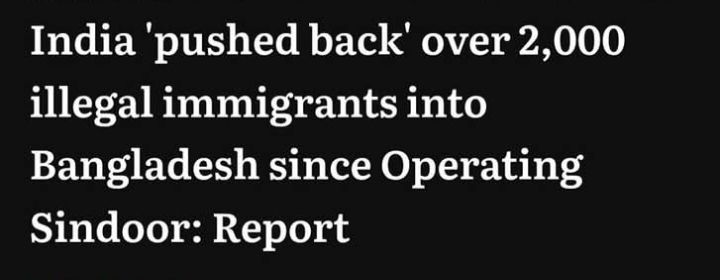

G. Britain’s recognition of Bangladesh, 1972
Britain recognized Bangladesh on February 4, 1972, about six weeks after India. Cabinet papers reveal the careful calculations behind this timing.
Foreign Secretary Alec Douglas-Home wrote in a January 1972 memo: “While immediate recognition would please India and Bangladesh, a measured approach maintains our credibility with Pakistan and our Western allies.”
British diplomats also worried about creating precedents for other separatist movements. One Foreign Office analysis noted: “Recognition must be timed to acknowledge reality without encouraging separatism elsewhere.”
The first British High Commissioner to Bangladesh, Arthur Collins, reported on the tremendous goodwill generated by Britain’s humanitarian aid during the crisis, noting this created a foundation for strong bilateral relations despite the delayed recognition.
H. Background
The documents showcased here span from 1947 to 1972, capturing the quarter-century journey from partition to Bangladesh’s independence. They include diplomatic cables, consular reports, cabinet meeting minutes, parliamentary debates, aid agency assessments, and intelligence briefings.
These records reveal how British officials observed and interpreted events they no longer controlled in their former colony. Sometimes they saw clearly what was coming; other times they misjudged the strength of Bengali nationalism.
What makes these documents particularly valuable is their contemporary nature—written as events unfolded, they capture the uncertainty and evolving understanding of a complex situation without the benefit of hindsight.
I. Teachers’ notes
These documents offer excellent opportunities for teaching historical analysis skills. Have students compare British diplomatic assessments with Pakistani government statements and Bengali nationalist perspectives to understand competing narratives.
The language movement documents pair well with UNESCO’s International Mother Language Day materials (celebrated on February 21 to commemorate the 1952 protests).
When discussing Cyclone Bhola, incorporate climate science to explore how natural disasters shape political history. Consider cross-curricular approaches with geography teachers.
For older students, explore ethical questions about humanitarian intervention and the responsibility to protect. The British government’s cautious approach provides a case study in balancing diplomatic interests against moral imperatives.
J. Further questions/activities:
- Compare British media coverage with diplomatic cables from the same dates. How did public information differ from private assessments?
- Analyze how British documents described Bengali identity. Did their colonial experience in India give them insights other international observers lacked?
- Create a timeline showing how British assessment of the likelihood of Bangladesh’s independence evolved from 1947-1971.
- Debate whether Britain should have recognized Bangladesh earlier based on evidence available at the time.
- Research how British-Bangladeshi communities formed after 1972 and their impact on both countries.
K. Sources
- The National Archives (UK), Foreign and Commonwealth Office Records, FCO 37 series
- Parliamentary debates (Hansard), 1971-72
- Cabinet Papers, CAB 128/49
- British Diplomatic Oral History Programme interviews
- BBC Archives: News broadcasts from 1971-72
- British Red Cross archives on Cyclone Bhola relief efforts
- Private papers of British diplomats stationed in Pakistan/Bangladesh
L. External links
- Bangladesh High Commission UK – Historical Documents Section
- National Archives UK – Newly declassified files on Bangladesh’s formation
- Imperial War Museum – Bangladesh Liberation War collection
- British Library – South Asia oral history project
- Digital Bangladesh Vision – Historical documents portal
- Liberation War Museum (Dhaka) – Digitized British press coverage
M. Connections to curriculum
These materials support the following curriculum areas:
- GCSE History: Conflict and tension in Asia, 1950-1975
- A-Level Politics: Nationalism and state formation
- Global Citizenship: Humanitarian responses to crises
- Geography: Natural disasters and political consequences
- International Relations: Post-colonial state development
- Media Studies: Reporting on international conflicts
Lesson at a glance
Related resources

A. Partition of British India
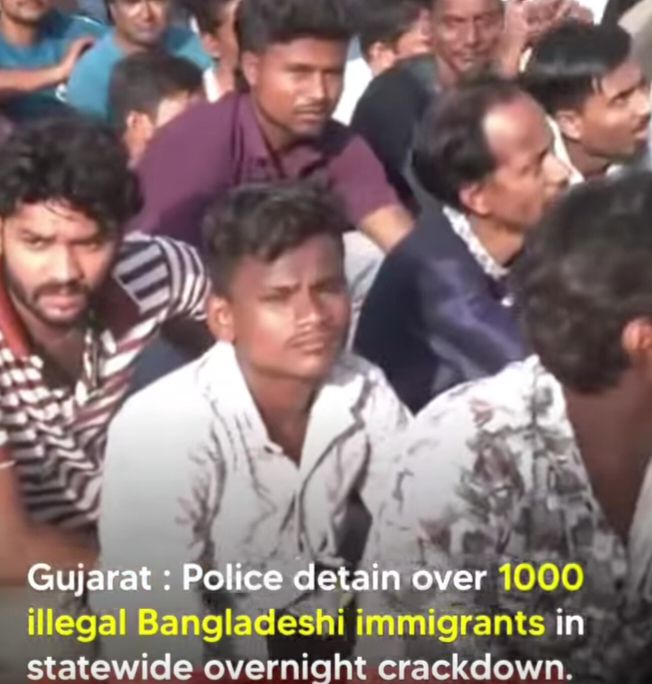
The roots of Bangladeshi immigration to India can’t be understood without looking back at the 1947 Partition of British India – arguably one of history’s largest forced migrations.
When the British finally packed their bags after nearly 200 years of colonial rule, they left behind a messy goodbye gift: a hastily drawn line splitting the subcontinent along religious lines. The infamous Radcliffe Line, drawn by a British lawyer who had never even been to India before, carved out two nations in just five weeks.
This partition created East Pakistan (which would later become Bangladesh) and West Pakistan, separated by over 1,000 miles of Indian territory. The creation of these borders wasn’t just about drawing lines on maps – it tore apart communities, villages, and families that had lived together for centuries.
Around 15 million people were uprooted during this chaos, with estimates suggesting up to 2 million died in the communal violence that followed. For Hindus in East Pakistan, this wasn’t just a political change – it was the beginning of decades of displacement that would eventually feed into the post-1972 migration patterns.
B. Indian Independence
When India gained independence on August 15, 1947, the celebrations were bittersweet. Freedom from British rule came with the painful price tag of partition.
The new Indian government, led by Jawaharlal Nehru, immediately faced the overwhelming challenge of absorbing millions of refugees streaming across the new borders. While much attention focused on the Punjab border in the west, Eastern India also saw massive population exchanges.
For the Bengali Hindus fleeing East Pakistan to India, this migration was just the first wave. The Indian government established refugee camps and rehabilitation programs, but the sheer numbers overwhelmed available resources.
This initial refugee crisis established migration corridors and settlement patterns that would be followed decades later after Bangladesh’s formation in 1971. Many Bengali Hindu families who stayed in East Pakistan maintained connections with relatives who had moved to West Bengal, Assam, and Tripura during partition.
These historical connections would become crucial support networks during later waves of Bangladeshi immigration following the 1971 Liberation War and the post-1972 period.
Looking Beyond the Archives
The British documents examined in this post offer invaluable insights into the complex dynamics that shaped Bangladesh’s formation after 1972. While these archives provide a foundation for understanding the geopolitical forces at work, they represent just one perspective in a multifaceted historical narrative. The immigration patterns that followed Bangladesh’s independence were influenced by numerous factors including economic opportunities, political instability, and environmental challenges.
As we continue to study this significant period in South Asian history, it’s essential to consider diverse sources and voices, particularly those of the immigrants themselves. Their lived experiences add crucial dimensions to our understanding that official documents alone cannot capture. We encourage readers to explore our related resources for a more comprehensive view of this migration story and its lasting impact on both Bangladesh and India.