


The Biate Tribe of Northeast India: Heritage, Cultural Identity, and the Struggle for Recognition in Modern Times
Introduction: The Forgotten Pioneers of the Eastern Hills
Northeast India presents one of the most culturally intricate landscapes on Earth. Across misty ridges, dense rainforests, and winding river valleys live hundreds of distinct indigenous communities. Among these groups, few possess a historical lineage as ancient and distinctive as the Biate (frequently referred to historically as Biahte, Beite, or Hadem).
Classified ethnically and linguistically under the Tibeto-Burman family and closely aligned with the Chin-Kuki-Mizo meta-group, the Biate people are recognised by regional chroniclers as among the earliest settlers to establish civilised mountain communities across present-day Mizoram, Meghalaya, and Assam.
Their ancestral migratory ballads sing of legendary stone gates, epic migrations across river basins, and warrior heroes who carved village bastions out of unforgiving mountain frontiers.
Despite their antiquity, deep philosophical traditions, and distinctive material culture, the Biate inhabit an ambiguous sociopolitical space in 21st-century India. Numbering roughly 20,000 to 25,000 individuals, their population is fractured across arbitrary administrative borders—primarily concentrated in the Dima Hasao district of Assam and the East Jaintia Hills district of Meghalaya, with scattered groups in Mizoram, Manipur, and Tripura.
                 Biate Settlement Corridors
                           │
       ┌───────────────────┼───────────────────┐
       ▼                   ▼                   ▼
  Dima Hasao         East Jaintia            Mizoram &
 (Haflong, Assam)   (Saipung, Meghalaya)   Borderlands
This geographic dispersion has marginalised their political voice. Caught between dominant ethnic neighbours—the Dimasas in Assam, the Pnar-Khasis in Meghalaya, and the larger Mizo demographic in Mizoram—the Biate wage an everyday campaign for cultural survival, constitutional status, economic mobility, and linguistic preservation.
Etymological Roots and the Mythic Origin: From Sinlung to the Hills
To understand the worldview of the Biate, one must first look at the meaning of their name and their migration narratives.
The Meaning of “Biate”
Linguistically, the ethnonym stems from two root words:
-
“Bia” or “Biak”: To speak, address, or worship.
-
“Te”: A plural suffix denoting “people,” “children,” or “descendants”.
Thus, the Biate identify themselves essentially as “the worshippers” or “the people who speak/pray.” Their traditional neighbors assigned them other names over the centuries:
-
The Khasis and Pnars called them Hadem, an overarching designation used in the Jaintia hills for early Kuki-Chin migrants.
-
The Dimasa Kacharis historically referred to them as Bedesa.
-
British colonial administrators such as C. A. Soppitt transcribed their name as Bêtê.
The Legend of Sinlung
Like several related hill communities, Biate oral folklore traces their genesis to a legendary cradle named Sinlung (literally translated as “enclosed stone cave” or “stone-covered fortress”). Biate troubadours and village elders still preserve epic poems describing this lost homeland:
“Ken siangna Sinlung ram mingthang,
Kinu ram kipa ram ngai…”
(The renowned land of Sinlung where I was brought forth, the beloved land of my mother and father…)
Anthropologists interpret the Sinlung myth as a cultural memory of fortified dwellings or rocky ravines in ancient Southeast Asia, likely within the Shan plateau, upper Myanmar (Burma), or southern China. The migration trajectory brought the ancestors of the Biate southward and westward through the Chindwin and Irrawaddy river systems, through the Chin Hills, and into the lush mountain valleys of the Indo-Burma borderlands.
Sinlung (Mythic Ancestral Cradle)
  │
  ▼
Shan & Kachin Terrains (Upper Myanmar)
  │
  ▼
Chin Hills & Western Myanmar (Chindwin Basin)
  │
  ▼
Champhai / Lushai Hills (Present-day Mizoram)
  │
  ▼
Barail Range & Jaintia Highlands (Assam & Meghalaya)
Renowned Mizo historian K. Zawla noted that the Biate were the earliest among the Chin-Kuki-Mizo groups to set foot in Mizoram, leaving an indelible imprint on landmarks surrounding the Champhai plains, where ancient monoliths and village sites still bear historical Biate clan names.
Around the 13th to 15th centuries, facing demographic pressures and the arrival of newer migratory waves, legendary leader Lamlira guided a large faction of the tribe northwest into the Barail mountain ranges of Dima Hasao (North Cachar Hills) and the Saipung tracts of the eastern Jaintia Hills.
Social Architecture: Clans, Kinship, and the Zolbûk Tradition
The Biate have preserved an intricate social structure built on kinship, strict incest taboos, and communal institutions that maintain civil equilibrium.
The Five Primary Clans
The Biate community is organised around five primary patrilineal clans, which diverge into roughly 49 sub-clans (phung):
| Primary Clan | Cultural Focus & Traditional Profile | Prominent Sub-Clans |
| Nampui | Historically recognised for administrative authority and village chieftainship. | Chungngol, Kungte, Thianglai, etc. |
| Darnei | Celebrated for historical lineage, diplomacy, and traditional craftsmanship. | Betlu, Bapui, Roichek, etc. |
| Ngamlai | Linked with martial strength, hunting expeditions, and village security. | Lungtau, Tuilor, etc. |
| Ngirsim (Lalsim) | Associated with artistic expression, ritual protocols, and oral traditions. | Zate, Khoreng, etc. |
| Thiaite | Integral to village settlement systems and agricultural clearing. | Hmunpel, Sonpar, etc. |
While the community maintains patriarchal descent—tracing lineage, inheritance, and clan membership through the father’s line—clan exogamy is flexible. A Biate youth may marry within the major clan provided the partner belongs to a distinct sub-clan, though absolute avoidance of direct biological consanguinity is enforced.
Courtship, Betrothal, and the “Mak-sin” Tradition
Traditional Biate courtship reflects mutual respect and careful family negotiation.
When a young man wishes to marry, his family dispatches a trusted elder or diplomatic envoy called a Palai to open negotiations with the young woman’s parents—a customary dialogue referred to as Ibiak (betrothal discourse).
Key features of this matrimonial system include:
-
The Customary Token Bride Price: Unlike dowry systems that burden the bride’s side, the groom’s family provides a modest, customary bridal acknowledgment fee (traditionally standardized to a modest sum, historically ~185 INR) accompanied by a Mairang (a revered ceremonial bronze or copper dish). This practice is intended to show deep respect to the bride’s parents rather than treat marriage as a commercial transaction.
-
Mak-sin (Son-in-Law’s Service): In historic times, the groom moved into his father-in-law’s household for a mandatory term of seven years (later reduced to three years). During this service, known as Mak-sin, he labored alongside his wife’s kin, working in their jhum fields and assisting with household maintenance. This allowed the family to evaluate his character, physical diligence, and temper before the couple set up an independent household. While the literal multi-year live-in obligation is rare today, the concept of reciprocal respect and supportive duty toward the in-laws remains a cornerstone of Biate family life.
The Zolbûk: The Village Youth Dormitory
Like other indigenous communities across the Indo-Burma highlands, the Biate historically relied on the Zolbûk—a village dormitory system for young men. The Zolbûk was the community’s civic training ground, educational institute, defense garrison, and cultural hall:
-
Young boys entered around adolescence, learning hunting techniques, woodworking, warfare, weaving, athletic competition, and oral literature from senior mentors.
-
It served as an emergency brigade: if fire threatened thatched roofs, wild beasts approached the crops, or hostile parties ventured near the perimeter, the young men of the Zolbûk were the first to respond.
-
It acted as a civic venue where folk songs, moral legends (thawnthu), and clan histories were transmitted without relying on written texts.
Spiritual Universe: From Animatism and “Chung Pathian” to Christianity
The spiritual history of the Biate illustrates how an ancient animist society can embrace modern monotheism without losing its core respect for the natural world.
        Traditional Biate Pantheon & Spiritual Cosmos
  ┌─────────────────────────────────────────────────────────┐
  │         Chung Pathian (The Omnipresent High God)        │
  └────────────────────────────┬────────────────────────────┘
                               │
               ┌───────────────┴───────────────┐
               ▼                               ▼
      Nuaia Malal (Earth Ruler)        Spirits of Nature
         • Terrestrial Sovereign         • Bolong Raja (Tarpa)
         • Guardian of Fields            • Theisini Kara
         • Protector of Soil             • Dangdo, Khua Vuai
The Ancient Pantheon
Long before conversion to world religions, the Biate recognized an organized spiritual universe:
-
Chung Pathian: The sovereign deity of the celestial realm—all-knowing, supreme, and ruling above all earthly spirits.
-
Nuaia Malal: The foundational sovereign spirit of the earth and the underworld, who required propitiation during clearing, planting, and mining.
-
Regional Spirits and Household Guardians: Forest groves, rushing rivers, rocky peaks, and village gates were overseen by specific spirits, including Bolong Raja (Tarpa), Theisini Kara, Khua Vuai, and Dangdo.
Illness and crop failure were attributed to spiritual disharmony or offending a nature spirit. The village priest performed blood sacrifices—roosters, goats, or pigs—to heal the sick, balance ecological forces, and clear evil presences from homesteads.
The Christian Transition (Circa 1890)
The spiritual landscape shifted permanently toward the end of the 19th century. In 1890, through the evangelical work of Welsh Presbyterian missionary Rev. Robert Evans and native Khasi evangelist Khulu Malang, Christian teachings entered the Biate hill country.
The Biate integrated Christianity into their identity with remarkable speed:
-
Today, virtually the entire Biate population adheres to the Christian faith, primarily through Presbyterian and Baptist churches.
-
Conversion brought high literacy, discouraged internal inter-village feuds, ended animal sacrifices, and established basic healthcare centers.
-
The transition, however, led to the decline of traditional ritual chants, divination practices, and the Zolbûk dormitory system.
In recent decades, modern Biate intellectuals and church leaders have worked to revitalize cultural heritage that does not conflict with Christian worship. They have revived indigenous musical instruments, traditional weaves, folk dances, and ancestral agricultural festivals, framing them as celebrations of heritage rather than pagan rites.
Festivals, Music, and the Living Tapestry of Art
Celebrations within Biate society reflect their deep connection to the agricultural calendar and seasonal shifts.
The Nul-ding Kut Festival: The Grand Renewal
The cultural showcase of the Biate people is Nul-ding Kut (often translated as the Festival of Renewal or the “Celebration of the New Year”). Observed every year on January 11, primarily centered in cultural heartlands like Saipung (Meghalaya) and Fiangpui/Haflong (Assam), it marks the close of one agricultural cycle and the beginning of another.
                 Nul-ding Kut Festivities
                           │
       ┌───────────────────┼───────────────────┐
       ▼                   ▼                   ▼
  Spiritual &        Folk Dances &       Culinary Feasts
 Civic Prayers       Lyrical Songs      & Tribal Sports
(Blessings for New   (Kallam, Dar-lam,  (Sumrisi, Baipok,
  Planting Year)     Traditional Gongs)   Archery, Games)
The word Nul-ding evokes cleansing, casting aside the old year’s grudges and debts, and stepping forward into renewal. The festival features:
-
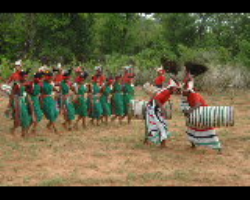
The Performance of Ancient Dances: Including the Kallam and the Dar-lam (Gong Dance), where youths step inside rhythmic bronze percussions and bamboo patterns in vibrant attire.
-
Folk Athletics: Traditional strength competitions, high-kicking games, wrestling, and archery.
-
Community Dining: Large communal feasts that bring together urban diaspora members and forest farmers, reinforcing village unity.
Other traditional celebrations, such as the Chapchar Kut (shared across Kuki-Chin-Mizo peoples) and pre-planting agricultural dances, are also practiced regionally.
Traditional Attire: The Art of Native Silk and Loom
Weaving is central to Biate artistic identity. Unlike many mountain tribes of Northeast India who historically wore plain cotton weaves, the Biate, alongside their close kin the Hrangkhol and Sakachep, were early pioneers of sericulture and silk-weaving:
-
Rilungpuan: A prestigious silk shawl, carefully woven with geometric bands and worn by respected elders, community leaders, and distinguished guests.
-
Lukom: A traditional headgear/turban woven of pure silk thread, worn with pride during cultural assemblies, festivals, and tribal council gatherings.
-
Puanpui: A thick, hand-carded cotton blanket woven on traditional backstrap tension looms. It is prized for warmth and serves as an indispensable, honorable wedding present offered to newly wedded couples.
┌──────────────────────────────────────────────────────────┐
│              Iconic Biate Material Weaves                │
├─────────────────┬─────────────────┬──────────────────────┤
│    Rilungpuan   │      Lukom      │       Puanpui        │
│   (Silk Shawl)  │  (Silk Turban)  │    (Cotton Quilt)    │
│  Symbol of Clan │ Ceremonial Head │ Indispensable Matri- │
│    Prestige     │  Adornment for  │    monial Gift &     │
│                 │   Dignitaries   │ Hand-Carded Bedding  │
└─────────────────┴─────────────────┴──────────────────────┘
Women continue to practice backstrap and frame-loom weaving, keeping their geometric and floral patterns alive in domestic spaces.
Gastronomic Heritage: Forest Foraging, Alkaline Cooking, and Fermentation
The culinary traditions of the Biate reflect their intimate knowledge of the Eastern Himalayan biosphere. Rather than relying on heavy fats and commercial ground spices, Biate cuisine emphasizes natural fermentation, smoking, wild herbal foraging, and alkaline-based cooking.
              Elements of Traditional Biate Cuisine
                                │
        ┌───────────────────────┼───────────────────────┐
        ▼                       ▼                       ▼
 Alkaline Cooking          Smoke & Fire         Wild Foraging & Herbs
 (Changal Extract)       (Cured Meats)         (Sumrisi, Forest Ferns)
 Boiled wild greens      Hearth-hung pork,     Tapering leaf Eurya,
 with zero cooking oil   game, river fish      sour herbs, bamboo shoots
1. Zero-Oil Cooking and Changal (Alkaline Water)
Biate cuisine historically used no processed cooking oils. Dishes are boiled, steamed, or slow-simmered, relying on natural aromatics, animal fats, and Changal—an alkaline culinary fluid made by filtering clear mountain water through the ashes of burned dried plantain peels or specific forest wood species. Changal tenderizes wild meats and fibrous wild leafy greens while giving broths a savory quality without synthetic seasonings.
2. Sumrisi: The Distinctive Green
The centerpiece of Biate foraging is Sumrisi (Eurya acuminata), an aromatic, tapering wild leaf picked from moist mountain slopes.
-
Sumrisi is cooked with fresh or smoked pork (voksa), a hint of changal, pungent green bird’s-eye chilies, and a small spoonful of crushed rice flour paste (an ibai) to create a rich, comforting stew.
-
It represents the culinary identity of the Biate; its distinct aroma in a mountain kitchen unmistakably indicates a Biate home.
3. Hearth-Smoked Meats and Fermented Flavors
Traditional Biate kitchens center on a large open wood-burning fireplace. Suspended above it are woven bamboo and cane drying racks (para):
-
Wild boar, venison (historically), farm-raised pork, and river fish are cut into long strips and smoked for days. This continuous smoking process dries the meat, extends its shelf life without refrigeration, and infuses it with the scent of wild forest fuelwoods.
-
Ngathu (Fermented Dried Fish): Pungent fermented dried river fish is a dietary staple. It forms the base of dishes like Baipok (a spicy stew of dried chillies, fermented fish, changal, and rice flour) and Mercha Deng, a fire-roasted chutney made by mashing ngathu, roasted chillies, mountain salt, and wild garlic cloves.
-
Rongtra (Parkia / Tree Bean): Harvested from towering forest trees (Parkia timoriana), these aromatic beans are chopped raw or roasted into chutneys with charred dried fish and herbs.
Linguistic Identity: The Endangered Melody of the Biate Tongue
The Biate language (Biate, ISO 639-3: biu) belongs to the Kuki-Chin branch of the Tibeto-Burman language family. Rich in tone and imagery, it preserves the tribe’s oral history through proverbs, agricultural metaphors, and migratory poetry.
               Socio-Linguistic Landscape
                           │
       ┌───────────────────┴───────────────────┐
       ▼                                       ▼
  Home Domain                             Public Domain
 (Intra-Community)                       (Inter-Community)
   • Biate Mother Tongue                   • Haflong Hindi (Assam)
   • Intimate kin terms                    • Khasi / Pnar (Meghalaya)
   • Folk proverbs                         • English & Assamese
Linguistic Vulnerability
Linguists at institutions such as the Central Institute of Indian Languages (CIIL) and Tezpur University have categorized Biate as endangered, especially across districts where speakers are a small minority:
-
Demographic Dispersion: With approximately 19,000 to 20,000 total native speakers spread across separate states, the language lacks a consolidated territorial sanctuary.
-
Everyday Multilingualism: Biate individuals are typically multilingual. Outside the home, Biate speakers in Assam communicate in Haflong Hindi, Dimasa, Assamese, or English, while in Meghalaya they use Khasi, Pnar, or English.
-
Limited Formal Education: While children use Biate in home environments and local church assemblies, state school curricula rarely use Biate as an instructional medium, relying instead on English, Assamese, or Hindi. Consequently, while spoken literacy remains active, written Biate (using the Latin alphabet) is preserved primarily by church publications, local magazines, and tribal cultural unions.
Without institutional support, digital lexical archiving, and mother-tongue primary education, the language risks losing its complex archaic registers and specialized agricultural vocabulary to regional dominant tongues.
Socio-Economic Profile: Jhum Cultivation, Coal Fields, and Human Development
The contemporary economic life of the Biate reflects a broader struggle faced by smaller hill communities in India: the balance between traditional ecological livelihoods and an industrialized economy.
                     Economic Transitions
                               │
       ┌───────────────────────┼───────────────────────┐
       ▼                       ▼                       ▼
 Traditional Jhum        Extractive Economy      Modern Cash Crops
  • Hill Rice, Ginger,    • Rat-Hole Coal Mining  • Organic Turmeric,
    Turmeric, Sugarcane     (East Jaintia Hills)    Broom Grass, Areca
  • Subsistence Base      • Environmental Stress  • Commercial Produce
1. Agrarian Lifelines and Cash Crops
The economic backbone of Biate rural villages remains agriculture:
-
Jhum (Slash-and-Burn Shifting Cultivation): Biate farmers clear secondary forest patches on steep slopes, let the brush dry, burn it to fertilize the soil with ash, and plant mixed crops—mountain rice, maize, chillies, sesame, and pumpkins.
-
Horticulture and Spices: The Biate hills produce world-class organic spices. The community cultivates premium ginger, sugarcane, and high-curcumin Lakadong-type turmeric in commercial volumes.
-
Forest Gathering: Harvesting wild bamboo poles, cane for furniture, wild broom-grass (Thysanolaena latifolia), and wild honey offers supplemental seasonal income for forest homesteads.
2. The Coal Mining Shadow in East Jaintia Hills
In the Saipung belt of the East Jaintia Hills, traditional agriculture has collided with the unorganized extractive coal industry.
-
For decades, unscientific “rat-hole” coal mining across Jaintia hills altered the local environment: acid mine drainage polluted pristine hill rivers (turning rivers like the Lukha and Myntdu turbid and yellow), degraded topsoil, and led to deforestation.
-
While mining offered brief, high-risk cash wages to some indigenous workers, it disrupted agrarian rhythms, caused health issues, and concentrated wealth among external mine barons while leaving village infrastructure underdeveloped.
3. Human Development Realities
The human development landscape of the Biate presents a notable contrast:
┌──────────────────────────────────────────────────────────────┐
│             Biate Human Development Indicators               │
├───────────────────────────────┬──────────────────────────────┤
│ Literacy Rates                │ High (~85% to 88%)           │
│ Female Literacy               │ Commendable (>50% to 55%)    │
│ Healthcare Access             │ Fragile (Remote Rural PHCs)  │
│ Transportation Infrastructure │ Poor (Isolated Hill Tracks)  │
│ Industrial Employment         │ Minimal (Agrarian Dominant)  │
└───────────────────────────────┴──────────────────────────────┘
-
Literacy: Educational figures are surprisingly strong. Thanks to missionary schools and community-funded church education, overall literacy among the Biate ranges between 85% and 88%, with female literacy exceeding 50%.
-
Healthcare Infrastructure: Despite high literacy, healthcare access in remote settlements remains fragile. Village Primary Health Centres (PHCs) often lack doctors, medicines, and specialized maternal clinics. Families must transport the critically ill over rough, landslide-prone roads to Haflong or Shillong.
-
Road Connectivity and Market Access: Many interior villages remain isolated without reliable paved roads. Because they struggle to reach major wholesale markets directly, farmers are often forced to sell their ginger and turmeric harvests to middlemen at steep discounts.
The Modern Predicaments: Fractured Borders and the Quest for Recognition
The primary challenge facing the Biate community today is not a lack of internal vitality, but systemic marginalization within modern state frameworks.
                    Structural Pressures
                              │
     ┌────────────────────────┼────────────────────────┐
     ▼                        ▼                        ▼
Border Fractures        Identity Erosion        Administrative Gaps
• Split across three     • Minority within       • Unequal Sixth Schedule
  states (AS, ML, MZ)      autonomous councils     protections
• Subsumed under other   • Assimilation into     • Need for autonomous
  tribal labels            dominant regional       development councils
  in census tallies        groups
1. Administrative Fragmentation Across Three States
Following the reorganization of Northeast India into separate administrative units in the 1970s, the historic homeland of the Biate was split across three different state jurisdictions: Assam, Meghalaya, and Mizoram.
-
Because their numbers are divided across administrative borders, they do not form an absolute electoral majority in any single state legislative constituency.
-
In Assam’s Dima Hasao, they operate as a demographic minority alongside the larger Dimasa population.
-
In Meghalaya’s East Jaintia Hills, they must protect their interests within institutions dominated by the Pnar-Khasi majority.
-
In Mizoram, their historic pioneer role was largely absorbed into the wider Mizo identity over the 20th century.
2. The Struggle for Autonomous Recognition
The Constitution of India protects indigenous homelands in the Northeast through the Sixth Schedule, establishing Autonomous District Councils (ADCs) such as the North Cachar Hills Autonomous Council (NCHAC) in Assam and the Jaintia Hills Autonomous District Council (JHADC) in Meghalaya.
However, smaller non-dominant tribes often struggle to secure adequate political representation within these councils. The Biate have persistently advocated for:
-
Dedicated Regional/Development Councils: Or institutionalized minority seats within existing ADCs to ensure that regional development funds reach their villages directly.
-
Accurate Ethnographic Recognition: In some administrative records, the Biate have historically been grouped under broad catch-all labels like “Any Kuki Tribes,” obscuring their specific population size, distinctive language, and heritage during census counts and welfare allocations.
3. The Dilemma of Modern Identity vs. Tribal Heritage
Young Biate face an intensifying cultural challenge. Higher education drives young people from rural villages toward cities like Guwahati, Shillong, New Delhi, and Bengaluru.
-
While this urban migration creates new career opportunities in technology, healthcare, education, and civil service, it distances youth from their ancestral villages, oral histories, and forest traditions.
-
Community bodies like the Biate Devanpui (Supreme Supreme Council) and student organizations actively work to counter this alienation by organizing cultural conventions, youth leadership camps, and documenting indigenous folkways through print and digital media.
Pathways to Progress: A Roadmap for Biate Cultural and Human Development
To secure the future of the Biate tribe while helping them share fully in India’s modern development, policymakers, civil society, and grassroots organizations should focus on several practical priorities:
                  Policy Roadmap for Biate Progress
                                  │
     ┌────────────────────┬───────┴────────┬────────────────────┐
     ▼                    ▼                ▼                    ▼
 Mother-Tongue        Processing       Grassroots           Digital
   Education         Infrastructure   Representation      Preservation
Formal Biate primers Value-added agri  Minority seats     Online archives
in primary schools   facilities for    in Sixth Schedule  for oral history
& digital lexicons   turmeric/ginger   Councils           and silk traditions
1. Mother-Tongue Primary Education and Language Safeguards
-
Primer Development: Partner with organizations like CIIL to publish standardized Biate language textbooks, storybooks, and digital readers for primary schools across the Saipung and Dima Hasao regions.
-
Mother-Tongue Instruction: Introduce Biate as a recognized medium of early education under the National Education Policy (NEP), helping young children build strong cognitive foundations in their native tongue before transitioning to state languages and English.
2. Spices and Agro-Processing Infrastructure
-
Local Processing Facilities: Rather than selling raw ginger and turmeric at low farmgate prices, establish local processing and packaging cooperatives in Saipung and Haflong.
-
GI Certification: Seek a Geographical Indication (GI) tag for indigenous Biate mountain ginger and heritage silk shawls (Rilungpuan), connecting local artisans directly to national and international ethical trade platforms.
3. Enhanced Sixth Schedule Representation
-
Nominated Minority Seats: Reserve dedicated seats in the North Cachar Hills Autonomous Council and Jaintia Hills Autonomous Council for smaller indigenous tribes like the Biate.
-
Targeted Development Budgets: Direct specific rural development funding toward road connectivity, clean drinking water systems, and 24/7 solar-powered medical clinics in interior Biate villages.
4. Digital Archiving of Oral Lore and Ethnobotany
-
Digital Repositories: Build multimedia archives documenting Biate oral epics, the history of Sinlung, the migration path led by Lamlira, and traditional musical repertoire.
-
Ethnobotanical Documentation: Record the community’s traditional knowledge of medicinal plants, wild greens (sumrisi), and organic food preservation methods before older practitioners pass away.
Conclusion: Safeguarding an Ancient Heritage in a Rapidly Changing World
The story of the Biate is a compelling testament to the resilience of India’s indigenous peoples. From their ancestral origins at Sinlung to their leadership during mountain migrations across the Chin hills, Barail ranges, and Jaintia highland plateaus, the Biate have navigated centuries of change with dignity and unity.
They are not relics of an isolated past; they are an active, literate, and creative community determined to build their future within the Indian democratic framework.
Preserving their ancient language, honoring their distinctive cuisine, and protecting their constitutional rights is more than an obligation to one small community—it is essential to safeguarding the extraordinary cultural diversity that defines India itself. As highway networks expand and globalized media enters their hill towns, our shared responsibility is clear: to ensure that the unique voice of the “people who speak and worship” continues to echo across these mountains for generations to come.
Key Takeaways & Quick Reference
┌────────────────────────────────────────────────────────────────────────┐
│                   The Biate Community at a Glance                      │
├─────────────────────┬──────────────────────────────────────────────────┤
│ Primary Locations   │ Dima Hasao (Assam), East Jaintia Hills           │
│                     │ (Meghalaya), Mizoram, Tripura               │
├─────────────────────┼──────────────────────────────────────────────────┤
│ Language Family     │ Tibeto-Burman / Kuki-Chin Branch (Biate)         │
├─────────────────────┼──────────────────────────────────────────────────┤
│ Legendary Origin    │ Sinlung (Ancient fortress / enclosed cave)     │
├─────────────────────┼──────────────────────────────────────────────────┤
│ Major Clans         │ Nampui, Darnei, Ngamlai, Ngirsim, Thiaite        │
├─────────────────────┼──────────────────────────────────────────────────┤
│ Signature Festival  │ Nul-ding Kut (Annual Renewal on Jan 11)          │
├─────────────────────┼──────────────────────────────────────────────────┤
│ Famous Weaves       │ Rilungpuan (Silk Shawl), Lukom (Silk Turban)    │
├─────────────────────┼──────────────────────────────────────────────────┤
│ Cuisine Staples     │ Sumrisi (wild herb), Changal (alkaline),         │
│                     │ Ngathu (fermented fish), Zero-oil stews          │
├─────────────────────┼──────────────────────────────────────────────────┤
│ Urgent Needs        │ Mother-tongue primers, rural road links,         │
│                     │ autonomous representation, crop processing       │
└─────────────────────┴──────────────────────────────────────────────────┘
| xdgfsdhg |
|
|