


The Forgotten Resilience of the Chella Yenadi Tribe : Culture, Struggles, and Human Development
Across the coastal plains, scrub jungles, and rural margins of Andhra Pradesh, Chella Yenadi Tribe settlements often tell two contrasting stories. On one side lies modern agricultural expansion, bustling highway towns, and high-tech infrastructure; on the other, tucked away behind irrigation canals, railway embankments, and village fringes, reside one of India’s most resilient yet historically marginalized indigenous groups: the Yenadi (or Yanadi) community.
Thank you for reading this post, don't forget to subscribe!Within this indigenous community exists an internal social stratification, at the bottom of which stand the Chella Yenadi (often spelled Challa Yanadi). To understand the Chella Yenadi is to confront the sharp intersections of tribal ancestry, caste hierarchy, spatial segregation, and modern developmental exclusion.
Etymology and Historical Roots of the Chella Yenadi Tribe
The overarching Yenadi population represents one of the largest Scheduled Tribes (ST) in Andhra Pradesh, primarily concentrated across Nellore, Prakasam, Chittoor, Guntur, Krishna, and Kadapa districts. Their ancestral home traces back to the Eastern Ghats and the coastal island of Sriharikota—long before it was repurposed into India’s premier space-launch facility.
Anthropologically, the term Yenadi is widely considered by linguists and colonial ethnographers (such as Edgar Thurston) to be an Anglicized corruption of the Sanskrit term ‘Anadi’, meaning “without beginning” or “those whose origins are untraceable”. It designated an autochthonous, pre-Dravidian foraging population that lived in intimate harmony with coastal wetlands, deciduous scrub forests, and fertile river plains.
Unlike isolated, deep-canopy forest tribes such as the Chenchus, the Yenadi historically operated across ecotones—the sensitive transitional borders between dense forests, agricultural fields, and inland waterways. They were forest gatherers, wetland fishers, honey foragers, and master trackers.

Social Stratification: Who Are the Chella Yenadi Tribe?
While mainstream sociology frequently treats tribal societies as egalitarian communes devoid of caste-like hierarchies, the Yenadi present a more nuanced sociological case study. Prolonged proximity to agrarian caste society led the Yenadi to internalize an endogamous structural hierarchy.
Anthropologists classify the Yenadi into four primary endogamous subdivisions:
- Manchi Yenadi (or Reddi Yenadi): Regarded as the highest subgroup within the internal hierarchy, they traditionally worked as settled cultivators, trusted farm watchmen, and domestic helpers for landed castes.
- Adivi Yenadi: Forest-dwelling groups who sustained traditional hunting-gathering practices, herbal medicine extraction, and honey gathering.
- Paki Yenadi: Engaged predominantly in scavenging and sanitary labor in semi-urban outposts.
- Chella Yenadi (Challa Yenadi): Historically situated at the lowest rung of the tribal sub-hierarchy.
The Telugu word ‘Chella’ or ‘Challa’ refers to spilled remnants or leftover food discarded after meals. Historically, this subgroup was pushed into extreme destitution, forced to survive by collecting discarded food leaves (vistarakulu) from public feasts, temple rituals, and village dustbins.
Because of these dietary survival strategies, even other Yenadi subgroups historically treated the Chella Yenadi as “unclean,” practicing social distancing and restricting marital alliances (endogamy). This dynamic created a system of double marginalization: they were excluded as forest-fringe tribals by mainstream rural society, while simultaneously facing sub-caste ostracization from within their own ethnic community.
Cultural Heritage, Kinship, and Community Customs
Despite facing structural deprivation, the Chella Yenadi have preserved an organic oral culture, unique family dynamics, and a spiritual worldview rooted in nature.
Kinship and Intiperlu (Lineages)
The Chella Yenadi follow an exogamous clan system organized around Intiperlu (family or surname lineages). A person cannot marry within their own intiperu, ensuring genetic diversity and preserving ancestral lineages.
Unlike many neighboring patriarchal caste communities, Yenadi society maintains notable gender parity:
- Marriage Practices: Marriages occur through negotiation, mutual consent, or elopement. Dowry was traditionally absent, though token bride-prices (oli) were common.
- Marital Autonomy and Remarriage: Women retain significant social freedom. Divorce, widow remarriage (chire kattadam), and secondary unions are fully permitted without institutional stigma.
- Nuclear Households: Newly married couples immediately build their own gudise (conical thatched hut), establishing independent nuclear family units.
Animism and Folk Deities
The religious life of the Chella Yenadi blends folk animism with localized Hinduism. They revere nature spirits and propitiate fierce village guardian goddesses:
- Poleramma: The goddess of village borders, smallpox, and infectious illnesses, appeased through community sacrifices.
- Chenchamma and Ankamma: Protective mother deities invoked for physical strength, protection from wild beasts, and safe child delivery.
- Maremma and Gangamma: River and water deities venerated before fishing excursions.
- Sacred Ecology: Old-growth tamarind, neem, and banyan trees are treated as sacred abodes, and ancestral spirits (Peddalu) are commemorated with seasonal offerings of cooked rice and toddy.
Music, Dance, and Oral Expression
Art and performance serve as vital outlets for community identity. During festive gatherings, weddings, and post-harvest nights, Yenadi men and women gather to dance the traditional rhythm of the Dhimsa and community beat dances.
Accompanied by the Thappeta (flat circular hand drum) and Kommulu (hollow horn bugles), their songs are unwritten archives recounting forest trackers outwitting wildlife, tracking seasonal rains, and finding comic relief in the faces of everyday rural life.
Traditional Livelihoods and Ecological Wisdom
The Chella Yenadi possess deep empirical knowledge of local biodiversity. Displaced from their ancestral foraging grounds by development, they have adapted their survival skills into specialized, albeit low-paying, semi-rural occupations:
| Occupational Domain | Traditional Practice & Ecological Method | Modern Economic Status |
| Rodent Catching | Locating subterranean rat burrows in paddy fields by reading soil texture; excavating rat grain caches without traps. | Hired by farm owners; paid minimal cash or allowed to keep the excavated paddy grain. |
| Inland Fishery | Hand-fishing in brackish canals, marsh estuaries, and seasonal tanks using woven reeds (thoota) and botanical stunners. | Displaced by commercial aquaculture leases; restricted to shallow irrigation runoffs. |
| Herbal Medicine | Formulating decoctions from forest roots and bark for gastrointestinal bugs, snakebites, and skin disorders. | Largely uncompensated; treated as open-access community folklore without intellectual property rights. |
| Agricultural Labor | Seasonal transplanting, field weeding, clearing irrigation bunds, and night guarding of fruit orchards. | Irregular seasonal wage labor; frequently tied to non-institutional informal credit cycles. |
| Waste & Forest Gathering | Harvesting wild honey, beeswax, tamarind, firewood, and scrap collection. | Vulnerable to forest department scrutiny, local intermediaries, and low market valuations. |
Their ability to identify medicinal plants, track animal behavior, and locate water veins in arid ground highlights a sophisticated indigenous science, even as they remain undercompensated by the formal market economy.
Human Development Challenges: The Modern Struggle
Despite constitutional safeguards under Article 342, the Chella Yenadi remain one of India’s most socio-economically vulnerable groups.
Landlessness and Housing Precarity
A fundamental issue confronting the Chella Yenadi is the lack of secured land rights. Unlike high-altitude Scheduled Tribes protected under Fifth Schedule areas, most Yenadi live scattered across non-scheduled plains alongside caste villages.
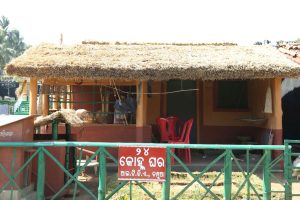
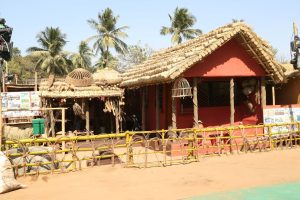
Consequently, they rarely receive protections under the Forest Rights Act (FRA), 2006. Their dwellings—frequently fragile huts thatched with palmyra leaves—are built on poramboke (unassessed government wasteland), canal banks, and roadside clearings. Without formal land title deeds (pattas), families face recurring evictions during road expansions and infrastructure projects.
Literacy Deficits and Educational Attrition
While overall literacy across Andhra Pradesh has steadily climbed, educational attainment among the Chella Yenadi lags behind. Many children enroll in primary schooling, but economic pressures lead to high attrition rates at the middle-school level.
Children often join parents in seasonal agricultural migration, brick kilns, or daily wage work. In formal classrooms, linguistic and social alienation, combined with subtle discrimination from peers, further discourages long-term attendance.
Healthcare, Nutrition, and Food Security
Centuries of structural poverty have had clear physiological consequences. Nutritional surveys across Yenadi settlements reveal high rates of maternal anemia, infant undernutrition, and child stunting.
While their traditional diet historically drew nutrients from wild greens, field crabs, freshwater mollusks, and millet, transition to low-cost market grains has reduced micronutrient intake. Furthermore, physical distance, lack of transit, and administrative paperwork often limit their access to primary healthcare centers (PHCs).
The Shadow of Debt Peonage
Because they lack collateral, Chella Yenadi households are excluded from formal banking systems. In times of illness, pregnancy, or lean agricultural seasons, they often rely on local moneylenders and agricultural contractors for emergency loans.
These cash advances create informal cycles of bonded labor, where family members work an entire season to service accumulated high-interest debt, receiving little more than daily food rations in return.
Social Activism: The Legacy of Vennelakanti Raghavaiah
During the colonial era, the British administration branded numerous nomadic and foraging communities under the draconian Criminal Tribes Act (CTA) of 1871. The Yenadi were subjected to institutional surveillance, mandatory roll calls, and restrictions on movement that disrupted their nomadic livelihoods.
| 1871 | 1949-1972 | 1997-2001 |
| Colonial CTA Enacted | Repeal of CTA | Liberation Dedicated Yanadi ITDA |
| Tribe criminalized | Vennelakanti Raghavaiah | Nellore administrative |
| and kept under state | secures de-notification | Hub established for surveillance and rehab focused development. |
Raghavaiah established the Yanadi Sangham, organizing schools, hostels, and legal aid clinics to challenge state harassment. His advocacy was instrumental in the repeal of the Criminal Tribes Act after independence (1949–1952), liberating the Yenadi and other Denotified Tribes (DNT) from legal subjugation. His foundational ethnographic book, The Yenadis, remains an essential reference on the community’s history and daily life.
Policy Measures, Interventions, and Future Pathways
Recognizing the distinct challenges faced by the tribe, the Government of Andhra Pradesh sanctioned a dedicated Integrated Tribal Development Agency (ITDA) for Yanadis with its administrative center in Nellore. While this specialized administrative framework was an important institutional milestone, achieving long-term human development requires addressing systemic gaps:
- Land Titling and Housing Upgrades
Sustainable progress begins with shelter security. State housing programs must transition from piecemeal initiatives to dedicated allocations of land ownership pattas, paired with climate-resilient brick housing equipped with clean water and sanitation.
- Contextual Education and Residential Facilities
- Institutionalizing Traditional Knowledge
The exceptional tracking and ethnobotanical skills of the Yenadi can be integrated into regional conservation and agricultural management:
- Forest Conservation: Employing community members as salaried wildlife trackers, nursery managers, and forest guards.
- Agro-Ecological Pest Management: Compensating their rodent-control expertise as an organic alternative to chemical pesticides.
- Ethnobotanical Documentation: Protecting their traditional herbal knowledge under People’s Biodiversity Registers (PBR) with shared commercial benefits.
- Financial Inclusion and Self-Help Groups
Extending microfinance initiatives via women’s Self-Help Groups (SHGs) under the National Rural Livelihood Mission (NRLM) offers an alternative to predatory moneylenders, helping households build small enterprises like poultry farming, inland fish cultivation, and cooperative honey processing.
Amplifying Voices from the Margins
The story of the Chella Yenadi reflects the broader journey of India’s indigenous populations: communities that have sustained rich cultural traditions and ecological insight while navigating systemic social and economic marginalization.
Documenting their history moves beyond passive observation; it is a call to recognize their place within the human family. Ensuring their access to land, education, and healthcare is not an act of charity, but a vital step toward constitutional equality and human dignity. By honoring their past and supporting their current aspirations, society can help ensure this ancient community moves forward into a just and sustainable future.