



The Hanneng Tribe: Guardians of Heritage, Indigenous Society, and the Fight for Survival in Modern India
Introduction: Unveiling an Overlooked Indigenous Legacy
Across the vast and ecologically diverse landscapes of India, indigenous and tribal communities have stood as the original custodians of the subcontinent’s forests, river basins, hills, and plateaus. Among the hundreds of distinct ethno linguistic groups that constitute India’s Scheduled Tribe (ST) population—totalling over 104 million people according to official enumerations—certain communities occupy an intensely localised, fragile space. The Hanneng represent one such distinct indigenous social fabric: an insular, deeply rooted community whose history, cultural institutions, and ecological wisdom are caught between ancestral traditions and modern developmental pressures.
For decades, mainstream sociological and ethnographic studies in India tended to focus heavily on major demographic blocs—such as the Santhal, Gond, Bhil, Munda, or the well-documented Naga and Khasi polities. However, the true complexity of Indian tribal life lies in smaller, hyper-localised clans, sub-tribes, and indigenous bands like the Hanneng. Often categorised under broader regional umbrella classifications, linguistic clusters, or lesser-known forest-dwelling groups of Eastern and Central-Eastern frontier belts, the Hanneng embody the triumphs and trials of tribal identity in twenty-first-century India.
Understanding the Hanneng requires examining more than just their folklore or material culture. It demands an investigation into their structural reality:
- How land tenure systems govern community life;
- How customary village councils mediate justice without formal courts;
- How oral epics transmit centuries of ecological data;
- How the push for industrial corridors, state assimilation, and market economies threatens their cultural survival.
This long-form ethnographic study explores the Hanneng tribe across multiple dimensions: anthropological origins, kinship systems, material culture, customary law, historical marginalisation, socioeconomic human development indicators, and their contemporary struggle for land rights and self-determination.
Anthropological Roots, Geographical Habitat, and Ethnolinguistic Identity
Ethnolinguistic Classifications
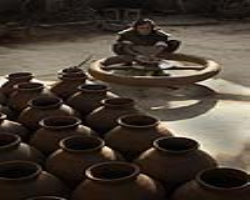
The Hanneng possess a unique linguistic identity, anchored in unwritten dialects that reflect historical migrations and inter-tribal exchanges. Anthropologically situated within the transitional linguistic pockets of northeastern and eastern tribal frontiers—where Austroasiatic, Tibeto-Burman, and localized variants intersect—the spoken tongue of the Hanneng is largely phonetic and oral.
The Hanneng language lacks an indigenous written script. Historically, it has relied entirely on oral transmission, where memory functions as an archival repository. Lexically, their dialect contains specialized terminology for flora, fauna, soil types, weather phenomena, and canopy layers, while lacking abstract terms for capitalist accumulation, private real-estate commodification, or hierarchical class systems. In recent decades, educated youth and local community leaders have used the Devanagari or modified Roman scripts to phonetically transcribe folk narratives, customary statutes, and primary learning primers.
Topographical Setting and Ecology
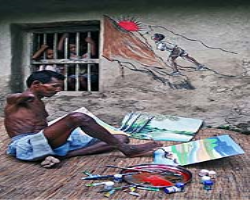
The ancestral habitat of the Hanneng is defined by forested foothills, river valleys, and mixed deciduous and semi-evergreen forest tracts. Their settlements are typically situated in micro-watersheds, near perennial freshwater streams and forest canopies that provide natural defenses and rich foraging grounds.
The physical geography of their habitat shapes their socio-economic calendar:
- Riverine Buffers: Supply fresh water, domestic fish species, and fertile silt for shifting cultivation.
- Mid-Slope Clearings: Act as the primary zone for village settlements and seasonal crop terraces.
- High-Canopy Sacred Zones: Untouched forest tracts, locally identified as sacred groves (sarnas or communal sanctuaries), strictly off-limits to timber felling, hunting, or cattle grazing.
This geography makes the Hanneng an ecosystem people. Their survival does not rely on mastering nature through extraction, but on fitting into their biome’s natural rhythms. The surrounding forest is not merely a source of timber and food; it is an animate space inhabited by ancestral spirits, elemental deities, and non-human beings.
Social Stratification, Kinship, and Clan Organization
Clan Dynamics: Lineage, Totemism, and Kinship Networks
The internal social structure of the Hanneng is organised around patrilineal descent systems that are strictly exogamous. A Hanneng community is divided into primary lineages or clans (often termed gutti or khel in comparative regional ethnography). Each clan traces its genealogy to a common ancestor, frequently associated with a sacred totemic symbol drawn from their immediate natural environment—such as the hornbill, the wild fig tree, the river otter, or seasonal thunderstorms.
Totemism among the Hanneng is not merely symbolic; it establishes a system of ecological taboos:
- A clan whose totem is the river otter will never harm, hunt, or consume that animal;
- A clan associated with a specific tree will never use its wood for fuel or house construction;
- Members of the same clan, regardless of village distance, consider one another biological siblings, making intra-clan marriages strictly forbidden.
Breaking a totemic or clan taboo is believed to invite chitta—a state of communal spiritual pollution and ecological imbalance that can cause crop failure, persistent illness, or sudden misfortune. Purification requires elaborate appeasement rituals conducted by the village priest (Dehuri or Pahan) alongside clan elders.
Gender Roles, Family Life, and Egalitarian Structural Realities
Unlike caste-based societies marked by rigid hierarchies, the Hanneng maintain a largely egalitarian social framework, though distinct gender roles structure daily tasks:
| Domain | Male Sphere of Responsibility | Female Sphere of Responsibility | Shared / Collective Tasks |
| Forest Economy | Deep-canopy hunting, honey collection, heavy timber extraction, clearing plots. | Wild tuber foraging, medicinal herb collection, fuel-wood gathering, stream fishing. | Gathering seasonal minor forest produce (MFP), tending bamboo groves. |
| Agriculture | Plowing, terrace cutting, fence building against wild boars. | Sowing, hand-weeding, winnowing, seed selection and preservation. | Harvesting, threshing, transporting grain to community storage bins. |
| Domestic Life | House frame construction, roof repairs, tool-making, metal repair. | Child-rearing, cooking, fermentation of rice/millet brew, weaving, pottery. | Maintenance of ancestral hearths, hospitality during inter-village feasts. |
| Governance | Village council deliberations, border dispute settlements. | Informal mediation, food diplomacy during negotiations, customary ritual preparation. | Public village assemblies (sabhas), collective dance rituals. |
While formal political councils have historically been led by male clan heads, Hanneng women wield significant domestic authority, autonomy, and socio-economic influence. Women maintain absolute control over the seed bank—a position of critical survival importance. They decide which indigenous landrace seeds are planted, how stocks are stored, and how grain is distributed during lean pre-monsoon months. Furthermore, Hanneng customs allow women to initiate divorce, seek separations without social stigma, and retain ownership of their personal jewelry, woven textiles, and foraging tools.
Cultural Expressions: Oral Literature, Sacred Rituals, and Material Craft
| (1) Material Craft | (2) Orality & Music | (3) Sacred Ecologies |
| – Splint Bamboo Weaving | – Call-and-Response Epics | – *Jahir/Sarna* Groves |
| – Earth-Pigment Murals | – Log Drums & Bamboo Flutes | – Animist Deity Offerings |
| – Organic Plant Dyes | – Organic Plant Dyes | – Seasonal Harvest Rites |
Material Culture and Craftsmanship
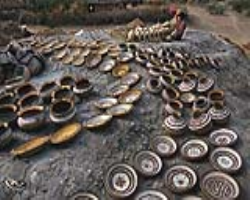
The material culture of the Hanneng tribe reflects their intimate knowledge of forest resources. Every household item, from residential architecture to cooking vessels, is fashioned from renewable materials gathered within a five-mile radius of the village.
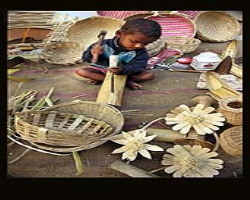
- Bamboo and Rattan Work: The Hanneng are master weavers of bamboo splints. They construct specialized conical fish traps (khoka), moisture-resistant granary baskets lined with cow dung and clay, and rain-shields (khum) woven from dried palm and wild banana leaves.
- Vernacular Architecture: Traditional homes are elevated on wooden piles or built upon packed-mud platforms to deter snakes, insects, and monsoon moisture. Frameworks are secured using split-cane lashings instead of iron nails, allowing the structures to flex during seismic tremors.
- Textiles and Dyes: Cotton and nettle fibers are processed by hand, spun onto drop-spindles, and woven on backstrap or simple waist-looms. Dyes are derived entirely from nature: madder root provides deep reds, indigo leaves yield blue-blacks, and wild turmeric produces rich ochres.
Oral Literature and Musical Heritage
Because the Hanneng lack a written script, their entire body of history, legal precedence, botanical wisdom, and cosmological belief is preserved through oral epics known as Katha-Geet or Chant-Narratives.
These songs are performed during communal festivals, weddings, and funerals:
- The Genesis Cycle: Narrates the emergence of the world from primeval waters, the birth of the first human siblings, and the pact made between humankind and the wild beasts of the forest.
- The Migration Epics: Chronologically list mountain ridges, river confluences, and valleys traversed by ancestral clans during historical flights from war, drought, and persecution.
- The Work Chants: Rhythmic, call-and-response verses sung while transplanting paddy, weeding, or paddling river canoes, coordinating labor and keeping workers energized.
Sacred Beliefs: Animism and Ancestor Worship
The spiritual universe of the Hanneng is animistic and animatist. They do not subscribe to anthropomorphic pantheons that demand high-temple rituals. Instead, their cosmos is inhabited by an array of non-material forces:
The sacred grove—often called the Jahir Than or Sarna—is the geographic and spiritual heart of every Hanneng settlement. Situated on the periphery of the village, this stand of virgin trees is never cut or disturbed. It represents the primeval forest as it existed before human settlement. Within this grove, the village priest offers rice beer, flowers, red roosters, and terracotta figurines to the forest spirits during the spring blossoming festival. Ancestor shades (Pitrs) are believed to live beneath the family hearth, where they receive daily libations of fresh water and food before every meal.
Economic Systems: Between Subsistence and Market Transition
Swidden and Terraced Agriculture
The traditional economy of the Hanneng is built on a mixed regime of rotational swidden farming (slash-and-burn, or jhum) on hillside slopes, alongside settled terraced cultivation in low-lying, well-watered valleys.
The swidden cycle is an ecologically sustainable practice when fallow periods are maintained across long, multi-year horizons:
- Plot Clearing: In early winter, secondary brush is cleared, leaving large canopy trees intact to prevent soil erosion.
- Controlled Burning: Before the pre-monsoon showers, the dried brush is burned in a controlled fire, turning dried biomass into potassium-rich ash.
- Polyculture Sowing: Seeds are mixed together and dibbled into the ash-fertilized topsoil. A single plot will yield up to twelve distinct crops in a single season: dry hill rice, pearl millet, finger millet, maize, cowpeas, pumpkins, sesame, and wild chillies.
- Staggered Harvesting: Different crops mature at different times between August and December, providing continuous food security and protecting against single-crop failures caused by pests or unseasonal rain.
The Foraging Economy and Minor Forest Produce (MFP)
Cultivated crops supply only a portion of the Hanneng diet. The forest supplies the remainder, functioning as an essential nutritional safety net.
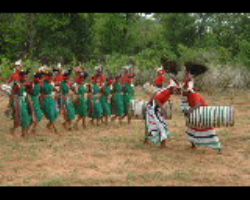
Key foraged resources include:
- Tendu / Kendu Leaves: Harvested during the dry summer months and bundled for sale to regional state-run forest corporations or private contractors.
- Mahua Blossoms (Madhuca longifolia): Collected at dawn, sun-dried, and used as a natural sweetener, livestock feed, or fermented into a medicinal spirit.
- Wild Tubers, Bamboo Shoots, and Mushrooms: Gathered throughout the monsoon season to provide carbohydrates, vitamins, and minerals when agricultural grain stores are depleted.
- Medicinal Herbs and Natural Gums: Sourced deep within the forest canopy, these remedies treat common ailments, snakebites, fevers, and gastrointestinal infections.
The Shock of Market Integration and Monoculture
Over the last three decades, this sustainable, subsistence-oriented way of life has been disrupted by cash-crop monocultures, commercial timber operations, and market networks:
When swidden fallow cycles are forcibly compressed from fifteen years down to three or four—due to population pressures, forest land enclosures, and state restrictions—the soil cannot regenerate. Driven by commercial pressures, many Hanneng farmers have shifted to monoculture cash crops like eucalyptus, rubber, or hybrid ginger.
This transition carries severe risks:
- It eliminates the traditional polyculture food security net, exposing families to market price swings;
- It requires cash for chemical fertilizers and hybrid seeds, forcing farmers to borrow from local moneylenders at exorbitant interest rates;
- It degrades indigenous soil quality, accelerating ecological erosion along hill slopes.
- Customary Governance, Village Councils, and Legal Pluralism

Traditional Justice Systems and the Rule of Consensus
The Hanneng retain a functioning customary legal framework that operates alongside India’s formal judicial system. Traditional authority does not stem from state decrees, but from shared community belief in ancestral customs.
At the village level, political and judicial affairs are mediated by a traditional council of elders. The council is led by a hereditary headman (often known locally as the Gaonbura, Munda, or Pradhan) and assisted by the village ritual expert (Pahan or Dehuri).
Hanneng justice focuses on restoration, not punishment:
- Restorative Justice: In cases of theft, boundary disputes, or physical altercations, the council’s objective is not to lock the offender away, but to restore peace to the community.
- Restitution and Compensation: Perpetrators are rarely subjected to physical violence. Instead, they are fined in livestock, grain, or rice beer, which is shared among the victims and council elders during a reconciliation feast.
- Social Ostracization (Bite-chhad): The most severe punishment the council can issue is social banishment. Reserved for incest, violating clan exogamy, or practicing malevolent sorcery, an ostracized individual is cut off from communal labor, water wells, and ritual life. For a Hanneng individual, complete isolation from the community represents social death.
The Clash with Formal Indian Jurisprudence and the PESA Act
The coexistence of customary tribal law and statutory Indian jurisprudence creates ongoing institutional friction. Under the Indian Constitution, the Panchayats (Extension to Scheduled Areas) Act of 1996 (PESA) was designed to address this challenge by legally empowering the Gram Sabha (village assembly) in Fifth Schedule areas. PESA recognizes customary law, community resources, and traditional dispute resolution mechanisms.
However, on the ground, PESA’s promises often go unfulfilled:
- State bureaucracies and regional police forces frequently bypass traditional Hanneng village councils, treating customary arbitration as illegal vigilantism.
- Formal property deeds (patta) granted under modern property laws conflict with communal, unwritten land ownership traditions.
Adversarial, expensive, and bureaucratic, formal state courts remain culturally alien and economically out of reach for most Hanneng people, who struggle with the legal system’s language barriers, procedural delays, and high costs.
The Crisis of Modernity: Human Development and Structural Challenges
Despite the socio-cultural richness of the Hanneng, their daily lives are defined by steep human development challenges. Trapped on the margins of state planning, the community deals with severe deficits across health, education, infrastructure, and political voice.
Health, Nutrition, and Maternal Mortality Realities
The health profile of the Hanneng community illustrates the structural neglect experienced by remote forest-dwelling tribes in India:
| Indicator | National Urban Avg. | Hanneng Tribal Est. |
| Under-5 Child Stunting | ~31% | >54% |
| Severe Anemia in Women (15-49) | ~53% | >72% |
| Institutional Deliveries | ~89% | <34% |
| Access to Clean Tap Water | ~76% | <19% |
- Chronic Malnutrition and Stunting: Due to declining forest diversity and restricted access to wild game and tubers, child stunting and wasting rates remain high.
- Anemia Epidemic: Over 70 percent of reproductive-age Hanneng women suffer from nutritional anemia, driven by iron-deficient diets, waterborne parasites, and malaria.
- Inadequate Healthcare Access: Primary Health Centres (PHCs) are often located miles away across difficult terrain. These facilities frequently lack doctors, medical staff, basic antivenom vials, and essential fever treatments.
- Ecosystem Degradation and Waterborne Disease: Deforestation and mining runoff have polluted pristine hill streams with heavy metals and silt, sparking annual spikes of dysentery, cholera, and vector-borne diseases like cerebral malaria during the monsoon.
Educational Infrastructure and Linguistic Barriers
The modern educational system presents a profound challenge to Hanneng cultural continuity:
- Mother-Tongue Absence: Children enter state-run primary schools speaking only their native tongue. They are confronted by teachers who teach exclusively in state languages (e.g., Hindi, Odia, or Bengali) and who often look down upon tribal dialects.
- Pedagogical Alienation: Textbooks celebrate urban, caste-centric, and technological milestones, while ignoring tribal history, forest ecology, and indigenous heroes. This teaches tribal children to feel ashamed of their identity, treating their ancestral wisdom as “primitive” or “backward.”
- High Dropout Rates: While primary school enrollment has improved through welfare measures like mid-day meal programs, retention drops precipitously by middle and secondary school. Schools require long, dangerous walks through forested foothills, and economic pressures force older children into wage labor or domestic care.
- Development-Induced Displacement, Mining, and Forest Rights
No issue affects the modern existence of the Hanneng as directly as the struggle over land, forests, and mineral resources.
Mining Encroachment and the Resource Curse
The ancestral homelands of the Hanneng sit atop some of India’s most valuable mineral seams: iron ore, bauxite, coal, and china clay. This makes them victims of the classic “resource curse.” Lands they have managed sustainably for generations are eyed by state-owned corporations and private industrial conglomerates.
When open-cast mining operations arrive, the consequences for the Hanneng are devastating:
- Ecosystem Destruction: Hilltops that store water for mountain streams are stripped bare, causing perennial springs to dry up.
- Forced Evictions: Villages are bulldozed, replaced by open-cast pits, tailing ponds, and haul roads.
- Economic Marginalization: Traditional forest protectors are converted into low-wage, contract laborers who shovel coal, crack stone, or work in distant brick kilns.
- Inadequate Compensation: Financial compensation, when paid, is captured by non-tribal middlemen or spent rapidly in an unfamiliar cash economy, leaving families landless, penniless, and stripped of their community support systems.
The Forest Rights Act (FRA, 2006): Promises and Implementation Failures
The Scheduled Tribes and Other Traditional Forest Dwellers (Recognition of Forest Rights) Act of 2006 (FRA) was a historic piece of legislation intended to correct the “historical injustice” done to India’s forest-dwelling communities during colonial and post-colonial consolidation.
On the ground in the Hanneng territories, the implementation of the FRA faces systemic resistance:
- Hostile Forest Bureaucracy: The forest department often acts as a gatekeeper rather than a facilitator, routinely rejecting Hanneng claims over ancestral swidden lands using minor bureaucratic technicalities.
- Paper Rejections without Reason: Thousands of individual and community forest rights claims submitted by Hanneng village assemblies are rejected without explanation or opportunities for appeal.
- Subversion of Community Rights: While some individual rights (IFR) are granted for tiny plots, Community Forest Resource (CFR) rights—which grant the community legal control over surrounding forests, water bodies, and gathering zones—are held back to facilitate industrial diversion.
- Forged Approvals: When industrial projects require village consent, local authorities often forge Gram Sabha signatures or hold meetings with hand-picked attendees, bypassing legitimate Hanneng clan representatives.
- Cultural Survival Strategies, Resistance Movements, and the Path Forward
Faced with resource extraction, cultural assimilation, and institutional neglect, the Hanneng are not passive victims. They have developed dynamic, multi-layered strategies to defend their heritage, lands, and sovereignty.
Grassroots Resistance and Legal Advocacy
Across Hanneng settlements, a new generation of educated youth, women leaders, and traditional elders are coming together to demand their rights:
- Direct Action and Nonviolent Blockades: When private mining conglomerates arrive with excavators, Hanneng villagers have organized nonviolent human chains, tree-hugging actions, and road blockades to stop illegal operations on unceded territory.
- Legal Mobilization: Working with indigenous advocacy groups and human rights organizations, Hanneng youth are learning the Indian legal system. They use Right to Information (RTI) requests to expose corporate violations and challenge illegal forest clearances in high courts and before the National Green Tribunal (NGT).
- Inter-Tribal Solidarity Coalitions: Breaking out of historical isolation, the Hanneng are building federations with neighboring indigenous groups. By presenting a unified voice, these coalitions push back against land-grabbing and demand the enforcement of Fifth Schedule rights.
Indigenous Knowledge Revitalization
Recognizing that the loss of their language and forest traditions guarantees assimilation, cultural preservation efforts have emerged across the community:
- Community-Led Mother-Tongue Schools: Educated youth run informal evening schools where children are taught the Hanneng language alongside standard state curricula. Elders are invited to share oral epics, folktales, and clan histories.
- Ethno-Botanical Mapping: Young Hanneng men and women work with village healers to compile inventories of medicinal plants, forest food systems, and local animal names. This documentation protects their ancestral knowledge from biopiracy and ensures it is passed down to future generations.
- The Sacred Grove Movement: Communities are formally mapping their Jahir/Sarna sacred groves using GPS tools. They then register these borders with district authorities to establish a legal shield against commercial development and agricultural encroachment.
Policy Blueprint: A Roadmap for Inclusive Development
To secure the future of the Hanneng tribe, national and state policy must shift from a model of forced assimilation to one of self-determination, ecological restoration, and genuine constitutional protection.
- Transparent Forest Land Restitution
- Fast-track the review of all rejected FRA claims in Hanneng territories using satellite imagery, historical surveys, and oral evidence from village elders.
- Hand over Community Forest Resource (CFR) titles directly to the Gram Sabhas, giving them legal management authority over minor forest produce, watershed management, and biodiversity protection.
- Ban the unilateral diversion of virgin forests for mining or industry without verifiable, uncoerced Gram Sabha consent obtained through open community meetings.
- Tailored Multilingual Education
- Introduce Mother-Tongue-Based Multilingual Education (MTB-MLE) programs throughout primary schools in Hanneng villages, providing instruction in their native dialect for the first four years before transitioning to regional languages.
- Hire and train local Hanneng teachers who understand community customs and enjoy the trust of village elders.
- Revise regional textbooks to incorporate local tribal histories, traditional environmental management, and oral literature, building cultural pride and dignity among indigenous students.
- Decentralized and Culturally Sensitive Healthcare
- Establish mobile health clinics staffed with community health workers who can hike into remote foothill settlements on a weekly basis.
- Stock rural Primary Health Centres with snake antivenoms, malaria testing kits, and essential child and maternal nutrition supplements.
- Respect and integrate traditional Hanneng herbalists, working alongside them to provide combined treatments for common illnesses rather than dismissing their centuries of botanical experience.
- Economic Empowerment Through MFP Cooperatives
- Establish community-run cooperatives for gathering, processing, and marketing minor forest produce, cutting out exploitative non-tribal private middlemen.
- Provide solar-powered processing units to Hanneng women’s self-help groups (SHGs) for making finished products from mahua, tendu leaves, wild honey, and bamboo craft, allowing the community to capture the economic value of their work.
Provide fair, transparent minimum support prices (MSP) for all wild forest items, ensuring economic stability throughout the lean pre-harvest months.
Conclusion: What India Loses If It Loses the Hanneng
The story of the Hanneng tribe is not an isolated anthropological curiosity; it is a mirror reflecting modern India’s soul. As the country builds its modern industrial economy, it faces an urgent moral and existential question: Can economic growth occur without destroying the first peoples of the land?
The Hanneng are not relics of a primitive past holding back national progress. They are contemporary innovators of a sustainable way of living that the modern world desperately needs. Their complex social fabric—built on kinship-based mutual aid, non-accumulative economies, restorative justice, and profound reverence for the natural world—offers vital lessons in ecological balance and sustainable living during an era of accelerating climate change.
Allowing the Hanneng to be displaced by mining projects, dissolved into urban sweatshops, and erased through linguistic assimilation would represent more than the loss of another small indigenous group. It would represent an irreparable tear in India’s civilizational tapestry—an abandonment of the constitutional promise of dignity, diversity, and justice for all communities.
The survival of the Hanneng is not an act of charity; it is an urgent requirement of constitutional justice and ecological preservation. By securing their land rights, listening to their councils, supporting their schools, and protecting their sacred groves, India has an opportunity to prove that true national progress does not erase its indigenous custodians, but walks forward beside them, honoring their ancient, irreplaceable connection to the earth.