

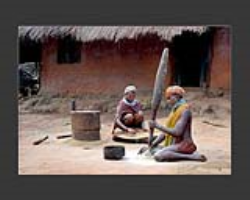

Guardians of the Whispering Hills: Culture, Memory, and the Modern Dilemma of the Hrusso (Aka) Tribe
Quick Summary: Deep within the misty, bio-diverse valleys of West Kameng, Arunachal Pradesh, lives the Hrusso tribe — historically known to outsiders as the Aka. Numbering fewer than 10,000 individuals, this indigenous community guards an ancient worldview grounded in Nyezi-No (the sacred bond of Earth and Sky). This comprehensive analysis explores their ancestral roots, social architecture, artistic heritage, the fascinating mystery of the co-existing Koro tongue, and their ongoing struggle for human development, cultural preservation, and ecological survival in modern India.
An Untamed Dawn in the Kameng Valleys
To understand the Hrusso people, you must first picture the terrain they inhabit.
Long before tarmac highways pierced the dense subtropical canopies of Arunachal Pradesh, the hilltops overlooking the Kameng and Bichom rivers were cradles of an unwritten, self-sustaining civilization. Here, dawn does not break with the harsh intrusion of an alarm, but with the steady crackle of dry cane wood on a central hearth, the aroma of ground roasting millet, and the call of the great hornbill echoing through cloud-wrapped bamboo groves.

For centuries, the Assamese plainsmen and colonial British administrators knew them by the exonym Aka—derived from the Assamese word Aka (meaning “painted”), a nod to the intricate black facial tattoos and charcoal cosmetics traditionally worn by their women and warriors. But among themselves, nestled across roughly three dozen villages like Jamiri, Buragaon, Thrizino, Palizi, and Bhalukpong, they call themselves Hrusso.
Ethnohistory and Ancient Footprints
Where do the Hrusso come from? If you pose this question to a village elder sitting cross-legged beside an open hearth, the answer is rarely a set of dates or cartographic coordinates. Instead, it is a rhythmic chant of migrations across icy mountain passes, wide churning rivers, and dense primeval forests.
According to tribal lore documented through generations, the ancestors of the Hrusso migrated through high Himalayan ridges before descending toward the foothills of the Brahmaputra. One central legend recounts that their first major historical settlement was established near Bhalukpong along the Bhareli (Kameng) River. There, two legendary chiefs—Natapura and Bayu—built fortified capitals to protect their clans from marauders and secure the fertile riverbanks.

Archaeologically and culturally, the Hrusso share an ancient frontier with the Ahom Kingdom of Assam. Between the 16th and 18th centuries, the Ahom rulers recognized the fierce military capabilities and geographic mastery of the Aka chieftains. Rather than engaging in perpetual mountain warfare, King Pratap Singha formalized the Posa system in the 17th century. Under this treaty, the Hrusso held the recognized right to gather fixed annual contributions—grain, textiles, iron utensils, and cattle—from designated lowland plains villages in exchange for ensuring border tranquility and guarding trade routes.
The Clash with Colonial Hegemony
When the British East India Company annexed Assam following the Treaty of Yandabo in 1826, they encountered this centuries-old arrangement. Viewing Posa through a colonial legal lens, British administrators dismissed the reciprocal customary tax as “blackmail” and attempted to curtail the autonomy of the hill leaders.
What followed was decades of fierce anti-colonial resistance led by legendary chieftains:
- The Revolt of Tagi Raja (1829–1835): The prominent Aka chieftain, Tagi Raja, refused to surrender his sovereign rights over the foothills. In 1835, his warriors attacked the British outpost at Balipara, wiping out colonial sepoys in a daring raid that stunned the British administration. Though captured and later negotiating peace, his rebellion cemented the reputation of the Hrusso as fearless mountain tacticians.
- Medhi Raja’s Defiance (1883–1888): Decades later, Tagi Raja’s son, Medhi Raja, led further resistance against intrusive British survey parties and commercial rubber tapping operations in Hrusso territory, culminating in the British Aka Expedition of 1883–1884.
This history of fierce autonomy still echoes within the community’s collective memory. The Hrusso were never passive recipients of history; they actively contested every attempt to dismantle their sovereignty.

Social Architecture and Daily Life
Traditional Hrusso society is organized around kinship, mutual solidarity, and an unwritten moral code that places community survival above individual gain
Clan Stratification and Governance
Historically, Hrusso society was broadly divided into two patrilineal strata:
- The Kutsun: The aristocratic lineage from which the village chiefs (Raja or Nyezi-Gow) traditionally emerged.
- The Kevatsum: The broad agrarian lineages of commoners who form the backbone of the community.
While modern democratic systems, Panchayati Raj institutions, and legislative representation have smoothed these boundaries, ancestral clan lines continue to guide marriage alliances and ceremonial protocols. The Hrusso practice clan exogamy—one cannot marry within their immediate patrilineal clan—and maintain an enduring cultural affinity and frequent intermarriage with their northern neighbors, the Miji (Sajolang).
Village governance relies on the village council, known historically as the Mechumpo. Presided over by the village headman (Gaon Burah in contemporary terminology) alongside respected clan elders, the council resolves land boundary disputes, family matters, and community obligations through dialogue rather than punitive incarceration. Fines (Danda), often payable in Mithun (Bos frontalis), traditional brass plates, or endi silk fabrics, serve to restore harmony between disputing clans.
The Architecture of Harmony: The Longhouse
Traditional Hrusso architecture showcases indigenous ecological engineering. Built high on stilts on rugged mountain slopes, an Aka house is an elongated structure crafted from timber, hand-split bamboo, and thatched Palo (wild cane) leave.
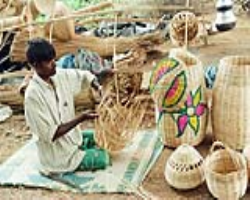
- The Raised Platform: Elevating the house 5 to 8 feet off the damp jungle floor provides safety from wild animals, improves air circulation in the humid summers, and keeps the living quarters dry during heavy monsoons.
- The Triple Hearths: Inside, the longhouse features hearths that never go cold. One hearth is reserved for family cooking, another for entertaining guests, and a third holds ceremonial reverence during shamanic rituals. Above the hearth hangs a multi-tiered wooden rack (Khur-khur) used for smoking meat, curing bamboo shafts, and drying seed corn for the following planting season.
- The Detached Granary (Poli): Recognizing the hazard of indoor fires, the Hrusso intentionally construct their granaries several hundred feet away from residential clusters. If a dwelling catches fire, the family’s food supply remains safe.
Sacred Ecology: The Nyezi-No Worldview
At the core of the Hrusso soul is their indigenous religion: Nyezi-No.
In the Hrusso tongue, Nyezi signifies the Sky Father, the vast cosmic canopy that brings warmth, rain, and light, while No (or No-Ain) represents the Earth Mother, the nurturing soil that bears crops and supports life. They do not perceive nature as an external resource to be extracted and exploited; nature is an interconnected web of living deities, ancestral spirits, and forest guardians
The spiritual mediator between the human realm and the unseen spirits is the Mugou (the village Shaman). The Mugou undergoes years of spiritual mentorship, learning to decipher omens through egg examination (Chong-sa) and liver divinations of sacrificial birds. During community crises—such as disease outbreaks, crop failures, or unexplained misfortune—the Mugou enters an altered state of consciousness, chanting archaic verse forms understood only by the spirit world to restore equilibrium between the human settlement and the wild forest.
The Nyethrii-Dow Festival: Celebrating Life and Soil
The most celebrated festival of the Hrusso is Nyethrii-Dow, held annually after the autumn harvest.
For weeks leading up to the festival, women ferment large clay pots of Mingri and Aarah (traditional brews made from maize and millet). Men venture into the forests to gather fresh bamboo reeds, cane foliage, and plantain leaves to construct the sacred festival altar (Shedung).
During Nyethrii-Dow, the community gathers in their finest attire. The Mugou invokes the blessings of Nyezi-No, thanking the Earth for its bounty and offering prayers to ward off famine, insect blights, and epidemics. The festival is alive with circle dances (Kha-chin), where young and old join hands in sweeping arcs, moving to the hypnotic rhythm of bronze cymbals, beating leather drums, and ancient responsorial ballads that recite the lineage of their clans.
Cultural Expressions: Textiles, Tattoos, and Adornment
Hrusso artistic expression is inseparable from identity. It is woven into their fabrics, forged into their hunting blades, and worn upon their bodies.
The Loom of Heritage
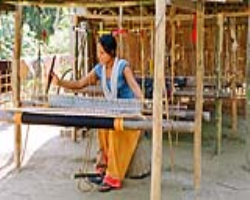
Weaving is a revered art form among Hrusso women. Using backstrap looms (loin looms) secured around their waists, weavers craft heavy, durable cotton textiles marked by clean geometric bands.
The signature ceremonial garment for women is a striking ensemble: a long, immaculately white handwoven robe that wraps around the torso down to the calves, overlaid with a vibrant red or crimson waist-jacket intricately embroidered with geometric diamond and zig-zag motifs.
Men wear a sleeveless tunic woven from wild nettle fiber and cotton, strapped across the chest, accompanied by a long woven haversack decorated with dyed cane strips. A notable motif on Hrusso haversacks and ceremonial bands is the Jana Flower—a stylized blossom design that oral history links to ancient cross-Himalayan trade contacts.
The silver filigree headband (Gichli) is an heirloom passed from mother to daughter during marriage. Paired with heavy, bell-shaped silver earrings and thick strings of polished turquoise, carnelian, and marine glass beads (Sikhli), the ensemble represents both economic security and sacred protection.

The Linguistic Landscape: The Mystery of Hrusso and Koro
One of the most remarkable discoveries in contemporary global linguistics took place right in the heart of Hrusso territory.
For generations, administrative census records classified everyone living within these West and East Kameng villages as “Aka”. Externally, their clothing, farming practices, architecture, marriage customs, and animist rituals were indistinguishable.
THE DUAL-LANGUAGE PHENOMENON ================================================================= COMMUNITY A: Hrusso Speakers (~4,000) ├── Tibeto-Burman / Unclassified Macro-Branch └── Primary language of West Kameng (Jamiri, Buragaon, Thrizino) COMMUNITY B: Koro Speakers (~1,000) ├── Distinct Tibeto-Burman language (closely aligned with Tani group) └── Coexists in same villages, shares identical customs and dress ================================================================= *Sociolinguistic Miracle: Centurial coexistence without linguistic assimilation!*
In 2008, during field expeditions led by linguists Ganesh Murmu, Gregory Anderson, and David K. Harrison under National Geographic’s “Enduring Voices” initiative, researchers confirmed that a distinct linguistic group—the Koro—lived alongside the Hrusso.
Though living intermingled within the exact same hamlets, intermarrying, and sharing identical material culture, the Koro spoke a language entirely distinct from Hrusso.
- Hrusso represents an isolated branch of the Tibeto-Burman family, sharing few structural or lexical cognates with surrounding tribes.
- Koro, by contrast, belongs to an entirely different branch, displaying structural affinities with the Tani language group found hundreds of miles to the east.
How two distinct languages coexisted for centuries within small, closely-knit villages without one absorbing or erasing the other remains a sociolinguistic wonder. It reflects a deep indigenous tolerance: communities could share land, hearths, and marriages while retaining their mother tongue without cultural friction.
The Agrarian Economy: Forest, Swidden, and Mithun
The traditional economic life of the Hrusso centers on balanced agro-forestry.
Jhum Cultivation: Controlled Fire and Mountain Soil
The foundation of Hrusso food production is Jhum (shifting or swidden cultivation).
Unlike modern industrial monoculture, Jhum is attuned to the steep slopes and thin topsoil of the eastern Himalayas. In late winter, designated patches of secondary forest are cleared by communal work parties. The brush is left to dry under the sun and burned just before the onset of pre-monsoon showers, returning vital potash and minerals to the soil.
In these ash-fertilized plots, families sow mixed crops: hardy mountain maize, finger millet, upland rice, yams, ginger, mustard greens, squash, and chilies. This mixed cropping protects the soil from erosion caused by heavy monsoon downpours and guarantees food security; if an unseasonable dry spell hurts the rice, the hardy millet and deep-rooted tubers survive. After two to three seasons of harvest, the plot is left fallow for 7 to 10 years, allowing the native bamboo and evergreen forest to regenerate naturally.
The Mithun: Wealth on Four Hooves
No discussion of Hrusso society is complete without the Mithun (Bos frontalis).
To the Hrusso, the Mithun is not a standard draft animal; it is never yoked to a plow or milked. It is a sacred creature, roaming semi-wild in community-managed forest tracts, recognized only by distinct notches cut into its ears.
The Mithun serves as an indigenous banking system. A family’s social standing and economic resilience are measured by the size of its Mithun herd. It is the indispensable component of bride wealth (Grum-ba) during matrimonial negotiations, the highest currency paid to resolve inter-clan grievances, and the ultimate sacrificial offering made to appease the forest deities during severe crises.
The Winds of Change: Human Development Realities
The arrival of the 21st century has brought profound transformations to the remote Hrusso valleys. While modern infrastructure, digital telecommunications, and welfare schemes offer new opportunities, they have also created complex challenges across education, health, language, and culture.
1. Education and the Youth Exodus
Literacy rates across West Kameng have risen notably over the past three decades, supported by government residential schools (Sarva Shiksha Abhiyan) and missionary educational institutions. A rising generation of Hrusso youth is graduating from colleges in Itanagar, Guwahati, Shillong, and New Delhi.
However, formal education has brought an unintended sociological side effect: the brain drain of the hills.
Because school curricula are taught in English and Hindi, educated youth often disconnect from the daily agricultural cycles and ancestral skills of their parents. A young person trained in modern academia finds few economic opportunities in village hamlets like Palizi or Buragaon. As a result, educated youth migrate to urban centers for administrative, tourism, or service jobs, leaving village hearths cared for primarily by aging grandparents and young children.
2. Healthcare: Bridging Traditions
Healthcare in the region remains an ongoing challenge. While primary health centres (PHCs) exist in administrative circles like Thrizino and Bhalukpong, staffing them with specialist doctors and maintaining cold-chain refrigeration for vital medicines in monsoon-hit, landslide-prone corridors remains difficult.
When acute medical emergencies occur—such as maternal complications, snakebites, or severe malaria—families often endure arduous journeys along unpaved mountain roads to reach district hospitals in Bomdila or Tezpur in Assam. Consequently, many remote families still turn first to traditional botanical remedies and the rituals of the Mugou before undertaking expensive journeys to modern medical clinics.
3. The Cash Economy and Changing Agro-Ecology
The traditional self-sufficient Jhum cycle is transforming into a market-driven cash economy.
In areas near motorable roads, such as Bana and Jamiri, Hrusso farmers are converting diverse swidden plots into single-crop commercial orchards—growing oranges, apples, kiwi fruit, tomatoes, and ginger. While cash crops bring disposable income—used to purchase tin roofing, solar lighting, motorcycles, and smartphones—they can leave families vulnerable to market fluctuations and reduce dietary diversity, which was historically anchored in nutrient-rich wild greens, native millets, and mountain tubers.
The Existential Struggle: Language and Cultural Erosion
Perhaps the most urgent challenge confronting the Hrusso today is linguistic endangerment.
The Spread of Arunachali Hindi
Arunachal Pradesh is home to over 26 major tribes and more than 100 sub-tribes, each with distinct dialects. To communicate across tribal lines, Arunachali Hindi—a simplified, expressive creole—has emerged as the universal lingua franca of the state.
While this shared language unites diverse communities, its convenience has come at a high cultural cost. In many Hrusso households, parents now communicate with their children in Hindi rather than Hrusso or Koro. Younger generations often understand their mother tongue when spoken by elders, but lack the fluency to speak it confidently or chant the complex oral poetry required during sacred rituals.
According to tribal lore, their primeval ancestor Buslu Awu was once given a written script inscribed on animal hide. Legend says the parchment was accidentally consumed during an ancient famine, leaving the community to preserve its entire intellectual tradition—history, medicine, genealogical charts, and religious chants—exclusively through oral memory.
Today, as tribal elders pass away, centuries of unwritten ethnobotanical knowledge, folk narratives, and ancestral genealogies risk disappearing with them.
The New Vanguard: Reclamation, Documentation, and Hope
Faced with the erosion of their linguistic and cultural heritage, the Hrusso community has begun an inspiring cultural revival.
1. Codifying the Language
In recent decades, community leaders, indigenous scholars, and linguists have worked together to create an orthography for the Hrusso tongue. A modified Roman script consisting of 55 alphabetical symbols—representing 34 distinct phonemic sounds and 21 complex consonant clusters—was developed to accurately capture the subtle tonal inflections of the spoken language.
Community-driven primers, storybooks, and phonics guides are gradually being introduced into local learning centers, ensuring children learn to read and write the language of their ancestors alongside English and Hindi.
2. Youth Cultural Collectives
Young Hrusso artists, filmmakers, and grassroots organizers are turning to digital media to celebrate their heritage. Through YouTube channels, community podcasts, and social media platforms, youth record village elders singing epic ballads, document rare forest-foraging techniques, and showcase traditional weaving motifs to global audiences.
Cultural organizations like the All Hrusso (Aka) Students’ Union (AHSU) regularly organize heritage summits and youth camps centered around traditional sports, loin-loom weaving workshops, and oratory contests conducted in the native tongue.
3. Community-Led Ecotourism and Ecological Stewardship
The Hrusso homeland borders some of the most critical wildlife habitats in the eastern Himalayas, including the fringes of the Pakke Tiger Reserve and the Eaglenest Wildlife Sanctuary.
Rather than viewing wildlife conservation as a restriction on their lifestyle, Hrusso villages are exploring community-based ecotourism. Educated tribal youth are training as certified birding guides, naturalists, and trekking leaders. By opening authentic bamboo homestays, serving traditional slow-cooked organic meals, and guiding visitors through mist-shrouded forests, local families earn sustainable livelihoods while preserving the sacred forest groves (Thou-gew) that their ancestors protected for centuries.
Lessons for Modern India
The story of the Hrusso tribe is far more than a localized narrative from a remote corner of Arunachal Pradesh. It offers essential insights into how modern India approaches indigenous development, conservation, and cultural identity.
Too often, mainstream definitions of human development prioritize concrete roads, industrial extraction, and linguistic assimilation over indigenous self-determination. The Hrusso challenge this narrow perspective. Their culture reminds us that true progress does not require erasing our roots.
A community that has lived in balance with the eastern Himalayan forests for centuries does not need to abandon its identity to participate in modern life. What the Hrusso need—and what tribal communities across India deserve—is a model of human development built on indigenous autonomy:
- Mother-tongue primary education that values indigenous oral history alongside science and mathematics.
- Decentralized healthcare that pairs modern medical diagnostics with respect for traditional ethnobotanical wisdom.
- Equitable economic infrastructure that supports local orchards, traditional weaving cooperatives, and sustainable ecotourism rather than destructive mountain extraction.
As twilight falls over the Bichom River, a grandfather in Jamiri village kindles the evening hearth, singing a low, gentle chant in the Hrusso tongue. In the shadows across the longhouse, his granddaughter watches, listening intently. In her hands is a smartphone; in her ears is the melody of her ancestors. The future of the Hrusso lives in the space between those two worlds—a delicate, courageous journey of remembering who you are while stepping boldly into the modern age.