


The Unbroken Thread: Tracing the History, Culture, and Modern Struggles of the Lengthang (Liangkang) Tribe
The northeastern frontier of India presents an intricate tapestry of human migration, highland ecology, oral traditions, and resilient social institutions. Across the undulating hills and mist-laden river valleys bridging Manipur, Assam, and Nagaland reside diverse indigenous groups whose historical narratives, rich cosmologies, and contemporary sociopolitical encounters provide a profound window into tribal survival in modern South Asia.
Thank you for reading this post, don't forget to subscribe!Among these indigenous groups—often spoken of within the broader fabric of the Zeliangrong communities, sub-clans, and related Tibeto-Burman hill societies—are clans and groups frequently documented in local nomenclature and oral archives under names such as the Lengthang (often associated with or recognised as linguistic and clan variants such as the Liangmai/Liangkang lineages).
Examining the Lengthang legacy offers a vital exploration of indigenous identity, highland governance, traditional ecological knowledge, socio-cultural evolution, and the mounting pressures of structural modernisation in twenty-first-century India.
| | Ecological Zone | Elevation Range | Primary Human Activity |
| River Valleys & Foothills | 400 m – 900 m | Terraced cultivation, foraging, fishing |
| Mid-Slope Ridges | 900 m – 1,800 m | Village settlements, jhum (swidden) plots |
| | Montane Crests | 1,800 m – 2,500 m+ | Sacred forest groves, gathering, hunting |
Geographical Domain, Ancestral Landscapes, and Sacred Ecology of Lengthang (Liangkang) Tribe
To understand the social psyche and cultural fabric of the Lengthang people, one must begin with the land. Their ancestral settlements are woven into the steep ridge-tops and deep folds of the Barail mountain range, extending across the Tamenglong, Senapati, and Kangpokpi districts of Manipur, spilling over into the Dima Hasao district of Assam and the Peren district of Nagaland.
Highland geography has long dictated architectural patterns, defence strategies, agricultural routines, and cosmological mappings:
- Strategic Settlement Planning: Traditionally, villages were perched high on ridge tops, fortified against surprise raids during the historical eras of inter-village warfare. This elevated location afforded panoramic sightlines across river valleys and mountain gaps.
- Microclimates and Biodiverse Habitats: The territory encompasses sub-tropical broadleaf forests, mixed bamboo belts, and temperate wet montane forests. These micro-habitats house endemic flora and fauna that feature prominently in tribal folklore, medicine, and fiber production.
- Sacred Geography: Prominent mountain peaks, deep limestone caverns, and swift-flowing streams are not merely physical assets; they are treated as living landmarks inhabited by guardian spirits (Nei or Tari). Every cliff face and river bend carries an etymological history tied to clan migrations, heroic ancestors, or cautionary supernatural tales.
Ethnohistory, Kinship Networks, and Clan Architecture
The ethnohistorical trajectory of the Lengthang identity is preserved in oral narratives (Chari or folk chronicles) chanted across generations. While academic ethnography historically grouped these highland populations within broad colonial administrative umbrella terms, indigenous memory traces origins through legendary migratory nodes such as Makhel (the ancient dispersal site in modern northern Manipur) and Ramting Kabin (a mythical cave or gorge signifying ancestral emergence).
Lineage Systems and Segmentary Clans
Social organisation among the Lengthang revolves around patrilineal exogamous clans (sagei or phratries). These lineages define rights to common lands, matrimonial alliances, ceremonial obligations, and customary judicial arbitration:
- Exogamous Proscriptions: Marrying within one’s immediate paternal clan remains strictly taboo, serving as a social mechanism to maintain peaceful political ties across dispersed mountain villages.
- Clan Responsibilities: Clans pool labour for house-building, trail clearance, agricultural planting, and mourning rituals during bereavement.
The Morung System: Civic Training and Cultural Transference
Central to traditional social engineering was the youth dormitory institution—most commonly recognised across the regional cultural continuum as the Khangchiu (male dormitory) and the Luchiu (female dormitory).
The Morung functioned as a comprehensive civic, cultural, and military academy:
1. Oral Pedagogy: Without a written script until the arrival of missionary efforts in the early twentieth century, tribal wisdom, epic genealogies, botanical classifications, and ritual chants were passed down around the dormitory hearth.
2. Artisan Craftsmanship: Youths learned the nuances of bamboo split-weaving, spear manufacturing, wooden relief carving, and textile backstrap weaving.
3. Physical and Martial Conditioning: Young men were trained in wrestling, high-altitude tracking, navigation, and defence tactics to protect agricultural territories.
4. Civic Ethics and Communal Altruism: The dormitory organised clearing parties for paths, constructed communal granaries, maintained aqueducts, and assisted elderly, widowed, or infirm villagers during harvest season.
Agrarian Traditions: Swidden Ecology and Forest Conservation
The Lengthang economy historically relied on a dual agricultural model: shifting swidden cultivation (jhum) on steep slopes and irrigated terrace agriculture along low-lying river plains.
The Morung System: Civic Training and Cultural Transference
Central to traditional social engineering was the youth dormitory institution—most commonly recognised across the regional cultural continuum as the Khangchiu (male dormitory) and the Luchiu (female dormitory).
The Morung functioned as a comprehensive civic, cultural, and military academy:
1. Oral Pedagogy: Without a written script until the arrival of missionary efforts in the early twentieth century, tribal wisdom, epic genealogies, botanical classifications, and ritual chants were passed down around the dormitory hearth.
2. Artisan Craftsmanship: Youths learned the nuances of bamboo split-weaving, spear manufacturing, wooden relief carving, and textile backstrap weaving.
3. Physical and Martial Conditioning: Young men were trained in wrestling, high-altitude tracking, navigation, and defence tactics to protect agricultural territories.
4. Civic Ethics and Communal Altruism: The dormitory organised clearing parties for paths, constructed communal granaries, maintained aqueducts, and assisted elderly, widowed, or infirm villagers during harvest season.
Agrarian Traditions: Swidden Ecology and Forest Conservation of Lengthang (Liangkang) Tribe
The Lengthang economy historically relied on a dual agricultural model: shifting swidden cultivation (jhum) on steep slopes and irrigated terrace agriculture along low-lying river plains.
Agro-Biodiversity and Soil Conservation
Unlike monoculture farming, the indigenous jhum plot was a self-sustaining food forest containing over thirty varieties of companion crops within a single season:
- Staples: Upland dry rice, job’s tears, finger millet, and foxtail millet.
- Legumes and Vegetables: Velvet beans, cowpeas, mustard greens, tree tomatoes, local ginger, and indigenous wild chilies.
- Companion Planting: Taller crops like maize served as natural trellises for climbing pole beans, while leafy tubers conserved topsoil moisture along precipitous inclines.
Cosmology, Belief Systems, and the Christian Transition
Prior to Christian proselytisation, the Lengthang observed an animistic cosmology centreed on supreme creator beings, regional deities, and ancestral spirits who inhabited sacred groves, crags, and rivers. Health, agricultural yields, and communal fortune depended on living in moral and ceremonial equilibrium with these unseen forces.
Traditional Ritual Life and Agricultural Festivals
The ceremonial calendar mirrored the rhythms of farming:
- Chaga/Chaga-Ngee (Festival of Sanctification): An autumn festival celebrating purification, victory, and the celebration of blessings. Warriors, hunters, and farmers underwent physical cleansing, offered prayers for bumper harvests, and renewed interpersonal village bonds.
- Gaan-Ngai: A post-harvest winter festival characterised by the lighting of sacred new fire, ancestor remembrance, rhythmic circle dances, and communal feasts.
- Ritual Healers (Maiba / Taku): Spiritual specialists interpreted omens, divined illnesses using rooster feathers or bamboo splints, and concocted herbal infusions derived from highland roots.
The Paradigm Shift: Christianity and Modernity
Beginning in the late nineteenth and accelerating throughout the mid-twentieth century, Christian missions (primarily Baptist and Presbyterian) reshaped the social fabric of the hills.
While Christianity brought modern schooling, medical clinics, and literacy through the Roman script, it dismantled the central role of the Morung dormitory. Certain ancestral practices—such as spirit propitiation, traditional drinking of fermented rice beverages (zou), and specific ritual chants—were historically suppressed as pagan customs.
In recent decades, however, an educated tribal intelligentsia has worked to revitalise and secularise these festivals, reinterpreting celebrations like Chaga-Ngee as symbols of ethnic solidarity, history, and communal pride.
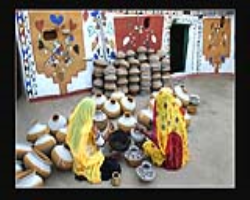
Material Culture, Visual Aesthetics, and Culinary Heritage
The material culture of the Lengthang mirrors a close ecological bond with their forest home:
1. Textiles and Regalia
Textiles serve as identity markers and social statements. Utilising the traditional backstrap loin loom, women spin and weave heavy cotton blankets and kilts adorned with striking red, black, and white bands, often punctuated with stylised diamond motifs. Historically, specific shawls were earned through acts of valor, generous community feasts (feasts of merit), or respected leadership standing.
2. Cane and Bamboo Craftsmanship
Bamboo is the bedrock of highland material life. Baskets woven from split cane and bamboo range from the finely meshed Kho (conical carrying basket fitted with tump-lines for carrying firewood) to winnowing trays, fishing traps, and rain-shields lined with broad leaves. Woodcarving adorns traditional village gates and house pillars, displaying stylised buffalo heads (Mithun horns) that symbolise wealth and peace.
3. Indigenous Gastronomy
Lengthang foodways centre on preservation, foraging, and subtle herbal infusions:
- Fermented Staples: Fermented bamboo shoots (Gakthi or regional variations) form the savory, sour base for curries, balancing fatty pork or river fish. Fermented soybeans (Rathua) provide an essential umami protein source through long winter months.
- Smoking and Dehydration: Hearth-smoked venison, wild boar, dried beef, and split fish are preserved above central kitchen fires, sustaining communities across extended farming periods.
- Wild Greens: Indigenous foraged ferns, tree tomatoes (tomatillo relatives), wild peppers, and Sichuan pepper seeds season dishes without reliance on modern artificial additives.
Human Development Realities: Health, Education, and Infrastructure
Despite rich cultural traditions, the human development profile of the Lengthang regions presents sharp structural disparities when compared to national Indian averages. Decades of administrative isolation, difficult terrain, and underfunded social sectors have left these mountain communities facing uphill battles for parity.
Healthcare Vulnerabilities
Primary Healthcare Centres (PHCs) in highland regions frequently grapple with chronic structural shortages:
- Medical Staffing: Specialised doctors, nurses, and laboratory technicians are often reluctant to serve in remote hill outposts lacking basic amenities.
- Critical Logistics: During the monsoon months, landslides regularly cut off primary roads, turning emergency medical transports—especially for complicated obstetric deliveries or acute infections—into dangerous multi-hour journeys on makeshift bamboo stretchers.
- Preventive Care: Waterborne ailments, vector-borne seasonal diseases, and nutritional deficiencies persist where piped drinking water networks remain incomplete.
Educational Infrastructure and Talent Drain
While literacy rates have risen substantially through mission-run private schools and government residential schools, qualitative indicators remain strained:
- Secondary and Higher Education Deficits: Few interior hill villages have fully equipped higher-secondary institutions offering science, technology, engineering, and mathematics (STEM) curricula.
- Brain Drain: Talented tribal students are forced to migrate to urban centres like Imphal, Dimapur, Shillong, Guwahati, and New Delhi for higher degrees. This geographic separation creates cultural estrangement and strains family finances.
Contemporary Struggles: Land, Governance, and Development Dispossession
The interface between traditional tribal communities and the expanding Indian state apparatus is marked by complex questions of property rights, natural resource governance, and environmental protection.
- Communal Land Ownership vs. Cadastral Surveys
Unlike mainland Indian agrarian systems organised around individually titled private land plots, the traditional Lengthang tenure model is communal:
- Customary Tenure: Land belongs to the village community, overseen by the village council. Individual families hold usufruct rights (the right to cultivate and harvest), but cannot sell or transfer village commons to outsiders.
1. Administrative Friction: Modern administrative mandates seeking individual cadastral mapping frequently clash with this communal philosophy. When infrastructure developers or administrative bodies fail to recognise customary ownership, disputes over compensation, environmental safety, and forest access inevitably flare up.
2. Ecological Degradation and Industrial Monoculture
Highland ecosystems face mounting threats from extractive industries and ill-planned development:
- Deforestation: Unregulated timber harvesting, alongside shortened jhum fallow cycles caused by population growth on restricted land bases, has triggered topsoil erosion and reduced water yields in mountain springs.
- Cash-Crop Pressures: Government schemes encouraging monoculture cash plantations (such as rubber, tea, or oil palm) risk eroding the agro-biodiversity preserved through traditional swidden farming.
- Infrastructure Footprint: Hill-cutting for highways and railway networks, while improving connectivity, has triggered destabilising landslides, buried terrace farms in silt, and fractured critical forest corridors.
3. Political Representation and Administrative Fragmentation
The dispersion of related ethnic clans across multiple state borders (Manipur, Nagaland, and Assam) dilutes their political voice. Straddling distinct state jurisdictions subjects them to conflicting policy frameworks, varying levels of reservation benefits, and fluctuating budget allocations. Achieving cohesive cultural autonomy and uniform socio-economic development across state borders remains a major hurdle.
Preservation Pathways: Reconciling Heritage with Twenty-First-Century Progress
Safeguarding the cultural integrity of the Lengthang people while advancing their human development requires actionable, community-first interventions rooted in constitutional protections and indigenous agency.
1. Bridging Traditional Agroforestry with Organic Markets
Rather than abandoning highland farming, modern agricultural programs must build on indigenous soil-management techniques. Promoting certified organic niche crops—such as heirloom red rice, wild mountain ginger, bird’s-eye chilies, and smoked teas—can inject cash directly into rural village economies without gutting local ecosystems.
2. Digital Archives and Oral History Conservation
With fewer elders retaining ancient oral epics, systematic digital archiving is essential. Tribal youth collectives, using portable audio and video equipment, can record folktales, weaving styles, architectural crafts, and ritual songs. Transforming this material into open-access bilingual digital libraries preserves intangible cultural heritage for generations to come.
3. Institutional Autonomy and Customary Legal Protection
India’s constitutional safeguards—including the Sixth Schedule and Article 371 provisions—must be applied with transparency and local accountability. Village councils need meaningful autonomy to govern their natural resources, evaluate regional projects, and maintain customary arbitration systems that resolve civil disputes swiftly and cooperatively.
Conclusion: Indigenous Wisdom as a Modern Compass
The story of the Lengthang is far more than an ethnographic snapshot of remote hill life. It is an enduring record of human adaptation, communal solidarity, and deep ecological balance. In an era marked by climate volatility, industrial monoculture, and social isolation, their tradition of communal labour, sustainable forest management, and intergenerational care offers profound lessons for the modern world.
Supporting these highland communities does not mean freezing them in an ethnographic museum. It means delivering high-quality healthcare, modern schooling, clean drinking water, and reliable physical connectivity on their own terms. By pairing meaningful constitutional autonomy with targeted investment in human development, India can ensure that vibrant tribal groups like the Lengthang continue to thrive as self-reliant, celebrated stewards of their ancestral heritage.