


Guardians of the Eastern Himalayas: Culture, Ecology, and the Modern Struggles of the Nyishi Tribe
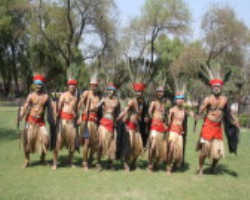
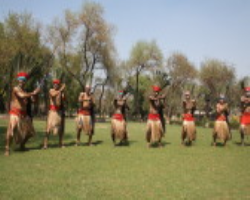
Deep within the misty valleys and emerald foothills of Arunachal Pradesh, a long cane bamboo trumpet sounds across the ridge. It is the beginning of the sowing season. The men tie their traditional Bopia—a woven cane headgear crowned with an iconic curved hornbill beak—while women adjust their heavy necklaces of turquoise, coral, and brass bells.
Thank you for reading this post, don't forget to subscribe!This is the land of the Nyishi tribe, the largest indigenous community in Arunachal Pradesh. For centuries, the Nyishi lived in self-contained highland ecosystems, carving out terraces on precipitous mountain slopes, communicating with spirits through oral epics, and settling community disputes through ancient customary councils.
Yet behind the arresting visuals of cane helmets and harvest dances lies a nuanced reality. Today, the Nyishi stand at a defining crossroads between ancient ancestral wisdom and modern Indian development. From pioneering wildlife conservation movements to grappling with hydropower projects, language attrition, and socio-economic transitions, their journey represents the living heartbeat of tribal India in the twenty-first century.
Who Are the Nyishi? Origins, Lineage, and Identity
The Nyishi—historically misnamed “Dafla” by colonial British surveyors, a derogatory exonym the community fought hard to shed—trace their ancestry back to a mythical forefather named Abo Tani. Across the central-eastern Himalayas, the descendants of Abo Tani (the Tani group, which includes neighboring tribes like the Apatani, Adi, Tagin, and Galo) share an interconnected mythological worldview, language branch, and social ethos.
Demographic Footprint and Geography
The Nyishi are concentrated across six major districts of Arunachal Pradesh:
-
Papum Pare (housing the state capital, Itanagar)
-
East Kameng
-
Pakke Kessang
-
Lower Subansiri
-
Kurung Kumey
-
Kra Daadi
Small populations also inhabit the Sonitpur and North Lakhimpur districts of neighboring Assam. Their geography ranges from subtropical river valleys to alpine ridges, an environment that has directly shaped their architectural ingenuity, culinary habits, and social resilience.
Social Fabric and Egalitarian Kinship
Unlike many rigid stratified societies of mainland India, Nyishi society is fundamentally non-hierarchical and clan-based.
-
The Clan System: Society is divided into patrilineal clans (Halu or Uyu lineages) tracing ancestry directly to Abo Tani. Marriage within the same clan is strictly prohibited.
-
The Traditional Longhouse (Namda): Historically, a Nyishi village did not consist of clustered single-family cottages. Instead, extended kin lived together in massive raised bamboo-and-thatch longhouses that stretched up to 50 meters in length. A single longhouse could hold multiple hearths (Ogo), housing up to forty members belonging to several generations of an extended family under one roof. The hearth served as the emotional, ceremonial, and culinary core of daily life.
Spiritual Cosmology: Donyi-Polo and the Unseen World
To understand the Nyishi is to step into an animistic worldview where nature is neither an inert commodity nor a detached wilderness. Everything—from the craggy mountain pass to the swollen monsoon river—possesses life force (Wiyu or spirits).
The Cult of Sun and Moon: Donyi-Polo
The central axis of indigenous Nyishi faith is Donyi-Polo (literally, Donyi = Sun, Polo = Moon). Donyi represents the maternal, all-seeing eye of warmth, life, and moral truth; Polo signifies cooling guidance, cyclical balance, and nighttime guardianship. Donyi-Polo is not an anthropomorphic deity demanding submission, but a supreme cosmic balance and moral witness to all human actions. When a Nyishi swears an oath before the council, invoking Donyi-Polo represents the highest, unbreakable pledge of honesty.
The Nyobo (Shaman-Priest)
At the center of Nyishi spiritual life stands the Nyobo. The Nyobo is neither elected nor formally appointed; shamans are recognized through early childhood dreams, spiritual afflictions, and spontaneous recitation of archaic ritual dialects.
The Nyobo acts as an intermediary between humanity and the forest spirits. Through ritual chanting that can continue uninterrupted for forty-eight hours, the priest divines the cause of illness, guides agricultural fertility rites, and performs intricate soul-retrieval ceremonies using omen-reading on chicken livers and egg yokes.
Major Celebrations: Nyokum Yullo and Boori Boot
-
Nyokum Yullo (Celebrated in February): The premier festival of the Nyishi, dedicated to Goddess Nyokum. It is an invocation for agricultural prosperity, community health, and protection against natural calamities. Sacred bamboo structures (Yugyang) are erected, and communal circle dances echo through the valley.
-
Boori Boot Yullo: Primarily observed by the Nyishi of the Upper and Lower Subansiri belts, marked by applying Etting (rice powder paste) on friends and family as a mark of harmony, reconciliation, and welcome to spring.
Mithun, Cane, and Hornbills: The Material Culture
Indigenous Nyishi material culture represents a zero-waste, hyper-adapted balance with the montane rainforest.
The Mithun (Bos frontalis): Wealth on Four Hooves
In Nyishi culture, status, economic wealth, and matrimonial alliances have long been mediated through the Mithun—a semi-wild bovine native to the northeastern hill tracts.
| Traditional Role | Cultural and Practical Function |
| Bridewealth (Bride Price) | Given to the bride’s family as a token of mutual respect and social guarantee, cementing lifelong inter-clan alliances. |
| Dispute Resolution | Handed over as customary compensation during council judgments to settle land, honor, or civil feuds. |
| Sacred Sacrificial Offering | Reserved for major life milestones and community peace rituals (Yullo). |
| Socio-Ecological Grazing | Free-ranges in designated community forests without fencing, identified purely by unique clan ear-notches. |
The Hornbill Paradigm Shift: From Hunter to Guardian
For centuries, the upper beak and casque of the Great Indian Hornbill (Buceros bicornis) was woven into every man’s Bopia helmet. It symbolized courage, manhood, and tribal dignity.
By the late 1990s, exploding human populations and market pressures caused hornbill numbers across the Pakke Wildlife Sanctuary to collapse. Recognizing that the bird woven into their identity was vanishing, the Nyishi community initiated one of the most celebrated conservation pivots in modern ecological history.
Led by community elders, local youth councils, and the Forest Department, the Nyishi launched the Hornbill Nest Adoption Program. Tribal hunters who once tracked hornbills transitioned into “Nest Protectors,” charting nesting hollows, collecting biological field data, and safeguarding breeding pairs from poachers. Simultaneously, artisans introduced fiberglass artificial hornbill beaks to replace genuine casques on ceremonial helmets. Today, the Bopia retains its sacred prestige without requiring the death of a single wild bird.
Customary Justice: The Nyele System
Long before modern Indian district courts and legal codes penetrated the valleys, the Nyishi resolved conflict through their indigenous participatory council: the Nyele.
-
Structure: The Nyele is an ad-hoc council assembled to adjudicate disputes ranging from land boundary incursions to marital friction and community theft.
-
The Mediators (Gingdung): Impartial, respected clan elders skilled in customary jurisprudence, oratory, and genealogical lineage act as intermediaries. Rather than imposing unilateral punishment, the Gingdung shuttles between disputing parties, negotiating restitution through consensus.
-
Restorative, Not Retributive: Modern criminal law focuses on incarceration. Customary Nyishi justice emphasizes restoring equilibrium. Compensation (Dapo treaties) in the form of Mithuns, brass plates (Dandang), and Tibetan prayer beads settles grievances without tearing the community fabric apart.
Under the Arunachal Pradesh Civil Courts Act, customary tribal councils still enjoy legal legitimacy for resolving local civil matters, functioning as an invaluable buffer against backlogged formal courtrooms.
The Faultlines of Modernity: Contemporary Struggles
Despite their resilience, the Nyishi face profound disruptions driven by rapid infrastructural expansion, modernization, and assimilation pressures.
While dams bring infrastructure and revenue, they pose grave risks to indigenous ecology:
-
Inundation of Ancestral Lands: Submergence zones swallow fertile riverbeds traditionally used for subsistence agriculture and seasonal grazing.
-
Downstream Destabilization: Altered water flow disrupts traditional fishing systems and changes fragile microclimates in riverine valleys.
-
Loss of Cultural Geography: Sacred river pools, rocks attributed to mythic spirits, and historical burial sites have been lost beneath reservoir waters, disconnecting younger generations from oral geographical memory.
2. The Shift Away from Shifting Cultivation (Jhum)
For millennia, the Nyishi sustained themselves through Jhum (slash-and-burn shifting cultivation), growing mountain rice, millet, and tubers alongside forest gathering.
As population density has increased, the traditional 10-to-15-year fallow cycle has shrunk to 3 to 5 years, stripping soil of regenerative nutrients. In response, modern schemes push for settled horticulture (kiwi, orange, cardamon, and oil palm plantations). While cash crops increase cash income, they reduce crop diversity, expose smallholders to volatile market prices, and spark shifts from communal clan landholding to private land ownership—eroding traditional collectivism.
3. Linguistic Attrition and Educational Gaps
The Nyishi language belongs to the Tibeto-Burman linguistic family. Rich in botanical terms, oral poetry, and spiritual metaphors, it possesses no historical written script of its own (relying today on modified Roman scripts).
In urban hubs like Itanagar, Naharlagun, and Banderdewa, younger generations increasingly communicate in Hindi and English. Without institutional immersion in schools, conversational fluency in ancestral dialects is declining among city-born youth. While tribal literary organizations are actively publishing dictionaries and primers, keeping the mother tongue vibrant remains an uphill battle.
4. Religious and Cultural Reconfigurations
Over the past four decades, widespread conversion to Christianity has transformed Nyishi villages, particularly in Papum Pare, Kurung Kumey, and East Kameng.
While mission institutions have built schools and clinics in remote mountain pockets, conversion has also created cultural fractures:
-
Some converts abandon participation in animistic festivals like Nyokum or avoid the traditional Nyobo chants.
-
In response, the Donyi-Polo Yelam Kebang movement emerged—an institutionalized revitalization movement designed to codify, preserve, and defend traditional animist rituals with temples, regular prayer days, and structured literature.
Human Development Indicators: Bridging the Valley Divide
The socio-economic landscape of the Nyishi reflects the broader development paradox of Northeast India: significant state investment in highways and institutional complexes, juxtaposed against rugged, isolated rural villages.
Navigating the 21st Century: The Way Forward
The Nyishi are not passive observers of change. Through student unions, community women’s cooperatives, and local environmental leagues, the community is actively designing its own development path:
-
Community-Led Ecotourism: Rather than allowing uncontrolled resort development, Nyishi homestay networks across Seijosa and the Pakke Valley welcome travelers directly into village households, generating income while fostering pride in traditional food, weaving, and architecture.
-
Digital Preservation of Oral Folklore: Young Nyishi researchers and filmmakers are recording the long mythological epics chanted by aging Nyobos, archiving them digitally before this intangible oral knowledge slips away.
-
Institutionalizing Customary Rights: Calls are growing to systematically codify customary land tenure, ensuring community land cannot be alienated without transparent local consent.
The story of the Nyishi tribe demonstrates that preserving indigenous identity does not mean freezing a community in a museum exhibit. True cultural resilience means exercising sovereignty over how change happens—choosing which values to guard, which tools to adopt, and how to honor the past while walking confidently into the future.