


The Pawi (Lai) Tribe: History, Cultural Heritage, Governance, and Contemporary Struggles in Northeast India
1. Introduction: The Guardians of the Blue Mountain
Deep within the rugged, mist-shrouded ridges of southern Mizoram, stretching across the borders of Myanmar and the Chittagong Hill Tracts of Bangladesh, live the Pawi—historically documented in colonial records as the Pawi or Poi, and endonymously known as the Lai. Nestled primarily in the Lawngtlai District under the administrative framework of the Lai Autonomous District Council (LADC), the Lai people represent one of the most culturally resilient, socially organized, and politically distinct indigenous communities of the Indo-Burma highland corridor.
For centuries, the Lai were renowned across the Lushai and Chin Hills as formidable warriors, master blacksmiths, deep-forest hunters, and skilled weavers. Their settlements, perched atop defensible mountain crests, commanded the trade routes and rivers cutting through southern Mizoram.
LAI (PAWI) ROOTS│┌───────────────────────┴───────────────────────┐▼ ▼Tibeto-Burman Zo / Chin-Kuki-MizoLinguistic Sub-family Civilizational Sphere│ │└───────────────────────┬───────────────────────┘▼Heartland: Lawngtlai District, MizoramAutonomous Entity: Lai Autonomous District Council
In the modern era, the Pawi face the delicate balancing act common to indigenous societies across Northeast India: preserving ancestral customs, distinct linguistic identities, and customary land tenure while integrating into the fast-paced frameworks of Indian federal democracy, cross-border geopolitics, market economics, and environmental transition.
2. Ethno-Nomenclature: “Pawi” vs. “Lai”
Understanding this community requires clarifying their ethnonyms.
-
Colonial Nomenclature (“Pawi” or “Poi”): During the 19th-century British expansion into the Lushai Hills, colonial administrators and ethnographers—such as N.E. Parry, J. Shakespear, and Major A.G. McCall—designated the highlanders living south of the Kolodyne (Chhimtuipui) River and along the Chin Hills border as the Pawi or Poi. In older Lushai parlance, the term was applied broadly to tribes originating from the Chin Hills who wore their hair knotted on top of the head (chignon) secured with brass pins, rather than tied at the nape of the neck as the Lushai (Duhlian-speaking clans) did.
-
Endonym (“Lai”): Within their own speech and consciousness, the people identify as Lai. The term Lai translates natively to “center,” “middle,” or “indigenous/original,” emphasizing their historical self-perception as the core branch of the wider Zo/Chin-Kuki-Mizo ethno-linguistic family.
While the Constitution (Scheduled Tribes) Order, 1950, historically listed them under the heading “Pawi,” legislative amendments and local self-governance institutions have formally affirmed the identity of the community as Lai, replacing colonial terminology in official and educational discourse.
3. Geographic Habitat and Demographic Profile
The Lai heartland is concentrated in the southern tier of Mizoram, anchored by Lawngtlai District, though Lai villages and families extend across Lunglei and Saiha districts, into the Chin State of Myanmar (Hakha, Thantlang), and into the Bandarban Hill District of southeastern Bangladesh.
┌─────────────────────────────────────────┐│ ASSAM & MANIPUR │└────────────────────┬────────────────────┘│▼┌─────────────────────────────────────────┐│ NORTHERN MIZORAM ││ (Aizawl Region) │└────────────────────┬────────────────────┘│▼┌─────────────────────────────────────────┐│ SOUTHERN MIZORAM ││ ┌───────────────────────────────┐ ││ │ Lawngtlai District (LADC) │ ││ │ - Lai Heartland │ ││ │ - Chhimtuipui River Basin │ ││ │ - Phawngpui (Blue Mountain) │ ││ └───────────────┬───────────────┘ │└────────────────────┼────────────────────┘│┌─────────────────────┴─────────────────────┐▼ ▼BANGLADESH BORDER MYANMAR BORDER(Chittagong Hill Tracts) (Chin State: Hakha/Thantlang)
Geographical Landmarks
-
Phawngpui (The Blue Mountain): Rising to 2,157 meters, Phawngpui is the highest peak in Mizoram. To the Lai, Phawngpui is not merely a mountain; it is a sacred realm revered in folklore as the abode of the spirit king Sangau and benign deities. It houses rare flora (orchids, rhododendrons) and fauna (Blyth’s tragopan, clouded leopards).
-
Chhimtuipui (Kaladan River): The arterial river draining southward into Myanmar, historically serving as the primary corridor for migration, seasonal fishing, and regional trade.
4. Historical Trajectory and Migration Legends
Oral narratives (Thawnthu) trace the origins of the Lai people to Sinlung (alternatively called Chhinlung), a legendary ancestral rock cave or fortified cradle located somewhere in southwestern China or the Tibetan plateau.
MIGRATION ROUTE ACCORDING TO ORAL TRADITION[ Sinlung / Chhinlung ] ──► Highland valleys of southwestern China│▼[ Shan Plateau ] ──► Settlement along the Chindwin and Irrawaddy rivers│▼[ Chin Hills ] ──► Consolidation at Hakha, Thantlang, and surrounding peaks│▼[ Trans-Kaladan Ridge ] ──► Entry into present-day Southern Mizoram (Lawngtlai / Phawngpui)
By the 17th and 18th centuries, powerful Lai chieftainships emerged along the spine of the Chin-Lushai mountain ranges. European accounts from the late 19th century note that Lai chiefs commanded vast tracts of territory, often extracting tributes from smaller surrounding clans. Their social order was rigorously organized, martial, and fiercely protective of territorial autonomy.
The Colonial Encounter
The expansion of British tea plantations into the Cachar plains and Chittagong lowlands brought the Raj into direct conflict with hill raiding parties. The Chin-Lushai Expedition of 1889–1890 marked the formal entry of imperial forces into the Lai domain.
Unlike central Lushai clans, who were pacified and placed under the Assam administration, the Lai inhabited a frontier zone split between:
-
The Lushai Hills District (Assam, British India)
-
The Chin Hills Tracts (British Burma)
This arbitrary administrative partitioning drew an imperial line across families, clans, and hunting grounds—a historical fracture that reverberates down to the present day.
5. Traditional Social Structure and Kinship Networks
Traditional Lai society is structured around patrilineal descent, clan solidarity, and a hierarchical yet mutually supportive social contract.
The Role of the Chief (Lal)
In pre-colonial times, the Lai village (Khua) was an independent sovereign entity governed by a hereditary chief, the Lal.
VILLAGE GOVERNANCE HIERARCHY│▼THE CHIEF (LAL)(Territorial Ruler & Judge)│┌───────────────────────┴───────────────────────┐▼ ▼UPAS (Elder Council) VAL UPA (Youth Commander)Advisors on Customary Law Overseer of the Zawlbuk & Defense│ │▼ ▼PUITHIAM (Priest) TANGPU (Village Crier)Ritual Specialist & Healer Broadcaster of Proclamations│ │└───────────────────────┬───────────────────────┘▼VILLAGE LEVELFarmers, Artisans, Hunters
The Chief was not an unchecked autocrat; he ruled alongside a council of seasoned elders known as the Upas. The Chief allocated jhum lands to families, settled blood feuds and property disputes, defended the village perimeter, and provided grains from the royal storehouse during lean periods or famine (Mautam). In return, villagers rendered customary tributes, including:
-
Fathang: A nominal agricultural levy of paddy baskets per harvest.
-
Sachhiah: A mandatory offering of a hind leg of any wild animal hunted within his territory.
Kinship and Marriage Laws
Lai kinship is strictly patrilineal. Children belong to the father’s clan (Hnam), such as Thantlang, Hlawncheo, Chinzah, Bawmcher, Zathang, and others. Traditional marriage required formal clan negotiations and the payment of a bride price (Man), calculated in brass gongs (Darmang), domestic mithuns (Sial), or specific ceremonial heirlooms.
The practice of Man was designed not as a commercial transaction, but as a stabilizing social compact between two extended lineages, guaranteeing the safety, welfare, and social dignity of the bride.

6. The Zawlbuk System and Traditional Youth Education
A central institution of traditional Lai village life was the Zawlbuk—the communal bachelor dormitory.
THE ZAWLBUK SOCIAL ECOSYSTEMCOMMUNITY DEFENSE PHYSICAL TRAININGRapid reaction force to Wrestling, path-clearing,raids, fires, and beasts archery, and endurance│ │└────────────────┬────────────────┘│▼[ THE ZAWLBUK SYSTEM ]│┌────────────────┴────────────────┐│ │▼ ▼ORAL TRADITION & LORE TLAWMNGAIHNA ETHICGenealogies, folk songs, Selfless service, modesty,hunting codes, handicrafts readiness to bear burdens
The Zawlbuk stood near the Chief’s residence. All unmarried young men past puberty slept at the Zawlbuk, led by an elected youth leader, the Val Upa.
Educational and Cultural Functions of the Zawlbuk
-
Civic and Military Training: Young men were taught tracking, path clearing, wrestling, archery, and tribal defense.
-
Character Building and Tlawmngaihna: The unwritten code of ethics across the Zo peoples is Tlawmngaihna—an imperative to put personal comfort aside to help others, to be truthful, modest, hospitable, and unyielding in times of trial. The Zawlbuk drilled this ethic into youth daily.
-
Oral Preservation: In the Zawlbuk, elders gathered around central hearths at dusk to recite oral genealogies (Chanchin), recount hunting exploits, and teach traditional folk poetry.
With the arrival of Christian missionaries, formal schools, and British administrative control in the early 20th century, the Zawlbuk declined and was eventually phased out, leaving its communal functions to church youth groups (Thalai) and village-level welfare associations.
7. Spiritual Worldview: From Primal Animism to Christianity
The religious evolution of the Pawi/Lai highlights how deeply colonial contact transformed highland life.
TRANSFORMATION OF THE LAI SPIRITUAL LANDSCAPEANCESTRAL COSMOLOGY CONTEMPORARY WORLDVIEWPathian (Supreme Creator God) Christian God / Holy Trinity│ │Khawhring / Huai (Spirits) ──► Displaced by Christian Theology│ │Puithiam Ritual Sacrifices Pastoral Ministry & Scripture│ │Khuangchawi / Feast of Merit Church Conferences & Revivals
Ancestral Cosmology
Before Christianity, the Lai practiced a naturalistic animism rooted in the existence of a high creator God, Pathian, who ruled the heavens and was generally benevolent.
However, daily affairs, sickness, harvest failures, and hunting fortunes were thought to be influenced by spirits known as Huai or Khawhring, inhabiting old trees, deep pools, cliff faces, and mountain passes.
-
Sacrificial System: The village priest, the Puithiam, diagnosed which spirit was offended and prescribed animal offerings—ranging from red cocks to pigs and mithun—to appease the spirit and restore cosmic balance.
-
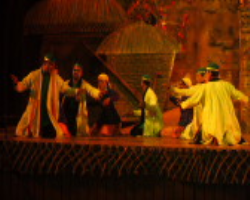
The Feast of Merit (Khuangchawi): Wealthy families affirmed their societal status not through individual accumulation, but by hosting massive multi-day feasts for the entire village and neighboring clans. Achieving the highest grade of feast guaranteed honor on earth and immediate entrance into Pialral (paradise) in the afterlife.
The Christian Transformation
Beginning in the late 1890s and accelerating through the early 20th century, Welsh Presbyterian and London Baptist missionaries entered southern Mizoram. The Baptist Church of Mizoram (BCM) and later the Lai Christian Fellowship / Lairam Baptist Church (LIKBK) found deep resonance among the highlanders.
Factors Driving the Rapid Adoption of Christianity:├─ Moral Alignment: The concept of a loving, supreme 'Pathian' matched ancestral belief.├─ Freedom from Fear: Released families from the financial burden of appeasing capricious spirits.├─ Scriptural Literacy: Translating the Bible into local tongues preserved the mother language.└─ Social Parity: Off-clan converts, widows, and commoners were welcomed into community life.
Today, Christianity is integral to Lai social and moral identity. The local church serves as a civic center, musical conservatory, charity network, and cultural preserver, balancing Christian doctrine with ancestral codes of community care.
8. Material Culture, Traditional Attire, and Weaving
The material culture of the Lai reflects their adaptation to rugged mountain ecosystems.
LAI TEXTILE TRADITIONS│┌───────────────────────┴───────────────────────┐▼ ▼Puanchei / Lai Puan ChawngnakIntricate ceremonial wrap-skirt Prestige clan blanketWoven using cotton and silk threads Features alternating red, black,Bold geometric lozenges & chevron bands and white structural bands
Textiles and Handlooms
Weaving is traditionally women’s art, conducted on traditional loin looms (backstrap looms) and fly-shuttle frame looms.
-
Lai Puan: Handwoven wraparounds featuring structured color schemes. While neighboring groups favor softer pastel combinations, traditional Lai textiles display contrasting black, white, deep indigo, and vibrant red geometries.
-
Chawngnak and Thangnang: Highly prized traditional blankets and shawls historically woven only by women whose families had performed specific hunting or feast exploits.
-
Headgear and Adornment: Historically, Lai men gathered their hair into a top-knot over the forehead, secured with carved bone or brass hairpins (Tawnkham), and wound red and white turbans around it. Women wore heavy necklaces of amber (Saikha), cornelian beads, and heavy circular brass earrings.
Metallurgy, Woodcraft, and Architecture
The Lai were skilled iron-workers, maintaining village forges fueled with mountain charcoal to craft daos (clearing swords), spears, axes, and traps. Traditional houses were built of split bamboo (Dap), heavy timber logs, and thatch grass roofs, raised on stilts against mountain slopes to deter wild animals and dampness.
9. Festivals and Performing Arts
Festivals (Kut) in the Lai calendar correspond directly to agricultural cycles and hunting seasons.
THE LAI FESTIVAL CYCLE (KUT)CHAPCHAR KUT NILAK KUT / MIM KUTCelebrated in February/March Observed in autumn/harvest timeFollows the arduous jhum clearing Commemorates ancestral departed souls│ │└─────────────────┬────────────────┘│▼THALFAVANG KUTCelebrated post-weedingCelebrates approaching harvests
Core Traditional Festivals
-
Chapchar Kut: Celebrated in spring after clearing the mountain forests for jhum plots. It is a festival of thanksgiving, reconciliation, feasting, and community dance.
-
Thalfavang Kut: Celebrated around November when clearing and weeding are finished, marking anticipation of the winter paddy harvest.
Dance and Music
-
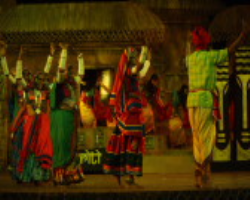
Cheraw (The Bamboo Dance): Although celebrated widely across Mizoram, the Lai version incorporates distinct rhythmic cadences, intricate four-to-eight bamboo configurations, and unique ancestral songs.
-
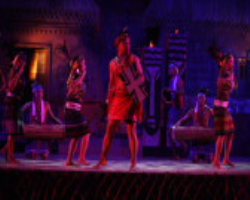
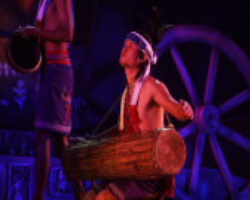
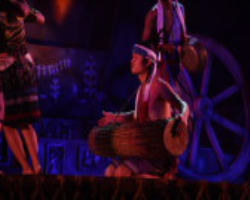
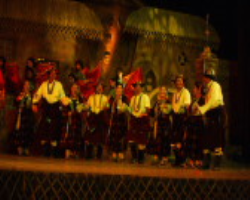
Chheihlam and Sarlamkai: Energetic community circle dances accompanied by traditional drums (Khuang) made of hollowed logs and animal hides, alongside brass gongs (Darmang). The Sarlamkai is an ancient martial dance performed to welcome successful warriors and hunters, celebrating physical courage and clan defense.
10. Language and Oral Literature: Lai Holh
The Lai people speak Lai Holh (or the Lai language), belonging to the Central Kukish branch of the Tibeto-Burman language family.
TIBETO-BURMAN FAMILY│▼KUKI-CHIN SUB-BRANCH│▼CENTRAL KUKISH│┌──────────────────┴──────────────────┐▼ ▼Lai Holh Duhlian(Language of the Lai) (Official lingua franca of Mizoram)
Characteristics of Lai Holh
-
Tonal Complexity: Like most Tibeto-Burman languages, Lai Holh is tonal; variations in pitch (high, low, rising, falling) differentiate lexical meanings of identical phonetic syllables.
-
Morphological Richness: It retains conservative phonological features, consonant clusters, and verbal conjugations that have simplified in surrounding languages, making it a valuable subject for Himalayan and Tibeto-Burman historical linguistics.
-
Oral Literature: The language holds an extensive oral library of Hla (rhyming poetry), Thawnthu (mythological epics), and Phaiphuntong (riddles and proverbs).
With the standardization of the Duhlian dialect as the primary state-wide Mizo language, the Lai community works deliberately through schools and councils to publish literature and textbooks in Lai Holh, preserving their linguistic heritage across generations.
11. Economic Life: Jhum Agriculture, Forestry, and Modern Livelihoods
Subsistence among the Lai has historically rested on symbiotic, seasonal interaction with their steep mountain ecosystems.
ANNUAL JHUM CYCLE (LOU)DECEMBER - FEBRUARY MARCH - APRIL MAY - AUGUST OCTOBER - DECEMBERForest plot selected Burned under clear skies Weeding rounds Harvesting of crops;and cut down (*Vau*) to enrich soils (*Meivah*) performed (*Hlo-thlaw*) grain stored in granaries
The Dynamics of Jhum (Shifting Cultivation)
The traditional mountain farm (Lou) operates on multi-year rotation cycles:
-
Biodiversity within Jhum: A single jhum field is rarely a monoculture. Lai cultivators intercrop mountain upland rice with maize, millet, yams, ginger, chillies, sesame, and pumpkins, providing varied subsistence over seasons.
-
Ecological Stress: Population growth, infrastructural expansion, and forest demarcations have compressed traditional fallow cycles from 10–15 years down to 3–5 years. This reduction leads to soil erosion, slower forest regeneration, and diminished agricultural yields.
Transition to Settled Agriculture and Modern Trades
To balance subsistence and conservation, the Lai community is shifting toward settled alternatives:
-
Horticultural Plantations: Cultivating areca nut, broom grass, rubber, dragon fruit, and mountain oranges across terraced valleys.
-
Forest Produce: Collecting wild bamboo shoots, medicinal herbs, mountain honey, and cane for weaving.
-
Service Sector: Many educated Lai youth work in teaching, administrative public service through the LADC, defense forces, and entrepreneurship in urban nodes like Lawngtlai and Aizawl.
12. Modern Political Empowerment: The Lai Autonomous District Council (LADC)
The constitutional standing of the Lai community rests within the Sixth Schedule of the Constitution of India, which provides self-governance guarantees to indigenous populations in Northeast India.
SIXTH SCHEDULE GOVERNANCE (LADC)EXECUTIVE POWER LEGISLATIVE POWER JUDICIAL POWERExecutive Committee led Formulates bye-laws on Customary Village Courtsby the Chief Executive Member land allocation, forests, resolve disputes, civil matters,manages rural development markets, and culture and local inheritance claims
Historical Evolution of the Council
Following Indian Independence and the integration of the Lushai Hills, distinct sub-tribes sought institutional protections against cultural assimilation:
-
In 1953, the unified Pawi-Lakher Regional Council (PLRC) was established under the Sixth Schedule to represent the Pawi (Lai), Lakher (Mara), and Chakma communities.
-
As demographic and political aspirations evolved, the PLRC was dissolved in 1972.
-
This reorganization created three dedicated entities: the Pawi District Council (later renamed the Lai Autonomous District Council in 1989), the Mara Autonomous District Council, and the Chakma Autonomous District Council.
Powers and Jurisdiction of the LADC
Headquartered at Lawngtlai, the LADC functions as a mini-legislative and developmental body with 25 elected Members of the District Council (MDCs) and nominated representatives. Its powers encompass:
-
Land Administration: Allocating rural lands, setting town planning guidelines, and regulating private ownership titles.
-
Customary Law Codification: Codifying ancestral marriage laws, inheritance rights, village headmanship, and dispute resolution.
-
Primary Education and Cultural Promotion: Overseeing primary schools, introducing Lai language primers, and patronizing indigenous arts.
13. Contemporary Challenges and Human Development Struggles
Despite constitutional autonomy and cultural preservation, the Lai face systematic structural challenges.
INTERLOCKING CONTEMPORARY CHALLENGESGEOGRAPHIC ISOLATION CROSS-BORDER REFUGEE FLUXPoor highways, landslides, Instability in Myanmar drives Chinhigh transport costs for goods kinfolk seeking shelter in Lawngtlai│ │└──────────────────┬──────────────────┘│▼[ STRUCTURAL PRESSURES ]│┌──────────────────┴──────────────────┐│ │▼ ▼HEALTHCARE & EDUCATION LUMBERING EMPLOYMENTSpecialist shortages, reliance Dependence on state funding,on distantly located hospitals scant large-scale industrialization
Geographical Isolation and Infrastructure Deficits
Lawngtlai District sits hundreds of kilometers from regional economic hubs. National Highway connectivity (such as NH-54 / NH-2) is frequently disrupted during the monsoon by massive landslides and road subsidence.
This geographic isolation inflates the cost of construction materials, fuels, and essential commodities, dampening local entrepreneurship.
Healthcare and Educational Infrastructure
-
Healthcare Access: Lawngtlai town has basic secondary health infrastructure, but rural Lai villages lack tertiary medical facilities. Critical medical emergencies require journeys over winding, damaged mountain roads to Lunglei, Aizawl, or out-of-state centers in Guwahati or Silchar.
-
Educational Gaps: While primary literacy is high due to church-run schools, higher educational institutions offering vocational, scientific, engineering, and medical training remain sparse within council boundaries. Educated youth frequently leave for mainland Indian metros, spurring a rural brain drain.
The Geopolitical Crisis: Myanmar’s Political Turmoil
Following the February 2021 military coup in Myanmar, intense fighting erupted across the Chin State, immediately across the Lawngtlai border. Thousands of Chin refugees—who share direct familial, linguistic, and historical kinship with the Lai—crossed the Chhimtuipui River into southern Mizoram seeking sanctuary.
The Humanitarian Scenario in Lawngtlai:├─ Ethno-Cultural Kinship: Lai communities welcomed refugees, sharing food and timber.├─ Community Mobilization: Civil society groups and local churches established relief camps.├─ Administrative Strain: Protracted displacement pressures local water, medicine, and food supplies.└─ Cross-Border Security: Ongoing border instability disrupts trade routes and forest stability.
The Lai community’s humanitarian response reflects deep Tlawmngaihna, but long-term support for displaced populations remains a challenge for local self-governing institutions.
14. The Kaladan Multi-Modal Transit Transport Project: Opportunities and Anxieties
The Kaladan Multi-Modal Transit Transport Project (KMMTTP) is a major infrastructure initiative directly intersecting the Lai territory.
KALADAN MULTI-MODAL PROJECT (KMMTTP)Sea Route: Kolkata Port ──► Sittwe Port (Rakhine State, Myanmar)│▼Inland Waterway ──► Paletwa Inland Terminal (Kaladan River)│▼Highway Corridor ──► Zorinpui / Lawngtlai Border Hub (Mizoram, India)│▼National Integration ──► Connection to NH-54 / Indian Highway Network
Designed to connect India’s landlocked Northeast with the Bay of Bengal through Myanmar, the highway section crosses directly through Lawngtlai District.
Anticipated Benefits
-
Economic Uplift: Establishing Lawngtlai as an international transit city, logistics hub, and dry port.
-
Market Access: Direct port access to export local mountain produce (organic ginger, bamboo products, turmeric, fruits) to Southeast Asian and Indian coastal markets.
Local Anxieties
-
Ecological Disruption: Forest clearing, hill cutting, soil erosion, and river silting along the Chhimtuipui basin.
-
Demographic Imbalances: Concerns that unmonitored commercial expansion could marginalize local indigenous businesses without protective policies.
-
Geopolitical Delays: Armed conflict in Myanmar’s Rakhine and Chin states has repeatedly paused construction, leaving highway segments incomplete and prone to seasonal degradation.
15. The Way Forward: Preserving Identity While Embracing Progress
The path ahead for the Pawi (Lai) tribe depends on policies that balance self-governance with inclusive modernization.
PILLARS OF SUSTAINABLE DEVELOPMENTINSTITUTIONAL REFORM SUSTAINABLE ECOLOGYDirect financial support Terracing, agro-forestry, andfor the LADC, clean records, value-added processing ofand clear governance local bamboo and ginger│ │└──────────────────┬──────────────────┘│▼[ RESILIENT LAI FUTURE ]│┌──────────────────┴──────────────────┐│ │▼ ▼CULTURAL PRESERVATION CROSS-BORDER SECURITYDigital archives of Lai Holh, Stable borders, managed commerce,textiles, and customary lore and sustained regional humanitarian aid
1. Strengthening the LADC Framework
Constitutional amendments that provide direct central funding to Autonomous District Councils (bypassing state bottlenecks) can help the LADC complete infrastructure initiatives, modernize schools, and establish local medical facilities.
2. Investing in Agro-Forestry and Eco-Tourism
Rather than abruptly suppressing ancestral farming, government programs can support the shift toward climate-resilient horticulture, terrace cultivation, organic cash crops, and responsible eco-tourism centered on Phawngpui National Park.
3. Digitizing and Safeguarding Cultural Heritage
Documenting Lai Holh oral literature, traditional song structures, weaving techniques, and tribal histories in digital archives can preserve their cultural legacy for future generations.
4. Cross-Border Stability and Infrastructure Completion
Completing the Kaladan transit corridor while safeguarding customary land tenure will allow the Lai people to turn their borderland location from a geographic obstacle into an economic advantage.
16. Comparative Overview: The Lai (Pawi) Tribe
Conclusion: A Resilient Highlander Legacy
The Pawi (Lai) tribe exemplifies the dignity, courage, and cultural depth of India’s northeastern indigenous communities. From independent mountain chiefs defending Phawngpui’s ridges to modern leaders guiding the Lai Autonomous District Council through regional changes, the Lai have maintained their unique identity.
Supporting their progress requires an honest appreciation of their distinctive language, traditions, and constitutional rights. As modern transport links open up southern Mizoram, protecting the Lai people’s cultural heritage and economic security will ensure that these highlanders continue to thrive on their ancestral hills.