


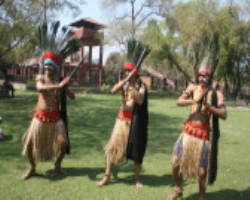
Echoes of the Forest: The Putiya Tribe, Cultural Heritage, and the Battle for Dignity in Modern India
In the dense deciduous hills where central and eastern Indian plateaus slope gently into perennial forest clearings, morning does not begin with an alarm clock. It begins with the low hum of grinding stones, the rustle of fallen sal leaves under bare feet, and the rhythmic beat of hand-carved drums echoing off the riverbed. This is the heartland of the Putiya community—an indigenous society whose history is etched not in institutional textbooks, but in oral ballads, ancestral groves, and the seasonal rhythms of the forest canopy.
Thank you for reading this post, don't forget to subscribe!India is home to more than 700 recognized Scheduled Tribes and numerous micro-indigenous groups, representing over 104 million people. While larger demographic groups like the Santhal, Bhil, and Gond frequently occupy public discourse, smaller, localized indigenous populations like the Putiya often live at the fragile margins of awareness. Their collective story is a poignant microcosm of India’s indigenous paradox: custodians of profound ecological knowledge and vibrant social systems, yet navigating severe socio-economic distress, political disenfranchisement, and cultural erosion in a rapidly urbanizing republic.
Who Are the Putiya? Roots, Identity, and Ancestral Landscape
The Putiya identify primarily as children of the forest (aranya or jangal). Ethnically belonging to the ancient Austroasiatic and Dravidian cultural continuum characteristic of the central-eastern Indian tribal belt (overlapping regions of Odisha, Jharkhand, Chhattisgarh, and neighboring borderlands), their oral genealogies stretch back generations before modern administrative territorial demarcations.
The name “Putiya” is intertwined in local lore with ideas of lineage, earthen hearths, and specific sacred flora. Unlike mainstream agricultural caste structures that historically organized society through rigid hierarchies of purity and pollution, Putiya society is fundamentally rooted in egalitarian communal kinship.
| Ancestral Putiya World | ||
|---|---|---|
| Kinship & Equality | Ecological Custodianship | Cosmology & Animism |
| Clan exogamy (Killi) | Customary commons (Nistar) | Sacred Groves (Jaher/Sarna) |
| Participatory councils | Sustainable NTFP gathering | Spirit veneration (Bonga/Devata) |
| Gender-balanced labor | Zero-waste agrarian rhythm | Earth-as-mother worldview |
Social Structure and Kinship Networks of Putiya Tribe
Putiya social organization pivots around totemic clans known colloquially as Killi or Gotra. Each clan traces its spiritual lineage to an animal, plant, or elemental phenomenon:
- The Tiger Clan (Baghel / Kul): Entrusted with territorial boundary rituals and spiritual protection.
- The Sal Tree Clan (Karanj / Sarai): Associated with seasonal harvesting and village arboreal maintenance.
- The River/Fish Clan: Guardians of natural streams, natural bunds, and clean water management.
Taboos strictly prevent members from harming their respective totemic animals or trees. This taboo system acts as an indigenous conservation charter, preventing over-exploitation of vulnerable plant and animal species.
Kinship strictly follows clan exogamy—one cannot marry within the same Killi. Unlike patriarchal mainland dowry cultures, traditional Putiya practice honors Kanya-Dhan in reverse through bride-wealth customs (Kanyasulka). This payment is nominal and symbolic, designed not to commodify the woman, but to compensate her clan for the loss of a productive, valued member of the agricultural unit.
Culture, Cosmology, and Daily Rhythm
To witness daily life among the Putiya is to understand a lifestyle where utility and aesthetics are seamlessly united.
Animistic Cosmology: Sacred Groves and Ancestral Whispers
The Putiya do not build towering stone temples. Their sanctum sanctorum is open to the sky: the Sacred Grove (often termed Jaherthan or Sarna). In this untouched cluster of ancient sal, mahua, and kendu trees, their supreme spirits dwell.
- Veneration of the Unseen: The divine is manifest in rivers, mountain ridges, and weather patterns.
- The Village Priest (Dehuri or Naike): Chosen not through heredity, but spiritual aptitude, officiating during life transitions and sowing ceremonies.
- Ancestor Presence: When elders pass away, their spirits (Purkhar) are formally welcomed back into the family storeroom or kitchen corner via quiet evening rituals, reassuring the living that wisdom remains near.
Material Culture, Folk Crafts, and Architecture
A Putiya settlement features mud-walled homes (Kutcha ghar) coated with cow dung, river clay, and natural husks. These dwellings insulate against blistering summers and freezing winter nights:
| Architectural / Cultural Artifact | Material Base | Cultural & Ecological Function |
| Sohrai-style Mud Frescoes | Red ochre (geru), white kaolin, charcoal | Depicts birds, cattle, forest leaves; wards off negative omens during post-harvest festivals. |
| Bamboo Baskets & Fish Traps | Split green bamboo, wild cane | Water-permeable, biodegradable trapping tools adapted to seasonal monsoon runoffs. |
| Kendu Leaf Twine (Rassi) | Twisted wild creepers and bark fiber | High-tensile cordage used for roof-thatching and binding cattle sheds without metallic nails. |
| Dheki (Foot-lever Rice Pounder) | Carved hardwood log, stone pestle | Manual grain dehusking that preserves grain germ and nutritional bran. |
Musical Traditions and Celebrations
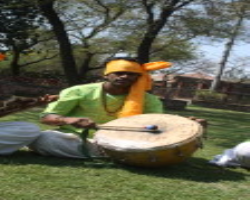
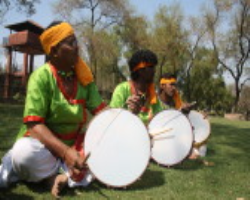
Song and dance are social adhesives, not entertainment. The Madal (two-headed earthen drum) and the Tiriyo (transverse bamboo flute) govern festive nights:
- Sarhul / Baha Festival: Welcoming the spring blossoming of the Sal tree. No sal flowers may be plucked or worn until the community elder performs the primary libation.
- Karam Festival: Celebrating youth, fertility, and labor. A fresh branch of the sacred Nauclea parvifolia (Karam tree) is brought into the village courtyard, around which young men and women dance in interlocked rows until sunrise.
The Traditional Economy: Stewardship of the Forest Commons
Historically, the Putiya followed a blended economic model: rainfed subsistence agriculture supplemented by the gathering of Non-Timber Forest Products (NTFP).
- Mahua flower collection • Upland paddy sowing • Paddy & Millet harvest
- Kendu leaf plucking • Wild mushroom foraging • Threshing & Granary storage
- Firewood collection • Bamboo shoot gathering • Wedding celebrations
- The Mahua Tree (Madhuca longifolia): Known affectionately as the tree of life. Dropped sweet petals are dried for food security in lean pre-monsoon months, fermented into ritual drink, or pressed for lamp and cooking oils.
- Kendu Leaves (Diospyros melanoxylon): Collected, dried, and bundled for sale to regional state corporations for bidi manufacturing.
- Millets & Indigenous Cereals: Cultivation of drought-resilient crops like finger millet (ragi), kodo, and little millet (kutki) on hillside slopes (dongar).
This ecosystem demanded minimal groundwater irrigation, produced zero synthetic waste, and preserved seed biodiversity over centuries.
The Onset of Fractures: Modernity and the Squeeze of Displacement
The peaceful coexistence of the Putiya with their forest began unraveling during the colonial era through draconian forest acts that transformed sovereign indigenous custodians into institutional trespassers on their own lands. Post-independence industrialisation and development programmes intensified this process.
The Land-Resource Paradox
The lands inhabited by communities like the Putiya are rich in mineral wealth—bauxite, iron ore, coal, and limestone. This reality has become their greatest existential vulnerability.
When land acquisition proceeds without informed consent, the consequences extend far beyond real estate losses. For a Putiya family:
- The loss of the forest means the loss of free fuel, wild nutrition, herbal remedies, and cultural sanity.
- Cash compensations, if paid at all, quickly evaporate in exploitative local informal economies where financial literacy has not been cultivated.
- Resettlement colonies lack the sacred trees, clan burial sites (Sasandiri), and communal spaces essential to their spiritual identity.
Human Development Challenges in the 21st Century
Assessing the socio-economic status of the Putiya reveals systemic vulnerabilities across all standard human development indicators.
- Public Health and Medical Disconnect
Primary Healthcare Centres (PHCs) are often miles away from Putiya hamlets over unpaved forest roads. This absence fuels two distinct crises:
- Maternal and Infant Mortality: Home deliveries without skilled birth attendants remain frequent due to inaccessible emergency transport.
- Malnutrition: As commercial monoculture plantations replace varied wild greens, tuber roots, and millets, the nutritional diversity of the indigenous plate has severely contracted.
- The Language Barrier in Primary Classrooms
Education is a constitutional guarantee, yet for a young Putiya child, entering a government primary school can be deeply disorienting:
- Linguistic Alienation: The child speaks an indigenous mother tongue at home, but encounters textbooks and teachers exclusively in standardized regional state languages or Hindi.
- Cultural Erasure: School curricula regularly dismiss their heritage, portraying forest living as “primitive” or “backward.”
- Systemic Attrition: Discouraged by humiliation and comprehension barriers, children drop out early, retreating into informal agricultural or domestic labor.
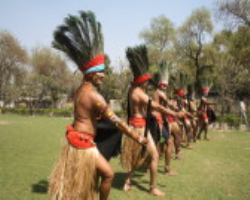
Legal Protections vs. Ground Realities: FRA and PESA
The Indian Constitution provides substantial institutional safeguards for tribal welfare, yet the gulf between statutory provisions and administrative enforcement remains wide.
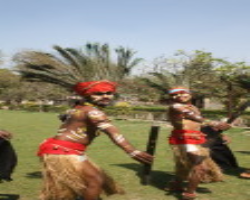
The Forest Rights Act (FRA), 2006
The FRA was passed to undo the “historic injustice” done to forest-dwelling communities. It formally recognizes:
- Individual Forest Rights (IFR): Land cultivated by families prior to December 13, 2005.
- Community Forest Resource (CFR) Rights: Ownership and management over minor forest produce, grazing paths, and water bodies inside forest zones.
The Challenge: In Putiya settlements, many individual applications are rejected due to technicalities—lack of satellite documentation, arbitrary forest department objections, or bureaucratic delays. Community Forest Rights, the real backbone of sustainable community autonomy, remain underutilized.
PESA Act, 1996
The Provisions of the Panchayats (Extension to the Scheduled Areas) Act legally empowers the local Gram Sabha (village council) as the supreme decision-making body regarding local developments, dispute resolutions, and natural resource management.
The Ground Reality: In practice, government bureaucracies and industrial developers often bypass the Gram Sabha, using fabricated resolution papers or coercive public hearings to secure developmental clearances.
A Road to Dignity: Empowering the Putiya in Modern India
The survival of the Putiya should not be an exercise in static museum preservation, nor should it require forced assimilation that strips away their unique cultural identity. True human development rests upon self-determined progress (Adivasi Swaraj).
SUSTAINABLE PROGRESS
| Mother Tongue | Value Forest | Decentralized | Strengthened |
| Education | Cooperatives | Decentralized | Strengthened |
| Education | Cooperatives | Healthcare | CFR Titles |
| (Bilingual Model) | (TRIFED / Van Dhan) | (Mobile PHCs) | (True Gram Sabha Power) |
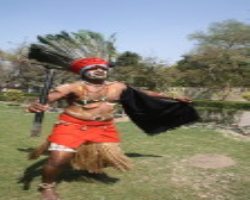
Strategic Interventions for Equitable Empowerment
- Mother-Tongue-Based Multilingual Education (MLE):
- Revitalizing the Millet Economy and Van Dhan Vikas Kendras:
Reviving climate-smart indigenous millets protects food sovereignty. Expanding the Pradhan Mantri Van Dhan Yojana can help Putiya women’s Self-Help Groups (SHGs) process raw mahua, tamarind, and wild honey locally, capturing profit margins currently lost to exploitative intermediaries.
- Democratizing CFR Forest Governance:
District collectors and forest departments must actively assist Putiya Gram Sabhas in demarcating their Community Forest Resource areas, giving them legal, unencumbered rights to harvest and protect their surrounding catchments.
- Culturally Sensitive Healthcare:
Deploying mobile tribal health teams that collaborate with local midwives and healers bridges the gap between state care and indigenous communities, building trust for immunizations and institutional deliveries.
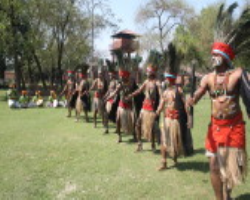
The Wisdom We Risk Losing
When we study the Putiya, we are not simply looking at a community struggling to navigate poverty indices. We are looking at a living archive of human sustainability.
At a time when climate volatility, ecosystem collapse, and extractive models threaten planetary boundaries, the philosophy of the Putiya offers vital lessons. Their worldview—rooted in taking only what is needed, viewing nature as a living kin rather than raw inventory, and grounding life in mutual community solidarity—is not an outdated artifact. It is an essential blueprint for ecological survival.
The true test of modern India’s democratic and human development trajectory lies in whether it can honor its smallest, most vulnerable communities. Ensuring the rights, health, and dignity of the Putiya is not charity: it is an act of historical restitution, justice, and common preservation.