



Synteng Tribe (Pnar of Meghalaya): History, Matrilineal Heritage, Culture, and Modern Realities
The mist-shrouded ranges of Meghalaya’s eastern tablelands are home to one of the world’s most enduring and sophisticated matrilineal societies: the Synteng, commonly referred to as the Pnar or Jaintia. Nestled within the lush valleys, deep river gorges, and limestone karsts of the West and East Jaintia Hills districts, the Synteng people hold a distinctive civilizational identity. While closely related linguistically and culturally to their Khasi neighbors, they preserve unique political histories, an intricate kinship architecture, vibrant festivals, and ancient agrarian wisdom.
To study the Synteng is to explore how tradition and modernity intersect across indigenous India. From the seat of the medieval Jaintia Kingdom to the challenges of post-colonial statehood, coal-mining economies, environmental degradation, and contemporary socio-political aspirations, the story of the Synteng reflects resilience, adaptation, and quiet determination.
Who Are the Synteng? Nomenclature, Origins, and Geography
Within the community, however, the preferred endonym is Pnar. Linguistically and ethnically, the Pnar constitute a major sub-group of the broader Hynniewtrep (or Seven Huts) people, who trace their mythical descent from seven celestial families whom the Creator permitted to dwell permanently on earth.
                                  [ Hynniewtrep Race ]
                                           │
         ┌─────────────────────────────────┴─────────────────────────────────┐
         ▼                                                                   ▼
   Khasi Sub-groups                                                   Synteng / Pnar
 (Khynriam, Bhoi, War)                                       (Jowai, Nartiang, Raliang, Shangpung)
         │                                                                   │
         ├─ Matrilineal Descent (Ka Khadduh)                                 ├─ Matrilineal Descent (Ka Khadduh / Iawbei)
         ├─ Matrilocal Residence                                             ├─ Duolocal / Matrilocal (Historically Duolocal)
         └─ Autonomous Dorbar Shnong                                         └─ Elaka Administration (Syiem, Daloi, Waheh Chnong)
The Topography of Jaintia Hills
The homeland of the Synteng is situated in the eastern quarter of Meghalaya, bordered by:
-
North: The Karbi Anglong and Dima Hasao districts of Assam
-
East: The North Cachar Hills of Assam
-
West: The East Khasi Hills district of Meghalaya
-
South: The Surma Valley and Sylhet plains of Bangladesh
The terrain shifts from high plateau regions around Jowai (the cultural and administrative nerve center of the community) to limestone ridges, descending southward into sub-tropical valleys along the Umngot, Myntdu, and Kupli (Kopili) rivers. The climate ranges from temperate highland weather to heavy monsoonal rains that shape soil fertility, terrace farming patterns, and sacred river systems.
Historical Trajectory: From Clan Federations to the Jaintia Kingdom
The historical evolution of the Synteng distinguishes them from many hill communities across Northeast India. Unlike scattered highland clans that avoided contact with lowland polities, the Synteng developed a centralized state apparatus known as the Jaintia Kingdom (Ka Hima Jaintia).
   13th - 15th Century             16th - 18th Century               1835 (Colonial Era)
┌───────────────────────┐       ┌────────────────────────┐       ┌────────────────────────┐
│ Clan Raids & Local    │  ──►  │ Jaintiapur Capital     │  ──►  │ British Annexation     │
│ Chieftaincies (Daloi) │       │ Synteng Hill Oligarchy │       │ Kiang Nangbah Revolt   │
│ Early State Formation │       │ Hill-Plains Synthesis  │       │ Disruption of Trade    │
└───────────────────────┘       └────────────────────────┘       └────────────────────────┘
1. The Genesis of Ka Hima Jaintia
Before centralization, the Synteng territory was governed by autonomous clan federations led by local chieftains known as Dalois (or Dolois). Over generations, through alliances, trade control, and military consolidation, these autonomous provinces coalesced under a paramount ruler: the Syiem (King).
By the late medieval era (around the 15th to 16th centuries), the Jaintia Kingdom expanded beyond the highlands into the plains of Sylhet (in present-day Bangladesh). The capital was established at Jaintiapur, at the foot of the hills.
2. The Hill-Plains Symbiosis
This dual geography created a unique socio-political structure:
-
The Highland Core: Inhabited by the Synteng/Pnar, governed through customary clan rules, matrilineal norms, and Dalois.
-
The Plain Periphery: Inhabited predominantly by Bengali Hindu and Muslim agrarian populations, governed by state revenue collectors.
This interaction produced a remarkable syncretism. While the royal court at Jaintiapur patronized Hindu rituals, constructed temples (such as the famed Jayanti Devi / Nartiang Durga Temple), and used Bengali-Sanskrit inscriptions for diplomacy, the king’s legitimacy remained rooted in the hills. The Syiem could not rule as an autocrat; he remained bound by the council of highland Dalois, who retained the power to advise, check, and depose a ruler who violated customary sanctions.
3. British Annexation and Colonial Resistance
British expansionism in the 19th century disrupted this political equilibrium. Following conflicts in the Surma valley and the annexation of the plains of Jaintia in 1835 under Lord William Bentinck, the Synteng king, Syiem Rajendra Singh, abdicated his hill territories, refusing to rule a truncated realm without his plain territories. Consequently, the British brought the Jaintia Hills directly under the administrative jurisdiction of the British East India Company.
British colonial rule imposed direct taxation on households, prohibited traditional religious rites near administrative zones, and interfered with forest exploitation. This sparked intense rebellions, culminating in the Jaintia Rebellion of 1860–1863 led by the legendary freedom fighter U Kiang Nangbah.
Kiang Nangbah organized the Synteng clans through customary democratic councils, waging guerrilla warfare against colonial forces across river valleys and mountain passes. Betrayed and captured, he was publicly hanged by the British in Jowai on December 30, 1862. His dying words—prophesying that his head would fall toward the east if his cause was unjust, but toward the west if his country would one day be free—remain immortalized in Synteng collective memory.
Social Fabric: Kinship, Matriliny, and Duolocal Residence
The most distinctive dimension of Synteng society is its kinship structure. Like the Khasi, the Synteng practice matriliny (Kur system), tracing lineage, ancestry, and inheritance entirely through the mother’s line. However, the Synteng model includes unique variations in living arrangements and paternal responsibilities.
                         [ Ka Iawbei ]
                      (Primal Ancestress)
                              │
               ┌──────────────┴──────────────┐
               ▼                             ▼
           Daughter                       Daughter
         (Inheritor)                  (Ka Khadduh - Custodian)
               │                             │
        Children take                 Children take
        Mother's Clan                 Mother's Clan
1. Kur and Kpoh: The Structural Architecture of Kinship
The foundation of Pnar identity rests on the Kur (clan). All members of a Kur trace their descent back to a mythical, common ancestress, Ka Iawbei Tynrai (the First Mother).
-
Within the Kur are subdivisions called Kpoh (womb/lineage), composed of families descending from a more immediate grandmother (Ka Iawbei Tymmen).
-
A single household unit is known as the Iing.
-
Strict clan exogamy (Sang) governs marriage. Inter-marriage within the same Kur is the highest taboo, resulting in immediate social ostracization (tang-sang), loss of inheritance, and denial of customary funeral rites.
2. The Traditional Duolocal Marriage System (Night-Visiting Husband)
Historically, the Synteng practiced an anthropological rarity known as duolocal residence. Unlike matrilocal systems where a husband moves permanently into his wife’s home, the traditional Synteng husband remained a resident member of his maternal home:
-
By day, a married man lived, worked, and ate in the home of his mother and sisters, contributing his physical labor to his maternal family’s land.
-
At dusk, he would visit his wife’s house (Iing Khadduh or wife’s residence) and return to his mother’s home at dawn.
-
Any property or income he generated belonged primarily to his maternal clan, under the management of his sister.
| Characteristic | Khasi Matriliny | Synteng (Pnar) Matriliny (Traditional) |
| Primary Residence | Neolocal / Matrilocal (husband lives with wife) | Duolocal (husband lived with his mother; night-visiting system) |
| Male Role | Father gains primary domestic authority over time | Maternal uncle (U Kni) held preeminent authority; father had limited domestic authority |
| Inheritance | Ka Khadduh (youngest daughter) inherits family estate | Ka Khadduh inherits ancestral property as trustee of the Kur |
| Religious Custody | Ka Khadduh maintains hearth and rites | Ka Khadduh works closely with U Kni to safeguard ancestral bones (Kpep) |
3. The Authority of U Kni (The Maternal Uncle)
In this matrilineal framework, the key male figure is not the father, but the U Kni (the eldest maternal uncle). The Kni acts as legal counselor, ceremonial head, ritual executor, and business supervisor of his sister’s domestic unit.
While the female head holds title to the hearth and ancestral lands, decisions regarding alienation of property, dispute resolution, and clan representation are guided by the U Kni. This dynamic balances female custody of property with male political representation.
Political Organization: Grassroots Democracy and the Elaka System
Long before modern democratic decentralization, the Synteng operated a tiered, participatory governance system. Even under the Syiem of Jaintia, authority was never despotic; political power flowed upward from the village assembly.
                     Level 1: The Crown
                     ┌──────────────────┐
                     │    U Syiem       │  (Paramount King - Historical)
                     └────────┬─────────┘
                              │
                     Level 2: The Province
                     ┌────────┴─────────┐
                     │    U Daloi       │  (Provincial Governor / Chieftain)
                     └────────┬─────────┘
                              │
                     Level 3: The Village
                     ┌────────┴─────────┐
                     │  Waheh Chnong    │  (Village Headman & Council)
                     └──────────────────┘
1. Waheh Chnong and the Dorbar Shnong (The Village Level)
At the base of Synteng democracy is the Dorbar Shnong (Village Council), presided over by the Waheh Chnong (Village Headman). Every adult resident male belonging to an indigenous clan participated in deliberations. The Dorbar resolves neighborhood disputes, manages community commons, enforces sanitation, and organizes communal agricultural activities.
2. The Elaka and the Daloi (The Provincial Level)
The Jaintia Hills region is divided into customary territorial units known as Elakas (historically 12 core regions, known as Ki Khat-ar Daloi). Each Elaka is governed by an elected Daloi, drawn from specific founding clans (Ki Kur Daloi).
-
The Daloi serves administrative, judicial, and priestly functions.
-
He is supported by the Pator (deputy governor), alongside village elders.
-
Under the Sixth Schedule of the Indian Constitution, the Jaintia Hills Autonomous District Council (JHADC) recognizes and interfaces with this indigenous tier of Dalois and Waheh Chnongs, creating an administrative system where modern statutory mechanisms coexist with age-old customary leadership.
Spiritual Worldview: Niamtre and Cultural Cosmologies
While a significant portion of the Synteng population embraced Christianity during the 19th and 20th centuries, a deep core of the community adheres to their ancestral faith: Niamtre.
                                  [ U Blai Tre Kynrad ]
                                 (Supreme Divine Creator)
                                             │
                       ┌─────────────────────┴─────────────────────┐
                       ▼                                           ▼
             Ritual Observance                               Moral Philosophy
     (Sacrifice, Libation, Cleansing)               (Kamai ia ka Hok - Earn Righteousness)
                       │                                           │
                       └─────────────────────┬─────────────────────┘
                                             │
                                   [ Tip Kur, Tip Kha ]
                             (Honor Maternal & Paternal Kin)
Niamtre is a monotheistic religion organized around nature veneration, moral duty, and ancestral remembrance. Its foundational tenets include:
1. Core Philosophical Tenets
-
Kamai ia ka Hok: To earn righteousness in daily life. Life is not seen as an illusion or a cycle of sin, but as a moral stage where human beings must live with honesty, hard work, and ethical rectitude.
-
Tip Bru, Tip Blai: To know humanity is to know God. Compassion and respect toward fellow human beings are seen as prerequisites for divine communion.

2. The Monoliths of Nartiang: Stone Pillars of Memory and Veneration
One of the most striking material expressions of Synteng cultural identity is found at Nartiang, home to the world’s largest concentration of megalithic monoliths erected by a single culture.
                      Moo Shynrang (Upright Menhir)
                            │  ▲  │  (Represents Male Ancestor / Paternal Uncle)
                            │  │  │
                            │  │  │
                          ┌─┴──┴──┴─┐
                          │         │
                          └─────────┘
                     ═════════════════════  Ground Level
                     ┌───────────────────┐
                     │                   │  Moo Kynthai (Flat Dolmen)
                     └───────────────────┘  (Represents Female Ancestor / Matriarch)
These megaliths fall into two primary structural forms:
-
Moo Shynrang (Menhirs): Tall, upright vertical stones representing prominent male ancestors, maternal uncles (U Kni), or heroic figures. The tallest menhir at Nartiang, erected by the legendary warrior U Mar Phalyngki, stands over 8 meters tall.
-
Moo Kynthai (Dolmens): Flat, horizontal stone slabs resting on smaller stone supports, placed directly in front of the upright menhirs. These symbolize the mother (Ka Iawbei), the nurturing earth, and maternal continuity.
These stones served as commemorative markers for departed heroes, ritual assembly sites, and physical markers of treaties signed between Elakas.
Festivals, Rites, and Intangible Cultural Expressions
The cultural life of the Synteng is expressed through community dance, sacred games, and seasonal thanksgiving festivals.
                                [ Behdieñkhlam ]
                                        │
         ┌──────────────────────────────┼──────────────────────────────┐
         ▼                              ▼                              ▼
    Symbud Khnong                 Ka Bam Pynsuk                    Dat-b-lawakor
 (Felling Sacred Tree)       (Ancestral Feast of Unity)         (Sacred Mud Football)
1. Behdieñkhlam: The Churning of Cosmic Renewal
Celebrated annually in July (primarily at Jowai and surrounding Elakas), Behdieñkhlam is the premier cultural and spiritual festival of the Synteng people. The name translates directly as chasing away the plague or demon of pestilence (Beh – to chase; Dien – stick/wood; Khlam – pestilence/disease).
The festival spans several days of intricate rituals:
-
Khnong Blai: Youths venture deep into sacred forests to fell tall, straight tree trunks known as Dein Khnong. These trunks are brought to town and left in designated spots for ritual preparation.
-
Rong / Rots: Local localities (Dongs) design tall, colorful, tiered decorative towers constructed from bamboo, paper, and cloth, featuring satirical commentaries on modern socio-political themes.
-
Aitnar: On the final day, the Rots are carried to a sacred mud pool named Aitnar. Hundreds of men dance together in rhythmic unison in the water and mud, accompanied by pipers playing the Ksing (drums) and Tangmuri (flutes). The Rots are submerged in the water as offerings.
-
Dat-b-lawakor: The celebration concludes with an ancient game similar to football, played with a heavy wooden ball in a mud field. The two teams represent the northern and southern halves of the valley; the side that scores is believed to secure an abundant harvest for the coming year.
                               Behdieñkhlam Festival Layout

     ┌─────────────────────── Aitnar (Sacred Mud Pool) ────────────────────────┐
     │                                                                        │
     │      [ Rot 1 ]       [ Rot 2 ]       [ Rot 3 ]       [ Rot 4 ]         │
     │     (Locality A)    (Locality B)    (Locality C)    (Locality D)       │
     │                                                                        │
     │     ~~~~~~~~~~~~~~~~ Rhythmic Communal Dancing ~~~~~~~~~~~~~~~~        │
     │                                                                        │
     └───────────────────────────────────┬────────────────────────────────────┘
                                         │
                                         ▼
                           Dat-b-lawakor (Wooden Ball Game)
                         [ North Valley ]  vs  [ South Valley ]
                         (Determines Agricultural Abundance)
2. Chad Pastieh
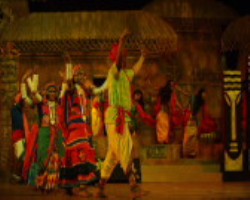
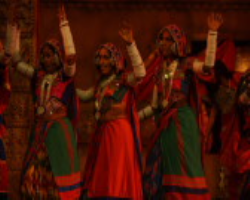
A traditional warrior dance performed during thanksgiving periods, Chad Pastieh features male dancers carrying swords (Wait) and fly-whisks (Symiad). Moving to steady drum tempos, the dance showcases martial agility, discipline, and historical readiness to defend the clan, while female members look on in festive silk attire.
3. Traditional Attire and Adornments
Synteng clothing blends practical highland warmth with ceremonial elegance:
-
Ka Jainsem & Ka Dhara: Woven silk textiles draped around the body, secured at the shoulders with pins. Muga and Eri silks from local sericulture cooperatives remain prized for community ceremonies.
-
Thoh Saru: A distinct checked cotton waist wrap favored by Pnar women for both daily agricultural work and gatherings.
-
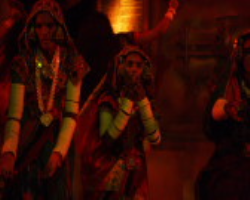
Khadu Syngkha: Heavy gold or brass bracelets, paired with thick strings of coral and gold bead necklaces (Kpieng Paila), serving as both family heirlooms and visual symbols of matrilineal family heritage.
Traditional Economy, Material Culture, and Livelihoods
Before mineral extraction shifted the regional economy, the Synteng maintained a well-balanced hill economy rooted in terrace cultivation, artisan trade, metal smelting, and regional cross-border commerce.
                             [ Traditional Synteng Economy ]
                                            │
         ┌───────────────────┬──────────────┴──────────────┬───────────────────┐
         ▼                   ▼                             ▼                   ▼
    Agriculture        Sericulture                 Blacksmithing           Border Trade
 (Lakadong Turmeric,   (Eri & Muga Silk           (Iron Smelting,        (Sylhet Plains: Betel,
  Terrace Rice)         Weaving)                   Farming Implements)    Areca Nut, Spices)
1. Agrarian Systems: The Gold of Lakadong
The Synteng engineered stepped terraces alongside river valleys for wet-rice cultivation (Kba), supplementing it with slash-and-burn horticulture (Bri) on rocky slopes.
The crowning jewel of Synteng agriculture is Lakadong Turmeric (Chyrmit Lakadong), cultivated in the foothills around the villages of Lakadong, Shangpung, and Raliang. Known for exceptionally high curcumin concentrations (ranging between 7% and 12%, compared to standard varieties averaging 2% to 3%), this indigenous root has received Geographical Indication (GI) recognition, providing livelihood stability for women-led farming collectives.
2. Mining, Blacksmithing, and Pottery
-
Iron Smelting: Historically, villages such as Raliang and Nartiang served as iron-smelting hubs, turning native ores into hoe blades, daos (machetes), and battle weapons.
-
Larnai Black Pottery: Handcrafted in the village of Larnai, this ancient pottery tradition relies on dark serpentine clay mixed with black rock. Pnar women shape these vessels by hand without a potter’s wheel, firing them in open bonfires. The resulting deep-black kitchenware is naturally non-stick and is widely used across Meghalaya for preparing rice and brewing tea.
3. Cross-Border Border Markets (Hats)
Before the 1947 Partition of India, the southern slopes of the Jaintia Hills maintained thriving trade routes with the plains of East Bengal. Synteng traders exported:
-
Oranges, areca nuts, betel leaves, bay leaves (Tejpatta), limestone, and hand-forged iron.
In return, they imported dried fish, salt, unrefined sugar, textiles, and earthenware via border markets along the Dawki, Tamabil, and Borghat trade corridors.
Human Development, Education, and Institutional Indicators
In comparison with many other indigenous communities across central and eastern India, the Synteng have achieved encouraging baseline human development metrics, though clear internal disparities persist.
       Meghalaya / Synteng Human Development Landscape
┌─────────────────────────────────────────────────────────────┐
│ Literacy Rate: Moderate to High (~75% - 80%)                │
│ Female Agency: High (Matrilineal Property Ownership)        │
│ Healthcare Access: Constrained in Remote Coal Belts         │
│ Clean Water: Severe Stress due to Acid Mine Drainage        │
└─────────────────────────────────────────────────────────────┘
1. Literacy and the Educational Footprint
Christian missionary organizations (beginning with the Welsh Presbyterian Mission in the mid-19th century) established schools and printed vernacular literature using the Roman script.
-
Today, literacy across West and East Jaintia Hills matches or exceeds the national median, with female literacy often comparable to or outpacing male literacy in urban nodes like Jowai.
-
Pnar scholars, civil servants, and medical professionals contribute significantly to regional academia and national administrative services.
2. Gender Dynamics: Agency versus Representation
While Synteng women possess substantial personal liberty, mobility, and property security under the matrilineal inheritance system, structural paradoxes remain:
-
Domestic Security: Women are protected from dowry harassment, rarely face institutional female foeticide, and hold title to ancestral land and hearth (Iing Khadduh).
-
Political Exclusion: Customary political councils—including the Dorbar Shnong and the Dorbar Elaka—historically barred women from active speech or holding elected offices like Waheh Chnong or Daloi.
-
Modern Reform Movements: Contemporary Synteng women’s networks, student unions, and legal advocates are increasingly challenging this divide, seeking institutional representation in village councils while preserving matrilineal family security.

Contemporary Challenges and Socio-Ecological Struggles
Modernity has introduced significant economic and environmental disruptions to the Synteng homeland. Over the past four decades, the Jaintia Hills have faced resource exploitation that has reshaped both the social fabric and regional ecology.
                          The Modern Resource Dilemma

       Rat-Hole Coal Mining                    Ecological & Social Toll
   ┌───────────────────────────┐             ┌───────────────────────────┐
   │ 1. Unregulated Shafts     │             │ 1. Acid Mine Drainage     │
   │ 2. Rapid Cash Flow        │   ──────►   │ 2. River Biological Death │
   │ 3. Influx of Labor        │             │ 3. Loss of Farmland       │
   │ 4. 2014 NGT Interim Ban   │             │ 4. Social Stratification  │
   └───────────────────────────┘             └───────────────────────────┘
1. The Coal Boom and “Rat-Hole” Mining
During the 1980s, extensive coal seams throughout the Jaintia Hills triggered an unregulated mining boom. Private landowners adopted rat-hole mining, sinking vertical shafts 5 to 100 meters deep before burrowing narrow horizontal tunnels to extract coal manually.
This extraction pattern led to rapid economic and social shifts:
-
The Rise of a Mining Elite: Families owning land rich in coal built sudden fortunes, transforming village economies and fueling conspicuous consumption.
-
Erosion of Communal Solidarity: Clan-managed and common-access lands were increasingly converted into private, mineralized property holdings, exacerbating economic stratification.
-
Human Exploitation: The narrow tunnels often relied on migrant laborers, including minors, who worked in hazardous conditions with little protective oversight.
2. Environmental Degradation: The Death of Rivers
The environmental consequences of unchecked coal and limestone extraction have been severe:
-
Acid Mine Drainage (AMD): Pyrite minerals exposed to air and water oxidised into sulfuric acid, leaching heavy metals into regional waterways.
-
Dead Waterways: Major rivers such as the Lukha, Myntdu, and Kupli have experienced seasonal acidification, with pH levels dropping low enough to turn waters turquoise-blue, killing aquatic life and threatening drinking water supplies.
-
Agricultural Disruption: Farmlands downstream have suffered from contaminated silt deposits, leading to reduced rice yields and damaged betel groves.
       Socio-Ecological Cascade of Acid Mine Drainage (AMD)

           Mining Waste + Rainwater Exposure
                         │
                         ▼
             Sulfuric Acid Generation
                         │
        ┌────────────────┴────────────────┐
        ▼                                 ▼
   River Acidification             Loss of Arable Soil
 (pH drops to ~3.0 - 4.0;        (Toxicity in wet-paddy fields,
  Aquatic species die-off)        drinking water shortages)
In 2014, the National Green Tribunal (NGT) issued an interim ban on rat-hole coal mining across Meghalaya. While designed to prevent ecological collapse and curb hazardous labor conditions, the ban shocked the local economy, highlighting the need for sustainable alternative livelihoods in the region.
3. The Repercussions of Partition on Border Economies
The 1947 Partition of India disrupted centuries of direct trade between the southern Jaintia hills and the Sylhet plains.
-
Routes that once took highland produce to markets within hours were severed by an international border.
-
Modern land customs stations along Dawki and Tamabil support formal border commerce, but informal village trade has declined, encouraging illegal smuggling and economic out-migration.
4. Cultural Hybridity and Identity Debates
As with many indigenous communities across Northeast India, globalization and digital connectivity have spurred generational conversations regarding Pnar identity:
-
Customary Law vs. Constitutional Uniformity: Ongoing discussions around uniform civil legislation raise community concerns regarding the legal recognition of matrilineal inheritance and customary clan land tenure.
-
Religious Transitions: Balancing traditional Niamtre practices with Christian church life requires ongoing inter-community dialogue, particularly regarding access to ancestral burial grounds and shared representation in customary village dorbars.
The Road Ahead: Sustainable Development, Resistance, and Cultural Renewal
The Synteng people are responding to these modern dilemmas through community-led solutions, legal advocacy, and grassroots social enterprise.
                           Pillars of Sustainable Renewal

          Community Farming                  Ecological Tourism
    ┌───────────────────────────┐      ┌───────────────────────────┐
    │ High-curcumin Lakadong    │      │ Clean-river initiatives   │
    │ cooperatives; processing  │      │ at Dawki and Umngot;      │
    │ value chains locally.     │      │ village-led homestays.    │
    └─────────────┬─────────────┘      └─────────────┬─────────────┘
                  │                                  │
                  └─────────────────┬────────────────┘
                                    │
                                    ▼
                      Revitalized Grassroots Dorbar
                       (Policy advocacy, women's civic
                        voice, cultural preservation)
1. Organic Revitalization and Agro-Processing
The resurgence of Lakadong Turmeric illustrates how indigenous agriculture can provide an alternative to extractive industries:
-
Supported by the Meghalaya Government’s Mission Lakadong, women-led self-help groups (SHGs) across the Jaintia Hills have formed processing cooperatives.
-
By drying, grinding, and packaging turmeric locally, farmers retain value-add margins within their villages, reducing economic reliance on informal mining labor.
2. Eco-Tourism Along the Crystal Waters of Umngot
Communities along the Umngot River near Dawki and Shnongpdeng have established community-run eco-tourism cooperatives:
-
Villages enforce community bans on river littering, chemical fishing, and deforestation along riverbeds.
-
By providing homestays, boat tours, and hiking trails, local youth find employment while serving as stewards of their river systems.
3. Indigenous Institutional Modernization
The Synteng civil society landscape—led by the Sein Raij, student organizations, and local community associations—continues to balance tradition with modernization:
-
Educational Initiatives: Documenting the Pnar language in instructional materials, recording oral folktales, and preserving knowledge of the sacred monoliths.
-
Environmental Remediation: Community groups, youth leagues, and scientists are piloting pilot neutralization projects using algae-based bio-remediation to clean the Lukha River.
-
Civic Dialogue: Constructive conversations are expanding the role of women in municipal assemblies while preserving the protections of the matrilineal clan system.
Synthesis: What Modern India Can Learn from the Synteng
The Synteng (Pnar) community offers valuable models for alternative governance and community life:
-
Matrilineal Kinship as Social Security: By placing lineage and inheritance within the female line, Synteng customary law prevents the total destitution of daughters, removes dowry practices, and supports high female independence.
-
Participatory Democracy: The multi-tiered Dorbar system demonstrates the enduring value of consensus-based local governance, showing that democratic accountability can thrive within customary community institutions.
-
Ecological Humility: The foundational philosophy of Niamtre—which views land, rivers, and forests as spaces under divine custody rather than mere resources for exploitation—offers a grounded ethical template for environmental recovery.
Navigating the future will require balancing economic diversification with ecological stewardship and ancestral heritage. The story of the Synteng demonstrates that indigenous traditions are living, adaptive systems capable of meeting the demands of the 21st century.