


Tribal Child Development in India: A Comprehensive Overview
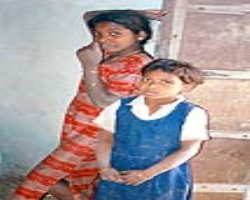
As far as development of Tribal Child Development in India is concerned, they have their own opportunities and challenges. Tribal people in India There are about 104 million tribals and account for around 8.6 per cent of India’s population. These children are spread all over the country, often in hilly and remote terrains. “Tribal” refers to local, often indigenous communities with their own culture, language and way of life. It is critical to know the development needs of these children — they are India’s future.
Who Are Tribal Children and Where Do They Live?
There are over 705 tribal communities in India. Every tribe has unique traditions, languages and ways of doing things. Tribal communities have children like any other community. Quite a few tribal children live in villages situated in remote areas which are a distance away from cities. Many of these villages are located in forests, mountains and other tough terrains. Many tribal families have lived in the same sites for centuries. They have their own knowledge of farming, forest products and healing with plants. These children simply don’t have enough to go round and often struggle to reach schools, hospitals or other modern conveniences.
The Major Problems Tribal Children Face
Nutrition and Health Issues
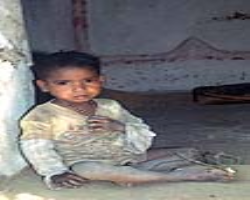
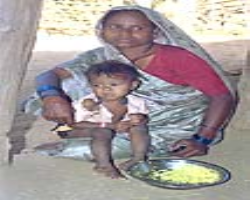
One of the largest challenges for young tribal members is getting enough food and proper nutrition. According to studies, more than half of tribal children are not properly nourished. Roughly 40 percent of tribal children under age 5 are stunted, a measure indicating that they are shorter and weaker than they ought to be. This occurs when children don’t eat enough nutritious food early in life. When children do not eat well, their brains and their bodies do not develop as they should.
There are also very serious health problems among children in the tribes. Roughly 77 percent of tribal children suffer from anemia, a condition that they’re not getting enough iron to carry in their blood stream. This tires and weakens them. Just 56 percent of tribal children receive all the vaccinations that prevent them from deadly diseases. Even rudimentary health services are absent in some places. Many mothers don’t receive proper care during pregnancy in tribal areas, and babies are often born without the assistance of doctors or nurses.
High Child Mortality
Tragically, many tribal kids die before they turn five. Tribal children are dying at a significantly higher rate than those of other communities. The under-five mortality rate in 2014 was estimated at 57.2 per 1000 live births for tribal children. This is a very sad situation. These deaths could be avoided with timely food, clean water and medical treatment for children.
Education Challenges
Another big issue around tribal children is the education. Most tribal children do not receive an education, or quickly drop out. Research done in regions such as West Singhbhum indicate that the number of out-of-school children exceed more than 50,000. Some children have never registered to school, while others attended and then dropped out much earlier.
There are a few reasons for this. Firstly, many tribal children learn their own tribal language at home and attend schools in Hindi, English or other languages. This is very hard for little minds to learn. Any child who cannot speak the language of what he learnt in school may never understand nor learn well. Second, a lot of tribal villages don’t have schools nearby. Children often have to walk long distances or take buses to school. Families too poor to pay to send their children to school, because the children are required at home to work. Girls especially face this problem. Girls are still being made to work at home instead of going to school.
Child Labour and Dropout
72 million tribal children must labor rather than attend school. They labor in the fields or help with chores around the home, or participate in another form of work that contributes earnings to their families. This prevents them from being in school. As families hop from one place to another in search of work, children are forced to do the same — and that means abruptly leaving for wherever other family members have found a job and missing tons of school days.
Tribal children are dropping out on a large scale. Despite the fact that children begin attending classes, many drop out before they finish school. The No. 1 reason for this is financial.
If families lack money to buy food and clothes, they have no means to keep their children in school.
Health Programs Helping Tribal Children
Despite these challenges, the Indian government as well as several organizations are working steadily to help tribal children. A few significant programs have been designed.
Anganwadi Centers and ICDS
One of the major ones is the Integrated Child Development Services ICDS. There is a program called anganwadi under which centers are located in villages. These centers are
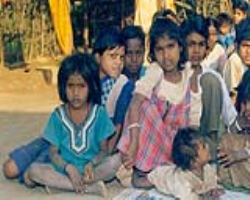
little schools where children between 3 years and 6 can come to learn. One for each center is staffed by a local woman from the villages, called an Anganwadi Worker.
This free food given to small children is called the supplementary nutrition and it is provided at Anganwadi Centers. They receive health check-ups and vaccinations too. And pregnant women and nursing mothers also rely on these centers for assistance and advice. Hubs teach children basic skills and ease them into going to regular school. At these centers, teachers will frequently use children’s mother tongue when teaching, which is beneficial to their learning.
“At present, there are approximately 13.89 lakh (1.389 million) operational Anganwadi Centres across the country. Such centres are key: they serve children in their own villages, and easy access means families use the services.
Health Missions and Vaccination Programs
The government has also introduced special health schemes for tribal children. Mission Indradhanush is such a program that ensures that no child miss their vaccination. This program is tribal children oriented. It also offered free COVID-19 vaccines to tribal communities.
Another scheme titled Nikshay Mitra is aiding people with tuberculosis, a deadly health problem among many tribal populations. The program provides them with medicine, food support and vocational training.
Tribal Health Services
A special division was established by the government to look after tribal health. This separation results in health plans that are familiar with tribal cultures and practices. The division coordinates efforts to provide tribal areas with clean water, appropriate sanitation and health care. It also respects native people’s traditional medicines and healing practices that stretch back thousands of years.
Education Programs for Tribal Children
Eklavya Model Residential Schools
Among the successful programmes for education is Eklavya Model Residential Schools (EMRS). It was the schools that were launched in 1997 98 to provide quality education to tribal children. So far in 2023-24, upwards of 1.23 lakh (123,000) tribal students were enrolled in these schools.
At these schools, child from ‘Class’ VI to XII get free education, food and also stay. Each school serves roughly 480 students. And, the schools imbue students with their tribal culture and traditions so they never feel embarrassed by who they are. The schools teach subjects like science, math and languages. They offer sports, art and craft programs as well.
These schools succeed because they allow tribal children the same chances as other children. Students who graduate from these schools can go on to colleges and obtain good jobs. One of those in Odisha saw 100% of its students pass their end-of-year exams in 2015, against a state average of 76%.
Mother Tongue-Based Education
Some states like Odisha have initiated teaching young tribal children in their first languages. This is referred to as Mother Tongue-Based Multilingual Education MLE[15]. 3,400 language teachers were also recruited to teach in tribal languages. Research has shown that children who are taught in their own language for at least the first six years of schooling learn more and stay enrolled longer. They’re more confident and more involved in class.
Some organizations have developed text books in traditional languages. Bhasha Research and Publication Centre has produced twolanguage textbooks in 50 tribal languages. That is how children learn, and that is also how you keep their languages alive.
Alternative Education Models
There are many organizations that have been set up specially for tribal children. These schools teach using methods that relate to tribal life and culture. Another example is Adharshila Learning Centre in Madhya Pradesh that teaches in the Bareli language; it also has traditional knowledge about farming.
In Tamil Nadu, Adivasi Munnetra Sangam includes the study of herbal medicine and environmental conservation in its curriculum alongside regular subjects.
Nutrition and Development Programs
Mission Poshan 2.0
The government operates a program called Mission Poshan 2.0 to combat malnutrition. Tribal children of the region are provided with healthy food in schools and Anganwadi Centers under this programme. The government gives millets (a kind of grain), it is very healthy, and full of minerals, vitamins. These are the foods that make children strong and healthy.
Children suffering from malnutrition among the tribals is, however reducing good news. This demonstrates that these programs are effective. But there is much work that remains.
Community Health Workers
Some groups train health workers from local tribal communities. These workers educate families about healthy eating, hygiene and child care. When health workers are from the same community, tribal people trust them more and listen to their guidance more attentively.
Child Protection in Tribal Communities
Traditional and Modern Protection
Tribal communities also have their own style of protecting children. Tribal families are close-knit and all members of the extended family take part in helping to look after children. Every child belongs to the whole community, and resources — and responsibility — are pooled for them all. Tribal kids are raised by the elders, and that’s how it is here– through stories and tradition.
At the same time, government has created modern child-protection laws. The National Commission for Protection of Child Rights protects all Indian children, including tribal.
children. The government has also put in place programmes such as the Integrated Child Development Services to safeguard children’s rights to food, education and health care.
The Role of Communities and Families
Community Involvement
The most effective are those where tribal communities are involved in planning and administering services. Programs are more effective when tribal people help design them, he said, because they know what the community needs.
In the tribal area of Melghat, an organization MAHAN Trust partnered with communities to enhance health. In fact, they didn’t just import programs. Instead, they asked tribal people what they needed most. What the community told us was that they wanted free, accessible health care in their languages. So, MAHAN Trust taught village health workers from the same community.
These workers knock on homes and teach families about health and nutrition. This strategy has been successful in addressing both malnourishment and deaths in the region.
Family Education
It is very important the programs that teach mothers and fathers how to care for children. Training programs that teach parents to feed young children well, to keep them clean and how to identify when a child is ill. Once parents are aware of this, they can take better care of their children without going to doctors.
Government Support and Funding
Recent Initiatives
In October 2024, the Indian government launched a major program called Dharti Aaba Janjatiya Gram Utkarsh Abhiyan. This programme is for tribal development and it has more than 79,150 crore rupees. It serves some 5 crore (50 million) tribal people in 30 states. The program consists of 25 types of assistance across education, health and jobs.
The government is: Under the program.
• Constructing new 40 Eklavya Model Residential Schools and beginning work on 25 more
• Bringing electricity to 75,800 tribal homes
20040 : ESTABLISHMENT OF NEW ANGANWADI CENTRES The establishment and running of 500 new Anganwadi Centres.
• Providing clean drinking water to 5,550 tribal villages
• Developing 250 centres for forest product development
Scholarships and Financial Support
The government also provides scholarships to tribal students, so they continue their education. छात्रवृत्तियों के प्री-मैट्रिक छात्रों 1 से 8| and के पोस्ट-मेट्रिक, » Q:- What is the Pre-Matric Scholarship for Students In-West Bengal Who are eligible.;”></h3> The minimum eligibility conditions for the award of scholarship at pre-matric level are as under:. There is also a special scholarship program for tribal students seeking to study abroad.
Challenges That Still Remain
Though hundreds of such programs exist, numerous gaps remain. The nearest Anganwadi Centers are not present in every tribal village. Some schools are still lacking for teachers or buildings. In many tribal areas, there are no proper roads or means of transport to access the schools and hospitals. And there still is widespread poverty. Even very poor families may still not have enough food or may be unable to buy school supplies.
Many tribal people remain suspicious of outside systems, such as schools and hospitals. They may like their old methods of healing better. Developing this trust takes time, and it takes programs that honor tribal knowledge and culture.
The Future of Tribal Child Development
We must work harder and invest more in tribal child development for the future of India. Education is very important because educated children can secure better jobs and help their families rise out of poverty. Health care needed to come out to tribal areas, and programs had to respect tribal languages and cultures.
The most promising model blends modern science with tribal wisdom. Schools should educate children about science and technology but they should also educate them about their tribal history. Health programs should incorporate modern medicine with traditional healing methods that tribal people respect.
Community involvement is key. When members of a tribe are involved in planning and running programs, those programs work better. Outside assistance is vital, Lombardrez said, but tribes must be in charge of their development.
Conclusion
Nutritional, health and educational challenges of tribal children in India. Many tribal children don’t have enough to eat, don’t attend schools or receive adequate health care. However, there is hope. The Indian government, along with many organizations, are developing programs to assist. In villages, Anganwadi Centers are centers that provide early education and nutrition. Tribal children in the Eklavya Schools can get quality learning. Health programs are slashing diseases and malnutrition. They learn better when they are taught in their mother tongue.
The challenge for success is sustaining this momentum with even greater investment and resources. The plan must be made with tribal communities, not for them. An education that respects tribal languages and culture. Health care should be accessible and affordable. Once all of these things are in place, tribal children will have the opportunity to be healthy and strong, learn and succeed at high levels, and become leaders in their own communities.