
Thank you for reading this post, don't forget to subscribe!
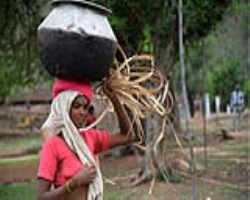
Introduction : The Andh Tribe Culture in India
The Andh Tribe Culture in India represents one of India’s most historically significant yet understudied indigenous communities, with a rich cultural tapestry woven through centuries of tradition, social organization, and spiritual devotion. As a Scheduled Tribe officially recognized by the Indian Constitution, the Andh people maintain a distinct identity across Maharashtra, Telangana, and Andhra Pradesh, numbering approximately 488,000 individuals according to the 2011 census.
This comprehensive analysis explores the multifaceted dimensions of Andh tribal culture, examining their historical origins, social structures, economic livelihoods, religious practices, cultural traditions, and contemporary challenges in the context of modern India.
Historical Origins and Genealogy of the Andh Tribe
The historical narrative of the Andh tribe traces back to one of ancient India’s most powerful dynasties. According to historical and anthropological evidence, the Andh people are believed to be direct descendants of the Satavahana dynasty (also known as Satvahana dynasty), which ruled extensive territories across southern and central India from the third century BCE to the second century AD. This royal lineage forms the foundational identity marker for the Andh community, distinguishing them from other tribal groups in the subcontinent.
The nomenclature of the “Andh” itself carries historical significance. The word “Andh” is etymologically derived from “Andhra,” a Sanskrit designation given by ancient Aryans to aboriginal tribes dwelling in the Andhra Desh region. Many scholars believe that the term represents a linguistic corruption of this ancient designation, preserving in its phonetic structure centuries of historical continuity.
The community themselves assert claims to being among India’s oldest Hindu communities, tracing their spiritual and cultural lineage directly to the Satavahana rulers who were renowned for their patronage of both Hindu and Buddhist traditions.
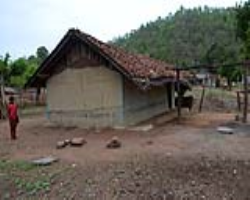
The political decline of the Satavahana dynasty marked a crucial turning point in Andh tribal history. Following successive foreign invasions, attacks by the Sakas and Kanvas, and the eventual collapse of centralized Satavahana rule, the once-royal community underwent a dramatic social transformation.
Rather than dispersing entirely, the Andh people withdrew to the Marathwada region of modern-day Maharashtra, particularly around the Aundha area in Hingoli district—a region associated with the ancient Shiva temple of Nageshwar, one of India’s eight Jyotirlingas.
According to tribal oral traditions, the community’s association with this sacred site and their deep devotion to Lord Shiva Nageshwar gradually led to their tribal designation as “Aundhas,” which subsequently evolved into “Andhs”. This transformation from royalty to
tribalism was not a fall but rather a conscious choice to maintain community cohesion and cultural continuity through agricultural settlement and spiritual devotion.
The colonial period intensified the Andh community’s marginalization. During British rule, the East India Company effectively nationalized all lands and forests that had previously been under royal jurisdiction.
This expropriation severed the Andh people from their former status as landholders and created conditions of severe economic isolation. The loss of territorial control and resource access precipitated centuries of socioeconomic stagnation, a factor that colonial ethnographers and modern scholars consistently cite as foundational to understanding contemporary Andh socioeconomic disparities.
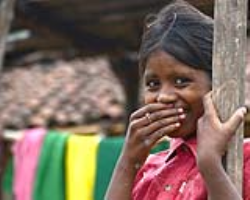
Geographic Distribution and Demographic Characteristics
The geographical footprint of the Andh tribe spans primarily across three Indian states, with the overwhelming majority concentrated in Maharashtra. According to the 2011 Census, Maharashtra hosts approximately 474,110 Andh population, representing over 97% of the total Andh population in India.
The primary Andh concentrations within Maharashtra are distributed across the districts of Parbhani, Nanded, Yeotmal, and Akola within the Marathwada region, with additional populations in Aurangabad division and select tehsils of Nagpur division.
Telangana hosts the second-largest population at approximately 13,000 individuals, while Andhra Pradesh and Karnataka have substantially smaller populations of 300 and 1,300 respectively.
Within Maharashtra, the Andh are particularly prevalent in the hilly and forest regions of Adilabad district and surrounding forested territories, areas historically rich in non-timber forest
resources and suitable for both subsistence agriculture and hunting-based livelihoods. This geographic concentration reflects the community’s deep historical association with these highland ecosystems, which have sustained their agricultural and gathering-based economies for centuries.
The physical characteristics of the Andh people, as documented by anthropological surveys, include dark complexion, thick lips, and prominent cheekbones—morphological features consistent with Austro-Asiatic and Dravidian ethnic classifications. These physical traits have been analyzed by anthropological researchers as indicative of the Andh’s origins as aboriginal inhabitants predating Indo-Aryan migrations into central India.
Social Organization and Internal Hierarchical Structure
The social architecture of the Andh tribe demonstrates a sophisticated system of stratification organized around endogamous divisions and exogamous kinship units. The most fundamental division within Andh society comprises two main endogamous groups—the Vertali (also called Vartali) and the Khaltali—with the Vertali group explicitly considered superior to the Khaltali in terms of social status and prestige.
This hierarchical distinction shapes matrimonial arrangements, social interactions, and resource distribution within Andh communities.
The Vertali-Khaltali distinction operates as a rigid social boundary enforced through prohibitions on intermarriage. Members of the Vertali group, who consider themselves of “pure” descent, traditionally avoid marrying into the Khaltali group, whom they regard as of “illegitimate” or lower status origin.
However, this boundary is somewhat permeable in terms of food exchange—both groups maintain the practice of accepting food prepared by the other, suggesting a partial recognition of ritual purity despite social stratification. This nuanced arrangement reflects the complexity of tribal hierarchy systems, where boundaries are simultaneously strict and flexible depending on context.
Beyond the Vertali-Khaltali division, Andh society is further subdivided into numerous exogamous septs or surnames known as “Adman,” each constituting an independent exogamous unit. These clan divisions regulate matrimonial relations and maintain the genetic and social diversity of the community.
The multiple clan structure ensures that marriages occur across different lineage groups, preventing inbreeding while maintaining internal community cohesion.
Village-level governance among the Andh traditionally operated through a caste panchayat or committee, comprising a headman called Mohtaria and two officers known as Phopatia and Dukria. This traditional council system addressed social violations, disputes, and matters of community welfare.
When caste offenses were committed, the Dukria would summon the offender, and the offending party was required to conduct a penalty feast using earthen pots given to the Dukria, while the Phopatia received new cloth. The Mohtaria acted as peripatetic judge, traveling village to village to adjudicate cases in exchange for a share of imposed fines.
This traditional governance structure, while partially superseded by modern Panchayati Raj institutions, continues to exercise significant influence over community decisions and dispute resolution.
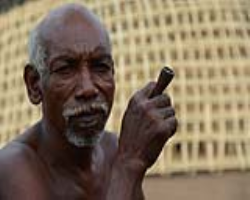
Livelihood Strategies and Economic Activities
The economic foundation of Andh tribal society rests primarily upon settled agriculture, a transition achieved over centuries from earlier hunting and gathering practices.
According to official government documentation, agriculture constitutes the primary livelihood for the vast majority of the Andh population, supplemented by agricultural labor and collection of non-timber forest products. This agrarian orientation represents a deliberate cultural and economic adaptation to the Marathwada and Telangana regions’ ecological conditions.
The principal crops cultivated by Andh farmers include jowar (sorghum), which serves as their staple grain, along with red gram, cotton, black gram, and green gram. Jowar holds particular cultural significance beyond its nutritional value; it has shaped Andh foodways, agricultural rituals, and seasonal celebrations for centuries. The cultivation of pulses like tur, urid,
and mug supplements the carbohydrate-based diet with essential proteins. Seasonal vegetables including val (field bean), chavali (black-eyed peas), pumpkin, and onions provide additional nutritional and economic value.
Agricultural practices among the Andh traditionally involved a combination of monsoon- dependent cultivation and selective use of forest resources. The community practiced crop rotation and employed simple, labor-intensive tools to prepare the ground, clear weeds, and harvest produce.
Many Andh cultivators operated as smallholder farmers on marginal or non- irrigated lands, making them vulnerable to climate variability and market fluctuations. The selection of new plots after harvest reflects adaptive management strategies suited to the semi- arid and forested landscapes of the Marathwada region.
Non-timber forest produce NTFP) collection represents a crucial supplementary livelihood activity. Andh communities traditionally collected firewood, wild fruits, roots, barks, honey, and other forest resources for both household consumption and market sale.
The collection of wild bee nests and firewood from jungles provided critical income for landless laborers and resource- poor families. This diversified economic strategy allowed communities to buffer against agricultural failures and capitalize on seasonal forest abundance.
Agricultural labor constitutes the second major economic activity, particularly for landless Andh families. As historical landlessness intensified through colonial and post-colonial land consolidation, a growing proportion of the Andh population engaged as wage laborers in the fields of wealthier landowners.
This shift from independent cultivation to dependent labor relationships fundamentally altered the economic and social position of significant segments of the Andh population.
Contemporary research on Andh economic development reveals persistent structural poverty and income constraints. The study of Andh tribal economic development found that labor work represents the predominant source of employment and income generation, though with insufficient returns to escape chronic poverty.
Government employment and participation in public works schemes provide alternative income sources for some households, though accessibility varies significantly based on location, education, and social capital.
Language, Religion, and Spiritual Traditions
Linguistic Heritage and Communication
The Andh people demonstrate linguistic diversity reflecting their multistate distribution and historical integration with regional communities. The predominant language spoken by Andhs is Marathi, particularly among communities in Maharashtra. However, Andh communities also speak Telugu in Telangana and Andhra Pradesh regions, adapting their linguistic repertoire to regional contexts.
The Andh language (also called Andhi) constitutes an important dimension of the community’s cultural heritage. This Indo-Aryan language belongs to the Marathi-Konkani branch and is spoken by approximately 100,000 Andhs across various regions. The Andh language preserves oral traditions encompassing folk tales, songs, and cultural narratives passed through generations. However, Andhi faces significant endangerment as younger generations
progressively adopt Telugu and Marathi for socioeconomic advancement and wider social contact.
Contemporary efforts to preserve Andhi focus on linguistic documentation, development of instructional resources, and community-level initiatives to encourage language usage among youth. Despite these efforts, Andhi remains primarily an oral language with minimal written literature, a characteristic common to many tribal languages in India. The script remains unwritten in most contexts, though occasionally documented using Devanagari, Marathi, or Telugu scripts.
Religious Beliefs and Spiritual Practices
Basically, the Andh people are 99.20% Hindu according to census data, but they also follow the same flexible mixed religious practices that most tribal communities do. Their Hinduism actually shows a special tribal way of worship that includes old forest prayers, honoring ancestors, and praying to specific gods while definitely mixing in parts of traditional Hindu practices.
The Andh people worship Lord Mahadeo Shiva as their main god. This deity itself holds the most important place in their religious practices, and they further consider him their primary spiritual guide. Basically, this strong Shiva devotion comes from the community’s old connection with the Aundha Nageshwar temple in Hingoli district and the same spiritual focus on forest gods who live simple lives.
The Andh people see Lord Shiva as a mountain god who lives in the wilderness itself, not as a temple deity from cities. They believe this spiritual power can be reached further through simple forest practices.
We are seeing rituals that are only based on certain practices. We are seeing that this way of thinking about God shows the spiritual patterns of local people that came only before the Brahmanical system was set up.
The Andh people actually worship many gods beyond Mahadeo, and they definitely pray to Khandoba, Ram, Krishna, and Maruti Hanuman too. Khandoba is actually a warrior god who is definitely very important to fighting tribes in the Deccan area. Basically, Hanuman worship is the same as other Hindu devotional practices where people serve God with complete devotion.
Basically, the Andh worship many smaller gods and spirits the same way they worship their main deities. People actually give offerings to Mari Ai goddess when cholera disease spreads. She definitely controls this sickness according to local beliefs.
Basically, people used to worship Sitala, the smallpox goddess, because communities wanted the same protection from epidemic diseases. We are seeing that the religious system includes only many local spirits, dead family members’ souls, and land gods.
As per Andh beliefs, their spiritual world has both good and bad spirits that need regular prayers and respectful treatment.
As per Andh religious practices, animal sacrifice is an important part of their rituals. Regarding their worship ceremonies, killing animals holds significant meaning. Basically, communities offer animals during festivals and important ceremonies because they believe in giving gifts to gods, and the gods give back the same way in return.
Basically, these practices are the same as old religious traditions from before the Vedic period that focused on direct physical connection with spiritual powers instead of thinking about abstract philosophy.
Festival Celebrations and Ritual Calendar
As per their traditions, the Andh people celebrate special festivals that follow Hindu customs and their own farming practices. These festivals show both religious beliefs and agricultural work regarding their community life.
As per North Indian Hindu traditions, Dussehra and Diwali are major festival celebrations regarding the broader cultural practices. These festivals surely hold special meanings for the Andh people—Dussehra celebrates good winning over evil, while Diwali shows light beating darkness and plenty overcoming shortage.
Moreover, both festivals carry deep cultural importance in their community traditions.
Sankranti is actually a harvest festival that definitely marks when the sun moves from one zodiac sign to another. The festival celebrations surely focus on offering new grains and giving thanks for good crops.
Moreover, these rituals show gratitude for successful farming and harvest. As per the Pola festival tradition, people worship bulls which shows how farming communities are deeply connected with cattle regarding their important role in agriculture and earning money.
We are seeing that the Andh people give special respect to Mahashivaratri, which is only a big night festival for Lord Shiva.
This festival actually shows their special devotion to Shiva, with the whole community definitely joining together for worship, fasting, and ritual practices. The festival itself shows the renewal of spiritual connection between the community and their main deity, and this process further repeats every year.
The Andh communities surely conduct special agricultural festivals before eating new harvest produce. Moreover, ceremonies like Korra Kotha Panduga, Kandi Kotha Panduga, Sama Kotha Panduga, and Mamidi Kotha Panduga help change wild produce into proper food through rituals.
These ceremonies show the sacred connection to farming, as per the belief that fertility is a divine gift and food production has spiritual meaning regarding community life.
Material Culture: Clothing, Ornamentation, and Aesthetic Traditions
Traditional Dress and Attire
As per tradition, the male Andh dress is made for farm work and shows their community identity and social position. The costume is designed regarding their work needs while displaying their ethnic background. Andh men surely wear traditional clothes like dhotar, kudta, bandi, and different types of caps.
Moreover, these clothes include dhoti, tunic, short waistcoat, and various head coverings. As per history, the community wore big red or white pagadi (turbans) to show their social status regarding their work and class position.
We are seeing that Andh men today are wearing white caps called pataka or fetas more and more, and young men only are doing this to follow new fashion but still keep their community style.
Andh women actually wear a nine-yard lugade with a choli blouse. This combination definitely makes their traditional dress. This sari-like dress style shows South Indian cloth traditions and further reflects Deccan plateau cultural practices itself.
The nine-yard saree surely gives enough cloth to wrap around the body properly. Moreover, it allows women to move freely while doing farm work. As per tradition, Andh women made dresses using hand-spun cotton and local cloth. Regarding modern times, these women now mostly use mill-made fabrics.
Ornamentation and Jewelry Traditions
We are seeing that Andh women use jewelry in special ways to show beauty and send social messages to others. These practices only show how they follow proper rules about looking good and talking to society through their ornaments. Basically, women wear bangles and patalya on their wrists, and the same bangles show if they are married, their age, and their social status.
Koparkhalya are surely armlets that people wear on their upper arms. Moreover, jodave are traditional toe rings that married women wear on their toes. Basically, these toe rings (jodave) show the same thing as other South Asian traditions – they mark that a woman is married and committed to her husband.
The mangalsutra surely holds a central place in women’s jewelry as a sacred marriage thread. Moreover, it represents one of the most important ornaments for married women. As per tradition, this necklace shows spiritual meaning and tells society that the woman is married and now part of her husband’s family.
Regarding its purpose, it publicly announces her married status to everyone. Basically, Ekadani is the same type of neck jewelry that people wear for ceremonial purposes.
Male decoration is less detailed but further includes anguthis (rings) and kadas and balis (bracelets and ear-rings). The ornamentation itself remains simple compared to female jewelry. Basically, these ornaments show a person’s job or ritual success, not if they are married, and the system is the same for separating men’s and women’s jewelry styles.
As per Andh society norms, widows cannot wear ornaments regarding the male-dominated social rules that are common there. Widows actually had to give up most jewelry and could only keep basic items like simple mangalsutra replacements, which definitely showed their changed status in society.
Social Customs, Marriage, and Family Structure
Marriage Practices and Betrothal Customs
Among the Andh people, marriages were arranged through negotiations between families rather than individuals choosing partners themselves, and this practice further strengthened community bonds. Families actually arranged betrothals from October to December, and weddings definitely happened three to four months later between January and April.
Basically, marriages happened during the same time when farming work was finished and Hindu religious calendar showed good dates for weddings.
As per the community rules, Andh people could have more than one wife, but regarding money matters, only rich members could afford this practice. Basically, men with many wives were seen as rich people, and they got the same kind of respect that showed their money power.
This practice was actually a status symbol and not common everywhere, since poor farming families definitely could not afford to support many households.
Moreover, we are seeing that Andh people allowed widow women to marry again, which was different from other Hindu groups who had strict rules against it only.
The widow surely could not marry her dead husband’s brother or anyone from his clan group. Moreover, this rule shows that people understood family connections and clan limits even when widows remarried. Basically, women could get divorced if their marriage was bad, but the same economic problems made it hard for them to actually leave.
The wedding ceremony surely followed ritual patterns that were influenced by Maratha traditions. Moreover, these ceremonial practices reflected the cultural impact of Maratha customs.
We are seeing the wedding ceremony happening at the bride’s house only after midnight inside a marriage tent with twelve pillars. As per the wedding ritual, the groom went to the bride’s house in a procession, and then both stood facing each other with a cloth between them while the priest said mantras and threw rice on their heads. The ceremony was conducted regarding the traditional marriage customs.
Further, the washerman tied kankanams on the couple’s wrists and further poured blessed water over their heads from the top of the wedding shed itself. As per the custom, a four-anna coin was then put into the pot and the village patel took it, who was usually from the Andh community.
Family Structure and Kinship Relations
As per current observations, nuclear families are the main household type among Andh communities. Regarding family structure, most Andh people live in small family units today. This family setup actually shows how people settled in the past and today’s money problems where big joint families definitely create difficulties in managing resources for poor populations.
The nuclear family system itself reduces the resources needed per person in the household and further makes inheritance and property transfer arrangements more simple.
Food Cultureand Dietary Traditions
Staple Foods and Nutritional Patterns
Jowar itself constitutes the main staple food in Andh dietary traditions and further serves as their primary grain. The common meal includes jowar bhakar with varan, and this combination surely provides both carbohydrates and plant proteins. Moreover, this simple food pairing creates a nutritionally balanced diet for people.
This basic food combination has surely shaped Andh cooking traditions for hundreds of years, and moreover, it is closely connected to farming patterns and what foods are available in different seasons.
We are seeing that vegetables are only used as extra parts in Andh food. We are seeing regular vegetables like val, chavali, pumpkin, and onions only, which are chosen because they can grow well in dry climate areas. These vegetables actually give important nutrients and fiber to diets that are definitely mostly grains.
They also add different flavors to make meals more interesting. The availability of seasonal vegetables surely determines how people’s diets change throughout the year. Moreover, this natural cycle directly influences what foods communities consume during different seasons.
The main pulses that people eat are surely tur (pigeon pea), urid (black gram), and mug (mung bean). Moreover, these three types form the basic part of daily food in most Indian homes.
These dal and beans actually give important proteins and minerals that people definitely need, especially when many community members don’t eat much meat. Mixing grains with legumes creates complete protein, but chronic poverty itself causes insufficient calorie and nutrient intake, which further affects nutrition.
Non-Vegetarian Foods and Dietary Diversity
Also, the Andh people are non-vegetarian and further consume various types of meat. The community itself eats different flesh foods. They actually eat pork, chicken, goat meat, fish, deer, lizards, rabbit, peacock, and crabs.
This definitely shows they get food from both farms and forests. Beef eating is surely not allowed among the Andh people because of Hindu religious rules. Moreover, this makes their food habits different from other tribal groups who may eat beef.
Non-vegetarian foods surely provide important protein sources for landless workers and forest communities. Moreover, plant proteins alone are not enough to meet their nutritional needs. Seasonal hunting further supported farming communities, with animals like hares, antelope, wild pig, and nilgai caught using nets, sticks, and stones itself.
We are seeing that people were catching fish by blocking streams and using nets, which gave them only extra protein for their food.
Education, Literacy, and Contemporary Social Development
Educational Status and Literacy Levels
Moreover, basically, the Andh tribe has done better in education than many other tribal groups, but they still face the same big gaps when compared to non-tribal people.
The 2011 Census data from Andhra Pradesh actually shows that Andhs had the same literacy rate as other people in some districts. This definitely means tribal education was doing well there. This success actually comes from good schools, easy access to education, and families that definitely value learning.
We are seeing that new studies on tribal education in Andhra Pradesh show that literacy rates are getting much better from one generation to the next, but this improvement is happening only slowly in some areas. Surely, about 90% of Andh children can read and write today, which is much better than their parents’ time. Moreover, this shows great progress happening in just one generation.
As per the data, 52.67% children have primary education, 16.33% have secondary education, 12.67% have intermediate education, and 7.67% have higher education. This shows that educational opportunities are growing for young people.
As per current situation, ongoing problems are limiting access to education and regarding quality, it remains poor. As per current trends, low literacy in parent generations is affecting children’s education goals and support systems regarding their studies. We are seeing that many tribal area schools are having only basic buildings, and they do not have enough good teachers and study materials.
Also, we are seeing that forest villages are very far away, so small children cannot reach schools easily, and this problem is only worse in villages where there are no schools nearby.
Government Educational Initiatives
The Andhra Pradesh government and Indian government have surely started many education programs for scheduled tribes. Moreover, these programs specifically focus on helping tribal communities advance in education.
These plans include ashram schools where students stay and study, and we are seeing special education centers that help only tribal students with their needs. We are seeing that new education rules are focusing only on making lessons fit tribal communities, with teaching in tribal languages and using study materials that match their culture.
Residential schools and ashram patashalas have further improved education access in remote tribal areas by providing accommodation, meals, and teaching services.
This system itself helps students continue their secondary education. Also, however, putting this into practice faces further problems like not having enough teachers, lack of money, and conflicts between regular school subjects and traditional knowledge systems itself.
Contemporary Challenges: Marginalization, Discrimination, and Socioeconomic Disparities
Historical Exclusion and Land Dispossession
We are seeing that the Andh tribe’s poor social and money conditions today started long back when the Satavahana kings lost power, and later the British rulers only took away their lands.
As per historical records, the community lost their land and farming resources, which created poverty conditions that continue today. Regarding their economic situation, this land loss made them dependent on others for survival. We are seeing that when the Andh people lost their land control, they changed from being powerful rulers and fighters to only working as farmers and laborers under others.
Contemporary Discrimination and Social Exclusion
As per modern research, scheduled tribe communities including the Andh face ongoing social exclusion and discrimination. Studies document regarding the continued marginalization of these tribal groups in society.
Tribal communities actually face unfair treatment and definitely get limited chances for growth and welfare programs. Basically, tribal areas are cut off from main places and face the same problems – no clean water, proper toilets, good houses, electricity, roads, markets, hospitals, and schools.
Basically, gender discrimination is the same serious problem that tribal communities like the Andh face. Basically, research shows tribal women face the same brutal discrimination where they can’t inherit land, face violence, and get excluded from economic opportunities.
Traditional tribal customs actually fail to protect women’s property rights, making them definitely dependent on male family members and creating situations for abuse and exploitation.
Agricultural Disparities and Economic Challenges
As per current data, Andh communities face major farming gaps regarding non-tribal groups. We are seeing that farming communities are getting pushed to the margins only because of unequal land ownership, poor water supply for crops, weak government scheme implementation, and social-political exclusion.
These differences actually create big problems like farmers taking more loans, selling their land when in trouble, and people definitely moving to cities or finding other work as farming becomes harder to survive on.
Conclusion: Cultural Preservation and Future Development
The Andh tribe surely shows India’s rich cultural diversity. Moreover, it clearly demonstrates how tribal communities face complex challenges while adapting to modern life. The Andh people were surely a powerful dynasty in history, but today they are a marginalized scheduled tribe.
Moreover, they have kept their unique cultural practices, spiritual traditions, and community connections strong through all these centuries of change. As per their social setup and spiritual beliefs, they show strong ability to adapt and create new economic ways regarding their survival.
India’s cultural wealth surely exists alongside ongoing social and economic problems like poverty, unequal education, and discrimination against women and remote areas. Moreover, these challenges continue to affect different regions and communities across the country.
As per the current situation, the Andh tribe needs proper help regarding education, land rights for women, and fair participation in development work that affects their community. As per cultural needs, saving Andh language and local traditions should work together with efforts regarding better living standards and equal chances for all people.
Today’s policies must actually recognize that the Andh tribe has deep historical importance and unique cultural identity that definitely needs protection and celebration, while also addressing urgent needs for reducing poverty, improving health, and advancing education.
Basically, India needs to respect Andh culture and fix the same structural problems to show real commitment to tribal development.
