

The Bhunjia Tribe represents one of India’s fascinating indigenous communities, primarily found in the forested regions of Chhattisgarh and Odisha. This guide serves anthropology students, researchers, and anyone curious about India’s diverse tribal cultures who want to understand the rich heritage and current realities of the Bhunjia people.
You’ll discover how the Bhunjia community has maintained its unique identity across centuries, adapting traditional practices while facing modern pressures. We’ll explore their historical roots and cultural traditions that have shaped their worldview, examine their traditional economic activities and how they’ve evolved with changing times, and look at the contemporary challenges threatening their way of life and the efforts being made to preserve their heritage.
From their distinctive social organization to their spiritual beliefs rooted in nature worship, the Bhunjia offer valuable insights into sustainable living practices and community resilience that remain relevant today.
Historical Origins and Cultural Heritage of the Bhunjia People
Ancient roots and migration patterns across Central India
The Bhunjia Tribe traces its origins back several centuries to the dense forests and hills of Central India, particularly concentrated in the states of Chhattisgarh, Odisha, and Jharkhand. Archaeological evidence and oral histories suggest that the Bhunjia people originally migrated from the eastern regions during the medieval period, seeking refuge in the remote mountainous terrain that offered protection from external invasions and administrative control.
These early migration patterns were largely driven by the search for fertile land and abundant forest resources. The tribe settled in areas rich in sal forests, which provided not only shelter but also the raw materials essential for their traditional way of life. The strategic positioning in hilly terrains allowed them to maintain their distinct cultural identity while engaging in limited trade with neighboring communities.
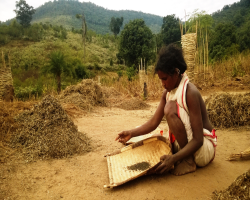
Migration routes followed river valleys and forest corridors, creating scattered settlements that eventually formed the foundation of modern Bhunjia villages. Each settlement retained strong connections to their ancestral lands through elaborate kinship networks and shared cultural practices.
Traditional social structure and clan organization systems
The social fabric of Bhunjia society revolves around a sophisticated clan system known as “gotra,” which determines marriage patterns, inheritance rights, and social obligations. The community is divided into several exogamous clans, each claiming descent from specific totemic animals or natural elements such as tigers, bears, or sacred trees.
Leadership traditionally rests with the village headman called “Pradhan” or “Gaontia,” who is typically elected from the most senior clan. This position carries both administrative and spiritual responsibilities, including mediating disputes, organizing community festivals, and maintaining relationships with neighboring tribes.
The clan structure operates on multiple levels:
- Family units: Nuclear families led by the eldest male
- Extended clans: Groups of related families sharing common ancestors
- Village councils: Representatives from all resident clans
- Inter-village networks: Alliances between settlements for mutual support
Women hold significant roles in maintaining clan traditions and managing household economies, though formal leadership positions remain predominantly male-dominated.
Cultural preservation through oral traditions and folklore
Bhunjia cultural heritage lives primarily through rich oral traditions passed down across generations without written documentation. These stories, songs, and folklore serve as repositories of historical knowledge, moral teachings, and entertainment for the community.
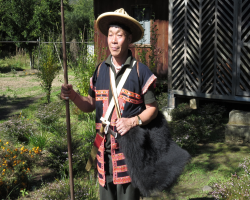
Traditional folk songs accompany agricultural cycles, wedding ceremonies, and religious observances. These musical expressions contain detailed information about farming techniques, seasonal changes, medicinal plant knowledge, and social customs. The lyrics often include references to ancient kingdoms, historical battles, and the tribe’s relationship with neighboring communities.
Dance forms like “Karma” and “Saila” serve dual purposes as entertainment and cultural education, with specific movements and costumes representing different aspects of tribal life and mythology.
Sacred rituals and spiritual practices passed down through generations
Religious practices among the Bhunjia blend ancestral worship, nature reverence, and animistic beliefs. The tribe worships a pantheon of deities including “Thakur Dev,” considered the supreme protector, and various forest spirits believed to control natural phenomena.
Sacred groves called “Dev Rai” are maintained in each village, where important rituals and festivals take place. These protected forest areas serve both spiritual and ecological functions, preserving biodiversity while providing spaces for community gatherings.
Seasonal festivals mark crucial agricultural and social events:https://link.amazon/B080eku4m
- Karma Puja: Celebrates the monsoon and agricultural prosperity
- Sarhul: Spring festival honoring the sal tree
- Kadleta: Harvest celebration with community feasting
Geographic Distribution and Settlement Patterns
Primary habitation areas in Chhattisgarh and Odisha states
The Bhunjia tribe primarily inhabits the mountainous regions along the border areas of Chhattisgarh and Odisha states in central India. Their main settlements are concentrated in the Nuapada district of Odisha and the Balrampur district of Chhattisgarh, with smaller populations scattered across adjacent areas including Kalahandi and Sundargarh districts.
The tribe shows a strong preference for hilly terrain and forested areas, establishing villages on elevated ground that provides natural protection and access to forest resources. Most Bhunjia settlements are found at altitudes ranging from 300 to 800 meters above sea level, where the topography offers both defensive advantages and fertile soil for cultivation.
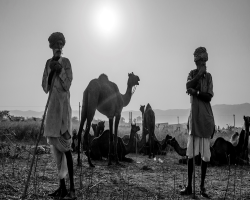
Population estimates suggest approximately 2,500-3,000 Bhunjia people live across roughly 15-20 villages, with the largest concentrations in villages like Sargiguda, Kenduguda, and Bhawanipatna region. These communities remain relatively isolated due to challenging terrain and limited transportation infrastructure, which has helped preserve their distinct cultural identity while also creating accessibility challenges.
The geographical distribution reflects historical migration patterns and the tribe’s adaptation to specific ecological niches. Dense sal forests and bamboo groves characterize their habitat, providing essential materials for housing, tools, and daily needs. Seasonal water sources and proximity to minor rivers influence village placement, ensuring year-round water availability for both domestic use and small-scale irrigation.
Village organization and traditional housing architecture
Bhunjia villages typically follow a clustered settlement pattern with 15-25 households arranged around a central courtyard or meeting space called the “chauk.” This central area serves as the community’s social hub where important decisions are made and festivals are celebrated. Villages are usually positioned on gentle slopes to ensure proper drainage during monsoon seasons.
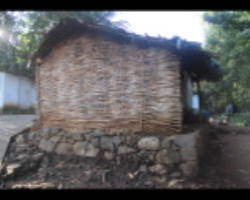
Traditional Bhunjia houses showcase remarkable adaptation to local climate and available materials. Homes are typically single-story structures built using a combination of mud, bamboo, wood, and thatch. The walls are constructed with wattle and daub technique, where bamboo frames are filled with mud mixed with rice husk and cow dung for strength and insulation.
Roofs feature steep slopes covered with grass thatch or sal leaves, designed to withstand heavy monsoon rains. The elevated foundation prevents moisture damage and protects against flooding. Most houses include a covered veranda at the front, serving as a workspace and social area during favorable weather.
Interior spaces are divided into specific functional areas: the main living room doubles as a sleeping area, a separate cooking space with a traditional clay stove, and storage areas for grain and household items. Many homes feature small shrines or prayer corners reflecting the family’s spiritual practices.
Village layout includes designated areas for livestock, community wells or water sources, and common spaces for drying crops. Sacred groves or trees are often integrated within or adjacent to settlements, maintaining the spiritual connection between the community and their natural environment.
Relationship with surrounding tribal communities
The Bhunjia tribe maintains complex relationships with neighboring tribal groups including the Gond, Kharia, and Oraon communities. These interactions involve cultural exchange, intermarriage, and collaborative resource management while each group preserves its distinct identity.
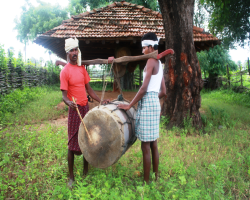
Trade relationships form the backbone of inter-tribal connections. Bhunjia communities exchange forest products like honey, medicinal herbs, and bamboo crafts with neighboring tribes for items they don’t produce locally. Market days in regional towns bring different tribal groups together, creating opportunities for social interaction and cultural exchange.
Marriage alliances occasionally occur between Bhunjia families and other tribal communities, though strict protocols govern such unions. These relationships help strengthen regional tribal solidarity while introducing new customs and practices into Bhunjia culture. Traditional ceremonies and festivals sometimes include participation from neighboring tribes, creating shared cultural experiences.
Territorial boundaries are generally respected, with informal agreements governing forest resource use and hunting grounds. During times of conflict or external pressure from mainstream society, tribal communities often unite to protect their collective interests and traditional rights.
Language interactions have resulted in the Bhunjia dialect incorporating words and phrases from neighboring tribal languages, creating a linguistic blend that reflects their social connections. Despite these influences, the Bhunjia people maintain their cultural autonomy and decision-making independence, participating in broader tribal networks while preserving their unique traditions and social structures.
Traditional Livelihood Practices and Economic Activities
Forest-based subsistence agriculture and crop cultivation methods
The Bhunjia Tribe has developed sophisticated agricultural techniques perfectly adapted to their forest environment. Their primary crops include rice, which serves as the staple food, along with millets, maize, and various pulses that grow well in the hilly terrain. The community practices shifting cultivation, known locally as “podu” or “jhum,” where they clear small forest patches, cultivate them for 2-3 years, and then allow the land to regenerate naturally.
Rice cultivation follows the monsoon pattern, with varieties specifically chosen for the region’s rainfall and soil conditions. The Bhunjia people have preserved numerous indigenous rice varieties that are drought-resistant and well-suited to their mountainous habitat. They also grow vegetables like beans, gourds, and leafy greens in kitchen gardens near their homes.
Their farming calendar revolves around seasonal festivals and traditional knowledge passed down through generations. Terraced fields carved into hillsides prevent soil erosion while maximizing arable land. The integration of agriculture with forest management allows them to maintain ecological balance while meeting food security needs.
Traditional hunting and gathering techniques for survival
The community follows strict hunting protocols that ensure sustainable wildlife management. Certain areas are designated as hunting grounds while others remain protected, allowing animal populations to recover. Seasonal restrictions prevent hunting during breeding periods, demonstrating their deep understanding of ecological cycles.
Women excel in gathering forest produce such as mushrooms, fruits, medicinal plants, honey, and edible roots. They possess extensive knowledge about which plants are safe to consume and their nutritional value. The collection of non-timber forest products like sal leaves, bamboo shoots, and various seeds provides both sustenance and potential income sources.
Their hunting and gathering practices include collaborative efforts where entire families participate in seasonal activities like honey collection or mushroom gathering, strengthening community bonds while ensuring food security.
Handicraft production and artisanal skills development
The Bhunjia Tribe demonstrates remarkable craftsmanship in creating functional and decorative items from locally available materials. Bamboo weaving stands out as their most developed skill, producing baskets, mats, containers, and household items with intricate patterns that reflect their cultural identity.
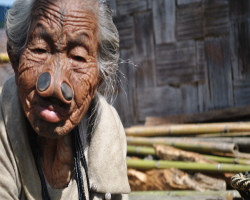
Women specialize in textile work, creating traditional clothing and decorative pieces using natural fibers and dyes extracted from forest plants. Their handwoven fabrics feature distinctive geometric patterns that carry cultural significance and are passed down through generations. The dyeing process uses roots, leaves, and bark to create vibrant colors that are completely natural and eco-friendly.
Wood carving represents another important craft, with men creating agricultural tools, kitchen utensils, and ceremonial objects. They work with various wood types found in their forest habitat, selecting materials based on durability and specific use requirements.
Pottery making, though less common, produces functional items like water storage vessels and cooking pots using local clay and traditional firing techniques. These crafts serve both practical and economic purposes, with surplus items sometimes traded with neighboring communities.
Modern economic challenges and adaptation strategies
The Bhunjia Tribe faces significant economic pressures as traditional forest resources become restricted due to conservation policies and modernization. Government forest regulations limit their access to hunting grounds and gathering areas, forcing them to adapt their subsistence strategies and find alternative income sources.
Educational opportunities remain limited, creating challenges for younger generations who struggle to balance traditional knowledge with modern skills needed for contemporary employment. Many young people migrate to urban areas for work, leading to cultural knowledge loss and weakening of community structures.
Market integration presents both opportunities and challenges. While handicrafts can generate income through tourism and urban markets, the community lacks proper marketing channels and fair pricing mechanisms. Middlemen often exploit artisans, paying low prices for high-quality products that sell for much higher amounts in cities.
Climate change affects their agricultural practices, with irregular rainfall patterns disrupting traditional farming cycles. The community adapts by diversifying crops and exploring sustainable farming techniques that work within changing environmental conditions. Government development programs offer some support, but implementation often fails to consider local needs and cultural sensitivities.
Some Bhunjia families have begun small-scale entrepreneurship, selling forest products and handicrafts directly to consumers through improved transportation networks. Community-based conservation initiatives provide employment opportunities while allowing them to maintain their connection to traditional forest management practices.
Social Structure and Community Organization
Kinship Systems and Marriage Customs Within the Tribe
The Bhunjia Tribe follows a patrilineal kinship system where family lineage traces through the male line. Extended families often live together in joint households, creating strong bonds across generations. Children belong to their father’s clan, and property typically passes from fathers to sons.
Marriage customs within the Bhunjia community involve careful consideration of clan relationships. The tribe practices exogamy, meaning marriage within the same clan is prohibited. Young people usually marry partners from different villages or distant clans to maintain genetic diversity and strengthen inter-community relationships.
Traditional marriage negotiations involve families rather than just individuals. Parents and elders play crucial roles in matchmaking, though modern influences have given young people more say in their partners. The marriage ceremony includes elaborate rituals spanning several days, featuring folk dances, songs, and community feasts that reinforce social bonds.
Leadership Roles and Decision-Making Processes
Village leadership among the Bhunjia people centers around the traditional council system headed by a village headman called the “Gaon Mukhiya.” This leader, typically an elderly respected male, serves as the primary decision-maker for community affairs.
The council includes several other important positions:
- Religious leader – manages spiritual ceremonies and festivals
- Dispute mediator – resolves conflicts between families
- Agricultural coordinator – organizes farming activities and resource sharing
Decision-making follows a consensus-based approach where community members discuss issues openly during village meetings. While the headman has final authority, major decisions require broad community support. Women participate in discussions affecting household and children’s welfare, though their formal political roles remain limited.
Age-Based Hierarchies and Respect Systems
The Bhunjia social structure places enormous emphasis on age-based respect systems. Elders receive the highest reverence and their words carry significant weight in all community matters. Young people address older individuals using specific honorific terms that reflect their relative age and status.
This hierarchy manifests in daily interactions through:
- Seating arrangements during community gatherings (elders sit first)
- Speaking order in meetings (younger people speak only after elders)
- Food distribution during festivals (elders served before others)
- Consultation practices (major life decisions require elder approval)
Knowledge transfer happens naturally through this system, as experienced community members share traditional skills, stories, and wisdom with younger generations during regular interactions.
Gender Roles and Women’s Participation in Community Life
Women in Bhunjia society handle most domestic responsibilities including cooking, child-rearing, and maintaining household gardens. They also participate actively in agricultural work, especially during planting and harvesting seasons. Many women possess extensive knowledge about medicinal plants and traditional healing practices.
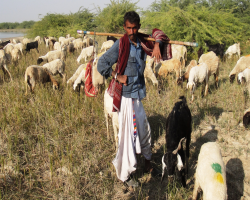
While men typically dominate formal leadership positions, women wield considerable influence within their households and extended families. They often manage family finances, make decisions about children’s education, and organize women’s groups for collective activities like handicraft production.
Recent changes have seen increased female participation in:
- Education – more girls attending school than previous generations
- Economic activities – women forming self-help groups and small businesses
- Health initiatives – women serving as community health workers
- Cultural preservation – leading efforts to maintain traditional arts and crafts
Women’s groups have become important platforms for discussing community issues and implementing development programs, gradually expanding their influence beyond traditional domestic spheres.
Language and Communication Systems
Linguistic characteristics of the Bhunjia dialect
The Bhunjia language belongs to the Indo-Aryan family, specifically falling under the Eastern Hindi subgroup. This dialect shows remarkable influences from neighboring tribal languages, creating a unique linguistic blend that reflects the tribe’s historical interactions with surrounding communities. The language incorporates significant borrowings from Gondi, given the proximity and historical contact between the Bhunjia Tribe and Gond communities.
Phonetically, Bhunjia exhibits distinctive features including retroflex consonants and specific tonal variations that distinguish it from standard Hindi dialects. The language uses a subject-object-verb word order typical of Indo-Aryan languages, but incorporates grammatical structures borrowed from Dravidian languages. Vocabulary related to forest resources, traditional occupations, and clan relationships contains many archaic terms that have disappeared from mainstream Hindi variants.
The Bhunjia dialect demonstrates considerable internal variation across different settlements, with speakers from various regions showing slight differences in pronunciation and vocabulary. These variations often correlate with geographic isolation and the degree of contact with neighboring linguistic communities.
Oral literature and storytelling traditions
Bhunjia oral traditions form the backbone of cultural transmission within the community. These narratives encompass creation myths, heroic tales of ancestors, moral stories, and historical accounts of tribal migrations and settlements. The storytelling tradition typically occurs during evening gatherings, seasonal festivals, and important life cycle ceremonies.
Epic narratives about mythical heroes and their battles against evil forces occupy a central place in Bhunjia folklore. These stories often feature supernatural elements, shape-shifting characters, and moral lessons about courage, loyalty, and community solidarity. Many tales explain the origins of specific clans, the establishment of territorial boundaries, and the development of traditional practices.
Folk songs accompany various agricultural activities, religious ceremonies, and social celebrations. These musical traditions serve multiple functions – they coordinate group work, preserve historical memory, and reinforce social bonds. The songs often employ repetitive patterns and call-and-response structures that facilitate community participation.
Riddles, proverbs, and folk sayings represent another vital component of oral literature. These short forms encapsulate practical wisdom about agriculture, interpersonal relationships, and natural phenomena. Elders use these expressions to teach younger generations about proper behavior, seasonal patterns, and traditional knowledge systems.
Impact of modernization on language preservation
Modern education systems pose significant challenges to Bhunjia language maintenance. Children attending government schools primarily use Hindi and English, gradually losing fluency in their ancestral tongue. This educational shift creates generational gaps where grandparents and grandchildren struggle to communicate effectively in the traditional language.
Television, radio, and mobile technology introduce dominant languages into Bhunjia households, reducing opportunities for native language practice. Younger community members increasingly prefer Hindi or regional languages for daily communication, viewing Bhunjia as less practical for economic advancement and social mobility.
Migration patterns for employment opportunities accelerate language shift. Young adults moving to urban centers for work often marry outside the community and raise children with limited exposure to Bhunjia. These demographic changes threaten the intergenerational transmission that traditionally sustained the language.
Community initiatives are emerging to counter these trends. Some villages organize cultural programs where elders share traditional stories and songs with younger generations. Local organizations document folk tales and create written materials in the Bhunjia dialect. However, these efforts face resource constraints and limited institutional support.
The documentation of oral traditions becomes increasingly urgent as elderly speakers pass away without fully transmitting their knowledge. Community leaders recognize that language loss would fundamentally alter Bhunjia cultural identity and social cohesion.
Religious Beliefs and Spiritual Practices
Nature worship and forest deity veneration
The Bhunjia tribe holds deep reverence for the natural world, viewing forests as sacred spaces inhabited by powerful deities. Their spiritual landscape centers around Dulha Dev, the forest god who protects the woodland realm and its inhabitants. Dense sal and bamboo forests aren’t just sources of livelihood for the Bhunjia people – they’re living temples where every tree, stream, and rocky outcrop carries spiritual significance.
Sacred groves called devrais dot their territories, serving as sanctuaries where no hunting or tree cutting occurs. These protected spaces house village shrines dedicated to various forest spirits, including Thakur Dev and Budha Dev, who govern different aspects of forest life. The Bhunjia maintain these sacred spaces through generations, believing that any disturbance would bring misfortune to the entire community.
Mountain peaks and hilltops hold special importance in their spiritual geography. The tribe considers these elevated spaces as dwelling places of ancestral spirits who watch over their descendants. Regular offerings of rice, flowers, and mahua wine appease these guardian spirits and ensure continued protection for hunting expeditions and forest gathering activities.
Shamanic practices and healing rituals
Village shamans, known as gunia or baiga, serve as intermediaries between the physical and spiritual worlds within Bhunjia society. These spiritual leaders possess extensive knowledge of medicinal plants, ritual procedures, and communication methods with supernatural beings. Their role extends beyond healing to include divination, exorcism, and conducting various life-cycle ceremonies.
Healing practices combine herbal medicine with spiritual intervention. When someone falls ill, the shaman first determines whether the condition stems from natural causes or spiritual interference. Treatment might involve preparing herbal concoctions from forest plants while simultaneously performing chants and rituals to drive away evil spirits or appease offended deities.
The shamanic toolkit includes sacred objects like brass plates, bells, peacock feathers, and specially prepared rice. During healing sessions, shamans enter trance states through rhythmic drumming and chanting, allowing them to communicate directly with spirits and identify the root causes of illness or misfortune.
Divination practices help community members make important decisions about marriage, farming, or hunting expeditions. The shaman reads omens through various methods, including observing the flight patterns of birds, interpreting dreams, or examining the arrangement of rice grains thrown during ritual procedures.
Festival celebrations and community ceremonies
Annual festivals strengthen community bonds while honoring important deities and marking seasonal transitions. Akti Jatra, celebrated during the harvest season, thanks forest gods for providing abundant wild foods and successful crops. The entire village participates in preparing special dishes from newly harvested grains and forest produce.
Karam festival celebrates the sacred karam tree, believed to protect unmarried girls and ensure good marriages. Young women fast throughout the day before gathering around a karam branch placed in the village center. They perform traditional dances while singing folk songs that tell stories of ancient heroes and forest spirits.
During Dussehra, the Bhunjia honor their warrior traditions through mock battles and displays of traditional weapons. The festival connects them to regional Hindu celebrations while maintaining distinct tribal elements, including special offerings to forest deities and ancestral spirits.
Marriage ceremonies involve elaborate rituals that seek blessings from multiple deities. The bride and groom make offerings at the village shrine before proceeding with wedding customs. Community elders perform prayers asking forest spirits to bless the union with children and prosperity.
Death rituals reflect beliefs about the soul’s journey after life. The deceased receives offerings of their favorite foods, and shamans guide the spirit to join ancestors in sacred mountains. Memorial ceremonies occur annually to maintain connections with departed family members.
Integration of traditional beliefs with external influences
Contact with mainstream Hindu culture has created interesting blends in Bhunjia religious practices. Village deities now receive names and attributes borrowed from Hindu gods, yet their core functions remain rooted in forest worship and tribal traditions. Dulha Dev might be equated with Lord Shiva, but his role as forest protector remains unchanged.
Some Bhunjia communities have adopted Hindu festivals like Diwali and Holi while adapting them to local customs. During these celebrations, they maintain their practice of first honoring forest deities before participating in broader festival activities. This approach allows them to engage with regional culture without abandoning ancestral practices.
Christian missionary activities have introduced some families to new religious concepts, creating households where traditional shamanic healing coexists with prayer services. However, most Bhunjia communities maintain strong connections to forest-based spirituality, viewing it as essential to their tribal identity.
Government development programs sometimes conflict with sacred grove protection and traditional resource management practices. The Bhunjia navigate these challenges by finding ways to participate in modern initiatives while preserving core spiritual values. They often reframe conservation efforts in terms of their traditional duty to protect sacred forests, creating bridges between ancient wisdom and contemporary environmental concerns.
Contemporary Challenges and Development Issues
Educational Access and Literacy Improvement Initiatives
The Bhunjia tribe faces significant educational barriers that stem from geographic isolation and limited infrastructure. Most Bhunjia settlements lack proper schools, forcing children to walk several kilometers to reach the nearest educational facility. This distance often becomes insurmountable during monsoon seasons when forest paths become treacherous.
Government initiatives have introduced mobile education units and residential schools, yet enrollment rates remain low among Bhunjia children. Cultural factors play a crucial role – many families prefer traditional knowledge systems over formal education. Parents often view their children’s time as better spent learning traditional skills like farming, hunting, and crafts that directly contribute to family survival.
Recent literacy programs have shown promise by incorporating Bhunjia cultural elements into curriculum design. Teachers trained in tribal customs create more welcoming environments where children can bridge traditional and modern learning. Adult literacy programs specifically target Bhunjia women, recognizing their pivotal role in community decision-making.
Digital divide presents another challenge. While smartphone penetration has increased, reliable internet connectivity remains sporadic in remote Bhunjia areas. Educational technology initiatives struggle with power shortages and technical maintenance issues in forest regions.
Healthcare Challenges in Remote Tribal Areas
Healthcare delivery to Bhunjia communities presents complex logistical and cultural hurdles. The nearest primary health centers often require day-long journeys through dense forest terrain, making emergency medical care nearly impossible. Traditional healers remain the first line of medical intervention, using indigenous plant medicines and spiritual healing practices.
Maternal mortality rates among Bhunjia women exceed national averages due to limited access to skilled birth attendants. Many women rely on traditional midwives who lack training in managing pregnancy complications. Mobile health units visit periodically, but inconsistent schedules and communication gaps reduce their effectiveness.
Malnutrition affects Bhunjia children at alarming rates, primarily due to seasonal food insecurity and limited dietary diversity. Traditional diets, while nutritionally rich when available, become insufficient during lean periods when forest resources dwindle. Government nutrition programs struggle with distribution challenges and cultural food preferences.
Mental health support remains virtually non-existent, despite community members facing stress from rapid social changes and economic uncertainties. Traditional support systems provide some relief, but specialized mental health interventions are needed as Bhunjia communities navigate modernization pressures.
Land Rights Disputes and Forest Conservation Conflicts
Land ownership disputes create ongoing tension between Bhunjia communities and government authorities. The tribe’s traditional land use patterns, including shifting cultivation and seasonal migration, often conflict with modern legal frameworks that require fixed boundaries and documented ownership.
Forest conservation policies frequently restrict Bhunjia access to traditional gathering areas where they collect medicinal plants, food, and materials for crafts. These restrictions threaten cultural practices that have sustained the community for generations while contributing to forest preservation through traditional ecological knowledge.
Mining and industrial projects pose increasing threats to Bhunjia territories. Companies seek mineral extraction rights in areas the tribe considers ancestral land, leading to displacement and environmental degradation. Compensation packages rarely match the true value of lost resources and cultural heritage sites.
Legal recognition of traditional land rights progresses slowly through complex bureaucratic processes. Many Bhunjia families lack proper documentation required by formal legal systems, leaving them vulnerable to land acquisition by outside interests. Community advocacy groups work to secure legal protections, but progress remains incremental.
The Forest Rights Act provides some protection, yet implementation challenges persist. Documentation requirements often exceed community capacity, while administrative delays leave families in legal limbo for years.
The Bhunjia tribe represents a unique cultural tapestry woven through centuries of tradition, resilience, and adaptation. From their rich historical roots to their distinct geographic settlements, the Bhunjia people have maintained their identity through traditional livelihoods, strong community bonds, and deeply rooted spiritual practices. Their social structures and communication systems reflect a sophisticated understanding of community living, while their religious beliefs continue to guide their daily lives and decision-making processes.
Today, the Bhunjia community stands at a crossroads between preserving their ancestral ways and navigating modern challenges. Development pressures, changing economic landscapes, and social transformation pose real threats to their traditional lifestyle. Supporting indigenous communities like the Bhunjia requires genuine efforts to respect their cultural autonomy while providing opportunities for sustainable growth. We must recognize that preserving such communities isn’t just about maintaining diversity – it’s about protecting valuable knowledge systems and ways of life that offer important lessons for our interconnected world.
