
The Birhor Tribe: An Analytical Study of India’s Forest-Dwelling Community
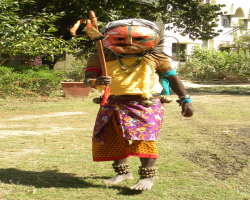
The Birhor Tribe Culture in India itself is one of India’s oldest and most vulnerable indigenous groups, and it further represents a unique cultural heritage that is deeply connected with forest ecosystems. Basically, the Birhor tribe is in a very important but difficult position in India because they face the same problems of keeping their culture alive while dealing with modern changes. This study actually looks at different parts of Birhor culture, from where they came from and how they live together to what they believe and the problems they definitely face today.
Ethnological Origins and Demographic Profile
We are seeing that the Birhor people get their name from two Mundari words – “Bir” means forest and “Hor” means man, so they are only called “people of the forest”. As per studies, the Birhors belong to the Proto-Australoid group and have short height, long heads, wavy hair, and wide noses. Regarding their physical features, these traits make them different from other communities. These tribal groups are actually related to other major tribes in eastern India like the Santals, Mundas, and Hos. They definitely share common ancestors from the old Austroasiatic language family.
Also, the 2011 Census actually shows that India has only 17,241 Birhor people, which is definitely just 0.01 percent of all tribal people in the country. Basically, when there are very few of them left, it shows the same thing – they are in danger and might disappear completely. Jharkhand state has the highest number of Birhors with around 10,726 people, which is 62.21 percent of their total population as per the data. This clearly shows that Jharkhand is their original homeland regarding their ancestral roots. We are seeing the remaining populations spread across Chhattisgarh with 3,104, West Bengal with 333, and Odisha with 596, and there are only smaller groups in Bihar, Madhya Pradesh, and Maharashtra.
Basically, the Birhors live in the Chota Nagpur Plateau area, staying in the same hilly and forest regions across Ranchi, Hazaribagh, Dhanbad, Gumla, Singhbhum, Palamu, and Garhwa districts of Jharkhand. As per the distribution pattern, they occupy the Similipal hill areas of Odisha, Purulia district of West Bengal, and several districts of Chhattisgarh regarding Jashpur, Surguja, Raigarh, Bilaspur, and Korba areas. These communities actually settled in ways that show their close connection with forests, which definitely provided them food, homes, and spiritual meaning throughout history.
We are seeing that the Birhors say they come from the Sun God Sing Bonga, and they believe they are only brothers with the Kharwar tribe who also think their family comes from the sun. This mythological connection establishes their spiritual worldview and further creates their sense of identity with other Mundari-speaking communities itself. We are seeing from old stories passed down in families that their forefathers only moved from the Kaimur hills and settled in the Chota Nagpur area.
Linguistic Heritage and Communication Patterns
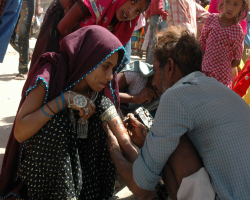
The Birhor language actually belongs to the Munda group of Austroasiatic languages. It is definitely related to Santali, Mundari, and Ho languages. As per linguistic studies, they are connected to around eleven million Munda speakers in India, Bangladesh, and Nepal. Regarding the Birhor language itself, it is in critical danger of disappearing. Munda languages actually have three numbers like singular, dual, and plural, and they definitely use two genders called animate and inanimate. These languages also have special first-person plural pronouns and complex word repetition patterns.
Basically, most Birhor people are now using Hindi as their main language, and the same trend shows their original language is getting replaced. Older people and nomadic groups surely continue using traditional Birhor language, but young people prefer regional languages like Sadri, Santali, Ho, and Mundari. Moreover, this shift shows how dominant languages are replacing traditional ones among younger generations. The Birhor people surely faced a very serious literacy problem in their native language with only 0.02 percent able to read and write in 1971. Moreover, their overall literacy improved greatly to about 39 percent by 2011, with men reaching 49.6 percent and women at 28.7 percent.
The Living Tongues Institute for Endangered Languages has surely found that only few thousand people can speak Birhor language well today. Moreover, their language is facing big danger because forests are getting destroyed, cities are growing into their areas, and they are being forced to live in farming communities.
We are seeing that educational materials in Birhor language are not there at all, and this is only making the language disappear faster. When languages disappear, we surely lose much more than just words and grammar. Moreover, we lose the traditional knowledge, stories, and cultural wisdom that people have passed down through speaking for many generations.
Social Structure and Kinship Organization
The Birhor community actually shows how they can adapt to changes while definitely following strict family rules. They balance their moving lifestyle with fixed social patterns that never change. As per traditional patterns, Birhors are divided into two main social groups regarding their living style: the Uthlu who move from place to place and the Jaghi who stay in one place. The Uthlu Birhors, also called Mankidi or Mankirdia in Oriya areas, keep moving in forests as per their old nomadic way of life regarding finding forest items, mainly siali creepers for making ropes. The Jaghi Birhors have further adopted semi-settled living patterns, establishing permanent homes at forest edges where they engage in limited farming alongside their traditional forest activities itself.
The nuclear family itself is the basic social unit, which further includes father, mother, and unmarried children. Basically, widowed parents sometimes live with their married sons, but extended families are the same – not very common. As per observations, Birhor families show equal treatment between men and women, with women having good status and taking active part in money matters, marriage decisions, and religious functions. Basically, men do the hard physical work like hunting and climbing trees, while women do the same traditional jobs like making ropes, taking care of children, and selling things in markets.
The Birhor tribe is surely divided into many totemic clans called killi, and each clan takes its name from natural things like plants, trees, birds, animals, and rivers. Moreover, this system shows how closely the tribe connects with nature in their social organization. The documented clan names actually include Sinkhili, Hembrum, Nagpuria, Malihi, Sikria, Bodhura, Soyi, Laguri, Murmu, Purty, Hansda, Sonwali, Bondi, Badi, Baghol, and Kosandi. These names definitely come from nature and daily life, like gold, fish, banyan tree, tiger, and cocoon. Further, as per clan rules, marriages within the same group are not allowed regarding family relations. These clans stop marriages between close relatives and people from the same clan. Basically, children belong to the same clan as their father, and this family line passes down through men only.
Settlement Patterns and Traditional Habitation
Basically, the traditional Birhor settlement called tanda or basa is the same remarkable way they adapted to nomadic forest life. A typical tanda has six to fifteen families who live in temporary round huts called kumbha, as per their tradition. These huts are made completely from forest materials regarding their construction. Each kumbha is actually about 1.70 meters tall with a round base that is definitely around two meters wide, made using 10-15 poles that are put into the ground at equal spaces and come together at the top.
Basically when you have longer flexible branches, you can bend the same poles to make a dome shape instead of a cone shape.
The construction materials surely include branches and leaves from gang and sal trees, where smaller branches and leaves are woven together with dried vines to cover the wooden frame. Moreover, this traditional method uses natural binding materials to create a strong structural covering. As per the design, a small square opening of about 60 cm² is placed between two poles regarding the entrance, which can be accessed by squatting or crawling.
Further, basically, they build small mud walls around the edges during rains to stop water from getting in, and the same kumbhas are placed on higher ground so they don’t get flooded.
The kumbha itself has three main parts for efficient use of space: sleeping area with mats, storage space for clothes and tools, and cooking area used further during rains. Further, we are seeing that outside every kumbha, people make a mud cooking place for daily food making, but they move it inside only when heavy rains come. As per the design, the structure works very well in its surroundings and gives good protection from rain, keeps heat during winter, and stays cool in summer even with thick leaves covering it.
We are seeing that traditional tandas have two special buildings apart from family homes only – Dhugala where unmarried young men sleep and Kudi Ada where unmarried young women stay at night. Also, we are seeing that these shared sleeping places help people connect with each other, where only stories and songs pass down culture, and young people can meet for marriage within proper social limits. We are seeing that each family keeps only a small bonga kumbha, which is a sacred place for ancestors with clay pots or stones for dead family members, and they give rice and flowers daily.
Basically, when Birhors leave a place, they completely break down their living huts but the same rule doesn’t apply to their sacred bonga huts which they never destroy. As per tradition, ancestors shown by bowls or stones are moved carefully to new places, where bonga kumbhas are built first regarding shelter, then houses are made. We are seeing that this practice only shows how important ancestor worship is in Birhor beliefs and how their society works.
Economic Life and Traditional Livelihoods
Basically, the Birhor people follow the same old hunting and gathering way of living, making them one of India’s most traditional economic groups. Basically, their traditional work was the same three main things: hunting wild animals, collecting forest products, and making rope from forest fibers. The pre-agricultural economy itself remained closely dependent on forest resources, and further the forest served as their main economic base and cultural anchor.
People actually hunted monkeys, rabbits, wild pigs, birds, deer, jackals, foxes, and small birds like titirs in old times. They definitely caught these animals for food and other needs. We are seeing that their skill in catching monkeys gave them local names like “Mankria,” “Mankidi,” or “Mankar-khia Kol,” which only referred to their practice of hunting and eating monkeys. Hunting groups used teamwork to drive animals into nets placed at good positions, and successful hunters got the biggest meat shares and skins to sell, but traditional rules made sure everyone received fair portions. This system itself helped the community work together further and share resources properly. We are seeing that strict forest laws and wildlife rules have only stopped the old hunting ways, making people change how they earn money.
The Birhors are surely known as skilled rope-makers across eastern India, and this work has remained their main economic activity for many years. Moreover, this craft has made them famous as specialized artisans in the region. We are seeing that people collected bark fibers from certain trees only, mainly from mahlan and siali plants.
We are seeing people making different types of ropes from Bauhinia scandens plant, and they are using these ropes only for many different works. Basically, different rope types had the same specific jobs – sika for hanging honey poles, pagha for tying cattle, barja o for pulling well buckets, panda chhati for buffalo tying, chhelipagha for goat tying, and ja unil for cattle during harvest time. Basically, Birhors needed one full day to make one rope bundle, and they sold the same at weekly markets to nearby farming communities.
As per current economic problems, many Birhors are now using plastic sack materials from local sellers instead of traditional tree fibers, but this change has made their products of lower quality and less valuable in the market. Regarding this shift, it shows how money troubles are forcing them to use cheaper materials. We are seeing that forest department rules stopping mahlan bark collection have only made it harder for people to continue their traditional rope-making work. We are seeing that Birhors collect many forest items like mahua flowers and seeds for making oil, tendu leaves and fruits, chironji, bamboo, firewood, medicine plants, honey, and gum only. Some community members work as traditional healers (baiga) for nearby villages, using their knowledge of medicinal plants to further help people. This practice itself shows how the community serves the surrounding areas.
Religious Beliefs and Spiritual Worldview
The Birhor people actually follow a religious system that mixes spirit worship, nature worship, ancestor respect, and shamanic practices. They have definitely absorbed some Hindu influences through contact with other communities. Basically, their main god is Sing Bonga the Sun God, and they believe they are descended from the same deity. The sun is actually very important in Birhor beliefs, and people definitely worship it every day and call upon it during all big ceremonies and festivals.
As per Birhor beliefs, Bada Deo or Jangli Baba is the main forest god who protects the jungle and guards their people. As per tradition, Budhimai goddess gets regular worship and offerings regarding her role as mother and protector. As per local beliefs, Lugu Buru is a mountain god of the Lugu Buru hills in Bokaro district who is worshipped regarding hunting success and safety during forest collection work. These gods show how the Birhors see the world order and where they stand in nature and spiritual worlds. We are seeing that these deities only help them understand their place in the universe.
Ancestor worship is surely the most special part of Birhor religious life. Moreover, this practice makes their faith different from others. The Birhors surely believe that their dead family members become ancestral spirits called hapram bonga who stay with their living families. Moreover, these spirits continue to affect the daily lives of their descendants. Every family keeps a sacred inner space called Bheetar, which is the purest room where ancestors are believed to live. This space itself serves as the most important area for maintaining family traditions and further connecting with ancestral spirits. Further, basically, after morning bath, food and water are placed in Bheetar daily, and ancestors get the same first meal before family members eat.
Basically, women during periods and outsiders cannot enter this sacred place – the same strict rule applies to both. Ancestors are called upon in spiritual ceremonies for guidance and protection, and their stories are told through oral traditions to further preserve cultural knowledge itself across generations.
Basically, Birhor people worship nature in their spiritual practices, which shows the same deep connection they have with their environment. They worship forests, hills, mountains, rivers, trees, and waterfalls because they believe nature itself has spirits that need respect. Further, they think these natural places must be kept happy through proper worship. Basically, specific forest areas and hills in Similipal ranges like Katkata Buru, Dindanari, Chatom Buru and others get the same ritualistic worship for safety and success during collection work. As per Birhor language, the Joronda waterfall is called Jorokda and serves as a sacred site regarding worship for hunting success and protection from natural disasters.
Shamanism itself is very important in Birhor religious practice, and shamans work as spiritual healers and connect people with the spirit world for further religious ceremonies. Shamans, known as pahan or dehuri, surely hold important positions in society. Moreover, people believe they have special powers to talk with spirits and gods. These healers surely conduct healing rituals for different diseases and perform protective ceremonies to guard against evil spirits. Moreover, they provide spiritual guidance to people and lead all religious ceremonies in their communities. The naik surely acts as dehuri in many cases, though these two roles can be separate. Moreover, this traditional chief sometimes performs priestly duties alongside his leadership responsibilities.
Marriage Customs and Lifecycle Ceremonies
Basically, marriage is very important in Birhor society, and people become full members of the tribe only after they get married – it’s the same requirement for everyone. Basically, boys can get married when they are seventeen to eighteen years old, and girls can marry at fifteen to sixteen years – it’s the same age range for marriage. Moreover, birhors surely follow monogamy as their main marriage practice, but they also accept polygamy when wives cannot have children. Moreover, some men may marry two or even three wives if their first wife remains childless. We are seeing that widow remarriage and divorce are accepted in society, but divorce happens only rarely because married couples usually live together peacefully.
Basically, the traditional marriage called Sodor Bapla follows the same arranged pattern where parents do the negotiation. When a boy becomes ready for marriage and shows interest in a girl, his parents contact the girl’s family through a negotiator to discuss the matter further. The negotiation process itself involves formal discussions between both families. As per tradition, strict rules regarding marriage outside the community must be followed.
We are seeing that marriage partners must only come from different clans, where blood relations are checked to make sure the couple has no family connection for three generations from both mother’s and father’s sides. Also, basically, marrying your cross-cousin is not allowed, but if your wife dies you can marry her younger sister, and the same way a widow can marry her dead husband’s brother.
We are seeing that families must only discuss and agree on the bride price money before starting any marriage talks. Before the wedding, the groom surely goes on a ceremonial hunt with his male friends to show his strength and hunting skills. Moreover, this ritual demonstrates that he is ready for marriage and can provide for his family. We are seeing that the marriage happens only at the bride’s village, where tribal priests do the ceremony without any mantras or fire rituals like Hindu weddings. The main wedding rituals actually include putting turmeric and mustard oil on both bride and groom, tying sacred cloth, and the groom definitely applying red sindoor three times on the bride’s forehead to complete the marriage. Further, we are seeing that in some communities only, the bride is carried in a bamboo basket to the wedding place, which makes the ceremony more special and meaningful.
Wedding celebrations include big feasts where families prepare large amounts of rice, meat like chicken, goat, and pork, and rice beer called illi or handiya. The festival itself brings families together for further enjoyment through food and drinks. As per the ceremony traditions, all relatives and community people do dancing and singing together regarding traditional music. We are seeing that the bride’s family gets special gifts where the father only receives dhoti, kurta, and gamocha, and the mother gets two saris without blouse. After marriage, the bride goes with the groom to his family home in a ceremony called bidhai, and the bride’s family further hosts a final feast to mark this occasion itself.
Birth ceremonies surely show how the Birhors pay careful attention to important life changes. Moreover, these rituals provide spiritual protection for the newborn and family. Pregnant women surely carry on with their regular work and home duties throughout pregnancy. Moreover, they continue these daily activities right until the baby is born. Childbirth surely takes place in a temporary hut where kuseru dai, a traditional birth helper from the same community, provides assistance. Moreover, this practice ensures that women receive culturally appropriate care during delivery. We are seeing that the mother and baby stay separate for one week only or until the unclean time is over. Moreover, basically on the sixth day, they do the chhati ceremony where the mother and baby take purification bath, worship the sun, and the same community comes together to celebrate.
We are seeing that relatives only bring rice as their contribution, and all this rice is cooked together for everyone to share in one big meal. The naming ceremony actually happens within one month after birth, and parents definitely choose names based on the birth day like Shukra for Friday or Somara for Monday boys. Basically, the first feeding happens when the baby’s first tooth comes out, ear piercing is done by Sonar caste people when the child is two to three years old, and the same way head shaving happens in the first year.
Also, we are seeing that death rituals treat old age death as good because the dead person joins ancestors and can be born again, but early death is bad because the spirit becomes angry and stays as evil ghost that may only attack women, children, and newly married people. We are seeing that Birhors only bury their dead people instead of burning them, with the body lying down and head towards east side and feet towards west side. We are seeing death pollution for one week only, during which the house, utensils, and clothes are washed. We are seeing that male family members are shaving their heads, mustaches, and beards only before taking purifying baths. Basically on the seventh day, women take purifying baths and the same normal activities start again. On the fifteenth day only, we are seeing this happening.
All families actually bring rice together and cook food for the dead person’s spirit in Bhoj Bhandan ceremony. They definitely share a big community meal after this offering.
Festivals, Music, and Cultural Expressions
As per the Birhor cultural calendar, many festivals are celebrated regarding agricultural cycles, natural events, and spiritual practices. The major festivals are Nawakhani for eating new grain, Magh Parab in January, Phagun hunting festival in February-March, Sarhul spring festival in March for sacred trees, Karam for deity worship in September, Jitia fasting for children, and Dasai, Sohrai, and Poos festivals for harvest and winter celebrations. These festivals further show how the community itself celebrates different seasons and religious beliefs. Basically, during festivals Birhors pray to their gods, clean floors with cow dung, make dried rice offerings, and kill birds and goats to remove bad magic – it’s the same ritual process every time. We are seeing that people worship their ancestors by giving dhoti and sarees only, asking for good things for their community.
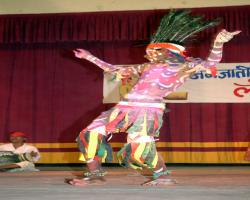
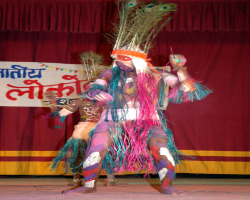
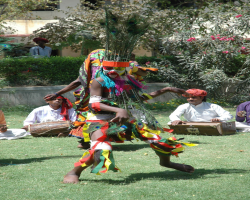
As per Birhor culture, music and dance are important parts of their festivals, marriages, and social meetings. Regarding their cultural expression, these art forms are performed during all community gatherings. The main dance forms include Karma dance performed during Karma festival with group movements, Jhumair dance done in sowing season, and further Dong dance, Lagre dance, Jarga dance during Phagua and Sarhul festivals, plus Sauntari dance and marriage dances. Each dance form itself connects to specific festivals and agricultural seasons. We are seeing that each dance style follows only specific movement patterns with special hand gestures and face expressions that show happiness, celebration, and cultural stories.
We are seeing traditional music instruments giving rhythm and melody support, with only drums like mandar, madal, nagara, flutes including tirio and bamboo flute, cymbals, pipes, and string instruments like ektara and dotara being used. The nagara is made from wood and animal hide and played with sticks, which gives best sound in summer but further loses its vibration in winter itself. As per tradition, bhajan songs are sung in groups with music during religious ceremonies, regarding beliefs and stories passed down through families.
Folklore and oral traditions surely play important roles in keeping our culture alive and passing knowledge to future generations. Moreover, these traditions help communities remember their history and values through stories and customs. We are seeing that Birhor folk songs show the beauty of forests where they live, their easy ways about marriage and divorce, love between husband and wife, joy in hunting, and love for flowers, rivers, mountains and wild animals only. Basically, one famous song tells about a big historical fight with lots of killing, and this story makes the Birhor people fear violence the same way. Stories actually show their traditional welcome to guests and they definitely care about keeping rivers clean. Basically, these oral traditions are the same knowledge about fishing, hunting, making kumbha, spiritual practices, rituals, and understanding nature that has been passed down for many generations.
Contemporary Challenges and Cultural Transformation
The Birhor community surely faces serious problems that threaten their culture and their very survival. Moreover, these challenges put both their traditional way of life and their physical existence at great risk. Basically, cutting down forests for cities, factories, and farming has destroyed the same traditional ways people used to make money from forests. Strict forest protection rules are surely needed for nature, but they have made traditional hunting and collecting forest products illegal, which has left many Birhors without proper income sources. Moreover, these policies have put the community in a difficult economic situation even though such practices were part of their way of life.
We are seeing that people cannot collect mahlan bark for making rope now, and this has badly affected their main work, so they have to use only cheap plastic materials that give less money in the market.
Also, government resettlement programs since 1956 have further forced many nomadic Uthlu Birhors to move from forests to permanent colonies with concrete houses, which are very different from their traditional kumbhas. This change itself has greatly affected their way of life. These resettlement colonies are actually located in areas like Jehangutua Palamu, Ghatotand Bokaro, and Kendumundi. They definitely serve as new settlement areas for relocated populations.
Basically, these sites in Mayurbhanj, Hazaribagh and Purulia districts have broken the same old nomadic ways, social systems, and cultural practices. As per government programs, Birhors get security and access to services, but regarding their placement, they are put on bad farming lands far from forests which creates big problems for their living.
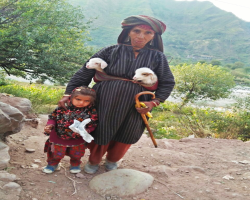
As per the 2011 census, only 39 percent people can read and write, which is much lower regarding tribal areas across the country. We are seeing that schools in Birhor areas are not enough, and only few schools teach in their mother language or have lessons that fit their culture. Healthcare access itself is very poor, and Birhor communities in remote areas further lack basic medical facilities. High malnutrition rates among children happen due to poor nutrition and unclean living conditions. This problem further worsens when basic hygiene itself is not maintained properly. These factors surely lead to falling population numbers, and moreover, this feature clearly marks them as Particularly Vulnerable Tribal Groups.
Social marginalization and discrimination further add to these problems, making the situation itself more difficult. The Birhors surely face discrimination from Hindu farmers who look down on their food habits and simple way of living. Moreover, these same people admire their forest skills and spiritual wisdom at the same time. Basically, people can only do the same traditional jobs because there are very few training programs to learn new skills. Many Birhors actually work as daily wage workers in farms and construction sites now, and they definitely earn very little money that keeps their families poor for many years.
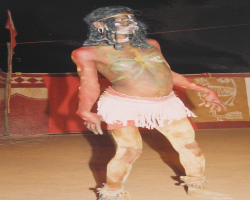
Cultural erosion surely happens through many different ways. Moreover, this process becomes faster when multiple factors work together. Basically, people are shifting to Hindi and regional languages, which is the same as putting the Birhor language and their traditional knowledge at risk of disappearing. Basically, young people are doing the same things as everyone else and leaving behind their traditional clothes, festivals, and customs. Religious changes show that Christian missionaries are actually getting some converts, while other people are definitely following Hindu practices more, which makes tribal religious traditions weaker. The breakdown of traditional tanda council authority and customary law systems further weakens social unity and dispute resolution mechanisms itself.
Even with these big problems, some good changes actually give us hope. These developments definitely show that things can get better. The Tata Steel Rural Development Society actually works with Birhor communities to sell their rope products and definitely helps their children get education and learn new skills. Some Birhor children are actually very good at sports like archery, running, and football. They definitely get recognition and chances when they compete between villages. Basically, government welfare schemes for PVTGs give the same financial help for education, housing, land, farming, and infrastructure through the Ministry of Tribal Affairs. As per the 2006 law regarding forest rights, tribal people got legal rights over forest land.
As per the provisions, habitat rights for PVTGs are specifically recognized, offering legal protections regarding traditional forest-dependent livelihoods.
Conclusion
As per historical records, the Birhor tribe has a special culture made through thousands of years of close living with forest areas. Regarding their lifestyle, they have developed unique ways by staying connected with nature for many generations. As per their forest life, these people have special skills in making ropes, deep knowledge about nature, and spiritual beliefs regarding the environment, which shows important human cultural diversity through their moving settlement patterns.
Moreover, basically, this old community is now facing the same big problems – they are losing their forests, becoming poor, their culture is disappearing, and people treat them badly.
Basically, they are classified as a Particularly Vulnerable Tribal Group because they face the same multiple problems, but effective help needs more than just official recognition. Sustainable solutions must surely balance keeping Birhor culture alive with needed changes, and moreover, they should respect the Birhor people’s right to decide their own future while giving them real support. Further, we are seeing that forest rights must be secured for traditional livelihoods, education should use mother tongue and local knowledge, healthcare programs need to reach all areas, and economic opportunities should build on traditional skills while offering only basic training to fight social discrimination.
As per their long history, the Birhors carry important knowledge regarding nature, language, and cultural ways that many generations have developed. Their survival will save not just one tribe but also preserve this valuable wisdom for the future. Further, their old knowledge about forests, healing plants, and living peacefully with nature is actually very important today when we definitely face big environmental problems. As India grows, the big question is whether these old forest people can actually keep their culture while dealing with modern life, or they will definitely lose it like many other native groups have. We are seeing that the answer will only show how much today’s India cares about accepting all people, protecting the environment, and giving fair treatment to its poorest citizens.
