
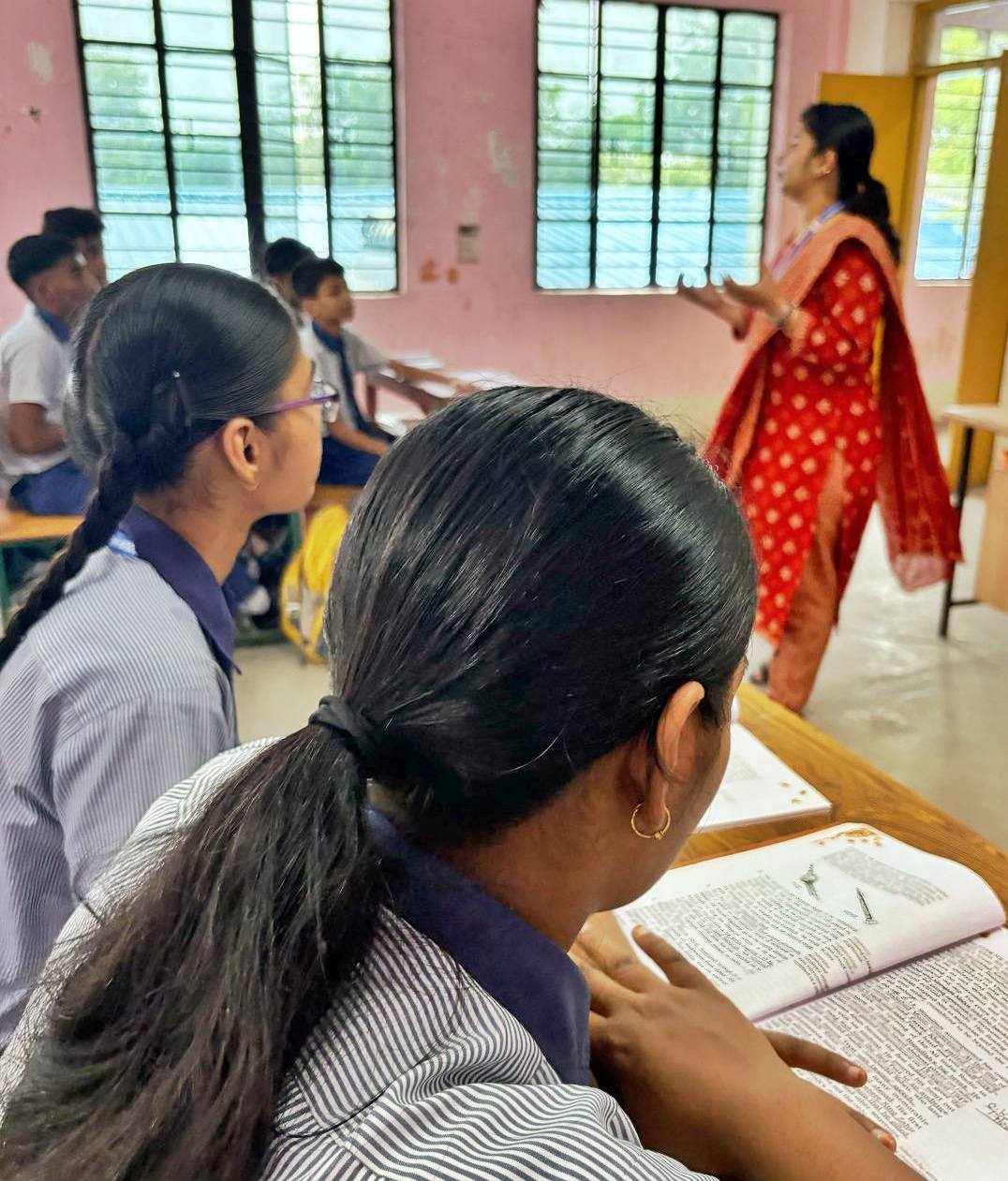
Classroom participation should be made mandatory for students in India. Did you know that 68% of Indian students sit through entire lectures without raising their hand once? Even when they know the answer.
If you’re teaching in India, you’ve seen it—that sea of silent faces hiding brilliant minds. The classroom participation problem isn’t about intelligence; it’s about deeply rooted cultural factors that shape how students engage.
But what if small changes to your teaching approach could dramatically shift this pattern? What if the solution isn’t pushing Western participation models, but something more culturally nuanced that you haven’t considered yet?
Current State of Classroom Participation in Indian Schools
Urban vs. Rural Participation Patterns
Walk into a classroom in urban Mumbai, then visit one in rural Bihar. The difference? Night and day.
This isn’t about ability – it’s about opportunity and confidence. Urban schools generally have smaller class sizes (30-40 students) compared to rural classrooms bursting with 50+ children. Hard to participate when you’re practically sitting in someone’s lap, right?

Gender Disparities in Student Engagement
Girls in Indian classrooms face a unique battle. Despite outperforming boys academically in many states, their voices are heard less frequently during discussions.
The problem gets worse as girls age. By high school, many female students report self-censoring their participation, especially in STEM subjects. Why? Cultural conditioning that rewards modesty in girls while celebrating assertiveness in boys.
Some numbers tell the story:
- Girls are called on 37% less often than boys
- Female participation drops by 48% in mixed-gender group activities
- Girls wait an average of 12 seconds longer to raise their hands
Impact of Socioeconomic Factors on Participation
Money talks – even in classroom participation. Students from higher-income families typically show greater confidence engaging in discussions. They’ve often had exposure to English-language media, travel experiences, and private tutoring.
First-generation learners battle invisible barriers every day. Many work before or after school, arrive tired, and struggle with homework without home support. Their participation suffers not from lack of interest but from competing priorities.
Language proficiency creates another divide. Students comfortable in the instruction language (whether Hindi, English, or regional languages) participate more actively than those struggling with linguistic barriers.
Regional Variations Across Indian States
Southern states like Kerala and Tamil Nadu show higher overall participation rates compared to some northern and eastern states. This partly reflects differences in literacy rates and educational investment.
Kerala’s model stands out with nearly equal participation between genders – the result of decades-long literacy campaigns and progressive educational policies.
Northeastern states face unique challenges with diverse tribal languages and geographical isolation affecting classroom dynamics. Yet several innovative programs have emerged here, using cultural stories and local knowledge to boost participation.
Maharashtra and Gujarat have pioneered participatory learning initiatives in urban centers, though rural-urban divides remain significant in both states.
Traditional Teaching Methods and Their Effect on Participation
A. Lecture-Based Approach and Its Limitations
Walk into most Indian classrooms and you’ll see the same scene – a teacher talking at length while students frantically take notes. This one-way communication style is deeply embedded in our education system.
The problem? Students become passive receptors rather than active participants. When you’re just sitting there absorbing information, your brain doesn’t engage critically with the material. Many students later struggle to apply what they’ve “learned” to real-world situations.
And let’s talk about those back-benchers. In lecture-dominated classrooms with 40+ students, they’re practically invisible. Without any requirement to contribute, many just mentally check out.
B. Examination-Focused Learning Culture
The shadow of board exams and competitive tests looms large over Indian education. Everything boils down to those few hours of testing.
This creates a classroom culture where students ask: “Will this be on the exam?” If not, why bother participating? Teachers rush through syllabi, leaving little room for discussions that could deepen understanding but might not directly translate to test scores.
The results are predictable – rote memorization trumps curiosity, and participation becomes an unnecessary luxury.
C. Teacher-Student Hierarchy and Its Influence on Discussion
In Indian classrooms, questioning a teacher is often seen as challenging authority rather than seeking clarity. The traditional guru-shishya relationship, while beautiful in principle, can create intimidating power dynamics.
Many students fear being wrong or appearing less intelligent in front of teachers and peers. This “fear of judgment” silences countless questions and insights.
Teachers who maintain rigid authority often unintentionally discourage the very participation they claim to want. Students learn it’s safer to remain quiet than risk being shut down for an incorrect answer or “irrelevant” question.
Cultural and Social Factors Affecting Student Participation
A. Respect for Authority and Its Impact on Questioning
The Indian classroom often mirrors our society’s hierarchical structure. Students grow up learning that teachers hold absolute authority. This isn’t just about rules – it’s baked into how students view knowledge itself.
“Don’t question your elders” isn’t just a household saying; it follows students to school. Many kids feel questioning a teacher might seem disrespectful, even when they’re genuinely confused.
I’ve seen countless classrooms where students nod along, afraid to raise their hands even when they don’t understand. This creates a one-way street of information rather than the rich discussion that helps ideas stick.
B. Fear of Making Mistakes in Public
Nobody likes being wrong, but in Indian classrooms, this fear runs deeper. Students worry classmates will judge them, teachers might scold them, or worse – they’ll become the class example of what not to do.
This stems from our achievement-oriented culture where mistakes are often portrayed as failures rather than learning opportunities. When a student gives a wrong answer and hears snickering, that’s one more student who won’t volunteer next time.
The constant pressure to be perfect silences many voices that could otherwise contribute valuable perspectives.
C. Parental Expectations and Peer Pressure
Parents in India often view education as the primary path to success. This translates to immense pressure on students to excel academically.
“What will Sharma aunty say if you don’t top the class?” Sound familiar?
Students internalize these expectations and become hyper-aware of their classroom image. Many avoid participation unless they’re 100% confident in their answer. Those who participate too much risk being labeled a “teacher’s pet,” while those who don’t might be seen as disinterested.
This double-bind leaves many students calculating the social cost of raising their hand rather than focusing on learning.
D. Linguistic Diversity and Communication Challenges
India’s linguistic landscape is incredibly diverse – a classroom might have students who speak different languages at home.
English medium schools present particular challenges. Students comfortable with regional languages often hesitate to speak up, fearing their accent or grammar will be critiqued. This language anxiety creates an invisible barrier to participation.
I’ve witnessed brilliant students stay silent simply because they’re more fluent in Hindi or Tamil than the classroom’s instructional language. Their ideas remain unshared, and both they and their classmates lose out.
E. Collectivist vs. Individualist Expression Styles
Indian culture traditionally values group harmony over individual expression. Students learn early that standing out isn’t always desirable.
In many classrooms, the focus remains on reaching consensus rather than exploring divergent viewpoints. Students may avoid expressing opinions that differ from the majority, especially on socially sensitive topics.
This collectivist mindset contrasts with Western educational approaches that often reward unique perspectives and debate. When Indian students hold back their contradictory viewpoints to maintain classroom harmony, educational discourse becomes limited and predictable.
Innovative Approaches Enhancing Student Engagement
A. Technology Integration and Digital Learning Tools
Indian classrooms are getting a tech makeover, and it’s about time! Gone are the days when a blackboard and chalk were enough to keep students interested. Now, teachers are using interactive whiteboards, educational apps, and online resources to make learning click.
Take the BYOD (Bring Your Own Device) approach gaining traction in urban schools. Students use their smartphones or tablets for real-time quizzes through platforms like Kahoot! or Quizizz, turning boring review sessions into competitive games that have kids actually asking for more questions.
Virtual labs are another game-changer. Schools with limited lab equipment can now conduct virtual experiments, giving students in remote areas the same hands-on experience as their city counterparts. One teacher from Rajasthan told me her students’ science scores jumped 30% after implementing virtual chemistry experiments!
B. Collaborative Learning and Group Projects
Team projects are breathing new life into Indian classrooms. Instead of the old “memorize and regurgitate” method, students now tackle problems together, mirroring real-world work environments.
The jigsaw technique has been particularly effective. Students become “experts” on a specific topic, then teach their peers. A Mumbai high school implemented this for history lessons – students became so invested in their expert roles that attendance shot up on presentation days!
Think-Pair-Share activities have transformed even traditionally quiet classrooms. Students first consider a question individually, then discuss with a partner before sharing with the class – giving even shy students a voice.
C. Activity-Based Learning Initiatives
The Activity-Based Learning (ABL) approach pioneered in Tamil Nadu has spread across India for good reason – it works! Students progress through self-paced learning cards and activities rather than sitting through endless lectures.
Classroom setups have been revolutionized with learning corners replacing rigid desk arrangements. In these specialized spaces, students rotate through different subject-focused activities. A primary school in Bengaluru created a math corner with manipulatives, a language corner with storytelling props, and a science corner with simple experiments.
Role-playing exercises have brought abstract concepts to life. One innovative history teacher in Delhi had students recreate historical negotiations, complete with period-appropriate concerns and constraints. The students remembered the nuances of these events months later!
D. Flipped Classroom Models in Indian Context
The flipped classroom model is gaining ground despite connectivity challenges. Teachers record lessons for students to watch at home, then use class time for application and problem-solving.
This approach has been adapted to work even in areas with limited internet access. Schools distribute pre-loaded tablets or memory cards with lesson content that students can access without needing constant connectivity.
What’s impressive is how teachers are adapting this Western concept to Indian realities. A teacher in Gujarat created “community viewing centers” where students without home devices could watch instructional videos together after school hours. Problem-solving sessions the next day showed deeper understanding compared to traditional lecture formats.
Benefits of Increased Classroom Participation
A. Improved Critical Thinking and Problem-Solving Skills
When students actually speak up in class, something magical happens to their brains. They stop being passive note-takers and start becoming active thinkers.
Indian classrooms that encourage participation create mental workout zones. Students who regularly share ideas learn to analyze information on the fly, spot flaws in arguments, and build stronger reasoning skills.
Think about it – when a teacher asks “Why do you think this happened?” instead of “What happened?”, kids have to dig deeper. They’re forced to connect dots and defend their viewpoints when classmates challenge them.
I’ve watched quiet students transform after just a few months of classroom debates. They start questioning assumptions, proposing creative solutions, and examining problems from multiple angles.
B. Enhanced Communication and Confidence
Remember that kid who would rather die than speak in front of the class? That used to be half of Indian students.
Regular classroom participation crushes that fear. Students who practice sharing thoughts in class stop seeing public speaking as torture. They learn to organize their ideas quickly, express themselves clearly, and actually make eye contact while talking.
The confidence boost doesn’t stay in the classroom either. Parents often report their previously shy kids suddenly speaking up at family gatherings or community events.
C. Better Academic Performance and Knowledge Retention
Here’s the not-so-secret secret: students who talk about what they’re learning remember it waaaaay better than those who just listen.
When a student has to explain a concept to peers, they process information more deeply. They fill gaps in their understanding and cement knowledge through verbalization.
Studies from Indian schools show participation-heavy classrooms see higher test scores and deeper comprehension. One Mumbai school reported a 27% improvement in science grades after implementing daily discussion sessions.
The memory boost happens because:
- Students process information multiple times (hearing, thinking, speaking)
- Peer explanations often stick better than teacher lectures
- Immediate feedback corrects misconceptions before they solidify
D. Development of Leadership and Teamwork Abilities
The modern workplace doesn’t need human robots who follow instructions. It needs collaborators, initiators, and team players.
Classroom participation cultivates these exact skills. When students manage group discussions, present team findings, or coordinate classroom debates, they’re practicing real-world leadership.
They learn to:
- Recognize and value diverse strengths in peers
- Navigate disagreements respectfully
- Motivate others toward shared goals
- Balance assertiveness with listening
Many Indian schools now structure participation activities specifically to build these collaboration muscles. Role rotation ensures everyone experiences both leading and supporting roles.
The transformation is remarkable – students who master these skills in class become the college students who effortlessly lead projects and the professionals who excel in team environments.
Challenges in Fostering Participatory Learning Environments
A. Large Class Sizes and Infrastructure Limitations
The reality in most Indian schools? Classrooms bursting with 50-60 students where teachers can barely remember everyone’s names, let alone engage them individually. Picture a teacher trying to make eye contact with a student in the back row – nearly impossible in these packed rooms.
Space constraints make group activities a nightmare. Want to arrange students in circles for discussion? Good luck when desks are bolted to the floor or when moving furniture means disturbing three other classes.
Basic infrastructure problems compound these issues. In many schools, you’ll find:
- Classrooms with poor acoustics where back-row students can’t hear discussions
- Insufficient whiteboards or visual aids
- No technology for interactive learning
- Poor ventilation making afternoon classes unbearably hot and drowsy
A teacher in Pune recently told me, “I’d love to have my students debate more, but with 62 students and 40 minutes, I can only call on a handful each week.”
B. Teacher Training and Preparedness Issues
Most Indian teachers never learned how to manage participatory classrooms. Their own education was lecture-based, and teacher training programs rarely cover interactive teaching methods in practical, applicable ways.
Many teachers fear losing control if they open the floor for discussion. Some worry students might ask questions they can’t answer, threatening their authority.
The skills gap is real. Teachers struggle with:
- Facilitating rather than dominating discussions
- Asking open-ended questions that spark thinking
- Managing the chaos that can come with participation
- Encouraging quiet students while restraining dominant ones
A secondary school teacher in Chennai admitted, “I tried group work once and it was total chaos. Nobody taught me how to make it work, so I went back to lectures.”
C. Time Constraints Due to Extensive Curriculum
The Indian education system is obsessed with “covering the syllabus.” Teachers race through textbooks like they’re running a marathon with a deadline.
This curriculum pressure creates serious problems:
- Teachers can’t pause for student questions
- No time for discussions that might lead to deeper understanding
- Activities seen as “extras” rather than essential learning tools
- Reflection time? Forget about it
A Delhi social studies teacher shared, “My principal checks my progress against the syllabus weekly. If I’m behind, I get questioned. How can I allow discussions when I have 35 chapters to finish before February?”
The sad irony? This rush through content means students remember less in the long run. We sacrifice actual learning for the appearance of completion.
D. Assessment Methods That Discourage Participation
Our exam system is killing participation. When success means memorizing textbook answers and vomiting them onto answer sheets, why would students bother forming their own thoughts?
The assessment nightmare looks like this:
- Board exams that test memorization over critical thinking
- Sample answers that teachers insist students copy verbatim
- Parents who panic if their child expresses “non-standard” ideas
- No credit given for original thinking or class contributions
A high school student in Mumbai told me, “I used to ask questions in class until my teacher said, ‘This won’t come in the exam, so don’t waste time.’ Now I just write down whatever she says.”
When participation doesn’t contribute to grades, students logically focus on what does – memorization.
E. Digital Divide and Access Issues
The pandemic exposed India’s massive digital gap. While elite schools pivoted to Zoom discussions and interactive apps, millions of students had:
- No reliable internet
- No personal devices
- No quiet space for online learning
- Parents unable to assist with technology
This divide continues to affect participation even as schools reopen. Teachers now incorporate digital tools for engagement, but many students remain excluded.
In rural areas, basic access to learning materials limits participation. A teacher in rural Rajasthan explained, “My students share textbooks. How can they prepare discussion points when they don’t have books at home?”
Language barriers add another layer – many students struggle with English or Hindi instruction when their home language is different, making them reluctant to speak up.
The journey toward more participatory classrooms in India isn’t without challenges, from large class sizes to resistance to change. Yet the benefits—improved critical thinking, better knowledge retention, and increased confidence—make this transformation essential. Schools, educators, and policymakers must work together to create environments where every student feels comfortable sharing their voice, ultimately preparing them for success in an increasingly collaborative world.
