

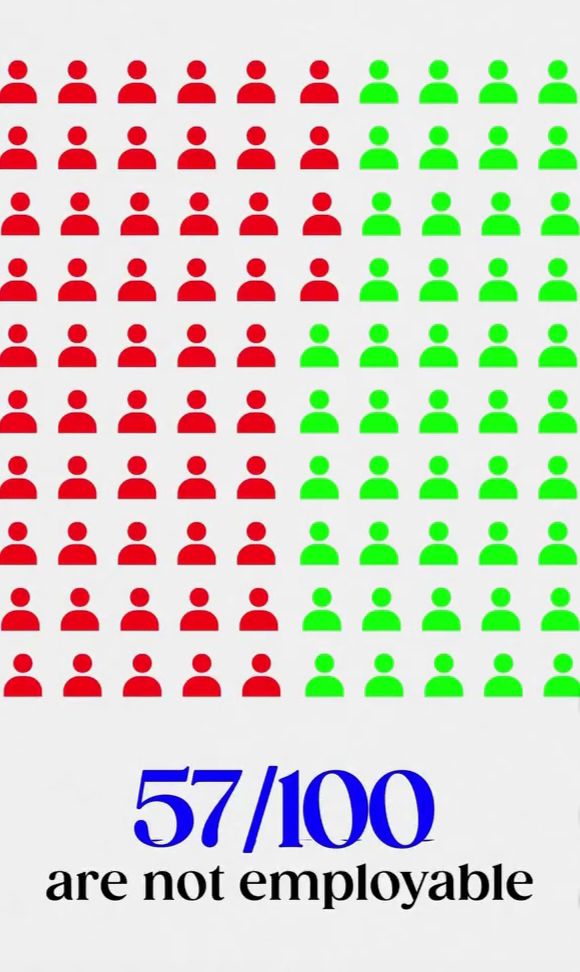
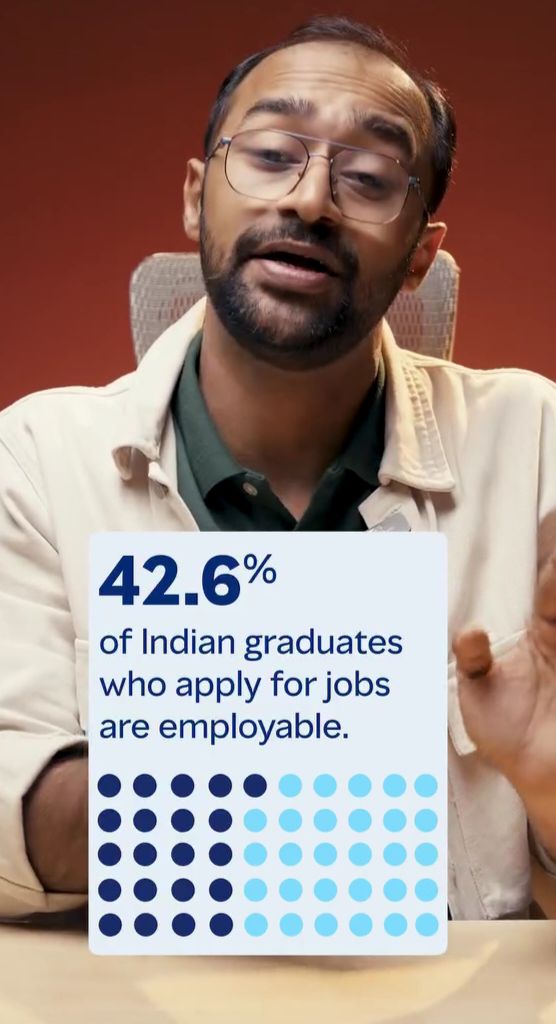
The entire youth in India must be made aware that a degree does n’t means a job. Educational Degree does not In India, the motto “A degree does not guarantee a job” is one that every young man and woman must learn to balance the differences in society with their thoughts. Education mean job in India. Picture this: you’ve spent four years and thousands of rupees on a degree, only to join the 53% of Indian graduates who can’t find jobs. Feels like a scam, doesn’t it?
The education-employment gap in India isn’t just a statistic—it’s the anxiety of keeping millions of students awake at night. Degree Doesn’t Mean Job in India. Our universities are churning out graduates faster than factories make smartphones, but employers keep saying the same thing: “These kids aren’t job-ready.”
The harsh reality of graduate employability in India affects everyone from engineering students in Bangalore to arts majors in Delhi. What’s the point of that certificate if it can’t feed you?
But what nobody’s talking about: the system isn’t broken accidentally. It’s functioning exactly as designed—and that’s the real problem.
The Education-Employment Gap in India : Degree Doesn’t Mean Job in India
A. Rising graduate numbers vs. limited job creation
The numbers tell a brutal story. India churns out roughly 15 million graduates yearly, but our economy creates barely 5.5 million jobs. Do the math – that’s almost 10 million educated young people left hanging each year.
Look at engineering – once the golden ticket to employment. Today, studies show over 60% of engineering graduates can’t find jobs in their field. Many end up taking positions that don’t even require a degree.
B. Skills mismatch between degrees and employer needs
Here’s the painful truth: Indian companies are desperate to hire, just not the graduates we’re producing.
A NASSCOM survey revealed that 78% of employers believe fresh graduates lack the skills needed for entry-level positions. They’re looking for problem-solvers, analytical thinkers, and tech-savvy professionals. Meanwhile, our universities are still focused on memorization and regurgitation.
C. Over-emphasis on theoretical knowledge
Our education system is stuck in a theory trap. Students spend years memorizing textbooks, writing papers, and taking exams that test recall rather than application.
The typical engineering curriculum devotes less than 20% of time to hands-on training. Compare that to countries like Germany, where practical training makes up 60-70% of technical education.
This theory-heavy approach creates graduates who can explain complex concepts but freeze when faced with real-world problems. They know the “what” but struggle with the “how.” This is the root cause, degree doesn’t Mean Job in India
Employers don’t need walking encyclopedias. They need people who can apply knowledge to solve messy, undefined problems. But our system rewards those who can recite information, not those who can use it.
D. Lack of industry-relevant training in universities
The gap between classroom and workplace is more like a canyon in India.
Most university curriculums haven’t been significantly updated in decades. They’re teaching programming languages that industry abandoned years ago, management theories that modern businesses have moved beyond, and using equipment rarely seen in actual workplaces.
Faculty members often lack industry experience themselves. A study found that less than 15% of engineering professors had any corporate work history before entering academia.
Internships, which should bridge this gap, are treated as box-ticking exercises rather than learning opportunities. Students get coffee, file papers, and return with little practical knowledge.
Meanwhile, countries outpacing us economically have created tight university-industry partnerships. Singapore’s universities co-design curriculums with major employers. South Korean students spend their final year solving actual industry problems.
The result? Our graduates enter the job market fundamentally unprepared for what awaits them.
Industries Facing Graduate Oversupply
Engineering: Too many graduates, too few positions
The numbers are staggering. India produces over 1.5 million engineering graduates annually, but barely 20% land jobs in their field. Walk into any IT company’s recruitment drive and you’ll see the harsh reality—thousands of candidates fighting for a handful of positions.
Why this massive gap? Companies complain that most graduates can’t solve real-world problems. They know theory but freeze when asked to apply it. A senior HR manager at a leading tech firm told me, “We end up training them for 6 months just to get them job-ready.”
Meanwhile, specialized fields like AI and data science have vacancies because traditional engineering programs haven’t caught up with industry needs.
Management: MBA inflation and its consequences
Remember when an MBA guaranteed a corner office? Those days are gone. India now churns out nearly 300,000 MBA graduates yearly, but the job market simply can’t absorb them all.
The quality gap is huge. While premier institutes like IIMs see 100% placement, tier-3 college graduates often settle for jobs that don’t even require their degree. Many end up earning less than skilled workers without degrees.
Companies have caught on too. They’re increasingly looking beyond the degree to actual skills and aptitude. As one recruiter put it, “I’d rather hire someone with two years of solid work experience than a fresh MBA with nothing but classroom knowledge.”
Arts and humanities: Limited career pathways
Arts graduates face perhaps the toughest battle. The typical reaction to someone pursuing literature or history is still, “But what job will you get?”
This stigma exists because clear career pathways are scarce. Teaching positions are limited and competitive. Media houses hire selectively. Government opportunities require extensive competitive exam preparation.
Many talented arts graduates find themselves working in completely unrelated fields or competing for general corporate roles where they’re measured against commerce and management graduates.
The irony? Employers increasingly value the critical thinking and communication skills humanities degrees foster, but rarely hire specifically for these qualifications. As creative economies grow globally, India’s system still hasn’t created enough spaces for these graduates to thrive.
New-age digital sectors: High demand but specific skill requirements
Digital marketing, UX design, data analytics—these fields are booming. But here’s the catch: they want specific skills, not just degrees.
A marketing degree won’t automatically qualify you for digital marketing. Companies want people who can run campaigns, analyze metrics, and understand platform algorithms. Your formal education matters less than your portfolio or certification from platforms like Google or HubSpot.
The paradox? These sectors offer plenty of jobs while traditional sectors struggle. But our education system hasn’t adapted fast enough to prepare students for these roles.
Bootcamps and specialized training programs are filling this gap, often proving more valuable than four-year degrees in securing employment.
Government jobs: Extreme competition for limited openings
Government jobs represent the ultimate security blanket in uncertain times. But the competition is mind-boggling.
When 10 million candidates apply for 200,000 railway positions, that’s a 0.02% selection rate—tougher than getting into Harvard.
These jobs attract massive interest despite modest salaries because they offer stability, pensions, and social respect. For many graduates from smaller towns and rural areas, a government position represents the safest route to middle-class security.
The preparation industry has become massive—coaching centers, test series, and study materials generate billions in revenue annually. Many graduates spend years attempting these exams, creating a large population of educated young people in perpetual preparation mode rather than actively contributing to the economy.

Root Causes of Graduate Unemployment
A. Outdated curriculum not aligned with industry needs
The gap between what students learn and what employers need is massive. Most Indian universities are stuck teaching concepts from the 90s while industries have zoomed ahead.
Engineering graduates spend countless hours memorizing formulas they’ll never use, while missing out on learning Python, data analytics, or cloud computing—skills companies actually pay for.
When a student finally graduates after four years, they discover their “knowledge” is already obsolete. The tech industry particularly changes every 6-12 months, but curriculum committees meet once every 5 years. Make that math work!
B. Poor quality education at many institutions
Degree doesn’t mean job in India and India has quantity, not quality. With over 900 universities and 40,000+ colleges, you’d think we’d be producing the world’s best talent.
Reality check: Most institutions are degree factories but Degree doesn’t mean job in India. Classrooms with 100+ students, professors reading from decades-old notes, and tests that reward memorization over understanding.
Labs with equipment from the previous century. Computer science labs where students share computers. Business programs where students never meet actual entrepreneurs.
C. Lack of soft skills and practical experience
Book smarts aren’t enough anymore. Indian graduates often can’t:
- Communicate clearly in English
- Work effectively in teams
- Solve problems without clear instructions
- Think critically beyond textbook scenarios
Companies need people who can present ideas, handle criticism, and adapt to changing situations. Our education system barely acknowledges these skills exist.
D. Economic factors limiting job creation
The economy simply isn’t creating enough good jobs. With 15+ million graduates entering the job market yearly, there’s brutal competition for limited positions.
Small and medium businesses—which should be job creators—struggle with complicated regulations and limited access to capital. Why hire five fresh graduates when one experienced person is less risky?
The formal sector, which offers decent salaries and benefits, employs less than 10% of India’s workforce. Most graduates end up underemployed in jobs that don’t require their qualifications, creating a cycle of frustration and wasted potential.
The Real-World Consequences
Rising youth frustration and social unrest
The gap between education and employment has created a powder keg of frustration among India’s youth. Millions of graduates wake up each day with degrees in hand but nowhere to use them. This isn’t just disappointing—it’s fueling genuine anger.

When 22-year-olds with engineering degrees end up driving for Uber or working call center night shifts, something’s seriously wrong. These aren’t the futures they were promised. Their parents didn’t sacrifice everything for this outcome.
This frustration is boiling over into protests and political unrest. Remember the 2019 nationwide student demonstrations? That wasn’t just about one policy—it was years of built-up resentment exploding.
Brain drain as talent seeks opportunities abroad
India’s brightest minds are packing their bags. Who can blame them?
Nearly 750,000 Indians left for overseas education in 2022 alone. Many won’t come back. They’re heading to countries where their degrees actually translate into careers.
This exodus costs India billions. We educate these brilliant minds only to have other countries reap the benefits. Silicon Valley, Wall Street, and hospitals worldwide are powered by Indian talent that our own economy couldn’t absorb.
Financial burden on families who invested in education
The math is brutal for Indian families:
Average engineering degree cost: ₹8-12 lakhs
Average starting salary (if you find a job): ₹3-4 lakhs
Years to break even: Too many
Parents mortgage homes, sell jewelry, and drain life savings to fund their children’s education. The return on this investment? Often nothing but debt.
For rural and middle-class families, this educational gamble can crush three generations of wealth. When the graduate can’t find work, the entire family suffers.
Psychological impact of unemployment on graduates
The mental health toll is devastating and largely invisible.
Depression and anxiety rates among unemployed graduates are skyrocketing. They face daily shame, questioning their worth and abilities. Many hide at home, avoiding relatives and school reunions where the dreaded “What are you doing now?” question lurks.
Self-blame is common, though the system is what failed them. They followed the rules, studied hard, got the degrees—and ended up nowhere.
This psychological damage doesn’t show up in economic reports, but it’s destroying an entire generation’s potential.
Bridging the Gap: Potential Solutions
A. Industry-academia partnerships for relevant training
The gap between what universities teach and what companies need is massive right now. Indian employers constantly complain about graduates who know theory but can’t solve real problems.
What’s the fix? Partnerships that actually work.
Companies like Infosys and TCS have already jumped in, collaborating with engineering colleges to design curricula that match industry demands. These aren’t just token programs – they’re reshaping how students learn.
When IBM partners with a university, students don’t just read about cloud computing – they work on actual IBM cloud platforms. That hands-on experience is gold for employers.
These partnerships need to go deeper though. Imagine semester-long industry projects, professionals teaching specialized courses, and mandatory internships built into every degree program.
B. Focus on vocational education and skill development
Let’s be honest – India’s obsession with degrees is hurting us. A plumber with skills earns more than many graduates with fancy certificates but no practical abilities.
The National Skill Development Corporation has trained millions, but we need to elevate the status of vocational education. Germany does this brilliantly – their dual education system combines classroom learning with apprenticeships, resulting in highly skilled workers who transition seamlessly into jobs.
India needs to:
- Create world-class vocational institutes with industry-standard equipment
- Develop certification systems employers actually trust
- Encourage students to consider skill-based careers from school level
C. Entrepreneurship as an alternative pathway
Not everyone needs to chase jobs. India’s startup ecosystem is booming, with over 61,000 recognized startups as of 2022.

Universities need entrepreneurship cells that do more than host annual business plan competitions. They should provide:
- Mentorship from successful founders
- Incubation facilities with actual funding opportunities
- Courses on building sustainable businesses
The best part? Student entrepreneurs create jobs instead of seeking them. And they develop resilience, problem-solving, and leadership skills that make them employable anywhere.
Several institutes like IIM-A’s Centre for Innovation Incubation and Entrepreneurship are showing how it’s done. Their startups have created thousands of jobs.
D. Policy reforms to boost job creation
The government needs to do more than launch schemes with catchy names. Real job creation requires:
- Simplifying labor laws that discourage formal hiring
- Tax incentives for companies that invest in training fresh graduates
- Funding for SMEs that commit to hiring first-time job seekers
The production-linked incentive scheme is a step in the right direction, but it needs to explicitly connect manufacturing growth with graduate employment targets.
We also need better data. How can we solve the job crisis when we can’t even agree on how bad it is? Regular, reliable employment surveys would help create targeted interventions.
E. Reimagining higher education for the 21st century
Our universities are stuck in the past. We’re still teaching like it’s 1990 while the job market races ahead into 2030.
Higher education needs:
- Flexible degree structures where students can combine subjects across disciplines
- Built-in digital literacy and soft skills training for every student
- Continuous assessment rather than high-stakes final exams
- Faculty who are incentivized to stay current with industry trends
NEP 2020 promises these changes, but implementation is the real challenge. Universities resist change, and regulatory bodies move at glacial speed.
The institutions that transform fastest will produce the most employable graduates. Everyone else will be left behind, churning out more frustrated job seekers with irrelevant skills.
Achieving a degree in India today represents only one part of the employment puzzle. While higher education continues to grow, an alarming gap persists between academic training and workforce demands, leaving many qualified graduates without suitable employment opportunities. The oversupply in traditional sectors, coupled with curriculum shortcomings and limited skill development programs, has created significant challenges for today’s job seekers.
Moving forward requires a collaborative approach between educational institutions, industry leaders, and policymakers. By prioritizing skill-based learning, practical experience, and entrepreneurship training, India can better align academic credentials with employment realities. Students must also take initiative to develop market-relevant competencies alongside their formal education. The path to meaningful employment in modern India increasingly depends not just on what degree you hold, but on the practical skills, adaptability, and industry awareness you bring to the table.
