
The Doungel Tribe: Lineage, Cultural Heritage, Governance, and Contemporary Realities in Northeast India
Tribal discourse in modern India often oscillates between romanticized folklore and clinical policy jargon, overlooking the complex socio-political systems of the country’s indigenous populations. Among the diverse mosaic of indigenous hill communities inhabiting Northeast India, the Doungel—a prominent patriarchal lineage within the broader Kuki-Zo (Tibeto-Burman) ethnic family—holds a foundational position.
Known genealogically as descendants of the senior-most branch among several related clans, the Doungels have historically occupied a revered role within the social hierarchy of the hill tracts spanning Manipur, Nagaland, and Assam. Exploring their lineage uncovers centuries-old institutional frameworks: hereditary chieftainship (Haosatna), customary land tenure systems, unwritten moral philosophies, and fierce resistance against colonial subjugation.
However, entering the third decade of the twenty-first century, the Doungel community stands at a historic crossroads. Traditional institutions face mounting pressure from modern constitutional frameworks, shifting geopolitical borders, ecological changes affecting customary slash-and-burn (Jhum) cultivation, demographic shifts, and ethnic polarizations across the frontiers of Northeast India.
1. Ethno-Historical Origins, Genealogy, and Seniority
To comprehend the Doungel identity, one must first explore the genealogy (Khangthu) that governs social kinship among the Kuki-Zo peoples.
The Primogeniture Hierarchy and Lineage Seniority
The traditional social structure of the Kuki-Zo community is rigorously organized around patrilineal descent and the principle of agnatic primogeniture. Within this genealogical framework, the Doungels—often referred to historically as the descendants of Thadou’s elder siblings or part of the senior-most lineages tracing back through legendary progenitors—carry deep customary prestige.
In traditional Zo oral accounts, genealogical charts trace ancestry back through mythical ancestors such as Chongthu, Songthu, and Manmasi. As generations expanded, families segmented into prominent clans: Doungel, Haokip, Kipgen, Singson, Sitlhou, and others. Among these lineages, the Doungels are widely venerated as holding the status of Upa (the elder brother or senior lineage).
In customary Kuki diplomacy and clan gatherings (Inpi deliberations), the principle of genealogical seniority dictates that the representative of the eldest branch presides or commands ceremonial precedence during sacred assemblies and reconciliation rites.
This status is not merely honorary; it historically structured mutual alliances, conflict resolution, marriage prohibitions, and inter-clan dispute arbitration. The senior-most head of the lineage carried profound moral authority across the hills, often functioning as an overarching patriarchal arbiter during inter-village discord.
Geographic Footholds and Settlement Patterns
Historically, the Doungels settled across strategic ridgelines and fertile hill valleys in what is today Manipur (particularly in districts such as Kangpokpi, Churachandpur, and Pherzawl), southern Nagaland (peripheries of Peren and Kohima), and pockets of the Dima Hasao and Karbi Anglong districts in Assam.
Their settlements were chosen with defensive acumen: hilltop summits provided sweeping panoramic views of valley approaches, natural defence against ambushes, and healthy elevations above malaria-prone marshlands.
2. Social Organisation, Chieftainship, and Customary Law
The socio-political life of the Doungel clan centres on the institution of chieftainship (Haosa). Unlike egalitarian segmentary tribes or village democracies (such as the traditional Ao Naga village councils), the Doungel and wider Kuki-Zo communities practise a distinct, highly centralised form of hereditary village governance.
The Office of the Haosa (Village Chief)
In a Doungel village, the chief is not merely an administrative officer; he is the custodian of the ancestral commons, the protector of the community, the chief commander in times of conflict, and the supreme customary judge.
-
The Principle of Miupa: Chieftainship passes through strict patrilineal primogeniture—from father to the eldest surviving son (Miupa).
-
Land Custodianship: Customary law dictates that all territory within the demarcated boundaries of the village belongs to the Chief. Villagers hold usufructuary rights, cultivating the soil, gathering firewood, and building homesteads under the protection of the chief’s authority.
-
Reciprocal Obligations: Historically, households paid a traditional tribute or tithe—known as Changseo (a designated basket of harvest paddy)—and provided Lhousul (customary labor to construct or repair the chief’s residence). In return, the Haosa was bound by customary expectations to act as a benevolent patriarch (Pa): feeding families suffering crop failure, sheltering orphans, providing hospitality to travelers, and procuring weapons for village defence.
| Customary Office / Institution | Societal Role | Operational Mechanics |
| Haosa (Village Chief) | Executive head, judicial authority, and land custodian. | Hereditary via the eldest male issue (Miupa). |
| Upas / Semang-Pachong | Council of Elders and village ministers. | Appointed by the chief to deliberate on customary disputes, crime, and land allocation. |
| Lawm (Youth Collective) | Labour force, social training school, mutual aid guild. | Peer-group cooperative handling farm labour, festival preparation, and community defence. |
| Thiempu (Priest/Medicine Man) | Spiritual intermediary, healer (historical pre-Christianity). | Performed diagnostic divinations, ancestral sacrifices, and agricultural rites. |
The Upas (Council of Elders) and Conflict Resolution
While the Haosa’s word carried decisive legal weight, he rarely ruled in a vacuum. He sat with his council of elders (Semang-Pachong and Upas), selected from respected elder men representing household lineages within the village.
Customary litigation covered everything from land encroachment to matrimonial disputes and livestock theft. Sentences were non-penal in the modern carceral sense; instead, they focused on restorative compensation:
-
Salam: A customary fine (typically a pig or cattle, brewed rice-beer, or traditional textiles) surrendered to the village court to expiate the social disturbance caused by the offense.
-
Reconciliation Rites: Once the guilty party fulfilled restitution, the meat of the sacrificed animal was cooked and shared among the disputants and the council, symbolically re-integrating the offender and wiping clean the social rift.
3. Cultural Tapestry: Folklore, Rituals, and Living Traditions
The cultural heritage of the Doungel community is rich with oral literature, textiles, folk dances, musical instruments, and community-wide celebrations linked to the agricultural cycle.
The Philosophy of Tlawmngaina
At the center of traditional Doungel and Kuki-Zo moral philosophy lies the concept of Tlawmngaina.
Tlawmngaina is an untranslatable virtue comprising self-sacrifice, altruism, quiet endurance, modesty, and hospitality. A person embodying Tlawmngaina works quietly on behalf of others, volunteers for the heaviest tasks during community emergencies, yields the finest portions of food to guests or the elderly, and faces personal hardship without outward complaint. This ethical compass governed village life long before modern legal systems were established in the hills.
Traditional Festivals: Celebrating the Agricultural Rhythm
Before the arrival of Christian missionaries, religious observances transformed, and communal life revolved around festivals tied directly to the lifecycle of paddy cultivation.
-
Mim Kut: Historically observed in autumn, this harvest feast celebrated the gathering of the early millets (Mim) and maize. It was a time of thanksgiving to the spirits, paired with solemn remembrances for deceased family members.
-
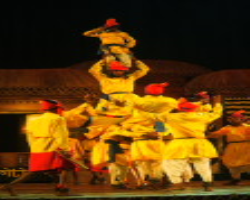
Chavang Kut: Held post-harvest when the granaries are full and the winter winds sweep across the high hills. It remains the largest festival celebrated by the community, featuring vibrant folk dances, traditional athletic displays, and cultural presentations.
-
Thazing Lap: An agricultural thanksgiving festival celebrating the weeding of fields and the onset of ripening crops, featuring traditional youth games, singing contests, and communal feasts.
Attire, Weaving, and Traditional Textiles
Doungel women have sustained indigenous spinning and loin-loom weaving techniques across centuries. The patterns, colour sequences, and motifs woven into traditional shawls and wraps often communicated the wearer’s social status, clan identity, or ancestral achievements.
-
Saipikhup: A distinct wrap featuring diamond-shaped motifs said to mirror the joints of an elephant’s leg, symbolising strength, endurance, and nobility.
-
Pondum and Ponhe: Traditional shawls featuring bold stripes of red, black, white, and yellow worn during formal assemblies, funerals, and matrimonial alliances.
Weaving is viewed as an essential marker of heritage, passed down matrilineally across generations, keeping tribal iconography alive in modern homes.
4. Historical Crucible: Colonial Encounters and the Anglo-Kuki War
Pu Chengjapao Doungel and the Aisan Chiefdom
In the late nineteenth and early twentieth centuries, Pu Chengjapao Doungel, the venerable chief of Aisan, emerged as an influential political figure across the regional landscape. Recognising his position as the representative of the senior genealogical branch (Upa), regional chiefs across the hills deferred to his counsel. British colonial administrators acknowledged his authority, referring to him in official records and intelligence dispatches as the “King of the Kukis” or “Kuki Raja”.
The Anglo-Kuki War (1917–1919)
The watershed anti-colonial conflict in the region was the Anglo-Kuki War of 1917–1919 (often referred to in colonial archives as the Kuki Rising or Kuki Rebellion).
-
The Stand of the Chiefs: The hill chiefs, led by Pu Chengjapao Doungel and allied chiefs (such as Tindong Haokip, Pache Haokip, and Enjakhup Kholhou), rejected the recruitment edict. They viewed the forced conscription as an unacceptable violation of sovereign autonomy and customary liberty.
-
The War Council at Aisan: Traditional historical accounts record that chiefs gathered at Aisan to perform sacred war rites (Thingkho-le-Malcha), passing roasted chili peppers and burnt wood along tribal trails to summon villages to arms against the British Empire.
-
Guerrilla Warfare: For two years, the hill fighters held off British military columns using ambush tactics, deep-jungle mobility, stockades, muzzle-loading flintlocks, and indigenous leather cannons (Sumpu).
The British response was harsh: applying scorched-earth policies, burning villages, cutting off grain supplies, and tracking down resistance redoubts. Ultimately overwhelmed by modern artillery and sustained supply lines, the chiefs surrendered to prevent the starvation of their people.
Pu Chengjapao Doungel, along with other prominent leaders, was arrested, tried, and exiled to the Taunggyi jail in Burma and later the Andaman Cellular Jail or regional prisons, enduring solitary confinement for his defense of ancestral sovereignty. This legacy remains a cornerstone of collective Doungel identity.
5. Faith, Modernity, and the Educational Transformation
The twentieth century brought sweeping shifts in the social and spiritual fabric of the Doungel community.
The Advent of Christianity
Beginning in the early decades of the 1900s, Christian missionaries (including Welsh Presbyterians, American Baptists, and independent regional mission pioneers) entered the hill regions.
The conversion from ancestral spirit propitiation to Christianity redefined village life:
-
Linguistic Empowerment: Missionaries helped introduce Roman script adaptations for the Thadou-Kuki dialects, publishing primers, songbooks, and Bible translations that spurred early literacy.
-
Decline of the Thiempu: The traditional village medicine man and priest lost their formal role as churches became the focal point of community worship, mutual aid, and education.
-
Syncretic Preservation: While ritual sacrifices were abandoned, foundational values such as Tlawmngaina were incorporated into Christian charity, preserving the ethical framework of the village.
Modern Educational Milestones
The establishment of mission schools, followed by post-independence state educational institutions, produced generations of Doungel teachers, civil servants, legal scholars, and defense personnel.
Members of the Doungel community joined state and central civil services (IAS, IPS, IFS), armed forces divisions (such as the Assam Regiment), healthcare institutions, and universities across India, helping connect their remote hill homes with mainstream metropolitan institutions.
6. Contemporary Struggles: Land, Governance, and Development
Despite notable progress in educational attainment and public service, the Doungel community—alongside their broader indigenous neighbors—faces complex challenges in modern India.
The Constitutional Paradox: Customary Land vs. Modern Law
The most structural challenge centers on land ownership and tenure.
Under Indian constitutional jurisprudence, tribal protections vary sharply between states:
-
In Nagaland, Article 371A provides strong protection for customary land ownership, religious practices, and traditional adjudication.
-
In Mizoram, Article 371G offers similar statutory guarantees.
-
In the hill districts of Manipur, however, land governance occupies an ambiguous space. The Sixth Schedule of the Indian Constitution, which grants Autonomous District Councils (ADCs) legislative and financial autonomy in parts of Assam, Meghalaya, Tripura, and Mizoram, has not been extended to the hill areas of Manipur. Instead, local ADCs operate under the weaker Manipur (Hill Areas) District Councils Act of 1971.
While the traditional system protects ancestral lands from alien corporate acquisition, it can leave individual farmers without formal land titles (Patta). Without formal land deeds, young entrepreneurs and smallholder farmers struggle to secure institutional credit or agricultural subsidies from commercial banks, slowing economic modernization.
Ecological and Agrarian Strain
For centuries, the primary mode of subsistence was shifting slash-and-burn agriculture (Jhum).
With population growth, infrastructure development, and conservation reserves restricting forest frontiers, the traditional Jhum fallow cycle has compressed from 15–20 years down to 3–5 years. This shortened rotation deprives the soil of adequate time to regenerate its nutrient canopy, leading to soil erosion, declining yields, and lower incomes for upland cultivators. Moving toward terraced horticulture, organic coffee, and agro-forestry remains difficult without steady state investment and capital access.
Infrastructure Deficits in the Hill Peripheries
While urban centers expand, rural hill villages inhabited by the Doungels often deal with basic infrastructure deficits:
-
Healthcare Bottlenecks: Primary Health Centres (PHCs) are frequently understaffed and lack emergency surgical equipment, requiring families to navigate rough roads to reach district hospitals for routine medical complications.
-
Digital and Physical Connectivity: Mountain roads are vulnerable to monsoon landslides, cutting off agricultural transport for weeks. Digital connectivity, essential for education, direct benefit transfers (DBT), and civil exam preparation, remains uneven across the hills.
7. Ethnic Volatility, Security, and Human Rights
No assessment of the Doungel community in modern India is complete without addressing the recurring ethnic conflicts and geopolitical turbulence that have affected the region.
The Trauma of Historical Clashes
Over the past three decades, the hills of Manipur and adjacent borderlands have experienced waves of ethnic violence. The inter-ethnic clashes of the 1990s (most notably the Kuki-Naga conflict) displaced thousands of families, destroyed ancestral villages, and led to internal refugee movements across district borders.
Many Doungel settlements were caught in the crossfire of boundary contestations, prompting villagers to abandon their ancestral ridges and seek security in larger ethnic enclaves.
Recent Conflicts and Humanitarian Challenges
The outbreak of ethnic violence in Manipur from May 2023 onward brought intense hardship to the hill populations, including the Doungels.
The conflict created sharp territorial partitions:
-
Displacement: Families were uprooted, with many living in Internally Displaced Persons (IDP) relief shelters or seeking temporary housing across Mizoram, Nagaland, and major Indian cities.
-
Economic Hardship: Upland farmers lost access to fertile valley-adjacent fields, and transport networks were disrupted, causing severe shortages of essential goods, medical supplies, and fuel.
-
Educational Disruptions: Prolonged internet blackouts, security shutdowns, and the loss of academic campuses stalled university education for thousands of young students.
Throughout these events, civil society bodies like the Kuki Inpi, village Haosas, and local youth associations have provided emergency mutual aid, illustrating the enduring strength of indigenous community solidarity.
8. The Path Forward: Balancing Tradition, Democracy, and Development
As the Doungel community moves forward, their future depends on finding a balance between honoring ancestral heritage and adapting to modern democratic institutions.
THE MODERN SYNTHESIS |
|
PRESERVE HERITAGE |
EMBRACE INNOVATION |
• Codify customary laws |
• Modern agro-forestry & horticulture |
• Preserve oral history & genealogy |
• Digital archiving of literature |
• Maintain ethical tenets (*Tlawmngaina*) |
• Democratic accountability in councils |
• Reconcile chieftainship with local democracy |
• Equal access to formal land credits |
1. Democratic Evolution of Customary Institutions
The Haosa institution does not need to be eliminated; rather, it can evolve. Integrating village chiefs with elected local councils—ensuring participatory seats for women and youth—can blend traditional authority with modern democratic accountability. Customary land laws should be codified into official legal frameworks that protect communal land from external exploitation while granting residents formal documentation to access modern enterprise loans.
2. Sustainable Agrarian and Economic Transition
Shifting away from unsustainable Jhum cycles requires community-led transitions to high-value agro-forestry:
-
Cultivating organic ginger, turmeric, cardamom, and specialty hill coffee.
-
Developing cold-storage hubs along major hill highway corridors.
-
Fostering community-managed eco-tourism that celebrates their highland forests, historical battle sites of the Anglo-Kuki War, and traditional crafts.
3. Institutional Reconciliation and Regional Peace
Lasting human development requires sustainable peace. The Doungel community, alongside all tribal and valley populations across Northeast India, needs sustained, honest political dialogue that addresses historical grievances, secures constitutional rights for minority communities, and restores civic trust.
The story of the Doungel tribe is one of resilience. From their genealogical position as keepers of clan seniority to their stand against the British Empire at Aisan, the Doungels have defended their culture across generations.
As modern India charts its path as a rising global democracy, honoring and safeguarding the cultural heritage, land rights, and human dignity of indigenous communities like the Doungels remains essential to building an inclusive and just republic.
