

Thank you for reading this post, don't forget to subscribe!

Introduction: The Abode of the Abo Tani Descendants
Perched amid the densely forested valleys, mist-shrouded gorges, and cascading tributaries of the Siang and Subansiri river basins lies the ancestral domain of the Galo people—one of the most culturally resilient, socially organized, and philosophically profound indigenous communities of Arunachal Pradesh, Northeast India. Recognized constitutionally as a Scheduled Tribe under the overarching rubric of the Tani group, the Galo (historically referred to by colonial administrators through the exonym Gallong, an appellation now firmly discarded by the community in favor of self-determined nomenclature) embody a unique synthesis of institutionalized customary law, egalitarian kinship networks, bio-cultural preservation, and an intricate spiritual cosmology centered around the veneration of nature.For centuries, the Galo have navigated the rugged frontiers of the Eastern Himalayas. Their settlements—spanning key administrative districts including West Siang, Lepa Rada, Lower Siang, Upper Subansiri, and parts of East Siang—stand as living testimonies to an indigenous civilization that has preserved its ontological autonomy despite the systemic upheavals of colonial expeditions, post-independence geopolitical integrations, administrative modernization, and ecological commodification.Understanding the Galo tribe is not merely an academic exercise in Himalayan ethnography; it is an urgent investigation into how an indigenous society maintains its cultural spine while navigating the relentless forces of 21st-century globalization, infrastructure expansion, electoral politics, educational disparity, and socio-economic transformation.
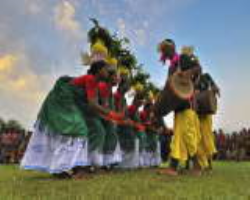
Ethno-Historical Roots and the Philosophy of Patrilineal Genealogy (Abo Tani and Agom)
To understand the Galo worldview, one must first deconstruct their deep historical roots and oral epistemic traditions. Like their sister communities—the Adi, Nyishi, Apatani, Tagin, and Mising—the Galo trace their mythical and biological ancestry to Abo Tani, the primal forefather of humanity in Tani cosmology. Abo Tani is not merely an ancestral figure; he represents the ontological bridge linking primal cosmic elements with terrestrial human survival, tool-making, agricultural codification, and ethical coexistence with non-human entities.
The Science of Patrilineal Genealogy: The Agom Tradition
The cornerstone of Galo identity and social taxonomy is their oral genealogical system, known broadly as Agom or the genealogical chain. The Galo adhere to a strict patrilineal naming convention wherein the last syllable of the father’s name forms the prefix or first syllable of the child’s name. This patronymic syllabic linkage generates an unbroken, recited mnemonic lineage stretching back dozens of generations directly to Abo Tani and, beyond him, to mythical entities representing natural and cosmic forces (such as Sisi, the Earth, and Pedo, the Rain).
This genealogical system is far more than a naming convention; it fulfills crucial socioeconomic and legal functions:Regulation of Exogamy: It strictly prevents incestuous unions, as individuals who share an unbroken patrilineal link within a defined number of generations are strictly barred from intermarrying.Land and Property Rights: Territorial inheritance, village common property boundaries, and ancestral hunting tracts are validated through oral recitations of who cleared or held the land ten generations prior.Social Cohesion and Dispute Resolution: During inter-clan negotiations, oral genealogists (Nyibo or clan elders) recite lineages to establish mutual brotherhood (Ato-Ayo relationships), diffusing tensions by proving shared ancestry.
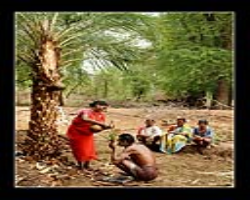
Socio-Political Structure: The Keba System and Customary Law
Indigenous societies in Arunachal Pradesh are celebrated for their village-level direct democracies, and among the Galo, this institutional mechanism reaches its zenith in the Keba system. The Keba is an organic, deliberative assembly that functions simultaneously as a village council, a courtroom, a legislative chamber, and a peace commission.
The Architecture of the Keba
The Keba is fundamentally republican and decentralized. It operates across multiple geographic tiers:Rutum Keba / Doke Keba: The local council at the clan or village level, addressing localized civil infractions, boundary disputes, marital reconciliations, and resource allocation.Bango Keba: An inter-village jurisdictional council representing a cluster of neighboring settlements, convened to resolve trans-village frictions, manage shared river basins, or address structural inter-clan violence.Bogum Bokang / Keba Apex: A regional summit or socio-political platform bringing together representatives across the wider district or ethnic collective to formulate broader policy decisions, codify customary laws, and interact with the district administration.

Jurisprudence of Restorative Justice
Unlike modern adversarial penal systems focused on incarceration and retribution, Galo customary jurisprudence is resolutely restorative. The primary objective of the Keba is to re-establish broken equilibrium (harmony between families and clans) rather than merely punish the offender.
| Aspect | Modern Adversarial System | Galo Traditional Keba System |
| Primary Goal | Retributive punishment / State deterrence | Restorative balance / Social reconciliation |
| Proceedings | Rigid procedural codes, codified legalese | Oratorical debates, ancestral precedent, public witness |
| Reparations | State fines, penal incarceration | Danyi / Mithun compensation, clan-level feasts |
| Verdict Enforcement | Police and correctional institutions | Collective moral weight, social ostracization (Nyoki) |
The currency of restitution often involves the exchange of ancestral valuables, primarily Mithun (Bos frontalis—the semi-domesticated bovine that serves as the apex marker of tribal wealth and prestige), heirloom bronze plates (Danki), Tibetan beads (Tadok), and traditional brass bells. Once a fine (Dondi) is paid and shared communal wine (Poka) is consumed by both aggrieved and offending parties, the matter is permanently extinguished from public memory. Resurfacing settled disputes invites severe spiritual and social penalties.
Spiritual Cosmology: Donyi-Poloism, the Nyibo, and Sacred Ecology
To categorize the Galo under broad modern religious categories is an ontological error. The core of Galo spiritual life is rooted in Donyi-Polo—a reverence for the dual celestial entities: Donyi (the Sun) and Polo (the Moon). However, indigenous thinkers emphasize that Donyi-Polo is not merely physical sun-and-moon worship; it represents a metaphysical framework where Donyi and Polo symbolize the all-seeing, omnipresent, impartial, and moral eye of truth, righteousness, and cosmic balance.

The Hierarchy of Spirits: Uyu and Doope
The Galo universe is densely populated by unseen spiritual entities, categorized broadly as Uyu. These spirits inhabit specific geographic domains:Forest and mountain spirits: Protectors of wildlife, thick groves, and alpine ridges. Overhunting, cutting sacred trees, or urinating in forbidden streams provokes their wrath, manifesting as illness or psychological distress.River spirits: Guardians of aquatic ecosystems who demand respect during fishing activities.Domestic and ancestral spirits: Watchers of the hearth and village perimeter who must be propitiated to ensure agricultural abundance and human fertility.
The Centrality of the Nyibo (Shaman-Priest)
The spiritual, medicinal, and historical nucleus of Galo society is the Nyibo. The Nyibo is neither elected nor hereditarily appointed; one is chosen by the spirits, often revealed through childhood trances, extraordinary dreams, and unlearned recitations of ancient chants.
The Nyibo fulfills critical functions:Divination: Using chicken livers (Roksin Gikan) or egg yokes, the Nyibo reads structural patterns to diagnose the spiritual cause of illnesses or social discord.Oral Encyclopedia: Without a written script, the entire corpus of Galo cosmology, history, mythological epics, and ecological knowledge is memorized by the Nyibo in an archaic, poetic register known as Nyibo Agom—a specialized dialect unintelligible to everyday speakers.Intermediary Healing: Conducting complex rituals (Pooja / Uyu-Kekan) requiring sacrificial offerings to negotiate with spirits, rescue stray human souls (Yalo), and restore bodily and communal vitality.
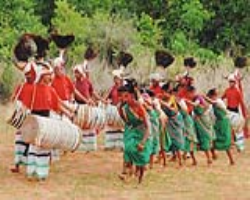
Cultural Celebrations: Mopin and the Rhythm of Agriculture
No cultural marker defines the Galo spirit to the outside world more vividly than the Mopin Festival, celebrated annually in the spring (traditionally in the month of Lumi, corresponding to March–April). Mopin is an agrarian festival designed to invoke divine blessings for a bountiful harvest, community health, protection from agricultural pests, and general prosperity.
The Ritual Grammar of Mopin
- Invocation of Ane Mopin: The central deity invoked is Ane Mopin, the divine feminine force of fertility, agriculture, and material sustenance.
- The Application of Ette: The hallmark of Mopin is the ritual smearing of Ette—a sacred paste made of ground white rice flour—on the faces of participants. This act symbolizes social equality, purity of heart, mutual love, and an earnest plea for crops as vibrant and plentiful as the white flour.
- The Popir Dance: Adorned in handwoven white attire accented with striking black geometric patterns, Galo women perform the synchronized, graceful Popir dance. Led by the rhythmic chanting of the Nyibo, the dancers move in circles, their synchronized steps imitating the movements of birds, planting activities, and the gentle swaying of grain crops.
- The Sacrificial Economy: A Mithun or pig is consecrated and sacrificed according to strict cosmological prescriptions. The distribution of meat follows rigid clan protocols, reinforcing social networks and mutual interdependence.
- The celebration is completed with the collective sharing of Poka—an indigenous fermented rice beverage that holds high symbolic, nutritional, and medicinal value in community life. Traditional Architecture, Material Culture, and Handlooms.
- Traditional Architecture, Material Culture, and Handlooms
The Galo relationship with their natural environment is physicalized in their settlements and domestic architecture. Traditional villages are historically situated on hill ridges and high river terraces, balancing defensive advantage, flood avoidance, and accessibility to terrace and shifting cultivation (Jhum) plots.
The Architecture of the Galo Nam (Traditional House)
The traditional Galo home is an engineering masterwork of sustainable, vernacular architecture:
Materiality: Constructed entirely from bamboo, timber logs, cane splits, and thatch leaves (Toko or wild palm leaves), these structures use zero metal nails. Every joint is lashed using cured cane splits that flex during seismic tremors—an indigenous earthquake-resilient architecture.
Raised Pilings: The house is elevated off the ground on heavy timber posts (stilt architecture). This protects inhabitants from damp soils, crawling reptiles, and Himalayan humidity, while the space beneath serves as shelter for livestock.

The Hearth (Merom): The physical and social center of every Galo home is the Merom—an open-air, multi-tiered suspended hearth. The fire burns continuously, providing warmth, cooking heat, smoke that preserves the bamboo ceiling from wood-boring insects, and a gathering place for family discourse.
Textiles and the Art of Weaving
Galo material culture is immortalized through its handlooms. Weaving on loin looms (back-strap looms) is traditionally the sacred domain of women.The most iconic garment is the Gale—a wrap-around skirt worn by women, characterized by its base of pristine white cotton woven with geometric black, red, and yellow motifs down the center. These geometric patterns are not arbitrary decoration; they encode clan markers, personal milestones, representations of natural landscapes, and mythological narratives of ancestral migrations.
Human Development, Socio-Economic Transitions, and Modern Realities
While the preservation of intangible heritage remains strong, the Galo community faces complex, multidimensional challenges in education, infrastructure, healthcare, and economic autonomy.
1. Literacy, Education, and the Youth Paradox
The Galo have produced prominent political figures, civil servants, jurists, writers, and doctors in Arunachal Pradesh. However, deep structural disparities persist between urban settlements (like Aalo, the commercial and educational center of West Siang) and remote rural villages.Infrastructure Gaps: Schools in interior pockets often battle acute teacher absenteeism, lack of science laboratories, inadequate digital connectivity, and crumbling classrooms.Cultural Alienation: The modern education syllabus, taught predominantly in English and Hindi, excludes indigenous histories, flora, fauna, and languages. As young Galo move to urban centers like Itanagar, Guwahati, or Delhi for higher education, a generational rift emerges: youth become fluent in global idioms but struggle to comprehend ancestral Nyibo Agom or customary legal nuances.
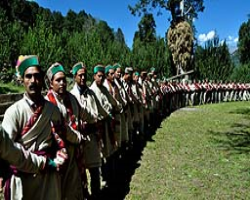
Agrarian Economies: From Jhum to Cash Crops
Historically, the Galo economy relied on Jhum (slash-and-burn shifting cultivation) supplemented by settled wet-rice farming in valley bottoms, hunting, fishing, and forest foraging. While Jhum is widely maligned by modern forest conservation policies as ecologically destructive, for the Galo it was a complex agro-ecological cycle characterized by long fallow periods, multi-cropping systems (growing dozens of rice, millet, tuber, and vegetable varieties together), and communal labor exchange networks (Riglap).In recent decades, shifting cultivation has steadily declined, accelerated by government subsidies encouraging permanent horticultural plantations:
The Boom in Kiwi, Orange, and Large Cardamom: Farmers across Lepa Rada and West Siang have transitioned thousands of hectares into monoculture orchards.
The Double-Edged Sword: While cash crops have raised cash incomes, enabled modern house construction, and funded urban education, they have also eroded traditional agro-biodiversity, introduced chemical fertilizers and pesticides to fragile mountain catchments, and heightened vulnerability to volatile national market prices.
The Environmental Frontline: Large Dams, Deforestation, and Climate Vulnerability
The Eastern Himalayas are among the world’s most ecologically sensitive and seismically active zones. Today, the ancestral landscape of the Galo sits at the center of national development plans focused on the exploitation of hydropower.
The Hydropower Juggernaut and Tribal Resistance
The Siang and Subansiri river systems—intimately woven into Galo song, myth, and sustenance—have been targeted for massive cascade dam projects designed to export electricity to peninsular India.
Submergence of Lowlands: Mega-dams threaten to submerge fertile river valleys, ancestral burial sites, and traditional cane suspension bridges (Chakar).
Erosion of Indigenous Territorial Sovereignty: The transfer of river corridors to public and private power corporations directly circumvents traditional communal ownership patterns, triggering community-led resistance movements demanding environmental transparency, free prior and informed consent, and protection of indigenous riverine heritage.
Climate Crisis on the Mountain Slopes
The impacts of anthropogenic climate change are already acute across the Galo homelands:
Erratic Monsoon Cycles: Prolonged dry spells during crucial sowing months alternate with violent cloudbursts that trigger catastrophic landslides, destroying mountain highway networks and isolating remote settlements for weeks.
Drying Mountain Springs: Natural Himalayan perennial springs (Dhara), the primary source of clean drinking and irrigation water for hilltop Galo hamlets, are drying up or turning seasonal, forcing women to travel longer distances to fetch water and disrupting traditional wet-rice agricultural cycles.
Identity, Acculturation, and the Battle for Linguistic PreservationPerhaps the most existential battle facing the Galo in the modern era is the erosion of their mother tongue and spiritual heritage under the combined pressures of linguistic homogenization, religious conversions, and digital modernization.
Linguistic Vulnerability of the Galo Language
The Galo language belongs to the Tani branch of the Tibeto-Burman language family. While spoken by over 100,000 people, it is classified as vulnerable due to:
The overwhelming dominance of Bollywood-driven Hindi and English-medium education among younger generations. In mixed urban spaces, young Galo increasingly speak an accented variant of Arunachal Hindi (Arunachali Hindi) as their mother tongue.
The absence of an institutionalized native script. To combat this, Galo scholars and the Galo Welfare Society (GWS) developed and standardized a modified Roman-based script for the Galo language, successfully lobbying for its introduction in primary school curricula in Galo-dominated areas.
Religious Transformations and Identity Politics
Over the last half-century, the religious landscape of Arunachal Pradesh has shifted. Christian missionary organizations have found significant followings in interior tribal regions, offering modern education, healthcare access, and social mobility. Concurrently, organized Hindu socio-cultural movements have sought to assimilate indigenous faiths into the broader fold of Sanatana Dharma.
These cross-currents have sparked profound debates within Galo society:
The Institutionalization of Donyi-Polo: To protect their ancestral cosmology from vanishing, modern Galo intellectuals and cultural leaders spearheaded the institutionalization of Donyi-Polo. They created structured prayer halls (Gangging), formalized Sunday congregational services, recorded sacred hymns, and codified iconography—borrowing institutional methods from organized world religions to preserve the essence of indigenous animism.
Intra-Community Cohesion: The Galo continue to wrestle with how to maintain communal unity across clan lines when families within the same village practice different faiths (traditional animist, institutionalized Donyi-Polo, Christian, or Hindu). Encouragingly, the collective pride surrounding the Mopin festival and allegiance to the customary Keba system have largely prevented the severe sectarian fracturing seen elsewhere in the region.
Voices from the Margins: Gender Dynamics and the Evolution of Women’s Rights
In general discourses, tribal societies in Northeast India are often categorized as egalitarian, especially when contrasted with the caste-based, patriarchal structures of mainland India. While Galo women certainly enjoy greater mobility, lack the historic burden of dowry-related violence, and hold a revered place in community economic production, institutionalized structural inequalities remain.
1. Customary Land Inheritance
Under traditional Galo customary law, land, Mithun, and immovable property are inherited strictly through patrilineal descent—from father to sons.Unmarried daughters, divorced women, or widows historically held no institutional right to claim a share of ancestral lands.As land transforms from a communal resource to a privatized, high-value commodity in expanding urban centers like Aalo, this structural exclusion increasingly risks rendering women economically vulnerable.
2. Representation in Traditional Governance
While the Keba system is celebrated for its direct democracy, historically, Keba assemblies were overwhelmingly dominated by male clan elders. Women rarely spoke as arbitrators or council members unless directly summoned as witnesses or disputants.Today, this paradigm is shifting:Educated Galo women, organized through civil society groups like the Galo Welfare Society Women’s Wing and local self-help groups (SHGs), are demanding formal seats at Keba deliberations.Galo women are running for local Panchayat governance, driving the rural micro-credit revolution, and utilizing statutory Indian legal mechanisms (such as the Protection of Women from Domestic Violence Act) to complement, challenge, or reform archaic customary determinations.
The Path Forward: Sustainable Development, Cultural Reclamation, and Policy Imperatives
The story of the Galo is not a tragedy of inevitable decline; it is a vibrant narrative of ongoing negotiation, resistance, and renewal. To ensure that this ancient Himalayan community flourishes in the centuries ahead without sacrificing its cultural identity, clear policy interventions must be enacted:
Reforming Educational Pedagogy: State education policy must formalize the study of indigenous epistemologies. The Galo language, oral literatures, and ecological knowledge systems must be formally integrated into the primary and secondary education framework of the district.
Support for the Nyibo Academy: The institutionalization of schools dedicated to passing on the esoteric oral traditions, chanting rituals, and medicinal knowledge of the Nyibo from aging shamans to youth apprentices is an urgent, non-negotiable cultural priority.
Decentralized Sustainable Energy: The state must move away from ecologically catastrophic mega-dams toward micro-hydel projects, sustainable solar installations, and community-managed agro-forestry programs that respect indigenous land rights and maintain the health of river basins.
Harmonizing Customary and Constitutional Law: Rather than eroding the Keba system, district administrations should formalize support for traditional dispute resolution while assisting communities in reforming archaic gender-discriminatory property practices, striking a balance between indigenous autonomy and constitutional rights.
Ecotourism and Indigenous-Led Value Chains: Capitalizing on the natural beauty of valleys like Aalo, Basar, and Likabali, state policies should promote community-owned, low-impact ecotourism. This allows Galo youth to generate sustainable livelihood streams celebrating their architecture, culinary traditions, and guided wilderness expeditions without commodifying their heritage.
Conclusion: Safeguarding an Irreplaceable Cultural Heritage
The Galo tribe stands at a historic crossroad. They are the living embodiment of an unbroken lineage stretching back through centuries of Himalayan mist to Abo Tani—a human collective that understands how to live within the carrying capacity of their landscape, resolve conflicts through communal consensus, and find transcendence in the flight of an eagle or the first shoots of spring rice.Their ongoing struggles—against environmental displacement, linguistic loss, cultural assimilation, and socio-economic marginalization—mirror the struggles of indigenous populations worldwide. The modern Indian state must recognize that human development in Arunachal Pradesh cannot be measured purely by the tonnage of cement poured into mountain highways or the megawatts generated by damming sacred rivers. Genuine development lies in empowering communities like the Galo to chart their own developmental trajectories on their own terms, ensuring that the white Ette of Mopin continues to grace smiling faces and that the chants of the Nyibo continue to echo across the hills for generations to come.
