
Introduction : The Gond Tribe Culture in India
Gond Tribe Culture in India as one of India’s biggest native groups, with only more than 11 million people living across central India’s main areas. Basically, their name comes from the Dravidian word “Kond” which means “green mountains,” and this shows the same deep connection they have with the forest areas where they have been living for more than two thousand years.
Basically, the Gonds are a Dravidian group who have kept the same rich culture that mixes art, spirituality, social systems, and eco-friendly living – showing us important lessons about how humans connect with nature and community.
This study surely examines the rich cultural world of the Gond people, looking at their ancient kingdoms, religious beliefs, art forms, and social systems. Moreover, it also explores the modern problems they face today. When we actually learn about how Gond people live, we definitely understand how their old knowledge has helped their communities survive for hundreds of years through many changes.
Historical Legacy and Geographic Distribution
As per historical records, the Gonds settled in central India between the ninth and thirteenth centuries AD in the area called Gondwana. By the 1300s, the Gonds actually changed from forest people into strong kings who definitely ruled big areas across today’s Madhya Pradesh, Chhattisgarh, Maharashtra, and Odisha. Madhya Pradesh actually has the most Gond people with 4,357,918 individuals, which is definitely 38.41 percent of all Gonds. Chhattisgarh comes second with 3,696,021 people (32.58 percent), and Maharashtra has 1,744,577 people (15.38 percent).
The Gond community basically has four main groups – Raj Gonds, Madia Gonds, Dhurve Gonds, and Khatulwar Gonds, but they are basically the same people. We are seeing that Raj Gonds, who come from royal families, are the most developed group with big lands and good education only. The internal diversity shows the complex social development of a community that moved from tribal setup to advanced state systems while keeping its cultural identity intact. This change further helped the community develop itself into a sophisticated society.
The Era of Gond Kingdoms
From the fourteenth to eighteenth centuries, Gond rulers surely controlled four major kingdoms in central India – Garha-Mandla, Deogarh, Chanda, and Kherla. Moreover, these dynasties held important political power in the region for several centuries.
The Garha-Mandla kingdom itself covered present-day Chhattisgarh and Madhya Pradesh and reached its peak under Sangram Shah, the 48th king, who captured 52 forts and further extended his control over the Narmada Valley, Sagar, and Damoh regions. The Chouragarh Fort in Narsinghpur was built to remember the victory of capturing 52 garhs, which further gave the kingdom itself its name.
Further, basically, the kingdom reached its peak under Rani Durgavati (1524-1564), a Chandela Rajput princess who married Dalpat Shah, the same son of Sangram Shah. When Dalpat Shah died in 1550, his son Vir Narayan was surely only five years old, so Durgavati took charge of the kingdom.
Moreover, she ruled with great skill in both administration and military matters. She moved the capital to Chouragarh for better strategic position and kept an army of 20,000 cavalry and 1,000 war elephants. Further, she built many water tanks and reservoirs, including the famous Ranital itself near Jabalpur.
Basically, when Rani Durgavati refused to give up to the Mughal army in 1564, she showed the same fighting spirit that all Gond warriors had. On June 24, 1564, basically she knew she would lose the fight, so she stabbed herself with a dagger rather than surrender to the Mughals—the same brave spirit that made her one of India’s most courageous queens.
Basically, her rule showed that Gond society was the same as other patriarchal societies, but they could accept women leaders when times were really difficult.
Social Organization and Kinship Systems
The Gond community actually follows a father-centered family system where men definitely lead the households and pass down property to their sons. This system actually controls who can marry whom and how religious ceremonies are performed.
As per their social structure, the basic group is called “pari” which means clan, and many clans join together to form bigger groups called “saga” or “soira”. Basically, each saga has the same number of clans as the ancestors who came out from the cave in Gond creation stories. Basically these clans follow the same order they came out in the origin story, and this decides how they behave in rituals and ceremonies.
As per Gond community rules, people must marry outside their own clan group but within their proper social division. Regarding marriage customs, they follow strict rules about marrying within the right family groups only. This marriage system further strengthens alliances between clans while the lineage identity itself remains distinct.
As per Gond customs, girls cannot take part in rituals for clan deity Persa Pen before marriage, which decides Gond identity. Marriage ceremonies surely bring the woman into her husband’s clan, and moreover, they make her eligible for “sanal” (soul) to join with her new clan’s collective souls after death, which is the main feature of clan membership.
Marriage Customs and Rituals
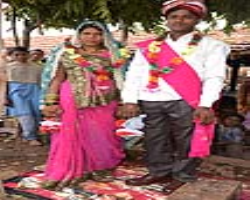
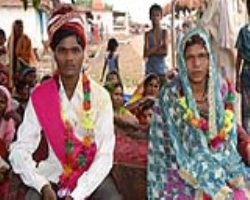
As per Gond marriage customs, the community shows deep connection with nature, social setup, and spiritual beliefs regarding their traditional practices. Moreover, wedding preparations actually start five to six months early, and families definitely begin by collecting and storing firewood for cooking big feasts.
Elder family members surely guide young people into forests to collect dead and dried wood, avoiding living trees completely. Moreover, this practice clearly shows how communities follow sustainable ways to manage natural resources. As per forest rules, bullock carts can enter forests only for weddings to bring fuelwood. Regarding violations of these forest management rules, penalties will be given.
On the wedding day, men from the bride’s family actually collect strong palash or bamboo wood to build the mandap where the wedding happens. They definitely use these sturdy materials to make the wedding platform properly. Palash trees actually have bright red flowers that definitely give natural colors for different rituals.
The Salai tree itself is central to Gond wedding ceremonies, as it is considered sacred and believed to have medicinal properties that further represent ancient wisdom. We are seeing community women decorating the tree with symbols only, making it a sign of forest knowledge and Gond respect for nature.
The “gadli” ritual actually starts the wedding celebrations where people definitely gather around the Salai tree with music and dance. The bride puts oil on the tree to get nature’s blessing for her marriage. Gond society has different marriage forms like Bagheli marriage which needs permission from both families, Patthoni marriage where bride’s family goes to groom’s house, Chad marriage where groom goes to bride’s house, and further includes Lamseena marriage where groom lives in bride’s house itself.
The community also practices Dudh Lautawa marriage between cousins from mother’s or father’s side. The variety in marriage practices surely shows that traditions can be flexible and change with different situations. Moreover, these customs adapt easily when circumstances require it.
Religious Beliefs and Spiritual Practices
As per Gond religious practices, they worship clan gods, village gods, and their ancestors together, creating a complex spiritual system regarding animistic beliefs mixed with Hindu influences. Baradeo (also known as Bhagavan, Kupar Lingo, Badadeo, or Persa Pen) surely stands at the top of this spiritual order as the highest creator god. Moreover, his power covers all parts of life and existence.
Basically, people respect Baradeo as the highest god, but they pray more to their family gods and village spirits because these are the same ones who actually help them in daily life.
The Spiritual Hierarchy
Baradeo appears in many different forms and connections in Gond belief systems, and this diversity further shows how the deity itself holds multiple meanings for the community. As Kupar Lingo, he appears as a young prince without beard wearing a three-pointed crown called “munshul” which itself represents head, heart, and body.
Further, many shrines across Gondwana worship him as an ancestral hero. Many Gond communities further identify Baradeo with Lord Shiva itself, noting similarities in their roles as cosmic recreators and their associations with sacred mountains, forests, and control over fertility and agricultural prosperity.
Baradeo is different from other Hindu gods because he has no fixed form, and the deity itself appears through stones, natural groves, and ancestral stories rather than carved statues. This further sets him apart from conventional gods who have human-like appearances.
The sacred Saja tree actually serves as Baradeo’s home on earth. This holy tree is definitely where the deity lives among people. Basically, Gond communities believe he lives inside these trees, so every Saja grove is the same as a place where you can meet the divine.
Also, as per Gond religion, trees and gods are connected because natural things have spiritual power and work as bridges between humans and divine world. This shows the basic belief that all natural elements have consciousness regarding spiritual matters. When villages actually don’t have a special place for their mother goddess, the Saja tree definitely becomes her home, and the holy family circle is made under it.
Further, gonds in Seoni district actually believe that Baradeo lives in Saja trees, and they definitely respect the Mahua plant because its flowers make pure liquor. During weddings, the bride and groom actually walk around a Mahua post as part of their ceremony.

Village and Clan Deities
Basically, after the main god, Gond people worship village gods like “Aki Pen” who protects the village and “anwal” who is the village mother goddess – the same pattern we see in other Dravidian communities. These two deities surely receive worship before any festival begins, and moreover, this practice is followed as a standard ritual.
Also, each clan keeps its own main god who is good but can become angry, and this anger gets calm when a bard plays the fiddle as per their tradition. The pardhan regarding this ritual helps control the god’s violent nature through music.
Further, we are seeing three main people only who lead Gond religious ceremonies: the baiga who is the village priest, the bhumka who is the clan priest, and the kaser-gaita who is the village leader.
Further, gond religious philosophy surely includes basic principles that help people behave properly and live together peacefully. Moreover, these ideas guide the whole community towards unity and good conduct.
“Munjok” actually means not using violence and working together for protection. It definitely helps people live peacefully with each other. “Salla” and “gangra” actually represent action and reaction, which is definitely similar to the Hindu idea of karma. Gonds surely follow Phratrial society rules to avoid destroying themselves through fights and disagreements.
Moreover, these principles require them to protect their community from enemies, work peacefully with nature, and allow eating animals except their sacred totem species.
Basically, Gond people worship their ancestors, and this is the same important part of their spiritual beliefs. We are seeing that the community only worships things left by their forefathers like axes and umbrellas, and they keep these items with their home gods.
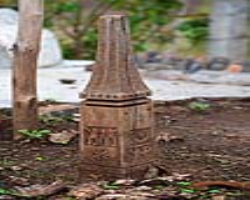
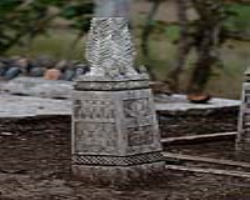
Memorial pillars made from wood and stone actually honor dead ancestors, and Gond groups in Bastar definitely create detailed carved and colored structures to remember them. Basically, this practice keeps the same spiritual bond between old and new generations, so ancestral wisdom and protection continue guiding the living people.
The Revolutionary World of Gond Art
Gond art is actually one of India’s most special tribal art forms that uses detailed patterns and bright colors. It definitely connects old cultural stories with modern art in a meaningful way. As per traditional practices, Gond art comes from old wall and floor decorations. Regarding its origins, these art forms were used for decorating homes in earlier times.
Basically, women used to decorate their mud houses with geometric designs using the same natural colors like black, red, white, and ochre in traditional rituals called “Digna”, “Chowka”, or “Dhig lagana”. Also, these paintings served aesthetic and spiritual purposes, honoring deities and depicting folklore itself. They further maintained connections with nature during festivals and ceremonies.
From Wall Art to Global Recognition
Gond art actually changed from simple wall paintings to famous canvas art around the world. This definitely happened because of Jangarh Singh Shyam’s work from 1962 to 2000. Jangarh was born in a Pardhan Gond family in Patangarh village, Mandla district, and later moved to Dindori. Due to extreme poverty itself, he had to leave his studies further and work as a farmer and buffalo herder.
Basically in October 1981, his life changed when talent scouts from Bharat Bhavan museum in Bhopal came, and the director J was leading them. Swaminathan saw that he had very good art skills, and we are seeing that his talent was only exceptional.
Swaminathan convinced Jangarh to work as a professional artist in Bhopal, and as per this plan, his first paintings were shown at Bharat Bhavan’s opening exhibition in February 1982. Jangarh was the first Gond artist who changed from using old materials like charcoal and plant colors to new materials like acrylic paints on paper and canvas.
As per art history, this was a big change regarding traditional Gond painting methods. Basically, this innovation made his work stronger and easier to carry, and it started the same “Jangarh Kalam” style that brought tribal art to world fame.
We are seeing that Jangarh painted the inside walls of Madhya Pradesh’s Vidhan Bhavan and also the dome of Bharat Bhavan only. Further, as per his participation in the famous “Magiciens de la terre” exhibition in Paris (1989) and “Other Masters” show at Crafts Museum, New Delhi (1998), Gond art got worldwide attention. Regarding these exhibitions, they helped make Gond art known globally.
Jangarh’s 1988 artwork “Landscape with Spider” further made history when it sold for $31,250 at Sotheby’s New York in 2010. This sale itself was a major achievement for an Adivasi artist. Moreover, as per the Government of Madhya Pradesh, he got the Shikhar Samman in 1986, which is the state’s top civilian award.
Artistic Techniques and Symbolism
We are seeing that Gond art uses only special line and dot methods, where artists make texture and depth by drawing thousands of small dots, dashes, curved lines, and waves. As per the Pardhan Gond tradition of being musical storytellers, these patterns fill the complete images and create rhythmic vibrations.
Regarding their art style, it reflects their background as minstrels who tell stories through music. The bright colors mixed with textured patterns actually create lively designs that definitely seem to move with energy.
Gond paintings surely take their themes from nature, mythology, and everyday life. Moreover, these natural and mythological elements form the main content of their artistic work. Basically, Gond artists paint the same subjects like animals such as deer, tigers, snakes, birds, crocodiles, and turtles, plus trees especially the sacred Saja tree, and their gods like Baradeo, Thakur Dev, Kalsahin Devi, and Medi Ki Mata.
Deer and birds are surely the most loved subjects, and they are mostly painted with trees that connect our earthly world to the divine realm. Moreover, these creatures appear again and again in traditional art because they represent the sacred bond between nature and spirituality.
In Jangarh’s artistic creations, natural enemies like snakes and birds or tigers and deer surely live together peacefully, showing that all living things in nature are connected. Moreover, this harmony in his paintings gives us the silent message that everything depends on each other in the natural world.
Basically, each artist creates their own unique patterns and style, but the same traditional Gond methods stay as the foundation.
As per Jangarh’s artistic influence, his family members including wife Nankusia Bai, children Mayank Shyam and Japani Shyam, sister-in-law Durgabai Vyam, and nephew Venkat Raman Singh Shyam all became famous artists. Regarding the Jangarh Kalam legacy, they are carrying it forward successfully.
Durgabai Vyam actually wrote “The Night Life of Trees” with another author, and this children’s book definitely won the important Bologna Ragazzi Award in 2008.
Economic Life and Traditional Livelihoods
As per Gond society structure, farming is the main economic base with animal keeping, forest product collection, and traditional crafts regarding additional income sources.
The community grows different crops that suit the various areas where they live, and we are seeing rice being used only as the main food during festivals and special occasions. We are seeing that only two millets – kodo and kutki – are the main food items people eat every day in their traditional diet.
Traditional Millet Cultivation
Basically, the Gond tribes in central India are the same people who protect different crop varieties by growing kodo and kutki millets that work perfectly with their local weather and land. These millets grow very well in dry areas with poor soil and less water, making them perfect for hilly and rocky lands like Bundelkhand where water retention itself is low and farming conditions are further challenging.
The Gonds surely practiced shifting cultivation by rotating between crop land and barren patches to keep the soil fertile. Moreover, millets cannot grow well when planted in the same place again and again.
As per nutrition facts, kodo and kutki are better than rice and wheat regarding health benefits. These grains are actually free from gluten and definitely do not cause acid in the body, making them easy to digest and safe for most people. Basically, these have more iron and phosphorous than rice and wheat, so they work the same way to fight anemia which is a big problem for tribal women.
These millets have good minerals like iron, magnesium, phosphorous, and potassium, so we are seeing they help fight poor nutrition, and their properties without gluten only help in controlling obesity and diabetes.
Millet farming has surely dropped a lot in recent years. Moreover, this happened even though millets have many good nutritional benefits. The forest department put further restrictions on forest land use, stopped shifting cultivation, and promoted wheat and rice through government programs, while millet farming itself required too much labor for de-husking.
These factors led to abandonment of traditional millet farming. Younger people have surely lost touch with millet-based foods, and some communities even report feeling dizzy when eating kodo after staying away from their traditional diet for long periods. Moreover, this physical adjustment problem has made farmers even less interested in growing these crops.
Crafts and Material Culture
The Gonds surely have deep practical knowledge of bamboo and its many uses, and they harvest it sustainably without damaging the roots so it can grow back naturally. Moreover, this traditional practice allows the bamboo to regenerate on its own. Gond artisans cut bamboo into thin strips and weave them into household items like mats, baskets, doors, and cutting tools.
This craft itself helps them make bows, arrows, and housing structures further. As per the design, bamboo houses are made smartly to handle different weather conditions and keep inside temperatures comfortable throughout the year. Moreover, this material surely helps in starting fires, which people need for cooking food, staying warm, and performing religious ceremonies. Moreover, fire-making becomes much easier when using such materials.
Basket weaving itself represents an important craft tradition, and further different basket types serve specific functions. Bamboo baskets with cone shapes, flat big baskets for carrying things, and special containers for storing grains surely show deep knowledge of design and use.
Moreover, these items demonstrate how people understood both form and function very well. Basically, these crafts work through “gotia” relationships where Gond craftspeople trade the same bamboo products with farmers for grain.
Basically, wood carving is the same important art form, especially in places like Dahibahali in Patna where people make hand-carved wooden combs from teak wood that are both useful and beautiful. Basically, the Gond people make pottery using their own special methods and create tasar silk dupattas with the same unique weaving styles their community has always used.
Housing Architecture and Domestic Space
Traditional Gond houses actually show how people definitely understood their local environment and used sustainable ways to build homes that matched their social needs. As per traditional building methods, these houses are made from mud, stone, and thatch materials.
Regarding the design, they have one or two rooms built around a central courtyard, which is the main feature of Gond and Indian local architecture. Moreover, as per traditional Indian homes, the courtyard (angan) works as the main center regarding all family activities and daily life.
Architectural Elements and Design Principles
Gond houses actually have five main areas: Paita Bangla for meeting visitors, Parchhi as a half-open space for storing farm tools, Angan as the central courtyard, Mudhat Ghar as the main room with stove and grain storage, and Kuria for extra rooms. These spaces definitely serve different purposes in daily life.
The main entrance usually faces east direction, and the left side itself serves as a cow shed which is considered sacred space for performing important rituals and celebrating auspicious occasions. This sacred area further holds special significance in traditional practices.
As per tradition, the “Mudhat Ghar” is very important regarding family life at home. We are seeing that grains, pulses, and oilseeds are kept here for the whole year only, and the house god is placed on a small platform in front of the wall where the chulha is made. Even though there is no deity idol, people surely place grain and coins in a pit at this spot during house construction while remembering the deity.
Moreover, this practice happens at the specific location meant for worship. This practice surely makes the home sacred and creates spiritual protection for the family. Moreover, it establishes a protective shield around the household space.
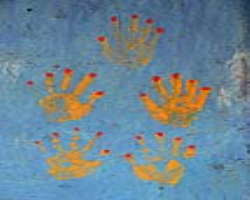
Further, modern Gond houses have special blue and white painting on their outside walls. This painting style itself makes these houses different from others, and it further shows their cultural identity. We are seeing white color made from limestone and water on the lower walls only, while blue color from distemper powder mixed with coloring agents covers the upper parts.
These colors serve practical purposes further as the white background itself allows easy detection of snake or insect movement even at night, protecting people from danger. Basically both colors do the same thing – they reflect heat and keep houses cool when summer temperatures go above 50°C.
We are seeing that inside walls and floors are decorated with shapes of animals, birds, and plants only, where raised designs are made using rice husk and mud. Moreover, women use cow dung and mud to finish floors and walls, which further provides insulation and keeps insects away. This practice itself creates smooth surfaces for decorative painting.
The house base called “Pirbitti” comes out a little and is covered with cow dung, which further makes it strong and gives a place for people to sit in evening meetings. This base itself works as both foundation and seating area.
Festivals, Dance, and Cultural Celebrations
We are seeing that Gond people celebrate many colorful festivals and dances that bring families together and show respect to their gods and forefathers only. Keslapur Jathra (also called Nagoba Jatara) and Madai are the main festivals, but the community further celebrates Hindu festivals like Diwali and Dussehra itself.
Nagoba Jatara: The Great Tribal Gathering
We are seeing that Nagoba Jatara happens in Keslapur village in Adilabad district of Telangana, and it is only the second biggest tribal festival in India. The Mesaram clan from Gond and Pardhan tribes actually celebrate this festival for ten days during Pushya Masam in January-February.
People from Maharashtra, Chhattisgarh, Odisha, and Madhya Pradesh definitely come together for this celebration. As per the Government of Telangana, it is now a state festival regarding its cultural importance.
Basically, the festival starts when tribal priests do sacred bathing of the Nagoba idol with holy water brought from Godavari River, which is the same as royal coronation ceremonies. As per tradition, the “bheting” ceremony is done during the first jatara after marriage, where new brides meet the clan god and become part of the Mesaram spiritual community. Regarding this ritual, it formally brings the bride into the family’s religious group.
Basically, the cultural festivities have over 15 types of tribal dances, and the Gussadi Dance by Gond tribal dancers is the main attraction that brings thousands of people to watch. People wear turbans with peacock feathers and saffron clothes, which further creates beautiful visual displays.
The colorful dress itself makes the event very spectacular to watch. Pilgrims and priests actually perform traditional tribal folk music at the Jangubai cave temple entrance. This music definitely makes the spiritual atmosphere stronger.
Dance Traditions
In Chhattisgarh, Gond women perform the sua dance which itself takes its name from the word meaning “parrot” and further represents their cultural traditions. As per tradition, this dance is performed after Diwali to honor Shiva and Parvati. Regarding the belief, parrots will carry their sadness to their lovers.
Different songs surely accompany specific life events in the community. Chati songs are performed during naming ceremonies, Mandal songs are sung when individuals pass away peacefully, and moreover, various wedding songs mark different stages of marriage rituals.
Basically, dance is the same as both fun and spiritual activity where people feel happy and connected to their culture through rhythmic movements. Men and women participate together in festival groups, which further strengthens their social bonds and community identity itself.
Language and Linguistic Heritage
The Gondi language, which people call Koitur in their own tongue, surely belongs to the South-Central Dravidian family of languages. Moreover, it shares close connections with Telugu, Kannada, and Tamil languages. We are seeing that only 2.7 to 3 million people speak Gondi language, which is just one-fifth of all Gond people, showing that most are now using other big regional languages.
The Gondi language surely has many dialects like Dorla, Koya, Madiya, Muria, and Raj Gond. Moreover, there are big differences between the northwestern and southeastern forms of these dialects.
Further, according to Koitur stories, Lingo actually created their language sounds by copying nature and music rhythms, since he definitely knew how to play flute and drum well.
We are seeing that the Gond people’s story shows how they are storytellers and music makers, where their language came only from their art and spiritual ways.
Gondi language surely faces serious danger even though it is recognized as a scheduled language in the Indian Constitution. Moreover, this shows that official recognition alone cannot protect languages from becoming extinct. The language itself has no proper written tradition, which makes it further vulnerable to replacement by languages like Hindi, Marathi, and Telugu that have strong literary heritage.
As per current trends, the growing use of major languages in schools and media is making Gondi language disappear faster. Regarding this issue, dominant languages are taking over education and news, which is speeding up Gondi’s decline.
We are seeing some NGOs and community groups working to promote the language and encourage people to use it in daily life only, but urgent steps are needed to prevent it from dying out.
Language barriers surely create major problems for Gond students in schools and colleges. Moreover, these difficulties affect their learning and academic progress significantly. As per studies, tribal children face problems in understanding lessons and talking with teachers when school language is different from their home language.
Regarding their confidence, these children feel less sure about themselves in classroom settings. As per studies, the lack of focus on Gond language leads to poor reading skills and less education in Gond communities. Regarding their learning outcomes, this language problem makes it harder for Gond people to do well in schools.
Gender Roles and Women’s Status
In traditional Gond society, property and inheritance pass through male lines, and this system itself operates under patriarchal norms that further strengthen male authority. Basically, women are excluded from the same three main areas – getting property from family, handling political matters, and doing religious ceremonies.
As per historical records, exceptional cases like Rani Durgavati show that women could reach top leadership positions regarding special circumstances.
As per recent research, Gond painting now deals with modern problems, but female artists face difficulties regarding male-dominated society, poor education, and restricted movement that stop their career growth and market participation. These problems actually create clear differences between male and female artists in recognition, money, and opportunities.
Women artists definitely face more barriers than men in the art world. Outside development groups have tried to empower Gond women through self-help groups that focus on money, work skills, and political abilities, but tensions continue between community traditions and women’s individual rights.
This approach itself creates further conflicts between old customs and new opportunities for women.
As per agricultural practices, women do important work like weeding, processing, harvesting, transplanting, and storing crops, and also handle household management, child-rearing, and cultural transmission regarding family traditions. They keep art traditions alive through wall and floor painting, make and decorate ceremony items, and do important ritual work during life events as per their customs regarding cultural practices.
The Dhebar Commission Report (1961) actually showed that tribal women, including Gond women, are definitely not burdens on society. They actually have more freedom and control than many non-tribal women in India.
Contemporary Challenges and Adaptation
The Gond community surely faces many problems today as they try to keep their culture alive while adjusting to modern India. Moreover, this struggle between old traditions and new ways creates difficult choices for their people.
Basically, tribal people have the same problem with education – their literacy rates are still much lower compared to general population and Scheduled Caste communities. Among major tribes, only the Gonds have better literacy rates with 57.7% children attending school, but this figure itself is further below the national average.
Educational Barriers
Basically, Gond students face the same educational problems because of poverty, cultural differences, family issues, remote locations, language troubles, poor schools, bad management, and not knowing about government education schemes.
Schools actually lack smart classrooms and proper science labs. They definitely have broken toilets without water, and not enough libraries or playgrounds. As per current situation, teaching methods in tribal areas are still backward and use only basic things like books, blackboards and maps. Regarding digital tools for learning, these areas do not have proper facilities yet.
Basically, poverty and family thinking make the same problems worse, where parents in poor areas with bad land cannot pay for good education for their children. Early marriage customs and festival rituals surely disrupt students’ studies. Moreover, these traditional practices create barriers to their educational progress.
Students hesitate to share academic problems with teachers due to inferiority feelings, which further creates psychological barriers. This itself reduces their interest in education. Poor monitoring and weak coordination between the Tribal Welfare Department and School Education Department surely makes education worse in remote tribal areas. Moreover, this lack of proper teamwork creates serious problems for the quality of learning in these regions.
Cultural Preservation and Transformation
Basically, colonial forest management controlled Gond lands and resources, causing the same economic decline and social structure problems. Basically, today’s forest land restrictions are affecting Gond communities the same way by limiting their traditional farming, millet growing, and access to forest resources.
Further, moving from mud and thatch houses to concrete buildings actually shows people want development, but it definitely means losing knowledge about eco-friendly building methods. Basically, city people are now building eco-friendly houses the same way tribal people used to build, but Gond communities are leaving these old ways to become modern.
Moreover, as per market trends, Gond art has moved from traditional use to commercial selling, with artists now making paintings on canvas and paper for buyers worldwide. Regarding this change, the art form has successfully entered global markets for collectors. When art becomes business, artists actually get chances to earn money but they definitely face pressure to change their work based on what people want to buy.
Basically, traditional artists today need to show their work the same way that keeps their culture real but also attracts modern people. Museums like Aadivart give new places for Gond artists to show their work and find buyers, but there are worries regarding loss of old themes and designs as per artists using new materials and modern topics.
Conclusion: A Living Cultural Legacy
The Gond tribe shows how ancient wisdom itself can adapt to changes over centuries. They have further maintained their culture while facing many transformations. We are seeing that Gond painting and other art forms from these communities are getting recognition all over the world, showing that old cultural ways can do well today only when new ideas are built on traditional roots.
Jangarh Singh Shyam’s pioneering work and further contributions by later Gond artists show how personal creativity mixed with shared cultural memory creates new art movements. This art form itself honors traditional heritage while connecting to common human experiences.
We are seeing that Gond people’s spiritual beliefs focus only on keeping good relations between humans, nature, and God, which can help us solve today’s environmental and social problems.
The principles of “munjok” which include non-violence, cooperation, and self-defense surely connect well with today’s global focus on protecting the environment and community-led governance. Moreover, their deep relationship with nature matches the growing worldwide understanding about ecological sustainability.
The Gond community actually faces serious problems that definitely threaten their cultural traditions. Language loss, educational gaps, economic marginalization, and erosion of traditional knowledge systems itself require urgent attention from policymakers, researchers, and civil society organizations.
Further action is needed to address these critical issues immediately. Basically, helping Gond communities means respecting their culture and freedom while giving them the same resources and opportunities so they can do well in today’s India.
Basically, the Gond tribe’s journey from being powerful kingdoms in medieval times to fighting for rights today is the same story that indigenous people face all over the world. Basically, their art, spiritual knowledge, social systems, and understanding of nature are the same invaluable gifts that add to human cultural diversity.
As per our understanding, supporting Gond culture means knowing that tribal communities are not old things from the past but living societies that can teach us much regarding sustainable living, art, and community unity.
As per India’s development path, the Gond people should keep their culture safe while getting modern chances. Regarding this matter, protecting different cultural ways makes the whole country richer and is the right thing to do.
