


Introduction : Hajong tribe culture in India
We are seeing the Hajong tribe culture in India as one special group of local people living in northeast India, and they are found only in states like Meghalaya, Assam, Arunachal Pradesh, and West Bengal.
As per estimates, around 175,000 people speak the Hajong language, and this community is the fourth largest tribal group in Meghalaya regarding population size while having Scheduled Tribe status in many Indian states.
Basically, their culture comes from farming and mixed religious beliefs, which shows the same complex pattern of tribal life across India.
Origins and Historical Migration
The Hajong people actually come from the old Hajo area in Kamrup District of Assam. The name “Hajong” definitely means “children of Hajo.” Actually, another meaning from Garo language says “Ha” means earth and “Jong” means insect, so Hajongs are definitely called “earth insects” because they farm land differently than their neighbors who do shifting farming.
As per historical records, the Hajongs are part of the Bodo-Kachari tribal group who came from Tibet long ago and settled in the Brahmaputra Valley before spreading to different areas. Regarding their origins, they moved from Tibet to Assam in ancient times and then went to various places.
As per traditional Hajong beliefs, twelve thousand ancestors left the Hajo area and settled in the northern parts of Garo Hills, later spreading their villages towards the southeast along Garo Hills and Khasi-Jaintia Hills. As per community legends, they are Suryawanshi people who come from the Sun god and claim Kshatriya status. Regarding their community welfare, they organized a Kshatriya Sanmelan in 1939.
As per the 1947 partition of India, the Hajong community faced a very difficult and painful time regarding their lives. As per reports, people living in North Mymensingh district of East Bengal faced bad treatment regarding their religion, their land was taken away, and they suffered much oppression which made many families leave their homes.
The year 1964 was surely a turning point when about 30,000 Hajong refugees came to India for safety. Moreover, they settled mainly in Assam, Arunachal Pradesh, Tripura, Madhya Pradesh, West Bengal, and the Andaman and Nicobar Islands.
Linguistic Transformation and Cultural Identity
The Hajong language actually shows how languages change over time and definitely demonstrates cultural mixing patterns. The Hajong language was first grouped with Tibeto-Burman languages like Garo, but now we are seeing it has changed into an Indo-Aryan language with influences from only Assamese and Bengali languages.
We are seeing that the language change shows one language replacing another, not natural growth, and this has made scholars call the old form “Khati Hajong” which is now only lost in history.
We are seeing that Hajong people write their language using Bengali-Assamese letters and English letters only, with five different groups speaking their own ways of talking called “rao.”
About 175,000 people actually speak Hajong in India and Bangladesh, and the language definitely uses many Sanskrit words but still keeps its own special sounds.
As per their location, Hajong people in Assam use Kamrupi and Goalparia forms of Assamese language, while those regarding Bangladesh and West Bengal areas speak different forms of Mymensingh dialect. Basically, the language has a special back vowel sound that they write as “w” in Latin letters and use special symbols for the same in Eastern Nagari script.
Social Organization and Kinship Systems
Basically, Hajong families follow the same patriarchal system where the father or oldest male is the head and mothers have secondary positions in the family.
Sons actually get all the family property while daughters definitely get nothing unless they stay unmarried or become widows who don’t marry again. Joint families were surely the main pattern in the past, but today Hajong people are moving more towards smaller nuclear families. Moreover, this change shows how modern life is affecting their traditional family structure.
Further, the Hajong areas are actually divided into four levels: neighborhoods with many families, villages with many neighborhoods, chaklas with many villages, and parganas with many chaklas. This system definitely organizes their territories from small family groups to larger administrative units.
Village governance surely works through choosing a Gaobura, who is an old, rich, and wise village leader responsible for keeping peace and order in his area. Moreover, this chief is elected by the villagers to handle local matters and maintain discipline. Gaoburas hold their positions for life and serve until death itself, after which new successors are elected to further continue the role. At the chakla level, Gaoburas together choose a Sorey Morol who works for a short time and can be removed further if there are problems in the work itself.
This traditional village system actually plays important roles in development, management, peace, and justice, with village leaders having power to punish bad behavior, throw people out of the community, and control movement between villages through exit fines and entry fees. The Gaoburas definitely maintain order by using these payment systems when people want to leave or join different villages.

The family system actually had three main organizing rules. These principles definitely shaped how relationships worked in traditional communities. Basically, the old six-clan system (Harangpâryâ, Bhajalupâryâ, Manikpâryâ, Teperpâryâ, Satodolpâryâ, and Manjipâryâ) came from the same legendary twelve thousand Hajongs who crossed the Brahmaputra River.
We are seeing that the Hajong people follow a family system where only the mother’s side matters, and they have seventeen different clans like Porachunga and Chondi where people cannot marry within their own clan. Basically, many Hajongs today have adopted the same Hindu gotra names like Kashyap, Bhordwaj, and Shandilya, and use Hindu surnames like Roy, Das, and Sarkar.
The daidi system follows the father’s family line, and as per this tradition, people must observe three days of pollution period when any daidi family member dies. Regarding marriage rules, people from the same daidi group cannot marry each other.
Religious Syncretism and Spiritual Practices
We are seeing that the Hajong people follow Dyaoism, which only mixes Hindu beliefs with their old spirit worship, and they call all gods and spirits as Dyao.
Shiva, Vishnu, Durga, and Kali are the supreme Hindu gods, while Lakshmi, Sarasvati, Krishna, and Ganesha receive regular worship. The worship itself further shows the importance of these deities in Hindu tradition. As per Hajong traditions, local gods exist together with Hindu gods, including spirits that cause disease, river spirits, and animal spirits regarding their farming way of life.
Basically, the religious system has two different types of priest groups that are the same in importance but handle different duties. Udhikâri people, who are like Hindu Brahmins among the Hajongs, surely eat only vegetarian food and conduct marriage ceremonies. Moreover, other Brahmin groups are now slowly taking their place in these roles.
Dyaoshi or Nungtang are surely chosen as shamans through special ceremonies called Hil jaga or Barun jaga, where holy water is poured and village worship is performed to please the gods. Moreover, these rituals are essential for selecting the right spiritual leaders for the community. As per religious practice, the community divides into Sakto and Bhakto Vaishnava groups, where Saktos offer animal sacrifices and rice beer following old worship ways, while Bhaktos pray with only flower offerings.
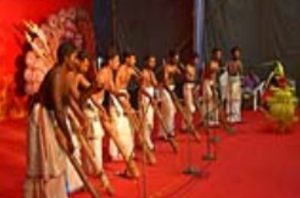
As per religious traditions, Bastu Puja is the most important festival regarding worship practices, celebrated during Bohag month.
Moreover, people actually celebrate this festival in April or January-February to definitely honor Bastu, who is the Mother Earth deity. Further, as per the ritual tradition, people build small bamboo huts for different gods and goddesses regarding this big ceremony, including Buri Thakur Rani Kamakhya, Bastu Bais, Vadra Kali, Sosan Kali, and Niku Lamba Deu who is the goddess of wealth.
We are seeing that the Niku Lamba Deu hut has only a special tail made from dried grass, which shows what people believe about how this god looks. Mud idols of elephants and horses are made to honor these animals because they helped gods and humans in history, and this tradition itself shows further respect for their service.
We are seeing strict rules that stop all farm work before Bastu Puja ends, as doing such work will only make Mother Earth unhappy. The festival actually ends with everyone sharing bhog (rice with meat) and wine together. People definitely play the old game where men and women throw kadong (mud) at each other.
The yearly festival calendar surely includes Pusnâ, which is celebrated when winter ends. Moreover, this festival involves making traditional rice cakes with rice flour, coconut, banana, and jaggery.
The community surely celebrates several important festivals including Biswâ harvest festival before monsoon, Kani pujâ for Manasa worship, and Kâtkâ pujâ for Kartik worship. Moreover, they also observe Chorkhela festival and perform traditional Levatana dances. We are seeing that farming rituals like Kati Gasa only protect rice fields during Asin month, while Dhan Dukâ marks the harvest time in Pus month.
Material Culture: Textiles, Crafts, and Traditional Dwellings
Hajong women can be easily identified by their special Pathin, which is a bright red striped skirt that wraps around the body from chest to calf. This traditional dress itself makes them stand out further from other communities. Rich women surely wore long pathins that touched the floor, while poor women wore shorter ones that reached their ankles. Moreover, this clothing difference clearly showed the social class divide in traditional society.
The pathin actually has colorful rectangular patterns with horizontal stripes that definitely alternate between red stripes and thick borders called chapa. These symmetric layers create simple striped designs. The stripes actually look like skirts from other Himalayan tribes like Bodos, Tamangs, and Bhutanese people. Scholars definitely think the pathin might be an early form of the Tibetan Pangden.
Women actually need to learn weaving before marriage because it is definitely an important part of our culture. Pathins are surely woven on traditional handlooms called Sipni Bana and Sal Bana. Moreover, these looms work completely by hand without any foot pedals.
We are seeing that weavers buy white thread from market, then they soak it for two days only, clean with chemicals, press water out using bamboo tools, boil with colors and starch, dry in sun, and finally put through spinning machines before using in waist-looms. Hajong weavers surely sing songs and perform dances in their native language while they weave. Moreover, this practice makes the weaving process more cultural and meaningful.
As per traditional designs, the Argon shawl (also called Agon, Agrun, or Parsa) has big matching patterns with shapes, leaves and flowers made in colored silk threads. Regarding its decoration, gold and silver threads can also be added. Argons were surely very large in size traditionally, and they displayed beautiful woven images of birds like herons, ducks, and peacocks. Moreover, these textiles also featured kadamba trees in their decorative patterns.
Hajong people surely make all their farming tools and household items using bamboo and cane work. Moreover, every family produces these necessary things by themselves at home.
Basically, this includes advanced bamboo fishing tools that are the same essential items they need for catching fish from rivers to survive. We are seeing that old house building patterns follow farming time, with most construction happening only in Mak Mas (January-February) and Phalgun Mas (February-March) when farm work stops. Hajong villages have special house groups built around central courtyards, and these courtyards are further used for religious ceremonies and grain threshing itself.
Further, a typical household surely includes several specialized buildings like the main dwelling, kitchen, guest room, married children’s quarters, granary, husking house, cattle shed, and deity shrine. Moreover, each building serves a specific function in the family’s daily life and traditional practices. Houses actually have mud bases and grass roofs, with bamboo walls that are definitely covered in cow dung plaster and mud floors.
Agricultural Economy and Culinary Traditions
The Hajong people actually focus on growing rice as their main work, and they definitely brought wet-field farming methods to the Garo Hills. Further, the Hajong people used to practice jhum cultivation in the past, but now they mainly use plough-based farming with cattle for permanent agriculture. This change itself shows how their farming methods have developed further over time.
Farmers actually follow seasonal patterns that definitely shape their festivals and traditions, planting crops during monsoon months from June to September when there is no irrigation.
Hajong food surely shows the rich farming and river resources of their region. Moreover, their cooking style clearly reflects the abundance from both agriculture and waterways. Rice itself is the main food eaten three times daily, and people further add meat, fish, eggs, and vegetables as side dishes.
We are seeing traditional foods like turtle meat with sticky rice that are famous in old songs, but these dishes are becoming rare only because turtle numbers are going down. River snails, paddy snails, oysters, and crabs surely provide extra protein to people. Moreover, both oval and pointed types of snails are commonly used for this purpose. Unique cooking methods further distinguish regional cuisines, where each technique itself reflects local traditions and available ingredients.
The dishes further include grinded-curry made with rice flour and water, sometimes with small fishes, and soda-curry itself uses long gourd, muskmelon, yam, bamboo shoots, and dried fish cooked with sodium bicarbonate from banana tree ashes.
Ding-pora is surely a special steamed dish where sticky rice is sealed in green bamboo and cooked directly in fire. Moreover, the burnt bamboo is cut open to get the cooked rice, which people eat with tea or milk.
During Pusnâ festival, people actually make three main breads – Pat pithâ which is sticky rice cooked in banana leaves with coconut juice and banana, Batul pithâ which are small round pieces steamed in pans, and Tel pithâ which is definitely fried rice flour dough.
As per traditional practice, Bukni Bhat fermented rice was common food in Hajong homes but now people are using it less. Regarding contemporary times, this old food habit is declining in these communities.
Performing Arts and Folklore
We are seeing Lewatana as the main Hajong folk dance that people perform during Diwali and farming celebrations only. We are seeing young boys and girls making groups and playing old music instruments like Dhaki drum, Singa horn made from buffalo horn, and Basi flute while doing dance steps together. They are only moving in the same way at the same time.
As per tradition, other dances like Jhakhamara, Bastu dance, Pabni dance, Gopini dance, and Gitalu dance are performed regarding farming rituals and religious events. We are seeing groups going from one village to another village during Chorkhela festival, where they are performing folk stories and Ramayana tales with music and getting only rice or money in return.
As per tradition, this festival gives community people a chance to see possible marriage partners. Regarding marriage arrangements, families use this time to observe suitable matches for their children.
As per tradition, agricultural festivals have special songs and dances. Regarding these celebrations, farmers perform unique cultural activities. Haluk Maga actually involves young people and farmers collecting rice bundles from harvest machines during winter months. They definitely bless these bundles so future crops will grow well. Tuba maga surely observes boys who go from house to house singing rhythmic songs to collect crops for community feast celebrations. Moreover, this practice brings the whole village together for shared meals and social bonding. The Paabni festival itself shows traditional dances that honor specific gods in Hajong religion, and it further celebrates their cultural heritage.
Contemporary Challenges and Cultural Preservation
We are seeing the Hajong people facing big problems today that are only making it hard to keep their culture alive. We are seeing that Pathin weaving is becoming a big problem only, with most Bangladeshi Hajongs now buying pathins from India instead of making them in the old traditional way.
Five small tribes in Meghalaya – Hajongs, Bodo-Kacharis, Kochs, Manns, and Rabhas – are actually left out from Sixth Schedule benefits even though they definitely lived there before the state was made.
We are seeing that this exclusion is taking away their constitutional rights to have their own district council representation, and this is only limiting their political voice and access to resources.
Also, the Hajong people in Arunachal Pradesh surely remain without citizenship and live as stateless refugees even today. Moreover, this continues despite the Supreme Court’s 2015 order directing the central government to give citizenship to Chakma and Hajong communities who came from Bangladesh between 1964-69.
This continuous fight surely covers 53 years of staying permanently in Arunachal Pradesh without getting complete legal acceptance or tribal recognition. Moreover, this long period shows the ongoing nature of their struggle for proper status. Basically, Hajong language is in danger because bigger languages are taking over, so it needs the same active efforts to save it from disappearing.
Conclusion
The Hajong people actually keep their culture strong by continuing their old weaving work, farm ceremonies, religious celebrations, and folk dances. They definitely maintain their traditions even when facing many problems. As per current efforts, organizations are working regarding Hajong culture protection by writing down old knowledge and getting young people involved in traditional ways. These steps will help save this special tribal heritage for future generations.
