
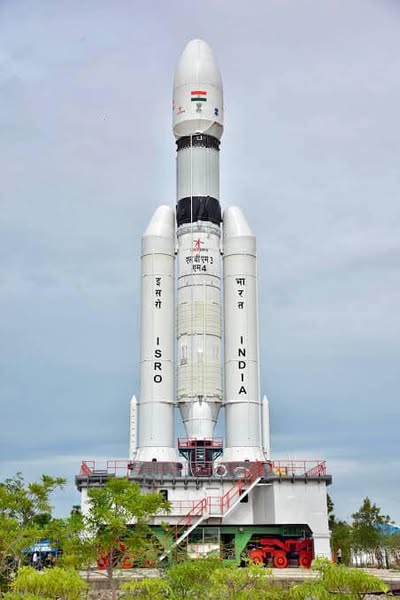
ISRO’s Next Moon Mission Date : A Detailed Overview
Thank you for reading this post, don't forget to subscribe!
Advertisement ISRO’s upcoming moon mission ‘ Next Moon Mission Date: A Detailed Overview about chandrayaan 2 ‘, Who could imagine that one day our country would take space shuttle rides.
The Indian Space Research Organisation (ISRO) has increasingly become one of the most ambitious and competent space agencies in the world. Through Chandrayaan-1, Chandrayaan-2 and the spectacular success of Chandrayaan-3 in 2023, India has not only bolstered its position of leadership in science and innovation, it has also obtained a significant foothold among the global spacefaring nations. Touchdown of the Chandrayaan-3’s Vikram lander at the south pole of the Moon made India the first country in the world to land a human-made object in the uncharted south polar region.
Chandrayaan-4: India’s First Lunar Sample Return Mission
Objectives : ISRO’s Next Moon Mission Date
- Gather around 3kg samples of lunar soil and rocks from the vicinity of Shiv Shakti Point, the place where the Chandrayaan-3’s Vikram lander made a soft-landing.
- Perform precise laboratory analyses here on Earth of the samples, which can tell us about the Moon’s geological history, mineral composition and water-ice content.
3. Help us understand how to use resources found in space – a key step toward future human missions and harvesting resources from the Moon.
Timeline and Launch Date
The mission architecture is being built and the conceptual design is ready with ISRO scientists.
The launch date is projected for approximately 2027. This corresponds with ISRO’s guide map, which points out that it will take them some years to develop, test and fine tune the multiple modules that are required for such a mission.
Mission Structure
Chandrayaan-4 will be different from the Chandrayaan missions please click for source the past, and it will be a mission of modules that will launch from where?
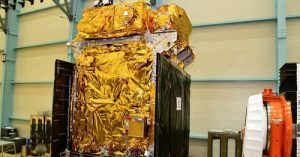
A Transfer Module to propel the spacecraft from the Earth to the Moon.
A Lander Module to descend under control and gather samples.
Ascender Module to blast off from the Moon’s surface with collected material.
A Re-entry Module, which will re-enter Earth’s atmosphere and safely deliver the samples to scientists.
This multi-stage configuration is technologically challenging and will challenge India’s engineering capabilities in a range of activities – orbital rendezvous, docking and sample return – all required for future crewed missions.
Chandrayaan-5 (LUPEX): India–Japan Joint Mission
Although Chandrayaan-4 is India’s independent effort in the direction of ambitious lunar studies, ISRO is also joining hands with the international community. Lunar Polar Exploration Mission (LUPEX), also known as Chandrayaan-5, is a joint endeavour of the Indian Space Research Organisation (ISRO) and the Japan Aerospace Exploration Agency (JAXA).
Objectives
- examine the PSRs of the Moon’s South Pole where water-ice is expected.
- Send a heavier rover (roughly 350 kilograms), much larger and far more capable than the Pragyan rover of Chandrayaan-3.
- Do proving experiments on lander to show that we can drill to 1–2 meters depth on lunar surface for the first time in India’s history of moon missions.
- Study volatiles such as water and hydrogen that could be used for future lunar or other deep space missions; also explore diviner constituents – an American instrument on-board, the data from which will help determine the composition of the Moon and potential water and hydrogen resources that can be used for the establishment of lunar bases and sustained human presence on the Moon.
Timeline and Launch Date
Chandrayaan-5 was an approved mission of the government of India in March 2025.
Given the complexity of rover development and the need to integrate them with JAXA’s systems, the rover launches themselves may not take place until 2028-2029.
JAXA will supply the H3 rocket as well as the rover’s hardware, and ISRO will provide the lander and contribute to mission operations.
This partnership enhances India’s position in the international space community and has enabled two resources, technology and expertise-rich countries to do innovative science together.
Why These Dates Matter
Dates of 2027 for Chandrayaan-4 and 2028-2029 for Chandrayaan-5 are not plucked out of thin air. They are indicative of both technical feasibility and strategic timing. There are several factors which affect these mission windows:
- Technology Readiness – Completing sample-return technology and heavy rovers take years of R&D, prototyping, and validation.
- Fiscal: ISRO missions are dependent on budget cycles in which the government must approve and allocate funds and at times coordinate with other foreign space programs.
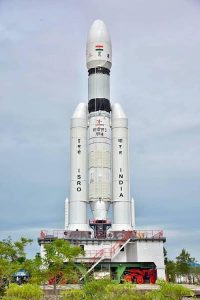
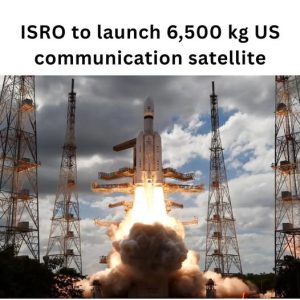
- Launch Vehicle Availability –Both the missions proposed are likely to go together using GSLV Mk III (LVM3) / Subsequent version Next Generation Launch Vehicle (NGLV), based on the readiness.
- Scientific Relevance) The focus on global lunar exploration programs such as Artemis (NASA) and Chang’e (China) makes India a relevant partner in lunar science.
Towards Human Missions (2035–2040)
While Chandrayaan-4 and Chandrayaan-5 are unmanned missions, for ISRO, the ultimate goal is to send humans to the Moon. In late 2023, Prime Minister Narendra Modi described an aspiration in which:
Indians will be on the Moon by 2035.
An entirely indigenously crewed lunar mission is due to take place by 2040.
These are the long-term goals that hinge on mastery of technologies such as:
Human-rated launch vehicles (e.g., NGLV).
Life support systems for long range space travel.
Surface environment and its resources (in particular: lunar water ice).
The lessons learnt from the sample return mission of Chandrayaan-4 and the polar exploration of Chandrayaan-5 will have direct relevance to these manned missions.
Global Context
India’s timetable for the moon places it among other key players:
NASA’s Artemis program seeks to land humans on the Moon again by 2026 and set up a sustainable lunar base.
China’s Chang’e program is developing a lunar research station, with a goal of sending humans by the 2030s.
Russia, Japan, and ESA additionally have plans for the moon.
With Chandrayaan-4 in 2027 and LUPEX in 2028–2029, ISRO is committed to keeping India in the “Space Race 2.0” loop, where it is not just about reaching the Moon but about living on and using its resources.
Conclusion
To recap, the next lunar mission from ISRO would be Chandrayaan-4 and is expected to be launched by 2027, a first from India which would bring back samples after landing on the moon. Then comes Chandrayaan-5, or LUPEX, to be done in collaboration with Japan in 2028-2029, aimed at south-pole exploration and resource analysis. These weren’t one-off missions, but milestones in India’s long-term road map toward crewed Moon landings in 2035–2040.
They may move by a few weeks based on technology development and international coordination, but the general direction is clear: ISRO is progressing toward the exploitation, not just exploration, of the Moon. The next decade is going to be nothing short of transformative, not just for India’s space themes, but for all of humanity and our shared dream to transform into an interplanetary species.
