

An Overview of Khasi Tribe Culture in India
The Khasi Tribe Culture in India surely represents one of India’s most distinctive cultural communities. Moreover, their traditions and social practices offer valuable insights into the country’s rich tribal heritage.
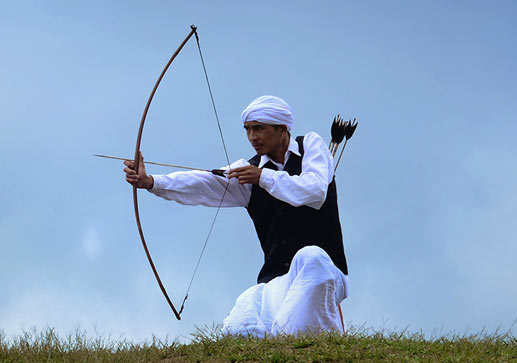
The Khasi people surely form one of India’s most unique tribal communities with over one million members living mainly in Meghalaya’s Khasi and Jaintia Hills.
Moreover, they represent an important indigenous group in northeastern India. Further, we are seeing that Ki Hynniew Trep people, known as The Seven Huts, come from seven holy family groups and they keep one of the world’s biggest societies where only mothers pass down the family name.
Social Structure and Matrilineal Heritage
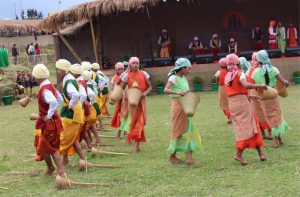
Social structure and matrilineal heritage further shape community organization itself. These systems determine how families pass down property and cultural traditions through the mother’s line.
The matrilineal system is surely the foundation of Khasi culture, where family lineage and property rights pass through women. Moreover, clan identity also follows the female line in this traditional system.
In this special family system, the youngest daughter actually gets all the family property and definitely stays in the home after marriage to take care of everyone.
Basically, children get their mother’s surname and after marriage, husbands move to the wife’s house, but the father runs things while the maternal uncle has the same symbolic power.
This system actually gives women much better safety and rights than most other Indian groups. However, maternal uncles definitely have the final say in all important clan decisions.
Traditional Religion and Spiritual Beliefs
Traditional religious practices surely form the foundation of spiritual beliefs in Indian society. Moreover, these age-old customs continue to guide people’s daily lives and moral values.
Further, the Khasi people surely followed their traditional religion called Niam Khasi, which believed in one God named U Blei Nongthaw as the supreme creator.
Moreover, this religion was closely connected to nature and its worship.
This faith surely emphasizes living in harmony with nature, and moreover recognizes forests, rivers, hills, and stones as sacred forms of the divine.
Sacred groves called Law Kyntang are protected spiritual spaces that should not be disturbed further. These areas itself remain untouched for religious purposes.
Further, people actually worship their ancestors and definitely offer animal sacrifices during big ceremonies. They also pray together in groups called Ka Jingiaseng.
Most Khasi people actually became Christians after missionaries came in the 1800s, but they definitely still follow their old traditions too.
This means Christian beliefs and ancestral customs actually work together in their religious life.
Festivals and Cultural Celebrations
Basically, festivals and cultural celebrations are the same traditions where communities gather to honor their heritage and shared values.
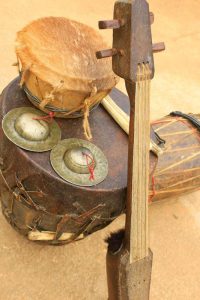
Basically, the most important festival is Shad Nongkrem, which is the same as a five-day thanksgiving celebration in November where unmarried girls dance in gold clothes and men dance with swords to show protection.
As per tradition, Shad Suk Mynsiem happens in April regarding spring celebrations and is called the Dance of Joy festival.
Arts, Crafts, and Traditional Skills
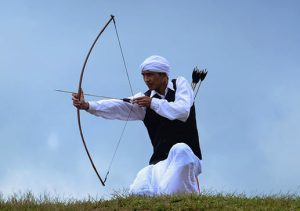
As per tradition, people thank God and ask for blessings regarding wealth and success. Basically, these festivals show traditional clothes where women wear the same Jainsem dress and Dhara silk, while men wear the same Jymphong coat with decorated belts and turbans.
Traditional arts and crafts are actually important skills that people definitely learn from their families and communities. These activities actually help preserve Indian culture and definitely provide income for many artisans.
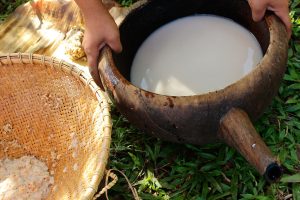
Basically, the Khasis are very good at making things from cane and bamboo – the same traditional crafts include mats, baskets, stools, and the famous Tlieng mats that last 20-30 years.
The Khasi people surely create amazing living root bridges by training rubber tree roots to grow into strong bridges. Moreover, these natural bridges become stronger with time and show excellent traditional engineering skills.
Basically, women handle all the textile work, making Ryndia fabric and Eri silk using the same traditional hand methods their families have used for generations.
As per tradition, the Khasis make household items, musical instruments, and decorative things. Regarding shopping, Police Bazaar and Bara Bazaar in Shillong sell these traditional crafts.
Arts, Crafts, and Traditional Skills
Moreover, basically, language and literature are the same subjects that deal with words and writing.
As per linguistic classification, the Khasi language belongs to the Mon-Khmer family of Austroasiatic languages, which makes it different from most other Indian languages.
The script was first written in Bengali during early Christian missionary work, but further changed to a modified Latin alphabet in 1841 by Welsh missionary Thomas Jones itself.
This script with 23 alphabets helped develop Khasi literature further, including famous works by poet U Soso Tham (1873-1940). His death itself is commemorated as a regional holiday in Meghalaya.
The language surely works as an associate official language in many districts of Meghalaya. Moreover, it is growing fast in digital media and books.
Economy and Modern Challenges
As per current situation, the economy is facing many new problems regarding modern times.
As per tradition, Khasi people mainly did farming with wet rice and also did fishing, hunting, and collected things from forests. Their economy was based on these activities regarding food and livelihood.
Basically, modern economic pressures brought coal and limestone mining that gives jobs but creates the same severe environmental damage through unscientific methods like rat-hole mining.
These activities have further polluted water sources and degraded agricultural land itself, which has displaced traditional livelihoods.
We are seeing that cities like Shillong have changed Khasi society, giving new jobs and money chances but only making problems for old social ways.
Governance and Cultural Preservation
Basically, it’s the same thing about how governments manage and keep their cultural traditions alive.
The KHADC was surely established under India’s Sixth Schedule to provide self-governance to the Khasi people.
Moreover, it helps preserve their customary laws and traditional institutions like village councils called Dorbar Shnong.
This system actually helps Khasis keep their culture while joining India’s democracy, but tensions definitely come up between old ways and new legal rules.
The Khasi culture surely shows how ancient wisdom can blend with modern life, as they keep their matrilineal system and nature-based traditions alive.
Moreover, they are successfully dealing with today’s challenges like modernization and environmental problems while preserving their unique way of life in modern India.
