

Echoes of the High Ridges: The Kholhou Tribe, Ancestral Heritage, and the Struggle for Identity in Modern India
Introduction: The Forgotten Chroniclers of the Eastern Hills
Small settlements—particularly that of the Kholhou tribe—nestled on the rugged slopes where the hills of the Northeast meet the valleys, have preserved the memory of a civilisation for centuries.
Among the myriad indigenous peoples of Northeast India—spanning the hill tracts of Assam, Meghalaya, Tripura, and Manipur—resides a distinct indigenous group known historically in colonial records and anthropological annals as the Kholhou, known endonymously and administratively today primarily as the Khelma (or Sakachep).
Belonging ethnically to the Old Kuki-Chin linguistic and cultural continuum, the Kholhou have spent centuries balancing communal self-determination, rich agrarian rituals, and close ecological communion against the tectonic pressures of regional politics, territorial reconfiguration, administrative neglect, and rapid socioeconomic modernisation.
Understanding the Kholhou demands looking beyond monolithic narratives of “Northeast Indian tribes”. It requires peeling back layers of migration, oral history, intricate clan kinship, distinct customary jurisprudence, and the existential friction that emerges when a traditional hunting-and-swidden community encounters modern land legislation, digital networks, and the economic machinery of contemporary India.
1. Ethno-Genesis and Historical Migration: Unravelling the Oral Epics
The Legend of the Cavern and the Southern Migrations
Like many indigenous groups belonging to the Tibeto-Burman linguistic umbrella, the Kholhou root their origin in cosmogonic oral narratives. Elder raconteurs preserve tales of Khur or Chhinlung—a mythical subterranean cave or rock shelter from which the primal ancestors emerged into the sunlit world.
These narratives place their historical trajectories across the Patkai Range and down the Chindwin and Irrawaddy valleys of Upper Myanmar before shifting westward into the Lushai Hills (modern Mizoram), the Chittagong Hill Tracts, and the Barail Range.
Colonial ethnographers, notably J. Shakespeare (The Lushei Kuki Clans, 1912) and C.A. Soppitt (A Short Account of the Kuki-Lushai Tribes, 1887), classified the Kholhou/Khelma under the broad taxonomy of “Old Kuki” clans. These early migrant waves settled across the lower heights and valleys well before the expansion of the Thadou (New Kuki) groups and the consolidations of the Sailo chiefs in the 18th and 19th centuries.

The Topography of Settlement
The historic movements of the Kholhou were dictated by three factors:
-
Soil fertility and forest cover for rotational swidden cultivation (jhum).
-
Defensible ridge tops designed to secure hamlets against inter-tribal skirmishes and punitive raids.
-
Proximity to perennial mountain springs, considered both physical lifelines and the dwellings of localised spirits.
Today, the Kholhou are dispersed across distinct geopolitical pockets:
-
The Dima Hasao (formerly North Cachar Hills) and Karbi Anglong districts of Assam.
-
The border areas of the East Jaintia Hills in Meghalaya.
-
Pockets in northern Tripura and foothill tracts of Manipur and Cachar.
This geographic splintering has shaped their contemporary socio-political leverage, leaving them an administrative minority across several state jurisdictions.
2. Social Architecture, Clan Kinship, and Village Polity
Kinship Structure and Exogamy
The social scaffolding of the Kholhou is grounded in patrilineal descent, patriarchal household governance, and rigid clan exogamy. The community is segmented into several primary clans (hnam or innsung), which further divide into sub-clans and lineages. Marriage within the same patriclan is traditionally tabooed, seen as a rupture of cosmic and social harmony that brings misfortune upon the family hearth.
Inheritance leans heavily toward primogeniture or ultimogeniture depending on the sub-clan variant. Typically, the youngest son (naupangpen) or eldest son retains rights to the ancestral hearth, bearing the lifelong duty of caring for aged parents, sheltering unmarried sisters, and maintaining ancestral gravesites.
The Village Council (Khadang or Lalship)
Before modern statutory Panchayats or District Councils, the Kholhou village operated as an autonomous mini-republic. Governance was anchored by the village chief (Lal) and his council of elder advisors (Khadang or Mantris):
| Role / Institution | Traditional Composition | Primary Function & Responsibilities |
| The Lal (Chief) | Hereditary or elder-selected patriarch | Overall governance, war leadership, land distribution, presiding over council |
| The Khadang (Council) | Clan representatives and village elders | Resolving civil feuds, property boundaries, marriage disputes, community defense |
| Thiempu (Priest) | Shamanic spiritual practitioner | Divination, propitiation of forest deities, conducting seasonal agrarian rites |
| Tlangau (Crier) | Appointed communal messenger | Broadcasting council orders, summoning assemblies, announcing taboos |
Land was owned collectively by the village under the custodianship of the chief. Individual households possessed only usufructuary rights over plots allotted for seasonal cultivation. This communal tenure system preserved local equality, preventing landlessness and absentee landlordism for centuries.
Traditional Youth Dormitories: The Socialization Engine
Like the Morung of the Nagas or the Zawlbuk of the Mizos, historical Kholhou villages maintained an active youth institution. Unmarried young men lived together in communal dormitories, which served three purposes:
-
Defense: A ready garrison positioned at village perimeter points to guard against animal incursions and sudden raids.
-
Apprenticeship: Passing down oral traditions, warcraft, hunting strategies, woodcraft, and bamboo architecture from veterans.
-
Civic Labor : Mobilising young men for communal tasks, such as clearing forest paths, constructing homes for widows, and preparing festival grounds.
With the advent of formal schooling and religious transitions over the 20th century, dormitories declined, leaving structural voids in traditional cultural instruction that community elders struggle to fill today.
3. Material Culture, Traditional Knowledge, and Indigenous Ecology
Traditional Kholhou Ecological Matrix
[Agro-Ecology] |
[Material Craft] |
[Ethnobotany] |
Rotational Jhum plots |
Cane & bamboo architecture |
Forest phytotherapy |
Mixed-crop biodiversity |
Handloom backstrap weaving |
Wild foraging |
Soil conservation slopes |
Custom storage baskets |
Seasonal dietary roots |
Ethno-Architecture: Living with Bamboo and Thatch
Traditional Kholhou dwellings showcase low-impact vernacular architecture. Built upon raised stilts (machang) on steep mountain slopes, these homes employ locally sourced timber, split bamboo walling, and thick thatched wild grass roofs. The elevation keeps the living quarters dry during torrential monsoons, deters wild predators, and leaves space beneath to shelter domestic fowl and livestock.
Central to the interior layout is the hearth (thou), formed of compacted earth and river stones. The hearth is the social and metaphysical anchor of the home. Above it hangs a multi-tiered bamboo drying rack (sal) where meat is cured, seed stocks are smoke-preserved against weevils, and wet firewood is dried.
Textiles and Backstrap Weaving
Kholhou textile arts are preserved by women working on backstrap tension looms (loin looms). The patterns are not mere decorations; they are geometric transcripts of cosmology, clan affiliation, and social status.
-
Color Palette: Sourced from forest botanicals—wild indigo (kala rang), madder root, walnut bark, and turmeric.
-
Motifs: Stylized zigzag bands representing mountain ranges, diamond grids mirroring python patterns, and continuous horizontal bars signifying life paths and lineage unbrokenness.
-
Ceremonial Garments: Heavy cotton shawls woven with meticulous care are awarded to accomplished community leaders, skilled hunters, and elders during major transitional rites.
Ethnobotanical Wisdom and Forest Pharmacy
Centuries in deep isolation fostered a sophisticated pharmacopoeia:
-
Wound healing and coagulants: Extracted pastes from wild asteraceous leaves and bruised forest ferns.
-
Fever and malaria management: Decoctions brewed from bitter barks (Chinchona varieties and local hill plants).
-
Gastric relief and digestive disorders: Charred roots, wild ginger infusions, and leaves of specific sub-tropical shrubs.
4. The Spiritual World: Animism, Cosmic Order, and the Great Transition
The Primal Cosmos: Spirits of Ridge, River, and Canopy
Before the arrival of foreign missionaries in the 19th and 20th centuries, the Kholhou inhabited a world dense with unseen presences. Their spiritual ontology recognized a supreme creator deity, broadly conceptualized as benevolent yet distant, alongside an active pantheon of nature spirits (thil/huai):
-
Mountain Spirits: Protectors of the high ridges, capable of obscuring hunting paths with mist when offended.
-
Water Spirits: Dwellers within subterranean springs and river whirlpools, requiring propitiation before fish trapping.
-
Village Deities: Guarding the settlement borders, honored during annual clearings to keep sickness away.
Sacrifices overseen by the Thiempu (priest-shaman) restored equilibrium whenever broken taboos brought illness, drought, or poor harvests. Sacrificial animals (roosters, pigs, and the revered semi-domesticated Mithun or Gayal) served as diplomatic offerings to the spirit world.
The Great Christian Transition and Its Complex Legacy
From the early 1900s through the post-Independence decades, Welsh Presbyterian, Baptist, and Roman Catholic missions arrived in the hill districts. The conversion of the Kholhou population transformed their society:
-
Literacy and Education: Missionaries transcribed indigenous dialects into Latin script, opened village schools, and introduced modern primary healthcare.
-
Abolition of Taboos: The collapse of animal sacrifice lowered economic strains on impoverished households, and communal youth spaces shifted toward church associations.
-
Cultural Disruption: The transition came at a steep cost to material heritage. Traditional village singing, ancestral harvest dances, and rice-beer feasts (zu) were often branded “heathen” practices and suppressed, snapping links to ancestral memory.
Today, a reflective generation of educated Kholhou youths and cultural activists is navigating this balance. They work to reclaim traditional music, oral poetry, and textile designs while remaining active members of their church denominations.
5. Agricultural Cycles, Seasonal Festivals, and Rhythms of Life
Life for the Kholhou continues to follow the agricultural clock, tethered to the lifecycle of the jhum plot.
The Jhum Calendar
-
Winter (December–February): Selecting forest patches, slashing bamboo stands and scrub, and letting biomass dry under the winter sun.
-
Spring (March–April): The controlled burn. Ash is worked into the topsoil as natural potash, followed by seed sowing before the first monsoon downpours.
-
Monsoon (May–July): Relentless weeding. The entire family relocates to the jhum hut (paam) perched beside the cultivation plot.
-
Autumn (August–October): Staggered harvesting of mixed crops—upland rice, maize, millet, yams, ginger, chillies, and squash.

Festivals of Harmony and Renewal
Harvest festivals mark the emotional and spiritual highlights of Kholhou life. While names and dates vary across dialects and regions, celebrations maintain core rituals:
-
Pre-Sowing Festivities: Invoking divine favor on scattered seeds, asking the soil to receive the grain without rot or pestilence.
-
Harvest Festivals: Marked by community feasting, thanksgiving, traditional dances, and sharing food with neighboring villages.
The Anatomy of a Kholhou Dance
Gongs (Dapi) |
Rhythmic, metallic pulse establishing tempo |
Drums (Khuang) |
Resonant skin beat anchoring the dancers' steps |
Dancers |
Interlocking arms, concentric circles, mimicry of nature |
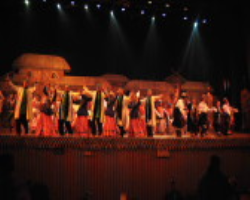
Men and women dance in concentric rings, mirroring the flight of birds, swaying bamboos, and the harvest wind. Instrumental music leans on the resonant bronze gong (dapi), the hollow-log drum (khuang), and delicate mouth-resonated bamboo flutes.
6. The Human Development Index (HDI) Deficit: Ground Realities
Despite India’s steady macroeconomic growth, the remote settlements of the Kholhou face persistent shortfalls across core human development metrics.
Healthcare Vulnerabilities and Nutritional Gaps
Village communities remain isolated along remote unpaved hill tracks. Primary Health Sub-Centres (PHCs) are often understaffed, chronically short of medications, and hours away on foot.
Geographic Remoteness |
Transport Bottlenecks |
High Referral Costs |
Underfunded PHCs |
Staff Vacancies |
Reliance on Untrained Care |
Water Quality Gaps |
Waterborne Illnesses |
Child Stunting |
-
Maternal Health: Institutional delivery rates remain lower than state averages in rural Dima Hasao and surrounding border tracts, with expectant mothers often carried on bamboo stretchers over steep terrain to reach asphalt roads.
-
Infectious Diseases: Vector-borne illnesses like falciparum malaria, waterborne gastroenteritis during monsoons, and respiratory infections remain common.
-
Malnutrition: Caloric intake is usually adequate thanks to forest foraging and upland crops, but nutritional diversity is thin, leading to persistent rates of childhood stunting and maternal anemia.

Educational Infrastructure: Access vs. Quality
While regional literacy figures show nominal improvement over recent decades, educational quality is constrained:
Primary Schooling |
Single-room structures; high teacher absenteeism |
Middle Schooling |
Inadequate STEM & language laboratories |
Secondary Tier |
Boarding miles away; steep dropout rates for girls |
Higher Education |
Urban migration to Guwahati, Shillong, or New Delhi |
Village schools are frequently single-room affairs with multi-grade teaching and high teacher absenteeism. To pursue secondary education, families must send children to distant administrative towns like Haflong, Diphu, or Silchar. This boarding expense strains subsistence households, and young girls often drop out early to help with domestic work, water hauling, and farming.
7. Modern Socio-Political Struggles: Identity, Land, and Survival
The Kholhou live at the intersection of overlapping regional identity movements, insurgent histories, and jurisdictional competition.
1. The Dilemma of Administrative Invisibility
Because the Kholhou are numerically small compared to regional demographics—such as the Dimasa, Karbi, Khasi, Jaintia, and larger Kuki-Zomi groups—they frequently find themselves sidelined in local district politics. Under the Sixth Schedule of the Indian Constitution:
-
Autonomous District Councils (such as the Dima Hasao Autonomous Council and Karbi Anglong Autonomous Council) direct regional budgets and development priorities.
-
Small populations often mean the Kholhou lack the voting strength needed to elect dedicated members to these councils.
-
This leaves many villages underfunded, with inadequate road construction, limited piped water projects, and minimal government jobs.
2. Land Alienation and the Shift in Land Tenure
Customary land systems are under growing strain from formal land laws, industrial expansion, and commercial plantation forestry:
-
Monoculture Plantations: The expansion of commercial rubber, tea, and teak plantations has swallowed communal fallow forests. This shift chips away at community-controlled land, transforming former self-sufficient cultivators into daily wage laborers.
-
The Shrinking Jhum Cycle: Population growth alongside falling land access has cut jhum fallow cycles down from 15–20 years to just 4–6 years. The land loses its fertility, leading to soil exhaustion, lower crop yields, and entrenched poverty.
3. The Search for Peace in Insurgency Borderlands
For decades, parts of Northeast India were unsettled by ethnic armed conflicts and demands for separate states or homelands. Small communities like the Kholhou were caught between competing factions:
-
Insurgent groups imposed “taxes” and forced logistics work on isolated villages.
-
Security forces regarded remote tribal settlements with suspicion during counter-insurgency operations.
-
Village defense councils struggled to shield families from crossfire and extortion, prompting periodic migrations into safe valley pockets.
While peace accords and surrenders have made the region far more peaceful over the last decade, the economic and social scars of that instability linger.
8. Comprehensive Structural Comparison: Traditional vs. Contemporary Realities
To understand how drastically life has changed for the Kholhou, we must contrast their ancestral practices with modern realities:
| Sphere of Life | Historical / Traditional Practice | Contemporary Post-2000 Reality | Key Modern Challenge |
| Land Tenure | Communal village ownership; allocation managed by the Chief and Council. | Encroachment by individual patta systems, state forests, and commercial leases. | Land alienation, reduced fallow cycles, declining crop productivity. |
| Governance | Village council (Khadang) led by the Lal; consensus customary justice. | Overlapping authority: Sixth Schedule Councils, State Panchayati systems, and Police. | Dilution of customary tribal law; limited political voice for minority clans. |
| Economic Base | Subsistence swidden farming (jhum), hunting, gathering, and local bartering. | Mixed cash-crop cultivation (broom grass, ginger), wage labor, state welfare (MGNREGA). | Market exploitation by middlemen, price volatility, rural indebtedness. |
| Spirituality | Animist worldview centered on forest spirits, nature balance, and the Thiempu. | Widespread adoption of Christianity; modern denominational churches. | Loss of ancestral folklore, rituals, and traditional dance traditions. |
| Education | Oral learning in dormitories; nature-based survival training. | Formal government and church schools using state curricula. | Cultural disconnect, high rural dropouts, shortage of native-language books. |
| Health Systems | Ethnobotanical knowledge, healing roots, rituals, and bone-setting techniques. | Reliance on understaffed rural Primary Health Centres and urban hospitals. | Severe medical costs, transport hurdles during monsoon emergencies. |
| Youth Trajectory | Integrated village life: community work, crafts, farming, and hunting skills. | Out-migration to urban centers (Guwahati, Delhi, Bengaluru) for service work. | Urban precarity, brain drain, erosion of native language skills. |
9. Development Paradigms, Institutional Safeguards, and Policy Recommendations
Addressing historical shortfalls and building a resilient future for the Kholhou requires moving away from one-size-fits-all welfare plans toward culturally sensitive policies that respect tribal autonomy.
[Agro-Ecological Support] |
Terrace farming aid, direct fair trade |
[Statutory Representation] |
Dedicated minority development boards |
[Decentralized Services] |
Mobile clinics, vernacular education |
[Cultural Archiving] |
Oral histories, native language texts |
1. Strengthening Political Voice within Sixth Schedule Frameworks
The Sixth Schedule of the Indian Constitution should be adapted to protect small, non-dominant tribes within Autonomous Councils:
-
Nominated Seats: Reserving seats in the Dima Hasao and Karbi Anglong Councils for micro-minorities like the Kholhou ensures their local concerns are heard.
-
Targeted Development Sub-Committees: Setting up dedicated development boards for small tribes can direct resources straight to long-overlooked villages.
2. Sustainable Agro-Ecology and Eco-Tourism
Instead of abruptly banning jhum farming—which often leads to food shortages—agricultural departments should support integrated farming models:
-
Sloping Agricultural Land Technology (SALT): Planting nitrogen-fixing trees, terracing slopes, and growing cash perennials alongside food crops to stabilize hillsides.
-
Organic Fair-Trade Certification: Kholhou-grown ginger, turmeric, and wild hill honey are naturally organic. Helping farmers form cooperatives frees them from exploitative local middlemen.
-
Community-Led Eco-Tourism: Modest, village-managed homestays along clean rivers and scenic ridges can bring in tourist income without damaging the local culture.
3. Decentralized Health and Culturally Rooted Education
-
Mobile Mountain Medical Units: Equipping all-terrain ambulances with diagnostic kits, antivenom, malaria therapies, and maternal supplies helps bridge the gap for isolated villages.
-
Mother-Tongue Early Education: Supplying early learning books in native dialects helps young children build literacy before moving into English, Assamese, or Hindi.
-
Documenting Traditional Medicine: Working with village elders to study and validate local healing plants preserves community knowledge and offers potential for broader research.
4. Digital Archival and Cultural Revitalization
Young tribal scholars, armed with digital tools, are starting to document their community’s living history:
-
Preserving Oral Traditions: Audio and video recordings of elder storytellers, customary council deliberations, and ancestral chants save endangered dialects from disappearing.
-
Supporting Traditional Weavers: Providing access to good raw yarn, market stalls, and fair-trade portals helps women weavers earn a steady income from their craft.
Conclusion: Safeguarding a Living Cultural Legacy
The story of the Kholhou is not a simple tragedy of marginalization; it is an enduring tale of indigenous resilience. Over centuries of migration across wild frontiers, amidst colonial intrusion, and through the changes of modern post-Independence India, this community has held onto its fundamental values: a deep bond with the natural world, democratic village councils, and a warm spirit of mutual aid.
India’s democratic strength lies in its ability to protect and uplift its smallest communities alongside its largest. The Kholhou do not belong to the past—they are a vital part of India’s living cultural mosaic.
True development for the Kholhou means more than simply building asphalt roads into the hills. It means building pathways that welcome the modern world while honoring their lands, their culture, and their right to shape their own future. As their ancient proverb reminds us:
“The mountain does not lose its stone because the wind blows hard; the roots of our grandfathers run deeper than the storm.”
