
The Korku Tribe represents one of India’s most fascinating indigenous communities, with a rich heritage spanning centuries in the heart of central India. This comprehensive guide is perfect for students, researchers, anthropologists, and anyone curious about India’s diverse tribal cultures and their unique ways of life.
Thank you for reading this post, don't forget to subscribe!The Korku people have maintained their distinct identity while adapting to changing times, making them a compelling subject for understanding indigenous resilience and cultural preservation.You’ll discover their ancient origins and how historical events shaped their community over generations. We’ll also explore their traditional lifestyle and cultural practices that continue to define Korku identity today, from their spiritual beliefs to their vibrant festivals and customs.
Finally, you’ll learn about the modern challenges facing the Korku tribe of India, including how globalization and development projects impact their traditional lands and way of life. This exploration reveals both the struggles and adaptations of a community working to preserve their heritage while navigating the demands of contemporary society.
Origins and Historical Background of the Korku People
Ancient tribal roots in central India
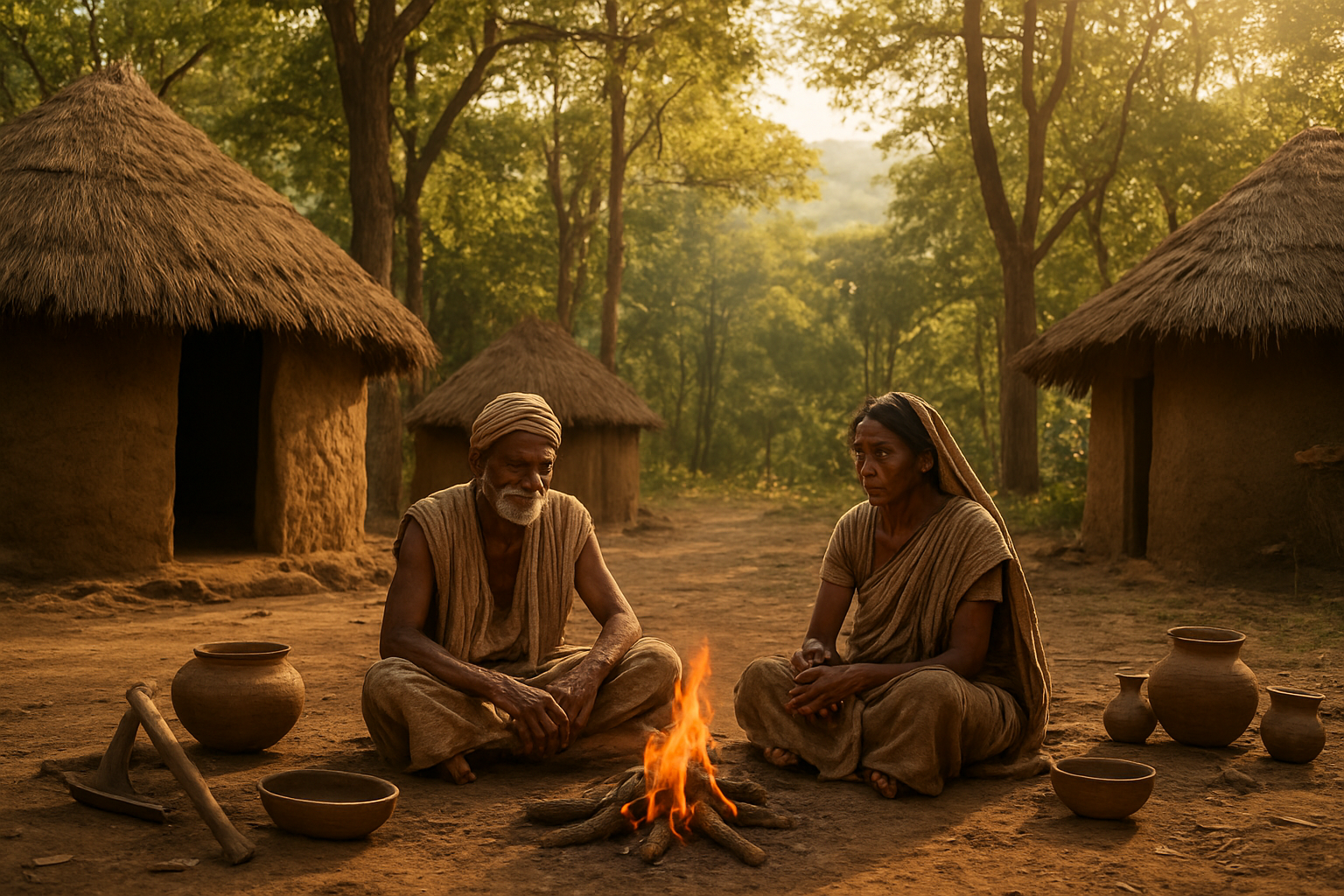
The Korku tribe traces its origins deep into the prehistoric landscape of central India, representing one of the oldest indigenous communities in the Satpura ranges. Archaeological findings suggest that the Korku people have inhabited the mountainous regions of Madhya Pradesh and Maharashtra for over several millennia. Their ancestral lineage connects them to the proto-Australoid populations that first settled across the Indian subcontinent, making them part of the original fabric of Indian civilization.
Ancient cave paintings discovered in the Satpura hills bear striking similarities to traditional Korku artistic motifs, suggesting a continuous cultural thread spanning thousands of years. These early inhabitants developed a sophisticated understanding of their forest environment, crafting tools from locally available stones and establishing seasonal camps that would later evolve into permanent settlements.
Migration patterns and settlement history
The Korku people’s settlement patterns reflect a gradual expansion from the core Satpura region to surrounding valleys and plateaus. Historical records from the Mughal period describe encounters with Korku communities who had established well-defined territorial boundaries and maintained trade relationships with neighboring plains populations.
During the medieval period, the Korku tribe experienced significant demographic shifts as they moved from higher elevations to more accessible valleys. This migration was primarily driven by:
- Seasonal availability of water sources
- Pressure from expanding agricultural communities
- Search for fertile lands suitable for cultivation
- Strategic positioning for trade routes
The British colonial administration documented extensive Korku settlements across present-day Betul, Hoshangabad, and Khandwa districts, indicating their successful adaptation to diverse ecological niches within central India.
Archaeological evidence of early Korku civilization
Recent archaeological excavations in the Korku heartland have unearthed compelling evidence of sophisticated early settlements dating back to approximately 2000 BCE. Stone tools, pottery fragments, and remnants of ancient granaries paint a picture of a well-organized society that had mastered both hunting techniques and early agricultural practices.
Distinctive Korku pottery styles, characterized by geometric patterns and earth-toned glazes, have been found in multiple excavation sites across the Satpura ranges. These artifacts demonstrate remarkable consistency in design and craftsmanship, suggesting a unified cultural identity that persisted across generations.
Rock shelters containing ancient fire hearths, storage pits, and rudimentary astronomical markers indicate that early Korku communities possessed advanced knowledge of seasonal cycles and celestial movements, essential for their eventual transition to agriculture.
Evolution from hunter-gatherers to agricultural communities
The transformation of Korku society from nomadic hunter-gatherers to settled agricultural communities represents a gradual process spanning several centuries. Initially, the Korku tribe of India relied heavily on forest resources, developing exceptional skills in tracking game animals and identifying edible plants throughout their territory.
Archaeological evidence suggests that around 1500 BCE, Korku communities began experimenting with primitive farming techniques, initially cultivating wild varieties of millet and rice in forest clearings. This agricultural revolution didn’t happen overnight – it involved generations of trial and error, developing irrigation systems suited to hilly terrain, and selectively breeding crops adapted to local conditions.
The transition brought significant changes to Korku social organization. Permanent settlements required new forms of governance, property rights concepts, and seasonal planning that differed dramatically from their nomadic predecessors. Traditional hunting skills remained important, but gradually shifted from primary subsistence activities to supplementary protein sources and cultural practices that continue today.
Geographic Distribution and Habitat
Primary settlements in Madhya Pradesh and Maharashtra
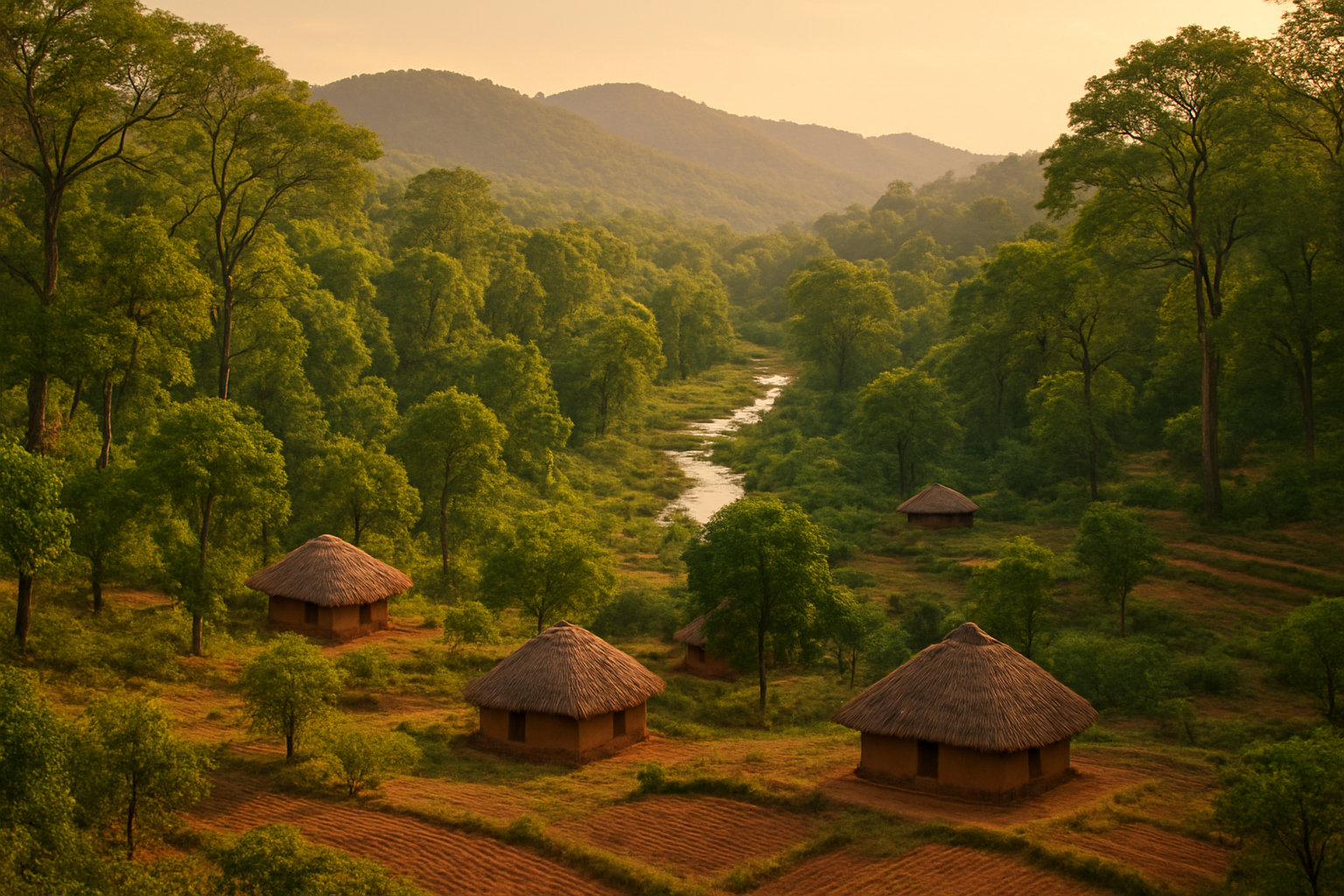
The Korku Tribe calls the rugged terrains of central India their home, with their largest concentrations found across the Satpura and Vindhya mountain ranges. In Madhya Pradesh, the Korku people primarily inhabit the districts of Khandwa, Harda, Hoshangabad, and Betul, where dense forests provide the natural resources they’ve depended on for generations. The Melghat region in Maharashtra’s Amravati district houses another significant population of this indigenous community.
These settlements aren’t random – they reflect centuries of strategic positioning near water sources, fertile valleys, and forest patches rich in medicinal plants and wildlife. The Korku Tribe has established villages that blend seamlessly with the natural landscape, often tucked away in forest clearings or perched on hillsides that offer both protection and access to hunting grounds.
The distribution pattern shows clusters of 15-20 villages forming larger community networks, allowing for intermarriage, trade, and cultural exchange while maintaining their distinct tribal identity. Many settlements remain connected through ancient footpaths that wind through the forest, creating an invisible network that has sustained the Korku people for centuries.
Forest ecosystems and natural environment preferences
Dense deciduous forests serve as the lifeblood of Korku communities, providing everything from building materials to medicinal herbs. These forests, dominated by teak, sal, and bamboo, create the perfect environment for the Korku Tribe’s traditional lifestyle centered around forest produce collection, hunting, and small-scale agriculture.
The Korku people show a remarkable preference for mixed forest ecosystems where different tree species create diverse micro-environments. They specifically choose areas where:
- Water sources like streams, springs, and seasonal rivers flow nearby
- Bamboo groves flourish, providing raw materials for housing and crafts
- Fruit-bearing trees such as mahua, tendu, and mango grow naturally
- Medicinal plants thrive in the forest understory
- Wildlife corridors support hunting and fishing activities
Their villages typically sit at elevations between 300-800 meters, where the climate remains moderate year-round and rainfall supports both forest growth and small-scale farming. The Korku Tribe has developed an intimate understanding of these ecosystems, recognizing seasonal changes in plant behavior, animal migration patterns, and weather cycles that guide their daily activities.
Seasonal migration patterns within their territory
The Korku Tribe follows time-tested migration patterns that sync perfectly with nature’s rhythm. During monsoon months (June-September), families often move to higher ground to avoid flooding while taking advantage of abundant forest produce like mushrooms, wild vegetables, and honey.
Post-monsoon periods see many Korku families descending to valley floors where they establish temporary agricultural settlements. These seasonal moves aren’t chaotic – they follow established routes passed down through generations, with specific stopping points that offer natural shelters and resource access points.
Typical seasonal movement patterns include:
| Season | Location | Primary Activities |
|---|---|---|
| Monsoon | Hill slopes/Higher ground | Forest produce collection, honey gathering |
| Post-monsoon | Valley floors | Agriculture, fishing |
| Summer | Near permanent water sources | Craft making, community gatherings |
| Winter | Protected forest clearings | Hunting, preparation for next cycle |
These movements rarely extend beyond a 10-15 kilometer radius from their permanent village base, maintaining strong territorial connections while adapting to seasonal resource availability. The migration patterns also serve social functions, bringing different Korku settlements together during specific seasons for marriages, festivals, and knowledge sharing.
Modern infrastructure development has disrupted some traditional migration routes, forcing the Korku Tribe to adapt their movement patterns while trying to preserve their connection to ancestral territories.
Cultural Practices and Traditional Lifestyle
Indigenous Religious Beliefs and Spiritual Practices
The Korku tribe maintains a deep spiritual connection with nature through their animistic beliefs. They worship a supreme deity called Bhagwan, along with numerous spirits that inhabit trees, rocks, rivers, and mountains. Village deities known as Devi-Devta receive regular offerings and prayers for protection and prosperity. The Korku people believe that ancestral spirits continue to guide and protect their families, leading to elaborate rituals for honoring the deceased.
Sacred groves called devrai serve as natural temples where the community performs important ceremonies. These protected forest areas remain untouched, preserving both biodiversity and spiritual sanctity. Shamans and traditional healers, called gunia or bhagat, act as intermediaries between the spiritual and physical worlds, conducting healing rituals and communicating with spirits through trance states.
Traditional Festivals and Ceremonial Celebrations
The Korku tribe celebrates several festivals throughout the year that mark agricultural cycles and spiritual occasions. Navakhani, the harvest festival, brings communities together to thank deities for successful crops and share the season’s bounty. During this celebration, families prepare special dishes using newly harvested grains and offer them to village deities.
Karma festival honors the Karma tree and celebrates fertility and prosperity. Young men and women perform traditional dances around the sacred tree, singing folk songs that have been passed down for generations. The festival includes ritualistic planting of Karma branches in village courtyards, symbolizing continuity of life and community bonds.
Jawa festival marks the beginning of the monsoon season, when the community prays for adequate rainfall. Villages organize collective prayers and offerings to water deities, believing that community unity influences natural forces.
Folk Music, Dance, and Artistic Expressions
Music and dance form integral parts of Korku cultural identity. The tribe has preserved ancient folk songs that narrate historical events, mythological stories, and seasonal changes. Traditional instruments include the dhol, nagada, and bamboo flutes that accompany ceremonial performances.
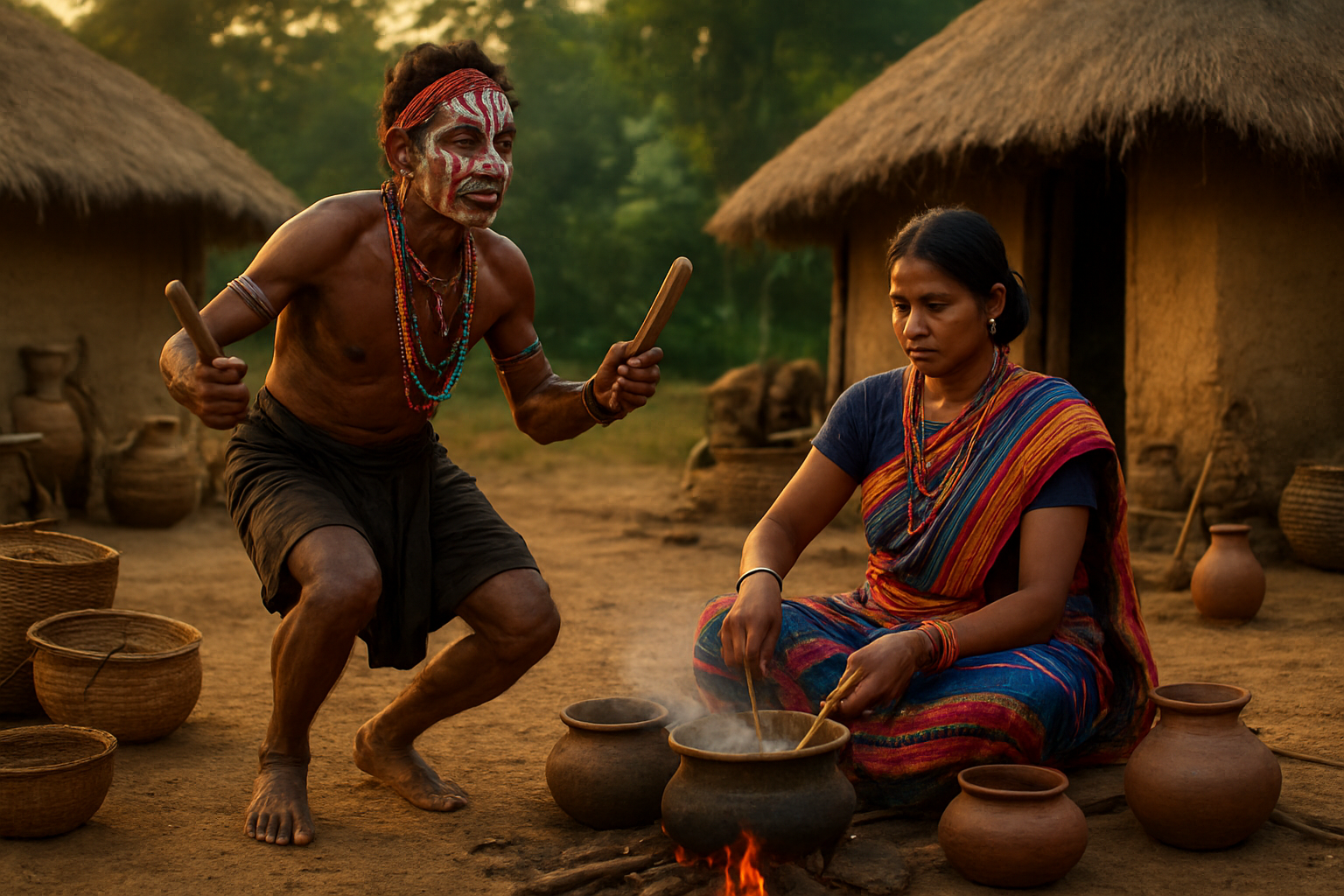
The Saila dance stands out as the most prominent folk dance, typically performed by men during festivals and celebrations. Dancers carry wooden sticks and create rhythmic patterns while moving in circular formations. Women participate in Matki dance, balancing earthen pots on their heads while gracefully moving to traditional melodies.
Korku artisans create intricate bamboo crafts, including baskets, mats, and decorative items. Their woodcarving skills produce beautiful household items and ceremonial objects. Women excel in traditional embroidery, creating colorful patterns on clothing that represent tribal identity and social status.
Oral Traditions and Storytelling Heritage
The Korku tribe preserves their rich history through oral narratives passed down across generations. Elderly community members serve as repositories of ancient wisdom, sharing creation myths, heroic tales, and moral stories during evening gatherings. These stories often feature animals as main characters, teaching important life lessons about courage, honesty, and community cooperation.
Traditional riddles and proverbs play significant roles in educating young people about tribal values and practical knowledge. Folktales explaining natural phenomena help children understand their environment while maintaining cultural connections to ancestral wisdom.
Marriage Customs and Family Structures
Korku marriage customs blend traditional practices with community participation. Arranged marriages remain common, with families considering compatibility, social status, and economic factors. The bride price system involves the groom’s family providing specific items or cash to the bride’s family, though this practice varies across different Korku communities.
Wedding ceremonies extend over several days, featuring elaborate rituals, feasting, and cultural performances. The entire village participates in celebrations, strengthening social bonds and community identity. Traditional marriage songs and dances mark different phases of the ceremony, from pre-wedding preparations to post-wedding customs.
Korku families typically follow patriarchal structures, with male elders making important decisions. Joint family systems remain prevalent, where multiple generations live together, sharing resources and responsibilities. Women hold significant influence in household management and child-rearing, while men handle external affairs and agricultural work.
Language and Communication Systems
Korku language classification and linguistic features
The Korku language belongs to the Austroasiatic family, specifically the Munda branch, making it distinct from the Indo-Aryan languages that dominate much of India. This linguistic classification places Korku alongside other tribal languages like Santali and Ho, sharing common ancestral roots that stretch back thousands of years.
Korku features several unique characteristics that set it apart. The language uses a subject-object-verb word order, different from Hindi’s subject-verb-object structure. Phonetically, Korku incorporates nasal sounds and tonal variations that carry meaning, creating a musical quality when spoken. The language has complex verb conjugation systems that indicate not just tense but also the relationship between speaker and listener.
Traditional Korku vocabulary reflects deep connections to forest life and agricultural practices. The language contains dozens of words for different types of trees, seasonal changes, and farming techniques that have no direct equivalents in Hindi. These specialized terms demonstrate how language preserves cultural knowledge about sustainable living and environmental awareness.
Bilingual practices with Hindi and regional languages
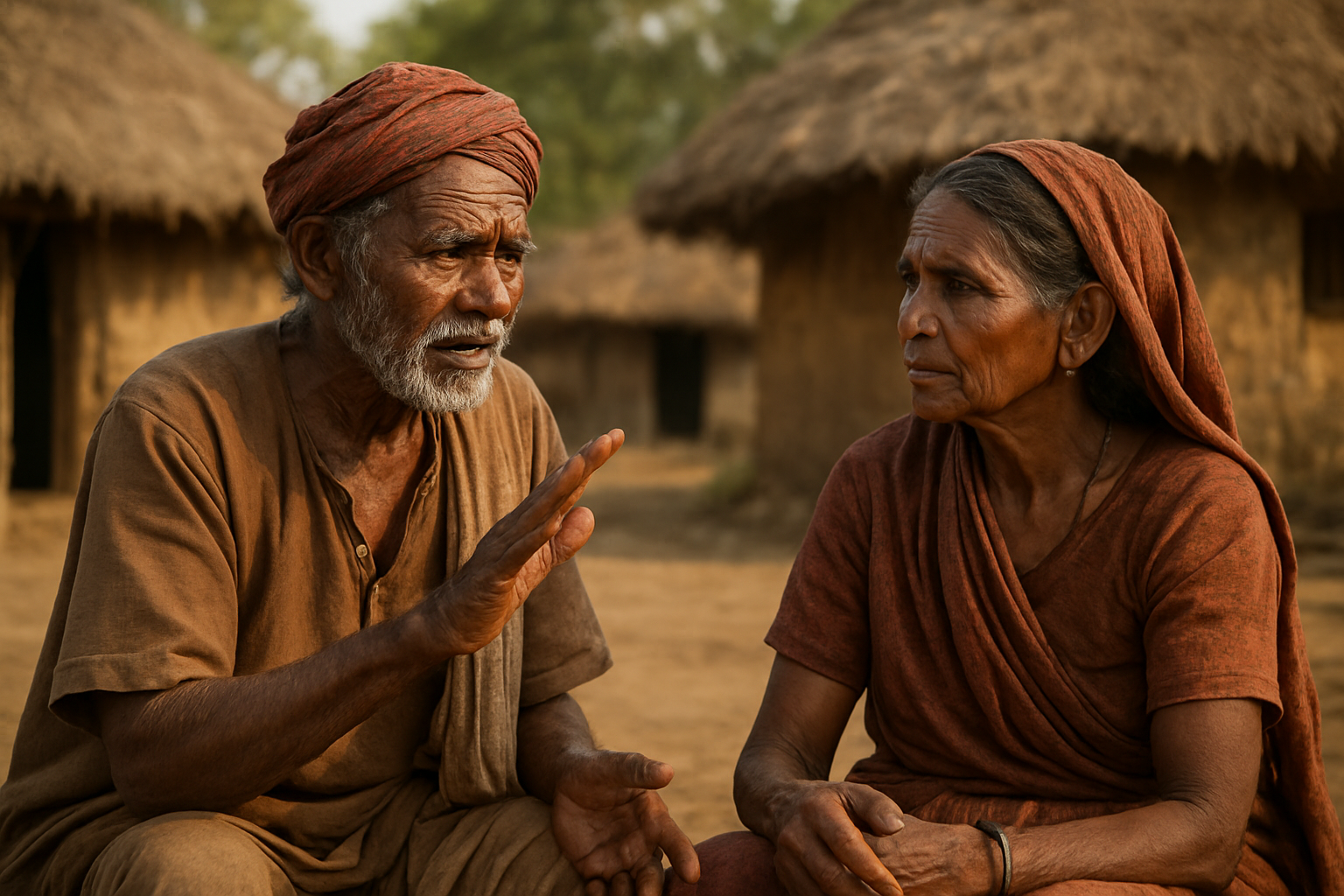
Most Korku people today navigate multiple languages daily. Hindi serves as the primary language for education, government interactions, and communication with outsiders. Children typically learn Hindi in schools while maintaining Korku at home with elders and community members.
Regional languages like Marathi also play important roles, especially in Maharashtra where many Korku communities reside. This creates a trilingual environment where language choice depends on context – Korku for cultural ceremonies and family discussions, Hindi for formal situations, and regional languages for local trade and commerce.
Code-switching between languages happens naturally in Korku communities. A single conversation might flow between Korku and Hindi, with speakers choosing words from whichever language best expresses their thoughts. This linguistic flexibility shows how the Korku Tribe adapts to modern India while maintaining cultural identity.
Preservation efforts for native tongue
Several initiatives now focus on keeping Korku alive for future generations. Community elders work with younger members to document traditional stories, songs, and oral histories in the native language. These efforts capture not just words but the cultural wisdom embedded in Korku expressions and idioms.
Local schools in some areas have introduced Korku as a subject, though implementation remains inconsistent. Teachers face challenges finding appropriate materials and textbooks in the language. Digital platforms and mobile apps are emerging as new tools for language learning, with audio recordings helping preserve correct pronunciation.
Cultural organizations within Korku communities organize festivals and gatherings where speaking the native language is encouraged. These events create spaces where children hear Korku used naturally, helping counter the trend toward Hindi dominance in daily life. Radio programs in Korku language broadcast folk tales and news, reaching scattered communities across different states.
Economic Activities and Livelihood Patterns
Traditional agriculture and crop cultivation methods
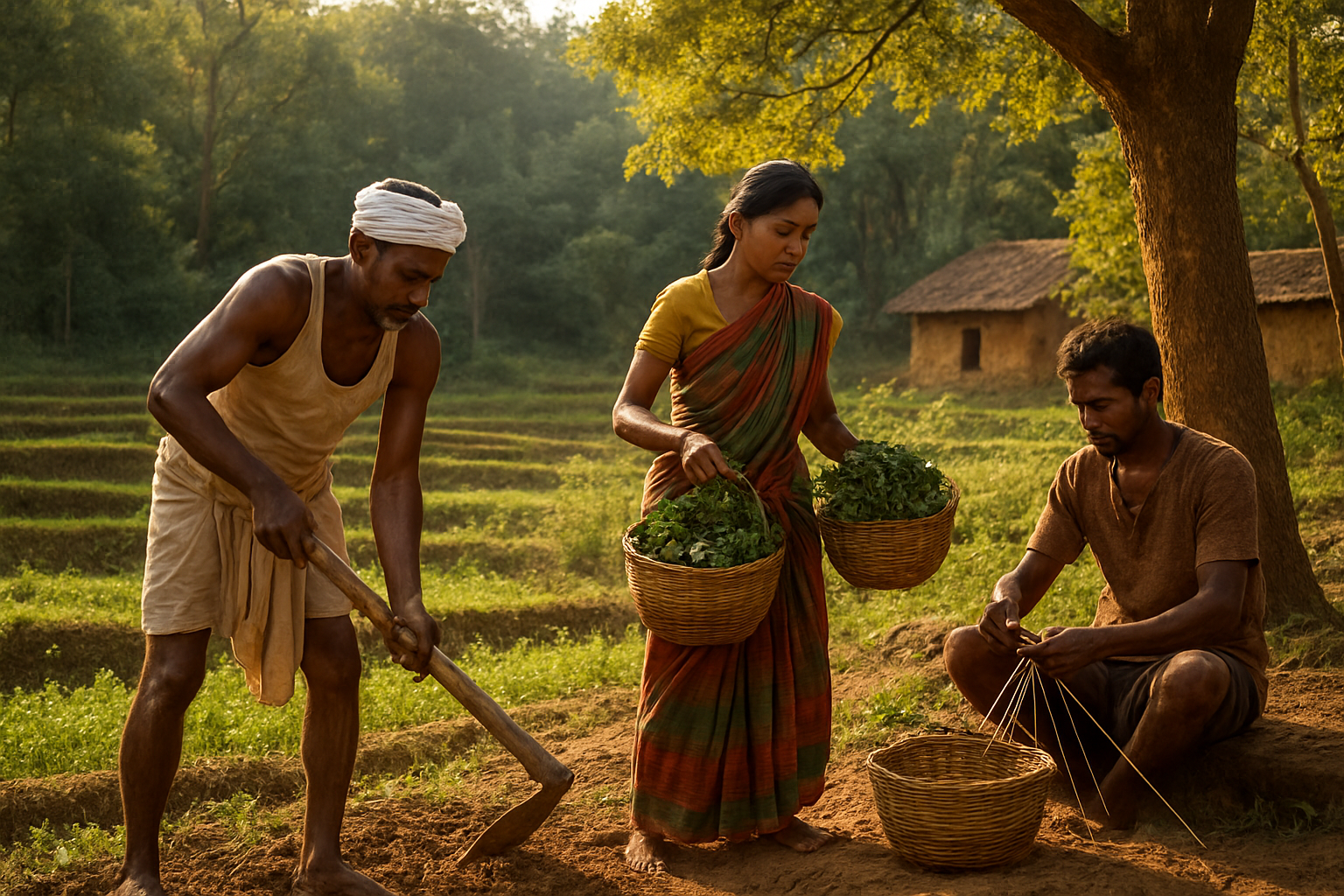
The Korku tribe has practiced agriculture for generations, developing sustainable farming techniques perfectly adapted to their hilly terrain in central India. Rice forms the cornerstone of their agricultural system, particularly upland varieties that thrive without extensive irrigation. The Korku people follow a traditional crop rotation system, alternating rice with pulses like black gram and pigeon pea to maintain soil fertility naturally.
Their farming calendar revolves around monsoon patterns, with kharif crops planted during the rainy season and rabi crops in winter. The Korku tribe employs mixed cropping methods, growing multiple crops simultaneously to reduce risks and maximize land use. Traditional tools like the wooden plow and iron-tipped digging sticks remain common, though some communities have gradually adopted modern equipment.
Terraced farming on slopes prevents soil erosion, showcasing the tribe’s deep understanding of their environment. The Korku people also maintain kitchen gardens near their homes, growing vegetables, spices, and medicinal plants that supplement their diet and provide natural remedies for common ailments.
Forest-based occupations and resource collection
Forest resources form an integral part of Korku economic life, providing both sustenance and income. The tribe collects mahua flowers, tendu leaves, bamboo shoots, honey, and various medicinal plants from surrounding forests. These activities follow seasonal patterns and traditional ecological knowledge passed down through generations.
Mahua flowers serve multiple purposes – they’re processed into oil, fermented into alcoholic beverages, and the dried flowers provide nutritious food during lean periods. Tendu leaf collection generates significant seasonal income, as these leaves are essential for manufacturing bidis (traditional cigarettes). Women typically handle this work, earning cash that supports household expenses.
The Korku tribe practices sustainable harvesting techniques, taking only what’s needed while ensuring forest regeneration. They collect bamboo for crafting baskets, mats, and household items, creating additional income streams through these handicrafts. Medicinal plant collection requires specialized knowledge, with certain community members serving as traditional healers who understand which plants to harvest and when.
Modern economic adaptations and employment opportunities
Recent decades have brought new economic opportunities for the Korku community. Many tribal members now work as agricultural laborers on larger farms, especially during peak seasons. Government employment schemes like MGNREGA (Mahatma Gandhi National Rural Employment Guarantee Act) provide wage work for road construction, water conservation projects, and other rural development activities.
Some Korku individuals have found employment in nearby towns and cities, working in factories, as domestic help, or in small businesses. Education initiatives have opened doors to government jobs for educated tribal youth, though these opportunities remain limited. The growth of eco-tourism in forest areas has created new income sources through guide services and cultural performances.
Self-help groups and cooperatives have emerged within Korku communities, focusing on activities like mushroom cultivation, poultry farming, and small-scale processing of forest products. These initiatives often receive support from government programs and NGOs aimed at tribal development.
Challenges in transitioning to contemporary economy
The shift from traditional to modern economic systems presents significant obstacles for the Korku tribe. Limited access to formal education restricts their ability to compete for skilled jobs, leaving many dependent on manual labor with irregular income. Language barriers complicate interactions with mainstream economic institutions, affecting access to banking services, credit, and market information.
Land rights issues create uncertainty around agricultural investments and long-term planning. Many Korku families lack proper land titles, making it difficult to access agricultural loans or participate in government schemes. The decline of traditional forest rights has reduced income from forest-based activities, forcing communities to seek alternative livelihoods without adequate preparation.
Market volatility affects both agricultural produce and forest products, creating income instability. The Korku people often lack storage facilities and transportation networks needed to get better prices for their products. Additionally, younger generations face the dilemma of preserving cultural traditions while adapting to modern economic demands, leading to migration to urban areas and gradual erosion of traditional knowledge systems.
Social Structure and Governance
Traditional tribal council system and leadership
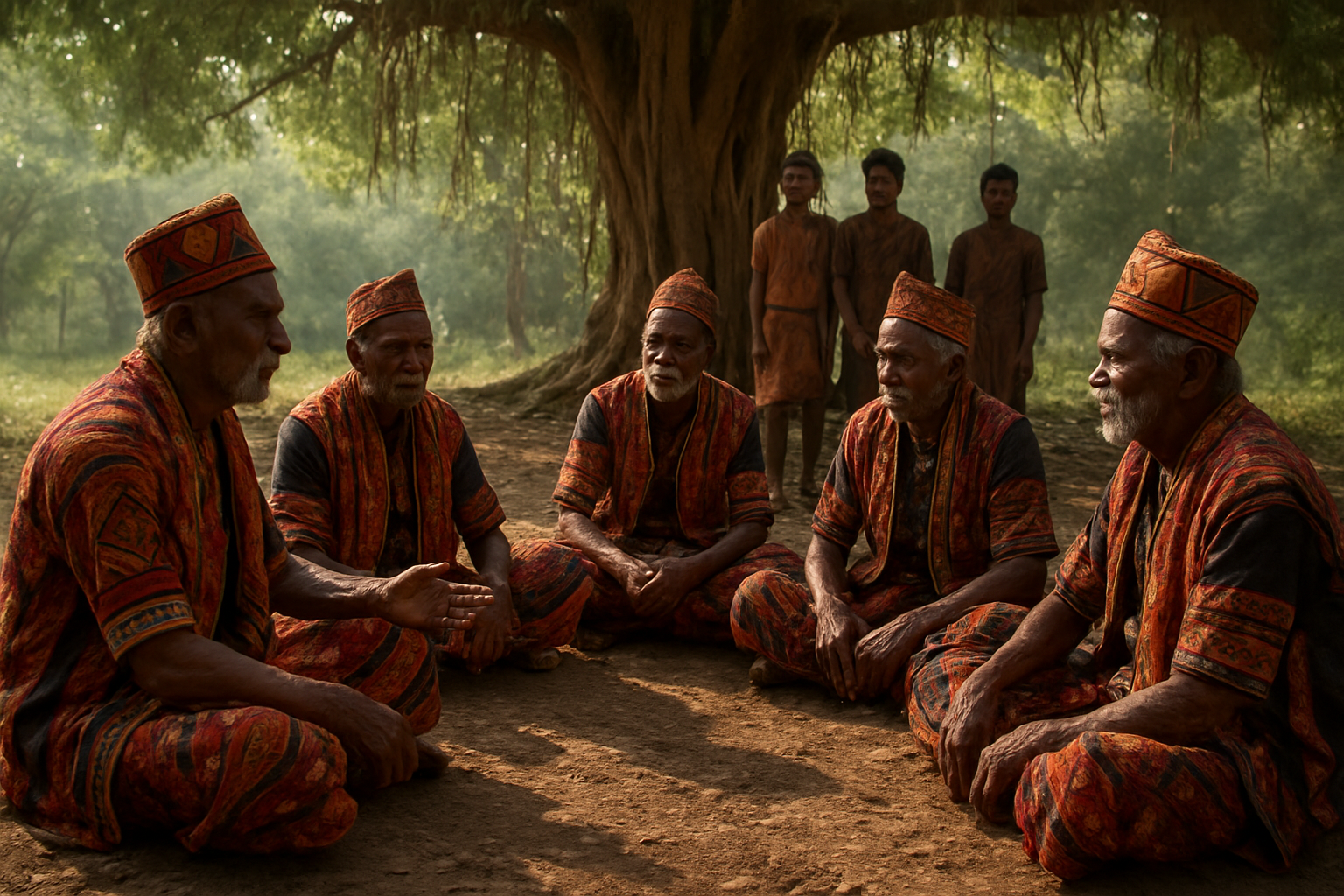
The Korku tribe maintains a well-structured governance system rooted in democratic principles and collective decision-making. Village councils, known as “panchayats,” serve as the primary governing bodies where community elders and respected members gather to resolve disputes, make important decisions, and maintain social order. These councils operate on consensus-building rather than authoritarian rule, with the village headman, called “Mukhiya,” acting as the chief facilitator rather than a dictator.
Leadership roles within Korku communities are typically earned through wisdom, age, and community respect rather than inherited positions. The tribal council includes various specialized roles: the priest (Baiga) who handles religious and ceremonial matters, the messenger (Kotwar) who communicates decisions across villages, and clan representatives who voice their group’s concerns. Decision-making processes involve extensive discussions where every adult member can voice their opinion, making the system remarkably inclusive for a traditional society.
Clan organization and kinship networks
The Korku tribe operates through a complex clan system that forms the backbone of their social organization. Each clan, called “got,” traces its ancestry to common mythical or historical figures and maintains strict rules about marriage and social interaction. Major clans include Hivare, Somvnshi, Khavse, and Bihare, each with distinct totemic animals and ritual practices that define their identity.
Kinship networks extend far beyond immediate family units, creating extensive support systems across multiple villages. These networks determine marriage patterns, economic cooperation, and social obligations. The Korku follow exogamous marriage practices, meaning individuals must marry outside their clan to maintain genetic diversity and strengthen inter-clan relationships. Extended family structures play crucial roles in child-rearing, economic activities, and elderly care, with responsibilities shared among multiple generations living in close proximity.
Gender roles and responsibilities within the community
Korku society exhibits a relatively balanced approach to gender roles compared to many other traditional communities. Women hold significant authority in household management, child-rearing, and agricultural activities, particularly in tasks related to food processing, seed selection, and small-scale farming. They actively participate in community festivals, religious ceremonies, and even serve on village councils in advisory capacities.
Men typically handle heavy agricultural work, hunting, and external trade relationships with neighboring communities. However, both genders work together during planting and harvesting seasons, sharing the workload based on physical capabilities rather than rigid gender restrictions. Elderly women, especially those who have gained wisdom and experience, command considerable respect and often serve as mediators in family disputes and keepers of traditional knowledge.
Property inheritance follows patrilineal patterns, but women retain rights to their natal family’s resources and receive support during times of need. The Korku tribe’s approach to gender roles reflects practical considerations for survival in their forest environment while maintaining cultural values that respect contributions from all community members.
Contemporary Challenges and Modernization Impact
Land Rights Disputes and Displacement Issues
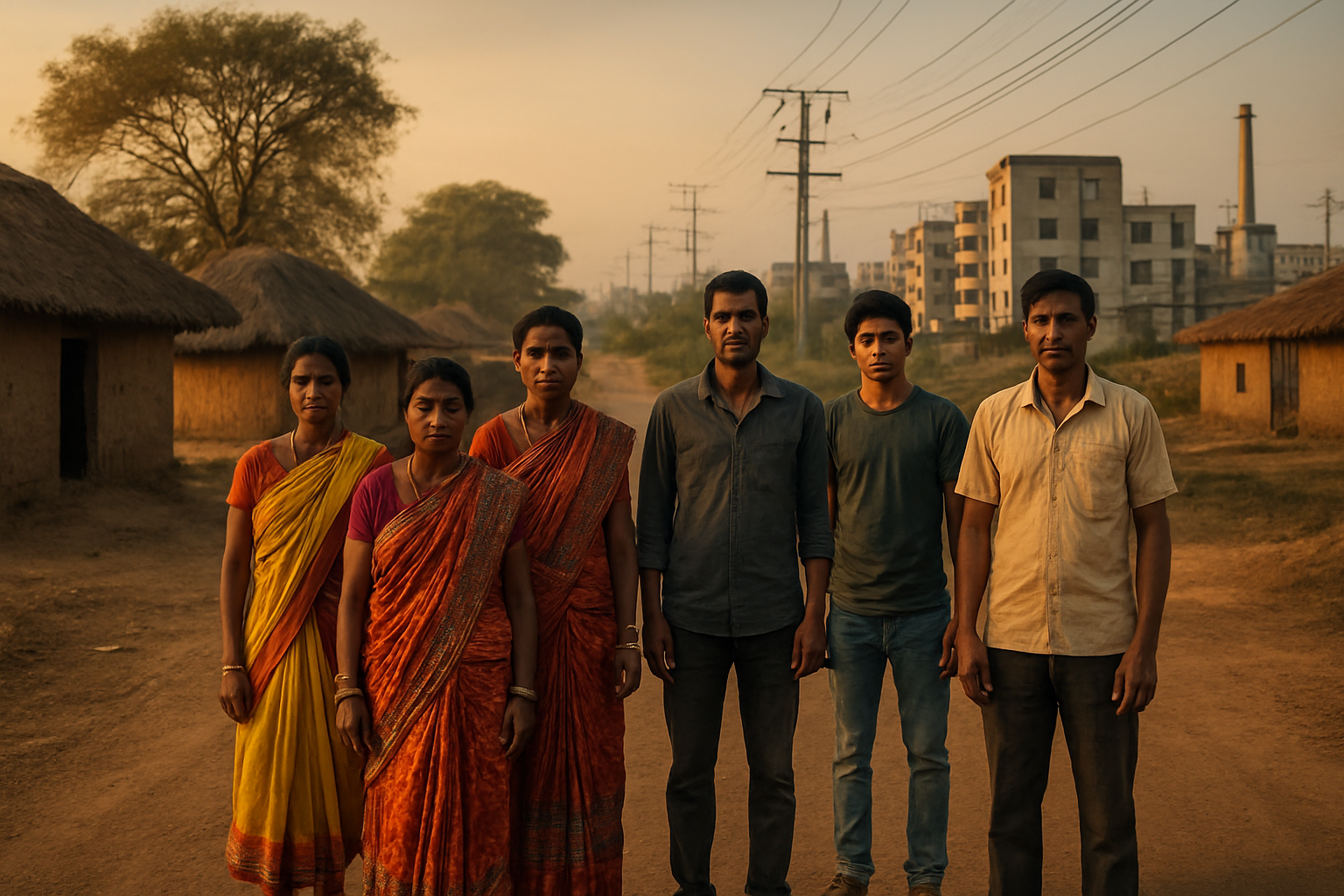
The Korku Tribe faces mounting pressure from land acquisition projects and industrial development. Mining operations, dam construction, and commercial forestry have displaced entire Korku villages, severing their deep connection to ancestral territories. The government often provides inadequate compensation, forcing families to relocate to unfamiliar areas without proper rehabilitation support.
Traditional shifting cultivation practices clash with modern forest laws, making many Korku farmers illegal occupants on lands their ancestors cultivated for generations. The Forest Rights Act of 2006 promised relief, but implementation remains slow and bureaucratic. Many Korku communities lack proper documentation to prove their historical claims, leaving them vulnerable to eviction.
Large-scale projects like hydroelectric dams have submerged thousands of hectares of Korku homeland, destroying sacred groves, burial grounds, and traditional farming areas. The displaced families struggle to adapt to new environments, often ending up in urban slums or inadequate resettlement colonies with limited access to natural resources.
Educational Access and Literacy Development
Educational opportunities remain scarce in remote Korku settlements. Government schools are often understaffed, with teachers frequently absent or unable to communicate in the Korku language. Children face a stark choice between their mother tongue and Hindi or Marathi instruction, creating barriers to learning.
The curriculum rarely reflects Korku cultural knowledge or experiences, making education feel disconnected from their daily lives. Traditional ecological wisdom, storytelling methods, and indigenous practices find no place in mainstream schooling. This disconnect discourages many parents from sending their children to school regularly.
Distance poses another major challenge. Many Korku villages lack nearby schools, forcing young children to walk several kilometers daily or stay in poorly maintained hostels. Girls face additional obstacles, with early marriage and household responsibilities limiting their educational prospects.
Adult literacy programs exist but often fail to address practical needs. The Korku tribe members benefit more from programs that combine basic literacy with agricultural techniques, healthcare knowledge, and legal rights awareness.
Healthcare Accessibility and Traditional Medicine
Healthcare access remains critically limited in Korku areas. Primary health centers are often located far from villages, with irregular medicine supplies and absent medical staff. Pregnant women and elderly tribe members suffer most from this inadequate infrastructure.
Traditional healing practices still play a vital role in Korku healthcare. Village healers use indigenous plants and rituals to treat common ailments, but their knowledge is gradually disappearing as younger generations migrate to cities. The integration of traditional and modern medicine could benefit the Korku Tribe, yet such programs remain rare.
Malnutrition affects many Korku children due to changing dietary patterns and reduced access to forest foods. Government nutrition programs reach some areas, but distribution is inconsistent. Seasonal diseases like malaria and waterborne illnesses spike during monsoons when healthcare access becomes even more challenging.
Mental health issues, particularly among displaced families, receive little attention. The trauma of losing ancestral lands and adapting to modern life creates stress and depression, but culturally appropriate mental health services are virtually non-existent.
Cultural Preservation Versus Modern Integration
The Korku Tribe faces the delicate challenge of preserving their rich cultural heritage while adapting to modern realities. Young Korku people increasingly migrate to cities for work, returning with changed perspectives and reduced connection to traditional practices.
Ancient festivals, songs, and dance forms risk extinction as communities disperse. The oral tradition that preserved Korku history and wisdom for centuries struggles against the influence of television, mobile phones, and mainstream Indian culture. Elder tribal members worry about losing their distinct identity.
Language preservation presents a critical challenge. Korku children often prefer speaking Hindi or regional languages, viewing their mother tongue as limiting their opportunities. Without active intervention, the Korku language could disappear within a few generations.
Modern technology offers both threats and opportunities. While smartphones and internet access can erode traditional lifestyles, they also provide platforms for documenting and sharing Korku culture. Some young tribal members use social media to showcase their heritage, creating new forms of cultural expression and preservation.
Economic modernization brings mixed results. While some Korku people benefit from new employment opportunities and improved living standards, others struggle with the loss of traditional livelihoods and the breakdown of community support systems.
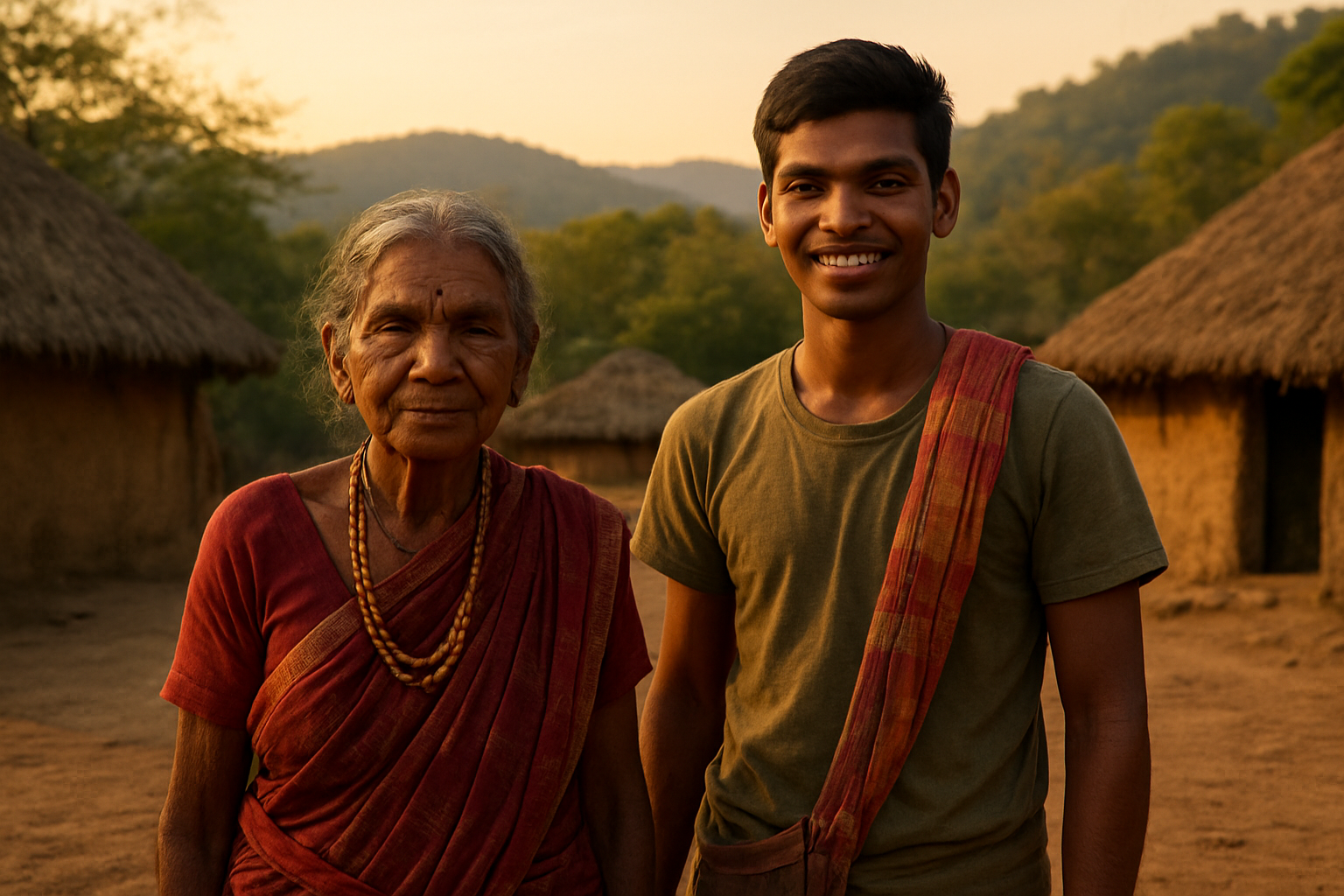
The Korku tribe stands as one of India’s most fascinating indigenous communities, with their rich cultural heritage spanning centuries across central India’s forests and hills. Their unique language, traditional governance systems, and deep connection to nature showcase a way of life that has adapted and evolved while maintaining its core identity. From their ancient origins to their current geographic spread, the Korku people have developed distinctive economic practices, social structures, and cultural traditions that set them apart within India’s diverse tribal landscape.
Today, the Korku community faces the delicate balance between preserving their ancestral traditions and adapting to modern India’s changing demands. Their story reminds us of the importance of protecting indigenous knowledge systems and supporting tribal communities as they navigate contemporary challenges. Learning about the Korku tribe opens our eyes to the incredible diversity within Indian society and highlights the need for inclusive development that respects and celebrates our country’s tribal heritage.
