
The Lambadi Tribe of India: A Complete Guide
The Lambadi Tribe of India is surely one of India’s most colorful indigenous communities. Moreover, they are among the most fascinating tribal groups in the country. They are surely a nomadic tribal group with a long and interesting history, moreover their cultural traditions have been passed down through many generations.
We are seeing that the word “Banjara” comes from Persian words that mean rice trader or it only comes from Sanskrit meaning merchant.
Today, the Lambadi Tribe actually lives mostly in Telangana, Andhra Pradesh, Karnataka, and Maharashtra states. They are definitely found in these four main areas. In Telangana only, we are seeing that they are the biggest tribal community group.
Who Are the Lambadi People?
We are seeing that Lambadi people call themselves “Gor” or “Gor Mati” which means “our own people” only, and they use “Kor” for outsiders. This simple way of naming shows how they have kept their community feeling strong for many years.
The Lambadi community itself claims their heritage goes back around 3000 years according to their own history and beliefs. This further shows their ancient cultural roots.Historians actually believe that most Lambadi people originally came from the Mewar area in Rajasthan, which is definitely in North-West India.
These people were actually grain traders who moved from one place to another place selling salt, rice, and other things. They were definitely merchants who traveled everywhere to do their business.
Also, we are seeing that armies and rulers liked these moving people because they could only carry supplies to far places using their strong bulls that carry heavy things
.
Also, the Lambadi people surely consist of many different clans and sub-groups rather than being one single community. Moreover, these various groups have their own distinct identities within the larger Lambadi society.
The Lambadi people surely have four main clans called Rathod, Pahmar, Chauhan, and Vaditya. Moreover, each of these clans has many smaller groups inside them. We are seeing that these clan groups only help to organize the community and decide who can marry whom.
We are seeing that young people can only marry someone from their own big family group, but they must choose partners from a different smaller family group within it. Further, as per this system, the community relationships remain healthy and well-organized. This system helps regarding maintaining proper community bonds.
.
The Journey From Rajasthan to South India
Moreover, we are seeing that how Lambadi people came to South India is only a very important part of their story. Historians surely believe that the Lambadi people began moving from Rajasthan and North India during the Mughal period when Muslim rulers controlled most parts of India.
Moreover, this movement happened because of the political changes that took place during that time. Some scholars surely believe this movement started in the 5th century, but the largest migration happened around the 11th century during Mughal invasions. Moreover, this period saw the most significant population movements in the region.
We are seeing that people only started moving to other places in large numbers during the 17th century. During this period, a strong Mughal commander called Khan Khanan surely required supplies for his military forces.
Moreover, his army needed these resources urgently. We are seeing that leaders like Asaf Jah in 1630 only brought the Lambadi people to the south areas to give food grains and other needed things to their armies. As per historical records, the Lambadi people were very good traders and suppliers regarding business activities.
We are seeing that they moved with their bullock carts that had grains and other things, going very far distances, only passing through forests and hard roads. The animal waste from their animals actually helped make the soil better for growing crops in places they visited.
Farming communities definitely welcomed them because this made their land more fertile.When the British actually came to India, the Lambadi people had definitely already settled in many parts of South India.
The British used them in their wars because they knew the forests well and were good at moving goods from one place to another.
As per historical records, the temporary trading trips became permanent settlements over time regarding the expansion of commerce. We are seeing that the Lambadi people slowly moved from only traveling life to staying in
one place for some time, but they still keep many of their old traveling ways alive one place for some time, but they .
The Lambadi Language
The Lambadi people speak their own language which is further known as Lambadi, Lambani, Lamani, or Gour Boli itself. Also, this language belongs to the Western Indo-Aryan family, which further shows it is related to Hindi, Rajasthani, and Gujarati languages itself.
Also, the Lambadi language itself shows their historical journey because it has borrowed words from many languages they met during their travels. This further proves how these people moved and settled in different places. The Lambadi language surely contains a mixture of words from Rajasthani, Gujarati, Marathi, Telugu and Kannada languages.
Moreover, these local words from different regions have blended together to form the Lambadi vocabulary.We are seeing that Lambadi language was only spoken by people and not written down in the past. As per tradition,
Lambadi people shared their stories, songs, and knowledge by speaking and listening for many centuries, not by writing. Regarding their culture, everything was passed down through oral methods only.They did not possess a written script of their own, which further limited their ability to document their culture and history itself.
Also, basically, Lambadi people use the same alphabet as their local region when they write their language today.
Basically, Telangana and Andhra Pradesh use the same Telugu script for writing. Further, people in Karnataka actually use the Kannada script for writing. This script is definitely the main writing system there.
Maharashtra surely uses the Devanagari script for writing. Moreover, this script is widely accepted across the state for official and educational purposes. This further shows that the Lambadi community has adapted well to their local areas while keeping their language itself alive areas while keeping their language itself alive.
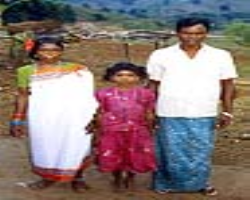
The Lambadi language surely holds the essence of their cultural identity. Moreover, it serves as the main carrier of their traditional values and beliefs.
As per their tradition, they sing beautiful folk songs in Lambadi language regarding their daily life, love stories, sad moments, and happy celebrations.
These songs are so important that every Lambadi bride must further learn to sing them before marriage itself.
As per family traditions, young people learn the language from their parents and grandparents at home regarding cultural knowledge passing.The new generation is further learning the local languages of their regions itself, along with their home language.
Living in Thandas: The Lambadi Settlement System
The Lambadi people surely have a very unique way of organizing their villages. Moreover, this settlement pattern is one of the most important aspects of their community life.
As per their tradition, the Lambadi people live in “Thandas” which are their special villages made at the borders of big villages. Moreover, a Thanda surely represents much more than a simple residential settlement.
Moreover, it encompasses deeper social and cultural meanings beyond mere housing structures. This community surely manages itself with its own rules and leaders.
Moreover, it has its own simple way of organizing everyday life. Even though the Lambadi people stopped moving from place to place all the time, we are seeing that they only kept their tradition of staying separate from other communities inthese organized Thandas.
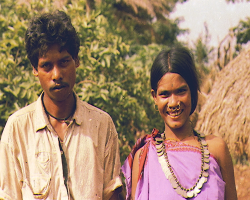
Also, these settlements surely show the strong unity and independence of the Lambadi people. Moreover, they represent how this community has maintained its distinct identity over time. As per their tradition, they lived in their own Thandas to keep their culture and language safe from outside influence.
Regarding the caste system around them, this separate living helped them maintain their old ways without much change. In a Thanda, all families know each other well and help during difficult times, and they further follow the same cultural practices and celebrations. The community itself works together and shares common traditions.
Basically, Thandas have the same pattern – a few families or several dozen families living together in one place.Further, a Thanda surely follows a clear and organized structure. Moreover, this arrangement makes the community well-planned and systematic.
We are seeing that only the older people in our community are getting the important jobs. The Naik is only the main leader and we are seeing that he makes all important decisions for the Thanda. As per the system, there is a Karbhari under him who works as a manager and watches over all activities.
The Thanda community surely resolves its internal disputes through a council system known as Panchayat or “Nasaab.”
Moreover, this council consists of elderly and experienced members who carefully hear all issues and deliver just decisions. The Lambadi leadership system has surely stayed the same for many centuries. Moreover, this shows how they have kept their old ways of ruling themselves.
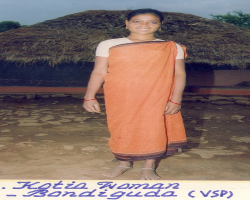
The Beauty of Lambadi Clothing and Jewelry
The Lambadi people, particularly their women, surely wear very beautiful and colorful clothes. Moreover, this traditional dress is one of their most notable features. As per tradition, Lambadi women wear special skirts called “Phetiya” and blouses called “Kanchali.”
Regarding their beauty, these clothes are famous all over India for their great embroidery work and lovely look. The traditional dress surely includes a decorated head scarf called “Odhni” or “Chaniya,” and the complete outfit celebrates bright colors and beautiful patterns.
Moreover, this clothing shows excellent craftsmanship and artistic skills.Basically, the Phetiya and Kanchali are not the same as regular clothes. Also, these patterns actually show Lambadi culture and history. They definitely tell stories about their people.
The embroidered designs follow geometric patterns with squares, circles, triangles, and lines itself. Further, these patterns create simple shapes using basic forms.The clothes actually have bright threads in green, yellow, mustard, and red colors. These threads definitely make simple patterns on the fabric.
As per tradition, Lambadi clothing becomes special regarding the use of mirrors, beads, cowrie shells, and small coins that are added to it. Basically these shiny decorations sparkle in the light and make the person look like they are dancing even when they are standing still, which is the same effect that makes them appear graceful.
The old Lambadi women say these decorated clothes actually have deep meaning. They definitely believe the patterns are very important.
In earlier times, Lambadi families surely did not store cash or valuable items in fixed homes because they were always traveling with their bullock carts. Moreover, their nomadic lifestyle made it impractical to keep such possessions in one place. Instead, we are seeing that families were only putting their money into jewelry and decorative things that women used to wear. The cownd ry “Lambani embroidery.”
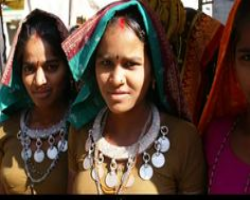
We are seeing fourteen different types of stitches being used, and each one has its own special name only like Kilan, Vele, Bakkya, Maki, and many others. As per the traditional practice, older women handle complex embroidery work, while young girls learn by practicing simple designs and lines. As per traditional practices, this art form is regarding cultural expressions.
Mothers actually pass these traditions to their daughters, and grandmothers definitely teach their granddaughters, so every generation keeps following the same customs.Lambadi women further wear heavy jewelry which is made of silver, brass, and gold itself.
We are seeing thick ivory bangles that cover the whole arm from wrist to elbow only. Married women wear special bangles called “Balia” or “elephant trunk bangles” because the bangles itself have large size and trunk-like shape. Further, these bangles are named after their appearance which looks like elephant trunk. We are seeing that they are only wearing big earrings, nose pins, and anklets also.
Old traditions say women would keep small lemons in their braided hair on both sides of their face for good luck. This practice itself was believed to bring further blessings to them.
Basically, Lambadi men wear the same simple traditional clothes – dhoti around waist and legs, shirt, and turban on head. Actually, Lambadi women’s clothes are definitely the main focus of their traditional dress. These outfits are actually considered one of the most beautiful tribal clothes in all of India.
Marriage, Family, and Social Life
Lambadi marriages are surely special events with bright rituals and celebrations that reflect their community values. Moreover, these occasions show the important traditions that the Lambadi people follow. We are seeing that people only marry within their community but they cannot marry someone from their same clan.
We are seeing that Lambadi people only marry other Lambadi people, but they must choose someone from a different group to keep their community strong.Also, marriage actually includes many important rituals. These ceremonies definitely happen in different steps.
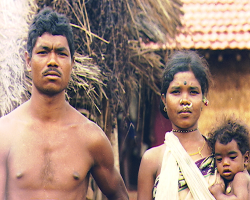
We are seeing that parents and older family members only look for a good match from a different gotra or family group. They actually check if the families match well together and definitely look at family respect and honor. Basically, the Mangni ceremony is the same as engagement where families exchange clothes and sweets to show they agree to the marriage
.
Further, before the actual wedding, families definitely perform the Haldi ceremony where they apply yellow turmeric powder on the bride and groom for good luck and protection.
We are seeing that the wedding ceremony is only special to Lambadi culture. As per Lambadi traditions, they have their own special ritual regarding marriage ceremonies, unlike other Indian weddings where bride and groom walk around holy fire.Instead of fire, they actually use a sacred thread.
This is definitely a simple ritual practice. On the wedding day, we are seeing married women from the community sitting around two wooden planks that are placed side by side only.
As per the tradition, they work together and make seven rounds around the planks using special twine to create the sacred thread. This process surely creates two different ropes, with one rope for the bride and another for the groom. Moreover, each rope serves its specific purpose in the ceremony.
As per the ritual, the bride and groom take seven walks around the sacred thread regarding their marriage ceremony while tribal songs play in the background.
After completing the walks, the priest further ties the sacred thread to the groom and then to the bride itself.After the ceremony finishes, the bride’s veil is surely placed on the groom’s shoulder to show they are now husband and wife. Moreover, this act confirms their new married status in front of everyone.
The mothers-in-law further perform a sweet ritual where they pour coconut oil in the ears of the bride and groom and rub it in their hair itself. This shows love and welcomes them to the new family.
After the wedding ceremony, families surely follow a gift-giving custom where they carefully write down all the presents they give. Moreover, this record helps them return the same value of gifts when the receiving family celebrates their own special occasions in the future.
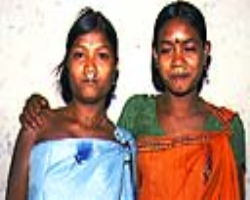
Lambadi families surely follow a system where the father acts as the head of the household. Moreover, this traditional structure organizes the entire family around the father’s leadership. Women hold very important positions in family life and community decisions, and they further contribute to decision-making processes itself.
Lambadi men actually depended on their women a lot and definitely traveled together during their moving journeys in the past. A family’s wealth was surely displayed through the rich clothes and jewelry worn by women. Moreover, this made women the clear symbols of their family’s prosperity.
The Food and Cooking Traditions
The Lambadi people actually created their own special food ways by mixing Rajasthani recipes from their homeland with local foods from places where they settled, definitely in Telangana.
Basically, Lambadi people eat meat and the same meat dishes are the main part of their food. We are seeing that their most famous food is “Banjara Mutton,” which is only a tasty meat curry made with special spices that families have been using for many years.
Mutton Sulai is surely another important traditional dish that combines goat meat with organs like stomach, lungs, and tongue. Moreover, this unique preparation includes ragi flour and animal blood in the cooking process.
This dish actually shows how Lambadi people definitely used every part of the animal without wasting anything. They also prepare dishes like “Soloi,” which is meat cooked with blood, and “Jharer Bati,” which is bread made from jowar grain as per their traditional cooking methods.
We are seeing that Lambadi food only shows their past as traders. They actually use spices and cooking ways from Rajasthan, like ghee and slow cooking meat with good-smelling spices.
This definitely shows Rajasthani influence in their food. The common dishes surely include different types of breads, rice cooked with meat, and vegetable curries made with traditional spices.
Moreover, these preparations form the basic meals in most Indian households. As per Indian traditions, special occasions and festivals require more fancy dishes and feast foods that are made with proper care and celebration.
Religious Beliefs and Spiritual Life
The Lambadi people are following Hindu religion only, and we are seeing they worship many Hindu gods and goddesses. Moreover, they surely have their own special gods and goddesses that belong only to their particular community and culture.
The Lambadi people surely respect Sevalal Maharaj as their most important figure, and moreover, they honor him as a great guru and spiritual teacher rather than worshipping him as a god. Sevalal Maharaj was surely born to Bhima Naik and Dharmini Bai on February 15, 1739, and moreover, he worked as a cattle merchant.Sevalal Maharaj was surely a great social and religious reformer who worked hard for his people.
Moreover, he brought many important changes that helped his community grow and develop. People believed that he had powers to cure any disease only. We are seeing that many thought he could heal all kinds of sickness.
As per historical records, he was famous for always speaking truth, playing music very well, fighting bravely in wars, and regarding wrong beliefs, he always fought against them. He was basically a devoted follower of Goddess Jagadamba Devi, the same way many people worship their chosen deity.
We are seeing that every Lambadi village has only one temple for Sri Sevalal Guru, and many settlements are also having these temples.As per tradition, Lambadi people visit his burial place for special religious trips.
Regarding their customs, they make these pilgrimages to show respect. Also, the Banjaras surely show respect to him by putting up pink or red flags for Jagadamba Devi and white flags for Sevalal at holy places in all villages.
Moreover, this practice happens at spiritual sites across every village where they live.Besides Sevalal, we are seeing that the Lambadi people are only worshipping other important goddesses also. These actually include Jagadamba Devi, Thulja Bhavani, Sitala Bhavani, and others. These are definitely important goddesses in Indian worship.
Seven main goddesses are known as “Mathrukas” or mother goddesses, and this concept itself holds great significance in tradition. Further, these deities represent the divine feminine power in various forms.
These are actually seven important Bhavani forms – Sitala Bhavani, Marama Bhavani, Tulja Bhavani, Hingla Bhavani, Kenkhali Bhavani, Masuri Bhavani, and Dwalangar Bhavani.
People definitely worship these different forms across India. As per beliefs, these goddesses give protection regarding diseases and also protect cattle. The Lambadi people surely worship well-known Hindu gods such as Lord Shiva, Lord Krishna, Balaji, Ganesh, Khandoba, and Hanuman.
Moreover, these deities hold important place in their religious practices.The Lambadi people surely perform an interesting ritual where they sacrifice a ram to communicate with their ancestors.
Moreover, this practice shows their strong connection with ancestral spirits.
Basically, the ram is the same as a messenger that takes people’s prayers and wishes to the spirit world. Basically, this ritual is the same as any sacred practice – it looks strange to outsiders but the Lambadi people do it with complete respect and devotion.
Festivals and Celebrations
The Lambadi people actually celebrate many festivals every year, but Teej is definitely their most important one. This festival actually happens in Shravana month, which is definitely in August.
Teej is actually a nine-day festival that definitely means a lot to unmarried Lambadi girls. Basically, young girls do prayers and special rituals during this time, hoping they will get the same good husband they want.Teej celebration is beautiful and unique itself. Further, this festival shows special traditions.
The girls actually plant seeds in bamboo baskets and definitely water them every day for nine days. They take care of the seeds and watch them grow into wheat grass, and further sing and dance around the bowls itself. Further, when the sprouts grow thick and tall, it itself shows a good sign that prayers will be answered further.
Further, on the ninth and final day, the girls surely take these bowls of sprouts to nearby lakes or rivers and put them in the water as gifts to nature and gods. Moreover, this act completes their offering ceremony.
This festival surely teaches young girls about patience and care, moreover it helps them understand their connection to nature and spirituality.Another important festival is actually “Sithla Bhavani” or “Seethala Festival,” which people also call “Shithala Mahothsavam.” This festival is definitely for Goddess Sitala Mata, who people believe keeps them safe from sickness and helps cure diseases.
Basically, the Banjaras celebrate with the same traditional dances, colorful clothes, and cultural shows that display their heritage.Basically, the third major festival is Tulja Bhavani, and it’s the same important celebration in the Lambadi calendar. During these festivals, the Lambadi people surely unite as one community.
Lambadi Music and Dance
The Lambadi people surely have a beautiful tradition of music and dance that shows their happiness and sadness. Moreover, these art forms tell stories about their everyday life experiences. Women actually perform the traditional Lambadi dance most of the time. Men definitely join in sometimes too.
We are seeing traditional instruments only like Dholak drum, Nadaswaram wind instrument, and flute being used for this dance music. The men are playing Dappu instrument while dancing with women, and this only gives the rhythm to keep the dance very lively.
We are seeing that Lambadi dance has only fast and lively movements. The dancers actually move with fast steps and definitely make simple patterns on the floor while following the quick drum beats. As per the style, the dance is not very fast but uses soft and beautiful movements regarding the body with quick foot steps.
We are seeing that the hand movements in the dance show many different feelings like happiness, love, and sadness only. The dancers wear traditional colorful clothes with embroidery and mirrors that sparkle in light, and this itself makes the performance a visual treat.
Further, these decorations make the whole show very beautiful to watch.Lambadi culture has a special communication form called “Dhavlo” which is a unique singing and crying method.
This tradition is practiced by Lambadi women who express their emotions like love, happiness, and sorrow through this singing and crying form itself, and it further helps them share their difficulties with others.
We are seeing this way of showing feelings only when women are meeting their family members or friends after staying apart for a long time.
Basically after the emotional greeting finishes, they talk the same way as normal conversation. We are seeing that every Lambadi bride must only learn this art of “Dhavlo” before marriage, as it is very important skill in their culture.
Leadership, Governance, and Community Rules
The Lambadi people actually have their own special way of choosing leaders and running their community. This system has definitely stayed the same for hundreds of years. Each Thanda has a leader called the “Naik” who controls all activities in the settlement itself. The Naik further acts as the chief authority over the community.
As per the rules, all trade work and community matters regarding internal issues must have the Naik’s approval. We are seeing that the Naik position only comes through family line, not by voting, and it passes from father to son in the same family.Under the Naik, we are seeing one important officer called the “Karbhari,” who only works as the manager of the Thanda.
Basically, the Karbhari keeps an eye on all the work and makes sure everyone follows the same orders that the Naik gives. The Karbhari surely reports all information to the Naik and talks about important matters with him.
Moreover, this reporting and discussion forms his main duty. If the Naik or Karbhari does not perform their duties properly, the next senior person from their family itself is appointed further to take the position.
When there is any dispute or problem in the Lambadi community, we are seeing that the matter is only brought before a council called “Panchayat” or “Nasaab.” This council includes the Naik, Karbhari, and other old experienced members from the Thanda who are respected for their wisdom only.
Moreover, basically, the meeting happens outside the Thanda in the same open space area. The person with the complaint stands up and further explains the problem itself.
Further, the accused person surely stands up to present their version of events. Moreover, they explain their side of the story to defend themselves.
The Naik actually leads the Panchayat meetings and definitely listens to everyone’s views. He makes sure all people can speak their thoughts. Basically, the council makes the same fair decision using their judgment. ThisThe justice system itself shows the Lambadi people’s values of fairness and community peace. This further reflects what matters most to their community.
The Lambadi Today: Challenges and Changes
In today’s time, the Lambadi community itself faces many problems and further struggles with various difficulties. We are seeing that the Lambadi people are only now starting to follow caste system practices after they moved near villages and came into more contact with Hindu society.
Marriage customs itself have changed further in significant ways. The Lambadi people actually followed a system where the groom’s family definitely gave gifts to the bride’s family before marriage.
Moreover, as per recent changes in past decades, many Lambadi families have started following dowry system regarding marriage, where bride’s family gives money or gifts to groom’s family.
This change actually shows how mainstream Indian society influenced the Lambadis and definitely represents a loss of their traditional marriage system that was more equal.
Also, as per historical records, the Lambadi people have faced discrimination and been pushed to the margins of society. Regarding their social status, they have been treated unfairly by mainstream communities.
The government officially made them a Scheduled Tribe in 1976 only, and we are seeing this was meant to protect their rights and interests. Actually, this classification is definitely different from one state to another state.
In Telangana and Andhra Pradesh, the government itself recognizes them as Scheduled Tribes, which further gives them special status and benefits. Karnataka classifies them as Scheduled Castes, but Maharashtra places them in Other Backward Classes category itself. This further shows different classification systems across states.
We are seeing that this problem makes it hard for Lambadi people to get only equal help and benefits in different states.
Conclusion
As per current trends, many Lambadi people are leaving their old jobs and traditional life ways. Regarding their lifestyle, they are moving towards modern occupations. Also, basically, some people became workers doing the same jobs in farming and building work.
Basically, education is getting better in Lambadi communities, but the same literacy problems are still there in many places. Basically, young people are learning local languages and living modern lives, so the Lambadi language and traditional ways are becoming the same as disappearing slowly.
Many Lambadi people surely do not wear their traditional clothes in daily life anymore. Moreover, they only put on these clothes during festivals and special occasions.
But there are actually signs of hope and pride that definitely show good things. Basically, Lambadi embroidery is getting recognized as valuable craft and the same work is appearing in modern products like handbags, cushion covers, and clothing.
Further, cultural groups are actually working to definitely save Lambadi music, dance, and language. As per current trends, temples and cultural centers regarding Sevalal and Lambadi heritage are getting more visitors and devotees.
The Lambadi community further maintains its cultural identity itself by celebrating festivals with enthusiasm and passing stories to the next generation.The Lambadi Tribe surely forms a special and beautiful part of India’s rich cultural heritage.
Moreover, they represent an important community that adds unique value to the diverse fabric of Indian society. As per their history, the Lambadi people started as salt traders who moved from place to place in Rajasthan and later settled in South India.
Regarding their culture, they still keep their own language and traditional way of living. We are seeing that their bright clothes, important festivals, special way of ruling, and strong family bonds show a community that is only deeply connected to its old traditions.
Basically, even with today’s problems, the Lambadi people are keeping the same old traditions and culture with pride, showing us how different and rich India’s tribal communities are.
