
Inroduction
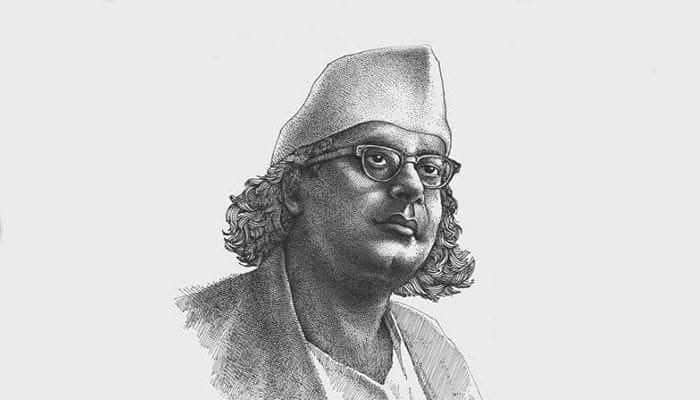
Ever wondered who opposed British rule in India with his pen instead of a sword? When poets rebelled, Kazi Nazrul Islam stood tallest among them all. While Gandhi led marches and Bhagat Singh threw bombs, Nazrul wielded something equally dangerous to colonial powers: words that ignited millions. His fiery poems and songs about Indian nationalism became battle cries during the independence movement.
The “Rebel Poet” didn’t just write pretty verses. He crafted anthems that ordinary people memorized and whispered when gathering courage to join protests. His work transcended religious divisions, uniting Hindus and Muslims under a shared dream of freedom.
Kazi Nazrul Islam: The Revolutionary Poet of Bengal
A. Nazrul’s early life and formative influences on his nationalist views
Born in 1899 in a small village in Bengal, Kazi Nazrul Islam’s journey from poverty to becoming Bengal’s revolutionary voice is nothing short of remarkable. His father’s early death thrust young Nazrul into the role of family breadwinner, working as a muezzin and later joining a traveling folk opera group. These early struggles weren’t just hardships – they were his first glimpses into the stark inequalities of British-ruled India.
The turning point? His military service during World War I. Stationed with the Bengal Regiment, Nazrul witnessed firsthand the bitter irony of Indians fighting for British imperial interests while their own homeland remained colonized. This contradiction lit a fire in him that never went out.
Reading banned revolutionary literature in the barracks and mixing with Indian freedom fighters shaped his political consciousness. He returned from military service not just as a poet, but as a voice determined to shake the foundations of colonial rule.
The Russian Revolution of 1917 hit Nazrul differently than most. He saw in it a template for what might be possible in India – a complete overturning of an oppressive system. These influences weren’t academic exercises for Nazrul; they became the raw material for a revolutionary vision that would soon explode onto Bengal’s literary scene.
B. The rebel poet: How his literary style embodied the spirit of resistance
Nazrul didn’t just write about rebellion – he made rebellion itself a literary style. When his poem “Bidrohi” (The Rebel) hit the streets in 1922, it wasn’t just published; it detonated across Bengal.
His writing broke every convention. Where Bengali poetry had often been delicate and ornate, Nazrul’s verses crashed through the door with military drums and thunder. He weaponized words, turning poems into calls for action against British colonialism.
What made his style revolutionary? First, the sheer force of his language. He wrote lines that practically leaped off the page and grabbed readers by the collar. Second, his masterful blend of Hindu and Muslim cultural elements created a new literary dialect that spoke directly to a unified Bengal. Third, his rhythm – often pounding and urgent – mirrored the quickening heartbeat of a nation ready for change.
Nazrul’s genius lay in making resistance feel visceral and immediate. When you read him, you don’t just understand rebellion – you feel it in your bones. His poetry didn’t invite you to consider freedom as a concept; it demanded you recognize freedom as your birthright.
C. Nazrul’s vision of an inclusive Indian identity that transcended religious divides
In an era when British colonial powers expertly played the divide-and-rule card, Nazrul stubbornly refused to fit into neat religious boxes. As a Muslim who wrote Hindu devotional songs and a revolutionary who embraced spiritual themes, he embodied the complexity of Indian identity itself.
Nazrul’s vision was crystal clear: India’s strength lay in its diversity, not despite it. His writings actively challenged the artificial boundaries between Hindus and Muslims, drawing freely from both traditions in ways that scandalized purists but resonated deeply with ordinary people.
“I sing of equality,” he declared, producing works that deliberately blended Hindu and Islamic motifs. His composition “Sāmyabādī” (The Egalitarian) became an anthem for those who believed India’s future depended on religious harmony.
What’s truly remarkable about Nazrul’s approach was how personal it was. He didn’t just preach unity – he lived it. His marriage to a Hindu woman, Pramila Devi, wasn’t just a romantic choice but a political statement in the most intimate sphere of life.
His revolutionary message gained such power precisely because it offered an alternative vision when many feared that independence would simply mean exchanging one form of division for another. Through poems, songs, and essays, Nazrul painted a picture of an India united not by erasing differences but by celebrating them.
D. The impact of his imprisonment by British authorities on his literary career
The British authorities weren’t fools – they recognized the danger Nazrul posed to colonial rule. In 1923, they arrested him for sedition over his poem “Anandamoyeer Agomone” (The Coming of the Mother Goddess), charging that his revolutionary writing was inciting rebellion.
Prison didn’t silence Nazrul – it amplified him. During his year-long imprisonment, he went on a hunger strike and wrote some of his most defiant works, including “Rajbandir Jabanbandi” (The Deposition of a Political Prisoner). The prison became his university of resistance, each day hardening his resolve.
The imprisonment transformed Nazrul in the public eye from merely a talented poet to a living symbol of Bengal’s resistance. When the authorities finally released him, his homecoming wasn’t just a personal relief but a national event.
What’s fascinating is how imprisonment changed his writing. His post-prison work showed a new depth – still fiery, but now with an almost prophetic quality. He had seen the machinery of oppression up close and returned with even sharper insights into the colonial system.
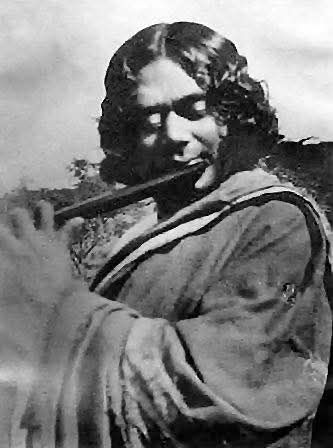
The British hoped jail would break him. Instead, it consecrated him. Every poem published after his release carried the weight of his sacrifice, making his words not just literature but testimony. His prison experience created an unbreakable bond with ordinary Indians who saw in his suffering a reflection of their own struggles under colonial rule.
Nazrul’s Literary Arsenal Against Colonial Rule
A. Analysis of his powerful anti-colonial poems like “Bidrohi” (The Rebel)
When Kazi Nazrul Islam penned “Bidrohi” in 1921, he didn’t just write a poem – he crafted a battle cry that would echo through the streets of colonial India. This wasn’t polite resistance; this was literary dynamite.
“I am the rebel eternal,” Nazrul declared, shocking a society accustomed to submission. What made “Bidrohi” so revolutionary was its unapologetic confrontation with power. While other writers hinted at freedom, Nazrul came out swinging with lines like “I shall become calm and quiet only when I find the oppressors’ might is suppressed.”
The poem’s imagery burns with destructive and creative forces simultaneously – Nazrul positions himself as both Shiva the destroyer and as the creator of a new world order. This duality perfectly captured the nationalist movement’s dual need to dismantle colonial structures while building an independent Indian identity.
The British authorities immediately recognized the danger. Here was a Muslim poet invoking Hindu deities alongside Islamic references, smashing religious barriers that colonial policies had carefully constructed to divide Indians.
Beyond “Bidrohi,” Nazrul’s “Dhumketu” (The Comet) and “Sarbohara” (The Proletariat) carried similar revolutionary fire. His genius lay in blending traditional Bengali poetic forms with explosive political content, making his rebellion both culturally authentic and radically new.
B. How his songs and poems became anthems for the freedom movement
Nazrul didn’t just write for literary appreciation – he created weapons for the freedom struggle that anyone could wield. His songs spread like wildfire across Bengal and beyond.
What made his work so effective as protest material? First, the sheer musicality. Nazrul composed hundreds of songs that paired revolutionary lyrics with memorable tunes people could actually sing at rallies and marches. These weren’t academic exercises – they were made for shouting in the streets.
His “Durgam Giri Kantar Moru” became the unofficial soundtrack for protesters facing police brutality. The lyrics – about pressing forward through mountain and desert – gave courage to freedom fighters facing imprisonment or worse.
Nazrul’s masterstroke was connecting personal courage with national destiny. In songs like “Karar Oi Louho Kopat” (The Iron Gates of Prison), he transformed individual suffering into collective resistance: “Those iron gates cannot stand against our united strength.”
Freedom fighters memorized his verses and passed them between prison cells. Young revolutionaries sang his songs before undertaking dangerous missions. Women in the movement found inspiration in his works that celebrated female strength and rejected gender barriers alongside colonial ones.
By 1930, singing Nazrul’s songs had become an act of resistance itself. The British couldn’t arrest everyone who hummed these melodies – his words had become too deeply embedded in the movement’s DNA.
C. Nazrul’s journalism and its role in awakening nationalist consciousness
Nazrul didn’t limit his fight to poetry – he weaponized journalism with equal ferocity. As editor of publications like “Dhumketu,” “Langal,” and “Navayug,” he transformed newsprint into revolutionary material.
His editorial approach was radically different from the cautious political reporting of his time. Instead of polite criticism wrapped in flowery language, Nazrul wrote with brutal directness. One famous editorial simply stated: “The British Empire rests on Indian corpses.”
What made his journalism particularly effective was his ability to connect with ordinary readers. He wrote in language accessible to farmers and workers, not just the educated elite. His publications explained complex political issues through relatable examples and vivid imagery that anyone could understand.
Nazrul’s papers became forums where different anti-colonial groups could find common ground. He published Hindu and Muslim writers side by side, actively countering the divide-and-rule strategy that kept imperial power intact.
His most influential journalistic achievement might be his series on economic exploitation. While other writers focused on abstract political rights, Nazrul meticulously documented how British policies created Indian poverty – connecting daily struggles with systemic oppression.
The circulation numbers tell the story: “Dhumketu” reached thousands of readers despite frequent censorship and shutdowns. His words traveled further through oral transmission, with literate readers sharing articles with those who couldn’t read.
D. The British response to his inflammatory writings
The colonial authorities didn’t take Nazrul’s literary rebellion lightly. Their response revealed just how threatening they found his pen.
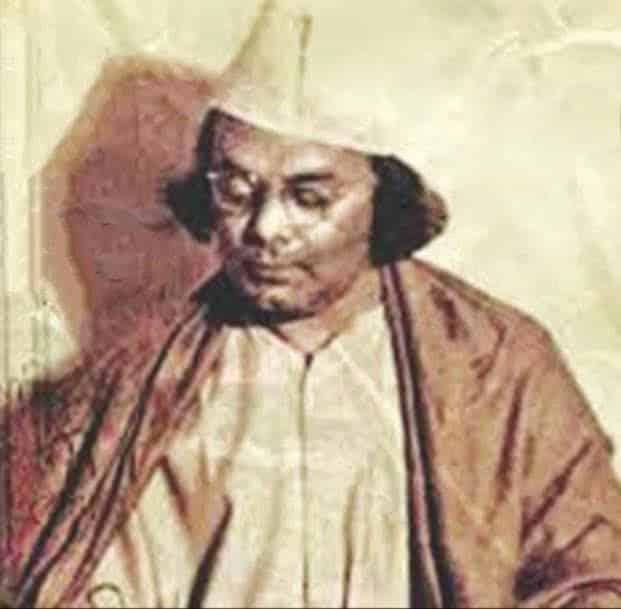
In 1922, British officials arrested Nazrul for his essay “Anandamayeer Agomone” (The Coming of the Goddess of Delight), charging him with sedition – their favorite tool against troublesome writers. The prosecution’s case centered on his direct calls for independence and his mockery of British rule as temporary and doomed.
During his year-long imprisonment, Nazrul famously began a hunger strike to protest prisoner treatment. The British response was telling – they force-fed him rather than risk creating a martyr. They understood his symbolic power.
Colonial censors banned his works with remarkable frequency. Publications containing his writings were confiscated, printing presses publishing his material were shut down, and bookshops selling his collections faced harassment.
The most revealing British tactic was their attempt to paint him as mentally unstable. Colonial officials circulated rumors questioning his sanity, hoping to undermine his credibility among educated Indians.
When suppression failed, they tried co-option. Nazrul was offered government positions and publishing opportunities if he would moderate his stance. He famously responded with a new poem declaring: “I sing the song of equality where all barriers have crumbled.”
The intensity of British response to his writings serves as perhaps the clearest testament to their effectiveness. Colonial powers recognized what some literary critics didn’t – that Nazrul’s pen threatened their empire as much as any armed rebellion.
E. How his works reached and mobilized the common people
Nazrul’s genius wasn’t just in creating revolutionary content – it was in making that content accessible to everyday Indians across social divides.
His strategy started with language. Unlike writers who used highly Sanskritized Bengali or Persianized Urdu, Nazrul wrote in the vernacular people actually spoke. He incorporated rural dialects, slang, and everyday expressions that resonated with farmers, factory workers, and small traders.
Public readings became crucial vehicles for spreading his message. Nationalist organizers would hold gatherings where his poems were recited and songs performed – creating cultural events that doubled as political rallies while staying just legal enough to avoid immediate shutdown.
Nazrul brilliantly leveraged traditional art forms as delivery systems for radical content. He set revolutionary lyrics to classical ragas and folk melodies, enabling his political messages to travel through existing cultural channels. Village singers and traveling performers became unwitting distributors of nationalist ideology.
Street theater groups adapted his poems into dramatic performances that could be staged in village squares with minimal equipment. These productions attracted audiences who might never read political literature but could absorb the same messages through entertainment.
The portability of his work proved critical. Short poems could be memorized and recited, songs could be sung without instruments, and brief essays could be read aloud to groups. This meant his ideas could penetrate areas where nationalist literature was banned or literacy was limited.
Most importantly, Nazrul created works that spoke directly to people’s daily struggles. He wrote about hunger, exploitation, and oppression in concrete terms that connected individual suffering to colonial policies, helping ordinary Indians see their personal hardships as part of a larger political struggle that required collective action.
Breaking Religious Barriers Through Nationalist Poetry
Nazrul’s unique synthesis of Hindu and Muslim cultural elements
Kazi Nazrul Islam wasn’t just any poet – he was a revolutionary who deliberately blended Hindu and Muslim traditions when most were busy drawing lines between them. His poetry mixed Arabic, Persian, and Sanskrit influences like no one had done before.
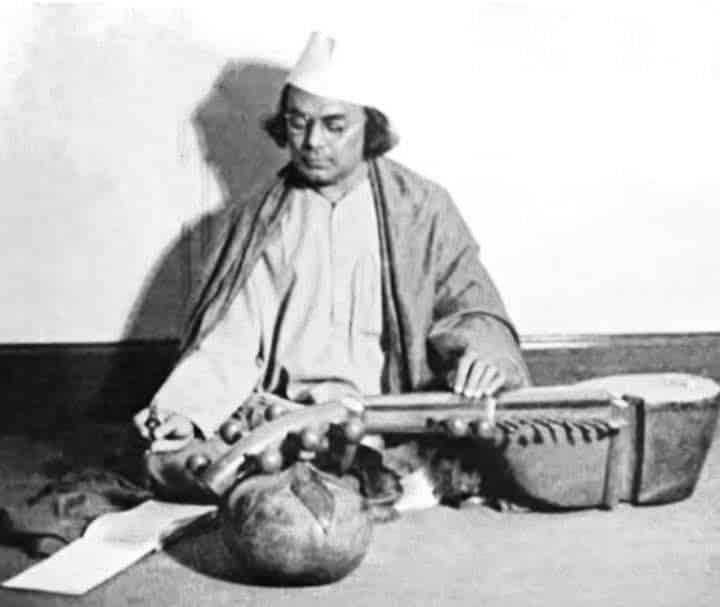
Take his musical compositions. Nazrul created something entirely new by combining the classical Hindu ragas with Islamic Ghazals and Qawwalis. In poems like “Sâmyabâdî” (The Equalizer), he’d casually reference both Hindu deities and Islamic concepts in the same breath.
What made Nazrul truly exceptional was how naturally he incorporated religious symbols from both traditions. He’d write devotional pieces to Hindu goddess Kali in one poem and celebrate Islamic traditions in the next. This wasn’t just artistic experimentation – it was a powerful political statement in pre-independence India.
His critique of religious orthodoxy as an obstacle to national unity
Nazrul didn’t just promote harmony – he actively called out religious extremism wherever he saw it. His pen became a weapon against anyone using religion to divide the nation.
In “Kandari Hushiar” (Beware, Helmsman), he directly confronted religious leaders who preached division:
Those who preach hatred in the name of religion,
Are the real enemies of our nation’s freedom.
Nazrul’s criticism wasn’t one-sided. He attacked Hindu casteism with the same fervor he condemned Muslim orthodoxy. His essays openly challenged religious institutions that prioritized outdated traditions over human dignity and national progress.
Religious bigotry wasn’t just morally wrong to Nazrul – it was practically foolish. He argued that India couldn’t possibly achieve independence while its people remained divided along religious lines.
How his works promoted Hindu-Muslim harmony during communal tensions
During the 1920s and 30s, as communal tensions reached dangerous levels, Nazrul’s voice became a desperately needed call for unity. His poem “Hindu-Musulmaner Yuddha” (The Hindu-Muslim Conflict) directly addressed the absurdity of religious violence:
“Who taught you this hatred? Not your religions. This poison comes from elsewhere.”
Nazrul’s approach was brilliantly strategic. Rather than asking people to abandon their faiths, he reminded them of the shared values within both traditions. His poems emphasized how both Hinduism and Islam taught compassion, justice, and human dignity.
His impact went beyond poetry. Nazrul organized cultural events where Hindu and Muslim artists performed together, creating physical spaces where harmony wasn’t just preached but practiced.
During the Calcutta riots of 1926, when violence between communities spiraled out of control, Nazrul’s writings became rallying points for peace activists from both religions.
The revolutionary concept of secular nationalism in his writings
Decades before secularism became central to Indian politics, Nazrul was already imagining a nation built on civic values rather than religious identity.
His vision of nationalism rejected both British imperialism and religious nationalism. In “Dhumketu” (The Comet), he wrote about a future where citizenship wasn’t defined by faith but by shared commitment to freedom and justice.
What made Nazrul’s secular vision revolutionary was its emotional appeal. He didn’t present secularism as a cold political arrangement but as the natural expression of love for one’s homeland.
For Nazrul, religious harmony wasn’t just a practical necessity – it was essential to India’s soul. His poetry portrayed a nation whose greatness came precisely from its diversity, where different traditions didn’t just tolerate each other but actively enriched one another.
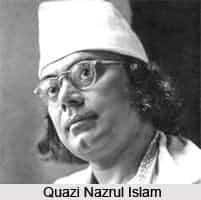
This vision directly challenged colonial narratives that portrayed Indians as inherently divided. Through his art, Nazrul showed that unity wasn’t something Indians needed to learn – it was something they needed to reclaim.
Nazrul’s Contribution to the Swadeshi Movement
His promotion of indigenous culture and economic self-reliance
Kazi Nazrul Islam wasn’t just a poet with fiery words – he was a revolutionary who understood that true independence meant breaking free from British economic chains. In the 1920s, when the Swadeshi Movement was gaining momentum, Nazrul emerged as one of its most passionate voices.
Through poems like “Daridrya” (Poverty) and “Sarbahara” (The Proletariat), he directly connected colonial exploitation to the economic suffering of everyday Indians. But Nazrul didn’t just highlight problems – he offered solutions by actively promoting indigenous industries and traditional crafts.
His newspaper “Dhumketu” (The Comet) became a platform to celebrate local artisans, featuring stories about weavers, potters, and other craftspeople who represented economic self-sufficiency. He wrote passionately about how supporting these traditional industries wasn’t just an economic act but a patriotic one.
What made Nazrul’s approach unique was how he wove economic self-reliance into his artistic vision. His songs incorporated folk traditions and local musical styles that had been overshadowed by Western influences. By elevating these indigenous art forms, he reminded Indians that cultural independence and economic independence were inseparable.
How his works inspired boycott of British goods
Nazrul’s works did more than just speak about boycotting foreign goods – they sparked real action. His poem “Bidrohi” (The Rebel) became an anthem for those participating in the boycott movement, with lines that directly challenged colonial economic control.
The impact of his writing was immediate and tangible. After publishing his revolutionary poems in magazines like “Bijli” and “Dhumketu,” local markets reported noticeable increases in sales of swadeshi products. British officials even monitored his writings, concerned about their influence on consumer behavior.
What made his approach different from other writers was how he connected everyday purchases to the larger freedom struggle. In “Purba-Pashchim” (East-West), he wrote:
“Your Manchester cloth binds not just your body, but your soul. Wear the rough cotton of your motherland and feel her embrace.”
These weren’t just poetic flourishes – they were practical calls to action that resonated with ordinary people who might not otherwise join political movements.
Nazrul’s call for cultural decolonization through his writings
Cultural decolonization formed the core of Nazrul’s revolutionary vision. He recognized that political independence would mean little if Indian minds remained colonized by Western ideals and aesthetics.
His approach to cultural decolonization was multi-faceted. First, he deliberately incorporated both Hindu and Muslim cultural elements into his work, creating an inclusive vision of Indian identity that transcended religious divisions fostered by colonial rule.
Second, he revived and modernized traditional art forms. His musical compositions drew from classical Indian ragas, folk traditions, and even the Islamic qawwali – demonstrating that indigenous artistic traditions could be both timeless and contemporary.
Perhaps most importantly, Nazrul attacked the colonial education system that taught Indians to value Western literature and thought above their own cultural heritage. In “Shikhsha” (Education), he wrote scathingly about schools that produced “brown sahibs” – Indians who mimicked British values while looking down on their own traditions.
Through his rebellion against linguistic colonization, Nazrul helped reclaim Bengali language as a powerful vehicle for revolutionary thought rather than just a “native dialect” as the British viewed it.
The Enduring Legacy of Nazrul in Indian Nationalist Thought
A. Nazrul’s influence on subsequent generations of freedom fighters
Kazi Nazrul Islam wasn’t just a poet – he was a revolution in human form. His fiery words didn’t just stir emotions; they sparked action among India’s freedom fighters long after his voice was silenced by illness.
When Subhas Chandra Bose rallied his Indian National Army, Nazrul’s poems became their battle hymns. Young revolutionaries memorized “Bidrohi” (The Rebel) as if it were sacred text, finding in its defiant verses the courage to face British bullets.
What made Nazrul’s impact so profound? Unlike dry political manifestos, his poetry spoke directly to the heart. He wrote about oppression in ways that made people’s blood boil and their spines straighten.
In Bengal’s student movements of the 1930s and 40s, you’d hear Nazrul’s songs echoing through university halls before every protest march. His words became shorthand for resistance – when someone recited the opening lines of “Karar Oi Louho Kopat” (Those Iron Gates of Prison), everyone understood the call to action.
Even Gandhi’s followers, committed to non-violence, found wisdom in Nazrul’s vision of a free India where all religions and castes stood equal. They might have rejected his calls for aggressive resistance, but they embraced his dream of unity.
B. His works as inspiration during key moments in the independence struggle
During the Salt March of 1930, protesters sang Nazrul’s songs to keep their spirits high as they faced police batons. His words became shields against fear.
The Quit India Movement of 1942 saw Nazrul’s poetry take on new urgency. Underground publishers risked everything to circulate his banned works. One activist later recalled: “We didn’t have guns, but we had Nazrul’s words – and somehow, those felt more powerful.”
His poem “Durgom Giri” (The Insurmountable Mountain) became particularly significant during prison hunger strikes. When bodies weakened, prisoners would recite its lines about conquering impossible obstacles.
What’s fascinating is how Nazrul’s work evolved during the struggle. Early on, his revolutionary poetry dominated. But as independence drew closer, his writings on Hindu-Muslim unity gained prominence. His essay “Hindu-Musulmaner Yuddha” (The Hindu-Muslim Conflict) was secretly passed between communities during the tensions of 1946-47.
Women freedom fighters especially connected with his works that championed gender equality alongside national liberation – a radical stance for his time.
C. Nazrul’s ideas on religious harmony in post-independence India
Nazrul’s vision of religious harmony wasn’t some vague ideal – it was concrete and practical. He didn’t just preach tolerance; he lived integration.
As a Muslim who wrote Hindu devotional songs and married a Hindu woman, Nazrul embodied the unity he preached. His approach to religious harmony stood out because it wasn’t about different faiths politely tolerating each other. It was about celebrating their shared humanity.
After independence, when communal tensions threatened to tear apart the newly formed nation, Nazrul’s writings became a touchstone for secular leaders. Nehru frequently quoted him in speeches about national unity.
His poem “Mora Eki Brinte Duti Kusum Hindu-Musalman” (We are two flowers on the same stem – Hindu and Muslim) became something of an unofficial anthem for interfaith cooperation programs.
What’s remarkable is how Nazrul anticipated the challenges of post-colonial religious identity. While many were focused simply on removing the British, Nazrul was already addressing what kind of society India should become afterward.
In regions torn by partition violence, community leaders organized readings of Nazrul’s works as a form of healing. His poetry created neutral ground where divided communities could begin rebuilding trust.
D. How his vision contrasts with other nationalist thinkers of his era
Nazrul stood apart from his contemporaries in ways that still feel relevant today. While many nationalist thinkers emphasized India’s ancient glory, Nazrul focused on its future potential.
Take Tagore, for instance. Both were Bengali literary giants, but their approaches differed dramatically:
| Tagore | Nazrul |
|---|---|
| Philosophical, contemplative | Direct, confrontational |
| Emphasized cultural revival | Demanded social revolution |
| Appeal to conscience | Call to action |
Or consider Savarkar’s Hindu nationalism against Nazrul’s inclusive vision. Where Savarkar saw religious identity as the foundation of nationhood, Nazrul rejected this entirely.
Even compared to secular nationalists like Nehru, Nazrul stood out. Nehru’s secularism came from European Enlightenment thinking. Nazrul’s emerged from the syncretic traditions of Bengali Baul singers and Sufi mystics – indigenous roots rather than imported ideas.
Most striking was Nazrul’s stance on revolution. Gandhi advocated non-violence; Tilak pushed for more aggressive resistance within constitutional means. Nazrul? He celebrated rebellion itself as a spiritual act. His poem “Bidrohi” portrays the rebel as almost divine – a radical idea that made even revolutionary leaders uncomfortable.
Unlike elitist thinkers who wrote primarily for educated audiences, Nazrul deliberately used language accessible to farmers and laborers, believing true independence required everyone’s participation.
E. Nazrul’s continued relevance in addressing contemporary challenges to Indian unity
The questions Nazrul wrestled with haven’t disappeared – they’ve intensified. In today’s India, where religious divisions are often politicized, his uncompromising stance on unity feels urgently needed.
When communal riots broke out in Gujarat in 2002, peace activists organized Nazrul poetry readings in affected neighborhoods. His words created spaces where healing conversations could begin.
Student movements against religious discrimination still draw on his imagery. At JNU protests in 2019, students carried banners with his line: “I sing of equality, where all barriers and differences between man and man have vanished.”
What makes Nazrul especially relevant today is his recognition that unity requires confronting injustice, not ignoring it. He never asked marginalized groups to stay silent for the sake of peace. Instead, he demanded that society transform to create genuine equality.
His economic critiques also resonate in contemporary India. As wealth inequality grows, his poems challenging concentrated power speak directly to today’s realities.
Digital activists have embraced Nazrul too, creating viral social media campaigns featuring his quotes about religious harmony. One recent Twitter movement, #NazrulForToday, paired his verses with images of interfaith cooperation during COVID-19 relief efforts.
Perhaps most importantly, Nazrul reminds us that patriotism isn’t about blind loyalty but about building a nation worthy of its people’s love – a message that cuts through partisan noise with timeless clarity.
Nazrul Islam’s revolutionary poetry and unwavering commitment to India’s freedom struggle transformed him from a mere literary figure into a powerful symbol of resistance against colonial oppression. Through his fiery verses and inclusive vision, he not only challenged British rule but also dismantled religious divides that threatened India’s nationalist movement. His active participation in the Swadeshi Movement and his ability to mobilize public sentiment through powerful artistic expression demonstrated how culture and politics could unite in the fight for independence.
Today, Nazrul’s legacy continues to inspire generations of Indians across religious and cultural boundaries. His works remain a testament to the power of words in igniting patriotic fervor and fostering national unity. As we reflect on India’s journey to freedom, we must recognize how Nazrul’s revolutionary spirit and commitment to religious harmony helped shape the inclusive, democratic values that define modern India. His contribution reminds us that true nationalism transcends divisions and embraces diversity as its greatest strength.
