
Thank you for reading this post, don't forget to subscribe!
Introduction :-
The polygamy of the Mughal emperors is well known. In India, since the time of the Mughal Emperor Babur, many wives were present in the harem of the emperors. A search of their contemporary documents shows that some marriages were for political reasons and some marriages were for their emotional needs and satisfaction.
They may have gone on a pleasure trip somewhere or went hunting or visited their conquered territories, and if they liked or liked a woman or a virgin daughter, then that woman or virgin daughter would have a place in the harem (Polygamy of Mughal emperors) of the Mughal court.
There, the number of wives did not depend, the choice of the Sultan was the criterion for the size of the harem as called as Polygamy of Mughal emperors. In this regard, none of the Mughal emperors was behind. Generally, the period from Babur to Aurangzeb is considered to be the period of the Mughal Empire.
Babur :-
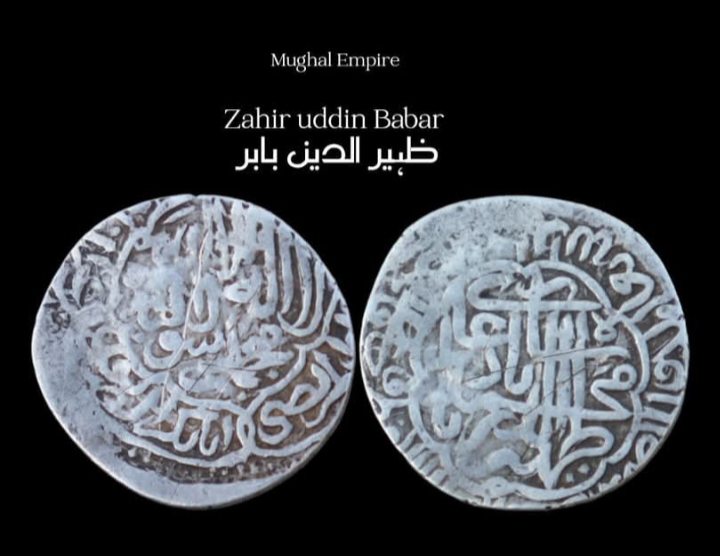
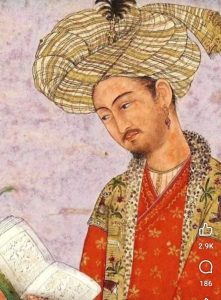
Aisha Sult̤ān Begum was the first wife of Babur, the founder of the Mughal Empire. After this, the names of his wives and the names of several wives of the Mughal emperors cannot be completed in this short space. It is known from various books that Babur was equally attracted to his sons, that is, to men. It is also known that his love for a boy named Baburi is also mentioned.

Humayun :-
Mughal emperor Humayun was also addicted to many women. Bega Begum was his first wife, Hamida Banu Begum was the mother of Emperor Akbar. But the first acquaintance with Hamida Banu Begum was not very pleasant.
Hamida Banu Begum was first met in the harem of Humayun’s stepbrother Hindal. Humayun liked Hamida Banu Begum so much that he even talked to his stepbrother Hindal to get close to her. He also spoke to his stepbrother Hindal and his stepmother Dildar Begum. But neither of them had anything to do with it.
Even Hamida Banu Begum expressed her dislike for Humayun in front of everyone in the royal court. But everyone had to bow down before Humayun’s insistence. At that time, Humayun was thirty-four years old and Hamida Banu Begum was only fourteen years old. Although there was no shortage of women in Humayun’s harem at that time. In this case too, it can be seen that the choice of the Muval emperor was the emperor’s will and the last word.
Akbar :-
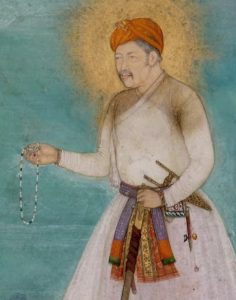
The dowry system existed during the Mughal period as well. Therefore, the birth of a daughter was considered a bad news for the parents. Emperor Akbar himself believed that the dowry system would prolong married life. That is, unwrittenly, only those who were financially independent in the society at that time were considered for polygamy. Polygamy was considered a symbol of aristocratic status in the society of that time. Even more than one wife would get involved in infighting among themselves to get the favor of the husband. This event was seen as an event of enjoyment.
In Muslim society, four marriages were allowed, but the emperor himself kept 300 wives in his own harem without divorcing the first wife. In the society of that time, only the first wife supervised the family affairs and that of course with the permission of the emperor. The other wives would demonstrate their skills in music, art, etc. Polygamy can be indirectly blamed for causing social laxity.
Jahangeer :-
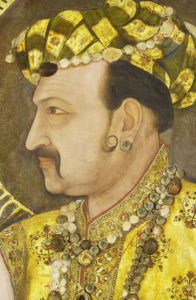
Mughal Emperor Jahangir had 20 wives. His marriages were political. He married provincial kings to establish relations with them during his time. Only Nur Jahan, who was Emperor Jahangir’s first wife.
However, the Mughal emperors did not keep so many wives that they married only out of desire or to establish friendship with the minor kings, but a medieval system similar to the female slavery of that time existed, the emperor’s polygamy and the capture of slave women and keeping them in the harem was also a matter of pleasure for the emperor. Not only that, the children of the conquered kingdoms under their protection were captured and later they were searched. They were appointed to guard the wives of the emperor’s harem.
Shahjahan :-
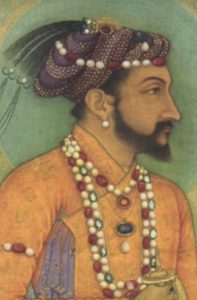
Emperor Shah Jahan was also not a polygamist. He had three wives, one of whom was Mumtaz Begum Chinen, who was his favorite wife. He married Mumtaz Begum in 1607. However, after the death of his wife Mumtaz Begum in 1631, he did not marry again.
At that time, there was a common idea among the Mughal kings that the subedars or governors they appointed to look after the later parts of their empire were their successors because they were more trustworthy. 1) Izz-Un-Nissa, 2) Mumtaz Mahal, 3) Fatehpuri Mahal,4) Muti Begum, 5) Qudsia Begum, they were the wife of Shah Jahan. It is said that Jahanara Begum, who was the daughter of Mumtaz Begum, was also married by Shah Jahan after Mumtaz Begum’s death.
Aurangzeb :-
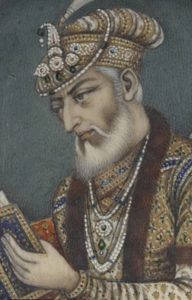
Dilras Banu Begum, Nawab Bai, Aurangabadi Mahal, Udaipuri Mahal – emperor Aurangzeb accepted these four women as his wives. Rabia-ud-Daurani (Dilras Banu Begum) she was his beloved wife. Mughal Emperor Aurangzeb had two Hindu wives, one of whom wanted to become a “Sati”.
If we examine the above descriptions of the Mughal emperors, it is seen that compared to the needs of their wives, that is, the women they themselves married as their own wives, that is, compared to the needs of the Mughal Empire, in some cases it is seen that they married many women even based on their whims, joy, infatuation, etc. That is, at that time, the fate of women was determined by the whims or pleasures of men in a patriarchal society, and the joy of this marriage would drag them down until their death.
Later, many different studies showed that polygamy caused various diseases and genetic problems, but due to the lack of these advanced systems during the time of the Mughal emperors, many of the problems were not recorded at that time, or those who recorded them at that time also ignored this aspect.
Conclusion :-
A major criticism of polygamy is that polygamy is a social disease of patriarchal society, meaning that women had no contribution to their own thoughts. It was believed that women were used only for the production of children. Although the Sharia law in the Muslim Empire mentioned four marriages, it is quite debatable.
Because, a man cannot marry another woman while he is in a marriage or while his wife is alive, until he is divorced. And this divorced woman must explain to everyone else why she is divorcing her. She cannot be divorced just out of anger or rage or for fun. This was observed according to the rules of the Muslim Imams, and they viewed the matter with enough sympathy so that a marriage does not break up or a divorce does not occur. In the case of both men and women, the divorce incident would be expressed to the Imam through their own complaints or arguments, and the Imam would give them his own advice with considerable sympathy that they should resolve these problems themselves through their married life.
