
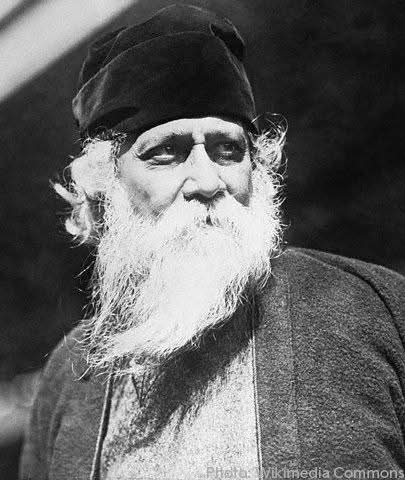
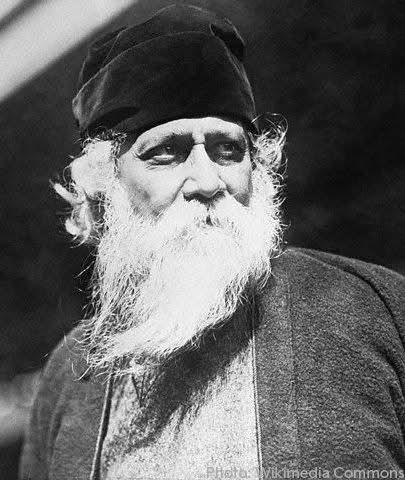
Ever wonder why a man who could’ve just enjoyed his Nobel laureate status instead spent decades obsessing over village schools? Rabindranath Tagore didn’t just write poetry—he rewrote the rulebook on rural education in India.
When everyone else was pushing rote memorization, Tagore was creating open-air classrooms where children learned through arts, nature, and their mother tongue. His revolutionary approach to expanding rural education transformed entire communities across Bengal.
The villagers initially thought he was just another wealthy outsider with grand ideas. But when children started thriving in his experimental schools, everything changed.
What made his educational philosophy so effective that it’s still studied worldwide today, yet remains tragically underimplemented in the very country where it began?
Rabindranath Tagore’s Educational Philosophy
A. Rejection of conventional education systems
Rabindranath Tagore wasn’t just dissatisfied with traditional schooling—he flat-out rejected it. Having dropped out of school himself, Tagore understood firsthand how suffocating conventional classrooms could be. He called them “factories,” churning out obedient workers rather than free thinkers.
“The system of education,” he once wrote, “which is based on book-learning alone is like an artificial arrangement of seeds in a paper packet which can never produce living plants.”
Tagore despised how British colonial education force-fed information to passive students. Remember those schools where kids sat in rigid rows, memorizing facts they’d never use? That’s exactly what made Tagore’s blood boil. He saw students becoming disconnected from their culture, language, and natural environment.
B. Vision for holistic development through nature-based learning
Walk around Shantiniketan today and you’ll immediately get what Tagore was going for. Classes under massive trees. Students painting landscapes. Discussions happening while strolling through gardens.
Tagore believed nature was the greatest teacher. Unlike stuffy classrooms with their artificial boundaries, the natural world offered endless opportunities for curiosity and discovery. His students learned through direct experience—feeling soil between their fingers, observing seasonal changes, and finding inspiration in birdsong.
This wasn’t some hippie dream but a carefully thought-out approach. Tagore wanted education to nourish the complete person—mind, body, and spirit. A child who climbs trees develops physical confidence. One who watches clouds develops imagination. One who plants seeds learns patience.
C. Integration of arts and culture in education
In Tagore’s educational model, arts weren’t “extra” activities—they were the core. Music, dance, drama, painting—all became essential tools for self-expression and learning.
Festivals became learning opportunities. Students participated in seasonal celebrations, connecting them to Bengali cultural traditions while developing performance skills. They created their own songs, stories, and plays, becoming active cultural producers rather than passive consumers.
This integration wasn’t random. Tagore understood that creative expression develops unique neural pathways, enhances memory, and builds confidence in ways textbooks simply cannot.
D. Emphasis on mother-tongue instruction
“You can’t truly think in a language that isn’t your own,” Tagore insisted. While colonial schools pushed English as the only path to knowledge, Tagore stubbornly championed Bengali instruction.
Tagore wasn’t against learning other languages—he was multilingual himself and translated his own works. But he firmly believed the foundation must be built in the mother tongue. Only then could students develop authentic voices and cultural identities.
This approach had profound implications for rural education. Village children no longer needed to abandon their linguistic heritage to access knowledge. Instead, education could build upon the rich oral traditions and cultural knowledge already present in rural communities.
Founding of Shantiniketan: A Rural Education Model
A. Establishment of the ashram school in 1901
In 1901, something revolutionary happened in the quiet rural landscape of Bengal. Rabindranath Tagore, already making waves as a literary genius, started a small school under the shade of mango trees in Shantiniketan. This wasn’t just another educational institution—it was his bold answer to the rigid, colonial education system that dominated India.
Tagore had experienced firsthand how traditional schooling felt like a prison. “I was sent to school,” he once wrote, “but found my lessons so dry that I could hardly force my mind to accept them.” He wanted to spare children from that misery.
With just five students and a handful of dedicated teachers, the ashram school began its journey. The location wasn’t random—Shantiniketan (meaning “abode of peace”) had deep personal significance for Tagore. His father had established a meditation center there years earlier, making it the perfect spot to nurture young minds away from the chaos of city life.
B. Creation of a learning environment connected to rural life
Tagore didn’t just build a school; he crafted an experience that breathed with the rhythms of rural Bengal. Students didn’t just study village life—they lived it.
The curriculum wove together academics with practical skills needed in villages. Children learned mathematics by measuring fields, botany by tending gardens, and economics by understanding the challenges of local farmers.
What made Shantiniketan truly special was how it embraced the natural environment. Students helped grow their own food, participated in seasonal festivals, and developed a deep connection to the land. This wasn’t education detached from reality—it was learning embedded in life itself.
“The highest education,” Tagore insisted, “is that which does not merely give us information but makes our life in harmony with all existence.”
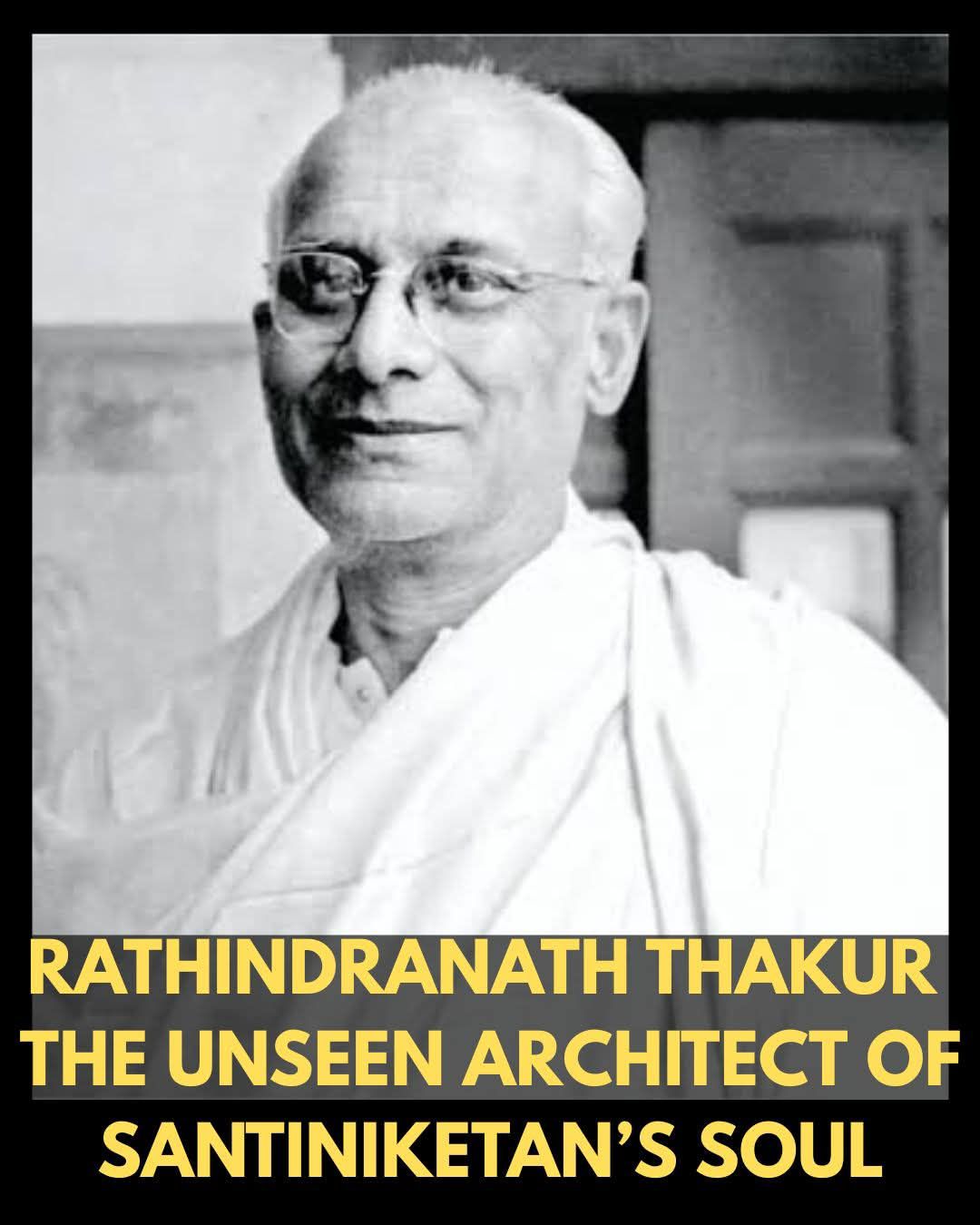
C. Open-air classrooms and experimental teaching methods
Walk through Shantiniketan in those early days and you’d see something remarkable—no stuffy classrooms with rigid desks. Instead, classes gathered under the sprawling branches of ancient trees, with children sitting on handwoven mats.
These open-air classrooms weren’t just charming—they were revolutionary. Tagore believed that walls restricted not just bodies but minds. The natural setting stimulated creativity and made learning a joyful experience rather than a chore.
The teaching methods were just as groundbreaking. Instead of memorization and rote learning, teachers encouraged:
- Direct observation of nature
- Creative expression through arts
- Questions and debate
- Learning through practical experience
Students learned literature by writing their own stories, history by staging plays, and science through experiments rather than textbooks. The emphasis was always on understanding, not just repeating information.
D. Development into Visva-Bharati University
What started as a modest experiment blossomed into something far greater. In 1921, Tagore transformed Shantiniketan into Visva-Bharati, an international university with a powerful vision: bringing East and West together in one place of learning.
The name itself tells the story—”Visva” meaning universal and “Bharati” referring to India. This wasn’t just an expansion in size but in scope. New departments emerged focusing on:
- Fine arts (Kala Bhavan)
- Music (Sangit Bhavan)
- Asian cultural studies
- Rural reconstruction (Sriniketan)
- Modern sciences
Despite growing in size and stature, Visva-Bharati maintained its core values. The university continued to champion rural education while introducing students to global perspectives. Classes still happened outdoors when possible, and the arts remained central to the educational approach.
E. Attracting international educational thinkers
Shantiniketan quickly became a magnet for forward-thinking educators and intellectuals from around the world. When most educational institutions were becoming increasingly standardized, Tagore’s experiment stood out as a beacon of alternative thinking.
Visitors came from far and wide—Europeans, Americans, and Asians all made pilgrimages to see this rural education model in action. Among the notable visitors were:
C.F. Andrews, the British missionary who became Tagore’s close friend
Leonard Elmhirst, who later established Dartington Hall School in England based on Shantiniketan principles
Okakura Kakuzo, the Japanese art scholar who reinforced Tagore’s pan-Asian vision
These exchanges weren’t just social calls—they sparked deep conversations about the future of education worldwide. Ideas flowed in both directions, with Tagore incorporating what he found valuable from other traditions while maintaining his focus on freedom, creativity, and connection to rural life.
The impact of these exchanges rippled far beyond Bengal. Educational reformers returned to their countries inspired to challenge conventional approaches to learning and create schools that honored children’s natural curiosity and creativity.
Practical Initiatives for Rural Education Access
Creating libraries and reading rooms in villages
Rabindranath didn’t just talk about education – he rolled up his sleeves and made it happen. One of his most brilliant moves was establishing libraries and reading rooms across rural Bengal. These weren’t fancy buildings with marble columns. They were simple, accessible spaces where villagers could drop in and discover new worlds through books.
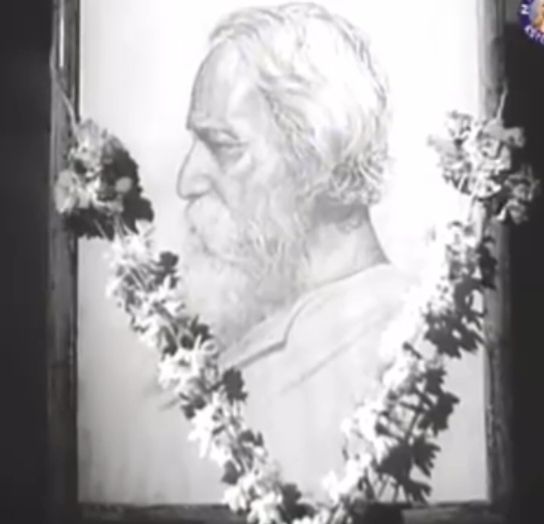
In villages like Surul and Sriniketan, Tagore set up reading rooms that stayed open in the evenings after farmers finished their day’s work. Smart timing, right? He understood that education had to fit into people’s actual lives.
What made these libraries special was their collection. Tagore didn’t just stock academic texts. He included practical farming guides, health manuals, folk stories, and translations of world literature. Something for everyone!
Village libraries became community hubs where people gathered to read aloud for those who couldn’t read themselves. This way, even the illiterate villagers got exposed to new ideas and information.
Founding rural schools and educational centers
Tagore’s rural education revolution really took shape through his schools. Sriniketan, established in 1922, wasn’t just another school – it was a bold experiment.
Unlike traditional schools that pulled kids away from their environment, Tagore’s rural schools embraced village life. Classes often happened outdoors under trees. The curriculum mixed book learning with practical skills like farming, weaving, and carpentry.
Patha Bhavana, another Tagore initiative, pioneered child-centered education decades before it became fashionable elsewhere. Kids learned at their own pace, through activities and direct experiences rather than rote memorization.
What’s remarkable is how these schools became self-sustaining centers. They produced handicrafts, grew crops, and created a micro-economy that supported the educational mission while teaching real-world skills.
Training local teachers to serve rural communities
Tagore knew that imported city teachers wouldn’t cut it. They’d either leave quickly or fail to connect with village realities. His solution? Grow your own teachers!
He started teacher training programs specifically designed for rural education. Local young men and women with basic education were selected and given specialized training that blended pedagogy with rural development knowledge.
These teachers weren’t just instructors – they were community leaders. During the day, they taught children. In the evenings, they organized adult literacy classes and community discussions.
Tagore’s teacher training focused on creativity and adaptability. Rural teachers often had to work with limited resources and multi-age classrooms. So they learned to use nature as their laboratory, local crafts as teaching tools, and songs as memory aids.
Implementing adult education programs
Tagore didn’t forget the grown-ups. He recognized that transforming rural life meant educating entire communities, not just children.
His adult education programs were remarkably practical. Evening classes taught farmers about improved agricultural techniques, basic accounting, and health practices. Women learned about nutrition, childcare, and cottage industries they could run from home.
What made these programs stick was their immediate relevance. Villagers could apply what they learned the very next day and see tangible benefits.
Lok-Siksha Samsad (People’s Education Council) became a cornerstone of Tagore’s adult education efforts. It organized traveling instructors who moved between villages, sharing knowledge and collecting folk wisdom to incorporate into the curriculum.
These programs weren’t one-way streets. Tagore emphasized that urban-educated instructors had as much to learn from villagers as vice versa. This mutual respect created an environment where traditional knowledge was valued alongside new information.
Breaking Social Barriers Through Education
A. Challenging caste and class divisions in rural schools
Rabindranath Tagore stood firmly against the rigid social stratification that plagued rural India during his time. At Shantiniketan, he deliberately created a learning environment where children from all castes sat together, ate together, and learned as equals. This was revolutionary in early 20th century India.
“Education should not be reserved for the privileged few,” Tagore once remarked to his colleagues. His schools welcomed children from Dalit communities alongside those from Brahmin families—a practice that shocked many traditionalists.
What made his approach work? He didn’t just preach inclusion—he modeled it. Teachers were instructed to treat all students with equal respect, regardless of their family background. The curriculum itself questioned caste narratives through stories and activities that highlighted human dignity over birth-based hierarchy.
B. Promoting women’s education in conservative rural settings
In villages where girls rarely stepped outside their homes, Tagore’s educational initiatives created safe spaces for female learning. He understood the cultural barriers all too well—families feared social stigma if their daughters received education alongside boys.
His solution? Start where people were comfortable, then push boundaries gradually.
Tagore introduced:
- Female teachers who served as role models
- Flexible school timings that accommodated household duties
- Practical skills training that families could see immediate value in
- Art and music programs that made schools culturally appealing
Rural parents who initially refused to send daughters to school began to reconsider when they saw tangible benefits. One rural mother near Sriniketan recalled, “My daughter can now keep our family accounts and read medical instructions. She’s more confident too.”
C. Making education accessible to all economic backgrounds
Money shouldn’t determine who gets to learn—Tagore lived by this principle. His rural schools operated on a sliding scale fee system where wealthier families paid more while poorer students attended for free or contributed through labor.
The genius in Tagore’s approach was making everyone feel they had dignity in the process. Poor students weren’t treated as charity cases but as valuable contributors to the school community.
His schools incorporated:
- School gardens where students grew food for midday meals
- Craft workshops that generated income to support operations
- Community grain banks where families could contribute what they could
- Barter systems accepting produce or services in lieu of fees
A former student remembered, “I couldn’t pay with money, so I helped in the garden before classes. Nobody looked down on me for it.”
D. Involving local communities in educational governance
Tagore rejected the colonial model where education was imposed from above. Instead, he pioneered community participation decades before it became an educational buzzword.
Every village school under his influence had a local committee with real decision-making power. These weren’t token positions—villagers helped shape curriculum, set school hours, and determine which skills were most relevant to local needs.
This approach transformed schools from foreign institutions into community assets. When local farmers, artisans, and elders contributed their knowledge, education became rooted in lived experience rather than abstract concepts.
During harvest seasons, school schedules adjusted. When local crafts were incorporated into learning, elders became teachers. This dynamic relationship between school and community created an educational ecosystem that was genuinely responsive to rural realities.
Economic Self-Sufficiency and Rural Education
A. Integrating vocational training with academic subjects
Rabindranath Tagore didn’t just dream up fancy educational theories—he rolled up his sleeves and revolutionized how rural education worked. At Shantiniketan, he broke down the artificial wall between book learning and practical skills. Kids weren’t just memorizing texts; they were learning carpentry alongside calculus.
What made Tagore’s approach special? He knew that rural students needed more than rote learning to thrive. A student might study literature in the morning and learn weaving techniques in the afternoon. This wasn’t some random pairing—Tagore carefully designed these integrations so skills reinforced each other.
“A mind all logic is like a knife all blade,” Tagore once wrote. “It makes the hand bleed that uses it.” That’s why his schools blended art, craft, and academics in a way that honored the whole child.
B. Promoting rural crafts and indigenous knowledge
Tagore had zero patience for colonial education systems that made Indian children feel ashamed of their cultural heritage. Instead, he placed local crafts and indigenous knowledge right at the center of his curriculum.
In his rural education initiatives, traditional basket weaving wasn’t treated as some quaint hobby but as a legitimate form of knowledge with its own complexity and value. Students learned directly from village artisans who became respected teachers within the school system.
What happened when rural crafts entered the classroom? Students developed pride in their cultural traditions while mastering skills with real economic value. Pottery, weaving, and woodwork became pathways to both cultural preservation and financial independence.
C. Teaching agricultural innovation and sustainable practices
Tagore didn’t just talk about farming—he transformed agricultural education. At a time when colonial practices were depleting India’s soil, Tagore’s schools became living laboratories for sustainable agriculture.
Students got their hands dirty in experimental farms where they tested improved crop varieties and natural pest management techniques. They learned to work with nature rather than against it—a revolutionary concept then and still relevant today.
The genius of Tagore’s approach was connecting agricultural theory with immediate practice. When a student discovered a better way to irrigate crops, the whole village benefited. This wasn’t abstract learning—it was education that put food on tables and money in pockets.
D. Creating cooperative learning models for village development
Tagore believed education should solve real community problems. His cooperative learning models weren’t just classroom techniques—they were blueprints for village transformation.
In his schools, students tackled actual village challenges through collaborative projects. A group might work together to design and implement a clean water solution or develop more efficient oil presses for local farmers.
These weren’t hypothetical exercises. The cooperative structures students practiced at school directly translated to village improvement societies and micro-credit initiatives that continued long after graduation. Students learned that collective action could solve problems no individual could tackle alone.
E. Encouraging entrepreneurship among rural students
Tagore saw rural students not as charity cases but as future innovators and business leaders. His schools deliberately cultivated entrepreneurial thinking decades before it became fashionable in education.
Students learned market analysis alongside mathematics, studying supply chains and identifying value-adding opportunities in local resources. A student might learn to not just grow mangoes but to create preserved mango products that commanded higher prices in distant markets.
The results were remarkable. Graduates from Tagore’s rural education initiatives often started small enterprises that employed fellow villagers. They understood how to calculate costs, market products, and reinvest profits—practical knowledge that transformed economic possibilities across rural Bengal.
Tagore’s entrepreneurship education wasn’t just about individual success but about creating local economic ecosystems that could resist exploitation from outside forces. He understood that true freedom required economic self-determination.
Tagore’s Literary Works as Educational Tools
Writing specialized texts for rural learners
Rabindranath Tagore wasn’t just a literary genius—he was deeply practical about education. When he looked at the standard textbooks of his time, he saw a massive disconnect. Rural children were being forced to memorize content that had nothing to do with their daily lives.
So what did he do? He rolled up his sleeves and wrote materials specifically for these children. His primers like “Sahaj Path” (Easy Reading) revolutionized how Bengali was taught to beginners. Instead of dry, disconnected sentences, he created simple, engaging narratives that rural children could actually relate to.
“Why should a farmer’s child read about snow when they’ve never seen it?” Tagore once remarked. He replaced those irrelevant examples with stories about village ponds, rice fields, and local festivals.
Using songs and poetry to promote literacy
Tagore knew something most educators missed—learning sticks when it’s set to music.
He composed hundreds of songs deliberately designed as teaching tools. These weren’t just beautiful melodies; they were literacy vehicles. Children who struggled with reading would happily sing these songs over and over, unconsciously absorbing vocabulary, grammar, and cultural knowledge.
His approach was brilliant in its simplicity. In villages where books were scarce, songs could be passed from person to person. A child might learn to sing before they could read, but those songs created a foundation for later literacy.
“The clouds gather, the rain falls,” begins one of his famous teaching songs. The melody lodges in the mind while teaching about nature, seasons, and the agricultural cycles central to rural life.
Publishing accessible literature in Bengali
Tagore took on the publishing establishment too. When he saw how little literature was available to ordinary Bengali speakers, especially in rural areas, he started producing affordable books and magazines.
His magazine “Sabuj Patra” (Green Leaf) became a platform for simple yet profound writing that village readers could access. He deliberately kept the language straightforward and the content relevant.
What made this revolutionary was his insistence on using colloquial Bengali rather than the overly Sanskritized formal language of the educated elite. He validated the everyday speech of rural people as worthy of literature.
“Books should come to people, not just people to books,” he wrote in an essay defending his publishing choices. This philosophy drove him to create pocket-sized, affordable editions that could reach the most remote villages.
Creating culturally relevant educational materials
Tagore understood something fundamental about learning—it has to connect with the learner’s existing world before it can expand their horizons.
His educational materials honored rural traditions while gently introducing new ideas. He developed textbooks featuring folk tales, local histories, and indigenous knowledge alongside more universal concepts.
At Shantiniketan, he directed the creation of teaching materials that integrated:
- Local crafts and artisanal techniques
- Regional agricultural methods
- Folk songs and dances
- Indigenous botanical knowledge
This approach affirmed the worth of rural cultural knowledge while using it as a bridge to wider learning. Children didn’t have to abandon their identity to become educated.
“The highest education,” Tagore wrote, “is that which does not merely give us information but makes our life in harmony with all existence.” His educational materials embodied this philosophy, treating rural culture not as something to be replaced but as a foundation to build upon.
Lasting Legacy on Rural Education in India
A. Influence on national education policy post-independence
When India gained independence in 1947, Tagore’s educational ideas weren’t just preserved—they became foundational building blocks. The first Education Commission (1948-49) headed by Dr. S. Radhakrishnan explicitly incorporated Tagore’s vision of holistic learning and rural development into its recommendations.
You can see Tagore’s fingerprints all over India’s landmark educational policies. The 1968 National Policy on Education emphasized creative expression and cultural rootedness—pure Tagore concepts. The 1986 policy took it further by promoting what they called “rural universities” that mirrored Tagore’s Visva-Bharati model.
His biggest win? Making rural education central to national development. Politicians and policy makers who might never have visited Shantiniketan were suddenly speaking his language—education needed to be practical, culturally relevant, and connected to village life.
B. Continuation of Tagore-inspired rural schools today
Walk into rural Bengal today and you’ll find hundreds of schools still running on Tagore’s blueprint. The Patha Bhavana and Siksha-Satra models haven’t just survived—they’ve multiplied.
The Rabindra Mukta Vidyalaya network now spans over 200 schools across rural West Bengal, teaching under the open sky just like Tagore envisioned. They’ve kept his core practices alive:
- Classes held outdoors whenever possible
- Arts integration across all subjects
- Student-led village service projects
- Seasonal festivals celebrating nature
What’s remarkable isn’t just that these schools exist, but that they consistently outperform conventional schools in student engagement and community impact. Parents trek miles to enroll their children in these institutions that promise not just literacy, but a complete transformation.
C. Impact on global approaches to rural education
Tagore’s ideas jumped borders decades ago. UNESCO adopted his model of “learning by doing” for its rural education initiatives across Asia and Africa in the 1970s. His approach—bringing education to people rather than forcing rural migration to urban centers—became standard practice in development circles.
Maria Montessori corresponded with Tagore and acknowledged how his nature-centric approach influenced her own methods. Paulo Freire, whose critical pedagogy revolutionized education in Latin America, cited Tagore’s rejection of colonial education models as inspiration.
Today, you’ll find Tagore-inspired schools from Bangladesh to Brazil. The New School movement in Colombia directly credits him for their approach to rural education. Even elite international schools like United World Colleges incorporate his philosophy of global citizenship rooted in local culture.
D. Modern adaptations of his educational philosophy
Tagore’s ideas haven’t just survived—they’ve evolved. Modern educators have taken his core principles and reimagined them for the digital age.
The “Digital Shantiniketan” initiative connects rural schools across India through video conferencing, allowing students to collaborate on environmental projects while staying rooted in their communities. Tagore would have loved it.
Climate education programs now frequently cite his nature-based pedagogy. His insistence that learning happens best in natural settings aligns perfectly with contemporary research on eco-literacy and outdoor education.
Some adaptations are practical innovations on his ideas:
- Mobile schools bringing Tagore’s methods to migrant communities
- Microfinance projects integrated into rural school curricula
- Arts-based trauma healing programs in conflict zones
What’s fascinating is how his century-old ideas feel more relevant than ever. As mainstream education struggles with screen addiction and disconnection from nature, Tagore’s vision of learning through direct experience with the natural world seems not just wise but necessary.
Rabindranath Tagore’s Revolutionary Impact on Rural Education
Rabindranath Tagore’s contributions to rural education in India were truly transformative. Through his visionary establishment of Shantiniketan, he created not just a school but a complete educational philosophy that emphasized learning in harmony with nature and traditional wisdom while embracing progressive ideals. His practical initiatives brought education to underserved rural populations, deliberately breaking down social barriers by creating learning environments where students from all backgrounds could thrive together. By integrating economic self-sufficiency into his educational model and using his literary works as powerful teaching tools, Tagore created a comprehensive approach to rural education that addressed both intellectual growth and practical needs.
The impact of Tagore’s educational vision continues to resonate throughout India today. His belief that education must be accessible, culturally relevant, and economically empowering for rural communities has inspired countless educational institutions and policies. As we face contemporary challenges in education, Tagore’s model reminds us that true learning must connect students with their cultural roots while preparing them for the modern world. His legacy challenges us to continue innovating educational approaches that serve rural communities, recognizing that meaningful access to education remains one of the most powerful tools for social transformation and rural development.
