
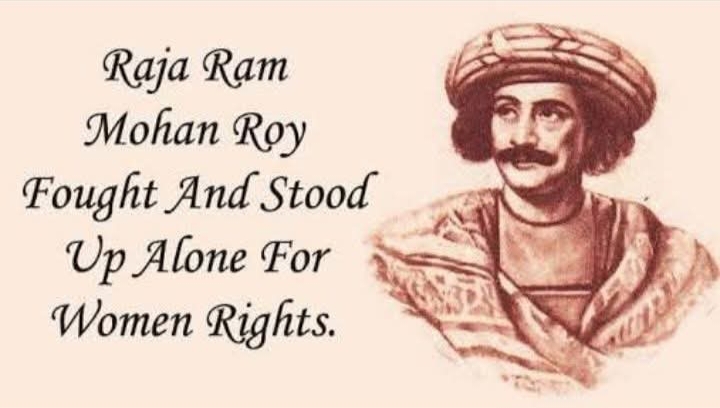
Raja Rammohan Roy’s statement on women’s education shook the foundations of the patriarchal system of governance in Indian society at that time. Ever wondered why India’s first schools for girls appeared in the 1800s? While we enjoy equal education rights today, women once couldn’t even dream of learning to read. That’s until Raja Rammohan Roy started challenging everything.
Picture this: a time when teaching girls was considered dangerous to society. Wild, right? But Raja Rammohan Roy’s revolutionary ideas about women’s education transformed Indian society forever.
This isn’t just ancient history. Roy’s battle against patriarchal education systems laid the groundwork for modern Indian women in STEM, politics, and business.
But what exactly drove this man to risk everything for female literacy when everyone around him violently opposed it? The answer reveals why he’s called the “Father of Modern India” – and it might surprise you.
Historical Context of Women’s Education in 19th Century India
Historical Context of Women’s Education in 19th Century India
A. Social restrictions and discrimination faced by women
Imagine living in a world where your worth was determined by your gender alone. That was a reality for women in 19th century India. Women faced crushing restrictions on nearly every aspect of their lives.
Women’s movements were severely restricted. They couldn’t leave home without permission, couldn’t speak to men outside their families, and certainly couldn’t participate in public life. The concept of “purdah” (seclusion) kept many women literally hidden behind veils or walls.
B. Prevalent superstitions and cultural practices
The web of superstitions around women’s education was thick and sticky. Many believed educated women would become widows early – a terrifying prospect in a society where widows faced harsh treatment.
Child marriage was rampant. Girls as young as 8 or 9 were married off, making education impossible. Once married, a girl’s sole purpose became serving her husband’s family.
C. British colonial influence on education systems
The British brought their own educational ideas to India, but these were primarily designed for men. In 1835, Macaulay’s Minute established English education in India, but it focused almost exclusively on creating male clerks for colonial administration.
When the British did establish schools for girls, they emphasized “feminine” subjects like sewing and home management rather than academic subjects. Their goal wasn’t female empowerment but creating “better wives and mothers.”
Some missionaries established girls’ schools, but these often focused on religious conversion rather than comprehensive education.
D. Status of female literacy before reform movements
The numbers tell a devastating story. Before reform movements gained traction, female literacy rates in India hovered around 0.2% – yes, less than one percent. In most regions, you could count literate women on one hand.
The few women who did receive education typically came from extremely privileged backgrounds or progressive families. Even then, their education was usually limited to basic reading, religious texts, and homemaking skills.
No universities accepted women. No professional careers welcomed them. No path existed for a woman to become financially independent through education.
This was the bleak landscape Raja Rammohan Roy confronted when he began advocating for women’s education – a radical, almost unthinkable concept in his time.
Raja Rammohan Roy’s Personal Journey and Motivation
Early life experiences that shaped his views on gender equality
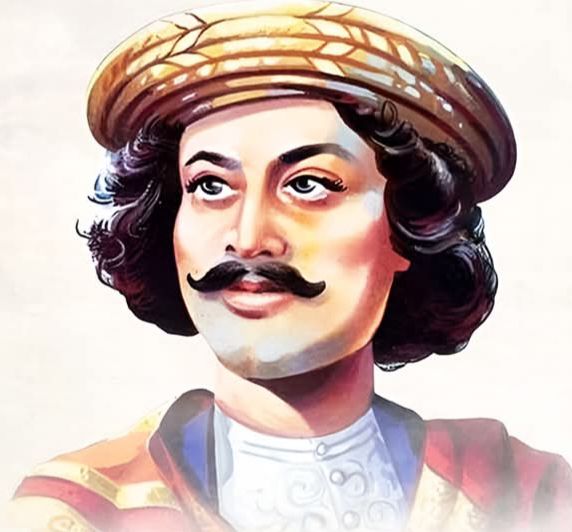
Raja Rammohan Roy’s journey toward advocating women’s education wasn’t accidental – it was deeply personal. Born in 1772 in Bengal, his childhood observations of women in his own family planted the seeds of his future activism. The profound impact of witnessing his brother’s wife commit sati (widow immolation) shook him to his core. This trauma never left him, fueling his lifelong battle against this practice.
Growing up in a traditional Brahmin family, Roy saw firsthand how women were denied basic rights – from education to property ownership. He watched his mother Tarini Devi, an intelligent woman, navigate the constraints of a patriarchal society. Her influence on young Roy was immense, showing him the untapped potential of women when society kept them in shadows.
Influence of Western liberal thought on his philosophy
Roy’s worldview expanded dramatically when he encountered Western liberal thinking during his time working with the East India Company. He devoured the works of enlightenment thinkers like Mary Wollstonecraft, whose “A Vindication of the Rights of Woman” (1792) particularly resonated with him.
His travels to England in 1830 further exposed him to European feminist movements gaining momentum. What struck Roy wasn’t just the content of these ideas but how they mirrored concerns he’d developed independently through his Indian experiences.
Unlike many of his contemporaries, Roy didn’t simply adopt Western ideas wholesale. Instead, he brilliantly wove these progressive concepts with Indian philosophical traditions, creating an approach to women’s education that was revolutionary yet culturally grounded.
Personal observations of women’s conditions in Bengali society
The Bengal that Roy knew was undergoing massive social transformation, yet women remained trapped in cycles of oppression. His firsthand observations were sobering:
- Child marriage forcing girls as young as five into matrimony
- Widespread female illiteracy (less than 1% of women could read)
- Property laws disinheriting widows, leaving them economically vulnerable
- Social customs keeping women secluded in zenanas (women’s quarters)
Roy meticulously documented these conditions, moving beyond abstract philosophy to confront hard realities. He recognized that educating women wasn’t just about individual improvement – it was about transforming Bengali society from its roots.
Connection between his religious reforms and gender equality vision
Roy’s approach to women’s education can’t be separated from his religious reforms. As founder of the Brahmo Samaj in 1828, he challenged religious practices that justified gender inequality.
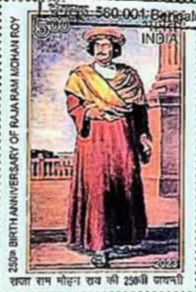
His religious thinking was radical yet strategic. By reinterpreting Hindu texts rather than rejecting them outright, he demonstrated that true Hinduism supported women’s dignity and education. He specifically challenged misinterpretations of sacred texts used to justify practices like sati.
For Roy, educating women wasn’t just a social reform – it was spiritual liberation. He believed an educated woman could better understand religious texts herself, freeing her from dependence on male interpretations that often justified her own subjugation.
This connection between religious reform and women’s education formed the bedrock of Roy’s approach, making his advocacy particularly powerful in a society where religion and daily life were inseparable.
Key Educational Reforms Championed by Raja Rammohan Roy
A. Campaign against Sati and its connection to women’s empowerment
Raja Rammohan Roy’s battle against sati wasn’t just about ending a horrific practice – it was his first major step toward women’s education and empowerment. Imagine this: in early 19th century India, a widow was expected to burn alive on her husband’s funeral pyre. Roy saw this barbarism firsthand when his own sister-in-law became a victim.
He didn’t just sit around feeling bad about it. He published pamphlets, organized public debates, and lobbied British authorities until Governor-General William Bentinck finally outlawed sati in 1829.
But here’s what most people miss: Roy understood that banning sati was meaningless without education. Women needed knowledge to claim their rightful place in society. He argued that educated women could make their own choices, support themselves financially, and contribute to family decisions – revolutionary ideas back then!
B. Advocacy for women’s property rights
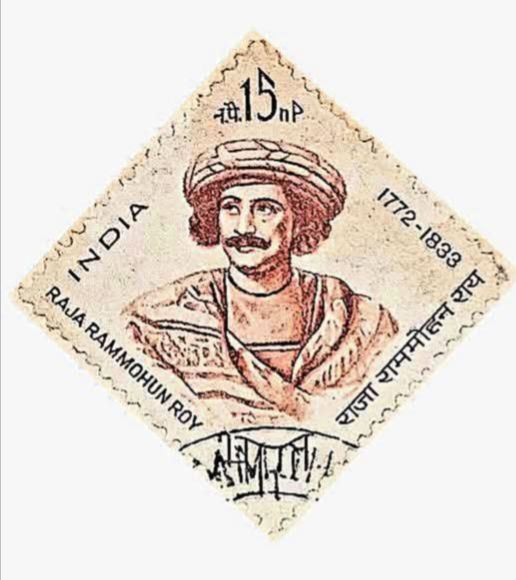
Roy didn’t stop at saving women’s lives – he wanted them to have financial independence too. While battling against sati, he simultaneously campaigned for women’s property rights.
In Hindu tradition, widows were often left destitute after their husbands died, with no claim to family property. Roy worked tirelessly to change inheritance laws, arguing that women deserved equal economic rights.
He challenged religious interpretations that denied widows their share of family assets. By pushing for legal reforms, he connected the dots between economic independence and social empowerment. His advocacy eventually influenced the Hindu Widow’s Remarriage Act of 1856, though it came after his death.
Roy knew something profound: without economic rights, educational opportunities meant little. A woman needed both knowledge AND resources to truly break free from oppression.
C. Establishment of schools for girls
While fighting legal battles, Roy put his money where his mouth was. In 1822, he established some of India’s first schools for girls – a shocking move in a society where female education was considered not just unnecessary but downright dangerous.
These weren’t fancy institutions. They started small, often in rented rooms, with basic curricula focused on reading, writing, and arithmetic. But they represented something revolutionary: the idea that girls deserved the same educational opportunities as boys.
Roy faced fierce opposition. Critics claimed educating women would destroy family structures and corrupt Indian values. His response? Education would make women better mothers, partners, and citizens.
He personally funded many of these schools and collaborated with progressive Indians and Europeans to keep them running. The curriculum balanced traditional subjects with practical skills women could use to support themselves financially.
D. Promotion of vernacular education alongside English
Roy wasn’t just progressive – he was practical. While he recognized the importance of English education in colonial India, he insisted that vernacular languages were equally important, especially for women.
He championed a dual approach: English for accessing global knowledge and vernacular languages for preserving cultural identity. His schools taught Bengali alongside English, making education more accessible to girls from various backgrounds.
This bilingual approach was radical. Most colonial education focused exclusively on English, while traditional education ignored it entirely. Roy struck a balance that acknowledged both the pragmatic value of English and the cultural importance of native languages.
For women’s education specifically, this approach was genius. It allowed girls to connect with their heritage while still gaining skills valued in the changing economy. Roy understood that education wasn’t just about learning facts – it was about developing a complete identity.
E. Collaboration with missionaries and progressive educators
Roy was no lone wolf. He knew educational reform required allies, so he built partnerships with unlikely collaborators – including Christian missionaries and British officials.
Despite religious differences, Roy worked closely with missionaries like William Carey and Alexander Duff who shared his passion for education. He collaborated with progressive Hindus and Muslims too, creating a diverse coalition of educational reformers.
These partnerships weren’t always comfortable. Roy often disagreed with missionaries on religious matters but recognized their expertise in educational methodology. He skillfully navigated these tensions, extracting educational resources while maintaining his own vision.
Through these collaborations, Roy established a network of schools across Bengal. He trained Indian teachers, developed textbooks in multiple languages, and created administrative systems that outlived him.
His ability to work across religious and cultural divides amplified his impact dramatically. By the time of his death in 1833, the foundation for women’s education in India had been firmly established.
Philosophical Foundations of Roy’s Educational Vision
A. Blend of traditional Indian values with progressive ideals
Raja Rammohan Roy’s educational philosophy wasn’t built in a vacuum. He crafted a unique vision that honored India’s rich intellectual heritage while embracing forward-thinking ideas from the West.
Roy deeply respected ancient Hindu texts and their emphasis on knowledge pursuit. But he wasn’t stuck in the past. He recognized that progress required fresh perspectives. This balanced approach made his ideas revolutionary yet culturally resonant.
What made Roy exceptional was his ability to extract the best from both worlds. From traditional Indian thought, he embraced concepts of spiritual enlightenment and moral development. From Western progressivism, he adopted rational inquiry and scientific thinking.
This synthesis wasn’t just intellectual showmanship—it was strategic. By rooting his reforms in familiar cultural soil, Roy made radical ideas more palatable to a society hesitant about change.
B. Belief in education as a path to national regeneration
Roy saw education as the beating heart of India’s revival. In his mind, a country’s strength wasn’t measured by military might or material wealth, but by the knowledge of its people.
Education wasn’t just about personal advancement—it was the key to unlocking India’s potential. Roy believed an educated population could tackle social evils, strengthen economic foundations, and restore cultural confidence.
His vision went beyond superficial learning. He wanted education that developed critical thinking, ethical reasoning, and practical skills. This comprehensive approach would create citizens capable of leading India toward a brighter future.
What’s fascinating is how Roy connected individual transformation with national progress. Each educated mind represented another step toward collective advancement.
C. Views on women’s role in family and society transformation
Roy broke dramatically from conventional thinking about women’s roles. While many saw women primarily as homemakers, Roy recognized them as powerful agents of change.
The family unit stood at the center of his vision. Roy understood that educated mothers raise informed children. By educating women, he wasn’t just changing individual lives—he was transforming future generations.
“When you educate a man, you educate an individual. When you educate a woman, you educate a family,” captures the essence of Roy’s thinking, though he never used these exact words.

His perspective was refreshingly practical. Roy didn’t just advocate women’s education as a moral right (though he certainly believed this). He highlighted its tangible benefits for society: healthier families, stronger communities, and more capable citizens.
D. Connection between women’s education and rational thinking
Roy drew a direct line between women’s education and society’s intellectual progress. In his view, rational thinking couldn’t flourish in a society where half the population remained intellectually restricted.
He challenged the notion that women were incapable of serious intellectual pursuits. Instead, he argued their natural intelligence, when cultivated through education, could contribute significantly to public discourse and social development.
This connection between women’s education and rational society wasn’t abstract philosophy—it was practical reform. Roy believed superstition and harmful practices would naturally fade as educated women questioned traditional assumptions.
His approach emphasized critical thinking over rote learning. Roy wanted women to develop the intellectual tools to evaluate ideas independently, not simply absorb information passively.
By championing women’s rational capabilities, Roy wasn’t just advocating for gender equality—he was reimagining India’s intellectual foundation.
Opposition and Challenges Faced
Resistance from orthodox religious leaders
Raja Rammohan Roy’s push for women’s education wasn’t exactly welcomed with open arms. Orthodox religious leaders, particularly from Hindu and Muslim communities, saw his ideas as a direct threat to their authority and religious traditions.
Many Brahmin pandits condemned Roy’s interpretation of sacred texts that supported women’s education. They argued that educating women would disrupt the social order and lead to moral degradation. These leaders often used selective religious passages to counter Roy’s progressive interpretations.
The religious orthodoxy didn’t just disagree—they actively campaigned against him. Public denouncements in temples and mosques became common. Some even declared that families following Roy’s ideas would face divine punishment or social excommunication.
Social backlash and criticism from conservative society
Beyond religious circles, Roy faced harsh criticism from the broader conservative society. Influential families worried that educated women would reject traditional roles and challenge patriarchal norms. The very idea of women learning to read and write seemed dangerous to many.
“What need do women have for education?” was a common refrain. Many believed education would make women “unfit” for marriage and household duties. Others spread rumors that Roy’s schools were fronts for Christian conversion or Western corruption.

Even some who supported modernization in other areas drew the line at women’s education, seeing it as too radical a change for Indian society to absorb.
Limited resources and institutional support
Money problems? Roy had plenty. Funding for women’s education initiatives was almost non-existent in early 19th century India. Roy often dipped into his personal wealth to establish and maintain schools for girls.
Finding qualified teachers willing to educate girls proved extremely difficult. Many educated individuals refused to associate with such “controversial” work, fearing damage to their reputation. Those who did teach faced social ostracism and economic hardship.
Physical spaces for women’s education were also scarce. Many landlords refused to rent buildings for girls’ schools, forcing Roy to use unconventional spaces like homes or religious buildings for educational purposes.
Navigating colonial politics while advocating for indigenous reform
Roy walked a tightrope between colonial powers and indigenous reform. The British authorities sometimes supported his educational reforms—but usually with strings attached. Many colonial officials saw women’s education primarily as a vehicle for spreading Christian values and Western superiority.
Roy had to carefully position his advocacy in ways that wouldn’t be dismissed as either too Western or too threatening to colonial authority. This delicate balancing act meant tempering some of his more radical ideas to maintain political support.
At the same time, many Indian reformers viewed Roy with suspicion, questioning whether his collaboration with British authorities compromised the authentic Indian character of his reforms. This meant constantly proving his commitment to Indian cultural identity while pushing for progressive change.
Lasting Impact and Legacy
A. Influence on subsequent reform movements
Raja Rammohan Roy’s advocacy for women’s education didn’t just fade away after his time. His ideas sparked a fire that burned bright through the generations that followed. The Brahmo Samaj he founded continued championing women’s rights long after his death in 1833.
Figures like Ishwar Chandra Vidyasagar picked up where Roy left off, fighting for widow remarriage and girls’ education. Pandita Ramabai, who established the Sharada Sadan for widows in 1889, credited Roy’s early work as her inspiration. The Social Conference movement of the 1880s regularly invoked Roy’s name when pushing for female education reforms.
What’s really fascinating is how Roy’s work provided a blueprint for later reformers. He showed them how to challenge religious orthodoxy by using scriptural arguments, a tactic that proved incredibly effective. Many subsequent reformers adopted his method of engaging with colonial authorities while maintaining cultural integrity – a delicate balancing act few mastered as well as he did.
B. Modern educational institutions inspired by his work
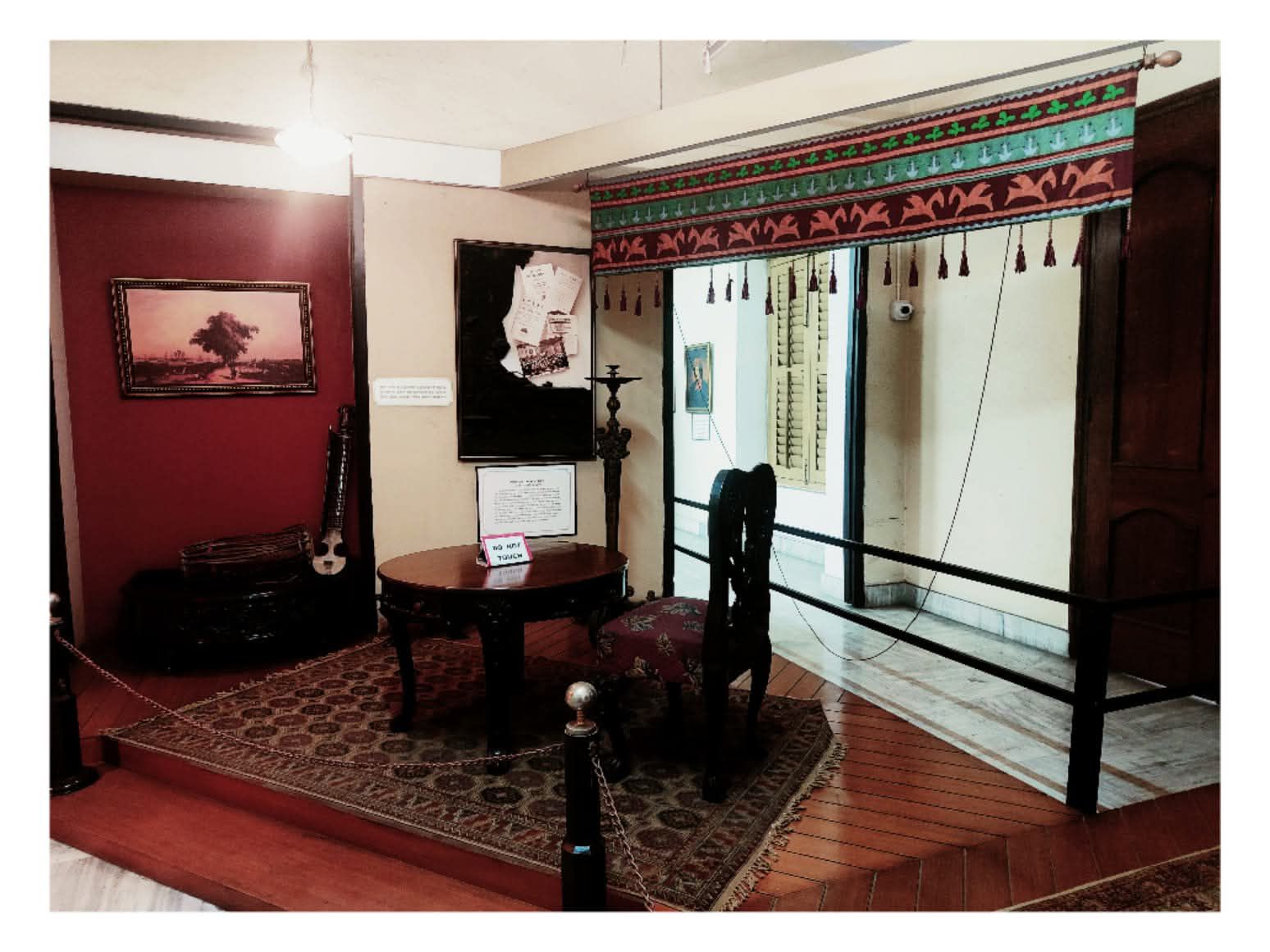
Walk around India today and you’ll find Roy’s fingerprints all over the educational landscape. The Rammohan Roy Memorial Museum in Kolkata isn’t just preserving his legacy – it actively runs educational programs specifically designed for girls from underprivileged backgrounds.
The Brahmo Balika Shikshalaya, established in 1890 in Calcutta, traces its philosophical roots directly to Roy’s educational vision. Today it stands as one of the premier institutions for girls’ education in Eastern India.
What’s particularly striking is how many modern institutions have adopted Roy’s approach of blending traditional knowledge with progressive values. The Rammohan College in Kolkata, established in 1961, continues his legacy by offering specialized women’s empowerment programs alongside traditional curricula.
Even the government’s “Beti Bachao, Beti Padhao” campaign echoes Roy’s core belief that educating women is fundamental to social progress – a radical notion in the 1820s that’s finally mainstream today.
C. Evolution of his ideas in contemporary feminist discourse
Roy’s ideas have evolved in fascinating ways within modern feminist thinking. His approach might seem paternalistic by today’s standards – he often framed women’s education as beneficial for family and society rather than for women themselves. But context matters.
Contemporary feminist scholars like Mrinalini Sinha have noted how Roy laid crucial groundwork by establishing the basic right of women to be educated at all. His arguments created cracks in patriarchal structures that later movements would transform into doorways.
The concept of “empowerment through education” that dominates today’s gender discourse? Roy was articulating early versions of this two centuries ago, albeit in language reflective of his time.
What’s particularly relevant is how Roy challenged the misuse of religious texts to suppress women. Modern Indian feminists still employ this strategy when confronting religious justifications for gender discrimination – showing that sometimes the most effective challenges come from within cultural frameworks rather than outside them.
D. Relevance of his educational philosophy in today’s India
India’s educational landscape has transformed dramatically since Roy’s time, but many of the barriers he identified stubbornly persist. Rural literacy rates for women still lag behind men’s. Cultural resistance to girls’ education remains entrenched in some communities.
Roy’s emphasis on practical education alongside traditional learning feels remarkably modern. As India grapples with creating educational systems that prepare students for a rapidly changing job market, Roy’s balanced approach seems prescient.
His insistence that education should be culturally relevant while embracing new knowledge resonates with current debates about curriculum design. Should Indian education prioritize global competitiveness or cultural preservation? Roy would likely argue it must do both.
What’s most striking is how Roy’s core argument – that society as a whole benefits when women are educated – has been validated by decades of economic research. Studies consistently show that educating girls delivers the highest return on investment of any development strategy. Roy intuited this connection centuries before economists had the data to prove it.
E. Global recognition of his pioneering efforts
Roy’s contributions have earned well-deserved international acclaim. UNESCO recognized him in their “Builders of Modern India” series, highlighting his role as an early champion of women’s education globally, not just in India.
The United Nations’ International Day of Education (January 24th) has featured Roy’s work in their historical highlights, acknowledging how his ideas on inclusive education predated similar Western movements by decades.
Academic institutions worldwide study his educational philosophy. The University of Chicago’s South Asian Studies program includes a module specifically examining Roy’s impact on gender and education in colonial contexts.
What’s particularly notable is how Roy has been recognized as a pioneer of what we now call “indigenous feminism” – challenging gender inequalities while remaining rooted in cultural contexts. International development organizations increasingly cite Roy’s approach as a model for culturally-sensitive gender equity work.
The Raja Rammohan Roy Memorial Prize, established in 1972, continues to recognize outstanding contributions to education and social reform internationally, ensuring his legacy extends far beyond India’s borders.
Raja Rammohan Roy’s visionary approach to women’s education fundamentally transformed 19th century India. His personal journey from traditional upbringing to progressive reformer fueled his unwavering advocacy for women’s educational rights, challenging deeply entrenched societal norms. Through strategic reforms, philosophical conviction, and persistent advocacy, Roy created pathways for women’s education despite significant opposition from conservative elements of society.
Today, Roy’s legacy continues to inspire educational reformers worldwide. His belief that educated women are essential for societal progress remains as relevant in 2025 as it was two centuries ago. As we reflect on his contributions, we’re reminded that educational equality requires both systemic change and cultural transformation—a mission that, while advanced significantly since Roy’s time, still demands our continued commitment and action.
