
Introduction
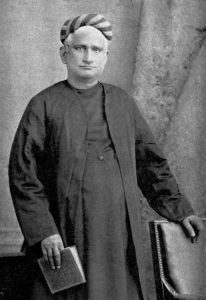
Ever wondered how a Bengali novelist Role of bankim chandra chatterjee in the formation of indian nationalism, became the spiritual father of modern Indian nationalism? Before Gandhi, before Nehru, there was Bankim Chandra Chatterjee, casually penning novels that would ignite the revolutionary spirit of an entire subcontinent.
Thank you for reading this post, don't forget to subscribe!I’m going to show you exactly how Chatterjee transformed from a government servant to the man who gave India its first national song “Vande Mataram” – the battle cry that would echo through decades of freedom struggle.
But here’s what most history books won’t tell you about the man who made millions of Indians realize they had a country worth fighting for…
Bankim Chandra Chatterjee: Early Life and Literary Foundation
A. Formative years and education
Bankim’s brilliance shone early. At just 15, he enrolled at Hooghly College, where he absorbed European literature and philosophy. In 1857—the very year of India’s First War of Independence—he became one of the first two graduates of Calcutta University. This dual education created the perfect foundation for a mind that would later bridge Eastern and Western thought.
His education wasn’t just academic. Growing up during the aftermath of the Bengal Renaissance and witnessing the brutal suppression of the 1857 uprising shaped his worldview profoundly.
B. Literary career and major works
Bankim started his professional life as a deputy magistrate and deputy collector, positions he held for 32 years. But his true calling was literature.
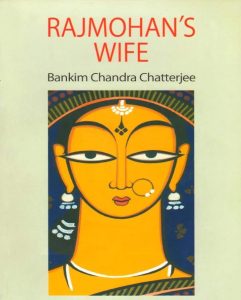
His first novel, “Rajmohan’s Wife” (1864), written in English, barely hinted at the literary giant he would become. When he switched to Bengali with “Durgeshnandini” in 1865, he transformed Bengali literature forever.
His masterpieces include:
- “Anandamath” (1882) – His most influential work containing “Vande Mataram”
- “Kapalkundala” (1866) – A romantic novel with supernatural elements
- “Vishvriksha” (1873) – Exploring social issues including widow remarriage
- “Krishnakanter Will” (1878) – A bold examination of adultery and passion
He also founded the monthly literary magazine “Bangadarshan” in 1872, which became the platform for his ideas and a nursery for Bengali literature.
C. Western influence and indigenous roots
Bankim embodied the perfect synthesis of East and West. His education in Western literature—particularly Walter Scott, whose historical novels inspired him—gave him new storytelling techniques. He admired the rational thinking of European Enlightenment philosophers while remaining deeply rooted in Hindu traditions.
This unique blend allowed him to create works that spoke to both educated, Westernized Indians and the traditional masses. He reimagined ancient Hindu texts and concepts for modern times, making them relevant to a colonized society seeking identity.
Unlike many of his contemporaries who either rejected Western ideas entirely or abandoned Indian traditions, Bankim took what he found valuable from both worlds. This approach later influenced generations of Indian nationalists who sought to modernize India without westernizing it.
D. Evolution of his political consciousness
Bankim’s political awakening wasn’t sudden but evolved throughout his career. Working within the colonial system as a government official, he witnessed firsthand the racism and exploitation of British rule.
His early works showed little political consciousness, focusing instead on romance and social issues. But by the time he wrote “Anandamath,” he had developed a sophisticated critique of colonialism cloaked in historical fiction.
His genius lay in using cultural nationalism as the foundation for political nationalism. By reimagining Hindu symbols and texts, he created a vocabulary of resistance that didn’t directly challenge British censorship but planted the seeds of nationalist thought.
The transformation of religious devotion into patriotic fervor in “Vande Mataram” represents his most brilliant political innovation. The song turned mother-goddess worship into worship of the motherland, making nationalism accessible through familiar religious imagery.
By his later years, Bankim had crafted a complete vision of cultural revival as a prerequisite for political independence—an idea that Tilak, Gandhi, and countless others would later embrace.
The Novel “Anandamath” and Its Nationalist Impact
A. Plot overview and historical context
“Anandamath,” published in 1882, is set during the devastating Bengal famine of 1770 when millions died under British East India Company rule. The novel follows a group of sanyasis (Hindu monks) who form a militant group called “Santans” to fight against British oppression.
The story centers on Mahendra and his wife Kalyani who encounter these revolutionary monks. After initial reluctance, Mahendra joins their cause while Kalyani and their daughter take shelter in an ashram. The monks worship “Bharat Mata” (Mother India) in three forms: the past (golden age), present (oppressed), and future (powerful and prosperous).
Bankim wrote this at a critical moment when Indians were beginning to question colonial rule. The Bengal famine had exposed the exploitation inherent in British policies, with tax collection continuing despite widespread starvation. Through his narrative, Bankim transformed individual suffering into a collective national trauma.
B. “Vande Mataram” as a national awakening
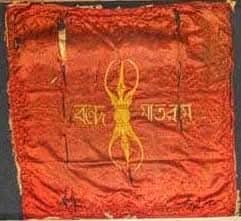
The novel’s most enduring contribution to Indian nationalism came through the song “Vande Mataram” (I bow to thee, Mother). Originally written in Bengali and Sanskrit, these powerful verses appear when the monks worship Mother India.
The opening lines instantly resonate:
Vande Mataram!
Sujalam, suphalam, malayaja shitalam,
Shasyashyamalam, Mataram!
This wasn’t just a hymn—it became a battle cry. The song personified India as a mother goddess worthy of devotion and sacrifice, making abstract patriotism deeply personal and emotional.
During the freedom struggle, “Vande Mataram” galvanized protestors who chanted it during marches and demonstrations. It became so powerful that the British banned it in certain provinces, which only increased its popularity.
C. Symbolic representation of Mother India
Bankim’s genius lay in materializing nationalism through powerful symbolism. By depicting India as a divine mother figure, he tapped into deep-rooted cultural and religious sentiments.
The three images of Mother India in the temple represented:
- Jagaddhatri (past glory): beautiful and bountiful
- Kali (present state): dark, terrible, famished
- Durga (future promise): radiant and powerful
These images tracked India’s journey from prosperity through colonization to eventual liberation. The mother metaphor made abstract national identity concrete and emotional.
The novel strategically blended Hindu imagery with patriotic fervor, creating a nationalism rooted in cultural revival. For many Indians, fighting for freedom became a sacred duty—not just political resistance but spiritual obligation.
This powerful metaphor worked because it connected political struggle to existing religious devotion, making nationalism accessible to ordinary Indians.
D. British reception and censorship attempts
The British authorities quickly recognized “Anandamath” as dangerous to colonial rule. Its revolutionary message glorifying armed resistance against foreign oppressors directly challenged British authority.
Colonial officials labeled it seditious literature. They were particularly alarmed by passages describing the Santans’ military victories against British forces, fearing these might inspire real insurrections.
After the partition of Bengal in 1905, when “Vande Mataram” became the anthem of protest, the government intensified censorship. The novel was:
- Banned from government libraries
- Removed from school curricula
- Heavily edited in new editions
Ironically, these censorship attempts only increased the novel’s mystique and circulation. Underground copies spread through nationalist networks, and public readings became acts of defiance.
E. Translation and spread across linguistic barriers
“Anandamath” transcended regional boundaries through translations. Initially written in Bengali, it gradually appeared in major Indian languages:
- Hindi (1900s)
- Marathi (1910s)
- Tamil (1920s)
- Malayalam (1930s)
Each translation adapted the story to resonate with local cultural references while preserving its revolutionary essence.
The English translation proved particularly significant, introducing the novel to educated Indians across the subcontinent and to international audiences. This helped unite diverse linguistic communities under a shared nationalist vision.
The novel’s journey across language barriers demonstrates how literature can forge national consciousness. Before mass media, “Anandamath” connected Indians who spoke different languages but shared colonial experiences. Its characters, symbols, and especially “Vande Mataram” created a common vocabulary of resistance that transcended regional divisions.
Religious and Cultural Nationalism in Chatterjee’s Works
A. Reviving Hindu consciousness
Bankim Chandra Chatterjee wasn’t just writing novels – he was igniting a spiritual awakening. His masterpiece “Anandamath” didn’t just give India “Vande Mataram” – it rekindled Hindu pride when colonial powers were busy dismantling it.
Chatterjee portrayed Mother India as the goddess Durga, merging patriotism with religious devotion in a way Indians could deeply connect with. This wasn’t accidental. He understood that for Indians, religion wasn’t separate from daily life or political identity.
Through characters like Satyananda in “Anandamath,” Chatterjee showed spiritually-driven patriots fighting for their motherland. These weren’t just fictional heroes – they were templates for a new kind of Indian nationalist who drew strength from religious identity.
B. Reinterpreting historical narratives
The British weren’t just ruling India – they were rewriting its history. Chatterjee fought back with his pen.
In novels like “Rajsingha” and “Sitaram,” he flipped the colonial narrative by showcasing Indian resistance against foreign rule. He transformed historical defeats into moral victories and portrayed Indian rulers as complex humans rather than the barbaric despots described in colonial textbooks.
His historical fiction did something revolutionary – it gave Indians their history back. While colonial historians portrayed India as a land that had always been conquered, Chatterjee reminded his readers of periods of indigenous strength and sovereignty.
C. Bridging ancient glory with contemporary struggles
Chatterjee’s genius lay in connecting India’s past with its present. He didn’t just romanticize ancient glory – he made it relevant to colonial-era Indians.
In “Krishnakanter Will” and “Devi Chaudhurani,” he created characters who embodied traditional values while fighting modern battles. This wasn’t mere nostalgia – it was strategic. By drawing parallels between ancient resistance to foreign invaders and the contemporary struggle against British rule, he showed that resistance wasn’t new to Indian soil.
His writing suggested that nationalism wasn’t a foreign import but something encoded in Indian civilization, temporarily dormant but ready to awaken.
D. Cultural pride as resistance to colonialism
Cultural colonization was as dangerous as political domination, and Chatterjee knew it. His works became cultural weapons against the British narrative that Indians needed “civilizing.”
By celebrating Bengali customs, Hindu traditions, and Indian philosophical thought, he challenged the colonial portrayal of Indian culture as backward. His novels showcased sophisticated moral dilemmas and complex social structures that contradicted European claims of Indian inferiority.
Chatterjee’s Bengali prose itself was revolutionary – elegant and accessible, it showed that Indian languages could convey modern ideas without Western mediation. His cultural nationalism laid the groundwork for later movements that would use indigenous art, literature, and language as tools of resistance.
Intellectual Foundation for Revolutionary Thought
Inspiring freedom fighters and independence movements
Bankim Chandra Chatterjee wasn’t just a writer – he was the spark that lit the revolutionary fire across India. His novel “Anandamath” became the bible of freedom fighters, passed from hand to hand like a secret weapon. The book’s storyline about sanyasis fighting against foreign rule struck a chord with Indians suffering under colonial oppression.
What made Chatterjee’s work so powerful was his ability to blend history with fiction in a way that made revolution feel not just possible but inevitable. His characters weren’t mere fictional creations – they were blueprints for action, showing ordinary Indians how to transform into freedom fighters.
Conceptualizing the motherland as divine
Chatterjee’s stroke of genius was elevating the concept of India from just a geographical entity to a divine mother figure. His composition “Vande Mataram” (Hail to the Mother) transformed patriotism into something spiritual.
This wasn’t just clever wordplay. By portraying the motherland as a goddess, Chatterjee made fighting for India equivalent to a religious duty. Suddenly, nationalism became sacred. The British couldn’t compete with that level of devotion.
Blueprint for passive resistance
Years before Gandhi formalized non-violent resistance, Chatterjee was laying its intellectual groundwork. His writings promoted cultural reclamation and spiritual strength as weapons against colonial rule.
In “Anandamath,” the characters don’t just fight with weapons – they fight with moral conviction. This idea that Indians could resist through cultural pride and spiritual strength rather than matching British military might gave hope to millions.
Influence on subsequent nationalist leaders
Chatterjee’s fingerprints are all over Indian nationalist thought. Aurobindo Ghosh openly acknowledged his debt to Bankim’s ideas. Even Gandhi, while developing his own philosophy, built upon the foundation Chatterjee had laid.
The most tangible proof of his impact? “Vande Mataram” became the rallying cry during the partition of Bengal in 1905 and continued to inspire freedom fighters until independence in 1947. Even today, it remains India’s national song – a living testament to how one writer’s words can reshape a nation’s destiny.
Legacy in Modern Indian Nationalism
A. Continued relevance in post-independence India
Bankim Chandra Chatterjee’s influence didn’t fade after 1947—it actually strengthened. His “Vande Mataram” became more than just a song; it was elevated to the status of national song alongside Jana Gana Mana. Politicians across the spectrum invoke his name to establish nationalist credentials, while his novels continue to be required reading in schools nationwide.
What’s truly remarkable is how his ideas have survived changing political landscapes. Both right and left-wing movements claim aspects of his philosophy. His vision of a culturally unified India resonates in policy discussions about national integration, with government programs often drawing inspiration from his cultural nationalism framework.
His birth anniversary (June 27th) is still commemorated with state functions in West Bengal and beyond, showing how deeply his legacy has been woven into India’s national fabric.
B. Controversial aspects of his nationalist vision
Not everything about Bankim’s nationalism has aged well. His Hindu-centric vision of India has faced serious criticism in our secular republic. Many scholars point to his writings as problematic in how they portrayed Muslim characters and Islamic history in India.
“Anandamath” especially draws fire for its potentially divisive religious imagery. The novel’s depiction of “motherland as goddess” and its portrayal of Muslims has sparked heated debates about inclusion in India’s nationalist narrative.
Critics argue his work sometimes reinforced harmful stereotypes and binary thinking that later manifested in communal tensions. This aspect of Bankim’s legacy creates genuine discomfort in a country committed to pluralism on paper.
His economic vision, too, seems outdated in the globalized world—his romanticized agrarian ideals clash with India’s industrial and technological aspirations.
C. Integration into national symbols and ceremonies
Bankim’s fingerprints are all over India’s national iconography. “Vande Mataram” isn’t just sung at official functions—it’s woven into the very fabric of Indian civic life. From school assemblies to Parliament sessions, his words echo across the nation.
The imagery he popularized—Mother India as a goddess—appears on government publications, currency, and public monuments. Political rallies across ideologies end with “Vande Mataram” chants, though sometimes with competing interpretations of what those words represent.
His conceptualization of the nation as something sacred, deserving devotion, has profoundly shaped how Indians express patriotism. The visual representation of Bharat Mata (Mother India) that adorns countless public spaces traces directly back to his literary imagination.
Even government programs borrow terminology and concepts from his works, reflecting how completely his symbolic vocabulary has been absorbed into official nationalism.
D. Academic reassessment of his contributions
Scholarly views on Bankim have evolved dramatically. Earlier black-and-white interpretations—either uncritical adoration or dismissal as regressive—have given way to more nuanced analysis.
Recent scholarship examines how he navigated the complex terrain between tradition and modernity. Historians now place him in the broader context of colonial intellectual history, seeing his work as a creative response to Western domination rather than simple revivalism.
Postcolonial theorists have found rich material in his attempts to reimagine Indian identity under colonial rule. Feminist scholars have critically examined his portrayal of women as national symbols while questioning the gender politics in his narratives.
Digital humanities projects are making his works accessible to new generations of researchers, leading to fresh insights. What’s emerging is a more complex picture of a thinker who was both revolutionary and constrained by his historical context.
E. Influence on contemporary political discourse
Today’s political battles are still fought on terrain Bankim helped define. The question of what constitutes “authentic” Indian identity—a debate he sparked—remains intensely contested.
His language of cultural pride has been repurposed by movements across the political spectrum. Right-wing nationalism draws heavily from his cultural symbolism, while progressive movements often challenge his narrower definitions of Indian identity.
When politicians invoke “cultural nationalism” or debate the boundaries of patriotism, they’re engaging with questions Bankim first articulated. His framing of nation as mother continues to shape emotional appeals in election speeches and policy debates.
The ongoing discussions about religious minorities’ place in the national narrative often reference his works, either as inspiration or as problematic precedent. Even movements opposed to his vision must contend with the powerful national symbols he helped create.
His ability to blend cultural revival with modern political consciousness remains a template for political communication in India, demonstrating his enduring relevance in shaping how Indians talk about their nation.
Bankim Chandra Chatterjee’s profound influence on Indian nationalism remains unmatched, shaping the country’s path to independence through his literary genius. From his seminal novel “Anandamath” which gave India its national song “Vande Mataram,” to his skillful fusion of Hindu religious imagery with patriotic ideals, Chatterjee created a cultural foundation for resistance against colonial rule. His works provided both the intellectual framework and emotional resonance that revolutionary movements needed to mobilize support across diverse communities.
Conclusion
The impact of Chatterjee’s contributions extends well beyond India’s independence struggle, continuing to inform discussions about national identity in modern India. By elevating Bengali literature while simultaneously creating symbols of pan-Indian significance, he demonstrated how regional cultural pride could complement broader nationalist aspirations. Today’s understanding of Indian nationalism, with its complex interplay between religious tradition and civic values, owes much to the pioneering vision of Bankim Chandra Chatterjee, whose work reminds us that cultural revival often precedes and sustains political transformation.
