
Thank you for reading this post, don't forget to subscribe!
Introduction
Ever wondered what it feels like to love someone so much you’d build one of the world’s most stunning monuments for them? Shah Jahan’s love story did exactly that.
The Taj Mahal isn’t just another pretty building – it’s the ultimate love letter. Built by the grief-stricken Mughal emperor for his favorite wife Mumtaz Mahal after her death in 1631, this ivory-white marble mausoleum stands as history’s most extravagant memorial to lost love.
Their romance wasn’t your average royal marriage, either. Despite having multiple wives (as emperors did), Shah Jahan’s devotion to Mumtaz was legendary. She wasn’t just his queen – she was his trusted advisor, his constant companion, the mother of 14 of his children.
But there’s a darker side to this famous love story that most tourists snapping selfies at the Taj never hear about…
The Love Story
The Meeting That Changed History
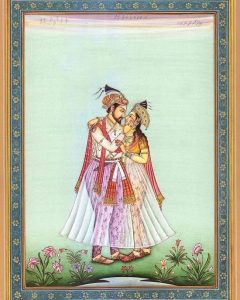
Picture this: a bustling marketplace in medieval India. The year is 1607. A young prince named Khurram, later known as Shah Jahan, catches a glimpse of a beautiful girl selling glass beads. Her name? Arjumand Banu Begum, later given the title Mumtaz Mahal, meaning “the chosen one of the palace.”
It wasn’t just her striking beauty that captivated the prince. It was her intelligence, her grace, her spirit. The moment their eyes met, something profound happened. The kind of connection most of us only read about in fairy tales actually took place.
But royal life isn’t a fairy tale. Despite falling madly in love, they couldn’t marry immediately. Politics and royal duty got in the way, and Shah Jahan had to marry another woman first. Yet his heart remained with Mumtaz.
A Marriage Like No Other
When they finally married in 1612, five years after their first meeting, Shah Jahan broke with tradition. In an era when emperors had multiple wives of equal status, he made Mumtaz his only chief wife.
Their marriage wasn’t just about romance – Mumtaz became his trusted advisor. She influenced imperial decisions, reviewed petitions, and even accompanied him on military campaigns. Unheard of for a woman in those times!
They shared 19 years together and had 14 children – a testament to their deep bond. Shah Jahan couldn’t bear to be separated from her, taking her everywhere, even to war camps.
Their love story wasn’t just powerful because of its intensity, but because it transformed an emperor, inspiring him to create the world’s most magnificent monument to love.
The Death of Mumtaz Mahal
In 1631, tragedy struck the Mughal Empire when Mumtaz Mahal died while giving birth to her 14th child in Burhanpur. Shah Jahan was devastated. The man who conquered kingdoms and commanded armies was utterly broken by the loss of his beloved wife.
Contemporary accounts describe how Shah Jahan was inconsolable, weeping for days and refusing food. His beard reportedly turned white almost overnight. The emperor who once dazzled in jewels and fine clothing now wore simple white mourning clothes.
A. Bringing Mumtaz Mahal Home
The story of Mumtaz’s final journey is heart-wrenching. Shah Jahan couldn’t bear the thought of burying his queen in Burhanpur – a temporary military base far from their home.
Six months after her death, he ordered her body exhumed. Her remains had been temporarily buried in Burhanpur’s Zainabad Garden while preparations were made for the final resting place.
Court historians recorded how her body was carefully wrapped in perfumed silks and placed in a gold casket. The procession that carried Mumtaz back to Agra was unlike anything seen before – thousands of soldiers, noblemen, and mourners accompanied the casket on its 900-kilometer journey.
The imperial caravan traveled slowly through the empire, with people lining the routes to pay respects. When they finally reached Agra, her body was placed in a temporary tomb while Shah Jahan began planning what would become history’s most magnificent monument to love – the Taj Mahal.
Plans for the Taj Mahal
The Vision Takes Shape
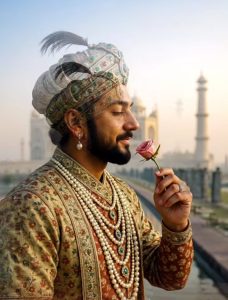
After Mumtaz Mahal’s death in 1631, Shah Jahan was consumed by grief. He didn’t just want a tomb—he wanted to create something that would make the world remember his beloved for centuries.
The emperor gathered the finest architects from across his empire and beyond. Think of it as assembling the Avengers of 17th-century architecture. These weren’t just random builders—they were visionaries who understood Shah Jahan’s pain and his desire to translate that emotion into marble.
Shah Jahan himself was deeply involved in the planning process. The initial sketches show how the design evolved from something relatively modest to the breathtaking structure we know today. The emperor spent countless nights poring over drawings, suggesting changes, and demanding nothing short of perfection.
Architectural Innovations
The plans for the Taj Mahal were revolutionary for their time. Shah Jahan insisted on perfect symmetry—a physical representation of the harmony he found in his marriage. The architects incorporated elements from Persian, Islamic, and Indian architectural styles to create something entirely new.
The blueprint included:
- A main dome reaching nearly 73 meters in height
- Four smaller domes surrounding it
- Minarets at each corner of the platform
- Gardens divided into four sections, representing the four rivers of Paradise
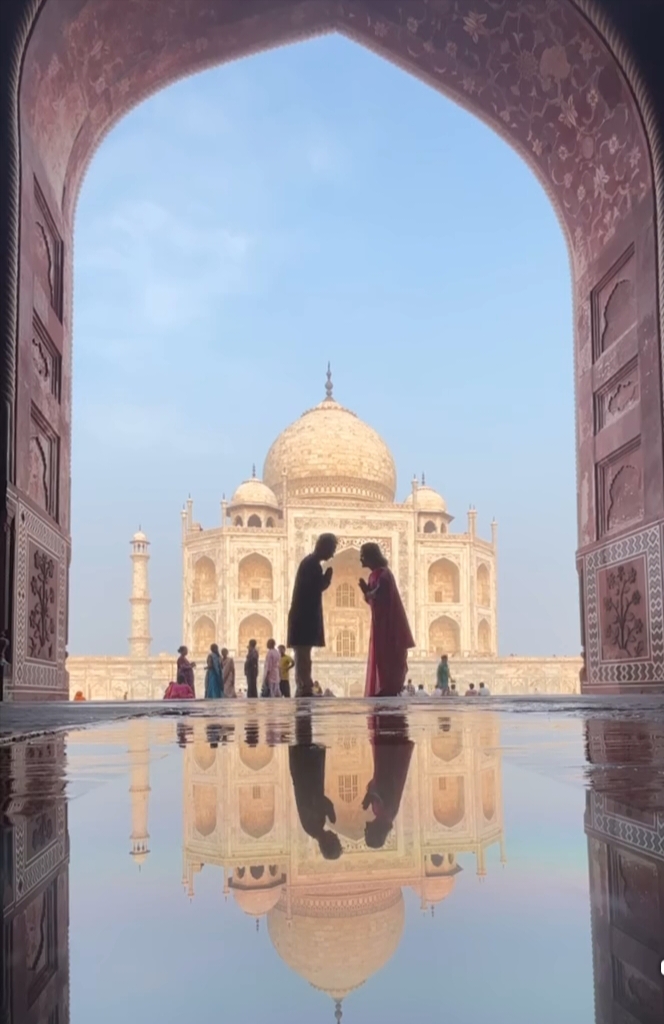
- A reflecting pool that would double the beauty through its mirror image
The planning stage alone took nearly a year. Every measurement, every angle, every decorative element was calculated to create a monument that would defy time itself—just as Shah Jahan believed his love for Mumtaz had done.
Building the Taj Mahal
A. Marble
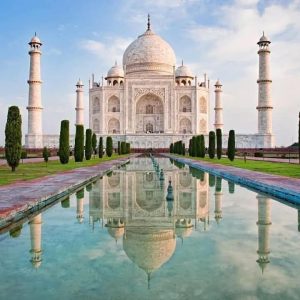
The very soul of the Taj Mahal lives in its marble. Shah Jahan didn’t settle for just any stone – he demanded the purest, most luminous white marble from Makrana, Rajasthan. This wasn’t your average building material. This marble possessed an almost magical quality: it changes appearance throughout the day.
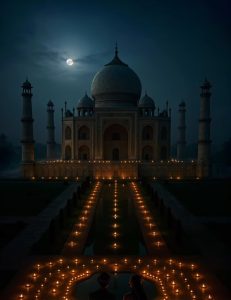
Visit at sunrise and you’ll see a pearly pink glow. By noon, it’s dazzling white against the blue sky. And if you’re lucky enough to see it under moonlight? Pure silver magic.
But here’s the really impressive part – over 20,000 workers hauled this marble from 200+ miles away using a system of elephants, oxen and specially-built wagons. They didn’t have trucks or cranes, just raw determination and ingenious engineering.
The craftsmen then polished this marble to such perfection that it reflects light like a mirror. Run your hand across it (though you shouldn’t!) and you’d feel a surface smoother than seems humanly possible to create.
B. Calligraphy and Inlaid Flowers
The marble walls aren’t just blank canvases – they’re living poetry. Islamic calligraphy swirls across the surface, passages from the Quran inlaid with precious black marble and jasper.
The lead calligrapher, Amanat Khan, was so valued by Shah Jahan that he alone was allowed to sign his work. Look closely and you’ll find his signature proudly displayed.
Then there are the flowers – oh, those incredible flowers! Over 40 different types of gems create intricate floral patterns throughout the monument. Jade, lapis lazuli, carnelian, turquoise, and dozens more stones from across Asia were cut with diamond-tipped tools and fitted so perfectly you can’t slip even a needle between them.
Each petal and leaf tells a story of artisanal perfection. The craftsmen achieved such delicate detail that some flowers appear to have texture and dimension that shouldn’t be possible in stone.
C. The Garden
The Taj isn’t just about the building – it’s the entire experience, starting with the garden. Called the Charbagh, it follows the Persian paradise garden design, dividing the world into four perfect parts with water channels representing the four rivers of Paradise.
These gardens weren’t just pretty – they were symbolic. The perfect symmetry represents balance and harmony in the universe. The reflection of the Taj in the central pool creates a visual masterpiece that doubles its beauty.
Cypress trees, symbolizing death, line the pathways. Fruit trees, representing life, were originally planted throughout. The garden creates a journey – as you walk toward the mausoleum, the Taj appears to grow and change before your eyes.
What makes this garden extraordinary is how it frames the monument. From every angle, through every season, the garden works with the marble structure to create a visual symphony that has moved visitors to tears for centuries.
Shah Jahan’s Death
The Final Years
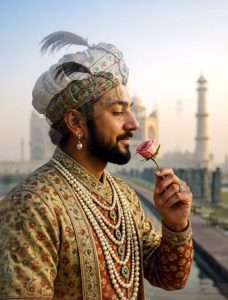
Imagine being locked up for eight long years by your own son. That’s exactly what happened to Shah Jahan. After Aurangzeb seized power in 1658, he confined his father to Agra Fort, where the aging emperor could only gaze at the Taj Mahal from a distance.
From his marble prison, Shah Jahan spent his days looking out at the monument he built for his beloved Mumtaz. The white dome shimmering across the Yamuna River was his only solace. What must have gone through his mind, seeing the tomb of his wife while unable to visit it?
The Emperor’s End
By January 1666, Shah Jahan’s health was failing fast. The once-mighty emperor who commanded vast armies and commissioned architectural wonders was bedridden and weak. He died on January 22, 1666, at the age of 74.
In death, he finally reunited with Mumtaz. His body was taken across the river and laid to rest beside her in the Taj Mahal. Their tombs lie side by side in the lower chamber of the monument—a permanent reunion after decades apart.
The greatest irony? The very son who imprisoned him would go on to rule the Mughal Empire for 49 years, longer than any other Mughal emperor.
Destruction of the Taj Mahal
A. The Taj Mahal Now
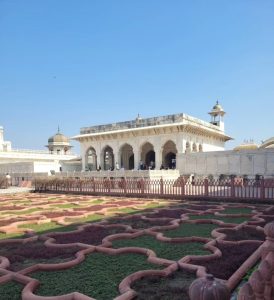
The Taj Mahal stands today as a testament to love, but it’s facing serious threats to its existence. Pollution from nearby factories and vehicles has been turning the pristine white marble a sickly yellow. Acid rain eats away at the delicate inlays and intricate carvings that Shah Jahan commissioned with such care.
The Yamuna River, once flowing majestically behind the monument, has shrunk dramatically and is heavily contaminated. In some seasons, it’s reduced to a trickle of murky water – hardly the reflecting pool that enhanced the Taj’s beauty for centuries.
Cracks have appeared in the structure too. The wooden foundations, designed to maintain moisture and flexibility, are at risk as the river dries up. Experts warn that if the foundations dry out completely, the entire monument could sink or tilt.
Tourism presents another double-edged sword. While visitors help fund preservation efforts, their footsteps wear down the marble floors, and their touch damages the walls. The Indian government has implemented visitor restrictions and special protection zones, but balancing access with preservation remains challenging.
Climate change brings new threats – more extreme weather patterns, flooding risks, and accelerated deterioration of the marble. What would Shah Jahan think, seeing his grand declaration of love facing such an uncertain future? The emperor who spent 22 years creating perfection would surely be heartbroken to see his masterpiece slowly fading away, despite our best efforts to preserve it.
Conclusion
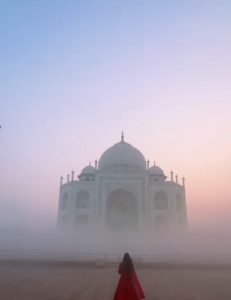
Shah Jahan and Mumtaz Mahal’s love story transcends time, immortalized in the magnificent Taj Mahal. Their devotion to each other, from their first meeting to Shah Jahan’s overwhelming grief at her death, showcases one of history’s greatest romances. The emperor’s dedication to creating a fitting memorial resulted in an architectural masterpiece that continues to awe visitors centuries later.
The Taj Mahal stands not only as a UNESCO World Heritage site but as a powerful symbol of eternal love. As we reflect on Shah Jahan’s later imprisonment by his son and his final days gazing at his beloved’s tomb, we’re reminded of love’s enduring power. Despite threats of destruction throughout history, this monument of devotion remains intact—a testament to how true love can inspire beauty that withstands the test of time.
