
Introduction : The Basic Education System in India
Structure, Evolution, and Challenges India’s education system is one of the largest and most diverse in the world, serving over 250 million students across urban and rural landscapes. Rooted in ancient traditions yet shaped by colonial legacies and modern reforms, the basic education system in India reflects a complex interplay of policy, pedagogy, and socio-economic realities.
Historical Foundations
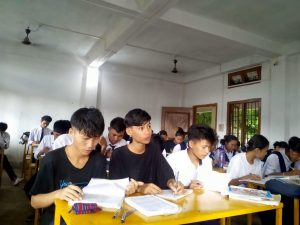
Education in India dates back to the Vedic period, where learning was imparted in gurukuls and pathshalas. Subjects ranged from philosophy and mathematics to astronomy and literature. During the medieval era, Islamic institutions like madrasas flourished. However, the colonial period marked a significant shift, introducing Western-style schooling and English as a medium of instruction. Post-independence, India adopted a constitutional mandate to provide free and compulsory education to children. The Right to Education Act (RTE), 2009, was a landmark legislation that made education a fundamental right for children aged 6 to 14.
Structure of Basic Education
India’s basic education system is organized into distinct stages:
| Level | Age Group | Grades | Description |
| Pre-primary | 3–6 years | Nursery to KG | Focuses on foundational skills, play-based learning, and early childhood care. |
| Primary | 6–10 years | Grades 1–5 | Emphasizes literacy, numeracy, and basic environmental awareness. |
| Upper Primary | 11–13 years | Grades 6–8 | Introduces subjects like science, social studies, and mathematics in depth. |
| Secondary | 14–15 years | Grades 9–10 | Prepares students for board exams; includes vocational and academic streams. |
| Higher Secondary | 16–17 years | Grades 11–12 | Specialization begins; students choose between science, commerce, or humanities |
Types of Schools
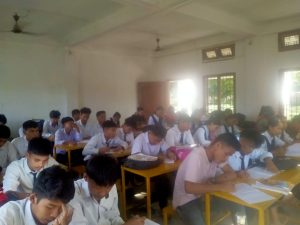
India’s education system is a mix of public and private institutions: –
Government Schools: Funded and managed by central, state, or local governments. They follow curricula set by state boards or national boards like CBSE. – Private Schools: Operated by individuals or organizations. Often affiliated with CBSE, ICSE, or international boards.
– Kendriya Vidyalayas & Navodaya Vidyalayas: Central government-run schools offering quality education, especially in rural areas.
– Madrasas and Religious Schools: Provide religious and secular education, particularly in Muslim communities. The ratio of public to private schools is approximately 10:3, with private schools often perceived as offering better infrastructure and outcomes.
Curriculum and Boards
India has multiple education boards, each with its own curriculum and assessment style: – CBSE (Central Board of Secondary Education):
-National-level board emphasizing science and mathematics.
– ICSE (Indian Certificate of Secondary Education): Offers a balanced curriculum with strong emphasis on English and humanities.
– State Boards: Each state has its own board with regionally adapted curricula.
– International Boards: IB and Cambridge boards cater to global standards, mostly in elite urban schools.
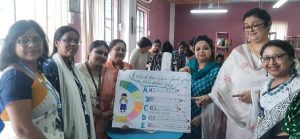
The National Education Policy (NEP) 2020 aims to overhaul curricula to focus on critical thinking, experiential learning, and multilingualism. Government Schemes and Initiatives India has launched several flagship programs to improve access and quality: –
Midday Meal Scheme: Provides free lunches to students in government schools, improving nutrition and attendance. –
Samagra Shiksha Abhiyan: Integrates various schemes to ensure inclusive and equitable education. –
Beti Bachao, Beti Padhao: Promotes girl child education and gender equality. – Digital India Campaign: Encourages digital literacy and e-learning platforms. These initiatives aim to reduce dropout rates, bridge gender gaps, and enhance learning outcomes.
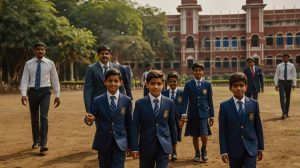
Literacy and Enrollment Statistics As per the 2011 Census: – Overall Literacy Rate: 77.7% – Male Literacy: 84.6% – Female Literacy: 70.3% – Primary Enrollment: ~95% – Secondary Enrollment: ~69% – Post-secondary Enrollment: ~25% While enrollment has improved, learning outcomes remain a concern, especially in rural and marginalized communities.
Challenges in Basic Education
Despite progress, India’s education system faces several systemic challenges:
- Quality of Education Many schools lack trained teachers, adequate infrastructure, and modern teaching methods. Rote learning dominates, limiting creativity and problem-solving skills.
- Dropout Rates Economic hardship, gender bias, and lack of accessibility contribute to high dropout rates, especially among girls and rural children.
- Teacher Shortage and Training India faces a shortage of qualified teachers. Continuous professional development is often neglected, affecting classroom effectiveness.
- Digital Divide While urban schools embrace technology, rural areas struggle with internet access and digital literacy, widening the education gap.
- Inclusive Education Children with disabilities, tribal communities, and linguistic minorities often face barriers to quality education. .
Reforms and the NEP 2020
The National Education Policy 2020 is a transformative blueprint aiming to revamp the entire education ecosystem: – 5+3+3+4 Structure: Replaces the 10+2 system with a more flexible model aligned with cognitive development stages.
– Multilingualism: Encourages mother tongue instruction in early years.
– Vocational Training: Introduces skill-based learning from Grade 6.
– Assessment Reforms: Focuses on competency-based evaluations rather than rote memorization.
– Teacher Empowerment: Emphasizes training, autonomy, and merit-based recruitment. NEP 2020 envisions a holistic, learner-centric education system that prepares students for the 21st century.
Conclusion
India’s basic education system is at a pivotal juncture. With ambitious reforms, increased investment, and a growing awareness of equity and quality, the country has the potential to transform its educational landscape. However, success hinges on effective implementation, community involvement, and a shift from quantity to quality.
Education in India is not just a policy issue—it’s a societal imperative. As the nation strides toward becoming a global knowledge hub, empowering every child with meaningful learning is the cornerstone of inclusive growth.
