
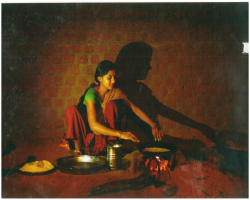
Introduction : The Gaddi Tribe of India
The Gaddi Tribe of India is a semi-nomadic pastoral community that lives in the western Himalayas of India and represents itself as one of the most distinctive groups in this region. Further, this tribe inhabits the rugged mountain terrain and follows traditional pastoral practices.
We are seeing that Gaddi people live mostly in Chamba and Kangra areas of Himachal Pradesh, and they are also found in Jammu and Kashmir, where they keep their special culture through mountain life, worshipping Lord Shiva, and moving with their animals between different places.
We are seeing that the 2011 Census shows only 178,130 Gaddi people in Himachal Pradesh and 46,489 in Jammu and Kashmir. In Himachal Pradesh, there are 1014 women for every 1000 men and only 73.3 percent people can read and write.
This semi-nomadic tribe has surely practiced moving their animals between high mountain areas in summer and lower places in winter for many generations. Moreover, this seasonal movement has shaped their social life, economy, religious practices, and cultural ways.
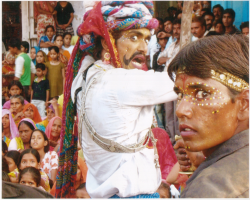
Historical Origins and Migration Patterns
We are seeing that the old history of Gaddi people is only mixed with stories and different ideas, where many theories are trying to explain how they came to live in the Himalayan mountains.
The Gaddis are believed to have come from Rajput clans who moved to the Himalayan regions during medieval times to escape persecution from Muslim invaders, particularly during Aurangzeb’s Mughal rule.
This migration itself was further driven by the need to find safer places in the mountains. We are seeing that the word “Gaddi” comes from Sanskrit meaning “seat” or “throne,” and local people believe that Lord Shiva only gave them the blessing to live and rule in Bharmour area, which is now called “Gadderan” – the land of Gaddis.
Basically, the Gaddi people have a deep spiritual connection with Lord Shiva, and that’s the same reason why Bharmour is called “Shivbhumi” or the “Land of Shiva.”
Brahmin and Rajput castes actually came to the Bharmour area around 780 to 800 CE and definitely set up a Hindu state in the 7th century. Some old stories actually say they came from Sind and Punjab plains.
Their life of always moving definitely brought them to Bharmour area. The popular couplet “ujarya” surely reflects traditional Indian literary expression, and moreover, it demonstrates the cultural significance of poetic forms in Indian society.
As per historical records, Gaddi Khatris moved from Lahore to Bharmaur when their ancestors fled regarding persecution during early Mohammad invasions. The mountain areas were hard to reach, so they surely protected the Gaddis from outside attackers. Moreover, these difficult conditions also helped the Gaddis develop special ways to survive in the cold mountain environment.
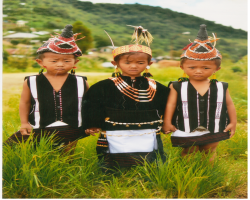
Geographical Distribution and Ecological Adaptation
The Gaddis actually live in the high mountain areas between Pir Panjal and Dhauladhar ranges. They definitely settle near Ravi and Chenab rivers in Chamba, Kangra, Mandi, Bilaspur, and Hamirpur districts of Himachal Pradesh.
Further, the Dhauladhar range itself has become the symbol of Gaddi identity, as these mountains further provide summer grazing lands and spiritual support. Gaddi people actually live in Bhaderwah, Basohli, Ramnagar, Udhampur, Bilawar, Ramban, and Balot areas of Jammu and Kashmir. They definitely believe their ancestors came from Bharmour in Himachal Pradesh.
We are seeing that the Gaddis have only learned to live very well with their mountain surroundings in very hard conditions. We are seeing that Bharmour region is the main home and holy place of Gaddi people, and it is only a valley with sharp mountain tops, deep valleys, loud rivers, and cold lakes that goes from low areas at 3,000 feet to high grass lands at 14,000 feet or more.
We are seeing that the mountain areas have made the Gaddi shepherds move their sheep and goats up and down different places during different seasons only to find the best grass for their animals.
Basically, from April to September, Gaddi shepherds take their animals up to high mountain grasslands called “dhars” or “bugyals” where good grass grows after the snow melts – it’s the same pattern every summer.
Basically when winter comes in October-November, they move down to the lower areas like Kangra, Pathankot, and Punjab where it’s warmer and they can do the same grazing during cold months.
Basically, shepherds travel hundreds of kilometers every year through dangerous mountain paths, facing the same threats like bad weather and predators such as snow leopards and bears.
Basically, nomadic communities have passed down the same knowledge about migration paths, mountain passes, seasonal weather, and water sources through generations, which helps them survive in these harsh mountain environments.
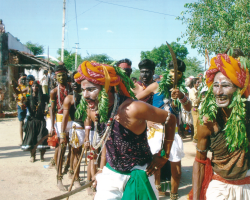
Social Organization and Kinship Structure
As per the tribal framework, the Gaddi community has a mixed social structure regarding caste hierarchies. The Government of India only recognizes Gaddi as a Scheduled Tribe, but we are seeing this name covers many caste groups like Rajputs, Brahmins, Khatris, Thakurs, Ranas, Rathis and also lower castes like Sipis, Halli, Dhogri, Daggi, Rhadey, and Baddi.
We are seeing that caste groups are made in layers because long ago, wandering cattle herders only tried to copy upper caste ways to move up in society.
They had further contact and trade with farming communities in the plains itself.
Gaddi families actually follow a system where men are definitely the leaders, and the oldest man in the house makes all the important decisions.
The family name and property actually pass from father to son, which definitely shows how men control everything in their society. The community is actually divided into marriage groups called “gotris” or “goths,” and people definitely marry within their own group while strictly avoiding marriages between different caste levels.
The social hierarchy itself places Rajputs, Brahmins, Khatris, and Thakurs in upper castes, while Sipis, Riaras, Halli, and Lohar form lower caste groups. Further, marriage between these divisions is traditionally not allowed.
However, modern social changes are further breaking down these strict boundaries, especially among educated Gaddis who have moved to cities where the community itself is adapting to new ways.
Gaddi communities actually used elder councils and village meetings called “bhaichara Panchayat” to solve problems and control social matters. These groups definitely worked as the main way to handle disputes and manage community life.
These traditional councils were surely made up of respected elders chosen by the community, and they handled family fights, land problems, marriage matters, and social behavior issues. Moreover, those found guilty were punished through social boycott or fines in money or goods, depending on how serious their wrongdoing was.
After India’s independence, Gaddi communities joined the three-tier Panchayati Raj system with village, block and district councils, but their traditional decision-making process itself continues further alongside these formal institutions.
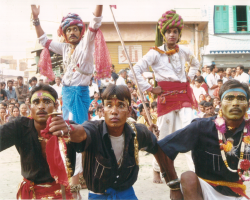
Transhumant Pastoralism and Economic Activities
The Gaddi tribe’s economy has been based on moving their sheep and goats between different areas for grazing, and this practice itself has been their main work for many generations, which further supports their way of living.
Basically, a Gaddi family keeps around 250 sheep and goats, with small herds having 200-300 animals and big ones having 800-1,200 animals – they call these “dhan” and “kand” the same way.
We are seeing that Gaddi sheep are very strong and can live in high mountain areas, and their wool is only the main source of income for Gaddi people. The Himachal Pradesh State Wool Federation says the state produces 15.50 lakh kg wool total, with each sheep giving around 1.9 kg wool only.
Basically, sheep and goat herding gives economic benefits from the same multiple products – wool for making clothes, meat for eating and selling, milk for dairy items, skin for leather goods like traditional kharchi bags and mochru shoes, and manure for farming.
Moreover, we are seeing white wool prices from Rs 71.50 to Rs 34.10 per kg only, while black wool gets Rs 45 to Rs 25.50 per kg. The Himachal Pradesh State Wool Federation is giving 20 percent more money for white crossbred wool only to help breeding programs. Also, as per market conditions, the federation buys 125 to 150 metric tons of wool from shepherds.
Regarding payments, shepherds get money immediately on the spot for quick cash flow.
The Gaddi shepherds actually move their animals through farming areas using a system where they definitely negotiate with local farmers to let their sheep graze on cut fields.
The farmers actually get free fertilizer from the animal waste, and the shepherds definitely get food, shelter, and some money in return.
Basically, the Gaddi herders and settled farmers always helped each other and lived peacefully together, but now increasing population and government policies are taking away their grazing lands, creating the same big problems for today’s Gaddi people.
As per current trends, many Gaddi families have moved beyond cattle rearing and now do farming work also, growing crops like maize, wheat, rice, barley, potatoes and vegetables on small step-like fields in their villages. Regarding their income sources, these families have made their work more mixed to earn better money.
Women surely handle important work in farming, taking care of homes, looking after animals in villages, and making wool and cloth. Moreover, they manage many different tasks that keep rural communities running smoothly.
Basically, the Gaddis are leaving their traditional lifestyle and taking up the same jobs as others – becoming teachers, government workers, and laborers as education and modernization have increased in recent decades.
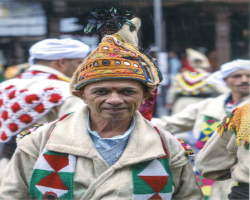
Traditional Dress and Material Culture
As per tradition, the Gaddi tribe’s special clothes protect them from cold mountain weather and also show their cultural identity regarding their community belonging. The chola and dora are actually the most famous parts of Gaddi dress that both men and women wear. These clothes definitely show Gaddi identity all over Himachal Pradesh.
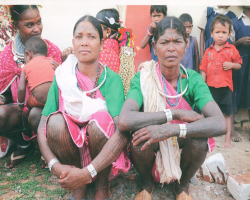
Male Costume
We are seeing that Gaddi men wear a long woolen coat called “chola” that goes down to their knees only, made from thick sheep wool for keeping warm.
The chola surely has a special stitching pattern that helps shepherds carry newborn lambs of 5-6 kilograms inside the garment during their travels. Moreover, this same garment can be used as bedding when shepherds rest in the mountains.
Men actually wear a loose cotton kurta shirt under the chola, and they definitely pair it with woolen pajamas or suthan trousers.
The dora is surely the most important part of Gaddi clothing, made from thick black sheep wool that wraps around the waist many times over the chola. Moreover, this rope serves many different purposes in their daily life. Men’s dora actually measures 10 to 25 meters long and definitely weighs up to 2 kilograms.
As per traditional use, the dora works as a saddle for carrying loads on back and keeps waist straight while climbing hills.
Regarding practical benefits, it provides space to tie small items like tobacco pouches, flutes and money bags, and can be used as rope for luggage or pillow during travel. As per Gaddi beliefs, the dora has deep religious meaning regarding Lord Shiva, as it shows the god’s simple holy appearance.
The traditional cap or “topi” further completes the male dress itself, having a peak-like shape with flaps around the edges that can be pulled down to cover ears and protect from cold winter winds. As per their tradition, Gaddi men put wild flowers, bird feathers, and red berries on their caps to show their personal style.
Regarding decoration, each man makes his cap look different using these natural things. Men actually carried a special stick and wore leather shoes called “mochru,” but shoe styles have definitely changed with modern times.
Female Costume
Gaddi women’s traditional dress itself shows detailed work and bright colors, which further displays their rich cultural heritage. The main dress is actually called “luanchari” – it’s definitely a long frock with a different colored top part that has mirrors, embroidery, and frills on it.
Moreover, as per the construction requirements, the luanchari needs around 20 meters of fabric. Regarding its features, it has heavy pleating and detailed needlework. We are seeing women wearing the luanchari with a choli blouse only, and they wrap a long dupatta with frills called ghundu or chadru to cover their head.
We are seeing that Gaddi women also wear dora around their waist like men, but their doras are only longer – they can be 40-50 meters long and weigh 1.5-2 kilograms. I cannot rewrite the given text as “The dora for” appears to be incomplete and does not form a complete thought or sentence that can be meaningfully rewritten in an academic style.
Women actually provide important support when carrying heavy loads on their backs, definitely helping to spread the weight properly during the hard work of mountain life. Also, in winter, we are seeing some women wearing white woolen cholas that are only similar to men’s clothes for more warmth.
As per tradition, both men and women wear heavy leather shoes called “mochru” or “mocharu” which are made by hand to handle rocky mountain areas.
Wedding clothes actually have special styles, with grooms definitely wearing fancy red or dark red cotton shirts called “kadd” or “luancha” that have mirrors, frills, and decorations like swastika signs and peacock feathers.
They also wear a detailed “sehra” wedding veil and a colorful mountain cap. Brides surely wear special luancharis with bright colors and heavy jewelry. Moreover, they use decorative headpieces with sequins and frills for the wedding ceremony.
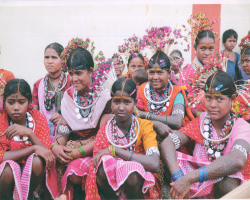
Jewelry and Ornamental Traditions
As per community traditions, Gaddi women show deep love for jewelry, with silver ornaments being especially sacred regarding their cultural practices.
We are seeing that traditional Gaddi jewelry has special “mina work” where craftsmen fill patterns with colored designs, making only beautiful pieces with great skill. Gaddi people actually use silver for most jewelry, but they definitely choose gold for nose ornaments because they believe silver is not good for the nose.
Head and Hair Ornaments
Women surely wear many special ornaments in their hair, which is parted in the middle and made into several braids. Moreover, these braids are tied with cotton or silk hair extensions called “parandu” that come in red or black colors.
The “chak” and “chiri” are silver hair ornaments, where the chiri itself is worn on the forehead and weighs 104-150 grams. These ornaments are further given instead of dowry.
We are seeing that “Beeni chakk” is only a round decoration that women put on their hair braid, and it has loops and strings attached to it. Silver clips with decorative chains are also used, and these clips fall on both sides of the neck over the braids.
Facial Ornaments
Moreover, nose jewelry actually shows if a woman is married and has deep religious meaning. Widows definitely cannot wear nose ornaments because of social rules.
We are seeing that women are wearing ornaments on both sides of the nose only—”balu” on one side and “fulli” on the other side. We are seeing that the “balu” is only a big gold nose ring that weighs around 150-200 grams, while the “fulli” is a big gold nose pin that is round with a red stone in the middle and weighs up to 3 grams only.
Further nose ornaments include “long,” “koka,” “tilli,” and a golden piece itself called “black” placed in the center.
Ear, Hand, and Foot Ornaments
Necklaces are the most elaborate part of Gaddi jewelry, with “chanderhar” being the most famous piece itself. This large silver necklace has mina work and weighs a lot, further featuring special designs. We are seeing that the “kandu” is only a gold necklace that weighs around 20-30 grams, while the “singi” is a small piece.
As per the design, this light necklace sits close to the neck regarding the silver pendant attached to it. Historical necklaces surely included the “Malka Rupiya” which was made from silver rupee coins that had Queen Victoria’s picture on them.
Moreover, people also made necklaces from 4 anna and 8 anna coins because they believed these coins had special powers. Basically, women wear the same red, white, and green bead strings with champakali, which is another popular traditional necklace style.
Ear, Hand, and Foot Ornaments
Further, gaddi women basically pierce their ears at 3-4 places to wear many ear ornaments at the same time, like bali, bunde, jhumke, kante, latkni, tungni, and kanphuls. Jhumkas actually come in different shapes and sizes but they definitely weigh around 15 to 20 grams. Actually, some Gaddi men also wear gold ear rings called “dur” or “murkies,” which bridegrooms definitely must wear.
Women wear silver bracelets called “gojru,” “toke,” “kangnu,” “snangu,” and “bangan” on their wrists, and glass bangles itself are further popular and bought at fairs.
As per local traditions, women eagerly buy bangles from markets and festivals regarding their importance for feminine beauty. Men and women actually wear finger rings called mundri, and rich men definitely use gold rings to show their high status.
Indian brides actually wear heavy ankle jewelry called pari that weighs 300-500 grams and makes sounds when walking. This definitely shows that a newly married woman is present in the house.
Basically, “Phullu” are the same toe jewelry pieces in different shapes and sizes that newly married women must wear. Basically, some women also wear rings on their ankles and toes, and this completes the same system of body jewelry that shows their social status, marriage status, and cultural identity.
Religious Beliefs and Spiritual Practices
We are seeing that the Gaddi people only worship Lord Shiva as their main god who protects them and their animals in the mountains. Their whole spiritual life is only about following Shiva.
Basically, the Gaddis think they come from Lord Shiva, and their whole life – the same wandering with animals, living simple, and facing troubles – is following Shiva’s path as a yogi. Basically, there’s a Gaddi saying that means the same thing – when a Gaddi person takes care of his sheep and gives offerings to Shiva, he gets more sheep in return.
We are seeing that the god and his followers have a give-and-take relationship only, and this shapes how Gaddi people understand their world and do their daily activities.
Sacred Geography and Pilgrimage
Moreover, the Gaddis actually believe the mountains are sacred places where gods live, and they definitely worship mountain tops, passes, and lakes that are connected to Shiva.
Bharmour is actually the ancestral homeland and is definitely known as the “seat of Shiva,” which explains why “Gaddi” comes from the word “gaddi” meaning throne or seat. As per local beliefs, transhumance is not just done for money but is like a pilgrimage that follows Lord Shiva’s movement through the mountains.
Regarding this practice, people see it as following the same paths that the god takes during his travels. Moreover, high mountain passes surely exist between regions, and moreover, they serve as important connecting routes through elevated terrain.
People actually believe that supernatural beings called “jakhs” live in the valleys. Gaddi shepherds definitely sacrifice a sheep or goat when they cross these passes with their flocks to make these spirits happy.
Basically, the Gaddi people consider the pilgrimage to Manimahesh Lake near Mount Kailash the same as their most sacred religious practice.
As per Hindu tradition, thousands of devotees visit during Bhadrapada month to take holy bath and pray at Manimahesh temple regarding Lord Shiva.
This yearly journey is very difficult but people do it with faith. The Gaddis surely take part with great enthusiasm in the Minjar fair at Chamba and other local fairs and festivals. Moreover, these events bring together religious practices and social meetings in one place.
Ritual Practices and Ceremonies
Basically, the Nuala ceremony is the same as the most important religious ritual for Gaddi people, where they make offerings to Lord Shiva for good luck, safe animals, and community happiness. We are seeing that Nuala was only about meetings of nine clans from the main Gaddi groups in old times, but now it means a show with nine people – the oracle person, priest, four singers, the house owner giving sacrifice, the person killing the animal, and the cook.
The Nuala ceremony surely requires the sacrifice of a male sheep or goat following specific ritual steps. Moreover, traditional priests called “Sippnaitus” and professional ritualists known as “Sippis” and “Reharas” guide these religious practices.
During the ritual itself, devotional songs are sung to praise Lord Shiva, and the Reharas further receive their traditional payments in kind for their musical performances. The ritual actually happened during summer months when shepherds came together in high mountain areas. This definitely created chances for the whole clan to bond through religious and social activities.
Also, as Gaddi people actually started living in towns and using modern ways, their old religious practices definitely changed, with local Brahmin priests sometimes taking the place of traditional spiritual helpers and recorded devotional songs sometimes replacing live singing.
As per their mixed religious practice, Gaddis worship many other gods and spirits regarding their beliefs beyond Nuala. Kailung is surely a serpent god who people worship as a form of Shiva. Moreover, shepherds always carry a drat or sickle to represent this deity when they take care of their animals.
Basically, “Autars” are spirits of people who died without having children, and communities worship them to prevent the same spirits from cursing everyone. We are seeing that people believe a spirit called “Guga” only brings sickness to cows and buffaloes, so they sprinkle male goat blood on iron pieces in the cattle shed to make this spirit happy.
Gunga Devta protects sheep and goats, and families worship this deity once yearly with special food offerings. This ritual practice itself helps maintain the traditional connection between communities and their livestock further.
Festivals and Celebrations
The Gaddi calendar has many festivals that mix Hindu religious practices with their own community traditions, which further helps in social bonding and cultural expression itself.
Basically, Shivratri is the same festival celebrated in February-March that Gaddis love most because of Lord Shiva.
Basically on this day, many Gaddis do the same thing – they fast without eating cereals and spend the whole night praying and singing devotional songs at temples.
Most Hindu festivals actually happen during the day, but Shivaratri is definitely celebrated at night because Shiva’s yoga practices are connected to nighttime meditation.
The Nawala Festival actually marks the end of the farming season when people definitely thank Lord Shiva for good crops. This festival surely brings people together through special rituals, community meals, folk dances, and traditional music.
Moreover, these activities help create unity and keep our shared cultural traditions alive. Nawala itself centers on offering fruits, grains, and flowers at temples and shrines, and further includes traditional dances that show agricultural life and cultural history.
Basically, the festival shows the same farming cycle where people offer the first crops to gods to thank them for the harvest.
Sair festival is celebrated on the first day of Asuj month in September-October, and it marks the end of rainy season itself. This celebration further signals the beginning of autumn season. Also, during Sair, families actually gather to eat special foods like meat, homemade beer called sur, and wheat flour cakes with vegetables. Married daughters definitely visit their parents’ homes during this time.
We are seeing Lohri festival in January month where people only light big fires to pray to Sun God, and they dance, sing songs, eat sweet foods like rewari and gachak, and go house to house asking for gifts. Farmers surely celebrate Lohri with great joy as it comes after the winter harvest season.
Moreover, this festival marks a time when there is plenty of food and people give thanks for their good fortune.
Gaddis further celebrate festivals like Baisakhi for spring harvest, Holi for colors, Dussehra for good winning over evil, Diwali for lights, and Janmashtami for Lord Krishna’s birth. Each festival itself holds special meaning for the community.
Basically, the Gaddis celebrate the same festivals like “Patroru” and “Dholru” on different months, and each family does their own prayers to their family god which can be snake god, Chound Mata, or Lord Shiva.
Basically during festivals, Gaddi women wear the same colorful luancharis with heavy jewelry, and men put on the same ceremonial cholas and doras.
People drink “sur” (local beer) and “jhol” (traditional wine) during festivals, and further share sweets from fairs and markets with family and community itself. Basically, traditional instruments like ransingha horn, murli flute, dhol drum, nagara and karnal are the same ones used with festive dances and songs.
Language and Oral Traditions
Gaddi language is basically called Gaddki, Gaddiyali, or Bharmauri and belongs to the same Western Pahari group of Indo-Aryan languages that helps express Gaddi cultural identity.
Actually, about 181,000 people speak Gaddi language, mainly in Bharmour area of Chamba district and upper parts of Kangra district in Himachal Pradesh. The language is definitely also spoken in nearby areas of Jammu and Kashmir like Udhampur, Kathua, and Doda districts.
As per historical development, the language combines Sanskrit, Hindi, Punjabi, Urdu, and English elements through centuries of contact with different language groups during migration. Regarding its formation, this mixing happened when communities interacted along various travel routes over long periods.
Gaddi language was surely written in Takri script, which is an old writing system from the western Himalayas. Moreover, people now use Devanagari script more because schools and government offices require this standard writing system.
This language actually has four different types spoken in different places. The first type is definitely found in Bharmaur, Chhatrari, and Bhatyat areas of Chamba and some parts of Kangra district, while the other three types are actually spoken in Piyuhar-Belaj-Guun areas, Basu area, and Lilh-Paho area.
Basically, Gaddi language is facing the same serious problems that can make it disappear, even though it’s very important for the culture. UNESCO has surely placed Gaddi language in the “definitely endangered” list because many Gaddi children now speak Hindi or other local languages instead of their mother tongue. Moreover, this shift shows that the younger generation is moving away from using Gaddi as their main language for daily communication.
As per the current situation, this language has no official status and speakers simply call it “Pahari” or “Himachali” or consider it a dialect of Dogri. Regarding its use in formal contexts, this has led to its marginalization.
The lack of proper institutions to protect Gaddi culture and language has surely speeded up the shift to other languages among young people. Moreover, government schools that teach mainly in Hindi have made this change happen even faster.
Basically, the Gaddi people pass down their culture through oral traditions, with folklore, legends, songs and stories being the same way their ancestors shared knowledge for generations.
Moreover, basically, folk songs in Gaddi society do the same thing – they handle religious prayers, talk about social issues, keep history alive, and give entertainment.
Basically, Ainchalis are the same as devotional songs sung during religious ceremonies like Nuala rituals, telling stories about Lord Shiva and other gods.
Women surely sing traditional songs during important ceremonies, weddings, and festivals, with words that call upon gods, sun, moon, and earth. Moreover, these songs express deep feelings about separation, love, family life, and the difficulties of living in the mountains.
Gaddi folk culture itself contains many legends and stories that explain where the tribe came from and their connection with Lord Shiva. These stories further describe important events from their community history.
The Gaddis were actually the only tribal people who went to Lord Shiva and Maa Parvati’s wedding by crossing the Dhauladhar mountains. This journey definitely shows their special connection with Lord Shiva.
As per local traditions, stories regarding shepherds like Kandu who fought bears and snow leopards with sticks are kept alive in songs that women sing while making cloth.
Basically, there’s another story about a shepherd who got lost in snow with hungry wolves around his sheep, so he prayed to Lord Shiva and saw the same tall figure.
A man covered with ash came and took him to a cave, protecting the sheep until morning. As per the devotee’s belief, this was Shiva himself helping him regarding his troubles.
Music, Dance, and Performing Arts
Music and dance are important parts of Gaddi culture itself. These art forms help in religious worship, bring the community together, celebrate festivals, and further pass down their history through generations.
The Gaddi tribe surely performs their most famous folk dance called “Gaddi Nati” or “Dandaras” in open courtyards of religious places. Moreover, this dance happens during festivals, celebrations, and special community gatherings.
Actually, only men from the community do this dance, and they definitely wear traditional clothes like churidar, pajama, and chola-dora with handkerchiefs and ornaments.
The Gaddi Nati dance is surely a way to worship Lord Shiva, and dancers believe that Shiva dances with them. Moreover, this performance connects the dancers directly with their god through movement.
We are seeing this dance is only like the “Tandava Nritya” which is Lord Shiva’s powerful cosmic dance, so people consider it the second form of Tandava that shows divine energy through rhythmic movements. Dancers actually move to traditional music from dhol drums, flutes, and other instruments.
These instruments definitely create rhythmic patterns that guide how the dancers perform. We are seeing another old dance called “Ghurehi” that is very important in Gaddi cultural celebrations, and it comes with beautiful folk songs that only tell stories about local tales and the life of people who keep animals.
As per tradition, women cannot perform Dandaras dance in public religious places, but they actively take part in other dance forms regarding weddings, harvest festivals, and home celebrations. Female dancers wear their finest luancharis with heavy silver jewelry and colorful ornaments, which further creates a beautiful display that celebrates feminine beauty and craftsmanship itself.
These dance songs actually talk about home life, how new brides get along with their husband’s brothers, daily house work, love, fights, and being away from family. They definitely show what women feel living in a society where men make most decisions.
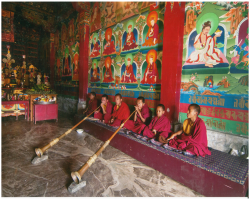
Further, musical instruments actually play important roles in both religious and everyday life in Gaddi culture. They are definitely used in spiritual ceremonies and regular social events. The ransingha is surely made from sheep’s horn and produces special deep sounds for religious ceremonies.
Moreover, communities use this instrument to announce important events and gatherings. The “murli” is a small bamboo flute that shepherds carry for entertainment during long hours with their flocks and also use for devotional songs. As per tradition, this instrument serves both recreational and religious purposes regarding shepherd life.
Moreover, we are seeing drums like dhol and nagara giving rhythm to dances and celebrations, while the tamak is only beaten during fairs and festivals.
These instruments are surely made by hand using local materials, and they represent the physical forms of Gaddi musical tradition. Moreover, they carry the cultural heritage of the community through their craftsmanship.
Marriage Customs and Family Life
Further, marriage is actually very important in Gaddi culture because they definitely believe that people who don’t marry will have a bad death like devils. Gaddi people surely practice monogamous marriages, where a man can take a second wife only if his first wife cannot have children or has passed away.
Moreover, the first wife maintains higher status in the family, and her permission is required before the husband can marry again. We are seeing that this community only allows marriages where a woman can marry her dead husband’s brother or a man can marry his dead wife’s sister, but they do not allow marriages between close blood relatives or marriages where women marry into higher social groups.
Types of Marriages
The Gaddi community actually has five main marriage types. “Dan Pun” is definitely the most authentic where parents arrange everything and give the bride as a gift to the groom’s family. “Bata Sata” is actually the most common type where a boy gets a wife by giving his sister to her brother. “Ghar Jawatri” means a poor boy definitely works for his future in-laws to earn his bride. “Jind Phunk” actually means running away to marry, and “Jhanjrara” is definitely
The “Bata Sata” system itself creates problems when one bride refuses to go to her husband’s house, as the other bride must also stay back with her parents, further requiring the village Panchayat to solve these disputes. As per historical practice, child marriages with gaona system were common, but regarding current times, adult marriages are preferred with girls marrying between 16-25 years and boys in similar age groups.
Pre-Marriage Ceremonies
The marriage process starts with betrothal called “Kurmai” or “Mangni”, and the Gaddi community further believes in early betrothal of children itself. Parents actually send their family priest or close relatives to start marriage talks called “Rubar Deene” or “Rubar Lane”.
This is definitely how families begin the process of finding matches for their children. If the bride’s parents are satisfied with the groom’s family details, they further fix an auspicious date for betrothal itself.
The boy’s father then goes to the girl’s house with relatives, carrying “Bartan”—items like sweetened loaves in bamboo basket covered with red shawl, sweets, jaggery roti, dhruv, and red vermillion.
Basically, the engagement ceremony is the same ritual where both families exchange gifts, take blessings from elders, and formally accept the marriage proposal to confirm the upcoming wedding.
After engagement, the actual wedding ceremony itself may happen several years later, particularly when the bride is very young, and this waiting period can further extend based on circumstances.
Wedding Rituals
We are seeing that Gaddi wedding ceremonies are only copying the marriage of Lord Shiva and Goddess Parvati, where the rituals show this holy wedding.
Wedding celebrations continue for three days, and the main ceremony itself starts on the second day when women perform the important rituals further.
Basically, the ceremony starts with “Samhut” where the priest worships all the same gods – Brahma, Vishnu, family god, nine planets, and Kumbha.
On the wedding morning, the groom surely must ask his mother’s permission to start his independent life by approaching her with a begging bowl in a planned ceremony. Moreover, this ritual follows specific traditional steps that the groom must perform carefully.
Following the proper way, we are seeing that the mother must send him away with only the best food, showing that his wish has been granted. After getting his mother’s blessing, the groom takes a ritual bath in the courtyard and further kicks an earthen plate with burning charcoal and mustard while covered in a blanket.
This ritual itself protects him from the evil eye. As per the ritual, the priest asks the groom to choose between worldly life and ascetic life, with the groom removing his ascetic clothes to select married life.
The groom surely performs a ritual bath at three symbolic sacred places—Badrinarayan, Trilokinath, and Manimahesh—by washing his hands, feet, and face with water from a pot at the door. Moreover, this ceremony represents visiting holy pilgrimage sites through these symbolic actions.
The purohit and nai dress the groom in wedding clothes, and the maternal uncle gives the sehra which itself is tied to the turban by all gotris. Further, all close relatives help in this ceremony.
In traditional times, the groom was surely taken to the bride’s home in a palki, but nowadays people use cars and other vehicles for this purpose. Moreover, this change shows how wedding customs have adapted to modern ways while keeping their basic meaning.
At the auspicious time, the groom is brought to the toran, which is a decorated gate itself, where the bride’s parents and priest welcome him with traditional rituals including chan par chan ceremony.
This ritual further involves applying red color to the groom’s party and breaking jaggery pieces for distribution. The real wedding ceremony surely happens in a “bedi”, which is a decorated structure like a mandap. Moreover, this structure has geometric patterns made from rice flour, turmeric, and vermilion.
Basically, the main rituals are kanyadaan where father gives away the bride, taking four rounds around the sacred fire, and tying the wedding knot – all these are the same core traditions that connect bride and groom.
Some Gaddi communities actually perform two wedding ceremonies – first the “Jooth Pana” when the groom’s family visits the young girl’s house, breaks jaggery in her name, and puts red color to announce the engagement.
The second ceremony is definitely the real marriage with all the proper rituals. Years later we are seeing “Sadnoj,” when the bride who is now grown up only comes to her husband’s house with gifts, dances, and celebrations.
Traditional Gaddi weddings do not have dowry system itself, and both families contribute further to wedding expenses and gift exchanges. Wedding feasts surely include babroo, lahoda (fried blood cutlets), vegetables, fried mutton, and tea or sur (alcohol) as main items.
Moreover, mutton is not prepared at the bride’s house according to traditional customs. For breakfast, halwa or other sweets are compulsory itself, and this tradition further continues in Indian households.
Gaddi weddings actually have lots of celebration and fun as important parts. These happy activities definitely provide joy to the ceremonies.
Further, these occasions allow the community to celebrate, dance, and sing, which further helps them temporarily forget the hardships of mountain life itself.
Death Rituals
As per Hindu funeral customs, Gaddi death rituals are followed with some changes regarding their community practices. When someone actually dies, the body is definitely cremated and the sad family members follow different cleaning rituals.
On the twelfth day after death, people actually wash their clothes and other things they used while mourning, and they definitely sacrifice a goat at night to give to the priest. As per the tradition, items like clothes, utensils, and money are given in the name of the dead relative the next morning.
Moreover, on the fourteenth day, we are seeing that relatives from wife’s side or daughter-in-law’s side only come to the house and give feast to end the mourning time.
Food Culture and Dietary Practices
Further, the Gaddi people actually eat what they can find in the mountains – grains, milk products, meat, and wild plants. Their food definitely comes from their sheep herding life and what grows locally.
Moreover, the main food is surely big rotis made from maize that can fill one person, and people eat them with dal or local vegetables. Moreover, these makki rotis are the most common meal in this area.
Other important cereals surely include wheat, barley, and rice, though rice is not grown locally and must be bought from Punjab markets. Moreover, Basmati rice is particularly preferred by people.
As per the dietary habits of Gaddi people, dairy products are very important regarding their food, even though hill animals give less milk. Also, ghee surely remains the traditional cooking medium for Gaddis, but limited milk availability forces them to use hydrogenated vegetable oil and refined oils.
Moreover, this shift from ghee to commercial oils has become common due to practical constraints.
Children drink goat milk, while adults further use this milk itself mainly for making tea. People actually drink lassi and definitely eat curd dishes sometimes. Basically, redurice is the same as rice cooked in curd water, making it a unique dish.
The community surely follows a non-vegetarian diet, eating mainly sheep, goat, and chicken meat. Moreover, they sometimes hunt wild animals like ghural, which is a mountain goat.
As per the situation in remote mountain villages, meat shops are not easily available, so families eat meat only during religious ceremonies or festivals when animals are sacrificed.
Butchering rules surely allow eating all parts of sheep and goat bodies, except the horns. Moreover, these protocols make clear that no other body parts are forbidden for consumption.
Cow meat is actually forbidden because cows are definitely sacred in Hindu tradition. Basically, dogs, cats, jackals and other animals are the same – they cannot be eaten even if they are hurt or dead.
As per religious beliefs, specific days like Mondays and Tuesdays are kept for not eating meat regarding pleasing the gods connected to those days. During sickness or mourning periods, food restrictions apply further where sick people get khichadi and ill babies receive cereal porridge made with water or milk itself.
As per tradition, food preparation during mourning period must avoid garlic, onion, heeng, meat, and haldi when someone dies. Regarding the mourning time, these items are not used in cooking.
People surely use coal and gas for cooking in winters and firewood in summers. Moreover, old mud stoves are slowly being replaced by modern gas stoves. In the past, people used dried cow dung balls as fuel along with wood from pine and tosa trees, but government rules on forest use have further reduced these practices itself.
Maize stalks, known as “tuttoo” in the Gaddi language, are surely used as fuel sometimes. Moreover, this practice shows how local communities utilize available plant materials for their energy needs.
Basically, traditional cooking tools include a “bhoopana” which is the same as a long hollow stick used to blow air and fan fires.
As per tradition, mustard oil was the main cooking oil, and regarding spices, people commonly used chillies, coriander, cumin seeds, heeng, and methi. We are seeing that Gaddis eat vegetables in moderate amounts, including roots and tubers, along with seasonal fruits, and they grow apples only which some families now sell for business.
Further, basically, Gaddi people collect wild plants from forests that give them important vitamins and proteins, and they use the same 49 types of these plants for their food.
People surely eat leaves, fruits, and stems from different forest plants, which shows old knowledge about plant-based food. Moreover, this represents traditional ways of understanding how forest plants can provide nutrition.
We are seeing that people make special food items only for different festivals and seasons. Gaddi men actually drink “sur” or “jhol” which is local beer during festivals and social gatherings.
This drink is definitely very popular among them. Lugdi is surely made through fermentation methods, and moreover, it is a traditional alcoholic drink. As per travel needs, Sattu powder made from roasted corn gives good nutrition when fresh food is not available during winter or long trips.
Madra is surely a respected dish that people prepare from rajmah, which are kidney beans. Moreover, this preparation holds great importance in traditional cooking. Moreover, pindari is made during Baisakhi festival by crushing kodra shrub and mixing it with wheat flour and water to form round balls.
These balls are further parched in a large vessel for half an hour, and the process itself creates special morning food.
Further, gaddis pray before every meal to show gratitude and seek blessings for food. They further call breakfast “nuhari” or “dutelu,” lunch “kallar” or “dophaaree,” and dinner itself is called “baili” or “shaamee.” Gaddi food culture is surely communal in nature, as people prepare elaborate feasts together for weddings, festivals, and religious ceremonies.
Moreover, these shared meals strengthen social bonds and help maintain their collective identity within the extended family and community.
Crafts, Textiles, and Artisanal Traditions
The Gaddi tribe surely has rich traditions in wool work, weaving, and making textiles that have helped their communities survive for many centuries. Moreover, these skills have produced special cultural items that show their unique identity.
We are seeing that sheep wool is the main material for Gaddi crafts, and women only handle all the work from cutting wool to making thread, colouring it, and weaving cloth.
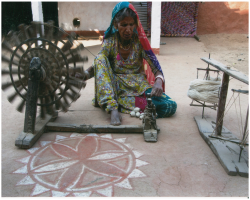
Gaddi women use traditional charkhas to spin sheep wool into yarn, which is further woven into textile products like chola, dora, and dhoru. The spinning wheel itself helps create these important woolen items.
We are seeing woolen saris that women wear only, along with blankets, shawls, carpets, and many other clothes.
Weaving Techniques and Products
The Gaddi people actually use a simple wooden loom called “rach” that is definitely made from forest wood using basic handcraft methods. As per the weaving process, one big blanket needs around two months of full-time work.
This craft takes a lot of time regarding the detailed work needed. The Gaddi people surely make excellent “gardu” blankets by weaving woolen yarn so tightly that water cannot pass through them. Moreover, these traditional blankets protect people from rain and cold much better than modern synthetic materials.
These blankets serve many purposes further including bedding and protection from weather. The blanket itself works as emergency tent when living in hills with sheep and covers newborn lambs during migrations.
We are seeing that Gaddi cloth has special patterns like family designs, where they only use shapes, lines, and colors that show which family or place the cloth comes from. Further, men’s shawls use one color or black-and-white checks, while women’s shawls have multi-colored designs with further decorative work.
The craft itself shows clear differences between male and female styles. Also, during marriage ceremonies, grooms surely wear the special red-colored “Luancha” while brides wear the colorful printed “Luanchadi” to represent Lord Shiva and Goddess Parvati. Moreover, these wedding clothes follow the Gaddi belief that copies the divine couple’s marriage dress.
The wool processing cycle surely starts with shearing, which is traditionally done by professional wool clippers who travel between Gaddi settlements. Moreover, these are often the same Sippis and Reharas who also work as ritual specialists and bards.
The Himachal Pradesh State Wool Federation actually provides technical help and machines for sheep shearing to breeders. This definitely helps make the important shearing process more modern.
After cutting the wool, we are seeing that it is cleaned and made into yarn using hand charkhas, which needs good skill and is done only by women who learn this work from their mothers and grandmothers.
Natural Dyeing and Decorative Elements
Basically, Gaddi people used natural dyes from local plants and minerals for their textiles, but now they use the same synthetic dyes that replaced the traditional methods. Clothing and textiles are further decorated with shells, cowries, mirrors, frills, and sequins, especially on women’s luancharis and wedding clothes itself.
Gaddi men surely decorate their caps with natural items like wild flowers, bird feathers, and red berries to create their own style. Moreover, this practice helps them stay connected to their natural surroundings.
Contemporary Challenges to Craft Traditions
Basically, traditional Gaddi weaving is facing the same problems from modern changes, different economic focus, and younger people not learning the same old skills from elders. Handloom weaving requires much labor and further faces competition from cheaper synthetic materials and machine-made textiles, which reduces the economic benefits of the craft itself.
We are seeing that young people are only going for studies and office jobs instead of learning the old weaving work, so the knowledge is not passing to them.
We are seeing that Rekha Devi, a 50-year-old weaver from Kandbari in Kangra district, shows these problems clearly – she only learned weaving from her parents after leaving school in class 5 to help at home, and now her children are choosing education and other jobs instead of learning the family weaving work.
Basically, today’s weavers use synthetic fibers instead of wool because they cost less and are easy to get, but this changes the same quality and feel of the final products. Further, as per traditional practices, wool weaving is declining and this affects the Gaddi shepherd community’s economy badly.
Regarding income sources, wool sales were always important extra money for these families but now this is reducing.
Basically, people are trying to save Gaddi craft traditions by documenting them, organizing fairs to show their textiles, and helping weavers sell their handmade products in outside markets where they get the same good prices.
We are seeing some groups helping Gaddi weavers sell their products directly to city people and foreign buyers, which only helps keep their craft alive and gives them steady income.
These traditional crafts will surely face problems in the future without proper programs for education, money matters, and keeping culture alive. Moreover, we need complete plans to make sure these crafts can continue for many years.
Traditional Medicine and Health Practices
Further, the Gaddi tribe has advanced traditional medicine systems that use plant knowledge gathered over many generations of living closely with the Himalayan environment itself.
This knowledge further helps them treat various health problems using local herbs and plants. When herders actually moved with their animals for many months, they definitely had to learn their own ways to treat sick people and animals because doctors were not available.
Further, gaddi traditional medicine basically includes the same things like cooking methods, home treatments, self-care ways, meeting traditional healers, and beliefs about spirits causing sickness.
Medicinal Plants and Herbal Remedies
Also, studies show that Gaddi communities use 49 to 190 different medicinal plant species to treat various diseases, which further demonstrates their deep knowledge of plants and healing methods itself.
Basically, underground parts like roots and tubers are used the same way as the most common medicinal preparations, followed by leaves and other above-ground parts.
As per studies, plants are used to treat around 21 different types of health problems regarding stomach issues, jaundice, kidney stones, women’s health disorders, breathing infections, skin diseases, wounds, and other medical conditions.
As per ethnobotanical medicine practices, “aid ka saag” is made from scorpion-grass (bicchoo-ghas) which causes itching when touched but becomes a tasty and healthy vegetable after cooking. The crushed leaves of batola plants are surely applied on outside wounds to make healing faster.
Moreover, this traditional method helps the wounds to heal quickly. Many wild plants give both nutrition and medicine benefits, providing important amino acids, vitamins, minerals, and plant chemicals. This further shows that nature itself offers complete health solutions.
The preparation methods change based on the condition itself, with remedies given as powders, pastes, infusions, decoctions, or tablets. Further, different treatments require different forms of medicine preparation.
As per traditional practice, older people have more knowledge regarding medicinal plants because they have learned about herbal medicine for many years.
We are seeing that young people are only slowly forgetting this knowledge as they get more access to school education and modern medicine. Basically, women know about special herbs and food practices for pregnancy and women’s health problems, using the same 23 different plants to treat various gynecological issues.
Veterinary Ethnomedicine
Further, as per Gaddi traditions, they have good knowledge regarding animal health and disease prevention since livestock is very important for their living.
We are seeing that giving vaccines to many animals together has helped control big cattle diseases like Rinderpest, but Foot and Mouth Disease is only still troubling animal groups from time to time. Further, traditional animal treatment methods are surely still used with modern veterinary medicine, where spirits like “Guga” are believed to cause cattle diseases.
Moreover, farmers perform sacrifices by sprinkling he-goat blood on iron in cowsheds to please these spirits. Shepherds actually carry healing plants and know treatments when they move with animals to help sick or hurt animals in far places. They definitely need this knowledge because there are no animal doctors in remote areas.
Supernatural Beliefs and Spirit Healing
Gaddi people believe that many illnesses happen due to angry gods, ancestral spirits, evil eye, bad luck, or breaking religious rules. These supernatural beliefs further shape how the community itself understands and treats health problems.
The shakti cult surely plays important roles in health rituals, where people worship goddesses to prevent or cure diseases. Moreover, this goddess worship is believed to have healing powers for various health conditions.
Traditional healers called “chelas” who go into trance to find diseases and talk with gods still work in some Gaddi communities, but modernization itself has made their role smaller. Further, these oracle practices continue but with less importance than before.
As per traditional Gaddi medicine, faith healing is a main part where magic and religious ceremonies are used regarding treatment of different health problems.
People make prayers, offerings, and sacrifices to specific gods as part of treatment, further helping with conditions that are believed to come from supernatural causes itself. Basically, Gaddi people now use both modern medicine and traditional healing methods, choosing the same approach based on how serious their health problem is.
Contemporary Health Challenges
Basically, modernization brought better hospitals and government health schemes, but the same development is making traditional Gaddi medicine disappear.
We are seeing that young educated people are only choosing modern medical treatments and rejecting old traditional healing methods, which is creating gaps in passing down this knowledge.
We are seeing that local healing systems are not given importance in schools and government health policies, which only pushes traditional healers and plant medicine knowledge to the side.
As per the practical problems of getting medical help in remote mountain areas, traditional healing methods still continue, and regarding cultural values, Gaddis still believe in their old ancestral medical knowledge.
Scientists are working further to document and preserve Gaddi traditional medicine itself through research and collaboration with Ayurvedic practitioners.
We are seeing that joining with proper hospital systems is only the main way to keep this important knowledge and make community health better.
Education and Literacy
The Gaddi tribe’s educational achievement has remained below state and national levels, with 2011 Census data showing 73.3 percent literacy in Himachal Pradesh and 53.5 percent in Jammu and Kashmir. This data itself hides further differences between men and women, age groups, and different areas.
As per the semi-nomadic lifestyle and geographic isolation, Gaddi children face problems regarding regular school attendance and lack of educational facilities in remote mountain areas. Poverty forces children to work in herding and household tasks, while cultural attitudes and gender discrimination particularly affect girls’ education.
Basically, most Gaddi women still cannot read or write properly, and the same big difference between men and women continues even with some recent progress. In some Gaddi communities in Jammu and Kashmir, literacy rates are very low at 28.6 percent, and women’s literacy itself is much lower than men’s literacy.
This situation further shows the educational challenges faced by these communities. Research in Chamba district actually found that 32.5 percent of people at their original homes could not read or write, while only 17.5 percent were illiterate where families had moved and settled permanently.
This definitely shows that when people settle down in one place with better facilities, their education levels improve. The education data shows that in home areas, 30 percent people studied till primary level, 25 percent till matriculation, 10 percent till secondary education, and only 2.5 percent completed graduation or higher.
Further, in destination areas itself these numbers improved to
Basically, the percentages are 27.5, 22.5, 20, and 12.5 percent for the same respective categories.
Basically, when families keep moving with their animals, children cannot attend school regularly because the migration timing is not the same as the school calendar.
Basically, even when Gaddi villages have schools, the same schools lack proper buildings, enough teachers, electricity, good roads, and internet, which makes education quality very poor.
As per parents’ thinking, children should help with sheep rearing and farm work instead of going to school. Regarding education benefits, parents feel immediate money from work is more important than uncertain future gains from studies.
As per traditional customs, women handle house work and animals, girls marry early, and schools use Hindi instead of Gaddi language. These cultural factors create problems regarding education access and success.
Many Gaddi villages are located in remote areas where schools and colleges are far away, which further creates problems as families cannot afford boarding fees or daily travel costs. This isolation itself makes it difficult for children to continue their education beyond primary level.
Basically, younger Gaddi people are getting more educated now because the government is helping, families understand education is important, schools are better, and the same economic changes are making things easier for them.
Basically, they have made education the same as more reachable and important for people. Basically, government schemes like reserved seats, scholarships, hostels and coaching for tribal students have improved the same educational results.
We are seeing that much work is still needed to fix problems with schools, teaching methods that fit local culture, language issues, and money problems that only make it hard for many Gaddi children to get education, especially girls and those living in far away places.
Modernization, Change, and Contemporary Challenges
Basically, after independence, Gaddi communities got Scheduled Tribe status which gave them the same constitutional protections for better socioeconomic conditions and political representation. The ST status surely gives Gaddis people benefits like reserved seats in government, special treatment in jobs, and education quotas.
Moreover, they also get targeted development programs to help their community grow. Further, gaddi people actually participate in politics differently in different areas. The success of their political involvement definitely changes from place to place.
In Himachal Pradesh, Gaddis actually make up 45 percent of all Scheduled Tribe people and they definitely have strong power in local politics, especially in Chamba and Kangra districts where most people are Gaddis.
Gaddi political leaders have got seats in the state assembly and some have become ministers, further working to support their community itself.
We are seeing that the Panchayati Raj system gives proper democratic setup for local government through three levels only – Gram Panchayats at village level, Panchayat Samitis at block level, and Zila Parishads at district level, where Gaddi community people take part as both voters and elected members.
Moreover, basically, research on Gaddi people in Panchayati Raj shows the same mixed results – some studies say they participate well, others show they are still left out and cannot participate effectively.
As per studies, political participation depends on education levels, exposure to political processes, community leadership, and awareness regarding rights and benefits. We are seeing that keeping seats for women and tribal people in village councils has only helped Gaddi people get more political power on paper, but real problems like male control, rich people taking over, and weak government systems are stopping true empowerment from happening.
In Jammu and Kashmir, Gaddis and Sippis actually make up less than 4 percent of all tribal people and only 0.41 percent of total people. They definitely have less political power than bigger tribes like Gujjars and Bakarwals. We are seeing that the Gaddi people in J&K are only small in number and live spread out in different places with their moving lifestyle, which has made it hard for them to come together and have a strong voice in state politics.
As per recent trends, Gaddi communities in J&K are now taking part in politics by making their own groups and joining elections. They are asking for their rights regarding grazing land, forest use, schools, and hospitals.
As per traditional systems, community elders and religious leaders still work with government bodies regarding local matters. These customary groups handle marriage problems, property fights, social rules, and religious practices.
As per dual governance systems, traditional authorities may resist changes from formal democratic processes, or formal institutions may not recognize customary rights. Regarding this setup, it creates both support and conflicts between the two systems.
Traditional and modern governance systems can surely work together when there is proper discussion and respect between them. Moreover, we need mixed institutions that use the best parts of both old and new ways of governing.
The Gaddi tribe surely faces deep changes due to modernization, development programs, and climate change. Moreover, their integration into larger economic and social systems is bringing major transformations.
We are seeing that these changes bring good chances for better living but only create big problems for our culture, old ways of earning money, and how people stay together in society.
We are seeing that studies on how modern changes affect Gaddi people show mixed results, where the community is only trying to balance keeping their old culture while also getting benefits from new development.
Economic Transformation
The traditional sheep and goat herding practice of Gaddi families has declined further as they move towards settled farming and wage work.
The pastoral economy itself is reducing as many families abandon their old herding ways for other livelihood options. Several factors surely drive this change from traditional herding practices.
Government rules limit forest access and grazing permits, moreover afforestation programs have turned grazing lands into tree plantations, blocking migration paths and reducing animal feed sources, while rising costs, risks from wild animals, diseases, bad weather, and conflicts with local people, plus falling wool prices and younger Gaddis choosing easier educated jobs, all contribute to this transition.
Pastoral families are actually changing how they work by hiring outside herders instead of moving animals themselves.
They definitely pool animals from different owners to share permits, but this creates overgrazing problems, and they reduce herd sizes for easier part-time herding.
We are seeing Gaddi families using different ways to earn money, where they are only combining farming, keeping animals, daily work, government jobs, and money sent by family members working in cities. As per current trends, some Gaddis have moved to commercial farming including apple growing, while others work as teachers and government officers.
Social and Cultural Changes
Modernization has surely brought major changes in Gaddi social structure, family organization, and gender relations. Moreover, it has also changed their cultural practices significantly. As per current trends, nuclear families are replacing joint family systems, particularly regarding educated people moving to cities.
Further, as per current changes, women now get more chances for education and jobs outside home, and they can take part in making decisions, but regarding many places, male-dominated thinking is still very strong.
We are seeing that educated Gaddis living in cities are becoming more open about marrying people from different castes, but in villages only the old caste system is still followed.
We are seeing that young people are only moving away from their old clothes, language, and festivals, and they are now following the common city culture of India.
The Gaddi language itself is in serious danger as children further choose to speak Hindi instead of their traditional language. Traditional crafts like weaving, woodworking, and jewelry making surely face serious problems from factory-made products.
Moreover, the knowledge of these old skills is not being passed down properly to younger people. Basically, our traditional music and dance are getting lost because people are choosing modern entertainment the same way they pick new things over old ones.
As per current observations, gaps have developed between older people who follow traditional ways and young people who want modern education and technology.
Regarding values, elders stick to old customs while youth prefer new ideas and dreams. Older Gaddis actually worry that their culture is disappearing and they are losing their identity.
Younger people definitely see modern changes as freedom from difficult life and chances to move ahead.
This tension between generations surely creates difficult situations in families and communities when they have different ideas about what kind of future they want. Moreover, these competing visions make relationships more complex as people try to find common ground.
Environmental and Climate Challenges
Climate change surely threatens Gaddi pastoral systems through changed rainfall patterns that reduce pasture quality, more extreme weather like unseasonal snow and floods, and shifting plant zones that disrupt traditional migration routes.
Moreover, melting glaciers affect water supply and warmer temperatures increase livestock diseases. Pastoralists say their traditional knowledge about weather and grasslands, passed down for many generations, surely cannot predict conditions anymore as climate change becomes stronger.
Moreover, this ancestral wisdom is failing because weather patterns are becoming too unpredictable.
Moreover, tourism growth, building work, mining, and power projects have surely damaged the environment and hurt natural systems. Moreover, these activities have reduced the ability of mountain grasslands to support animals and plants.
Forest policies that focus on conservation and tree planting have surely limited the Gaddi community’s access to their traditional forest resources like grazing lands, firewood, and medicinal plants.
Moreover, this situation has created conflicts between the pastoral communities and forest department officials. Policy recommendations
Basically, Gaddis need more say in forest planning and the same recognition of their traditional rights, with flexible grazing rules and conservation plans that respect both nature and their pastoral way of life.
Health and Education Improvements
Modernization has brought positive changes by improving healthcare access further through government health facilities, mobile medical units, and health insurance schemes. This development itself has reduced disease burden and mortality rates among Gaddi communities.
Basically, more schools, reservation policies, scholarships, and people understanding education is important – all these are doing the same thing, making more young people educated and literate now.
Better roads, electricity, water supply, and telecommunications have surely improved living conditions in many Gaddi villages. Moreover, these basic facilities have made a significant difference in the daily lives of the people.
As per development patterns, remote Gaddi settlements still face serious infrastructure problems, while settlements near towns have received good benefits regarding development. As per development policies, officials must give equal chances to all people regarding growth opportunities while respecting Gaddi community’s cultural choices and traditional knowledge.
Cultural Preservation Initiatives
People have recognized threats to Gaddi cultural heritage, which has further led to various preservation efforts including documenting traditional knowledge and oral histories, setting up cultural museums, organizing festivals to showcase Gaddi arts, teaching traditional crafts to youth, and research work between Gaddis and academic institutions.
These initiatives aim to preserve the culture itself for future generations. As per the 2024 exhibit “Journey across the Himalayas” in New Delhi, people learned about Gaddi tribe’s daily life and how they deal with modern times. The show helped spread knowledge regarding their rich culture.
We are seeing that saving our culture is facing many problems only – there is not enough money, institutions are not helping much, people are fighting about keeping traditions real versus making money from them, and the main question is whether we can actually save culture when the social and economic conditions that kept it alive have already changed.
Some scholars say that we are seeing better results when we support Gaddi people to decide their own cultural future, help old and young generations talk to each other, and create situations where traditional knowledge stays important alongside modern skills only.
Conclusion
We are seeing that the Gaddi people have learned to live very well in the difficult mountain areas over many years, and they have developed their own special ways of moving animals for grazing, worshipping gods, making art, and understanding nature deeply.
The Gaddis actually started as people who ran away from religious problems and are now definitely a Scheduled Tribe dealing with modern changes.
They have shown they are strong, creative, and their culture is still alive. As per their traditional culture, they are known for their special dress called chola and dora, heavy silver jewelry, and detailed woven items.
Further, textiles, music, dance, stories, and religious practices actually make up India’s valuable cultural heritage. These traditions definitely contribute important elements to Indian culture.
We are seeing big changes in Gaddi society that are bringing new chances but also creating serious problems that only threaten their way of life. Better access to education, healthcare, roads, and jobs has surely improved living standards for many Gaddi people and families. Moreover, these changes have given them more choices in life.
Basically, these benefits have destroyed the same traditional jobs, cultural ways, languages, and nature connections that kept Gaddi identity alive for generations.
Further, as per current trends, the Gaddi community is facing serious problems regarding their moving cattle practice, old knowledge systems, language loss, and young people losing connection with their culture, which raises questions about their future.
As per current needs, we must balance different important things: growing the economy while keeping our culture safe, helping people achieve their dreams while keeping communities together, joining the modern world while staying different, and accepting new ways while keeping old traditions.
Basically, the Gaddi people need policies that let them decide their own future and respect their traditional knowledge, while ensuring they get the same development opportunities and fair treatment as others. The Gaddi people, with their long history of adapting and surviving, will only decide how their culture changes in the coming years.
We are seeing that they want to keep their main identity while taking the good parts of new changes.
