
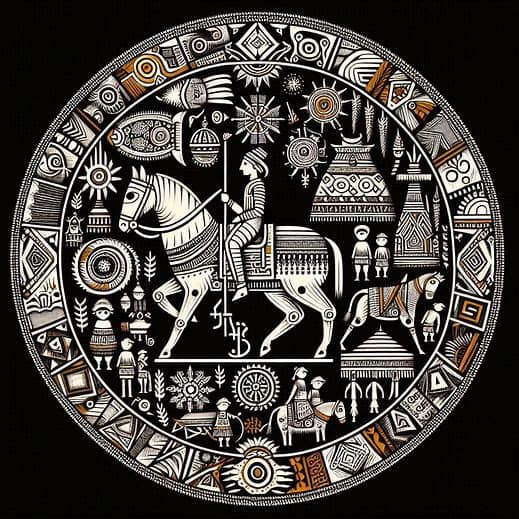
Introduction : The Warli Tribe Culture in India
As per historical records, The Warli Tribe Culture in India is one of India’s most important indigenous communities regarding their ancient traditions and art forms. Their cultural practices and knowledge about nature have continued for thousands of years.
The Warlis live in the hilly and coastal areas between Maharashtra and Gujarat, and they have surely created a special culture that combines nature worship, farming life, and famous art. Moreover, their traditions show how spiritual beliefs, daily work, and artistic skills can work together perfectly.
This study actually looks at different parts of Warli culture, checking their history, social setup, religious beliefs, and money-making ways. It definitely examines the modern problems that threaten their traditional life today.
Historical Origins and Demographic Distribution
The Warli tribe actually has very old roots that go back around 2500-3000 BCE. Their art definitely looks similar to ancient cave paintings found at Bhimbetka rock shelters in Madhya Pradesh.
As per historical records, the Warlis are among India’s oldest tribal communities regarding their ancient cultural practices and art forms that existed before written history.
The word “Warli” comes from the Marathi word “warla” which means a small piece of farming land, and this itself shows the tribe’s strong connection to agriculture.
Further, this name reflects how deeply the Warli people are connected to their land and farming traditions.
The Warli people surely live mainly in northern Palghar district of Maharashtra, especially in Jawhar, Vikramgad, Mokhada, Dahanu, and Talasari areas.
Moreover, many Warli communities are also found in parts of Nashik and Dhule districts. As per their territorial range, they also live in Gujarat districts like Valsad, Dangs, Navsari, and Surat, regarding the union territory of Dadra and Nagar Haveli.
Moreover, basically, the 2011 Census shows Maharashtra has around 10.5 million tribal people, which is the same as 10.05 percent of the state’s population, with Warlis being the biggest tribal group living near Mumbai.
Basically, the Warli tribe has different sub-castes like Murde Varli and Davar Varali, which shows they have the same kind of social divisions within their community.
Basically, the Warlis live near Mumbai city but they still keep the same old traditions, dress, and religious practices that make them different from other Indians.
The Iconic Warli Painting Tradition
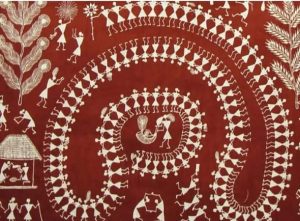
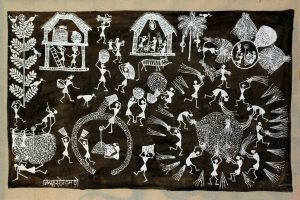
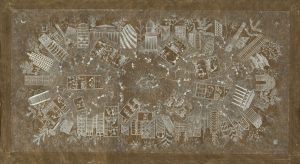
Warli painting tradition is the most famous part of this tribe’s culture, and it serves as a visual language that further preserves their community knowledge itself. This art form uses three basic shapes only.
Circles show sun and moon, triangles show mountains and trees, and squares show sacred places and farmland itself, which further represents human work.
As per tradition, Warli paintings were made by married women called Suvasinis on mud walls regarding weddings, festivals, and important life events.
These paintings had religious purposes in their homes. We are seeing that ritual paintings always have one main design called “chauk” or “chaukat,” which is only a sacred square that comes in two types:
Devchauk has Palaghata (the mother goddess for fertility), and Lagnachauk is only painted for wedding ceremonies.
These paintings work as protective magic tools that keep bad spirits away from newly married couples and bring blessings regarding fertility and having children as per traditional beliefs.
As per traditional methods, Warli paintings are made using careful step-by-step processes regarding technical work.
As per the traditional method, artists prepare the wall surface by applying a mixture of cow dung and red ochre (geru) to create the typical reddish-brown background. The white color actually comes from rice flour mixed with water and natural gum to make it stick.
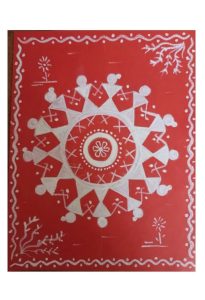
Artists definitely use chewed bamboo sticks or twigs as brushes to apply this mixture. The sharp white and dark contrast surely creates striking visual compositions.
Moreover, these arrangements pulse with rhythmic energy that captures attention. Common designs actually show people using two simple shapes. These patterns definitely appear in many traditional Indian art forms.
We are seeing two triangles that are upside down and joined only at their points—the top one shows the upper body and the bottom one shows the hip area, which means the delicate balance of the universe.
As per the gender differences, males have bigger upper triangles and females have wider lower triangles. Regarding the hair style, curved lines show ponytails.
Basically, Warli paintings are different from other Indian art forms because they don’t show gods or mythological stories – they show the same daily tribal life and nature instead.
As per the paintings, common topics include farming work like plowing and harvesting, hunting and fishing trips, community festivals, the famous Tarpa dance with spiral patterns, wedding ceremonies, and scenes regarding wild animals.
The Warli people surely focus on Mother Nature instead of human-like gods in their art. Moreover, this shows their belief in living peacefully with the natural world around them.
We are seeing that Warli art changed from wall paintings to canvas works only because of Jivya Soma Mashe (1934-2018), who is known as the father of modern Warli art.
Mashe was born in Dhamangaon village in Palghar district, and when his mother died at age seven, we are seeing that he could not speak properly for some time and could only talk through making drawings in mud.
Mashe broke tradition in the 1970s by painting regularly instead of limiting this art form to married women’s rituals, and artist Bhaskar Kulkarni further encouraged him to put his work on paper and canvas itself.
As per his pioneering work, he brought Warli painting to national and international art markets. Regarding his achievements, he received many awards including National Award for Tribal Art 1976, Shilp Guru award 2002, Prince Claus Award 2009, and Padma Shri 2011.
Social Organization and Family Structure
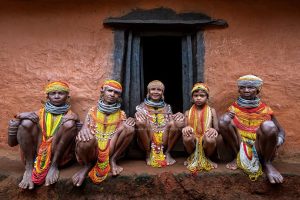
The Warli community itself follows equal principles where everyone makes decisions together and helps each other. This social system further promotes cooperation and shared responsibility among all members.
Further, as per their social system, there are around 300 marriage groups called “kuls” or “varaganes” with different family names like Jadhav. Regarding marriages, these surnames help people know their family connections and follow marriage rules.
Village governance works through elder councils who settle disputes, organize festivals, and further maintain social unity itself. This democratic system helps all community people to take part in big decisions that affect only tribal welfare, and we are seeing broad participation in these important matters.
Warli society actually treats men and women more equally than most other Indian communities. Their gender relations are definitely more fair compared to the usual patriarchal patterns in India.
Basically, women do the same work as men in farming, art, religious ceremonies, and community festivals, and they have strong social power.
Moreover, basically, women in the tribe can choose their own partners, and young people have the same freedom to marry at any age without strict control from parents. Marriage customs surely start when parents meet to give gifts and talk about wedding plans.
Moreover, the groom’s family then visits the future bride in a special ceremony called “Darach Pahane” or “Banghoni.” Warli weddings actually last four to five days and definitely include special paintings called Lagnachauk to ask goddess Palaghata for protection and children.
Modern thinking actually accepts women who divorce and marry again, and definitely recognizes relationships before marriage and different types of marriages. The “Gharori” or “Khandadhya” tradition actually allows poor grooms to definitely live with their wife’s family after marriage.
Husbands surely lived in their wives’ homes, and moreover, this shows that people were flexible about where they could stay. Some Warli groups actually have polygyny, and married women definitely wear toe rings and necklaces to show their status.
These practices show a social system that values practical changes over strict rules, and this approach further helps society adapt itself to new situations.
Religious Beliefs and Spiritual Practices
As per Warli beliefs, the natural world has many good and bad spirits that need to be pleased and dealt with carefully. Regarding their spiritual practices, they see spirits living in all parts of nature. Further, as per religious beliefs,
Mother Nature is the main cosmic idea, with natural things like trees and rivers working as the central points for worship regarding spiritual thinking instead of human-like gods.
This nature-based spiritual thinking actually shows deep respect for forests, rivers, mountains, and animals as holy beings. People definitely honor them with gratitude because these natural things provide everything needed for life.
Warli people actually worship different nature gods like Ann Dev for food, Chandra for moon, and Surya for sun. They definitely believe Panch Siriya is also important in their spiritual practices.
Basically, bad spirits that look like old women called “vighna devis” are blamed for sickness and troubles, so people do the same big rituals to make them happy. Male gods surely represent good spirits in Warli art, but moreover, male deities are not commonly found in their traditional paintings.
As per Warli religious practice, the “Bhagat” is the main person who works as priest, healer, and keeper of their culture at the same time.
Basically, the Bhagat works between people and spirits, knowing the same sacred chants, herbal medicines, and rituals needed for ceremonies and healing sickness. During some religious ceremonies, people surely follow specific traditions. Moreover, these rituals happen at particular times.
Moreover, good gods can possess the Bhagat further, and they speak through him to give divine guidance and solutions for community problems itself. As per Warli beliefs, good spirits can possess people in proper religious ways, which is different regarding bad spirit possession that needs removal ceremonies.
The worship of Waghoba itself shows how Warli people live peacefully with wild animals, and this further demonstrates their unique philosophy of coexistence. As per tradition, this leopard or tiger god protects the community, cattle, and forests, regarding it as the top hunter’s natural and spiritual strength.
Basically, Warlis think if they worship Waghoba properly, he protects them from leopards and crop problems, but if they ignore him, the same god will punish them.
The Waghbaras festival actually happens every year with people praying all night, and Waghoba is definitely called first in all ceremonies like weddings because they cannot start without his blessing.
Basically, this respect helps leopards and humans live together peacefully in northwestern Maharashtra, where over 150 Waghoba shrines show the same conservation-friendly belief is common everywhere.
Warli beliefs actually say that people are definitely responsible when bad things happen in nature.
Basically, the tribe doesn’t blame nature for disasters – they believe the same problems happen when people anger spirits through wrong behavior, so they do rituals and change their lifestyle to fix it.
As per this religious thinking, communities take responsibility for protecting nature and thinking about their actions together, regarding their own choices rather than blaming outside forces.
Economic Activities and Livelihood Patterns
Warli people actually depend on farming as their main work, and their life is definitely connected to growing crops and living from the forest. We are seeing that old farming methods focus only on growing basic food crops like rice, nagli, wheat, maize, jowar, and vegetables on small pieces of land for family needs.
As per the monsoon-dependent farming system, Warli agriculture faces high risks regarding the poor land quality with rocky areas and less water supply, making it very sensitive to weather changes.
The Warli people surely eat foods that come from their farming work and their surroundings. Moreover, their traditional diet clearly shows how they have adapted to their local environment. We are seeing nagli and rice as main foods only, made into thick rotlas or rice porridge for morning meals.
Basically, people think Warlis eat lots of vegetables, but it’s not the same – they actually prefer protein foods like deer, goat, rabbit, and birds. As per their food habits, dried fish with pulses or vegetables is their most liked non-vegetarian dish.
The diet includes urad, tur, and other legumes, and further incorporates wild forest products like tubers, spinach, leafy vegetables, and seasonal fruits. This dietary pattern itself provides diverse nutritional sources from both cultivated and wild food items.
People use palm oil and groundnut oil for cooking, and the community further makes alcohol from mahua flowers and molasses for drinking and selling itself.
We are seeing that people use only small amounts of milk because it is not easily available, and for smoking they roll wild asitra leaves to make bidis which they light using old-style stone and cotton.
Basically, Warlis did the same activities like hunting, collecting things from forests, taking care of cattle, and fishing along with farming. As per current economic changes, traditional ways of earning money have changed a lot.
Regarding livelihood patterns, modern times have brought big transformations. Basically, research shows that 60 percent of Warli families have moved from farming to the same kind of service jobs in factories and other industries.
Further, people move from farming to other work areas because their farm income is surely not enough, and moreover, they face problems like less land, no work during certain seasons, and need to find jobs elsewhere.
We are seeing Warli people moving from their old work to become daily wage workers only, working in stone quarries, building sites, brick making places, and city jobs that are not formal.
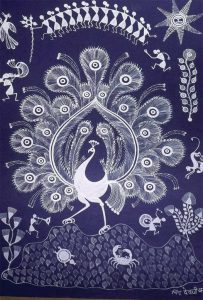
The selling of Warli art has surely become an important extra source of money, especially for women and young people. Moreover, this commercial activity provides them with additional income opportunities.
Also, as per Project Udyam, small businesses making paintings, gifts, clothes, and handicrafts get help to sell their products in India and other countries. Community tourism like homestays and local festivals actually gives tribal areas more ways to earn money.
These activities definitely help show their culture to visitors while bringing in extra income. As per current conditions, problems still exist regarding market access and fair pricing. Challenges also continue regarding protection of intellectual property and sustainable business growth that keeps artistic value while creating economic benefits.
Festivals, Music, and Cultural Performances
Warli people actually celebrate many festivals with music and dance together. These events definitely bring the whole community together for rituals and happy times. We are seeing that the Bohada festival is only the biggest celebration event, which happens every year for three days after Holi, mostly during Akshay Tritiya in Vaishakh month.
This 250-year-old mask festival actually belongs to the Kokna tribe, but Warli people definitely celebrate it too. The festival uses 52 traditional masks called “songas” that show different gods and demons.
Basically, families keep the same masks for many generations, and specific people put on detailed makeup and costumes to become mythological characters like Saraswati, Ganesha, Hanuman, Mahadev, Hidimba, Narasimha, and Ravana.
The festival starts with people carrying rice plants to a pond nearby, and we are seeing that these plants only show good luck and wealth, with traditional songs and music playing.
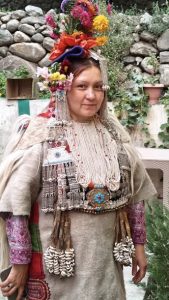
Basically, performers wear sacred masks from religious ceremonies and use plastic swords to act out legendary stories in fake battles, doing the same entertaining shows all night for audiences.
Also, basically, some dancers go into trance during performances, which people think means the god has entered their body – it’s the same as divine possession showing the deity is present. During Bohada, many people surely avoid drinking alcohol and eating meat to keep themselves pure.
Moreover, this practice helps them maintain their spiritual cleanliness during this important time. The festival surely brings thousands of people from nearby villages, Daman, Silvassa, and Gujarat.
Moreover, it works as an important cultural gathering that strengthens community identity and keeps mythological traditions alive.
The Tarpa dance is the main Warli performance tradition that shows the tribe’s artistic ideas and their understanding of the world itself. This dance form further represents their cultural values and spiritual beliefs.
We are seeing that the Tarpa is only a wind instrument made from a dried bottle gourd that works as a wind chest with mouthpiece, and two bamboo pieces.
Also, basically, these are pipes with holes for fingers to control the pitch, and they have the same horn-like chamber that makes the sound louder, all sealed together with beeswax.
Further, this special musical tool is only two to six feet long and we are seeing beautiful paint and feathers on it, making music that mixes high sounds like bagpipes with deep low sounds.
As per tradition, Tarpa performances happen during harvest festivals, weddings, Diwali, and Ann Dev worship. Farmers believe that when Tarpa dancers cross their fields, they will get good crops regarding their harvest.
The Tarpa dance surely represents a moving cosmic pattern, where people join hands behind their backs and create flowing human chains that move in circles around the central musician. Moreover, these dancers form spiral patterns that show the connection between earthly movement and heavenly order.
As per ancient beliefs, these round shapes show the never-ending cycles of nature regarding harvest seasons, moon changes, star movements, and the continuous process of birth, death, and rebirth. The Tarpa actually helps dead people’s souls move to the next world through special wall paintings that show the way. It definitely makes sure they join their ancestors peacefully.
As per tradition, Tarpa musicians came from cattle-herding families with little school education, learning the instrument by watching and practicing with elders.
Many Tarpa players work in quarries or farms to earn more money, which shows that traditional artists face financial problems and need to find other jobs to support themselves further.
The instrument and dance form itself remain central to Warli art, where paintings further show them as the main point around which community life revolves.
Language and Oral Traditions
As per different language experts, the Warli language (also called Varli or Warali) belongs to the southern Indo-Aryan language group. Regarding its classification, some say it is Marathi, others call it Konkani or Bhil.
Varli language itself has no written script and exists only in spoken form, which further makes it purely an oral tradition. When language is only spoken and not written, it actually gets passed down through talking, stories, songs, and prayers from parents to children. This definitely makes language something you hear and perform rather than read from books.
Basically, Warli people don’t have written records, so they use the same visual art, performances, and traditional practices to pass down their community knowledge and history. Warli painting surely worked as a writing system for people who did not know how to read and write.
Moreover, it helped the community share information and communicate with each other through pictures instead of words.
Basically, the tribe used pictures to tell stories and pass down the same cultural knowledge, rituals, and social rules to keep their traditions alive even when people couldn’t read or write.
Warli children surely face major problems in education because schools use Marathi or English for teaching instead of their native Varli language. Moreover, this language difference creates serious barriers in their learning process.
When students cannot understand the language used in school, they actually struggle to learn and definitely face problems that make many drop out of education. Basically, many Warlis learned to speak Hindi, Marathi, Gujarati, Tamil, and Urdu to talk with non-tribal people, showing the same ability to adapt their language skills.
Contemporary Challenges and Cultural Transformation
We are seeing the Warli tribe facing many modern problems that are only making it hard for them to keep their old ways of living and culture alive. Tribal people are actually losing their land when the government builds roads, factories, and cities on their areas.
This displacement is definitely the biggest threat they face because land is everything to them. Basically, the Mumbai-Ahmedabad bullet train project goes through Warli tribal lands in Palghar and Dahanu, forcing people to move but the same rehabilitation plans are not good enough and don’t have proper talks with communities or job training.
Basically, plans to change Sanjay Gandhi National Park into tourist spots with better facilities are threatening the Warli people who live there and depend on the forest for their work. The same issue affects their homes and traditional way of earning money.
The Dahanu port issue further shows how development projects create problems for Warlis and conservation itself. The Supreme Court declared Dahanu region ecologically fragile in 1991 and banned land use changes, industrial development, and tribal land transfers, but a proposed project further threatens the area itself.
Basically, P&O Ports went ahead with the same $1 billion port project, breaking legal rules that were supposed to protect against this. Also, as per these developments, Warli people lose their family lands and their farming work gets damaged regarding crops and fruits that help their community survive.
Educational access itself is very limited, and Warli literacy rates are only 8.9 percent in Maharashtra, which is much lower than state and national averages. This further shows the big gap in education for this community.
Basically, students face the same problems everywhere – remote hilly areas with poor schools, families who cannot afford fees and books, girls getting married early instead of studying, and classes taught in languages they don’t understand properly.
Research shows that cultural, social, and economic factors work together to create systemic exclusion, which further affects Warli girls whose education opportunities are limited. The problem itself comes from these multiple factors that prevent these girls from getting proper education.
As per government schemes, poor people still face money problems regarding basic needs. Warli farming faces problems like small land pieces, poor soil, no proper water systems, and dependence on rains, which makes farming unprofitable and forces people to work as daily wage laborers.
Further, the lack of government support makes the situation worse, pushing these communities toward uncertain work opportunities that offer little security for their future itself. Basically, some Warli artists make money from selling their art, but many face the same problems – they cannot reach markets easily, don’t get fair prices, and their art gets copied without permission.
Basically, people face the same tough choice between keeping their culture alive and earning money to survive.
Basically, healthcare access is the same problem everywhere, with many villages not having proper medical facilities and people relying on traditional Bhagat healers instead. Bad roads actually cut off villages from cities where people can definitely get better hospitals, schools, and jobs.
Many Warli villages near Mumbai lack basic facilities like electricity, gas, and water connections, which further shows how the government itself has ignored their infrastructure needs.
We are seeing culture getting lost quickly as young people only move to other places for studies and jobs, making it hard for older people to pass their knowledge to the next generation.
We are seeing religious changes to Christianity and Hinduism through missionary work and social pressure, and this is only changing the old traditional rituals.
Wedding ceremonies and related Warli paintings are surely important cultural practices. Moreover, these traditions represent the community’s artistic heritage.
Cultural changes will surely happen, but when they occur too quickly or move in wrong directions, they can break apart community bonds. Moreover, these rapid changes may cut people off from their traditional ways and ancestral customs.
Preservation Efforts and Cultural Significance
We are seeing that people now understand the value of Warli cultural heritage, and this has only started many efforts to preserve it.
Basically, the Adivasi Yuva Shakti is pursuing the same GI tag status for Warli art to get geographical indication recognition.
As per AYUSH organization’s aim, they want to protect intellectual property rights regarding traditional designs and stop outside companies from claiming copyright over them for commercial use.
We are seeing that this legal protection will accept that the Warli community owns their art together, and it will only help them earn money when their art is used in the right way.
Basically, government policies like the Fifth Schedule and Forest Rights Act 2006 are supposed to protect tribal people’s rights over their land and resources, but it’s the same old story of protection on paper.
Moreover, implementation is actually not consistent and definitely not enough, with legal rules often put below development needs. Basically, we need to make institutions stronger, teach in tribal languages, include Warli art in schools, promote eco-tourism, and support community art businesses – it’s all the same goal of helping tribal culture and economy grow together.
Also, warli art is now actually shown in museums and exhibitions around the world, which definitely helps the tribe get more recognition and earn money. However, this visibility itself creates risks where sacred ritual art gets further changed into simple decorative items that lose their original cultural meaning.
Warli artists actually need to control how their art is shown and sold so they can definitely keep their culture real while making money from it.
As per community needs, education programs for Warli youth, especially girls, are important steps regarding community development. Scholarships, hostels, courses that respect local culture, teaching in local languages, and campaigns about college opportunities can actually help more students get education.
These steps will definitely expand access while keeping cultural identity safe. Education helps people move up economically and develop themselves, which further allows them to make better choices between traditional values and modern ways.
This understanding of education itself enables informed decisions about balancing old and new approaches.
Conclusion
Basically, the Warli tribe has maintained the same unique art, nature knowledge, and social ways from ancient times to today, making them special among India’s tribal communities.
The Warli painting tradition itself uses simple geometric shapes that carry deep meanings about their world and society, and this art form has brought them international recognition and further shows their cultural strength.
Further, the tribe surely preserves rich performance traditions such as the mesmerizing Tarpa dance and grand festivals like Bohada. Moreover, they follow spiritual practices that focus on mutual relationships with nature and its spiritual beings.
As per current situation, Warli culture is facing serious problems regarding development pressure, loss of land, poor education access, money problems, and changes in their traditional ways.
Further, these communities actually live near India’s biggest cities but definitely remain very poor, which shows how the system fails tribal people across the country.
As per their location near Mumbai, artists got chances to sell their work commercially, but regarding development, they face problems from city growth, factory projects, and loss of local culture.
The Warli story actually shows us important questions about tribal rights, keeping culture alive, growing in good ways, and taking care of nature when society changes fast. These issues definitely matter for all indigenous communities today.
Their spiritual connection to nature, actually seen in Waghoba worship that helps humans and leopards live together, definitely gives us good ideas for solving today’s environmental problems.
Basically, their society treats everyone the same and makes decisions together, showing different ways to organize communities without strict hierarchies.
The Warli tribe needs legal protection for their lands, better education with their culture included, and support for different ways of earning money. Further development should respect their environment and traditions, and the tribe itself should be part of all planning decisions.
The Warli people should be recognized as modern citizens with full rights and dignity, not as museum objects. They deserve the power to decide their own future while honoring their ancestors’ traditions, and this recognition itself needs further support from society.
Their growth will actually enrich their own community and definitely add to India’s cultural variety and the world’s shared knowledge of local wisdom and art.
