
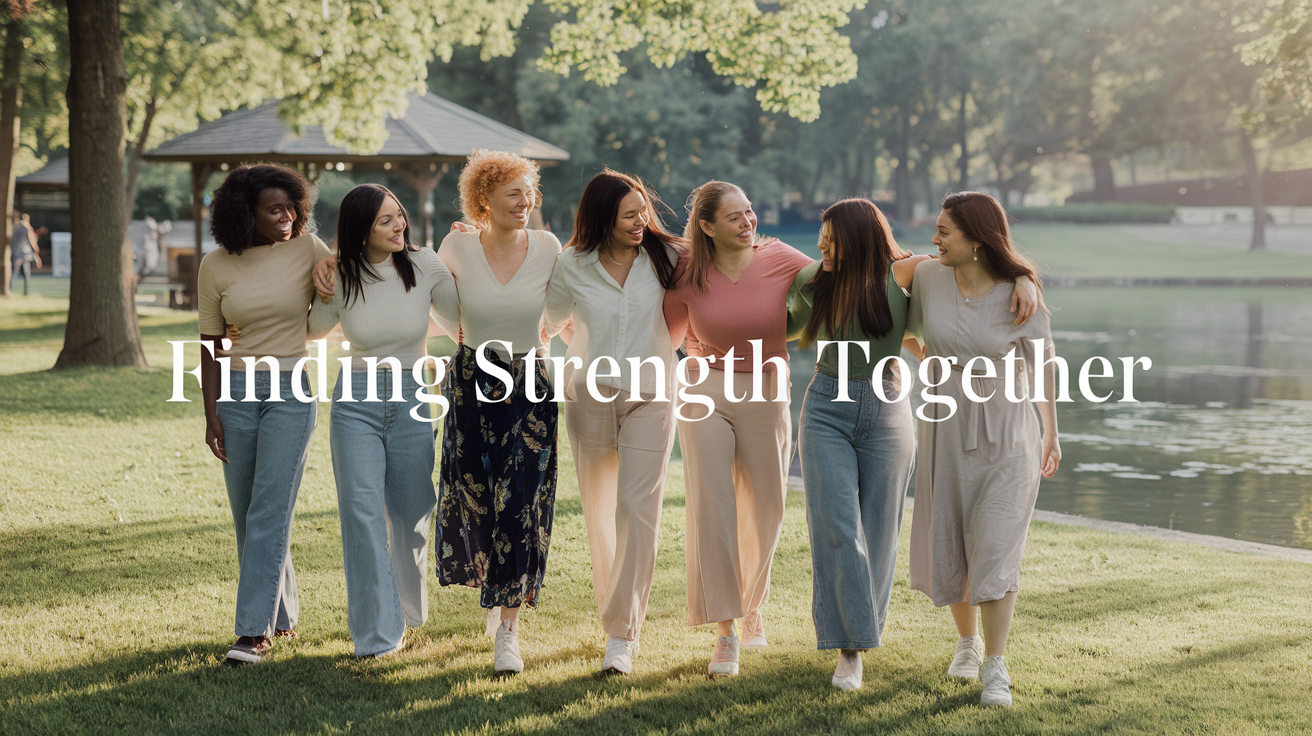
The statistics are brutal: 80% of widows still face social judgment when remarrying, despite our supposedly progressive attitudes. Widow marriage in modern society remains caught between outdated traditions and genuine human needs for companionship.
Thank you for reading this post, don't forget to subscribe!I talked to women who waited decades before dating again. Women who married within a year and weathered the judgment storm. Women who decided never to marry again because the social price was too steep.But here’s what nobody’s talking about: the psychological transformation happening when a society finally lets go of controlling women’s grief and choices. And it’s about to change everything.
A movement for widow marraige and care dedicated to providing women with essential health tools, supporting them as they transition from the pain of loss to a future filled with growth and empowerment
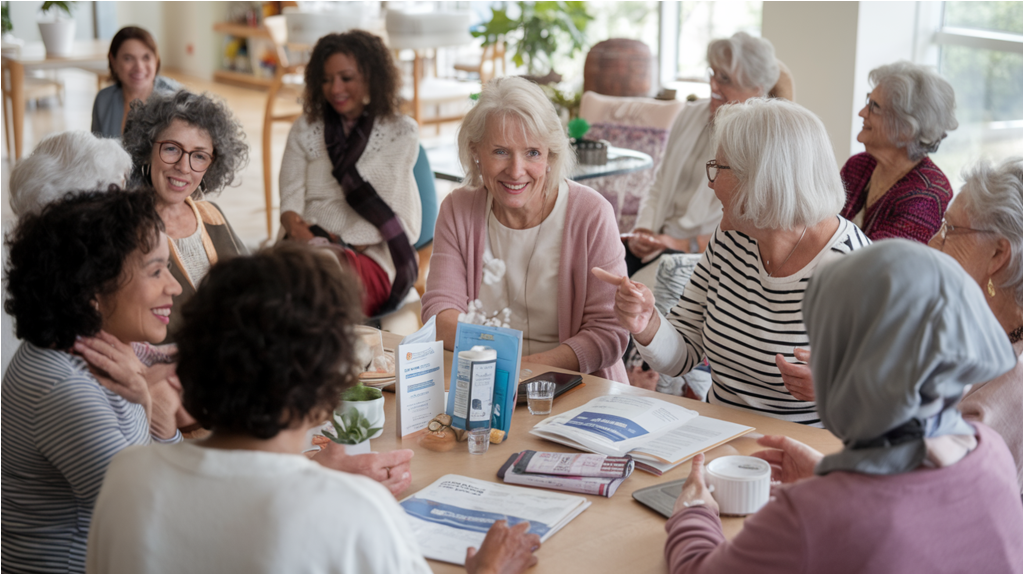
The numbers say it all about our widow care movement.
A. 676
That’s how many women found a new beginning through our community last year alone. These aren’t just statistics – they’re mothers, daughters, and friends who thought their world had ended when they lost their spouse. Remember Maria who joined us barely able to make eye contact? She’s now mentoring newcomers and has even started dating again. Your journey might look different, but you’re never walking it alone.
B. 30
Just 30 days. That’s our initial program length, because we know how overwhelming everything feels right now. One month of dedicated support where you’ll connect with health professionals, grief counselors, and other widows who actually get what you’re going through. No pressure to “move on” or “get over it” – just practical tools for managing your physical and emotional health during this impossible time.
C. 16,500
Hours of volunteer support provided by women who’ve been where you are now. From accompanying you to that first terrifying doctor’s appointment to helping you sort through financial paperwork, our volunteer network spans across 38 states. They’ll show up with home-cooked meals, offer childcare when you need a moment to breathe, and sometimes just sit with you in silence when words fail.
This movement isn’t about pushing anyone toward remarriage – it’s about rebuilding your health and confidence so you can make whatever choices feel right for your future.
“MWC made me understand the importance of taking care of myself physically, mentally and spiritually.”

Grief hits hard. After losing my husband, I was completely lost – not just emotionally, but physically too. I stopped eating properly. Exercise? Forget about it. Sleep became this strange concept that happened to other people.
That’s when MWC (Modern Widows Club) became my lifeline.
The Physical Journey
Before MWC, I’d go days without a proper meal. My friends at MWC gently reminded me that nutrition wasn’t optional. They shared simple recipes that didn’t require motivation I didn’t have. We had walking groups where moving my body became about connection, not just exercise.
One widow told me, “Your body is carrying your grief. You need to strengthen it for the journey.”
She was right.
Mental Clarity Through Community
The fog of widowhood is real. At MWC meetings, I found women who understood the random memory triggers, the paperwork nightmares, the decision paralysis.
Read more: Widow marriage in modern society“Write it down,” my mentor suggested. “Your brain is processing trauma. Don’t expect it to remember the grocery list too.”
These practical tips saved my sanity.
Spiritual Reconnection
Many widows, including myself, question everything after loss. MWC created space for this questioning without judgment.
Some found comfort in traditional faith. Others discovered spirituality in nature or art. I rediscovered mine through journaling.
The gift of MWC wasn’t telling me how to heal but showing me I needed to intentionally care for all parts of myself to survive this new chapter. And eventually, to thrive in it.
“I am standing in my power, and I know it is because I took the time to do the work inspired by MWC and use their many resources to pivot.”

I never imagined I’d find my voice again after losing my husband. Those first months were a blur of paperwork, well-meaning casseroles, and nights staring at the ceiling wondering who I was now.
Then I found Modern Widow Community. Not just another support group—these women got it. They’d walked the path I was stumbling down.
The difference? MWC didn’t just offer tissues and sympathy. They gave me tools. Resources. A roadmap when I couldn’t see beyond tomorrow.
It wasn’t magic. I had to do the work—the ugly crying, the journaling, the sitting with uncomfortable emotions. I had to face financial decisions I’d never made before. Learn to show up to events alone. Figure out who I was without being someone’s wife.
But I wasn’t doing it blindly. Every step, MWC resources helped me pivot toward something new rather than just surviving.
Today, I date on my terms. I’ve built boundaries with well-meaning family. I make decisions without apologizing. When someone asks if I’m “over it yet,” I can smile knowingly instead of crumbling.
Standing in your power doesn’t mean forgetting. It means building something meaningful from what remains. That’s what MWC helped me discover—not just how to survive widowhood, but how to create a life that honors both my past and my future.
“I’m a different person now, I used to have low self-esteem, but now, my heart is lighter and my bubbly self is back. Thank you.”

These words echo the transformative journey many widows experience after finding support and community. The path from grief to renewed self-confidence isn’t linear, but it’s possible.
The Return to Self
When loss shatters your world, it often takes pieces of your identity with it. Many widows describe feeling like shadows of their former selves. That crushing weight of grief doesn’t just hurt emotionally—it rewires how you see yourself.
But then something shifts. Maybe it’s joining a support group. Maybe it’s that first genuine laugh that doesn’t leave you feeling guilty. Or maybe it’s simply waking up one morning and realizing you slept through the night without tears.
Finding Your Bubbly Self Again
Recovery doesn’t mean forgetting—it means growing around your grief. That “lighter heart” mentioned in the quote? It comes gradually:
- First, the heaviness lessens from unbearable to manageable
- Then from manageable to occasional
- Eventually, joy returns without the sharp sting of guilt
This journey to reclaiming self-esteem happens differently for everyone. For some widows, considering new relationships plays a key role in rediscovering their worth. Others find it through creating new routines, investing in friendships, or pursuing passions they once shelved.
The beauty is in that moment of recognition—when you catch yourself smiling naturally or standing taller, and think, “There I am. I’m still here.”
“I’ve been with Modern Widows Club for six years, and I needed to step into something that put me first.”

Life after loss can feel like a maze without a map. That’s the reality many widows face – trying to navigate a world that suddenly feels alien and overwhelming.
I found myself in that exact position. After my husband passed, everything became about survival mode – taking care of kids, managing finances, just getting through each day. My own needs? They were buried under an avalanche of responsibilities.
Then I discovered Modern Widows Club. Six years ago, I walked into my first meeting, terrified and unsure. What I found was a room full of women who just… got it. No explanations needed. No awkward platitudes.
This wasn’t just another support group. It was a space that challenged me to rediscover myself beyond my grief.
“I needed to step into something that put me first.” That phrase became my mantra. For the first time since becoming a widow, I was encouraged to prioritize my own healing, my own dreams.
Through MWC, I learned that taking care of myself wasn’t selfish – it was necessary. Whether it was the weekend retreats, the coffee meetups, or the online check-ins during tough days, having a community that encouraged self-care transformed my healing journey.
The most powerful part? Watching other widows blossom when given permission to put themselves first. Some returned to school, others started businesses, and yes, some found love again.
My story isn’t unique. It’s the story of thousands of widows who discovered that healing begins when we dare to prioritize ourselves.
“MWC opened my eyes to what I couldn’t see in early widowhood that I needed.”
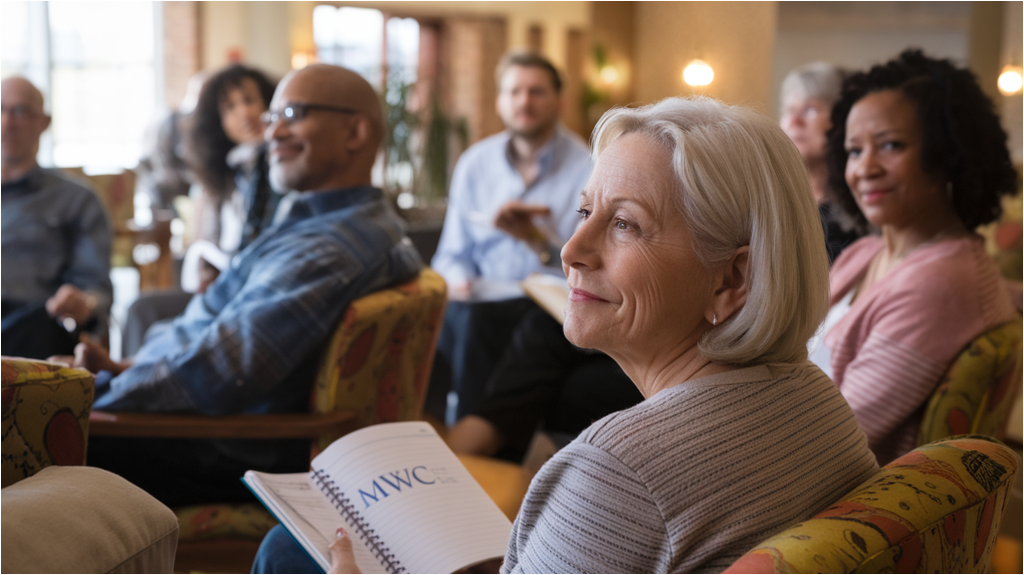
Early widowhood feels like being dropped into a pitch-black room. You’re fumbling around, bumping into walls, with no idea which way is up.
When I first joined Modern Widow Community, I didn’t know what I needed. I just knew I was drowning.
Finding My Blind Spots
The thing about grief is that it creates massive blind spots. You can’t see what you can’t see. MWC gave me vision when I couldn’t even name what I was missing.
Looking back, here’s what I couldn’t recognize in those early days:
- I needed permission to laugh again without guilt
- I needed to hear “me too” from someone who truly understood
- I needed to see examples of women five years ahead of me on the journey
- I needed practical tools for managing finances and legal matters
- I needed space to consider loving again
The Mirror of Community
The women in MWC reflected back to me possibilities I couldn’t imagine. While friends and family offered support, they couldn’t show me a future I couldn’t yet see.
“I remember thinking ‘dating’ was a four-letter word,” shared one widow who later remarried. “Now I realize healing and new love aren’t mutually exclusive.”
These stories became my roadmap. When another widow shared how she navigated introducing a new partner to her in-laws, I tucked that wisdom away for when I’d need it.
The journey from widow to possibly finding love again isn’t linear. MWC showed me that healing doesn’t mean forgetting—it means growing around the grief.
“We were all looking for something positive to grab onto.”
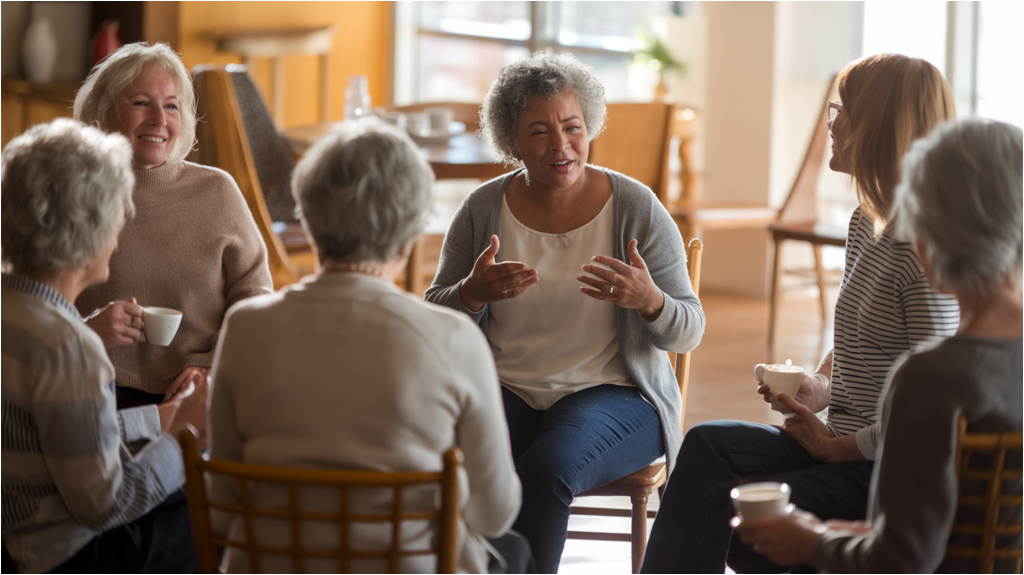
Grief has a way of isolating us. After losing a spouse, many widows feel like they’re drifting alone in an ocean of pain. I felt that way too.
Then I found my support group. These weren’t just people who understood my loss—they were actively rebuilding their lives. Some were dating again. Others were rediscovering old passions. A few were even considering remarriage.
“We were all looking for something positive to grab onto,” Maria told me after her third meeting. “Something that wasn’t wrapped in black crepe paper.”
That’s exactly it. When the world expects you to wear your grief like a permanent label, finding people who see beyond it feels revolutionary.
Jack, widowed at 42, put it perfectly: “In that room, I wasn’t ‘poor Jack’ anymore. I was just a guy figuring stuff out like everyone else.”
The beauty of widow communities isn’t just shared sorrow—it’s shared hope. It’s seeing someone six months ahead of you in their journey laugh again. It’s watching someone find love after swearing they never would.
These connections become lifelines. They’re where we learn it’s okay to be happy again, to consider new relationships, to imagine futures we never planned for.
When you’re drowning in grief, nothing matters more than seeing someone else who’s learned to swim.
“In the fall of 2023, I made my second home—a condo by Lake Eola—my permanent residence. It was then that I realized every moment I’d spent in Orlando had been with my husband, and now, I was navigating it alone. Seeking new friendships I scrolled through my phone, searching for walking groups. Then, almost instinctively, I typed in “widow organization.” Divine intervention. That’s when I found MWC. Your logo should be a life preserver.”
Error! Filename not specified.
I stood there in my condo overlooking Lake Eola, the view both beautiful and painfully empty. Every corner of Orlando held memories of us together—laughing at that quirky restaurant downtown, holding hands during evening walks around the lake, planning our future on that park bench.
But now it was just me.
Fall 2023 marked when this place became my permanent home, not our weekend getaway. The realization hit hard: I knew Orlando only through the lens of my marriage. Every favorite spot, every familiar route—all discovered with him by my side.
Those first weeks were a blur of unpacking boxes and avoiding silence. I’d scroll through my phone at night, initially searching for walking groups—anything to fill the empty hours. But deep down, I knew what I really needed.
That night, my fingers seemed to have a mind of their own. I typed “widow organization” into the search bar. Not “grief support” or “loss groups”—specifically widow. Because that’s what I was now, wasn’t it?
And there it was. MWC. Like a lighthouse appearing through fog when you’ve almost given up hope of finding shore.
Your logo should be a life preserver. That’s exactly what you were for me—something to grab onto when the waves of grief threatened to pull me under. Divine intervention doesn’t always come as dramatic signs. Sometimes it’s just your finger typing exactly what you need when you didn’t even know you were looking for it.
Thanks to donors like you, we can continue to provide compassionate support and a path to empowerment for widows
Error! Filename not specified.
Your donations make a real difference. Every dollar you give helps us provide crucial support to widows navigating life after loss.
When you donate to our organization, you’re not just giving money – you’re offering hope. You’re helping widows who often feel invisible in society find their voice and rebuild their lives.
What your generosity makes possible:
- Emergency financial assistance for widows facing immediate hardship
- Career counseling and job placement services
- Mental health support groups and individual therapy sessions
- Community events that combat isolation and loneliness
- Legal aid for navigating estate issues and benefits
- Educational workshops on financial management
The impact goes beyond just the practical help. Many widows tell us that knowing someone cares enough to donate gives them strength during their darkest days.
“After my husband died, I felt completely lost. The support I received through this organization showed me I wasn’t alone. Today, I’m not just surviving – I’m thriving in my new life.” – Maria, 42
We’ve seen firsthand how your support transforms lives. Widows who once struggled to get out of bed now run their own businesses, mentor others, and yes – sometimes find love again.
By continuing to support our mission, you ensure no widow has to face their journey alone. Together, we’re creating a world where widowhood isn’t the end of a story but the beginning of a new chapter filled with possibility.
Error! Filename not specified.
Widow care movements like Modern Widows Club are transforming lives through compassionate support and empowerment resources. As the testimonials reveal, these organizations help women transition from grief to growth by providing physical, mental, and spiritual tools that allow them to prioritize their wellbeing and rediscover their identity after loss.
Your support makes this vital work possible. By contributing to widow care initiatives, you’re not just providing a lifeline to women navigating uncharted waters alone—you’re helping create communities where widows can find friendship, purpose, and the strength to build meaningful new chapters in their lives. Through collective compassion and action, we can ensure no widow has to face her journey without the resources and support she deserves.
