
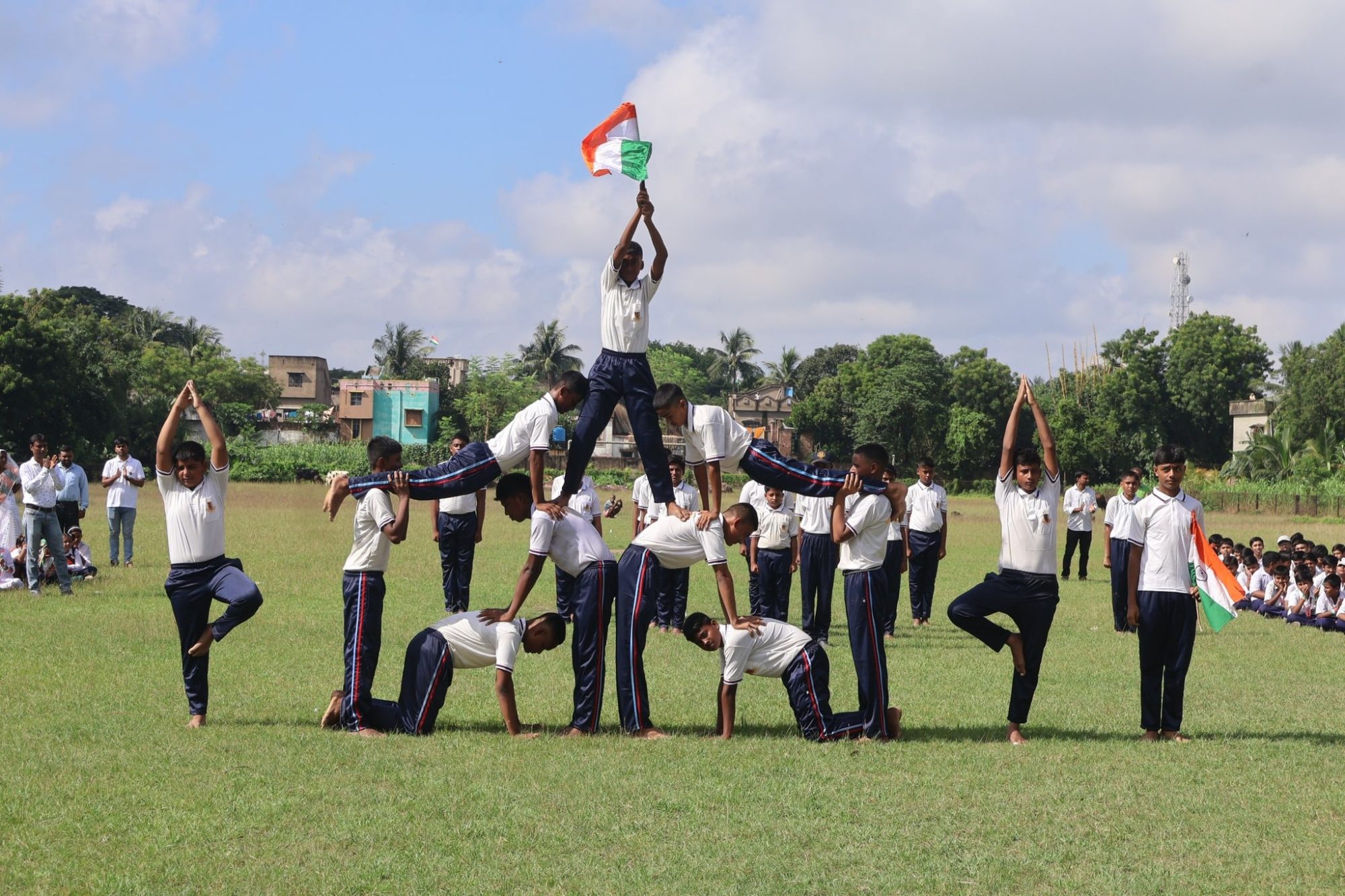
India’s 79th Independence Day: History, Celebrations, and Future Vision

Looking for information about India’s 79th Independence Day? This guide helps students, history enthusiasts, and patriotic Indians understand the significance of this important national holiday. We’ll explore the historical journey to freedom in 1947, traditional celebration practices across the country, and the vision for India’s future as it approaches its 80th year of independence.
The Historical Journey of India’s Independence
A. The Struggle for Freedom: Key Milestones
India’s road to freedom wasn’t a straight line—it was a winding path marked by sacrifice, courage, and unwavering determination.
The sparks of resistance first ignited with the Revolt of 1857, often called India’s First War of Independence. Though unsuccessful, it planted the seeds for what would follow.
When Mahatma Gandhi entered the scene in 1915, he revolutionized the freedom struggle with his non-violent approach. The Champaran Satyagraha (1917), Non-Cooperation Movement (1920), Civil Disobedience Movement (1930), and the Quit India Movement (1942) shook the very foundations of British rule.
Other significant milestones included:
- Simon Commission boycott (1927)
- Dandi March (1930)
- The Government of India Act (1935)
- Formation of the Indian National Army by Subhas Chandra Bose
By 1945, with Britain weakened after World War II and facing mounting pressure both in India and internationally, independence became inevitable.
B. Significance of August 15, 1947
Why August 15? The date wasn’t randomly picked out of a hat.
Lord Mountbatten, the last Viceroy of India, chose this date because it marked the second anniversary of Japan’s surrender to the Allied Forces in 1945. For Mountbatten, who had accepted Japan’s surrender as Supreme Allied Commander of South-East Asia, the date held personal significance.
But the significance of August 15 transcends this connection. It marked the culmination of decades of struggle and the birth of the world’s largest democracy. At the stroke of midnight, as Jawaharlal Nehru delivered his famous “Tryst with Destiny” speech, India awoke to freedom.
The date symbolizes more than just political independence—it represents the triumph of peaceful resistance over imperial might. It demonstrated to the world that a nation could achieve freedom through non-violence and civil disobedience.
August 15 also marks a pivotal moment in global history. India’s independence accelerated the collapse of colonial empires worldwide, inspiring freedom movements across Asia and Africa.
For Indians, the day represents both an end and a beginning—the end of subjugation and the beginning of self-determination. It’s a reminder that freedom, though hard-won, must never be taken for granted.
C. Role of Freedom Fighters and National Leaders
India’s independence wasn’t won by a few famous names—it was secured through the collective sacrifice of millions.
Mahatma Gandhi, the face of India’s freedom struggle, transformed resistance into a mass movement through his principles of truth and non-violence. His ability to mobilize ordinary Indians across religious, regional, and caste divides was unprecedented.
Jawaharlal Nehru, with his vision of a modern, secular India, complemented Gandhi’s moral leadership with political acumen. His seventeen years in British prisons didn’t dim his optimism for India’s future.
Sardar Vallabhbhai Patel, the “Iron Man of India,” united over 562 princely states into the Indian Union—a feat of diplomacy and determination that prevented fragmentation.
Subhas Chandra Bose took a different path, forming the Indian National Army and seeking international support for armed resistance against British rule. His slogan “Give me blood, and I shall give you freedom” galvanized many.
Women leaders like Sarojini Naidu, Aruna Asaf Ali, and Lakshmi Sahgal broke gender barriers and led from the front.
Countless unsung heroes—farmers, workers, students, and tribal leaders—sacrificed everything for freedom. People like Bhagat Singh, Chandrasekhar Azad, and Birsa Munda became symbols of resistance in their regions.
Each leader brought unique strengths to the movement—Gandhi’s moral authority, Nehru’s vision, Patel’s pragmatism, and Bose’s revolutionary zeal. Together, they formed an unstoppable force that the British Empire ultimately couldn’t resist.
D. Partition and Its Impact
The joy of independence came with the tragic price of partition—perhaps the largest forced migration in human history.
The idea of dividing India along religious lines gained momentum in the 1940s. The Muslim League, led by Muhammad Ali Jinnah, demanded a separate nation for Muslims. Political negotiations failed, communal tensions rose, and Britain—eager to exit—accepted partition as the expedient solution.
The human cost was staggering. Nearly 15 million people were displaced, with Muslims moving to Pakistan and Hindus and Sikhs to India. Between 500,000 to 2 million people died in the communal violence that followed.
Families were torn apart, centuries-old communities destroyed, and cultural heritage lost forever. Cities like Lahore and Amritsar, once centers of shared culture, became divided by an international border.
The psychological scars run even deeper. Partition created lasting suspicion between India and Pakistan, leading to multiple wars and ongoing tensions. The Kashmir dispute—a direct consequence of partition—remains unresolved to this day.
For survivors, partition wasn’t just a historical event but a personal trauma. Stories of loss, violence, and displacement have been passed down through generations.
Yet amid this tragedy, there were countless acts of courage—Muslims protecting Hindu neighbors, Sikhs sheltering Muslim friends, ordinary people choosing humanity over hatred.
Partition reminds us that independence, while cause for celebration, came with profound costs that continue to shape the subcontinent’s politics, culture, and identity.
79 Years of Progress and Achievements
Economic Development and Growth
Remember when India was called the “golden bird”? For centuries, foreign powers stripped our nation of its wealth. But since 1947, we’ve been writing our own economic story.
The transformation has been nothing short of remarkable. From a GDP of just ₹2.7 lakh crores at independence to becoming the world’s fifth largest economy today – that’s a journey worth celebrating.
The 1991 liberalization policies changed everything. Opening our markets to the world unleashed a wave of entrepreneurship that continues to this day. Our IT sector? A global powerhouse. Our startups? Changing the game across industries.
But numbers only tell half the story. Real progress shows in how millions have risen from poverty, how our middle class has expanded, and how Indian businesses now compete on the global stage.
Scientific and Technological Advancements
From sending Mangalyaan to Mars (at a budget lower than a Hollywood movie) to developing our own COVID vaccines during a global pandemic – India’s scientific journey has been incredible.
Our space program ISRO has launched satellites for 26 countries. We’ve gone from tech consumers to tech creators. The Digital India initiative has put government services in people’s pockets through smartphones.
Indian scientists are making breakthroughs in quantum computing, biotechnology, and renewable energy. Our pharmaceutical industry provides affordable medicines globally, earning the title “pharmacy of the world.”
Cultural Preservation and Global Influence
Indian culture isn’t just surviving – it’s thriving and spreading worldwide. Yoga has become a global phenomenon with the UN declaring International Yoga Day. Our movies and music are crossing borders like never before.
Traditional art forms that were fading are finding new audiences through digital platforms. Sanskrit, one of the world’s oldest languages, is being preserved through innovative teaching methods.
The world is embracing Indian cuisine, fashion, and philosophy. Our festivals are celebrated across continents. This cultural renaissance isn’t just about nostalgia – it’s about sharing India’s unique perspective with the world.
Democratic Evolution and Political Stability
The world’s largest democracy has stood strong for 79 years – no small achievement considering the challenges. Our election system, managing over 900 million voters, is a marvel of logistics and transparency.
We’ve seen peaceful transitions of power through 17 general elections. Our Constitution has evolved through amendments while preserving its core principles of justice, liberty, equality, and fraternity.
Grassroots democracy through Panchayati Raj institutions has empowered millions in villages. Digital governance initiatives have made government more accessible and accountable to citizens.
Diplomatic Relations and International Standing
India has transformed from a newly independent nation to a respected global player. Our founding principles of non-alignment have evolved into strategic autonomy that serves our national interests.
We’re active in international forums from the UN to G20. Climate leadership through initiatives like the International Solar Alliance shows our commitment to global challenges.
Our diaspora of 32 million people worldwide serves as cultural ambassadors. Humanitarian assistance during disasters, peacekeeping missions, and vaccine diplomacy have strengthened our soft power.
India’s voice on the world stage grows stronger each year – advocating for a more equitable global order that reflects today’s realities rather than yesterday’s power structures.
Celebrations and Traditions of Independence Day
Flag Hoisting Ceremony at Red Fort
Ever wonder what makes August 15th so special in Delhi? The Red Fort ceremony is the crown jewel of Independence Day celebrations. The Prime Minister hoists the tricolor flag while thousands watch in person and millions tune in on TV. It’s not just any flag – it’s a handwoven khadi flag, symbolizing India’s self-reliance movement during the freedom struggle.
Before the main event, the PM inspects a guard of honor presented by the Armed Forces and Delhi Police. The moment the flag unfurls, helicopters shower rose petals and the national anthem plays. Goosebumps guaranteed!
Prime Minister’s Address to the Nation
Right after the flag hoisting comes the speech everyone’s waiting for. The PM addresses the nation from the ramparts of Red Fort, highlighting achievements, announcing new initiatives, and setting the agenda for the coming year.
For the 79th Independence Day, expect reflections on India’s journey since 1947 and visions for the future. These speeches aren’t just formalities – they’ve historically been platforms for launching major national programs. Remember Digital India? That was announced during an Independence Day speech!
State-level Celebrations and Parades
Independence Day isn’t just a Delhi affair. Every state capital puts on its own show with the Chief Minister hoisting the flag at state headquarters.
The parades showcase regional diversity through:
- State police and local NCC cadets marching in formation
- Tableaux depicting state achievements and culture
- School children performing regional dances
- Demonstrations of local martial arts
Cultural Programs and Patriotic Activities
Schools and communities across India transform into hubs of patriotic fervor. Students participate in:
- Patriotic song competitions
- Essay writing on freedom fighters
- Plays recreating revolutionary moments
- Art exhibitions depicting India’s freedom journey
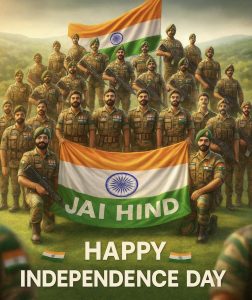
Evening celebrations light up neighborhoods with buildings decorated in saffron, white and green. Many families fly flags at home, wear tricolor clothing, or share sweets with neighbors.
Challenges and Opportunities for Modern India
A. Social Equality and Justice
India’s journey toward social equality is still a work in progress. Despite constitutional guarantees, caste discrimination remains deeply entrenched in rural areas. Women still earn 19% less than men for the same work, and only 14% of leadership positions are held by females.
But there’s hope. Grassroots movements are gaining momentum. The #MeToo movement has forced a national conversation about gender-based violence. Dalit activism has moved beyond traditional protests to digital advocacy, reaching millions through social media.
The real question is: can we turn these conversations into lasting change? Recent Supreme Court judgments protecting LGBTQ+ rights show institutional progress, but implementation at the ground level is where we struggle.
B. Economic Challenges and Reforms
The Indian economy stands at a crossroads. Youth unemployment hovers around 23%, while inflation eats away at middle-class savings. Small businesses, once the backbone of our economy, are fighting to survive.
The government’s push for digitalization has created opportunities, with UPI transactions crossing 9.4 billion monthly. Startups are flourishing in tier-2 cities, not just metros.
But who’s being left behind? Nearly 60% of our workforce remains in agriculture, where incomes are stagnant. The path forward requires balancing global integration with protecting vulnerable sectors.
C. Environmental Sustainability
Climate change isn’t some distant threat for India – it’s happening now. Extreme weather events have increased by 40% since 2000, affecting millions of farmers.
Water scarcity hits harder each year. Over 600 million Indians face high to extreme water stress. Yet we’re seeing incredible innovation. Solar capacity has grown 18-fold in the last decade. Community-led conservation efforts are restoring watersheds and forests.
The sustainability challenge is massive but not insurmountable. Urban centers are experimenting with electric public transport, while villages pioneer zero-waste systems.
D. National Security and Defense Preparedness
India’s security landscape has evolved dramatically. Cyber threats now rival traditional border concerns, with attacks increasing 300% in the past five years.
Our defense modernization is accelerating, with indigenous production reaching new milestones. The Tejas fighter jet and nuclear submarine programs showcase growing self-reliance.
Border tensions remain complex, requiring both diplomatic finesse and military readiness. Internal security challenges demand a balanced approach between technology-driven surveillance and community policing.
The defense sector is also becoming an economic driver, with the potential to create thousands of specialized jobs. Security in modern India isn’t just about military strength – it’s increasingly about technological sovereignty and economic resilience.
Vision for India’s Future
A. Goals for the Centenary of Independence
India isn’t just dreaming small for its 100th independence milestone in 2047. The nation’s aiming for the stars with its “Amrit Kaal” vision – a comprehensive blueprint for becoming a developed nation within these next crucial decades.
What’s on this ambitious wishlist? Economic transformation tops the chart – with goals to hit a $30 trillion economy and boost per capita income to $18,000. And it’s not just about the money. India wants to eliminate poverty completely, create world-class infrastructure across both rural and urban areas, and achieve carbon neutrality.
The roadmap includes some serious heavy lifting: manufacturing contributing 25% of GDP, 100% literacy, universal healthcare access, and energy independence. These aren’t just government talking points – they represent the collective aspiration of 1.4 billion Indians.
B. Youth Empowerment and Education
The numbers don’t lie – with over 65% of Indians under 35, this demographic dividend could either be our greatest asset or biggest missed opportunity.
Education reform stands at the crossroads of this future. The National Education Policy 2020 is already reshaping how young Indians learn – emphasizing critical thinking over rote memorization, practical skills over theoretical knowledge.
Digital education initiatives are breaking down barriers, bringing quality learning to remote villages. Skill development programs like Skill India and Startup India are creating entrepreneurs, not just job seekers.
The youth aren’t just passive recipients though. They’re actively driving change through innovation hubs, social enterprises, and grassroots movements. Their energy is contagious – challenging outdated systems and reimagining what’s possible.
C. Digital India and Technological Innovation
India’s digital revolution isn’t coming – it’s already here.
The transformation is staggering. From UPI payments that have democratized financial transactions to the JAM trinity (Jan Dhan-Aadhaar-Mobile) that’s revolutionized service delivery, technology is reshaping everyday life for millions.
India Stack – the world’s largest public digital infrastructure – has become a global case study in inclusive technology. The Digital India program continues pushing boundaries, connecting remote villages to the information superhighway and bringing government services to citizens’ fingertips.
Indigenous innovations like Gaganyaan (India’s human spaceflight program) and advances in quantum computing show India’s not just adopting technology but creating it. The startup ecosystem is booming, with unicorns emerging in everything from edtech to fintech.
This digital transformation isn’t just about economic growth – it’s creating a more transparent, efficient and inclusive society. Rural farmers checking market prices on smartphones, elderly citizens receiving pension payments directly, students accessing world-class education online – this is the new India.
D. Global Leadership Aspirations
India is finally claiming its seat at the global high table.
The world’s largest democracy and soon-to-be third-largest economy isn’t just participating in global conversations – it’s shaping them. From climate action to digital public goods, India’s bringing unique perspectives and solutions to worldwide challenges.
The country’s diplomatic footprint continues expanding, with initiatives like the International Solar Alliance and Coalition for Disaster Resilient Infrastructure demonstrating its commitment to collaborative problem-solving. India’s growing soft power – through yoga, cuisine, films, and philosophy – complements its economic and political influence.
At international forums, India advocates for reformed multilateralism that better reflects today’s geopolitical realities. Its G20 presidency theme – “One Earth, One Family, One Future” – captures its vision for a more equitable, sustainable global order.
As traditional power structures evolve, India positions itself as a bridge between the Global North and South, leveraging its unique development experience and democratic credentials. The nation’s journey from colonial subject to global leader in just eight decades offers an inspiring narrative for emerging nations worldwide.

Celebrating 79 Years of Freedom and Progress
India’s journey from colonial rule to a sovereign nation has been marked by tremendous sacrifice, resilience, and achievement. Through 79 years of independence, the country has made remarkable strides in various fields including technology, education, healthcare, and global diplomacy, while maintaining its rich cultural heritage and democratic values. The traditions of flag hoisting, cultural programs, and patriotic celebrations continue to unite Indians across the nation and abroad on this significant day.
As India faces contemporary challenges of economic inequality, environmental concerns, and geopolitical complexities, these obstacles also present opportunities for innovation and growth. Looking toward the future, India’s vision remains focused on inclusive development, technological advancement, and strengthening its position as a global leader. The spirit of freedom that inspired the independence movement continues to drive India’s progress as it works toward fulfilling the dreams of its founding visionaries and creating a prosperous nation for generations to come.
