
In atheism and a socialist state system, people cannot be loyal to any religion. Ever wonder why some totalitarian regimes went to such extreme lengths to eradicate religion? It wasn’t just political—it was existential.The marriage between atheism and socialist state systems shaped entire generations across Eastern Europe and Asia. You’ve probably seen the abandoned churches repurposed as museums of atheism or heard stories of underground religious communities risking everything.In this deep dive, we’ll explore how atheism became the mandatory worldview in socialist states and what happened when governments tried to engineer a post-religious society.The relationship between atheism and the socialist state wasn’t just policy—it was a fundamental reimagining of human society without divine authority.But here’s the million-dollar question: did these massive social experiments actually create the atheist utopias their architects envisioned?

Historical Foundations of State Atheism
A. The Marxist Critique of Religion as “Opium of the Masses”
Karl Marx’s famous quote about religion being “the opium of the people” wasn’t just a clever sound bite. It was a deep analysis of how religion functions in society. Marx saw religion as a tool that kept workers docile while the rich exploited them. Think about it – if you believe you’ll get your reward in heaven, you might put up with more suffering on earth.Marx didn’t hate religious people. He actually sympathized with them. In his view, religion was a response to real suffering – a kind of painkiller (hence the opium analogy). But instead of just treating the symptoms, Marx wanted to cure the disease: capitalism itself.His critique went deeper than just “religion is bad.” He saw it as a social institution that:
- Distracted workers from their exploitation
- Provided comfort without changing material conditions
- Justified existing power structures as “divine will”
- Postponed justice to an afterlife rather than demanding it now
For Marx, atheism wasn’t the goal – it was just a step toward human liberation. Once people stopped looking to the heavens for solutions, they could start building a better world right here.
B. Lenin’s Implementation of Atheistic Policies in Early Soviet Russia
When Lenin and the Bolsheviks seized power in 1917, they didn’t waste time putting Marx’s ideas about religion into practice. The Orthodox Church had been buddy-buddy with the Tsar for centuries, so it was high on Lenin’s hit list.Within weeks of taking control, Lenin issued the “Decree on the Separation of Church and State.” This wasn’t just about constitutional principles – it was economic warfare. The decree:
- Stripped the Church of its property
- Banned religious teaching in schools
- Ended government subsidies to religious institutions
- Made marriage a civil, not religious, ceremony
But Lenin was also pragmatic. He knew rushing anti-religious campaigns too quickly might backfire. In a 1921 letter, he warned against “combating religious prejudices by direct and crude methods” which would only “strengthen religious fanaticism.”The early Soviet approach wasn’t just about tearing down churches – it was about building a replacement. They created new secular rituals: “Octobering” ceremonies instead of baptisms, revolutionary holidays instead of religious ones, and workers’ clubs instead of parish gatherings.Churches weren’t just closed – they were repurposed as museums of atheism, grain storage facilities, or community centers. The message was clear: these buildings now served the people, not God
C. How State Atheism Became a Cornerstone of 20th Century Socialist Regimes
Look at any major socialist revolution of the 20th century, and you’ll find state atheism baked right into the system. It wasn’t optional – it was foundational.By the 1930s, Stalin had ramped up anti-religious campaigns to new heights. The League of Militant Atheists grew to millions of members. Their slogan? “The struggle against religion is the struggle for socialism.”This blueprint spread globally as socialist revolutions emerged:
| Country | Leader | Anti-Religious Policies |
|---|---|---|
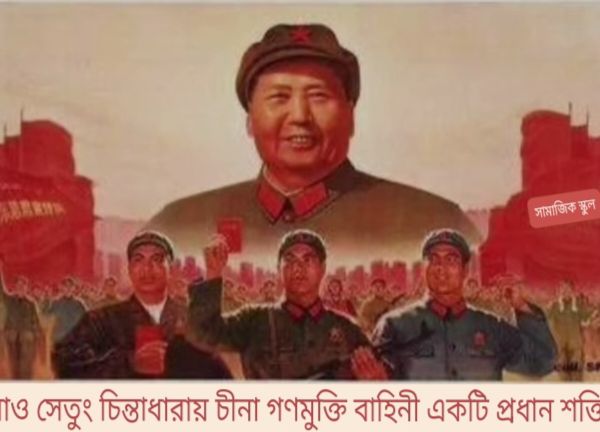
| China | Mao Zedong | “Religion is poison” campaign, destruction of temples during Cultural Revolution |
| Cuba | Castro | Church property seized, religious schools nationalized, believers banned from Communist Party |
| Cambodia | Pol Pot | Buddhist monks targeted, temples destroyed, religious practice banned entirely |
| Albania | Hoxha | Declared world’s first “atheist state” in 1967, all religious practice criminalized |
Why was atheism so central? Because socialist states needed to replace existing power structures with party loyalty. Religious institutions represented:
- Alternative sources of authority
- Networks outside state control
- Traditional values that competed with revolutionary ones
- International connections beyond government oversight
The party couldn’t tolerate competing loyalties. As Mao put it: “There cannot be two suns in the sky.” Either the party or religion would be the guiding light – not both.
D. Contrasting Approaches: Militant vs. Moderate State Atheism in Different Socialist States
Not all socialist states approached religion with the same sledgehammer. Some realized that brutal suppression often backfired, creating martyrs and underground movements.Albania and North Korea represent the extreme end – outright banning religious practice and severely punishing believers. These militant approaches are typically included:
- Physical destruction of religious buildings
- Imprisonment or execution of clergy
- Forced public renunciations of faith
- Complete ban on religious literature
- Religion treated as a criminal activity
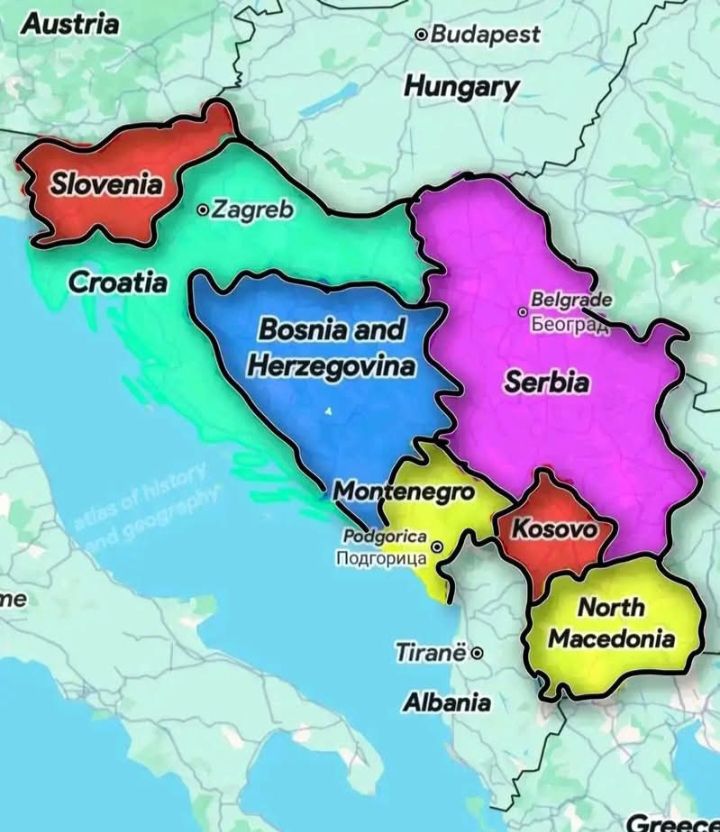
Other socialist states took a more moderate path. Yugoslavia under Tito and Nicaragua under the Sandinistas allowed some religious practice while keeping it politically neutered. These approaches typically:
- Permitted private worship but restricted public religious activities
- Allowed some churches to remain open under strict oversight
- Co-opted religious leaders who were sympathetic to socialism
- Created state-controlled religious organizations
- Limited religious education but didn’t ban it entirely
The results were telling. Countries with more militant approaches often saw religion go underground, becoming intertwined with nationalist resistance. When these regimes eventually collapsed, religious resurgence was often explosive.Meanwhile, states with moderate approaches maintained better control. By allowing limited religious expression, they reduced the appeal of underground worship and prevented religion from becoming a rallying point for opposition.Cuba’s evolution shows this learning curve. After initially harsh anti-religious policies, Castro gradually softened his approach, even welcoming Pope John Paul II in 1998. He had realized that making enemies of believers created more problems than it solved.
The Philosophical Underpinnings of Socialist Atheism
Dialectical Materialism and the Rejection of Supernatural Explanations
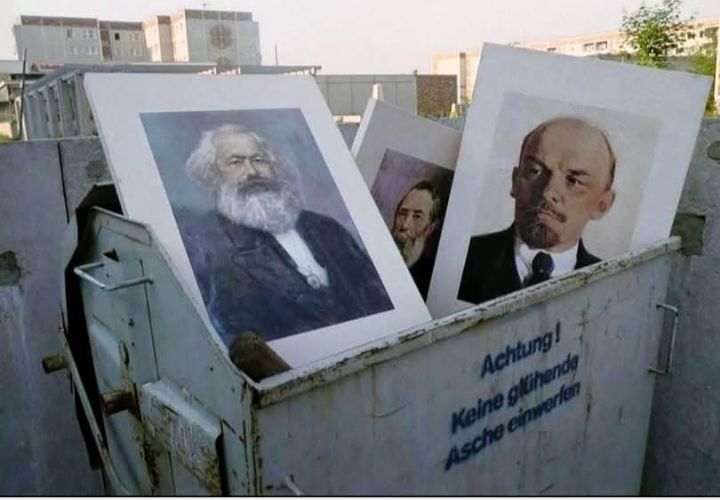
Think about it – when socialist states pushed atheism, they weren’t just randomly hating on religion. There was a whole philosophical framework behind it.At the heart of this thinking was dialectical materialism, Marx and Engels’ big idea that everything in the universe is basically matter in motion. Nothing supernatural needed, thanks very much.These thinkers looked at the world and said, “Hey, we don’t need gods or spirits to explain how things work.” They believed reality is just physical stuff interacting according to natural laws. Full stop.For Marx, religion was a symptom of material conditions gone wrong. Fix those conditions, and poof! No more need for religious comfort.When socialist states adopted this view, they weren’t being arbitrarily anti-religious. They were working from a philosophical position that saw supernatural explanations as outdated ways of understanding the world – mental crutches that would naturally fall away once science and material progress took hold.

The Concept of Scientific Socialism and Its Incompatibility with Religious Thought
Scientific socialism claimed to be exactly what it sounds like – socialism based on science, not wishful thinking. And this created an immediate tension with religious worldviews.Marx and Engels saw their approach as radically different from earlier “utopian” socialist ideas. They weren’t dreaming up perfect societies based on moral ideals. They believed they were uncovering actual laws of historical development, as real and provable as gravity.Religious thinking, with its faith-based approach and supernatural elements, directly contradicted this scientific self-image. How could you base a society on scientific principles while simultaneously endorsing worldviews that accepted miracles and divine intervention?In socialist thinking, religion was fundamentally backward-looking, keeping people tied to pre-scientific explanations. Scientific socialism was forward-looking, promising to build society on rational, evidence-based foundations.This clash wasn’t just academic. When socialist states tried implementing their vision, they often saw religious institutions as competing power centers offering alternative explanations for how society should work.
How Socialist Theory Positioned Religion as an Obstacle to Class Consciousness
Religion wasn’t just intellectually incompatible with socialism – according to Marx, it actively worked against revolutionary change. That famous “opium of the people” quote wasn’t a compliment.Socialist theory argued that religion dulled people’s awareness of their actual material conditions. It redirected righteous anger about inequality into passive acceptance. Why fight for justice now when heaven promises eternal rewards later?This made perfect sense within Marxist theory. If workers were going to unite and overthrow capitalism, they needed to see their shared class interests clearly. Religion, by emphasizing other identities and promising otherworldly solutions, fractured this class solidarity.Socialist states took this theoretical position and ran with it. They viewed religious institutions not as neutral cultural entities but as active obstacles to building class consciousness.The cruel irony? Many religious traditions shared socialism’s concern for the poor and oppressed. But the philosophical gap was too wide to bridge in most cases.
Existential Questions: How Socialist States Addressed the Human Need for Meaning
People crave meaning. We want to know why we’re here and what it’s all for. Religion traditionally answered these questions, so socialist states had to fill that vacuum somehow.Most tried replacing religious meaning with collective purpose. Instead of working for God’s glory or personal salvation, citizens were urged to find fulfillment in building the new society. Your life had meaning because you were part of the great historical march toward communism.This substitution worked differently across various socialist experiments. Some created elaborate civic rituals and ceremonies that mimicked religious observances. Others developed personality cults around leaders that offered a focus for devotion formerly directed to divine figures.Did it work? Sometimes, partially. The early revolutionary fervor in many socialist states genuinely provided meaning for true believers. But over time, the gap between ideological promises and everyday reality grew.What socialist states discovered, often painfully, was that addressing existential questions isn’t optional in human societies. When official atheism failed to satisfy these deep human needs, religion often persisted underground, waiting for the moment to reemerge.

Implementation and Enforcement of Atheistic Policies
A. Anti-Religious Campaigns and Propaganda Strategies
The socialist world didn’t just wake up one day and decide religion was the enemy. It was a calculated effort spanning decades.Look at the Soviet Union’s League of Militant Atheists in the 1920s and 30s. These folks weren’t playing around. They published magazines like “Bezbozhnik” (The Godless) filled with cartoons mocking priests and rabbis. They staged public debates where religious leaders were set up to fail against “scientific” arguments.In China, Mao’s Cultural Revolution took things to another level. Red Guards would parade religious leaders through the streets wearing dunce caps. Public humiliation was the name of the game.What made these campaigns so effective? They tapped into existing resentments. “Your children are hungry because the church takes your money.” “The monks live in luxury while you suffer.” Messages like these resonated with people who had genuine grievances.Television and radio broadcasts in Albania under Enver Hoxha (who declared the world’s first atheist state in 1967) constantly reminded citizens that religion was “the opium of the people” and a tool of foreign powers.
B. Conversion of Religious Buildings to Secular Purposes
The repurposing of religious buildings wasn’t just practical—it was symbolic warfare.Moscow’s Cathedral of Christ the Savior? Blown up in 1931 to make way for a never-completed Palace of the Soviets. The site eventually became a swimming pool until the post-Soviet era when the cathedral was rebuilt.Cambodia’s Buddhist temples became detention centers under the Khmer Rouge. Imagine being tortured in a space once dedicated to peace and meditation. That’s psychological warfare at its most brutal.In East Germany, churches weren’t usually destroyed outright. That would’ve been too obvious. Instead, they were gradually converted into “cultural houses” or museums of atheism. The famous Frauenkirche in Dresden sat in ruins for decades after WWII—the socialist government had other rebuilding priorities.Some examples of repurposed religious buildings across socialist states:
| Original Purpose | New Function | Location |
|---|---|---|
| Cathedral | Grain storage | Kazan, USSR |
| Monastery | Prison | Romania |
| Mosque | Cinema | Albania |
| Church | Museum of Atheism | Leningrad, USSR |
C. Education Systems and Youth Indoctrination Programs
Kids’ minds were the real battleground in socialist states. Catch them young, and you’ve got them for life.The Young Pioneer organizations—present in nearly every socialist country—weren’t just about camping and singing songs. They were designed to create the “New Socialist Person” free from religious “superstition.”In Soviet classrooms, science textbooks explicitly debunked religious creation myths. Teachers would ask students to pray for candy to appear on their desks, then when nothing happened, they’d tell the class, “See? Now let’s ask the Party instead”—and pull out hidden treats.Cuban schools introduced “Scientific Atheism” as a subject. Students learned that religion was unscientific and incompatible with revolutionary thinking.The most effective approach? Making religion seem uncool and old-fashioned. North Korean children learn that only backward, gullible people believe in supernatural beings. Meanwhile, their calendar starts with Kim Il-sung’s birth rather than Christ’s.
D. Legal Frameworks: From Persecution to Tolerance in Various Socialist Regimes
The legal approach to religion in socialist states wasn’t one-size-fits-all. It evolved over time and varied widely from country to country.Early Soviet laws weren’t subtle. The 1918 decree on the Separation of Church and State stripped religious organizations of property rights and legal status. Clergy were classified as “non-workers” and denied food rations and voting rights.Compare that with Poland under socialism, where the Catholic Church maintained significant influence. The government couldn’t afford to alienate the deeply religious population, so they reached an uneasy compromise.Yugoslavia under Tito took a middle path. Religious practice was tolerated as long as it didn’t challenge the state’s authority. “You can pray, just don’t organize politically.”China’s approach has been fascinating to watch evolve:
 Vietnam and Laos eventually softened their stance too. They realized harsh suppression created martyrs and underground movements, while controlled religious expression could actually help social stability.
E. The Role of Secret Police in Monitoring Religious Activities
The eyes and ears of every socialist state were its secret police, and they watched religious communities like hawks.The Soviet KGB had entire departments dedicated to infiltrating religious groups. They’d plant agents in seminaries to become priests, then report on their colleagues or push state-friendly theological interpretations.Romania’s Securitate was particularly thorough. They bugged confessionals and blackmailed priests with recordings of confessions. How’s that for destroying sacred trust?In East Germany, the Stasi recruited about one informant for every 6.5 citizens. Religious communities were riddled with them. That prayer group you attended? At least one person was taking notes for the government.The psychological impact was devastating. Never knowing who you could trust led many believers to self-censor or abandon their faith entirely.North Korea perfected this system with the “inminban” neighborhood units where citizens spy on each other. Religious activity is among the most serious “crimes” they’re told to report.Cambodia under Pol Pot took the most extreme approach—they simply eliminated religious leaders entirely. Buddhist monks, with their distinctive robes and shaved heads, were especially visible targets during the Khmer Rouge’s reign of terror.
Case Studies of Atheism in Socialist States
A. Soviet Union: From Revolutionary Fervor to Pragmatic Accommodation
The Soviet experiment with state atheism wasn’t just academic—it was revolutionary. When the Bolsheviks seized power in 1917, they viewed religion as the perfect enemy: an opiate keeping the masses docile under capitalism.During the early revolutionary period (1917-1928), the new Soviet government confiscated church property, executed clergy, and promoted “godless” education. The League of Militant Atheists, founded in 1925, grew to 5 million members by 1932 and published magazines with titles like “Godless” and “Godless at the Machine.”But here’s the twist—World War II changed everything.Stalin, desperate for national unity against the Nazi invasion, relaxed anti-religious policies. Churches reopened, priests were released from gulags, and the Orthodox Church suddenly found itself with limited government protection.After Stalin’s death, Khrushchev briefly revived anti-religious campaigns (1958-1964), shuttering half of all churches. Yet by the 1970s, Soviet leaders like Brezhnev adopted a more pragmatic approach:
| Period | Policy Approach | Religious Reality |
|---|---|---|
| 1917-1928 | Militant atheism | Direct persecution |
| 1941-1945 | Tactical retreat | Religious revival |
| 1958-1964 | Renewed campaigns | Administrative pressure |
| 1970s-1980s | Pragmatic coexistence | Underground growth |
By the 1980s, religion hadn’t vanished—it had gone underground. Despite 70 years of official atheism, when the USSR collapsed in 1991, religious identification surged back almost immediately.The Soviet case shows how even the most determined atheist state ultimately couldn’t eradicate religious belief, only drive it beneath the surface.
B. China’s Evolving Relationship with Religion Under Communist Rule
China’s communist revolution brought a different flavor of state atheism than the Soviet model. When Mao Zedong established the People’s Republic in 1949, the government’s approach to religion was more strategic and less immediately violent.Initially, the Chinese Communist Party created a religious affairs bureau to control—not eliminate—the five officially recognized faiths: Buddhism, Taoism, Islam, Catholicism, and Protestantism. Religious leaders were pressured to sever foreign ties and declare loyalty to the Communist Party.Then came the Cultural Revolution (1966-1976).Religious persecution reached fever pitch as Red Guards destroyed temples, churches, and mosques across China. Religious practitioners faced public humiliation, imprisonment, and even execution. Tibetan Buddhism suffered particularly harsh treatment as the government viewed it as both religiously and politically threatening.After Mao’s death, Deng Swapping economic reforms brought unexpected religious policy shifts:
Today’s China presents fascinating contradictions. The country hosts the world’s largest Buddhist population and fastest-growing Christian community—while simultaneously implementing sophisticated surveillance systems to monitor religious activities.The government’s approach has evolved from brutal suppression to what scholars call “managed religious pluralism”—allowing faith to exist but only under strict Party oversight. Religious groups that challenge state authority (like Falun Gong) face severe repression, while compliant organizations receive official recognition.China demonstrates how atheist states can evolve beyond elimination strategies toward sophisticated control mechanisms that attempt to harness religion for nationalist goals.
C. Cuba: Fidel Castro’s Journey from Religious Suppression to Limited Tolerance
When Fidel Castro seized power in 1959, he didn’t immediately target religion. The break came in 1961 when the revolutionary government nationalized Catholic schools and expelled foreign priests. Castro declared Cuba an atheist state in 1962, banned public religious displays, and prohibited believers from joining the Communist Party.The contrast with pre-revolutionary Cuba couldn’t have been sharper. Once dominated by Catholic influence, the island became a laboratory for state atheism in the Western Hemisphere.But Cuba’s religious story isn’t simple suppression. While Catholicism faced restrictions, Afro-Cuban religious practices like Santería often continued undisturbed—partly because the government viewed them as cultural traditions rather than organized religion.The real turning point came in the 1990s after the Soviet collapse:
In 1992, facing an economic crisis after Soviet support vanished, Castro amended the constitution to declare Cuba a secular (rather than atheist) state. Religious believers could now join the Communist Party. Pope John Paul II’s 1998 visit marked the first Christmas celebrated as a national holiday in decades.What makes Cuba fascinating is how pragmatism ultimately trumped ideology. When economic survival required improved relations with religious nations, Castro—once a hardline atheist—found himself welcoming the Pope and permitting greater religious expression.By the time Fidel handed power to his brother Raúl, state atheism had given way to a peculiar Cuban religious pluralism—where Catholic priests, Protestant pastors, and Santería practitioners operated with varying degrees of freedom under watchful government eyes.
D. Eastern European Variations: Poland’s Catholic Resistance vs. Albania’s Extreme Atheism
Eastern Europe under Soviet influence wasn’t a monolithic bloc of atheist states. Instead, it presented a fascinating spectrum of religious policies that revealed how local conditions shaped communist approaches to faith.On one end stood Poland—proof that imposing atheism could backfire spectacularly. Despite four decades of communist rule, Poland’s Catholic identity never faltered. The Church became the center of national resistance against Soviet domination. When Cardinal Karol Wojtyła became Pope John Paul II in 1978, the communist government faced an impossible situation: their most famous citizen was now the global head of Catholicism.The Solidarity movement that eventually toppled Polish communism emerged directly from Catholic social networks and church-protected spaces. Polish communists learned the hard way that attacking deeply rooted religious identity could strengthen rather than weaken opposition.On the opposite extreme sat Albania under Enver Hoxha, who in 1967 declared the world’s first officially atheist state. Albania’s approach was radical:
Albania banned all religious practices, closed every house of worship, and made religious teaching a crime punishable by death. Priests and imams faced execution or imprisonment. Religious buildings were converted to secular uses or destroyed entirely. Even private prayer was forbidden.When communism collapsed in 1991, Albania’s religious communities had to rebuild almost from scratch. Mosques, churches, and monasteries reopened, but decades of forced atheism had created a generation with little religious knowledge.These Eastern European contrasts reveal a crucial insight: state atheism’s success depended less on ideological fervor than on local religious conditions, historical context, and implementation methods. Where religion was tied to national identity (Poland), atheist policies failed dramatically. Where the state controlled all aspects of life (Albania), religion could be temporarily suppressed—but rarely eliminated permanently.
Social and Cultural Impacts of State Atheism
Social and Cultural Impacts of State Atheism
A. The Creation of Secular Rituals and Celebrations to Replace Religious Traditions
When socialist states banned or severely restricted religion, they didn’t just leave a void. They filled it with new traditions. Think about it – humans crave ritual and celebration. We need those moments that mark time and bring us together.Soviet officials knew this when they created “Octobering” ceremonies to replace Christian baptisms. Parents would present their babies to Communist Party officials instead of priests. The child would receive a red star pin rather than holy water.Marriage? That got a makeover too. Couples exchanged vows in “Palaces of Happiness” with portraits of Lenin watching over them instead of religious icons.Major holidays weren’t forgotten either. Christmas trees became “New Year trees.” Easter’s spring celebration morphed into festivals honoring workers and harvests.In East Germany, they created the Jugendweihe (youth dedication) ceremony as a socialist alternative to confirmation. By the 1980s, over 90% of teenagers participated in these coming-of-age rituals.The new celebrations weren’t just replacements – they actively promoted socialist values. State holidays featured massive parades showcasing military might and worker solidarity. Citizens didn’t just attend; their presence was often mandatory, tracked through workplace and school attendance records.

B. Underground Religious Movements and Their Role in Resistance
Religion doesn’t disappear just because a government says so. It goes underground.In Soviet Russia, babushkas (grandmothers) kept Orthodox traditions alive at home while priests held secret masses in forests and basements. Polish Catholics gathered in homes when churches were monitored. In China, “house churches” formed as independent Christian communities outside state control.These weren’t just spiritual gatherings – they became islands of free thought. When you can’t trust official information, religious communities offered alternative networks and perspectives.Religious resistance took many forms. Sometimes it was simply preserving traditions – secretly baptizing children or celebrating religious holidays behind closed doors. Other times, it meant open defiance.In Poland, the Catholic Church became the backbone of anti-communist resistance. When Pope John Paul II visited in 1979, over a million Poles attended his Warsaw mass – a clear message to authorities that Catholicism remained a powerful force.Underground religious printing presses produced banned texts, from prayer books to political commentary. These samizdat (self-published) materials created hidden information networks that communist authorities couldn’t control.Religious dissidents paid heavy prices – job loss, imprisonment, sometimes execution. Yet their persistence kept alternative value systems alive under oppressive regimes.
C. The Psychological Effects of Forced Secularization on Populations
Forcing people to abandon their beliefs doesn’t come without psychological costs. Many citizens in atheist states lived double lives – outwardly conforming while privately maintaining their faith.This constant deception created what psychologists call “cognitive dissonance” – the mental stress of holding contradictory beliefs. Parents had to decide: teach children religious traditions and risk them accidentally revealing this at school, or deprive them of their heritage?For true believers in both camps, the situation was traumatic. Devout Christians, Muslims and Jews saw their sacred spaces destroyed or repurposed. Meanwhile, committed communists watched as older generations clung to “superstitions” they believed were holding society back.The state’s intrusion into deeply personal beliefs violated psychological boundaries. Religious holidays once spent with family became workdays. Sacred rituals marking birth, marriage and death were replaced with bureaucratic ceremonies lacking spiritual meaning.When Bulgaria forced its Turkish Muslim minority to adopt Slavic names in the 1980s, the psychological impact was devastating. Many experienced depression and identity crises when forced to abandon names that connected them to their ancestors and faith.Perhaps most damaging was the breakdown of trust. When neighbors might report religious activities to authorities, community bonds fractured. This atmosphere of suspicion left psychological scars that outlasted the regimes themselves.
D. How Religious Identity Became Intertwined with National Identity in Many Socialist States
Something unexpected happened under state atheism – religion and nationalism fused together.In Poland, “Polish” became synonymous with “Catholic” despite communist rule. The more the state pushed against religion, the more it became a symbol of national resistance. When Polish Catholics gathered at the Black Madonna of Częstochowa, they weren’t just worshipping – they were asserting their Polish identity separate from Soviet influence.This pattern repeated across the Eastern Bloc. In Lithuania, the Hill of Crosses became both a religious pilgrimage site and a symbol of national resistance. Every time authorities bulldozed the crosses, locals replaced them overnight.Romania’s Orthodox Church managed a delicate balance – officially cooperating with the Ceaușescu’s regime while preserving Romanian cultural identity. Church leaders emphasized Orthodoxy’s historical role in Romanian nationhood, making it harder for authorities to attack.The phenomenon wasn’t limited to Christianity. In Soviet Central Asia, being Uzbek or Tajik became intertwined with Muslim identity, despite official atheism. Traditional Islamic practices became expressions of cultural resistance against Russification.This merger of religious and national identity created a powerful counter-narrative to communist internationalism. While official propaganda emphasized worker solidarity across borders, religious-national identity reminded citizens of histories and traditions that predated and would outlast communist rule.When these regimes fell in 1989-1991, religious institutions were uniquely positioned to fill the vacuum. They had maintained legitimacy when state institutions had lost it, explaining the religious revivals that followed communism’s collapse across Eastern Europe and beyond.
The Collapse of Socialist States and Religious Revival
Religion as a Force for Anti-Communist Resistance
When communist regimes tried to squash religion, they didn’t count on one thing: faith runs deeper than politics. Across the Soviet bloc, religious communities became unexpected hotbeds of resistance.In Poland, the Catholic Church stood as the backbone of opposition. When Pope John Paul II visited his homeland in 1979, millions turned out. The message was clear: communism hadn’t killed Poland’s soul. Within a year, Solidarity was born, with religious symbols prominently displayed at protests and meetings.Underground churches in East Germany hosted peace prayers that morphed into the massive Monday demonstrations of 1989. In Lithuania, the Chronicle of the Catholic Church documented religious persecution, becoming the longest-running samizdat publication in the USSR.Even in Romania, where Ceaușescu’s grip seemed unbreakable, Pastor László Tőkés’ refusal to leave his church in Timișoara sparked the revolution that toppled the dictator.Religion provided what communism couldn’t: moral authority, connection to national identity, and most importantly, a language to express dissent when political speech was dangerous.
The Post-Soviet Religious Renaissance in Eastern Europe and Russia
The fall of the Berlin Wall didn’t just change political maps—it unleashed a religious revival that shocked many Western observers.In Russia, Orthodox church attendance skyrocketed. Buildings seized by Soviet authorities were returned and restored. Between 1991 and 2010, the number of active parishes grew from 3,451 to nearly 30,000. Even former Communist Party members started showing up with candles in hand.The pattern repeated across Eastern Europe:
- Albania, once declared the world’s first atheist state, saw mosques and churches reopen by the hundreds
- In East Germany, confirmation classes filled up with teenagers whose parents had never set foot in church
- Ukraine experienced competing revivals of Orthodox, Catholic, and Protestant churches tied to questions of national identity
This wasn’t just spiritual hunger—it was people reclaiming suppressed identities. Religion became a way to process collective trauma and rebuild civil society in the post-communist vacuum.For many citizens, embracing faith was an act of personal decolonization—rejecting the ideology that had been forced upon them for generations.
How Former Socialist States Navigate Church-State Relations Today
The religious comeback in former communist countries has created some fascinating—and messy—church-state dynamics.Russia embraced Orthodoxy as a pillar of national identity, with Putin and Patriarch Kirill developing a relationship so close it’s hard to tell where the church ends and state begins. Religious conservatives and government officials team up to promote “traditional values” against Western liberalism.Poland’s situation is equally complex. The Catholic Church remains politically powerful, influencing hot-button issues like abortion and LGBT rights. But younger Poles are increasingly questioning this arrangement, creating new tensions.Other countries have taken different paths:
- Czech Republic maintained its largely secular outlook, becoming one of Europe’s least religious nations
- Hungary under Orbán embraces Christian identity politically while actual church attendance remains low
- Estonia keeps religion largely private, with strict separation of church and state
The diversity shows there’s no single “post-communist” model for religion in public life. Each country is working through its unique historical baggage. What’s clear is that the pendulum swing from forced atheism often landed on some form of religious nationalism—creating new challenges for pluralism and minority rights.
Lessons on the Futility of Forced Ideological Conversion
The communist experiment in mass atheism stands as one of history’s most spectacular ideological failures. Turns out, you can’t just decree what people believe.Soviet authorities tried everything: they demolished churches, executed clergy, mocked believers, and bombarded citizens with “scientific atheism.” They created secular alternatives to religious ceremonies and even their own communist saints. Yet the moment controls loosened, churches filled again.This teaches us something profound about human nature. People resist having worldviews imposed on them—especially when those views contradict deeply held values or family traditions.The backlash effect was especially strong. By persecuting religion, communist regimes inadvertently made faith more attractive. Forbidden fruit tastes sweetest, and underground churches gained moral authority precisely because they were oppressed.This pattern extends beyond religion. When states try to force any comprehensive doctrine—whether religious or secular—they typically create resistance rather than conversion.The more aggressively atheism was promoted, the more it became associated with an unpopular system. When that system collapsed, atheism’s credibility collapsed with it in many former socialist countries.The irony? By trying to eliminate religion, communist regimes ensured its survival and eventual resurgence.
Critical Evaluation of State Atheism’s Legacy
Critical Evaluation of State Atheism’s Legacy
A. Human Rights Violations in the Name of Secular Progress
The road to hell is paved with good intentions, and state atheism proves this point. While claiming to liberate people from “religious superstition,” regimes like Stalin’s Soviet Union, Mao’s China, and Pol Pot’s Cambodia committed some of the worst human rights violations in modern history.In the USSR, thousands of priests were executed, churches demolished, and believers sent to gulags. The Chinese Cultural Revolution saw Red Guards destroying irreplaceable cultural artifacts and forcing monks to denounce their beliefs. Cambodia’s Khmer Rouge took things even further, targeting not just religious leaders but anyone with religious connections.What’s striking isn’t just the violence, but the hypocrisy. These regimes claimed to be freeing people while denying them basic freedoms of conscience and expression.
B. The Failure to Eliminate Religious Belief Despite Decades of Effort
You can’t kill an idea. Despite massive propaganda campaigns, religious persecution, and “scientific atheism” education programs, state atheism’s grand project of eliminating religion failed spectacularly.After the USSR collapsed, Russian Orthodoxy surged back. In China today, Christianity is growing faster than in almost any other country. Albania, once declared “the world’s first atheist state,” now has thriving religious communities.This resilience raises profound questions: Why did these massive state efforts fail? The answer seems to lie in human nature itself. People seek meaning beyond material existence, and top-down attempts to reshape fundamental human needs often backfire.
C. Comparing State Atheism with Religious Fundamentalism: Structural Similarities
The irony is painful. State atheism and religious fundamentalism, supposedly polar opposites, share disturbing similarities:
Both systems demand total ideological conformity and punish dissent. Both claim exclusive access to truth. Both see individual conscience as subordinate to collective belief.
D. Contemporary Secular Movements’ Efforts to Distance Themselves from Authoritarian Atheism
Modern secular humanists and atheist organizations are working overtime to distance themselves from state atheism’s bloody legacy. Groups like the American Humanist Association explicitly reject coercion and embrace human rights.”New Atheists” like Richard Dawkins and Sam Harris face criticism when they appear to endorse anti-religious policies. Most contemporary atheist movements emphasize personal choice and religious liberty while opposing religious privilege in public life.This shift represents a healthy evolution. Rather than trying to eliminate religion through force, they’re advocating for neutral public spaces where all beliefs (or lack thereof) receive equal treatment under law.
E. The Relationship Between Political Freedom and Religious Freedom
History teaches us something clear: religious freedom and political freedom are intertwined. When governments restrict religious liberty, other civil liberties typically follow. Conversely, democratic societies that protect religious freedom tend to protect other rights too.This connection isn’t accidental. Both freedoms stem from the same principle: individuals should determine their own beliefs and practices without government coercion, so long as they don’t harm others.Even purely secular arguments support this view. Freedom of conscience – including religious conscience – serves as a check on state power. When governments claim authority over our innermost beliefs, they’re crossing a dangerous line that threatens democracy itself.The lesson? True freedom requires protecting even beliefs we disagree with. State atheism failed this test, and any viable political philosophy must do better.The intricate relationship between atheism and socialist state systems reveals how ideological frameworks can fundamentally reshape societies. From the historical foundations in Marxist thought to the varied implementations across different nations, state atheism served as a cornerstone of socialist governance—often with profound and sometimes devastating consequences for religious communities and cultural traditions. While aimed at creating secular, rationalist societies, these policies frequently led to persecution, cultural loss, and ultimately contributed to the social tensions that preceded many socialist states’ collapse.As we reflect on this complex historical legacy, we must acknowledge both the legitimate philosophical questions about religion’s role in society and the dangers of imposing atheism through state power. The subsequent religious revivals following socialist collapse demonstrate the resilience of faith communities and the limitations of top-down ideological transformation. Today’s societies can draw valuable lessons from this history as they navigate the delicate balance between religious freedom, secularism, and governance—recognizing that true social progress comes not through coercion but through respecting diverse worldviews while fostering common values that unite rather than divide.