
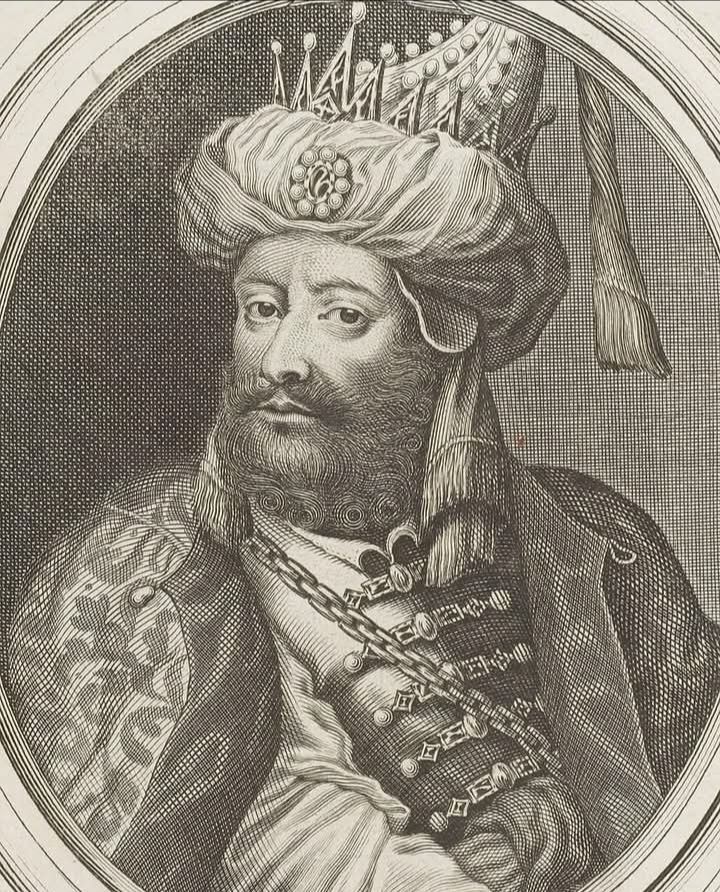
Thank you for reading this post, don't forget to subscribe!
Introduction : Aurangzeb’s religious policy-
Ever wondered what happens when a ruler’s like Aurangzeb’s religious policy decisions shape an entire empire? Aurangzeb’s religious policy remains one of history’s most controversial governing approaches.
Some call him a zealot who destroyed temples and imposed the jizya tax. Others point to his grants to Hindu institutions and employment of Hindu officials. The truth? It’s complicated.
His policies weren’t just about faith – they were political calculations in a diverse empire where religion and state were deeply intertwined.
By the end of this post, you’ll understand why simplistic “tolerant vs. intolerant” labels fail to capture the complex reality of Aurangzeb’s reign. And you might be surprised to learn how modern politics has shaped what you thought you knew about this Mughal emperor.
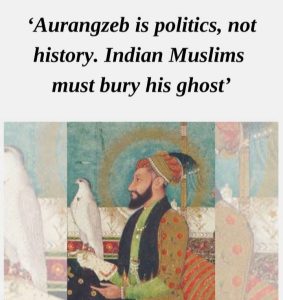
Who was Aurangzeb?
Aurangzeb, born Abul Muzaffar Muhi-ud-Din Muhammad Aurangzeb Alamgir in 1618, was the sixth emperor of the Mughal Empire. He grabbed the throne in 1658 after imprisoning his father Shah Jahan and eliminating his brothers in a brutal succession battle. Unlike Aurangzeb’s religious policy predecessors who were known for religious tolerance, Aurangzeb took a sharp turn.
He ruled for 49 years until his death in 1707, making him the longest-reigning Mughal emperor. His era marked the largest territorial expansion of the empire, stretching across most of the Indian subcontinent.
But territorial expansion came at a price. Aurangzeb spent much of his reign fighting rebellions and wars. He was a strict, disciplined ruler who lived simply despite his enormous wealth. He even sewed caps and copied the Quran to earn money for his personal expenses.
What really sets Aurangzeb’s religious policy apart from other Mughal emperors was his intense religious devotion. He memorized the Quran and followed Islamic law rigorously. Aurangzeb’s religious policy fervor heavily influenced his governance style and policies.
Many historians view him as controversial because while he was an effective military leader and administrator, Aurangzeb’s religious policy created deep divisions in Indian society. These tensions contributed to the eventual decline of the Mughal Empire after his death.
Understanding who Aurangzeb was helps explain why he implemented such contentious religious policies during his reign – policies that would leave a lasting impact on Indian history.
How many years did Aurangzeb rule as a Mughal emperor?
Aurangzeb ruled the Mughal Empire for an impressive 49 years, from 1658 until his death in 1707. This makes him the longest-reigning Mughal emperor in history, surpassing even his celebrated ancestors.
Think about that for a moment – nearly half a century of absolute power over what was then one of the world’s largest empires. When Aurangzeb took the throne, Louis XIV was still establishing himself in France. By the time Aurangzeb died, the American colonies were growing, the Scientific Revolution was transforming Europe, and the global balance of power was shifting dramatically.
His reign spanned almost the entire latter half of the 17th century, a period when the Mughal Empire reached its greatest territorial extent. Under his command, Mughal dominion expanded to include nearly the entire Indian subcontinent.
To put this in perspective:
| Mughal Emperor | Years Ruled | Territorial Achievement |
| Babur | 4 years | Established Mughal rule |
| Akbar | 49 years | Expanded central authority |
| Shah Jahan | 30 years | Cultural golden age |
| Aurangzeb | 49 years | Maximum territorial extent |
Aurangzeb’s extraordinary longevity in power gave him time to implement his controversial religious policies thoroughly. While his predecessors typically ruled for 20-30 years, Aurangzeb’s extended reign allowed his religious vision to become deeply entrenched in imperial policy, fundamentally altering the character of Mughal rule and leaving an indelible mark on South Asian history.
How many years did Aurangzeb rule as a Mughal emperor?
Aurangzeb ruled the Mughal Empire for an impressive 49 years, from 1658 until his death in 1707. This makes him the longest-reigning Mughal emperor in history, surpassing even his celebrated ancestors.
Think about that for a moment – nearly half a century of absolute power over what was then one of the world’s largest empires. When Aurangzeb took the throne, Louis XIV was still establishing himself in France. By the time Aurangzeb died, the American colonies were growing, the Scientific Revolution was transforming Europe, and the global balance of power was shifting dramatically.
His reign spanned almost the entire latter half of the 17th century, a period when the Mughal Empire reached its greatest territorial extent. Under his command, Mughal dominion expanded to include nearly the entire Indian subcontinent.
To put this in perspective:
| Mughal Emperor | Years Ruled | Territorial Achievement |
| Babur | 4 years | Established Mughal rule |
| Akbar | 49 years | Expanded central authority |
| Shah Jahan | 30 years | Cultural golden age |
| Aurangzeb | 49 years | Maximum territorial extent |
Aurangzeb’s extraordinary longevity in power gave him time to implement his controversial religious policies thoroughly. While his predecessors typically ruled for 20-30 years, Aurangzeb’s extended reign allowed his religious vision to become deeply entrenched in imperial policy, fundamentally altering the character of Mughal rule and leaving an indelible mark on South Asian history.
Religious Views of Aurangzeb
Aurangzeb’s Islamic Identity
Aurangzeb saw himself as a defender of Islam. Unlike his predecessors who embraced religious tolerance, he believed in strict adherence to Islamic principles. This wasn’t just political—it was deeply personal.
Think about this: while other Mughal emperors commissioned elaborate tombs, Aurangzeb requested a simple unmarked grave. He even paid for it by sewing prayer caps and copying Qurans, showing his commitment to Islamic simplicity.
His religious views weren’t just talk. He memorized the Quran, strictly observed daily prayers, and fasted regularly. Court historians noted how he avoided luxury and dressed modestly compared to the opulence of previous emperors.
Theological Influences
Aurangzeb’s worldview was shaped heavily by orthodox Sunni scholars, particularly those following the Hanafi school of jurisprudence. He surrounded himself with ulema (religious scholars) who reinforced his conservative interpretation of Islam.
The emperor’s letters reveal his anxiety about the afterlife and divine judgment. In one famous correspondence, he wrote: “I know not how I shall be received by God, and I fear for my salvation.”
This religious anxiety drove many of his policies. He wasn’t just building an empire—he was preparing for judgment day.
What’s fascinating is how his religious views evolved. Early in his reign, there was some flexibility, but as he aged, his positions hardened considerably. By his final decades, religious orthodoxy dominated both his personal life and state policy.
Religious Policies of Aurangzeb
From the Perspectives of Critics
Aurangzeb’s religious policies remain some of the most hotly debated aspects of Mughal history. Critics paint him as a religious zealot who reversed his predecessors’ tolerant policies. They point to how he abandoned the principle of sulh-i-kul (peace with all) that Akbar had championed.
Many historians highlight how his orthodox interpretation of Islam created deep divisions in the empire. His critics argue that while earlier Mughal rulers sought to balance between different religious communities, Aurangzeb actively promoted Islamic supremacy at the expense of Hindu subjects.
British colonial historians particularly emphasized his religious intolerance to justify their own rule. They portrayed him as the tyrant who destroyed the harmony of the Mughal Empire – a narrative that continues to influence popular perception today.
Establishment of Islamic Law
Aurangzeb’s religious policy wasn’t subtle about his religious agenda. He appointed muhtasibs (religious censors) throughout his empire to enforce Islamic moral codes. These officials cracked down on practices deemed un-Islamic – from drinking alcohol to gambling.
He banned music at court – a dramatic shift from his predecessors who were patrons of the arts. The emperor also dismissed court musicians and poets who didn’t align with his strict religious vision.
In 1679, he ordered the compilation of the Fatawa-e-Alamgiri, a comprehensive code of Islamic law. This massive legal document (spanning over 30 volumes) standardized Hanafi Islamic jurisprudence across the empire and replaced many customary laws that had accommodated diverse religious practices.
What is Jaziya taxation?
Jaziya, or Jizya, was a tax imposed on non-Muslim subjects in Muslim-governed territories throughout history. When Aurangzeb reimposed this tax in 1679, it marked a significant shift in Mughal policy.
Think of it as a protection tax. If you weren’t Muslim, you paid this special fee, and in return, the Mughal Empire would protect you and let you practice your faith. At least, that’s how it was framed officially.
The reality? It wasn’t just about money.
Aurangzeb’s religious policy – Jaziya served multiple purposes:
- Generated revenue for the state treasury
- Created economic pressure that encouraged conversion to Islam
- Established clear social hierarchy with Muslims at the top
- Aligned the empire with orthodox Islamic principles
The tax wasn’t applied equally to everyone. The rates varied based on economic status:
| Economic Class | Annual Jaziya Rate |
| Wealthy | 48 dirhams |
| Middle class | 24 dirhams |
| Poor | 12 dirhams |
Women, children, elderly, disabled persons, and religious figures were technically exempt.
When Aurangzeb brought back this tax, it wasn’t received well. Hindu merchants protested by closing their shops. Many subjects found it discriminatory and economically burdensome. Even some Muslim scholars and nobles questioned the wisdom of implementing it in a predominantly non-Muslim population.
The tax collection process itself often involved humiliation. Non-Muslims had to pay in person, sometimes while standing, as tax collectors sat on elevated platforms – a physical reminder of their inferior status.
Contrary to what some might claim, Jaziya wasn’t just standard operating procedure. Earlier Mughal rulers like Akbar had abolished it to promote religious harmony and integration.
Temple and Hindu Idols Destruction
The temple destruction policy wasn’t constant throughout Aurangzeb’s reign – it fluctuated based on political circumstances. But make no mistake, he definitely ordered the destruction of numerous Hindu temples.
Some famous temples he targeted include as a part of Aurangzeb’s religious policy:
- Vishwanath Temple in Varanasi
- Keshava Deo Temple in Mathura
- Somnath Temple in Gujarat
Interestingly, he also issued land grants to certain Hindu temples and protected others. Why the inconsistency? Simple – politics. He preserved temples when it served his strategic interests and destroyed them when he needed to assert Islamic authority or punish rebellion.
Reimposition of Jaziya – Aurangzeb’s religious policy
In 1679, Aurangzeb’s religious policy revived the jaziya tax on non-Muslims – a decision that sparked widespread resentment. This tax had been abolished by his great-grandfather Akbar nearly a century earlier.
The jaziya wasn’t just a revenue tool – it was a clear symbol of Islamic dominance and non-Muslim subordination. Hindu merchants and peasants felt the economic sting, while Hindu nobles saw it as a deliberate humiliation.
This tax policy fueled growing resistance to Mughal rule. The Marathas, Jats, and Sikhs all used Aurangzeb’s religious policies as rallying points for their rebellions. What’s often overlooked is how the jaziya created administrative headaches too – with complex exemptions for those serving the empire and constant disputes over collection methods.
Conclusion
Aurangzeb’s religious policies remain a complex and controversial aspect of Mughal history. The emperor’s 49-year reign transformed the empire in profound ways, leaving a legacy that continues to spark heated debate among historians and the public alike.
Looking at the evidence objectively, we can see that Aurangzeb implemented numerous Islamic policies that marked a significant departure from the religious tolerance of his predecessors. The reimposition of the jizya tax on non-Muslims, destruction of temples, and restrictions on Hindu practices weren’t isolated incidents but part of a systematic approach to governance.
Yet history is rarely black and white. The same ruler who ordered temple destructions also issued land grants to other Hindu temples and employed Hindus in high positions of his government. Aurangzeb’s religious policy motivations were often political rather than purely religious—targeting enemies who happened to be Hindu rather than Hindus as a whole.
What’s clear is that Aurangzeb’s religious policy contributed to fracturing the delicate religious balance within the empire. The resistance movements that emerged during his reign—particularly from Marathas, Sikhs, and Rajputs—were responses to his religious policies as much as his territorial ambitions.
When Aurangzeb’s religious policy died in 1707, he left behind an empire at its greatest territorial extent but internally weakened. The religious divisions he exacerbated accelerated the empire’s eventual decline, teaching us that even the mightiest empires cannot survive when they fail to accommodate their diverse populations.
