
Introduction:-
To talk about educational reforms of Akbar, one must first know Emperor Akbar and then think about his work, i.e., reforms. It can be said without a doubt that Educational reforms of Akbar was the only ruler of the Mughal period who rose above their sultanate empire and rose above the sultanate mentality and made arrangements for equal education for all.
On the one hand, he made arrangements for education for his friends, and on the other hand, he also made arrangements for Muslim students to receive education equally.
However, in order for Persian to become popular in the emperor’s court, students from both Hindu and Muslim communities devoted a lot of attention to practicing Persian.
At that time, teaching was unpaid, that is, the teacher received his money from the treasury and he taught people from all classes of society. However, as per the instructions of the emperor, the emperor specified some subjects for the students of his time, following their subjects from some textbooks from the outside world.
These subjects were quite relevant to the times, very necessary in practical life and this education was continued keeping in mind the future life
At that time, the printing industry was only widespread in China. As a result of the considerable expansion of the printing industry in China in the 12th century, students there had the opportunity to study various subjects and were selected through competitive post-graduate examinations. .
During the reign of Emperor Akbar, Agra was known as an educational city. He did not limit himself to establishing schools and educational institutions, madrasas, but his court regularly held discussions on literary and religious events.
He not only honored the learned men with respect, but also gave place to all scholars, poets, and writers. Abul Fazl and his brother Abul Faizi, Abdul Qadir Badaoni, Abdur Rahim, all of them enlightened his court. The book Ain-e-Akbari written by Abul Fazl was his unique creation.
Self educated :-
Some say that Emperor Akbar was illiterate, but another view says that Emperor Akbar was well-versed in history, while others say that he was also proficient in literature. The main point of all the issues is that he was equally sympathetic to all religions. During his reign, many foreign literary works were translated into Persian, and Hindu works like Ramayana and Mahabharata were also translated into Persian.
Just as he was sympathetic to all religions, his ability to unite this vast empire regardless of caste is considered one of the symbols of his political foresight.
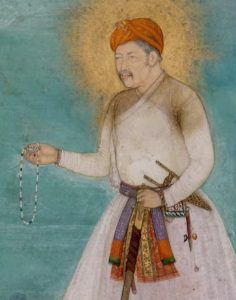
Although the education system of that time was somewhat religious, he made education life-oriented. On the one hand, although he himself was a Muslim, he felt that it was not possible to rule this vast empire dominated by Hinduism without Hindus.
Also, at that time, Buddhist missionaries arrived in India from China. There was also a fusion of Buddhism there. It is not easy to overcome these problems and build a life-oriented, practical education system for people of all religions.
Educational reform :-
Educational reforms of Akbar, the education system in the Muslim empire under royal patronage was limited to the people of the Muslim community only, he was the only Mughal emperor during whose reign people of both Hindu and Muslim communities could receive education in the same school. In this regard, he took a groundbreaking decision. On the other hand, child marriage was prevalent among people of both Muslim and Hindu communities.
He was the first to issue a law from the royal court that at the time of marriage, boys should be at least 16 years old and girls should be 14 years old. Educational reforms of Akbar this decision, in addition to showing the depth of his knowledge, brought about a social epoch-making change for all people, especially girls, at that time.
Not only that, he declared that the consent of both the parents of the bride and groom was necessary for any marriage, whether Hindu or Muslim.
Educational reforms of Akbar even did not issue any law against the practice of sati, but he could not force a woman to commit suicide against her will. Raja Bhagwan Das’s first cousin Jajman died at a very young age, in this case his wife refused to die with her husband, in this situation his stepson Uday Singh and close relatives almost forced him, i.e. his wife, to commit suicide, but as soon as the news reached Emperor Akbar, he rushed to the spot and saved the life of the young woman.
Conclusion :-
There are many more such incidents where Emperor Akbar saved all these widows from death as soon as he received the news. While ruling in a Hindu-dominated country, he did not want to harm Hinduism, but he did not allow any injustice to be done to any person.
Considering all these facts, there will be debate as to whether he can be called an educational reforme of Akbar or a social reformer.
