
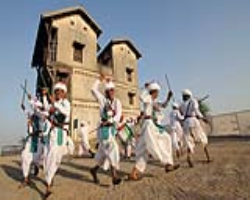
Introduction : Bhumij Tribe Culture in India
Basically, the Bhumij Tribe Culture in India is the same as other Indian tribal groups but they mix old traditions with new changes in a unique way. The Bhumij people actually number around 911,349 as per the 2011 census and are definitely found mainly in eastern Indian states like Jharkhand, West Bengal, Odisha, and Assam.
Basically, “Bhumij” comes from the Sanskrit word for land, meaning people born from soil, which shows the same deep connection they have with farming and being early settlers. Basically, this study looks at all parts of Bhumij culture – their history, social life, money matters, religion, festivals, and marriage ways – and the same challenges they face today to keep their culture alive with modern changes.
Historical Origins and Geographic Distribution
Moreover, we are seeing that the Bhumij people’s history is only connected with the local Munda language family and the bigger Austroasiatic language group. Basically, Herbert Hope Risley found in 1890 that the Bhumij people lived around the Subarnarekha River and were the same as Munda people who moved east, but they lost contact with their main tribe and started following Hindu ways after mixing with other groups.
Over many centuries, we are seeing the Bhumij people change their culture, and now they are stuck between two worlds – their old tribal ways and the Hindu society around them. Scholars say they are living in a space that is only between these two different identities.
Basically, the Bhumij people live in different districts across four Indian states, which is the same as saying they are spread out in many areas. In Odisha, we are seeing that they live mostly in Mayurbhanj district only, with smaller groups in Sundergarh, Keonjhar,
Balesore, and Dhenkanal districts, where their total number was 283,909. Further, in West Bengal, large numbers of Bhumij people surely live in Purulia, Bankura, Paschim Medinipur, and the 24 Parganas districts.
As per the population data, the state comes after the Santal and Oraon communities regarding tribal numbers. As per records, they live in East Singhbhum, Saraikela Kharsawan, and nearby areas of old Manbhum and Singhbhum districts in Jharkhand. The wide spread across different regions has further led to changes in local customs, languages, and how much culture itself is preserved in each area.
Social Structure and Organization
As per traditional patterns, Bhumij society shows a mix of tribal ways and Hindu caste system influences regarding their social setup. As per Bhumij society structure, nuclear families follow patrilineal descent system where fathers have main authority regarding all household matters.
We are seeing that the community has only four main groups where people marry within their own group, and these groups are based on where they live and what work they traditionally do: Tamudia or Tamaria Bhumij, Haldipokhoria Bhumij, Teli Bhumij, and Desi or Dehuri Bhumij.
As per the social structure, each marriage group has many sub-groups called killi that marry outside their group, and these killi names come from animals, plants, stars, and earth materials.
The Bhumij community has a totemic system, but Hindu influence has further weakened the system itself over time. People from the same killi group surely avoided harming the animal or plant that was their totem symbol. Moreover, the detailed ceremonies that once honored these clan totems have mostly vanished today. We are seeing that Bhumij people follow very strict marriage rules only – they cannot marry someone from their same killi group or marry close relatives up to three or sometimes five generations.
We are seeing a new local group system called thaks, which is named after villages only, and this creates another rule where people from the same village cannot marry each other, no matter which killi they belong to.
Moreover, as per Bhumij tradition, village governance follows a simple political system regarding the headman who is called Sardar, Naik, or Pradhan and gets this position from his family line. The Sardar actually calls meetings with village elders to solve problems and definitely gives punishments to people who break village rules.
Basically, the community priest called Dehuri, Naya, or Laya works alongside the Sardar and does the same important job of conducting rituals and ceremonies. The Bhumij villages actually have two types of leaders – one for daily matters and one for religious matters. This system definitely helps keep the village people united and maintains peace in their communities.
Economic Livelihood and Material Culture
As per their economic structure, agriculture forms the main base of Bhumij people’s livelihood, with rice farming being the primary source for their daily needs. Surjit Sinha did detailed field work in Bhumij areas of Jharkhand and we are seeing that Bhumij people are farmers who own large pieces of land with proper papers, and they grow good crops only.
Also, besides farming, the Bhumij people further work as daily wage laborers in fields, catch fish from rivers and ponds, hunt animals, collect forest products, and raise cattle like cows, buffaloes and goats. This economic diversity helps the community sustain itself through multiple income sources. As per agricultural practices, collecting Sal leaves for making leaf plates is an important side job, particularly regarding the off-season when single-crop farming leaves workers without work.
Historical records show that the Bhumij people of Manbhum surely considered military service as their first job. Moreover, they later changed to farming as their main work. During colonial times, Bhumij people without land actually found new work by moving to Assam’s tea gardens. This definitely gave them more job opportunities.
Today’s economic trends surely show more variety, with young people preferring to work as migrants outside their villages. Moreover, they often cross district and state borders to find better job opportunities. This change shows that traditional farming has limitations and young Bhumij people want better economic opportunities. The shift itself reflects their desire to move further ahead in life.
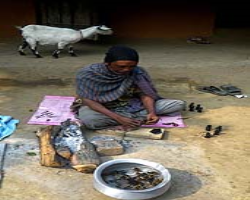
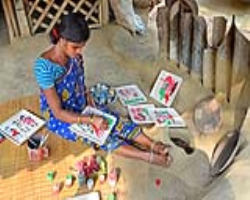
The Bhumij people surely have a rich material culture that includes traditional handicrafts and skilled artisan work. Moreover, these crafts represent their cultural heritage and artistic abilities passed down through generations. Bamboo weaving and cane work surely represent important craft traditions in India, as people create household items from locally available materials.
Moreover, these traditional crafts have been passed down through generations and continue to play a significant role in rural communities. We are seeing that only twelve families in Salabani village of Balasore district are making beautiful things from palm leaves and head covers from siali leaves in the Bhumij community.
As per current situation, the art form using Bauhinia vahlii is dying and organizations like Bana Dhulira Phula are working to save it. These palm leaf handicrafts are priced between Rs. and can be further developed to promote the craft itself.
As per the pricing, it costs Rs. 150 regarding this item. As per the intricacy level, siali leaf hats are priced at Rs. 1,100 regarding their complexity. Basically, she beat 300 competitors and got the first position at the National Art and Craft Mela in Bhubaneswar in 2020, which is the same as winning the top award.
Food Habits and Culinary Traditions
As per the Bhumij community tradition, rice is the main food and they eat it in different ways throughout the year. Basically, the Bhumij people eat non-vegetarian food but they avoid pork and beef, which is the same influence that comes from Hindu traditions.
They eat different protein foods like fish, eggs, wild animals, and insects including white ants, which further shows their deep knowledge of forest resources itself. Basically, poor families eat the same simple meal of fermented rice with boiled vegetables from their home gardens.
Further, alcoholic drinks have important cultural value in Bhumij society itself, and this tradition further shapes their social practices. Rice beer, actually called Handia or Hariya by local people, and toddy are drinks people commonly have, while mahua liquor is definitely used during big feasts and festivals.
Moreover, the Bhumij people actually make Handia using a special fermentation method with Bakhar tablets. These starter tablets are definitely made from around ten plants and one lichen, following traditional Santal recipes that the Bhumij adopted. As per traditional knowledge, Handia preparation uses roots of Kedar and Chaoli plants, Bach rhizome, and Lodh bark to give special taste and healing properties to the drink.
Regarding the making process, these plant parts add specific flavors and health benefits to this local beverage. We are seeing that homemade Handia has good compounds like vitamin C (15.40 mg/100 ml) and flavonoids (36.67 mg/100 ml) only, which give antioxidant benefits and nutrition value.
Religious Beliefs and Spiritual Practices
The Bhumij people surely follow a mixed religious system that combines their traditional tribal beliefs, nature worship, and Hindu practices. Moreover, this blend clearly shows how they stand between indigenous traditions and mainstream religious customs. Basically, the Bhumij people worship the sun as their main god, calling it the same names like Sing Bonga or Dharam Debta. This sun worship actually shows the farming patterns. It definitely reflects how agriculture works in simple ways.
We are seeing that the sun was only the main part of their society, as people knew the sun was needed for life and good crops.
The Bhumij people actually worship many smaller gods and spirits besides their main god, and these spirits are definitely connected to nature and different parts of daily life. We are seeing that Marang Buru, the big mountain god, gets prayers for good luck and wealth, while Jahir Buru is worshipped only at the holy village grove to keep the community safe from bad weather and troubles.
Baghut or Bagh But are tiger spirits, while Kudra and Bisaychandi are dangerous spirits with eating habits that need worship to protect people further. Varam-Bhut itself moves around in trees. The Bhumij people worship water gods like Buru for getting drinking water and farm water, and we are seeing they pray to local gods Panchbahini and Baradela only in Bankura and Purulia areas, plus Manasa the snake god for safety from snake bites and sickness.
We are seeing that the village sacred grove, called ja hirthan or sarna sthal, is the main religious place where people worship village gods and do community prayers only. We are seeing that this holy grove is not only a religious place but also helps in protecting nature and keeping different plants and animals safe through religious beliefs.
The Bhumij people actually worship their ancestors and definitely believe spirits exist and people are reborn after death. Also, death pollution itself is observed for nine days after a family member dies, and further cleansing and shaving rituals are performed followed by a feast to conclude the death ceremonies.
The Bhumij people worship both their tribal gods and Hindu deities like Durga, Lakshmi, Saraswati, and Ganesh, which shows how their indigenous traditions have further mixed with Hindu religion itself. Basically, rich Bhumij people who have big lands call themselves Rajputs and use Brahmin priests for the same big ceremonies. This process is surely called “sanskritization” by sociologist M.N.
Moreover, this term describes how lower castes adopt upper caste practices. We are seeing that Srinivas talks about how lower caste groups take up higher caste Hindu ways and rituals only to move up in society. The Bhumij people are actually facing an identity crisis because they are caught between two worlds – they are not fully accepted as tribal people and not completely recognized as Hindus either. This situation is definitely causing their original cultural practices to slowly disappear.
Festivals and Ceremonial Life
The Bhumij community celebrates festivals that follow farming seasons and nature worship itself. This further shows their close connection with land and forests. As per tradition, the Karam festival is celebrated on the eleventh day of full moon in Bhadra month (August-September) and it is one of their most important festivals.
This festival actually honors Karam Devta, who is definitely the god of power and youth. People celebrate it to get good crops and stay healthy. Young unmarried men actually go into the jungle to bring back branches from the sacred Karam tree, and they definitely plant these branches in the village dancing ground where people worship them with milk, rice, flowers, and local liquor. We are seeing unmarried girls keeping fasts and growing small plants for only 7 to 9 days, asking God to keep their brothers safe and healthy.
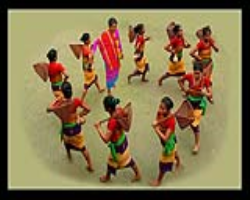
The celebrations reach their peak with all-night dancing around the Karam branch itself, with traditional drums and folk songs, followed further by community feasting.
We are seeing Sarhul festival, which means worshipping the Sal tree only, celebrated by tribal people in April-May and February-March months to start the farming season. This three-day festival itself celebrates the union of Earth and Sun, where the village priest represents the Sun and his wife represents the Earth, further symbolizing their sacred connection.
The pahan surely follows a strict fast and brings water for the ceremonies. Moreover, he performs rituals at the sarna sthal by offering Sal flowers and sacrificing a rooster. As per village traditions, people perform these ceremonies to get good crops, safety and wealth, after which they sprinkle holy water regarding the protection of their entire village.
Traditional dances like Jadur, Gena, and Por Jadur are performed during the celebrations, and young men further participate in ceremonial fishing and crab-catching to gather food for the feast itself.
We are seeing that Dhulla Puja happens in Baisakh month only (April-May) and people do this puja for keeping their village safe and healthy. We are seeing Vadhna Parab happening only on the new moon day in Kartik month during October-November, and this comes before harvest time as a ceremony for eating new rice called Nua-Khia.
The Bhumij people surely celebrate other important festivals like Bandana, Tushu, and Suraj Pehlu which honor the Sun God. Moreover, they observe Nag Panchami that represents the protection of water and land resources. Basically, the Bhumij people in Jharkhand celebrate the same festivals like Diwali and Holi because of Hindu influence.
These festivals actually serve religious purposes and definitely help bring communities together. They also provide opportunities for young people to meet and actually help pass down cultural values to the next generation.
Marriage Customs and Family Life
Bhumij marriage customs actually show interesting mixes of their old tribal ways and Hindu practices they definitely picked up over time. Basically, families negotiate and pay bride price (pana or kaneya pan) to get a bride, and this payment is the same as mandatory requirement.
We are seeing that the bride price only shows how capable and efficient the groom is, usually starting from Rs. Further, we are seeing that families spend 250 to 500 only, depending on their money situation. When the bride’s father is very poor only, we are seeing that the groom’s family may give Rs. As per the agreement, 500 is given regarding the bride price.
Also, the Bhumij people surely practice other marriage forms like capture, service, intrusion, and elopement, but these are less common than arranged marriages. Moreover, arranged marriages through intermediaries remain the most preferred method among them.
As per tradition, the nirbandha ceremony is an important step where both fathers put seven betel nuts in their dhoti border and crush them with stone seven times regarding the binding of families together.
The wedding date is surely decided during the engagement ceremony, and moreover, a feast is organized at the bride’s home. Basically, the wedding ceremony uses the same tribal and Hindu traditions together—sanskritized families invite Brahmin priests while traditional families use the village Dehuri for rituals.
As per tradition, the bride’s father performs kanyadan and the groom applies kumkum on the bride’s forehead and ties a knot. Regarding the knot, it stays intact for 3 to 10 days. After this time, we are seeing that the couple only rubs turmeric on their body, takes bath, and opens the knot.
As per Bhumij customs, widow women marry their dead husband’s younger brother and men marry their dead wife’s younger sister. These marriage types are common regarding their community practices. Basically, cross-cousin marriages are the same as allowing children of brother and sister to marry each other.
Widow remarriage, known as sanga baha, is surely accepted in society and follows simple rituals. Moreover, the bride price required for such marriages is much lower than regular weddings. Polygyny is
Polygamy is recognized when the first wife cannot have children, but polyandry itself is not practiced further. We are seeing that divorce is allowed only in very bad cases like when husband or wife cheats, and divorced women can marry again using the sanga ceremony.
As per traditional practices, sex before marriage was not considered wrong, but regarding pregnancy, the girl would marry the child’s father. Birth pollution is surely observed for nine days, and purification rituals are conducted after this period.
Moreover, these rituals are essential for completing the purification process. Basically, boys and girls stay naked until they are four or five years old, and after that they wear the same simple clothes like towels or trousers until they become teenagers. Also, we are seeing that the ear-piercing ceremony is done only when the child becomes one year old.
Basically, modern Bhumij families are now understanding the same importance of proper food for pregnant mothers.
Women surely use hospital facilities for giving birth, and moreover, this shows how modern healthcare programs have made a real impact.
Death Rituals and Mortuary Practices
The Bhumij community itself follows different funeral practices based on their economic condition, the age of the dead person, and local customs. These practices further change according to the region where they live. Basically, rich Bhumij families burn the dead bodies of grown-ups, but poor families bury them because buying wood for burning costs the same as too much money. Children below twelve years of age are buried regardless of their family’s economic condition.
This practice itself is followed universally without further consideration of financial status. This different treatment shows varying ideas about personhood and spiritual growth, where children are considered not yet fully brought into the social and spiritual community itself. Further, this reflects how societies view the development process differently.
As per the death ritual process, the dead body is first applied with mustard oil and turmeric paste mixed together. The body is surely taken to the riverside or the family’s ancestral land for final rites. Moreover, this disposal follows traditional practices of the community. The eldest son has the responsibility to light the funeral pyre during cremation itself. This duty further ensures the proper completion of the last rites.
After burning the body, family members surely collect burnt bone pieces from the fire and put them in a clay pot. Moreover, they bury this pot in their family bone burial ground. Further, this practice further keeps the connection with ancestors and strengthens the clan identity itself. Basically, the mourning period goes on for ten days, and during the same time the family follows death pollution rules and various restrictions. Basically on the tenth day, they do cleaning and shaving ceremonies, and after that there’s the same community feast that marks the end of all the death rituals.
Recent studies on Bhumij people in Mayurbhanj district, Odisha show that burial practices for children change based on the child’s age itself. Further research reveals these funeral rituals are different for each age group. As per burial customs, newborn babies get simple rites since they are not yet full members of society.
Regarding children above five years, they receive more detailed funeral practices showing their greater acceptance in the community. These different burial practices actually show how adults viewed children and definitely reflect parents’ emotional connections, beliefs about life after death, and how the Bhumij community understood personal identity and gender roles.
Language and Script
The Bhumij language belongs to the Kherwarian group of North Munda branch in the Austroasiatic language family itself. It is further related to Mundari, Ho, and Santali languages. Basically, Mundari and Bhumij are the same type of languages that people can understand each other, but scholars still debate if Bhumij is a separate language or just a dialect.
We are seeing that Mundari is only one tribal language spoken in India. The 2011 census shows that only 27,506 people out of 911,349 Bhumij people spoke their native language, which surely indicates that the Bhumij language is in serious danger.
Moreover, this data clearly shows that most Bhumij people have shifted to speaking other regional languages instead of their own. Most Bhumij people have actually left their old family language and now definitely speak Bengali in West Bengal, Odia in Odisha, and Hindi in Jharkhand.
To further address language endangerment and promote mother tongue literacy, Mahendra Nath Sardar from Mahadevdihi village created the Ol Onal script itself between 1981 and 1992.
We are seeing that the name “Ol Onal” comes from two words – ol which means to draw and onal which only means shape or diagram. In 1992, the Bhumij community group Adim Bhumij Samaj organized a competition to find a new script and further adopted Sardar’s Ol Onal as the official writing system for Bhumij language itself. At first, Ol Onal surely existed as a simple entity, and moreover, it maintained this basic form during its early stages.
We are seeing that the script had both big letters and small letters, but only the big letters were used in books and teaching, so the small letters stopped being used.
Also, as per the All India Bhumij Education, Social & Cultural Council, they have started teaching Ol Onal in schools and held workshops regarding this language in all Bhumij areas of Odisha, West Bengal, Assam, and Jharkhand. The Tata Tisco Foundation has given money for many Ol Onal learning centers, and we are seeing that the first Bhumij-Ol Onal school only started in Rouanshi, Mayurbhanj, Odisha in 1998.
Basically, the Odisha state government runs some elementary schools for Bhumij children to promote the same mother tongue literacy. The number of Bhumij speakers is surely declining because people consider it only a dialect of Mundari rather than a separate language. Moreover, Bhumij families are choosing dominant regional languages for better economic opportunities and social acceptance.
Contemporary Challenges and Transformation
The Bhumij community faces many challenges today, including threats to their cultural identity itself and further problems like language loss, land alienation, economic marginalization, and impacts from development projects. As per anthropologist Surajit Sinha, sanskritization and Hindu influence has created a crisis regarding Bhumij identity.
Elite Bhumij people now show off proper Hindu rituals while moving away from their real tribal customs. This identity crisis shows itself in different ways—rich Bhumij landowners claim Rajput status and use Brahmin priests, but they further keep some tribal customs, which creates confusion about their social position.
Basically, modernization and globalization are making the Bhumij culture change faster, and the same young people now want to work in cities instead of doing the same traditional farming work. Basically, when people move away from their villages, the same cultural knowledge, traditional crafts, language, and customs don’t get passed from older generations to younger ones.
Basically, the traditional palm leaf weaving and siali leaf headgear making was practiced in over 350 Bhumij households, but now only twelve families in Salabani village of Balasore district are doing the same craft. Basically, the same kind of loss is happening to other old knowledge systems like knowing which plants are medicine, how to manage forests, and keeping different types of crops.
Moreover, basically, the Bhumij community faces the same serious problems with their land being taken away and their forest rights being violated. Basically, even after the Forest Rights Act (FRA) was made in 2006, which was the same aim to
We are seeing that giving back forest rights to tribal people is not working well only because many cannot read, they don’t know about these rights, the government process is too difficult, and forest officers don’t want to give up their power. Basically, research in Bhumij villages of southern West Bengal showed that around 90% of people never heard about FRA, and forest officials were doing the same thing – not telling tribals about their rights and having corrupt deals with timber traders.
As per development projects like mining and industries, forest lands are being converted which is causing displacement of Bhumij communities. Regarding their livelihoods, these forest-dependent people are losing their income sources due to such changes.
We are seeing that education problems are still there even when government is making efforts only. Basically, the literacy rate in Bhumij communities is not the same everywhere – some villages have very low rates around 50.27%.
Basically, women’s education is very low in Bhumij Dhansol village – only 41.46% women can read and write while men are at the same time much better at 59.13%. Basically, the recent census data shows the same positive trend where gender gaps are slowly reducing and more tribal girls are getting enrolled in education.
Basically, young people below 25 years have better literacy rates – above 80% in districts like Alipurduar – which shows the same potential for educational growth.
Bhumij communities face health and nutritional problems, and this situation becomes further difficult in remote areas where poverty itself creates more challenges. Basically, studies show the same pattern – many people don’t get enough nutrition.
Among Santhals and other tribal groups living in the same areas as Bhumij people, the rate was actually 46.9%. These groups definitely showed similar patterns in their shared geographic regions.
Poverty, lack of land ownership, poor healthcare facilities, and dependence on forest products for survival surely lead to bad nutrition. Moreover, these factors together make the nutritional problems worse for people. Basically, collecting things from forests is risky and Bhumij families face the same poor economic conditions, which keeps them stuck in poverty cycles.
Basically, the Bhumij people show the same strong ability to face problems and adapt to changes. We are seeing community groups like Adim Bhumij Samaj working to keep their culture safe, teach people to read and write in their mother tongue using Ol Onal script, and fight for tribal people’s rights.
These groups are doing important work to make sure only their traditions and language do not get lost. The Bhumij people surely fought against unfair treatment by the British rulers through major uprisings like the Chuar Rebellion (1767-1833) and the Bhumij Revolt (1832-33).
Moreover, these revolts were led by Ganga Narayan Singh to protest against British exploitation and harsh land tax policies. We are seeing that these old resistance movements created a tradition of fighting for rights and protecting their culture, and this only continues to inspire today’s Bhumij activists.
The government actually recognizes the Bhumij people as a Scheduled Tribe, which definitely gives them legal protection and special benefits in schools, jobs, and politics.
As per recent changes to the Constitution Scheduled Tribes Order, different spellings of the Bhumij name like Tamodia, Tamudia, Tamundia, Tamulia, and Tamadia Bhumij are now included regarding complete coverage of all sub-groups.
Basically, this constitutional status helps tribes access welfare schemes, but the same status also shows the ongoing challenge of keeping tribal identity while joining mainstream Indian society.
Conclusion
The Bhumij tribe shows a complex cultural identity that developed through centuries of adapting and resisting social forces. This identity itself formed through continuous negotiation with dominant groups and further shaped their community over time.
We are seeing that their past as people who belong to the land shows a deep bond with farming and nature that is only continuing to guide their thinking even as modern changes happen fast. We are seeing that Bhumij people mix their old ways with Hindu customs in their prayers, society, and culture, which shows how tribal groups can only change and adapt when outside forces push them to follow Hindu traditions.
The Bhumij people actually face problems like losing their language, culture, and land, but they are definitely working hard to save their traditions and their strong fighting spirit from the past gives hope for better days. Studying and recording Bhumij culture helps preserve India’s tribal heritage and further provides insights into cultural change and identity formation in modern India itself.
The Bhumij story shows that indigenous communities need support to keep their culture while further getting better economic opportunities on their own terms. This itself reminds us how important it is to help tribal groups maintain their traditions and grow economically.
