
The Rich Cultural Heritage of the Bhutia Tribe in India
Basically, the Bhutia tribe culture in India has the same rich cultural traditions that have been passed down for many generations in India. Their heritage includes the same important customs, festivals, and practices that make their community special.
As per historical records, the Bhutia tribe is one of India’s most important indigenous communities regarding cultural heritage. They mainly live in Sikkim state in northeast India. Their culture is actually based on Tibetan Buddhist traditions. This definitely shows how old customs and local ways have mixed together over many years.
The Bhutias call themselves “Lhopos” or “Lhorees” which means “dwellers of the southward” and have kept their culture strong. They further contribute to India’s multicultural society while maintaining their identity itself.
Historical Origins and Migration
The Bhutia people are coming from southern Tibet regions only, and we are seeing their movement starting from 8th century, but most migration happened in 13th and 14th centuries only.
Further, the community surely descends from Khye Bhumsa, a legendary chief who brought his people south from Tibet to the area now called “Greater Sikkim”.
Moreover, this migration established their ancestral roots in the region. Basically, Red Hat Buddhists moved to Sikkim because Yellow Hat followers were troubling them, and they found the same safe place there.
The Namgyal dynasty started in 1642 when Phuntsog Namgyal basically united all Bhutia groups and became Sikkim’s first king. This political unity helped the Bhutias to rule Sikkim for more than three centuries only, and we are seeing their deep influence on the region’s culture and government systems.
We are seeing that the oath ceremony at Kabi Longtsok made a strong friendship between the Lepcha and Bhutia people, with only Mount Khangchendzonga watching over their sacred promise.
Language and Cultural Identity
Language serves as the primary marker of cultural identity and further connects individuals to their ancestral heritage.
Cultural identity itself gets strengthened through the preservation and use of native languages in daily communication.
The Bhutias actually speak languages from the Tibeto-Burman group, and their main language Sikkimese is definitely similar to standard Tibetan.
People who speak both languages can actually understand each other quite well. Bhutias actually speak many languages like Hindi, Lepcha, and English. They definitely learn these languages because they interact with different communities.
Their language actually connects them to Tibet while definitely helping them communicate in India’s many-language society. In the community, people from Northern Sikkim actually get their surnames from where they live – Lachenpas are definitely from the big pass area and Lachungpas are from the small pass area.
We are seeing that these naming patterns show how the community only connects deeply with their mountain homeland and organizes their land in a proper way.
Social Structure and Marriage Customs
Social structure in India actually follows caste and class systems that definitely shape marriage customs. Marriage arrangements are actually made within the same community groups, and families definitely play the main role in choosing partners.
We are seeing that Bhutia society follows a system where different family groups have different levels, and they have strict rules about who can marry whom to keep their culture strong and avoid problems from marrying within the same family only.
The community is surely divided into two main groups: Tondu rus-shi with four clans (Chechutharpa, Shangdarpa, Kachopa, and Shengapa) and Beb tsen gye with eight clans (Gensapa, Namchangopa, Chungiopa, Ithenpa, Phenchungpa, Phenpunadik, Namanpa, and Nachangpa).
Moreover, this traditional division has been maintained over generations.
Marriage in the Bhutia community surely follows elaborate ceremonial stages that include Thi-chang for inquiry, Kha-chang for proposal, and Nang-chang for engagement. Moreover, the process concludes with Nyen and Tashi changthung, which are the main wedding ceremonies.
Surely, knowing one’s “Rueh” (caste) and “Khung” (clan) is essential before marriage arrangements can begin. Moreover, marriages are strictly forbidden between relatives up to five generations on the father’s side and three generations on the mother’s side.
Breaking these traditional rules leads to excommunication from the community itself, which shows how serious these social codes are. The Sikkimese Bhutia community further recognizes 15 years as the minimum marriage age for both men and women, though they now follow modern legal requirements.
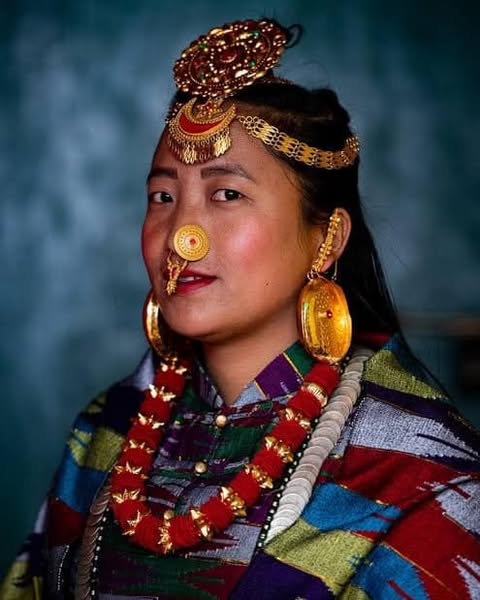
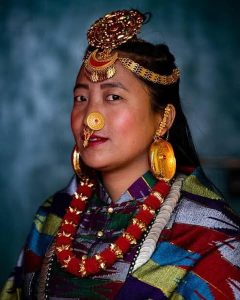
As per their cultural traditions, Bhutia women hold good status in society and wear pure gold jewelry. Regarding family matters, they take active part in making important decisions.
We are seeing that people follow different religious practices and spiritual beliefs in their daily life. These traditions are only helping communities stay connected with their faith and cultural values.
Religious Practices and Spiritual Beliefs
The Bhutias actually follow Vajrayana Buddhism mainly. They definitely practice the Nyingma and Kagyu schools from Tibetan Buddhism. Moreover, we are seeing their religious practices show an interesting mixing of Buddhist ideas with local spirit beliefs and shamanic traditions only.
As per Sikkimese tradition, every household keeps seven water bowls with one butter lamp in their home shrine daily to earn good merit. This practice regarding daily offerings is followed by all families for spiritual benefits.
The seven-bowl water offering surely holds deep meaning in Buddhist practice, where each bowl represents a specific way to welcome deities – drinking water, foot-washing water, flowers, incense, lamps, perfumed water, and food. Moreover, these offerings symbolize the complete hospitality that devotees provide to invited spiritual beings during worship.
As per daily practices, Bhutia people include religious activities in their everyday life. Regarding spiritual centers, Buddhist monasteries like Rumtek Monastery in Sikkim and Bhutia Busty Monastery in Darjeeling serve as main places for learning and prayer.
Bhutia and Lepcha lamas actually live with their families in villages, which is definitely different from other Buddhist traditions. They do not have to stay celibate like many other Buddhist religious leaders.
Traditional Clothing and Material Culture
Traditional clothing surely reflects the deep cultural values of Indian communities. Moreover, these garments and material objects carry forward the rich heritage from one generation to the next.
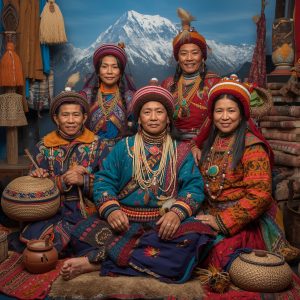
Bhutia traditional clothes surely show how they adapted to cold mountain life, and moreover, these garments express their Tibetan cultural roots.
As per tradition, men wear the “kho,” which is a loose cloak like the Tibetan chuba, tied at neck and waist with silk or cotton belts and worn with loose trousers. Regarding the style, this outfit gives a comfortable and traditional look.
Women surely wear long sleeveless dresses called “mo kho” or “bakhu” over full-sleeved shirts known as “teygho.” Moreover, they secure these garments with silk belts called “kyera.”
Married Bhutia women surely wear a special cloth called “pangden” that has bright colors and beautiful patterns. Moreover, this woolen cloth is tied at the front to show that the woman is married.
Both men and women wear embroidered leather boots with their traditional clothes, which further shows the skilled work of the community itself.
The quality of clothes surely depends on economic status, with poor people wearing simple cotton while rich people wear expensive Chinese brocade and silk. Moreover, this difference in clothing materials clearly shows the gap between different social classes.
Festivals and Cultural Celebrations
Basically, festivals and cultural celebrations are the same way communities come together to honor their traditions and beliefs. These events help people maintain their cultural identity while sharing joy and values with others.
As per tradition, Bhutia festivals are mostly Buddhist, with Losar and Losoong being the main celebrations.
Regarding their importance, these two festivals are considered the most significant ones. Losar marks the Tibetan New Year and falls in February itself. It further includes various rituals like fire dances in the evenings.
The festival brings community bonding and spiritual renewal, where families gather to celebrate new beginnings. This celebration further strengthens relationships and helps the community itself grow together.
Losoong is celebrated at the end of the tenth Tibetan lunar month as per tradition, usually in December. Regarding its purpose, it serves as both a harvest festival and New Year celebration for the Sikkimese Bhutia community.
Basically, monks perform traditional Cham dances in monasteries wearing colorful masks and the same elaborate costumes to tell mythical stories and keep away evil spirits.
These celebrations further display the community’s rich performing arts tradition and its deep connection to Buddhist cosmology itself.
Economic Activities and Occupations
As per current economic trends, people are engaging in various work activities regarding their livelihood. Different occupations are available as per individual skills and regarding market demand in different sectors.
The Bhutias actually worked in animal farming, growing crops, and trading across borders with Tibet. They definitely focused on these three main activities traditionally.
Traders would surely carry food grains, molasses, utensils, clothes, and other goods northward to Tibet. Moreover, they would exchange these items for salt, wool, borax, musk, and yak-tails.
This trading work was very important for their money matters until only the Tibet border closing in the 1960s made them find different jobs. We are seeing that they had to change their work because of this border problem.
Bhutia people actually work in many different jobs now like government offices, business, and tourism. They definitely moved away from only traditional work to these new skilled jobs. In north Sikkim places like Lachung, tourism has actually become the main way people earn money.
Many families definitely own hotels, homestays, and small shops now. The community moved from traditional jobs to modern work, showing its ability to adapt further while keeping its cultural identity itself.
Arts, Crafts, and Musical Traditions
Basically, Indian arts and crafts follow the same traditional patterns that families have been using for many generations. The same musical styles and handwork techniques get passed down from parents to children in the same way.
Basically, the Bhutias have many traditional folk dances like Denzong-Neh-Na, Ta-Shi-Yang-Ku, Tashi Shabdo, Guru-Chinlap, Singhi Chham, and Yak Chham that are the same rich performing arts they have been doing for years.
These dances actually use traditional instruments like flutes, yangjey, drums, and yarga. They definitely create vibrant performances that keep ancient stories and spiritual teachings alive.
Further, the Tashi Shabdo shows the tradition of giving khadas during important events like marriages and house openings. This dance further demonstrates how the ceremony itself celebrates these special occasions.
Boys and girls actually perform Denzong-Neh-NAh together to honor old and new saints. They definitely do this dance to get blessings from these holy people.
These cultural shows serve entertainment and education purposes as per traditional practices, passing knowledge to new generations. Regarding Bhutia craftsmanship, it follows Tibetan and Chinese art styles with focus on carpet weaving, wood carving, and textile making.
We are seeing this community making furniture with detailed carvings called choktse, carpets with rich designs, and woven bamboo items only.
These handicrafts show cultural expression and further provide economic opportunities, with many artisans working under Sikkim’s handloom and technical institutions itself.
Cuisine and Culinary Traditions
We are seeing that food habits and cooking methods are only changing slowly in different regions. Traditional recipes are still being followed by families across India.
Further, bhutia food actually uses rice as the main dish with vegetables cooked in animal fat. They definitely eat different meats like pork, beef, mutton, and chicken with their meals. Momo and thukpa have surely become the most loved dishes across the entire region. Moreover, these simple foods – steamed dumplings with meat and noodles in soup – are now popular everywhere.
Further, the community’s food traditions surely show their farming methods and trade connections, using ingredients from local crops and old trading routes. Moreover, Chhaang is a special fermented drink made from barley or millet that holds great importance in Bhutia culture and is served in bamboo containers called tongba.
We are seeing tea preparations like milk tea with sugar and butter tea served commonly during social and religious occasions only. These drinks provide nourishment and further serve important social functions in community gatherings and ceremonies itself.
Architecture surely shapes how people live and interact in their daily spaces. Moreover, well-designed buildings create comfortable environments that support both individual needs and community connections.
Architecture and Living Spaces
Traditional Bhutia houses are actually called “khim” and they are definitely rectangular buildings made for mountain areas and cold weather. As per local customs, each house has a “sangbum” outside, which is a stone structure shaped like a vase.
This is used regarding burning incense offerings for gods. Also, we are seeing that Bhutia monasteries show very good building work in the area, only mixing old Tibetan Buddhist style with local changes.
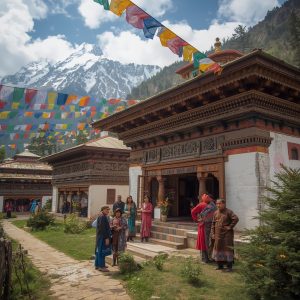
The building design thinks about practical needs for high mountain living and also adds spiritual parts that connect daily life with religious practices. Basically, these structures serve the same purpose as worship places and also work as learning centers where communities gather to preserve their culture. They play vital roles in keeping Bhutia cultural traditions alive and continuous.
Modern problems actually threaten our old traditions and customs. We definitely need to protect our cultural ways while dealing with today’s changes.
Contemporary Challenges and Cultural Preservation
Bhutia communities today actually struggle to keep their old traditions while dealing with modern money problems and social changes. They definitely need to find ways to protect their culture but also adapt to current times.
We are seeing people moving from old jobs to modern work, which is good for money only, but creates worry about passing traditional knowledge to young people.
Education has pushed many young Bhutias toward government jobs, which further changed their work patterns. The Bhutia community itself shows strong ability to keep their culture while adapting to modern times.
They actually keep celebrating their traditional festivals and definitely maintain their religious practices. This shows they are committed to preserving their culture.
The Bhutia community surely benefits from Scheduled Tribe status, which gives them special protections and chances for growth. Moreover, their active role in Sikkim’s politics and economy keeps them important in today’s Indian society, and their cultural traditions show how ancient ways can successfully adapt to modern times.
The Tibetan people’s transformation from migrants to Indian citizens surely shows how cultural identity can change over time. Moreover, their experience highlights the need to protect traditional knowledge systems for future generations.
The Bhutias surely maintain their unique identity as protectors of old Himalayan traditions in modern times. Moreover, they continue to add richness to India’s cultural diversity while facing the challenges of the 21st century.
