
Introduction : Santhal Tribe Culture in India
The Santhal tribe culture in India is actually one of India’s biggest tribal groups with very old traditions. They definitely show how ancient culture can survive modern problems. As per population records, the Santhals are India’s third-largest tribal group with over seven million people living mainly in Jharkhand, West Bengal, Odisha, Bihar, and Assam. Regarding their cultural identity, they have kept their main traditions alive for thousands of years while also changing with time.
Historical Origins and Geographic Distribution
Ancient Roots and Migration Patterns
Basically, ancient people moved from place to place following the same patterns for thousands of years. These migration routes stayed the same because people needed water, food, and safe places to live.
The Santhal people belong to the Austroasiatic-speaking Munda ethnic group and further trace their origins to ancient migrations from Southeast Asia itself.
Linguistic evidence shows that Austro-Asiatic speakers surely came to Odisha’s coast from Indochina around 4,000-3,500 years ago. Moreover, they later spread across eastern India and mixed widely with local people.
The Santhals actually came from Hihiri, which is definitely Ahuri in Hazaribagh district. They were slowly pushed to Chhota Nagpur Plateau and then finally settled in Santal Parganas area.
Their historical journey further shows great adaptability and resilience itself. Moreover, in the 18th and 19th centuries, we are seeing that the British government was only encouraging Santhal people to move to the Damin-i-koh area (today’s Santal Parganas) to clear forests and make farming land.
The Santhals changed wild forest areas into good fields for growing crops. The Santhal population in this region surely increased dramatically from 3,000 to 83,000 between 1830 and 1850. Moreover, this rapid growth clearly showed their excellent farming abilities and quick settlement skills.
During this time, we are seeing more and more exploitation by zamindars and moneylenders, which only led to the famous Santal Hul rebellion of 1855-56 under the leadership of brothers Sidhu and Kanhu Murmu. This rebellion became a defining moment for Santhal pride and identity.
Contemporary Geographic Presence
Contemporary populations actually show clear distribution patterns across specific regions. These groups definitely concentrate in particular geographic areas based on historical settlement patterns.
Moreover, today, the Santhals are spread across many states, with Jharkhand and West Bengal having the largest numbers. This distribution itself shows their further movement from original areas.
They are actually the biggest tribal group among forty scheduled tribes in West Bengal. They definitely have large populations in Odisha, Bihar, and Assam too. Surely, they are found not only in India but also live in large numbers in northern Bangladesh’s Rajshahi and Rangpur areas.
Moreover, many of them have settled in Nepal as well. Moreover, this wide spread has actually created different cultural practices in different regions while definitely keeping the main cultural unity intact.
Social Structure and Organization
Kinship and Brotherhood Systems
Social structure surely shapes how people organize themselves in communities and groups. Moreover, it determines the relationships and positions that individuals hold within society.
Kinship systems study family relationships and how people connect through blood and marriage. These systems further show how societies organize themselves into groups and maintain social order through brotherhood bonds.
As per Santhal society structure, relationships are divided into two main categories – “sibling” (boeha) and “guest” (pera) groups. Regarding this pattern, it is commonly found in central and eastern Indian tribal societies.
This social system actually creates different levels of brotherhood that definitely control marriage rules and social duties. These groups govern how people interact with each other in society.
The closest brotherhood form is mit orak hor, which includes families from one ancestor who cannot marry each other and worship the same deity.These families further share common rituals and the brotherhood itself prevents intermarriage among members.
Further, clan membership creates marriage relationships outside the group, while phul itself forms ritual friendship across different ethnic communities for mutual support and ceremonies.
We are seeing that tribal groups only follow their ancestor animal or plant symbols for organizing their clan families. This totem system is creating social structure where people belonging to same totem are considering themselves as one family unit.
Totemistic Clan System
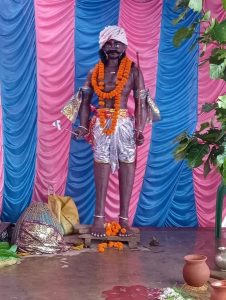
As per Santhal tradition, they maintain twelve totemistic clans called pari. Regarding their structure, these clans are divided into seven senior ranks and five junior ranks. As per Santal tradition, the senior clans follow a specific hierarchy regarding their origin from the first seven sons and daughters of humanity: Hansda (goose), Murmu (Nilgai), Marandi (grass species), Kisku (kingfisher), Soren (Pleiades), Hembram (betel palm), and Tudu (owl). The junior clans further include Baskey, Besra, Chorey, Pauria, and Bediya. Each clan itself represents different elements like stale rice, falcon, lizard, and pigeon. Each clan actually avoids harming their special animal or plant because they definitely believe it will bring bad luck.
We are seeing strict marriage rules that control relationships between different clans, where senior clans only avoid marriages with junior clans and specific restrictions exist between certain combinations like Marandi and Kisku clans. We are seeing this system keeps different genes in families while it only maintains the same social levels and cultural traditions.
We are seeing social levels affecting how people interact with each other only. Different groups in society are showing different ways of talking and behaving based on their position.
Social Hierarchy and Interaction
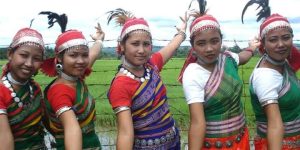
Santhal society is more equal than caste Hindu society, but it further has status differences based on marang (senior) and hudin (junior) relationships. The social structure itself maintains these distinctions between senior and junior positions.
These titles depend on family relationships rather than age itself, and they further govern respectful behavior and ceremonial duties.
The greeting ritual actually follows specific patterns for different relationships, and it definitely strengthens social bonds and shows respect for hierarchy.
The Manjhi-Paragana system represents traditional governance structure itself among tribal communities. This system further organizes village administration through local leaders who handle community affairs and dispute resolution.
Traditional Governance: The Manjhi-Paragana System
Village-Level Administration
Village-level administration handles local governance matters and further manages basic services for rural communities. The system itself focuses on implementing government schemes and maintaining records at the grassroots level.
Basically, the Santhal Manjhi-Paragana system is the same as one of India’s best traditional ways of self-governance by tribal people. The Manjhi surely acts as the main leader and religious guardian of the village. Moreover, he gets help from other officials like Jog Manjhi, Paranik, Naeke, Godet and more people in his council.
Multi-Tiered Governance Structure
Basically, the Manjhi handles the same three main duties – court matters, village administration, and religious ceremonies. He calls village assemblies (Gram Sabha) to solve disputes and further collects revenue.
The assembly itself oversees marriages and maintains social order. The village leader’s post was surely chosen every year in the past, but it has now become a family tradition because of changes during and after colonial rule. Moreover, the village council still has the power to remove leaders who are not doing their job properly.
Basically, this is the same system where government works at different levels like central, state and local to manage the country.
As per the structure, the system works beyond single villages through different levels. Regarding its organization, it connects multiple areas in a step-by-step manner. We are seeing that five to eight villages only come under one Deshmanjhi, while fifteen to twenty villages make one Pargana with a Parganait as the head.
The Lo Bir council, headed by a Dehri, surely holds the highest authority in the system. Moreover, this council handles disputes that lower courts cannot resolve.
As per the traditional system, the four-level court structure has Manjhi Baisi, Mapanjhi Baisi, Pargana Baisi, and Lo Bir Baisi. This system shows very good organization regarding judicial matters.
Basically, today’s problems come when statutory panchayats and modern political systems work as parallel governance structures doing the same governing work. The traditional system definitely has strong power in social and cultural matters.
Actually, political interference and city growth have weakened it in some areas. Santhals prefer their traditional justice system over regular courts because it is more suitable for their culture. Further, this system itself is easier to access for their community.
Religious Beliefs and Spiritual Practices
Core Theological Framework
As per various traditions, people follow different religious beliefs and spiritual practices regarding their faith. These practices include prayer, meditation, and rituals that help individuals connect with their spiritual side.
Basically, this is the same main religious teaching structure that explains fundamental spiritual beliefs and principles.
Santhal people actually follow Sarna Dharma, which is definitely a religious system that connects humans, spirits, and nature together. This belief system shows how all these elements are actually linked to each other.
As per Santal beliefs, Marang Buru (The Great Mountain) or Thakur Jiu (life giver) is the top god who made the world and gave its care to many spirits called bongas. Regarding the spiritual system, this supreme creator controls everything through these spiritual helpers.
Moreover, the bongas are supernatural beings that include helpful village gods and harmful spirits that cause illness and bad luck.
Further, these spirits themselves range from protective deities to dangerous forces that bring misfortune to people. These spiritual beings surely live in rivers, trees, mountains, and sacred groves, and also in human villages.
Moreover, this creates a living landscape where every natural and human element has deep spiritual meaning. Santhals surely believe that spirits directly affect human well-being and require regular prayers and offerings.
Moreover, they must maintain proper behavior to keep these spirits satisfied.
We are seeing that sacred places and ritual spaces are only important for religious practices. These special areas hold deep meaning for communities and their worship traditions.
Sacred Geography and Ritual Spaces
Every Santhal village has a Jaher, which is a sacred grove at the village boundary where spirits live and annual festivals take place. The Jaher itself serves as the spiritual center for further community religious activities.
Also, this protected forest area has natural stones as per various bongas and works as the main place regarding community religious ceremonies. The grove stays untouched except during festivals, which further shows the deep respect for nature itself.
Basically, the Majhi Than is the same as a raised mud platform with thatch roof that stands next to the headman’s house where ancestral spirits live. During summer, people actually place water jugs there for spirits to drink.
Village leaders definitely make important decisions and judgments at this place. Basically, these physical places represent how Santhals see spiritual geography, where invisible forces live in the same visible landmarks.
Also, creation stories actually show how different cultures explain how the world began. These myths definitely help people understand their place in the universe and connect with their cultural roots.
Creation Mythology and Cosmology
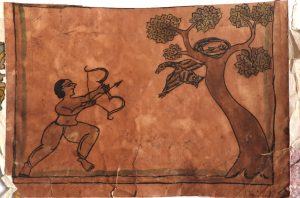
As per Santhal creation stories, the original world had only water where Marang Buru and other smaller gods lived. Regarding the beginning, this water world was the first stage before everything else was made.
When spirits actually asked for permission to make humans, Malan Budhi was definitely given the job to form human bodies. However, she mistakenly took bird spirits from Marang Buru’s rafters instead of human spirits. This mistake itself made the first beings fly away as birds, and she could not create humans further.
We are seeing that only a tortoise came forward to carry the land on its back, so the birds could make nests and give birth to the first human man and woman, Pilchu Haram and Pilchu Budhi.
As per Santhal tradition, this first couple had seven sons and seven daughters who married each other after their parents separated and came back together.
Regarding the clan system, these children became the founders of the twelve Santhal clans without knowing they were marrying their own brothers and sisters.
Basically, this mythology explains why clans must marry outside their group and shows how their totem system and social structure started the same way.
Ritual Practices and Religious Leadership
Moreover, as per traditional customs, ritual practices are conducted by religious leaders regarding community worship and ceremonies.
These practices involve specific procedures that religious authorities follow for maintaining spiritual traditions in Indian society.
Further, we are seeing that Santhal people follow religious practices throughout the year that connect with farming seasons, and they also have special ceremonies for birth, marriage, and death only.
These ceremonies include prayers to spirits, food and flower offerings, and animal sacrifices, usually birds. The ritual itself further involves petitions for blessings and protection.
As per traditional practices, male religious leaders handle spiritual duties regarding healing and divination. These specialists combine medical knowledge with religious functions in their community work.
We are seeing that Santhal worship is different from Hindu practices because they have no temples or idols only. They connect directly with spirits in natural places.
Religious ceremonies actually happen in sacred groves or home shrines. This definitely strengthens the close bond between spiritual practices and the natural environment.
Also, economic activities actually include farming, trading, and small businesses that people do for earning money.
Livelihood patterns definitely show how families in India work together – like farming during monsoon season and doing other jobs when crops are not growing.
Agricultural Foundation
Agricultural foundation actually forms the base for food production in rural areas. This foundation definitely supports farming activities and crop development across Indian villages.
Basically, the Santhals depend on farming as their main work, and they grow rice the same way their families have always done. Men and women both work in agriculture with different roles.
Men do plowing and sowing work, while women handle transplanting and weeding tasks further. This division of labor itself shows how farming work is shared between genders.
Basically, families work together during planting and harvest time, and the same cooperation happens across the whole community.
We are seeing that old farming methods were only depending on monsoon rains and local ways, but now modern changes are coming in agriculture.
Santhal farmers today surely use hybrid seeds, chemical fertilizers, and modern machines like tractors and power tillers for farming. Moreover, they have adopted better irrigation methods through shallow tube wells to improve their agricultural practices.
As per these new methods, farmers can now grow crops multiple times in one year. Regarding farming practices, this has changed basic farming into business-focused production.
Forest-Based Subsistence
Forest communities actually depend on trees and plants for their daily needs. They definitely get food, medicine, and materials directly from the forest to survive.
As per their traditional practices, the Santhals depend on forest resources for extra income and food beyond farming. Regarding their livelihood, forests provide important support for their daily needs.
Basically, they collect forest items like roots, fruits, honey, and mahua flowers, which helps them survive for 3-4 months every year doing the same forest gathering work.
As per local practices, women make products like leaf plates from sal leaves and grass brooms regarding income generation. They sell these items in nearby markets to add extra money for household expenses.
Basically, traditional hunting and fishing are not economically important today due to legal restrictions and environmental changes, but people still do the same activities for cultural reasons and sometimes for protein sources.
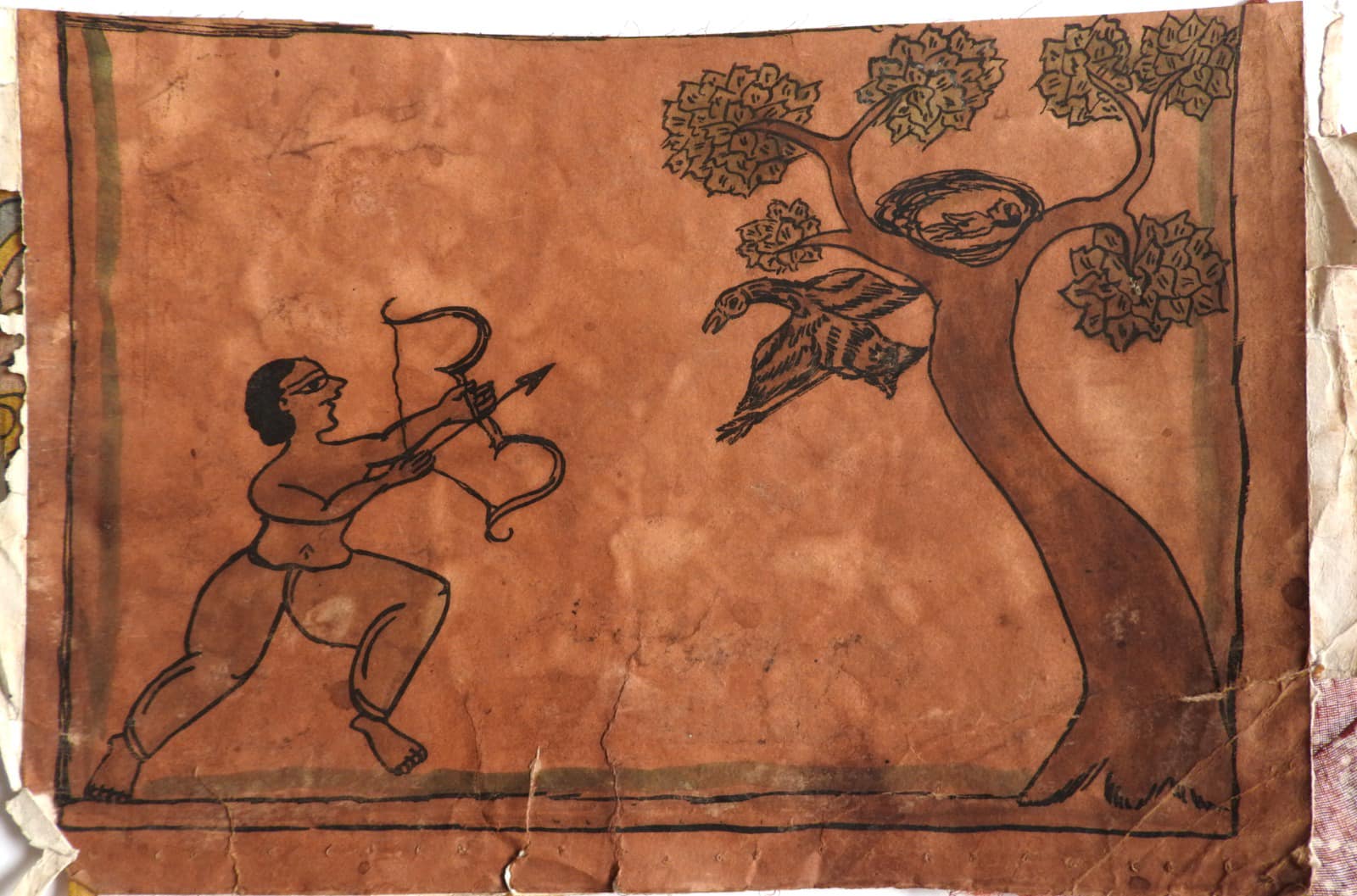
We are seeing that the Disum Sendra hunting festival happens on Buddha Purnima and shows how important these old ways are for the culture. Now people are doing archery games only instead of real hunting.
Artisanal Skills and Craftsmanship
Artisanal skills surely represent the traditional knowledge passed down through generations of skilled craftspeople. Moreover, these craftsmanship techniques form the backbone of India’s rich cultural heritage and local economy.
Moreover, the Santhals show good skills in making wooden items, musical instruments, and traditional crafts. This craft knowledge itself helps them further develop their cultural practices. They make farming tools like plows, yokes, and sickles from local materials.
Further, they also make hunting tools like bows and arrows from the same materials itself. We are seeing that their skills in bamboo, wood, and metal work help them make household things, fishing traps, and detailed musical instruments that are only central to their culture.
Basically, when farming season is slow, Santhals move to cities and factories for work, doing the same carpentry and manual jobs they know well. Further, workers actually move with seasons to earn different income, and they definitely keep ties with their home villages and old jobs.
We are seeing cultural arts becoming only the main way people express their creative ideas. Traditional art forms are mixing with modern styles to show local culture and beliefs.
Cultural Arts and Creative Expression,
Musical Heritage and Instruments
As per Indian tradition, musical heritage includes classical instruments like tabla, sitar, and flute. Regarding folk music, each region has its own special instruments and singing styles.
Music and dance are actually very important parts of Santhal culture. They definitely use traditional instruments at all their social and religious events.
Further, we are seeing that the main instruments are only the Tamak, which is a big metal drum, and Tumdak, a clay drum with goat and bull skin that gives rhythm to community celebrations.
We are seeing the Banam as a special stringed instrument that holds deep cultural meaning, serving not only as a musical tool but also as a sacred object in folk traditions. Santhals believe the Banam itself has magical powers to communicate with spirits and ancestors.
Further, they think it can help achieve impossible things. The instrument is surely made from one piece of wood and carved into human or animal shapes. Moreover, this shows the deep spiritual beliefs about how music, nature, and supernatural powers are connected.
As per traditional practices, other important instruments include the Tirio which is a seven-holed bamboo flute for love songs, the Junko ankle bells for dancing, and the Singa S-shaped brass instrument regarding wedding ceremonies.
Each instrument actually carries specific cultural meanings and ritual purposes, definitely creating a complete musical system that supports various ceremonial requirements.
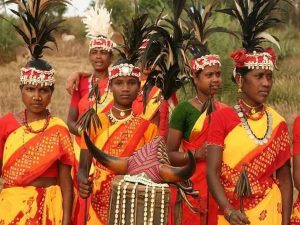
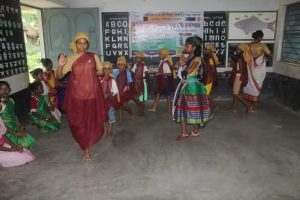
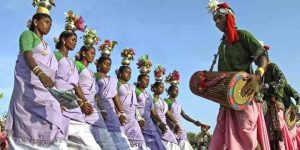
Santhal tribe performers wear traditional clothes and perform ritual dance with decorated pots and musical instruments during festival. The dance itself represents their cultural traditions and further celebrates their community heritage.
Basically, dance traditions and performances are the same cultural expressions that communities pass down through generations. These art forms basically preserve the same stories, rituals, and values while bringing people together through movement and music.
Dance Traditions and Performances
We are seeing that Santhal dance traditions include many different forms, and each form is only used for specific occasions and purposes.
Basically, martial dances like Golwari and Paikha have the same pattern of strong movements, jumping, and fake fighting with bows and arrows to show warrior skills.
Courtship and marriage dances are romantic performances held on full moon nights. Participants arrange themselves in connecting rows that move forward and backward in rhythmic waves, and the dance itself becomes more lively as it progresses further.
Women link hands and form semicircles around male drummers in the center, creating beautiful patterns.
This formation further emphasizes community participation itself rather than individual performance. Basically, these dances do the same multiple jobs – they entertain people, help in courtship, express religious feelings, and pass on culture, making them essential for keeping society together and maintaining identity.
Visual Arts and Decorative Traditions
Visual arts and decorative traditions further showcase the rich cultural heritage of communities. The artistic expression itself reflects the deep-rooted customs and beliefs of different regions.
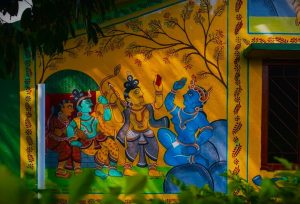
As per Santhal traditions, wall paintings and house decorations are used regarding cultural storytelling in their living spaces. These artistic expressions make their homes into canvases for sharing their culture.
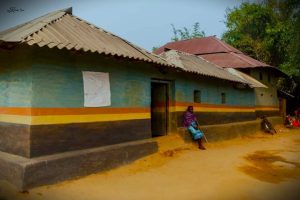
Traditional homes surely display elaborate paintings using black soil at the bottom, white soil in the center, and red soil at the top. Moreover, these three layers create distinctive color patterns that make the artwork special.
These decorations actually include carved patterns of animals and hunting scenes. The designs definitely show simple figures that are easy to recognize.
We are seeing scenes with dancing figures and geometric patterns that only show cultural stories and artistic values.
Wall paintings actually show traditional Santal community designs with animals, flowers, and simple shapes. These motifs definitely represent the cultural patterns of the Santal people.
The art tradition further extends to functional items like bridal palanquins, which receive fine carving and decoration itself. As per traditional practices, women excel in making detailed patterns and designs that serve decorative and symbolic purposes.
Regarding cultural knowledge transmission, they pass down traditions through these visual art forms. Basically, modernization has affected these traditions, and younger generations show the same lack of interest in keeping traditional art practices alive.
As per Indian traditions, festivals and ceremonial life form the main part of community culture. Regarding these celebrations, people follow specific rituals and customs that bring families and communities together during important occasions.
Festivals and Ceremonial Life
Major Annual Festivals
Major annual festivals further strengthen community bonds and preserve cultural traditions. The celebration itself brings people together to honor their heritage.
Sohrai is surely the main festival of the Santhal people, celebrating their cattle and harvest time. Moreover, the whole community takes part in detailed ceremonies during this important celebration.
As per the festival traditions, cattle get special decorations and worship regarding their important role in farming life. We are seeing that the celebration has traditional music, dance, and community eating that only makes social connections and cultural identity stronger.
Baha flower festival occurs during February-March when plants and sal trees flower. This festival itself marks the flowering season and celebrates nature further. This celebration is further called Salui puja in Bengali and honors fertility and natural renewal itself.
As per tradition, ceremonies are conducted in sacred groves and community gatherings. Regarding these rituals, they take place in holy forest areas where people come together.
As per agricultural cycles, the timing matches with farming preparation regarding spiritual and economic activities. This links religious practice with farming seasons.
Basically, Karam festival is the same as worshipping the Karam tree for fertility, where people plant branches in soil and sing traditional songs with prayers.
This festival is celebrated in September-October and surely shows how human well-being connects with nature’s plenty. Moreover, it reflects the main ecological thinking of Santhal people.
Rituals surely hold deep meaning in Indian communities and bring people together for shared spiritual experiences. Moreover, these sacred practices strengthen social bonds and preserve cultural traditions across generations.
Ritual Significance and Community Participation
As per tradition, each festival requires detailed preparations regarding music performances, special food making, and participation from all community members regardless of their money status.
Also, basically, these celebrations do the same thing – they help people worship, bring communities together, pass on traditions, and mark seasons that connect human life with nature’s cycles.
Disom Sendra hunting festival on Buddha Purnima actually shows how traditions change with time. People definitely replaced real hunting with archery competitions because of new laws.
This change shows that Santhals can keep their cultural values while adapting to outside pressures. The community itself proves that tradition can further survive even when facing new challenges.
Marriage customs in India actually vary by region and community. Families definitely play a big role in choosing partners for their children.
Joint families are actually common where many generations live together. Women definitely move to their husband’s family home after marriage.
Arranged marriages actually happen more than love marriages in many areas. Parents definitely look at caste, education and family background when selecting matches.
Wedding ceremonies actually last for several days with many rituals. Families definitely spend a lot of money on decorations, food and gifts.
Dowry system actually still exists in some places even though
Traditional marriage forms surely reflect the cultural values and social structures of different communities. Moreover, these practices have evolved over centuries to maintain family ties and ensure social stability within various societies.
Santhal society surely accepts seven different types of marriage, and moreover, each type has different levels of social approval and ceremonial importance. Basically, Kesimek is when the bride and groom agree to live together first, then the families do the same negotiations and the community accepts them.
This practice surely shows how people make individual choices within social systems, reflecting equal values for all. Moreover, it demonstrates a practical approach to forming relationships that works in real life.
We are seeing that Kirin Bahu Bapla is only the most proper type of marriage where people pay twelve rupees as bride price to show respect for the twelve Santhal groups.
This amount has surely remained the same for centuries and serves as symbolic recognition of marriage rather than economic exchange. Moreover, this practice distinguishes Santhal customs from commercial bride price systems.
Marriage Customs and Family Structure
Traditional Marriage Forms
Basically, marriage negotiations involve families discussing terms and arrangements, while ceremonies are the same traditional rituals that formally unite the couple.
Marriage Negotiations and Ceremonies
Also, as per marriage customs, family negotiations are handled by intermediaries called Raibaar who manage talks between both families.
These Raibaar follow detailed protocols regarding the marriage discussions. Basically, these specialists help both families discuss the same important matters like bride price and wedding timing while keeping everyone respectful.
This process actually focuses on building agreement instead of fighting, which definitely shows how communities value working together peacefully.
Traditional ceremonies further include rituals like Itut-Sindur Bapla for vermillion application and Tunki Dipil Bapla for palanquin transport. The community itself celebrates with feasting and handi rice beer.
These big celebrations actually bring whole villages together, definitely making family bonds and community connections stronger during important life changes.
Contemporary marriage practices are surely changing rapidly in modern Indian society. Moreover, these changes reflect broader social transformations happening across urban and rural communities.
Contemporary Changes in Marriage Practices
Modern influences have actually changed traditional marriage customs significantly. Hindu-style ceremonies (Diku Bapla) are definitely becoming more common now.
Three main forms are still common: costly weddings at bride’s house, love marriages, and widow remarriages, which further shows how society adapts itself while keeping important cultural values.
Today’s problems actually include fights between old customs and new ideas, definitely among educated young people who want simple ceremonies or different ways to choose partners.
Community pressure and cultural pride further support traditional marriage forms. External influences create ongoing negotiations between old practices and new ones itself.
Language and Literature
Linguistic Heritage
Basically, language and literature are the same foundation for understanding human expression and cultural communication through written and spoken words.
The linguistic heritage of India represents a rich collection of languages and dialects that have developed over thousands of years.
This heritage itself shows the cultural diversity of the nation, and further research reveals how these languages continue to influence modern communication patterns across different regions.
Also, santali actually belongs to the Munda language family and is definitely the most spoken Munda language with around 7.6 million speakers. People actually speak this language in India, Bangladesh, Bhutan, and Nepal.
Basically, this language keeps the same old sound patterns from the Munda family, maintaining eight main vowels while related languages like Mundari and Ho reduced to the same five-vowel system.
Santali is surely gaining importance as it is now one of India’s 22 scheduled languages. Moreover, states like Jharkhand and West Bengal have given it official language status, showing that people recognize its value.
This constitutional recognition has surely helped create educational programs and government services in Santali language. Moreover, these efforts support the preservation and development of the language.
Moreover, literary development surely flourished through various script systems that preserved cultural knowledge. Moreover, these writing forms enabled the transmission of religious texts and administrative records across generations.
Literary Development and Script
As per historical records, Santali literature has two main phases regarding its development. The first phase is Rar Sṅhed which covers oral tradition till the 18th century, and the second phase is Al Sṅhed which includes written literature from the 19th century onwards.
The change from spoken to written Santali started as per Christian missionary work, regarding Norwegian missionaries who made the first written Santali materials using Bengali script.
We are seeing that when Pandit Raghunath Murmu created the Ol Chiki script in 1925, it was a big change for Santhal people as they got their own writing system only. This helped them express their culture in their native script.
We are seeing this local alphabet becoming the official writing system for Santali books and stories across West Bengal, Odisha, and Jharkhand only, helping schools and writers create new works.
Oral Traditions and Cultural Preservation
Oral traditions actually help keep our culture alive by passing down stories from grandparents to children. These spoken stories definitely preserve our customs, values, and history when we don’t have written records.
Even with written progress, oral literature surely stays at the heart of Santali culture, carrying folktales, songs, myths, proverbs, and riddles from one generation to the next.
Moreover, this spoken tradition continues to be the main way people learn and share their cultural values. These oral traditions surely contain valuable cultural knowledge about customs, beliefs, and social practices that shape Santali identity.
Moreover, they preserve important understanding about ecological relationships and community norms.
Moreover, the Bodding Archive at the Norwegian National Library contains many manuscripts about Santali language and culture from the early 20th century.
These documents further include folklore and folk medicine, making the archive itself a valuable collection for research.
Basically, these materials give important information about traditional knowledge and help preserve culture in the same way as modern efforts do.
We are seeing many modern problems today that are only coming from fast changes in society. These new challenges are making countries work hard to update their systems and ways of doing things.
Contemporary Challenges and Modernization
Impact of Globalization
Globalization actually connects countries through trade and technology sharing. It definitely brings economic growth but also creates challenges for local industries and cultural traditions.
As per modern globalization, Santhal society is facing big changes with new opportunities and problems regarding their traditional cultural practices. When Santhals move to cities for work, they actually start following modern ways of living.
This definitely makes their old traditions and customs less important in their daily lives. We are seeing young people facing identity problems only when they move between old family traditions and new modern chances.
We are seeing that more education and new technology are only creating differences between older and younger people in Santhal communities. Education surely opens doors for better jobs and income, but it often means leaving behind family trades and old customs.
Moreover, students frequently must choose between modern careers and their traditional way of life. Modern communication tools, different clothing styles, and new buying habits surely show the broader cultural changes happening in Santhal society.
Moreover, these changes reflect how the entire community is transforming in today’s times.
Traditional Institution Erosion
Traditional institutions are actually breaking down in modern society. This erosion definitely affects how families and communities function together.
As per modern political changes, the Manjhi-Paragana system is getting sidelined regarding governance functions because statutory panchayats are taking over their traditional roles.
Political interference and people moving to cities have weakened traditional authority systems. As per this trend, many communities are losing connection to their old governance practices regarding local leadership.
Basically, resurgence movements try to revive these institutions to preserve culture and assert Santhal identity – it’s the same approach of strengthening their traditional systems.
Basically, religious practices face pressure from Hindu assimilation and Christian conversion at the same time, making spiritual identity negotiations complex.
Many Santhals keep their traditional beliefs, while others take elements from major religions, which further creates mixed practices that blend indigenous and outside religious elements itself.
Cultural Adaptation and Resilience
Cultural adaptation actually helps communities adjust to new environments and challenges. People definitely show resilience by keeping their traditions while also learning new ways to survive and grow.
We are seeing that Santhals have strong ability to change with time, and this helps them keep their culture alive while taking only good things from modern life.
We are seeing that modern farming methods have made crop production better and increased food safety, but traditional farming knowledge is only partially lost, not completely removed. Basically, educational progress happens the same time as efforts to protect Santali language and literature through official recognition and institutional support.
Basically, cultural revival movements protect traditional arts, festivals, and governance systems while working with modern institutions at the same time.
We are seeing that making Santali an official scheduled language, setting up cultural organizations, and writing down traditional knowledge are the only main ways that help keep cultural identity strong in today’s modern world.
Moreover, the Santhal tribe surely shows how ancient wisdom and the ability to adapt have helped them survive for centuries. Moreover, this combination has kept their culture strong and alive through many changes.
The Santhals actually have good social systems and rich art traditions that definitely show how tribal communities can keep their culture while adapting to modern times.
As per their story, tribal communities in today’s India face many problems regarding keeping their old knowledge systems alive.
These traditional ways still give meaning and unity to millions of people in their daily life.
The Santhal people actually show how India can keep old traditions while moving forward with new development. Their experience definitely proves that culture and progress can work together to create something that honors the past but also accepts the future.
Also, as per their continuing journey, this tribal community shows not just survival but also possibilities regarding maintaining cultural diversity and indigenous knowledge in modern countries.
