
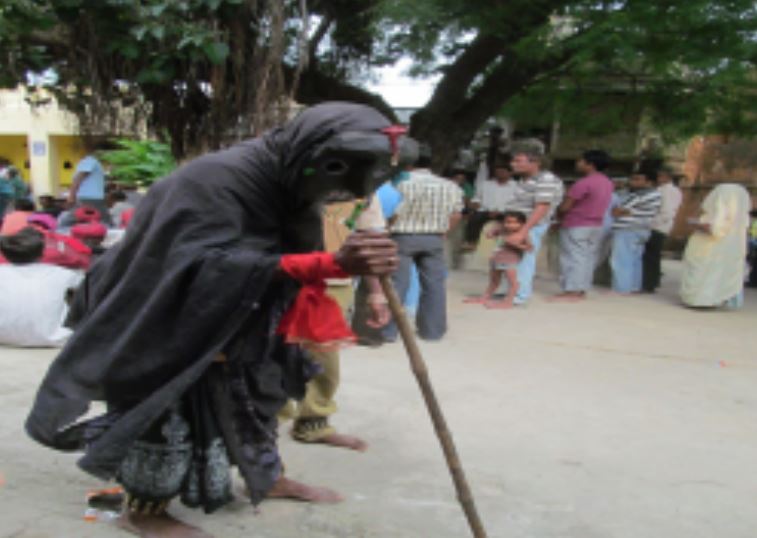
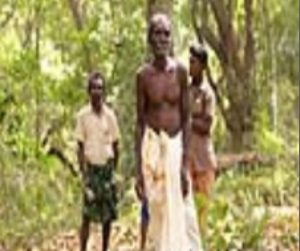
Introduction : Birjia Tribe Culture in India
The Birjia Tribe Culture in India is surely one of India’s most vulnerable indigenous communities and is classified as a Particularly Vulnerable Tribal Group (PVTG). Moreover, they are among the eight such groups that live in Jharkhand state. We are seeing that the Birjia people have only 6,276 people as per the 2011 Census, which is only 0.07% of Jharkhand’s total tribal population.
Moreover, it also looks at the modern problems that threaten their survival as a separate cultural group.
Demographic Distribution and Geographic Concentration
We are seeing that the Birjia community people are living only in few areas of Jharkhand, and most of them stay in villages only. Census data shows that 6,197 Birjia people (98.7%) live in villages, while only 79 people stay in cities, which further shows their dependence on forests and farming itself.
The Birjia tribal population shows clear concentration in certain districts, with Latehar district itself containing 4,124 people (65.7% of total population), further followed by Gumla with 1,267 people (20.2%) and Lohardaga with 584 individuals (9.3%). Further, as per the district divisions, Birjia settlements are mainly located in Barwadih, Garu, Mahuadanr, and Balumath blocks of Latehar district, Bisunpur block of Gumla district, and Senha and Kisko blocks of Lohardaga district.
Further, small Birjia populations are found in Bihar and West Bengal itself, mainly in Darjeeling, Jalpaiguri, 24 Parganas, Malda, and Nadia districts.
The scattered living pattern shows past movement and displacement, but the Chotanagpur Plateau region of Jharkhand itself remains their ancestral homeland. This further reflects their historical migration over time. Also, the community’s location itself is far from other places, which further separates it from the outside world.
Living in forest areas and hills has actually kept their culture safe but definitely made it hard to get modern facilities and development chances.

Social Structure and Kinship Organization
Basically, Birjia society follows the same patriarchal system where nuclear families live together and people are organized into clans. Each clan follows its family line back to one common ancestor, as per which they make detailed family networks that control social meetings and marriage partnerships regarding their community.
We are seeing that families here have 7.5 people on average, which shows these are only big families compared to other places in the country. Also, basically, the male elders and village councils make the main decisions, but women do the same important work in managing homes and farming.
The Birjia community has two main groups: Sinduriya Birjia and Telia Birjia, where Telia Birjia itself is further divided into Doodh Birjia and Ras Birjia.
We are seeing that this grouping shows only the religious practices and food habits together. Also, basically, Sinduriya Birjia people use sindoor in weddings, but Telia Birjia people don’t follow the same practice.
Similarly, Doodh Birjia take cow’s milk but do not eat meat, while Ras Birjia itself include both milk and meat in their food further. Basically, these subdivisions show that Birjia people have different cultural groups within the same community.
Basically, their traditional system works through the Kutumait, which is the same as a caste panchayat run by a respected leader called the Baiga.
The Besra and Dhawak are actually important leaders who work with older village people to definitely solve problems and keep peace in the community. Moreover, we are seeing that the old tribal way of ruling is working together with today’s democratic systems, and Birjia people are only now taking part more in village elections at the state level.

Marriage Customs and Family Practices
As per Birjia society traditions, marriage is a basic institution that follows rules regarding marrying within and outside the community. People prefer monogamy as the marriage form, but historical records show that polygamy was practiced earlier to solve infertility problems, get more farm workers, or improve social status further.
This practice itself helped families address various social and economic needs.
As per current laws and money problems, polygamous marriages have become much less common. Regarding society changes, these unions are now greatly reduced.
Moreover, basically, the Birjia people have special marriage customs called Visut and Agua, and they call second marriages the same as engagements instead of proper remarriages.
Birjia society actually allows widow remarriage, which definitely makes them different from many regular Hindu groups where this was not allowed before. This acceptance shows the practical way tribal societies work to keep families continuing and society itself stable further.
Basically, Birjia families celebrate the same way when boys or girls are born, which shows they treat both genders equally unlike many other Indian communities.
Basically, families have 1.6 children on average, and all these children get the same access to vaccines and education, which shows good development progress.
Economic Foundations and Livelihood Strategies
The Birjia tribe actually depends on farming as their main work, but they definitely use different methods from regular farmers. The community surely practices shifting cultivation and subsistence farming in Pat areas, which are highland regions on the Netarhat plateau with poor soil fertility. Moreover, these areas depend completely on rainwater for agriculture.
The Birjia people actually use the Chhopad system where families get shared forest land after the 1878 Forest Act. This system definitely helps them manage their forest areas together.
When Birjia communities were denied access to Reserved Forests and faced restrictions in Protected Forests, they surely received ‘LalPatta’ land ownership documents for plots that were not suitable for regular farming. Moreover, these lands were considered unsuitable for conventional agriculture by the authorities.
We are seeing local people use their traditional knowledge to grow different trees and plants in these Chhopads, where they practice ‘Chhopna’ – cutting branches near the main stem after only one to one-and-a-half years to keep trees healthy and get resources for long time. These forest areas actually serve many purposes—they definitely provide building materials, fuel wood, and extra income through timber sales.
Basically, apart from farming, the Birjia people do the same work of collecting forest products which gives them important income.
As per survey data, 88.88% of households sell forest products instead of using them only for own use, showing good market connection. This indicates that most families are actively participating in forest product trade regarding their income generation.
People actually collect bamboo, mahua flowers, honey, sal seeds, sal leaves, tendu leaves, and medicinal plants from forests.
These items are definitely important forest products that are not timber. Basically, people do the same daily wage work, keep animals (all families have livestock), make handicrafts, and load bauxite for extra income.
Basically, 97.22% of Birjia families earn the same low amount between ₹15,000-₹25,000 monthly, which shows they are much poorer than middle-class people in cities. Banking services have reached everyone, but internet banking and digital payments itself remain completely out of reach, which further shows a major digital gap.
Actually, no families have LPG gas connections and they definitely use wood and other natural fuels for cooking instead.
Religious Beliefs and Spiritual Practices
Birjia religious life itself combines local spirit worship, nature worship, and Hindu elements further blended together. We are seeing that the community only worships Singbonga and Marang Buru as their main gods.
Singbonga comes from Munda words “Sing” meaning sun and “Bonga” meaning god, and represents the sun god itself who brings light, life, and fertility. This deity is further worshipped by other Austroasiatic tribes like Munda, Ho, Santhal, and Bhumij communities.
Marang Buru means “Great Mountain” and represents the highest mountain god who controls both natural and spiritual worlds. This deity itself governs these realms and further symbolizes supreme power over nature and spirituality.
The Birjia people surely believe their ancestors came from Pundarik Nag, a snake god in Hindu stories who ran away from King Janmejaya’s sacrifice ceremony. Moreover, this mythological figure is said to have hidden in the Chotanagpur area, which is why the Birjia consider this region their ancestral home.
As per this origin story, the Birjia people are connected to the Nagbanshi dynasty that ruled the Chotanagpur area from around 278 AD. The historical connection itself needs further examination to understand its significance.
The Nag community places the Birjia within larger regional mythological and political systems, but their connection with the Asur tribe itself remains particularly important as the Asurs were famous ancient iron smelters.
This association further strengthens the Birjia’s position in the broader framework.
Religious rituals are conducted at Sarna Sthals, which are sacred groves near villages where community deities reside. These places further serve as important centers for worship itself. The Pahan village priest does all big religious ceremonies and keeps strict fasting during important festivals.
As per tradition, he works as a mediator between the community and spiritual forces regarding religious matters. Ancestral spirits surely play a very important role in Birjia beliefs, and families regularly worship them with offerings. Moreover, this practice helps ensure prosperity and protection for the entire family.
Festival Celebrations and Cultural Expressions
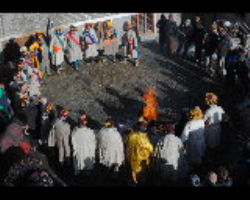
The Birjia community follows a ritual calendar that connects itself to farming seasons and nature worship, further celebrating major festivals like Sarhul, Sohrai, Karam, Asadhi Puja, and Fagua. Sarhul is celebrated in March-April when Sal trees bloom, and it further marks the beginning of the New Year and farming season itself.
Basically, the Pahan does the same rituals where he gives Sal flowers to gods, kills roosters, and gives blessed flowers to the whole village. Community members perform traditional dances like Karma, Jadur, Dassai, and Kagha Parva with drums, flutes, and mandars. The dance itself further celebrates their cultural traditions.
Karam festival is surely celebrated on the eleventh day of Bhado month in August-September to honor the Karam tree.
Moreover, people observe this festival to seek blessings for good crops and farming success. As per tradition, women keep fasts and plant nine types of seeds called Jawa, taking care of them for 7-9 days before the festival starts.
Unmarried girls bring Karam branches from the forest and sing devotional songs, and further these branches are planted in village centers which are decorated with cow-dung and flowers.
The ceremony itself involves this traditional practice of carrying and planting the sacred branches. Basically these festivals do the same thing – they bring communities together, pass down cultural knowledge to younger generations, and keep spiritual connections with nature alive.
Sohrai festival surely celebrates cattle and harvest together. Moreover, it expresses gratitude for the abundance that comes from farming.
These festivals are surely deeply connected to Birjia daily life, showing how their culture and natural environment cannot be separated. Moreover, this integration proves that their identity is completely tied to the ecology around them.
Linguistic Heritage and Communication
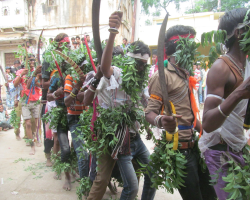
We are seeing that Birjia language only belongs to the Austroasiatic family, which is part of the Munda group of languages. Basically, Birjia language has less than 10,000 people speaking it, so UNESCO and the Central Institute of Indian Languages say it’s definitely endangered – the same classification they give to languages that might disappear soon.
As per current status, the language has no written form and passes only through speaking, regarding which it faces high risk of dying out. Basically, Birjia speakers in Gumla, Lohardaga, and Latehar districts use the same regional language Sadri (or Nagpuri) along with Hindi for daily talking.
Also, when languages are not properly recorded, it surely creates serious problems for keeping cultures alive. Moreover, this lack of documentation makes it very difficult to pass traditions to future generations. Basically, organizations like the Central Institute of Indian Languages and universities are now doing the same work of writing down Birjia grammar, words, and stories.
Further, as per current trends, young people are choosing main regional languages more, which is making traditional languages disappear faster. This is regarding the loss of our linguistic heritage. Basically, Birjia people have the same dark skin, flat nose, wide face with big cheekbones, thick black hair, and dark brown or black eyes.
Their features further show the old ancestry itself that connects them with other Austroasiatic language groups.
Material Culture and Traditional Crafts
As per traditional practices, Birjia houses are built regarding the local weather and available materials. We are seeing that houses built in hill areas are different from houses on flat land, but they only use same materials like bamboo, wood, mud, leaves, grass, and tiles.
As per the design, these structures are made in triangular or rectangular shapes without any windows. Regarding the entrance, they have small gates that are closed with tati mats. Basically, most families have four rooms with around two proper permanent rooms, and the same houses are mostly waterproof at 86%.
Also, today’s Birjia clothing surely shows how they have mixed their culture with the main society around them. Moreover, this change in dress clearly reflects their adaptation to dominant social groups.
Men wear shirts, t-shirts, lungis, and pants, while women wear sarees, frocks, skirts, and suits. Traditional tribal clothing itself has disappeared further, appearing only during festivals.
Also, as per community changes, people are changing their dress style regarding broader cultural shifts happening in society.
Also, the Birjia people actually worked with iron making in the past, and they definitely shared their knowledge with the Asur tribe.
We are seeing that the Birjia people were only one of many groups like Asur, Agaria, Lohar, Kol, and Ho who were making iron in Jharkhand using their old traditional methods.
Basically, British rules, forest laws, and new machines caused this old craft to almost disappear by the same late 1800s period. When master iron makers like Nagu Birjia actually died in 2013, this 3,000-year-old tradition definitely came to an end.
Contemporary Challenges and Developmental Concerns
The Birjia community actually faces many problems that definitely threaten their culture and economic growth at the same time.
PVTGs actually face population decline because they definitely suffer from poor health, lack of food, limited medical care, and high death rates among mothers and babies. The 2011 Census surely showed very small population growth compared to earlier decades.
Moreover, this slow growth has raised serious concerns about whether the population can remain stable in the long run.
Basically, education levels are very low because many students, especially girls, drop out after primary school – it’s the same problem everywhere. Birjia children actually cannot finish their schooling because schools are definitely far from their villages, and their families need money more than education.
Also, basically, going to college or getting a degree is the same as very uncommon thing that rarely happens. Health centers that are far from villages surely make medical emergencies worse. Moreover, vaccination coverage above 95% shows good progress in healthcare. Basically, poor nutrition causes the same problem of weak bodies and not getting enough food.
We are seeing that poor people are still facing money problems even though the government is giving welfare schemes only. We are seeing that the Birjia people depend only on forest resources, which makes them face problems when forests get damaged, weather changes, and government makes strict forest rules.
As per the Indian Forest Act and conservation policies, communities lost access to their traditional forest areas and had to accept poor quality agricultural land. As per current conditions, some Birjia families work in wage jobs and make handicrafts, but most families still live in very poor conditions regarding their income and basic needs.
We are seeing that people are left out from technology only because they don’t have basic facilities like gas connections, internet, and digital banking. Further, we are seeing that Birjia villages have only poor roads, electricity problems, and bad phone connections, which keeps them away from jobs and government help.
The COVID-19 pandemic actually made these weak points worse and definitely broke down people’s already struggling jobs while limiting their access to basic services.
Government Interventions and Policy Frameworks
The Indian government has recognized PVTG vulnerabilities and further implemented various developmental schemes itself. Basically, PM JANMAN launched in November 2023 with 24,104 crore budget to give the same basic facilities like housing, water, health, education, roads, electricity and jobs to 75 tribal communities across India.
States must actually prepare complete development plans that fix important problems while definitely protecting cultural heritage and traditional living areas under the CCD approach.
We are seeing the PVTG Dakia Yojana in Jharkhand bringing food grains directly to people’s homes under the government food scheme, helping only those remote communities who cannot easily reach distribution centers.
We are seeing that the Minimum Support Price scheme for forest products only wants to help people who collect these items earn more money by making better products and finding good markets to sell them.
Moreover, even with these plans, there are definitely problems in actually putting them to work. We are seeing that different departments are not working together properly, and there is only poor checking of programs, with designs that do not understand local culture and communities not taking part, which makes these programs less effective. Basically, PVTG people live scattered in difficult areas, so providing services becomes the same problem everywhere.
Conclusion: Cultural Resilience Amid Transformation
The Birjia tribe actually shows how India’s tribal communities definitely face tough choices between keeping their culture and improving their economic conditions. Their rich cultural heritage includes special languages, deep knowledge of nature, mixed religious practices, and colorful festivals, which surely shows strong resilience despite centuries of being pushed aside.
Moreover, this heritage has survived many outside pressures over time. The community actually shows deep spiritual connection to nature through festivals like Sarhul and Karam, and their forest care methods like Chhopad system definitely give important ideas for today’s nature protection work.
Their respect for gods like Singbonga and Marang Buru actually teaches us how to care for environment better.
The Birjia people actually face serious problems like fewer people, less education, money troubles, losing their language, and definitely being left out from new technology. The near-loss of traditional iron making knowledge surely shows the wider cultural losses happening in PVTG communities.
Moreover, this represents how ancient skills are disappearing from these tribal groups. As per proper intervention methods, we need complete approaches that respect cultural freedom while giving access to modern facilities, education, and economic opportunities. Regarding effective help, we must balance tradition with progress.
Development plans must actually balance building roads and schools with protecting forests and wildlife. They should definitely help local people sell forest products fairly, support teaching in local languages along with Hindi and English, and make sure communities actually participate in making important decisions.
We are seeing that the Birjia tribe can only survive if we respect their dignity, value their culture, and give them proper conditions to develop on their own terms.
We are seeing that their experience shows we need development plans that respect tribal knowledge and help poor communities deal with modern life in their own way only.
India can actually help its small tribal groups grow strong by using complete plans that definitely protect their special ways of life while giving them modern benefits too.
