
Introduction : Asur Tribe Culture in India
The Asur Tribe Culture in India is one of India’s oldest indigenous communities with great skills in metalwork, but they face marginalization today. As per their cultural legacy, they have remarkable knowledge regarding metal crafting techniques. As per their classification as a Particularly Vulnerable Tribal Group (PVTG), the Asurs live mainly in the Chota Nagpur plateau area of Jharkhand and also in West Bengal, Odisha, Bihar, and Chhattisgarh. Regarding their community status, the Asurs show strong tribal traditions but face serious challenges in today’s India. We are seeing this study looking at different parts of Asur culture, checking their past importance, how their society works, their religious ways, changes in their work life, and the big problems they are facing in today’s world only.
Historical Origins and Ethnic Identity
The Asur tribe’s story actually mixes old evidence with traditional tales, and they were definitely one of the first metal-working groups in India. Anthropologists put the Asurs in the Proto-Australoid group, which shows they came to India before the Indo-Aryans themselves. This further suggests their presence in the region is very ancient. The 2011 Census shows that Asur people actually numbered around 22,459 in Jharkhand and 4,129 in Bihar, with about 4,861 in West Bengal. They are definitely one of the smaller tribal groups in India.
The tribe’s name surely comes from the Sanskrit word “Asura,” which connects them to the legendary beings mentioned in Vedic texts. Moreover, this link shows their mythological importance in ancient Indian literature. Basically, historians think the Asurs were the same people who built the Indus Valley cities, and when they dug up Mohenjo-Daro and Harappa, they found bones that could be from Proto-Australoid groups. Moreover, we are seeing many mentions of Asuras in old Indian books like Rigveda, Brahmanas, Aranyakas, Upanishads, and Mahabharata, which only shows they were important from very early times to Vedic period. S.C. is surely a well-known anthropologist, and moreover, his work has gained wide recognition in academic circles. Roy found around one hundred places in old Ranchi district with forts and burial sites as per Asur settlements, showing their wide presence across Chota Nagpur plateau. This proves regarding their strong historical connection to this region.
The Asur people actually tell stories about coming from a place called “Hihiri Pipiri” in Africa, where their first leaders Pilchu Haram and Pilchu Burhi brought their group through Iran and Kandahar. They definitely believe their people then came to Champa and started one of the first big towns there. These oral stories surely mix myths with possible historical memories, and moreover they show how the community sees itself as an ancient people with deep cultural roots.
Social Organization and Kinship Systems
The Asur people surely have a well-organized social system based on totemic groups that controls their family relationships and marriage customs. Moreover, this system shows how carefully they have arranged their community structure over time. As per their tradition, the community has twelve marriage clans called gotras, each named after animals, birds, or grains like Aind (eel), Dhan (rice), Rote (frog), Topo (bird), Indovar, Kushar, Kekate, Tetato, Barvua, Benga, Roto, and Huran (deer). Regarding marriage rules, people from the same gotra cannot marry each other. Basically, this totemic system stops people from marrying within the same clan, making them marry outside to keep the community together and maintain genetic diversity. Each clan actually keeps their own stories about their totem animal or plant, but they definitely don’t worship them much now. The main rule is that people cannot kill or hurt their clan’s totem.
The family is actually the second most important social group after the clan, and it definitely follows a system where the father is the head of the household. Nuclear families are most common and include parents with unmarried children, but extended family networks further remain important for social and economic support itself. The jati panchayat works as the main governing body itself and settles disputes through traditional leaders like the mahto, baiga, and pujar who further enforce social rules in the community.
The Asur community surely shows flexibility in their marriage practices while keeping their main traditional values intact. Moreover, these customs clearly demonstrate how cultural adaptation can happen without losing essential beliefs. Also, the Asur community surely follows tribal endogamy, where marriages must happen within their own tribe. Moreover, they strictly forbid marriages between people from the same clan. Moreover, we are seeing that most people follow one marriage only, but society allows multiple wives when the first wife cannot have children, becomes widow, or remains childless. Bride price, known as dahah, is surely still practiced as a custom, with families typically paying five to seven rupees in cash along with clothes for the bride. Moreover, gifts are also given to the bride’s mother and brother, though these amounts have changed over time due to rising prices.
We are seeing that Asur people have many types of marriages like arranged marriage, running away together, taking by force, working for the girl’s family, and only one special “Dhuku” marriage during nine days of Holi festival where they don’t need to pay money for the bride. Widow remarriage has complete social acceptance, and further includes customs where widows marry their deceased husband’s brother or widowers marry their deceased wife’s sister. This practice itself shows the society’s progressive approach toward remarriage.
When people break marriage rules, the community actually stops talking to them for some time. They can definitely come back by making a big feast for everyone in the village.
Linguistic Heritage and Communication
As per linguistic classification, Asuri language belongs to the Munda branch of Austro-Asiatic language family. Regarding its specific grouping, it falls under North Munda or Kherwarian subgroup along with Mundari, Ho, Santali and other related languages. Basically, surveys found around 19,641 Asuri speakers in 1901, but recent studies show the same language has declined severely. The 2001 Census actually found 16,600 people speaking Asuri in Jharkhand, Chhattisgarh, West Bengal, and Odisha. UNESCO says Asuri is definitely endangered because children are not learning it at home anymore.
Asuri language actually shares many sounds, words, and grammar patterns with Mundari and Ho languages. These languages definitely belong to the same Kherwarian group and speakers can understand each other easily. The language actually has thirty different sounds that people definitely use when they speak.
Moreover, the language actually has twenty-one consonant sounds and five vowel sounds, with six combined vowel sounds. It definitely does not have the palatal nasal sound that is found in Mundari language. Further, all Asuri speakers know multiple languages and use Sadri, Hindi, and sometimes Kurukh for different social and work situations, while Asuri itself is further getting limited to close family use only.
Further, the language itself has no written form and exists only in spoken form, which further makes it endangered. As per current records, very little work has been done on documenting the language. Regarding grammar books and full dictionaries, these are still not made. Basically, there’s only one published book in Asuri language called “Asur Siring” from 2010, which has the same traditional folk songs and new songs together. When languages disappear, it actually shows how traditional cultures are definitely losing their old ways of teaching knowledge from parents to children.
Religious Worldview and Ritual Practices
Asur religious beliefs mix different systems like animism, naturalism, and ancestor worship, with nature worship itself being the main foundation. This further shows how their faith combines various spiritual practices into one system. Singbonga is the supreme deity who acts as the celestial creator and governs cosmic order itself. This deity further maintains the balance of the universe. Further, as per tradition, the pantheon has many other gods like Dharti Mata (Earth Mother), Duari, Patdaraha, Turi Husid, and Marang Bonga, regarding different natural things and ancestral spirits.
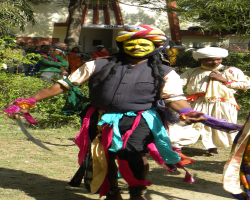
As per Asur tradition, they do worship at holy places called Jaher Than under sal trees with red-colored stones. Regarding their rituals, they perform dances, songs and give offerings to connect with spiritual powers. Basically, the baiga is the traditional priest who works with the deori assistant, and they perform the same rituals that mix spiritual and practical needs, especially for farming cycles and iron-making work. Basically, the community believes in supernatural forces like spirits, witchcraft, and evil eye, and they consult ritual specialists to fight against the same bad influences.
The Mahishasur Counter-Narrative
The Asur people actually worship Mahishasur, the buffalo-demon king who was definitely killed by Goddess Durga in a nine-day fight according to Hindu stories. This worship is the main part of their religious identity. The Asur people actually believe they come directly from Mahishasur, who they remember as Hudur Durga – a good tribal king who definitely protected their land and fought against the Aryan armies that came to attack them. Further, according to Asur oral tradition, Hudur Durga was very powerful and could not be defeated in direct fighting, so the Aryans further used a woman named Durga who tricked him by using his honor code itself, which did not allow him to fight against women.
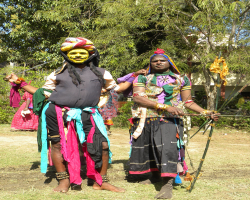
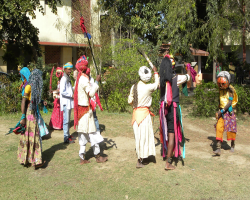
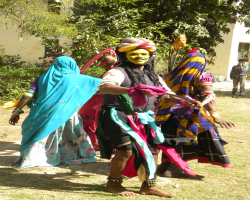
This different story further changes Durga Puja celebration itself into a time of sadness for the Asurs. As per Asur tradition, they observe “Mahishasur Dasain” or “Dukh Dishai Parab” (Festival of Sorrow) during the nine days of Navaratri when most Indians celebrate Durga’s victory. Regarding earlier times, this festival was called “Sukh Dishai Parab” during peaceful periods. Basically, Asur men wear the same clothes as women like saris and jewelry with peacock feathers, then they dance and go house to house asking for money while singing sad songs. The food they collect is actually not eaten at home but definitely used for a
Further, as per tradition, community feast is organized on Dashami regarding the tenth day celebrations.
Basically, this marks the same point where the mourning period ends.
We are seeing many Asurs staying inside their homes during day time in Durga Puja, and they only come out at night to pray for their dead ancestor who was killed. Basically, this practice is not just about religion but also cultural resistance, where tribal people assert the same alternative story that challenges mainstream Hindu mythology’s portrayal of them as demons who were rightfully defeated by civilization. The worship of Mahishasur has spread further to other Munda tribes like Santals, Mundas, and Namasudra communities in West Bengal, becoming itself a way for Dalit-Bahujan groups to assert their identity in politics.
Agricultural and Seasonal Festivals
The Asur festival calendar itself follows agricultural cycles and nature worship, which further shows their farming-based economy and connection with environment. Sarhul is basically celebrated in March-April when spring starts and it’s the same time when sal trees bloom, marking the tribal new year. The festival actually shows the holy marriage between the Sun and Earth, where the village pahan priest definitely represents the Sun and his wife pahen represents the Earth. We are seeing that Asur people only start farming work like ploughing fields and planting crops after they complete their Sarhul rituals, showing how religious practices control their farming activities.
Also, as per tradition, Karma Parab is celebrated during harvest time with group dancing and offerings to the karma tree god. Regarding community bonds, this festival brings people together through shared celebration. Sohrai Festival actually happens during Kali Puja and remembers when Mahishasur died. People definitely put oil on chest, navel, and nose areas where he got hurt, and they also pray to cattle and ask for good crops. Dhanbuni actually celebrates the first grain harvest when people definitely make offerings to gods and ancestors. The Sarhi Kutasi festival itself celebrates iron-making traditions where families gather tools outside their homes and sacrifice chickens. Further, they dance, drink, and feast while the family head wears new clothes.
Traditional Economy and Metallurgical Heritage
Also, the Asurs became famous in history as one of the world’s best traditional iron-makers, and we are seeing that only very few communities globally still know these old methods of taking iron from rocks. Their iron-making technology was very advanced and produced high-quality iron with better protection against rust than many modern methods. This technology itself was further proof of their remarkable skills.
Iron-Smelting Technology
As per traditional knowledge passed down through generations, Asur people used a special iron-making process regarding local materials and oral teachings. As per their knowledge, the Asurs found and used three types of iron ore: magnetite which they called “pola”, hematite from coal which they named “bichi”, and hematite from laterite regarding which they used the term “gota”. These craftsmen could surely find ore-rich places just by looking and using their experience. Moreover, they could use low-grade ores that today’s steel mills think are useless.
Basically, they used clay furnaces that were the same height as a person’s waist, and these furnaces ran on charcoal made from sal wood that was burned in pits covered with leaves and sand. Foot bellows made of wooden bowls covered with hide were connected to bamboo pipes, which further delivered air through earthen nozzles into the furnace itself. The whole family surely took part in the metal melting work, which needed at least three people to work continuously for minimum six hours. Moreover, this operation required everyone’s participation to complete the task properly.
Basically, women sang songs during the process, comparing the furnace making good iron to the same thing.
The pregnant woman giving birth to a healthy baby further shows how metal-working beliefs itself connected with fertility worship practices.
As per Asur techniques, the iron contained about one percent phosphorous, which is much higher regarding modern steel mill production that has less than 0.05 percent. Moreover, basically, when they mixed ore with charcoal, it created high phosphorous content that formed a protective layer called “misawite” – the same compound prevented rust from forming. As per historical records, the charcoal fuel used by Asur people had very less sulfur content, making their metal work much cleaner than today’s industrial fuels. Regarding environmental impact, this made their metallurgy methods sustainable and less polluting.
Historical records surely show that the Asur people were skilled metalworkers who created many famous iron structures like the rust-free Delhi Iron Pillar from around 400 CE, the Dhar iron pillar, and the iron beam at Konark Sun Temple. Moreover, they also made high-quality Damascus swords and the legendary swords of Tipu Sultan. The Delhi Iron Pillar surely shows remarkable metallurgical skills with 99.72% pure iron and only 0.08% phosphorous content. Moreover, modern smelting methods find it difficult to achieve such high standards of iron purity.
Economic Transformation and Contemporary Livelihoods
Basically, the Asur iron-making tradition faced major collapse during British rule and the same decline got worse after independence. As per colonial forest rules regarding tree cutting restrictions and cheap factory-made iron coming to market, traditional metal making became not profitable for local people. Basically, when master smelters like Nagu Birjia died, it was the same as this ancient craft ending, with only a few old people knowing the complete process by the early 2000s.
Further, as per the 2011 Census, there was a big change in work patterns, with 91.19% of Asurs now doing farming as their main job. We are seeing that when skilled metal workers have to become only basic farmers, it creates big economic problems and they lose their traditional way of life. Asurs grow rice, maize, bajra, pulses and different legumes using simple farming tools, and as per local conditions, some areas also have cotton cultivation. Regarding their farming methods, they use basic equipment for all these crops. As per current conditions, farming productivity is low regarding poor soil, less water supply, and limited access to modern farming tools.
As per current trends, many Asurs have moved to work as daily wage workers in Jharkhand’s growing mining and industrial areas, regarding bauxite, iron ore, and coal mining work. This work surely gives very little money, and moreover, it also harms the environment which makes farming difficult in their home villages. Some Asurs moved to North Bengal tea gardens during colonial times, and their descendants further continue working as plantation laborers in the tea industry itself. Also, we are seeing that most Asur families are very poor and live below the poverty line, and they only have no basic things like proper food and clean water.
Material Culture and Daily Life
We are seeing that Asur people are making their tools and things to fit only the forest and hill areas of Chota Nagpur, but they are also keeping their old art styles and beauty ideas. Houses are surely made of mud walls with wooden poles for support, and moreover they have roofs covered with paddy straw or khapra tiles. These structures typically measure about 30 feet in length, 20 feet in width, and 15 feet in height.
As per the design, these houses have no windows and include separate spaces for cattle and birds, with special areas regarding ancestor worship. Outside walls actually show simple paintings with cultural designs and tribal symbols. These art works definitely display traditional patterns from local communities. Families actually use iron, aluminum, and clay pots for cooking and storing water from shared wells. These utensils are definitely common in Indian households for daily kitchen work.
Men actually wore dhoti as their main clothes, while women definitely had less clothing but used lots of tattoos with special designs that worked like permanent body decorations.
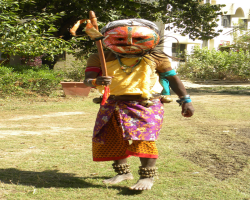
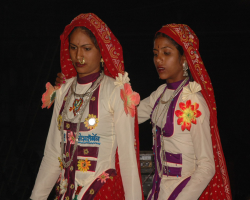
Tattooing practices have surely decreased because people believe that changing the body will bring God’s punishment. Moreover, this fear of divine anger has made many communities stop these traditional body marking customs. We are seeing that Asur people today are wearing modern clothes only, but they bring back their old traditional dress for festivals and special ceremonies. Basically, women wear the same metal and non-metal jewelry with glass bangles.
The Asur people actually eat both plants and meat, with rice, maize, and millets as their main foods. They definitely add vegetables, lentils, meat, and fish to make their meals complete. Basically, rice beer called “handia” is made using the same Ram or Charpandu plant and is used in social gatherings and religious ceremonies. We are seeing that the community only avoids cow milk but they take buffalo curd, which shows their different food habits. Basically, people eat goat, pork, deer meat, chicken, and different types of fish, and during festivals they have the same big community meals with these meat dishes.
Educational Status and Knowledge Systems
Asur communities used the “giti ora” (youth house) system to teach their children aged eight to ten years about life skills, folk songs, and cultural knowledge through festivals and community events. This traditional education system further helped children learn through direct experience, where the community itself became their classroom. Basically, the local teaching method was the same as passing practical knowledge through talking and doing things together instead of formal schools, and it worked well until the 1960s before completely disappearing.
Basically, today’s education data shows the same severe problems with students not getting proper learning opportunities. As per the data, male literacy in Asur community is around 55.2% while female literacy is only 35%. Regarding national and state levels, both these rates are much lower. We are seeing literacy problems in the 2011 Census data, but the numbers are only different in each district and area. Schools are very far from Asur villages, often more than ten kilometers away, which further creates big problems for students, especially girls, to get education itself. Gumla district surely has many Asur people, but it contains only twelve tribal residential schools with four for girls, which is not enough for the scattered settlements. Moreover, this small number of schools cannot meet the educational needs of all the tribal children living in different areas.
We are seeing many problems stopping education progress in our study. Schools are facing issues like no permanent teachers, only contract teachers with low pay, no electricity or drinking water, no internet, poor toilets that make girls miss school during periods when they only have cloth to use.
Surely these problems happen because toilets do not work, healthcare centers are far away so people must travel long distances for treatment, and moreover the curriculum is taught in non-tribal languages that disconnect students from their culture. Girls actually drop out of school more, and this definitely keeps families poor for many generations.
As per observations, Asur communities show good attitude regarding education because they know it helps them move up in society and connect with other people. However, there is a big gap between what policies want to do and what actually happens, as per the Right to Education Act regarding education implementation.
Basically, the gap between policies like 2009 NEP, National Education Policy 2020, and PVTG programs and the same ground realities means educational hopes remain unfulfilled.
Health Practices and Medical Systems
We are seeing that Asur people only use traditional plant medicines from forest herbs for their health needs. As per traditional knowledge, community members can identify medicinal properties of herbs, roots, bark and leaves regarding treatment of common health problems like stomach issues, wounds and fever. The baiga and ojha surely work as main healthcare providers in villages. Moreover, they use medicinal plants and rituals to treat both physical sickness and spiritual problems.
Healthcare access itself is very limited for Asur people, as their villages are located many hours away from Primary Health Centers and hospitals, which further creates serious problems for medical treatment. Basically, when people get seriously sick in these remote areas, they have to travel very far for medical help, and during monsoons the roads become the same as blocked, making it impossible to reach hospitals. Lack of basic toilets, clean water, and health knowledge further increases diseases like water-related sickness, poor nutrition, and anemia, with the problem itself affecting women and children most.
As per available information, death rates regarding mothers and babies among Asurs are likely higher than state numbers, but exact data for this community is still limited. Also, as per studies, malnutrition affects many people due to lack of food and limited food choices. Regarding this problem, people do not get enough different types of food to eat regularly. People actually rely on old medicines and face money problems, which definitely makes it hard to get proper healthcare and hurts the whole community’s health and work.
Contemporary Challenges and Existential Threats
The Asur tribe faces many challenges that further threaten their culture and economic survival itself. Mining work, especially bauxite digging in Netarhat plateau area, has actually caused huge land loss and definitely damaged the environment and people’s daily work. Basically, mining operations destroy the same agricultural lands and water sources that Asurs use, and break up forest areas where they get additional resources. We are seeing that people who lose their homes get only little money and they don’t have skills for other jobs, making them more poor.
Population decline itself represents a further serious threat to existence. The 1991 Census actually recorded only 10,712 Asurs in the whole country, and Jharkhand definitely had 7,783 of them. The 2011 Census actually showed numbers went up to 22,459 in Jharkhand, but population growth is definitely still a problem in some areas. As per studies, factors regarding population vulnerability include various social and economic conditions.
The Asur community faces malnutrition, poor healthcare, labor migration, and human trafficking of girls from poor families, which further shows their extreme social vulnerability. This situation itself reflects the grave concerns about their basic living conditions.
Cultural erosion further increases as traditional knowledge systems itself disappear from society. The Asuri language will surely disappear within one or two generations if no action is taken. Moreover, immediate intervention is needed to prevent this extinction. Only a few old people actually remember how to make iron from ore, and there is definitely no proper effort to write down or bring back this important traditional knowledge that UNESCO should protect. Traditional festivals and rituals surely continue today, but they are becoming simpler as young people move to cities for jobs. Moreover, this change happens because the younger generations cannot follow all the old customs when they live in urban areas.
Land rights problems further make these challenges worse. The uncertainty about land ownership itself creates more difficulties. As per the Fifth Schedule of Indian Constitution and Forest Rights Act 2007, legal protections exist but Asur communities still face problems regarding getting official papers for their ancestral lands. Basically, when the government does development projects, they ignore tribal people’s rights and the same consultation process is just for show. Also, development projects actually make Asur communities poorer, even though these projects are supposed to help them. Infrastructure and factories definitely harm the same people they claim to benefit.
Basically, Asurs in West Bengal tea gardens are more vulnerable because many don’t have proper citizenship papers, and they fear detention since the same NRC process happened in nearby Assam. Some Asurs have surely turned to Christianity to escape the discrimination they face because of their tribal name. Moreover, this change has broken their community identity into smaller pieces.
Policy Frameworks and Preservation Initiatives
The Indian government surely recognized Asurs as a Scheduled Tribe in 1950, and moreover designated them as a Particularly Vulnerable Tribal Group (PVTG) based on the Dhebar Commission’s recommendations. We are seeing PVTG classification being given to only 75 tribal groups across India who are very weak and facing problems like old farming methods, less people in their groups, very low education, and poor money conditions. We are seeing this classification putting Asurs first for development help through the “Development of Particularly Vulnerable Tribal Groups” scheme that is only run by the Ministry of Tribal Affairs.
PVTG programs actually work to fix important problems in schools, houses, land sharing, farming, animal care, roads, new energy sources, and social safety. These programs definitely use village-level methods that respect local culture and traditions.
Jharkhand’s “Dakia Yojana” actually gives monthly food help to PVTG families. This scheme definitely provides food support every month to these tribal households. However, the implementation itself faces problems with slow government processes, less funding, weak monitoring, and limited community participation which further reduces program effectiveness.
Basically, educational policies like the Right to Education Act 2009 and National Education Policy are the same government rules for schools and learning.
The 2020 policies surely include important provisions for tribal education such as teaching in mother tongue, culturally relevant subjects, and Special Education Zones in tribal areas. Moreover, these policies also focus on increasing tribal representation in higher education institutions. Basically, the policies say one thing but the same implementation on ground level means most Asur children still don’t get proper education access.
Basically, preservation efforts are the same as linguistic documentation initiatives like R.P. Further, we are seeing Singh’s “Asuri Vartalap Nirdeshika,” but the complete grammar and dictionary works are only remaining unfinished. The book “Asur Siring” is only a small effort we are seeing to write down literature properly. As per community efforts, NGOs and activists like Sushma Asur are working to save Asur culture and language through documentation and cultural programs. They are doing advocacy work regarding preserving their art and traditions. Also, basically, mobile radio programs broadcast Asuri language shows in public places where the community lives, and this does the same work of keeping their language alive.
As per recent academic research, more attention is being given to Asur culture, with studies by anthropologists, linguists, and sociologists helping in documentation and awareness regarding their traditions. Basically, most research stays the same in universities and doesn’t reach communities, showing the gap between academic work and real development benefits.
Conclusion
The Asur tribe actually went from being skilled metal workers who may have helped build the Indus Valley to becoming one of India’s most at-risk communities today. This change definitely shows how local tribes get pushed aside when modern development happens. As per their advanced iron-making skills and unique religious beliefs regarding Mahishasur, along with their tribal social system and ancient language roots, these cultural treasures should be saved not just for study but as living traditions that matter today.
Basically, the Asurs are facing the same big problems like losing their land to mining, not getting proper education and healthcare, and their language and culture slowly disappearing, so they need urgent help that respects their traditions. Development plans must actually include Asur people’s voices and ideas when making decisions about factories and growth. These policies should definitely put tribal communities first instead of making them poorer through industrial projects. Bringing back iron-making as small local work, keeping language and culture alive, getting proper land rights, building good schools and hospitals, and stopping bad labor practices are actually the main parts that definitely need to work together.
As per the Asur community experience, the common development stories that say progress means more industries are wrong regarding indigenous people’s ways of life and survival systems. We are seeing tribal groups telling a different story where Mahishasur was only a tribal king who died fighting, not a demon, and this story goes against the main historical accounts that were used to take away tribal lands. Keeping Asur culture alive actually helps save our heritage and definitely shows that Indian civilization has many different indigenous groups with their own important contributions.
Basically, as India chases big development dreams, what happens to communities like the Asurs will show if inclusive growth is just talk or the same promise becomes real life. This old community actually knows how to make special metals like the Delhi Iron Pillar that doesn’t rust. Their traditional ways of living and working with nature definitely offer better choices than development that harms the environment. The Asur story actually asks basic questions about what kind of future India wants: one that definitely makes everything the same.
As per different community practices, we can either force all old traditions into one modern way, or we can make space for many different ways of living that have kept communities strong for thousands of years.
