
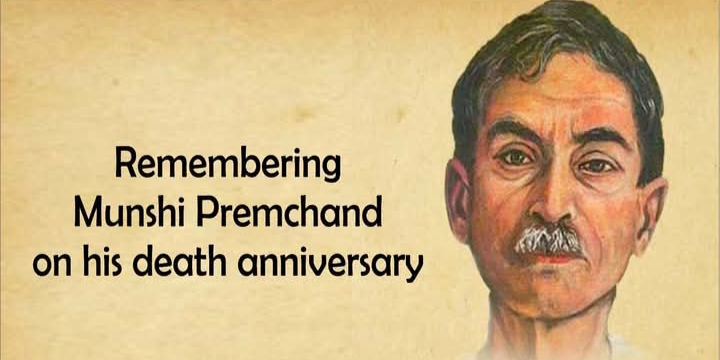
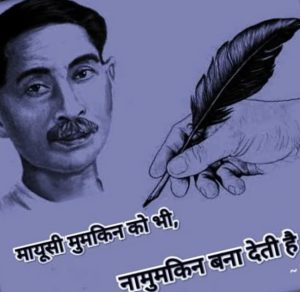
In Munshi Premchand’s famous work, we get to know the Indian society of that time., we get to know the Indian society of that time. Ever felt the aching truth of being human through a story that wasn’t technically yours, but somehow was? That’s what happens when you dive into Premchand’s world.
The “Upanyas Samrat” (Emperor of Novels) didn’t just write stories—he painted the raw reality of pre-independence India with words so sharp they still cut through hearts today.
Whether you’re new to Indian literature or hunting for Famous works of Munshi Premchand to finally check off your reading list, you’re in the right place. From the heart-wrenching “Godaan” to the revolutionary “Kafan,” his writings strip away pretense and force us to confront the uncomfortable truths about society.
But what makes these century-old stories still feel like they were written yesterday?
Famous works of Munshi Premchand’s Literary Journey
Early life and influences on his writing
Born Dhanpat Rai Shrivastava in 1880 in Lamhi village near Varanasi, Premchand’s early life shaped his literary sensibilities profoundly. Losing his mother at eight and growing up under a strict father who remarried quickly, young Premchand experienced hardship firsthand.
These childhood experiences weren’t just sad stories—they became the raw material that fueled his writing. The village life he observed, with its stark inequalities and human struggles, appeared repeatedly in his works.
His education at a missionary school exposed him to Western literature while his traditional upbringing kept him connected to Indian storytelling traditions. Books weren’t luxury items in his household—they were necessities, despite financial constraints.
Transition from Urdu to Hindi literature
Premchand started writing in Urdu under the pen name “Nawab Rai.” His first collection, “Soz-e-Watan” (Dirge of the Nation), got him in hot water with British authorities who burned all copies they could find in 1910.
This wasn’t just a minor career setback—it was a turning point. After this government crackdown, he adopted “Premchand” as his pen name and gradually shifted to writing in Hindi.
Why the switch? Hindi allowed him to reach a broader audience—the everyday people whose stories he wanted to tell. This wasn’t just a practical decision but a political one. By embracing Hindi, he connected with the swelling nationalist movement sweeping across North India.
The transition wasn’t overnight. For years, he wrote in both languages, sometimes even translating his own works between Urdu and Hindi.
Evolution of his writing style over decades
Premchand’s writing journey shows a clear evolution from idealism to mature realism. His early works like “Seva Sadan” (1919) reflected reformist zeal with straightforward narratives.
Middle-period works like “Rangbhoomi” (1925) and “Gaban” (1931) show a writer hitting his stride—more complex characters, nuanced social criticism, and deeper psychological insights.
By the time he wrote “Godan” (1936), widely considered his masterpiece, Premchand had developed a style that balanced unflinching social criticism with profound compassion. His characters weren’t just symbols but flesh-and-blood people caught in social and economic traps.
What makes Premchand’s evolution remarkable is how he abandoned romantic notions without becoming cynical. His later works tackle harsher realities but maintain faith in human dignity. His language grew simpler over time—shedding literary flourishes for direct, powerful prose that could reach readers across social classes.
Landmark Hindi Novels
A. Godaan: A masterpiece of rural Indian life
Ever read a book that feels like it’s ripped straight from the heart of a nation? That’s Godaan for you. Published in 1936, this novel isn’t just Premchand’s crowning achievement – it’s arguably the greatest Hindi novel ever written.
Godaan follows Hori, a poor farmer drowning in debt, whose simple dream is to own a cow. That’s it. One cow. But in Premchand’s India, even this modest wish becomes a tragic impossibility.
What makes this book hit so hard is how Premchand captures village life with brutal honesty. The feudal system, caste politics, money-lenders circling like vultures – it’s all there, painted in unflinching detail.
The genius is in how personal it feels. You’ll find yourself fuming at the injustice, cheering for small victories, and ultimately questioning the entire social structure that creates such suffering. When Hori dies still clinging to his dream, it’s not just his tragedy – it’s India’s.
B. Nirmala: Addressing issues of dowry and patriarchy
Nirmala isn’t an easy read, and that’s exactly the point. Published in 1928, this novel rips the band-aid off issues most writers of the time wouldn’t touch.
The story centers on Nirmala, a young woman forced into marrying a widower old enough to be her father because her parents couldn’t afford a proper dowry. Brutal, right? It gets worse.
Premchand doesn’t just stop at exposing the dowry system. He goes full throttle into showing how patriarchy crushes women from all sides. Nirmala’s husband suspects her of having inappropriate feelings toward his son (who’s practically her age). The psychological torture she endures is enough to make your blood boil.
What’s remarkable is how modern this novel feels. Replace the setting, and these issues could be ripped from today’s headlines. Premchand wasn’t just ahead of his time – he was calling out problems we’re still grappling with nearly a century later.
C. Gaban: Exploration of moral corruption
Money changes everything. That’s the brutal truth at the heart of Gaban. Written in 1931, this novel digs into how financial pressure can corrupt even decent people.
The story follows Ramanath, a young man who desperately wants to keep his wife happy by buying her jewelry. Nothing wrong with that, right? Except he can’t afford it, leading him down a path of embezzlement, lies, and eventually, running away from his problems.
What makes Gaban special is how Premchand refuses to paint anyone as purely villain or victim. Even as Ramanath makes increasingly terrible choices, you understand his motivations. The social pressure to maintain appearances, the desire to please loved ones, the slippery slope of small compromises – it all feels uncomfortably familiar.
By the end, you’re left wondering: would I do any better in his shoes? That’s the mark of great literature – making you question not just the characters, but yourself.
D. Rangbhoomi: Social and political commentary
If you’re looking for subtlety, Rangbhoomi isn’t it – and that’s what makes it powerful. Published in 1925 during the height of India’s independence movement, this novel doesn’t just comment on politics – it throws you headfirst into the struggle.
The protagonist, Surdas, is a blind beggar facing displacement when a tobacco factory threatens his land. This simple conflict explodes into a much larger examination of industrialization, capitalism, and colonial exploitation.
Premchand pulls no punches here. The characters represent different ideological positions – from non-violent resistance to revolutionary action – forcing readers to confront the complex reality of fighting systemic oppression.
What’s fascinating is how relevant Rangbhoomi remains today. The questions it raises about development versus displacement, profit versus people, and what true freedom means could be asked in any modern protest movement.
E. Karmabhoomi: Depicting nationalist struggle
The story weaves through Hindu-Muslim relations, the Non-Cooperation Movement, and the complex social dynamics of a nation fighting for its soul. Through characters like Amarkant, a privileged young man who abandons comfort to join the struggle, Premchand shows how independence wasn’t just a political movement but a moral awakening.
What separates this from other nationalist literature is Premchand’s refusal to glorify or simplify. He shows the movement with all its contradictions – the idealism alongside the opportunism, the unity alongside the divisions.
When you read Karmabhoomi, you’re not getting a sanitized history lesson. You’re getting the messy, passionate, sometimes heartbreaking reality of people trying to birth a nation while still carrying the wounds of centuries. It’s not just a novel about freedom – it’s a novel about what freedom costs.
Influential Short Story Collections
Mansarovar: Compilation of his finest works
Diving into Premchand’s “Mansarovar” is like opening a treasure chest of Indian literary brilliance. This eight-volume collection showcases the master storyteller at his peak, capturing the essence of pre-independence India with unmatched clarity.
What makes “Mansarovar” special? It’s not just about quantity (though with 300+ stories, it’s impressive). The collection represents Premchand’s evolution as a writer who transformed from Dhanpat Rai to the literary giant we know today.
These stories aren’t your typical light reading. They punch you in the gut with their raw portrayal of village life, caste politics, and colonial oppression. Yet somehow, Premchand makes you feel everything – the despair of a hungry farmer, the quiet dignity of the oppressed, the hypocrisy of the privileged.
Kafan: The iconic tale of poverty and moral degradation
“Kafan” (The Shroud) might be the most gut-wrenching story you’ll ever read. Two impoverished men – Ghisu and his son Madhav – receive money to buy a shroud for Madhav’s dead wife but spend it on food and alcohol instead.
The genius of “Kafan” isn’t in shocking you (though it does). It’s in making you understand these seemingly heartless characters. Their moral degradation isn’t born from evil but from a lifetime of crushing poverty that has stripped away their humanity piece by piece.
Poos Ki Raat: Powerful portrayal of farmer’s struggles
In “Poos Ki Raat” (A Winter’s Night), Premchand takes us through one freezing night with Halku, a poor farmer guarding his field from nilgai (blue bulls).
The bitter cold is almost a character itself, but the real chill comes from realizing Halku’s impossible situation – either lose his crops to animals or freeze to death protecting them. The physical cold mirrors the cold indifference of a system where farmers like Halku are trapped in endless cycles of debt and desperation.
What makes this story timeless? Nearly a century later, Indian farmers still face these same struggles. That’s Famous works of Munshi Premchand’s power – showing us how little has changed while making us care deeply about those caught in these struggles.
Literary Themes and Social Commentary
A. Rural poverty and exploitation
Famous works of Munshi Premchand didn’t just write about village life—he ripped open its harsh realities for all to see. In “Godaan,” his masterpiece, we meet Hori, a farmer drowning in debt who dreams of owning a cow. This simple desire shows the crushing weight poor villagers carried.
Ever notice how Premchand’s characters are always one bad harvest away from disaster? That’s no accident. In stories like “Poos ki Raat,” a farmer spends a freezing night guarding his field because losing even a small portion of his crop would mean starvation.
The zamindari system gets absolutely skewered in his works. Landlords aren’t just wealthy—they’re often depicted as vultures circling desperate farmers. In “Sadgati,” the Brahmin priest exploits a poor Dalit man to death, showing how caste and economic exploitation worked hand in hand.
B. Critique of religious orthodoxy
Premchand took aim at religious hypocrisy when few dared to. His pen turned into a weapon against blind faith and ritualism.
In “Kafan,” a father and son spend money meant for a funeral shroud on alcohol. Shocking? Absolutely. But Premchand uses this disturbing scenario to expose how religious traditions become meaningless when basic human needs aren’t met.
His stories like “Mandir aur Masjid” don’t just suggest religious harmony—they actively challenge the divisions created by religious orthodoxy. Characters who hide behind religious authority while exploiting others get thoroughly exposed in his works.
C. Women’s issues and gender relations
The women in Premchand’s stories aren’t just side characters—they’re complex humans fighting impossible battles. Take Dhania from “Godaan,” who often shows more courage and practical wisdom than her husband.
In “Nirmala,” we see a young girl forced into marriage with an older man—a practice Premchand condemns through the tragic consequences that follow. The novel doesn’t just tell a sad story; it demands readers question the entire system of arranged marriages and dowry.
What makes Premchand revolutionary is how he portrayed women’s inner thoughts and desires at a time when few male writers bothered. His female characters dream, rebel, and occasionally triumph despite overwhelming odds.
D. Nationalism and the independence movement
During India’s fight for freedom, Premchand’s pen became as powerful as any protest. His work “Rangbhoomi” features a blind beggar who stands up against a foreign-owned factory—a thinly veiled metaphor for resistance against colonial rule.
Many don’t realize Premchand quit his government job in response to Gandhi’s Non-Cooperation Movement. This personal sacrifice informed stories like “Namak ka Daroga,” where characters face moral dilemmas between duty to colonial masters and love for their country.
What’s fascinating is how Premchand avoided simple nationalism. His characters rarely make grand patriotic speeches. Instead, they show love for India through their daily struggles and moral choices—making his political writing feel deeply personal rather than preachy.
Premchand’s Literary Legacy
A. Impact on Hindi and Urdu literature
Premchand revolutionized Hindi and Urdu literature in ways few authors ever have. Before him, most writing was flowery, romantic stuff that didn’t touch real life. Premchand flipped the script. He brought the everyday struggles of ordinary Indians—farmers, laborers, women—right to the center of literature.
His writing style? Straightforward and powerful. No fancy words when simple ones would do. This made his stories accessible to everyone, not just the educated elite.
What really set him apart was his courage. He wrote about untouchability, poverty, colonial exploitation, and women’s rights when these topics were barely whispered about. “Godan” (The Gift of a Cow) showed the brutal reality of rural debt and exploitation decades before it became a mainstream concern.
B. Influence on subsequent generations of writers
Ask any Hindi writer who shaped them, and Premchand’s name comes up. Always.
His influence runs deep—like DNA in Hindi literature’s genetic code. Writers like Yashpal, Phanishwarnath Renu, and Bhisham Sahni all built on Premchand’s foundation but took his realistic approach in their own directions.
The greatest testament to his influence? Even writers who reject his style must first acknowledge him. You can’t escape Premchand’s shadow in Indian literature. His emphasis on social issues created a tradition of purpose-driven writing that continues today.
What makes his influence remarkable is how it transcends political divides. Progressive writers claim him. Conservative writers claim him. Everyone finds something in Premchand’s humanism that speaks to them.
C. Adaptations of his works in film and television
Premchand’s stories jump off the page and onto the screen like they were written for it. Satyajit Ray’s “Sadgati” (Deliverance) brought Premchand’s brutal examination of caste to life with haunting visuals that stick with you.
Shyam Benegal’s “Shatranj Ke Khilari” (The Chess Players) turned Premchand’s critique of aristocratic indifference during colonial rule into cinematic gold. The film is now considered a classic of Indian cinema.
TV adaptations have brought Premchand to new generations. Doordarshan’s serials based on his short stories introduced millions of 80s and 90s kids to his work. More recently, streaming platforms have created modern adaptations that prove just how relevant his stories remain.
What’s fascinating is how directors keep finding new angles in his work. A story written in the 1930s somehow perfectly captures 21st-century issues—that’s the Premchand magic.
D. Global recognition and translations
Famous works of Munshi Premchand isn’t just an Indian treasure—his works have traveled far beyond our borders. His stories have been translated into over 50 languages, from Russian to Japanese to English.
International universities teach Premchand in their South Asian literature courses. Literary critics worldwide rank “Godan” alongside the greatest novels of social realism from any culture.
What makes famous works of Munshi Premchand’s global appeal impressive is how deeply rooted his stories are in Indian life. Somehow, his portrayal of human struggles transcends cultural barriers. A reader in Brazil or Korea connects with his characters despite the vastly different settings.
The translations aren’t always perfect—how do you capture the nuances of rural Hindi dialogue in German or French? But the emotional punch of his narratives survives the journey across languages, proving that great storytelling is truly universal.
Premchand’s Literary Journey: A Legacy of Social Consciousness
Famous works of Munshi Premchand stands as a towering figure in Indian literature, with masterpieces like “Godaan” defining his contribution to Hindi and Urdu literature. Through his landmark novels and influential short story collections, Premchand captured the essence of rural India and highlighted the struggles of ordinary people. His unflinching portrayal of social inequalities, caste discrimination, and economic exploitation established him as a pioneer of realism in Indian literature, using his pen as a powerful tool for social reform.
The literary legacy Premchand left behind continues to resonate with readers even decades after his passing. His works remain relevant in contemporary discussions about social justice and human dignity. As we reflect on his contributions, we’re reminded of literature’s power to illuminate societal issues and inspire change. For anyone seeking to understand the soul of India through its literature, Premchand’s works offer an authentic, compassionate window into the complexities of Indian society—making them not just classics of the past, but essential reading for our present.
