

Henotheism Judaism is an ancient religion, where people found a connection between their existence and God. Ever wonder if the ancient Israelites were actually monotheists, or if they just had a favorite god in a crowded pantheon? Yeah, I didn’t sleep much thinking about it either.
Thank you for reading this post, don't forget to subscribe!The whole “one God vs. many gods” thing in early Judaism isn’t as clear-cut as your Hebrew school teacher made it sound. Henotheism in Judaism reveals a fascinating evolution where Israelites acknowledged other deities while exclusively worshiping Yahweh.
Think about it: those Bible verses where God says “have no other gods before me” don’t exactly deny other gods exist. They just say not to worship them.
So how did ancient Israel move from “our God is the best god” to “there is only one God, period”? The answer involves politics, exile, and religious identity in ways you never expected.
Revisiting the controversial subject of henotheism is good for spuriously familiar readings of Old Testament Scriptures we think we know so well.

Have you ever noticed how some Bible passages make more sense when you toss out your Sunday School assumptions? That’s what happens when we revisit henotheism in Judaism.
Challenging Our Familiar Readings
When most of us read the Old Testament, we assume ancient Israelites were monotheists from day one. But what if they weren’t? What if they acknowledged other gods while worshiping YHWH as supreme?
Take Exodus 15:11: “Who among the gods is like you, LORD?” Or Psalm 82:1: “God presides in the great assembly; he renders judgment among the gods.”
These verses hit differently when you stop forcing them into a strictly monotheistic framework.
Seeing the Text with Fresh Eyes
Reading the Bible through a henotheistic lens isn’t about undermining faith—it’s about understanding the text on its own terms. The commandment “You shall have no other gods before me” takes on richer meaning when we recognize it doesn’t deny other deities exist but commands exclusive loyalty to YHWH.
Think about how the Israelites struggled with idolatry. If other gods were just fictional, why was this temptation so powerful? The biblical writers weren’t battling mere superstition but competing religious systems that felt real to people.
Historical Context Matters
Archaeological findings from ancient Israel show household idols alongside YHWH worship. This wasn’t simple rebellion—it reflected a complex religious landscape where devotion to Israel’s God existed alongside recognition of other spiritual powers.
By acknowledging this henotheistic backdrop, familiar passages gain depth and historical authenticity that strict monotheistic readings often miss.
Neither Jews Nor Christians…

The Third Path
Ever met someone who just doesn’t fit into your neat little boxes? That’s exactly what we’re dealing with when we look at certain ancient religious groups that existed in the shadows between early Judaism and Christianity.
These fascinating communities weren’t fully Jewish according to the standards of Second Temple Judaism. But they weren’t Christians either. They existed in this curious middle ground, following practices and beliefs that borrowed from both traditions while creating something entirely their own.
Take the Ebionites, for instance. These folks accepted Jesus as a prophet or messiah but rejected Paul’s teachings. They kept kosher, observed Sabbath, and circumcised their males – very Jewish practices – but also revered Jesus in ways that mainstream Jews wouldn’t.
Or consider the Nazarenes, who maintained Jewish law while accepting Jesus as divine – a theological tightrope walk if there ever was one.
What’s particularly interesting is how these groups viewed divine beings. Some recognized YHWH as supreme while acknowledging other divine entities – not quite polytheistic, not fully monotheistic, but something closer to what scholars would call henotheistic.
Their existence points to a messy, complex religious landscape during a time when what we now call Judaism and Christianity were still finding their boundaries. These groups didn’t survive as distinct traditions, but they show us that the path from ancient Israelite religion to modern Judaism and Christianity wasn’t a straight line – it was a tangled web of competing ideas, practices, and beliefs.
Revisiting Anachronistic Absurdities

Anachronistic Misinterpretations
Ever tried watching a movie where someone in ancient Rome checks their wristwatch? That’s essentially what scholars do when they impose modern religious categories on ancient Israelite texts.
The whole “henotheism in Judaism” debate often hinges on these ridiculous anachronisms. Academic types love throwing around terms like “monotheism,” “polytheism,” and “henotheism” as if ancient Israelites were sitting around debating these philosophical categories.
They weren’t.
These are modern constructs we’ve superimposed on ancient practices. The early Israelites weren’t concerned with whether they were technically monotheists or henotheists—they were focused on covenant loyalty to YHWH.
Context Matters, Folks
Pull any verse out of context and you can make the Bible say practically anything. That passage in Psalm 82 about “gods” (elohim)? When you actually read the whole thing, it’s clearly using the term to refer to corrupt human judges or, at most, as a poetic device.
The ancient Near East didn’t compartmentalize religion the way we do. Their understanding was holistic, integrated into every aspect of life. When Moses told the Israelites that YHWH was bringing them out of Egypt, he wasn’t making a theological statement about the non-existence of other divine beings—he was declaring YHWH’s supreme power and authority.
The Evolution Fallacy
Another absurdity is the neat little “evolution” timeline modern scholars love to create:
- Polytheism (many gods)
- Henotheism (many gods but we worship one)
- Monotheism (only one God exists)
As if ancient Israelite religion was some Pokémon character gradually evolving into its final form. This tidy progression ignores the complex, messy reality of lived religion and reduces thousands of years of rich tradition to a simplistic timeline that better fits modern academic theories than ancient realities.
Revisiting the Henotheistic Israelite Scriptures

The Biblical View of Other Gods
When we dig into ancient Israelite scriptures, we find something fascinating that rarely gets discussed in synagogues or Sunday school. The Bible doesn’t actually deny the existence of other gods – it just insists YHWH is superior to them.
Take Exodus 15:11: “Who is like you among the gods, O LORD?” The writer isn’t saying these other gods aren’t real – they’re comparing them to YHWH and finding them wanting.
Or check Psalm 82, where God stands “in the divine assembly” and “judges among the gods.” That’s not monotheism – that’s a divine boardroom meeting!
Even the First Commandment doesn’t say “there are no other gods” – it says “you shall have no other gods before me.” Big difference.
Archaeological Evidence
The evidence keeps piling up. Archaeological discoveries at Kuntillet Ajrud revealed inscriptions mentioning “YHWH and his Asherah” – suggesting God had a divine consort in early Israelite worship.
Household figurines and shrines from Iron Age Israel show that regular folks weren’t strict monotheists. They incorporated elements of Canaanite religion alongside YHWH worship.
What’s really eye-opening is how the biblical writers themselves struggled with this reality. The constant prophetic rants against idol worship weren’t addressing imaginary problems – they were fighting against widespread practices that recognized multiple deities.
The Monotheistic Shift
The transformation from henotheism to monotheism didn’t happen overnight. The Babylonian exile (586-538 BCE) was the game-changer.
When Jerusalem fell and the Temple was destroyed, Israelites faced an identity crisis. How could YHWH be supreme if his people were conquered? The theological answer that emerged: YHWH wasn’t just their national god – he was the only God, period. Other “gods” were reduced to mere idols or demons.
This shift appears dramatically in later biblical texts like Second Isaiah, where we get declarations like: “I am the first and I am the last; besides me there is no god.”
YHWH is El

YHWH is El
One of the most fascinating aspects of ancient Israelite religion is the relationship between YHWH and El. Across numerous biblical passages, we see clear evidence that these names refer to the same deity, contrary to claims that early Judaism recognized multiple supreme gods.
A. Genesis 13:4
Here, Abram “called on the name of YHWH” at the altar he had built previously. This passage establishes a pattern of worship that identifies YHWH as the primary deity Abram followed, the same God who had called him from Ur.
B. Genesis 13:18
Abram builds an altar to YHWH in Hebron, showing continuity in his devotion. This sacred space became significant throughout patriarchal history, reinforcing the centrality of YHWH worship.
C. Genesis 14:22
Abram swears by “YHWH, El Elyon” (the LORD, God Most High), explicitly linking these divine names. This compound name is crucial for understanding the identity equation.
D. Genesis 17:1
God appears to Abram and identifies himself as “El Shaddai” (God Almighty). The narrative presents no confusion about this being the same deity previously called YHWH.
E. Exodus 8:10
Moses declares there is “no one like YHWH our God,” establishing exclusive divine status during the conflict with Egypt’s pantheon.
F. Deuteronomy 4:35, 39
These verses contain some of the strongest monotheistic declarations: “YHWH is God; there is no other besides him” and “YHWH is God in heaven above and on earth below; there is no other.”
G. Deuteronomy 6:4
The famous Shema declares “YHWH our God, YHWH is one,” a foundational statement for Jewish monotheism that identifies YHWH as the singular deity.
H. Deuteronomy 32:39
YHWH proclaims: “See now that I, even I, am he, and there is no god beside me.” This divine self-declaration leaves no room for other deities.
I. Psalm 83:18
The psalmist affirms that YHWH, “whose name alone is exalted,” is “Most High over all the earth,” using terminology previously associated with El Elyon.
J. Psalm 86:10
“You alone are God” expresses exclusive monotheism, recognizing YHWH’s unique divine status.
K. Isaiah 37:20
Hezekiah’s prayer acknowledges YHWH as “the only God,” reflecting mature monotheistic understanding.
L. Isaiah 43:10
God declares: “Before me no god was formed, nor shall there be any after me,” establishing both primacy and exclusivity.
M. Isaiah 44:8
The rhetorical question “Is there any God besides me?” with its implied negative answer reaffirms complete divine uniqueness.
These passages trace a consistent thread through scripture, showing that while different divine names appear, they refer to the same deity. The biblical writers didn’t view El and YHWH as competing gods but as different designations for the one true God of Israel.
Revisiting Ancient Social Institutions

Ancient Family Structures and Religious Practices
Think about your family dinners for a second. Now imagine those gatherings actually shaped your entire religious worldview. That’s exactly what happened in ancient Israelite society.
Family units in ancient Israel weren’t just social structures—they were religious institutions. The patriarch didn’t just lead the household; he served as the family priest. He’d offer sacrifices, lead prayers, and pass down traditions that mixed everyday life with spiritual practices.
Each family had their teraphim (household gods) alongside their reverence for YHWH. These weren’t separate religions competing for attention. They were part of a unified worldview where different deities had different roles in their lives.
The Village Assembly as Religious Community
Villages took this family model and scaled it up. The village elders weren’t just making civic decisions—they were maintaining religious cohesion.
When people gathered at the village gate, they weren’t just gossiping. They were reinforcing social bonds that kept their understanding of the divine intact. These communal spaces turned individual faith into collective identity.
From Tribal Confederacy to Kingdom
The shift from tribal confederation to monarchy fundamentally changed Israelite religion. As political power centralized, so did worship practices.
Kings like David and Solomon didn’t just build palaces—they built temples. They didn’t just collect taxes—they formalized priesthoods. The royal court became a religious institution that could standardize worship in ways impossible under the older, more decentralized system.
This transition helps explain how worship evolved from acknowledging multiple deities to focusing primarily on YHWH. It wasn’t just theological evolution—it was social reorganization.
Revisiting Biblical Idolatry

A. Exodus 20:1-2
We’ve all heard of the Ten Commandments – they’re those rules carved in stone that kickstarted Judaism’s relationship with God. But have you really stopped to think about those first few lines?
Exodus 20:1-2 states: “And God spoke all these words, saying: I am the LORD your God, who brought you out of the land of Egypt, out of the house of bondage.”
This isn’t just a casual introduction. These words are absolutely revolutionary when you consider the religious landscape of the ancient world.
God doesn’t open with “I am the only god” or “Those other gods don’t exist.” Instead, this deity specifically identifies as the one who performed a particular historical action – freeing the Israelites from Egypt.
Think about that. It’s like saying, “Remember that incredible thing that happened to your people? That was me.” This personal connection forms the foundation of the covenant relationship. The focus isn’t on theological abstractions but on a shared history.
This introduction actually makes more sense in a henotheistic framework than a strictly monotheistic one. Why would an all-powerful, singular deity need to distinguish himself from non-existent beings? The phrasing suggests a world where multiple divine powers were acknowledged, but YHWH was claiming primary allegiance from this particular people.
B. No other gods before or after me.
The famous line “You shall have no other gods before me” (Exodus 20:3) takes on fascinating new dimensions when we stop reading it through our modern monotheistic lens.
The Hebrew preposition used here – “al panai” – literally means “before my face” or “in my presence.” It doesn’t actually say these other gods don’t exist – just that you shouldn’t worship them in YHWH’s presence.
This command makes perfect sense in a henotheistic worldview. The Israelites weren’t being told other gods were fictional; they were being told not to rank any other deity above YHWH in importance or devotion.
Some scholars point out that archaeological evidence from ancient Israelite households often included figurines of other deities alongside YHWH symbols. Regular people weren’t necessarily practicing pure monotheism in their daily lives.
And when we look at Deuteronomy 32:8-9, we find hints that YHWH was originally understood as one deity among many in a divine council:
“When the Most High gave the nations their inheritance, when he divided all mankind, he set up boundaries for the peoples according to the number of the sons of God. For the LORD’s portion is his people, Jacob his allotted inheritance.”
This suggests a worldview where different nations had different patron deities, with YHWH specifically choosing Israel. That’s classic henotheism – acknowledging many gods while exclusively worshiping one.
Henotheistic Old Testament

The Origins of Henotheism in Ancient Israel
Ever wondered if ancient Israelites actually worshipped multiple gods? The archaeological and textual evidence might shock you.
The Old Testament wasn’t always as monotheistic as we’ve been taught. Early biblical texts reveal a religious landscape where YHWH wasn’t the only deity in town. He was simply the main god the Israelites were supposed to worship.
Take Exodus 15:11 for example: “Who among the gods is like you, LORD?” Not exactly a ringing endorsement of “there are no other gods.” Instead, it’s asking which god can compare to YHWH—implying others existed but weren’t as powerful.
YHWH Among the Divine Council
The Bible contains numerous references to a divine council or assembly of gods. In Psalm 82:1, we read: “God stands in the divine assembly; among the gods he pronounces judgment.”
This isn’t metaphorical language—it’s a remnant of older religious concepts where YHWH presided over lesser deities.
From “No Gods Before Me” to “No Gods Besides Me”
The First Commandment doesn’t deny other gods exist—it simply commands Israelites not to prioritize them above YHWH. “You shall have no other gods before me” makes perfect sense in a henotheistic framework.
The transition toward strict monotheism developed gradually. Early Israelite religion acknowledged other deities while demanding exclusive worship of their national god. Only during and after the Babylonian exile did Judaism evolve into the strictly monotheistic religion we recognize today.
Forbidden Yet Acknowledged
The Old Testament spends considerable energy condemning the worship of other gods—Baal, Asherah, Molech, and others. These condemnations make little sense unless these gods were genuinely attractive alternatives to the Israelites.
Why fight so hard against something that doesn’t exist? The biblical authors weren’t battling mere idols of wood and stone, but competing religious systems that had real appeal to the common people.
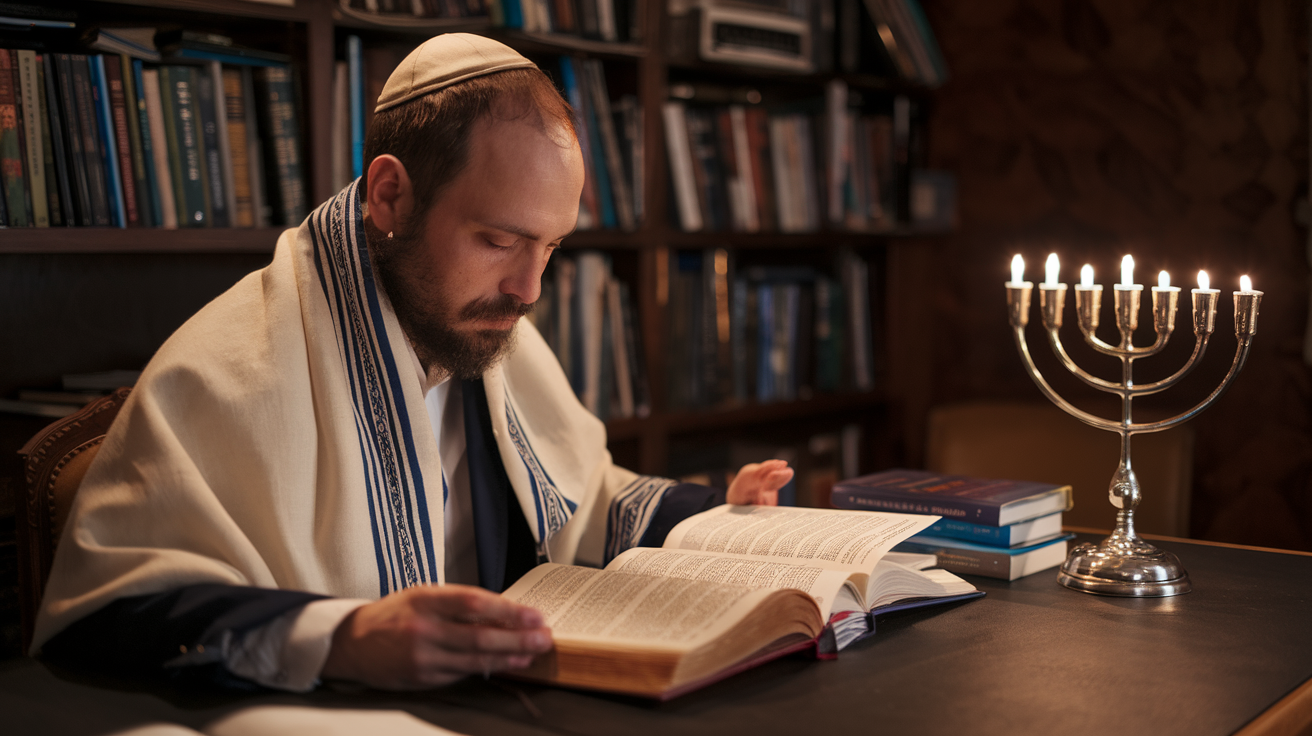
The journey through henotheism in Judaism reveals layers of complexity often overlooked in traditional biblical interpretations. By revisiting the Old Testament through this lens, we’ve uncovered how ancient Israelites navigated a world where they acknowledged multiple deities while devoting themselves exclusively to YHWH, understood as El. This perspective challenges our modern anachronistic readings and helps us better appreciate the social institutions and religious practices that shaped biblical narratives about idolatry.
As we continue to study these ancient texts, embracing the henotheistic elements of Judaism allows us to engage more authentically with Scripture as it was understood by its original audience. Rather than imposing later theological developments onto these texts, we can appreciate the rich religious heritage that evolved over centuries. This recognition doesn’t diminish faith but rather enriches our understanding of how religious concepts developed within their historical contexts, inviting us to approach familiar passages with renewed curiosity and deeper insight.