
The Kalanga tribe represents one of southern Africa’s most fascinating indigenous communities, with a rich heritage spanning centuries across present-day Botswana and Zimbabwe. This guide is perfect for students, researchers, cultural enthusiasts, and anyone curious about African tribal traditions and history.
The Kalanga people have maintained their unique identity despite colonial pressures and modern challenges. Their story offers valuable insights into how traditional societies adapt while preserving core cultural values.
We’ll explore the origins and historical background that shaped the Kalanga community from ancient times to today. You’ll also discover their vibrant cultural practices and social structures that continue to bind families and communities together. Finally, we’ll dive into their traditional beliefs and spiritual practices that remain central to Kalanga identity and daily life.
Origins and Historical Background of the Kalanga People
Ancient migration patterns and settlement in Southern Africa
The Kalanga people emerged from complex migration movements that shaped Southern Africa’s demographic landscape centuries ago. Archaeological evidence points to their ancestors arriving in the region between the 11th and 13th centuries, part of broader Bantu-speaking migrations that transformed the continent’s cultural map. These early settlers brought advanced iron-working techniques, agricultural knowledge, and sophisticated social organization systems that would define their communities for generations.
Their migration routes followed river valleys and fertile plains, allowing them to establish permanent settlements across what is now Zimbabwe and eastern Botswana. The Kalanga chose strategic locations near water sources and mineral deposits, demonstrating their keen understanding of resource management and territorial planning. These settlement patterns created a network of interconnected communities that maintained cultural unity despite geographical spread.
The Kalanga migration wasn’t a single event but rather a gradual process spanning several centuries. Different clans moved at various times, each contributing unique elements to the collective Kalanga identity. This staggered settlement pattern explains the rich diversity within Kalanga culture while maintaining core shared traditions and beliefs.
Cultural connections to the Great Zimbabwe civilization
The Kalanga tribe holds deep historical ties to the renowned Great Zimbabwe civilization, one of Africa’s most impressive medieval kingdoms. Many scholars recognize the Kalanga as direct descendants of the builders and inhabitants of Great Zimbabwe, which flourished between the 11th and 15th centuries. This connection goes beyond mere geographical proximity – it represents a continuous cultural thread linking ancient achievements to modern Kalanga identity.
Archaeological findings at Great Zimbabwe reveal architectural techniques, pottery styles, and agricultural practices that mirror traditional Kalanga methods still practiced today. The sophisticated dry-stone walling technique used in Great Zimbabwe’s construction appears in traditional Kalanga settlements, suggesting an unbroken transmission of building knowledge across generations.
The Kalanga oral traditions preserve stories and legends that align closely with historical accounts of Great Zimbabwe’s golden age. These narratives describe powerful chiefs, extensive trade networks, and remarkable architectural achievements that match archaeological discoveries at the ancient site. Traditional praise songs and ceremonial practices within Kalanga culture contain elements that researchers trace back to Great Zimbabwe’s religious and social customs.
Traditional homeland spanning Zimbabwe and Botswana borders
The Kalanga people’s ancestral territory straddles the modern border between Zimbabwe and Botswana, creating a unique cross-border cultural identity that predates colonial boundary-making. This traditional homeland centers around the Shashe-Limpopo river confluence, an area rich in archaeological sites and cultural significance for the Kalanga community.
In Zimbabwe, Kalanga settlements concentrate primarily in Matabeleland North and South provinces, particularly around Plumtree, Gwanda, and parts of Bulilima district. These areas contain sacred sites, ancient ruins, and burial grounds that hold special meaning for Kalanga spiritual practices and cultural identity.
The Botswana portion of Kalanga territory includes the North East District, encompassing towns like Francistown, Selebi-Phikwe, and surrounding rural areas. Here, the Kalanga maintain strong cultural practices while adapting to modern national structures. The cross-border nature of their homeland means many Kalanga families have relatives on both sides of the Zimbabwe-Botswana border, maintaining kinship networks that transcend political boundaries.
This geographical distribution created a resilient cultural system where traditions, languages, and customs flow freely across borders, preserving Kalanga identity despite external political changes and modernization pressures.
Cultural Practices and Social Structure
Traditional Leadership Systems and Chieftaincy Roles
The Kalanga tribe operates under a sophisticated hierarchical leadership structure that centers around the institution of chieftaincy. At the apex sits the paramount chief, known as the Mambo, who holds ultimate authority over the entire Kalanga territory. Below the Mambo are regional chiefs called Ishe, who govern specific geographical areas and serve as intermediaries between the paramount chief and local communities.
Village headmen, referred to as Sabhuku, manage day-to-day affairs at the grassroots level. These positions are typically inherited patrilineally, though exceptional circumstances may allow for alternative appointments. The chief’s council, composed of senior advisors called Dare, assists in major decision-making processes and ensures that traditional laws are upheld.
Royal courts maintain specific protocols and ceremonies that reinforce the chief’s legitimacy. The Kalanga chieftaincy system emphasizes consensus-building rather than autocratic rule, with leaders expected to consult their advisors and community elders before making significant decisions. Women can hold influential positions as spirit mediums or royal advisors, though the primary chieftaincy roles remain predominantly male-dominated.
Marriage Customs and Family Organization Patterns
Marriage within the Kalanga tribe follows well-established customs that strengthen social bonds and ensure proper lineage continuation. The preferred marriage arrangement involves negotiations between families, with the groom’s family paying roora (bride price) to the bride’s family. This payment typically includes cattle, money, and other valuable items that demonstrate the groom’s ability to provide for his future wife.
Polygamy is culturally accepted and practiced, particularly among wealthy men and chiefs who use multiple marriages to forge political alliances. The first wife holds special status as the senior wife and often manages household affairs when the husband has multiple wives.
Family organization follows a patrilineal system where children belong to their father’s lineage. Extended families live in homesteads called musha, which house multiple generations under the guidance of the eldest male family member. The Kalanga people maintain strong kinship networks that extend beyond immediate family members, creating support systems for economic cooperation, conflict resolution, and social welfare.
Women play crucial roles in maintaining family cohesion and passing down cultural knowledge to children. They manage household economics, food preparation, and child-rearing while also participating in agricultural activities alongside their husbands.
Initiation Ceremonies and Rites of Passage
The Kalanga tribe marks important life transitions through elaborate ceremonies that integrate individuals into different social roles and responsibilities. Male initiation, known as kuraguza, occurs during adolescence and involves teaching young men about their cultural heritage, responsibilities as adults, and proper behavior within the community.

Female initiation ceremonies focus on preparing girls for marriage and motherhood. These rituals include teachings about domestic responsibilities, traditional medicine, and the importance of maintaining cultural values. Elderly women serve as instructors during these ceremonies, passing down generations of wisdom and practical knowledge.
Birth ceremonies welcome newborns into the community and establish their place within the clan structure. Naming ceremonies involve consulting with ancestral spirits and choosing names that reflect family history or circumstances surrounding the birth.
Death rituals are particularly significant, as they ensure proper transition of the deceased to the ancestral realm. The Kalanga people believe that improperly conducted funeral rites can result in restless spirits that may cause problems for the living community. These ceremonies can last several days and involve elaborate preparations, feasting, and specific burial practices.
Community Governance and Dispute Resolution Methods
Traditional Kalanga governance operates through a council system called Dare where community issues are discussed and resolved. These assemblies bring together village elders, family heads, and respected community members to address conflicts, make decisions about resource allocation, and maintain social order.
Dispute resolution follows a structured process that emphasizes reconciliation over punishment. Minor disputes are first addressed at the family level, with senior family members mediating between conflicting parties. More serious issues move to the village headman’s court, where evidence is presented and witnesses testify before a panel of community leaders.
The Kalanga people prioritize restorative justice, seeking solutions that repair damaged relationships and restore community harmony. Compensation payments, public apologies, and community service are common forms of conflict resolution. Serious crimes like theft, adultery, or violence may result in fines, temporary banishment, or requirements for ritual cleansing.
Spirit mediums sometimes participate in dispute resolution, particularly when conflicts involve accusations of witchcraft or violations of traditional taboos. These religious leaders help determine appropriate spiritual remedies and ensure that ancestral spirits are appeased. The entire process emphasizes transparency, with community members able to observe proceedings and participate in discussions when appropriate.

Language and Communication Systems
Kalanga language classification and linguistic features
The Kalanga language belongs to the Bantu language family, specifically classified under the Shona cluster of languages. Spoken primarily in northeastern Botswana and parts of Zimbabwe, Kalanga shares linguistic roots with other regional languages while maintaining its distinct identity. The language exhibits typical Bantu characteristics, including a complex system of noun classes marked by prefixes, and an agglutinative structure where meanings are built through the addition of various morphemes.
Kalanga features a rich tonal system that distinguishes meaning between otherwise identical words. The language uses both high and low tones, with tone patterns playing a critical role in grammatical functions and lexical differentiation. Speakers navigate this tonal complexity naturally, though it presents challenges for language documentation and learning materials.
The phonological system includes clicks borrowed from neighboring Khoisan languages, reflecting centuries of contact and interaction between different language communities. These click consonants appear mainly in borrowed vocabulary and certain traditional expressions, adding a unique layer to Kalanga’s sound system.
Grammatically, Kalanga employs a subject-verb-object word order as its basic structure, though this can be flexible depending on emphasis and context. The verb system is particularly elaborate, with various tenses, aspects, and moods that allow speakers to convey precise temporal and situational information.
Oral traditions and storytelling importance
Storytelling serves as the backbone of Kalanga cultural transmission, carrying forward ancestral wisdom, moral teachings, and historical knowledge through generations. Elders hold the responsibility of preserving and sharing these narratives, often gathering community members around evening fires to recount tales that blend entertainment with education.
Traditional Kalanga stories fall into several categories: creation myths explaining the origins of the world and humanity, animal fables teaching moral lessons, historical narratives preserving tribal memories, and cautionary tales warning against dangerous behaviors. Each story type serves specific social functions, from reinforcing cultural values to providing practical guidance for daily life.
The art of storytelling among the Kalanga people involves more than mere recitation. Skilled narrators employ dramatic techniques including voice modulation, gesture, audience participation, and call-and-response patterns. These performances create immersive experiences that capture attention and enhance memory retention, ensuring stories remain vivid in listeners’ minds long after the telling ends.
Proverbs and riddles form another crucial component of Kalanga oral tradition. These condensed forms of wisdom appear frequently in everyday conversation, legal proceedings, and ceremonial contexts. Elders use proverbs to settle disputes, offer guidance, and transmit cultural knowledge efficiently, while riddles serve both as entertainment and mental exercises that sharpen wit and problem-solving skills.
The communal nature of storytelling strengthens social bonds and reinforces group identity. Children learn not only the stories themselves but also the cultural contexts, behavioral expectations, and social hierarchies embedded within these narratives.
Written literature development and preservation efforts
The transition from purely oral to written forms of Kalanga literature began during the colonial period when missionaries and linguists first attempted to document the language. Early efforts focused primarily on religious translations, particularly Bible portions and hymns, which provided the foundation for developing a standardized writing system.
Modern preservation efforts have expanded significantly, with community leaders, academics, and cultural organizations working together to document traditional stories, songs, and cultural practices. Digital recording projects capture elderly storytellers sharing their knowledge, creating audio archives that preserve not only the content but also the performance aspects of oral tradition.

Contemporary Kalanga authors have begun producing original written works, including poetry, short stories, and educational materials. These publications serve dual purposes: preserving traditional themes and stories in written form while also creating new literary expressions that reflect modern Kalanga experiences and perspectives.
Educational initiatives play a vital role in preservation efforts. Schools in Kalanga-speaking areas increasingly incorporate mother-tongue instruction and cultural content into their curricula. Textbooks written in Kalanga help students maintain connections to their linguistic heritage while acquiring literacy skills.
| Preservation Method | Description | Impact |
|---|---|---|
| Digital Archives | Audio/video recordings of elders | Captures performance elements |
| Written Collections | Transcribed stories and songs | Enables wider distribution |
| Educational Materials | School textbooks in Kalanga | Supports language learning |
| Community Workshops | Training sessions for storytellers | Maintains oral traditions |
Technology has opened new avenues for preservation and dissemination. Mobile applications, online dictionaries, and social media platforms help younger generations access Kalanga content and connect with their cultural heritage, even when living far from traditional communities.
Traditional Beliefs and Spiritual Practices
Ancestral worship and spiritual connection systems
The Kalanga tribe maintains deep spiritual connections with their ancestors through elaborate worship systems that form the backbone of their cultural identity. Ancestors, known as midzimu, serve as intermediaries between the living and the divine realm, offering guidance, protection, and blessings to their descendants. Family lineages trace their spiritual authority through patriarchal lines, with eldest males typically serving as primary communicators with ancestral spirits.
Ritual offerings play a central role in these spiritual connections. The Kalanga people prepare traditional beer (doro), tobacco, and specific foods that were favored by deceased family members. These offerings are presented at family shrines, usually located near the main homestead or at burial sites. The community believes that neglecting ancestral worship can result in misfortunes, illness, or crop failures.
Spirit mediums, called svikiro, serve as vital conduits between the living and ancestral worlds. These individuals, often chosen by the spirits themselves through possession experiences, undergo extensive training to interpret spiritual messages and perform cleansing ceremonies. During possession rituals, ancestors communicate directly with their descendants, addressing family disputes, providing agricultural advice, or warning about potential dangers.
Traditional healing practices and medicinal knowledge
Kalanga traditional healing encompasses a sophisticated understanding of herbal medicine, spiritual cleansing, and psychological wellness. Traditional healers, known as n’anga, combine extensive botanical knowledge with spiritual practices to treat various ailments affecting community members. These healers undergo rigorous apprenticeships, learning to identify medicinal plants, prepare remedies, and diagnose both physical and spiritual illnesses.
The healing process often begins with divination using hakata (divination bones) or other traditional methods to determine the root cause of illness. Healers distinguish between natural ailments and those caused by spiritual imbalances, witchcraft, or ancestral displeasure. Treatment approaches vary accordingly, ranging from herbal preparations to elaborate cleansing ceremonies.
Medicinal plants hold sacred significance within Kalanga healing traditions. Healers harvest specific plants during particular lunar phases, often accompanied by prayers and offerings to ensure their effectiveness. Common medicinal plants include mukwa for digestive issues, mubvumira for respiratory problems, and various roots for strengthening spiritual protection. Knowledge of these remedies passes down through family lines, with healers carefully guarding their most powerful formulas.
Sacred sites and religious ceremonies
Sacred sites scattered throughout Kalanga territory serve as focal points for community worship and spiritual activities. These locations, often featuring natural formations like caves, large rocks, or ancient trees, are believed to house powerful ancestral spirits or nature deities. The most significant sites require special protocols for entry, including ritual cleansing and appropriate offerings.
Kurova guva ceremonies represent one of the most important Kalanga religious observances. These year-long mourning rituals culminate in elaborate celebrations that officially install the deceased into ancestorhood. The ceremony involves the entire extended family, with participants traveling from distant locations to honor their departed relatives. Traditional foods, music, and dance accompany these gatherings, strengthening family bonds and cultural continuity.
Rain-making ceremonies, called mukwerere, demonstrate the Kalanga tribe’s connection to environmental spirituality. During drought periods, community elders perform special rituals at designated sacred sites, appealing to Mwari (the supreme deity) and ancestral spirits for precipitation. These ceremonies involve entire communities, with participants fasting, singing traditional songs, and making collective offerings.
Integration with modern religious practices
Contemporary Kalanga communities navigate complex relationships between traditional beliefs and introduced religious systems, particularly Christianity. Many community members practice what anthropologists term “religious syncretism,” blending ancestral worship with Christian doctrines in ways that preserve cultural identity while embracing new spiritual concepts.
Churches within Kalanga areas often incorporate traditional music, languages, and ceremonial elements into their services. Some Christian denominations have adapted to include prayers for ancestral intercession, recognizing the deep cultural significance of these practices. However, tensions occasionally arise between strict evangelical interpretations and traditional healing practices.
Modern Kalanga families frequently maintain dual religious identities, attending church services while continuing ancestral worship at home. This integration allows communities to access modern healthcare and education systems while preserving essential cultural practices that define their ethnic identity. Young people especially navigate these dual systems, often participating in both Christian youth groups and traditional initiation ceremonies.
The Kalanga tribe’s approach to religious integration demonstrates remarkable adaptability while maintaining core spiritual principles. Rather than abandoning traditional practices entirely, many communities have found creative ways to honor both ancestral wisdom and contemporary religious influences, ensuring cultural continuity across generations.
Economic Activities and Livelihood Strategies
Traditional agriculture and livestock farming methods
The Kalanga tribe has built their economic foundation on sophisticated agricultural practices passed down through generations. Their farming techniques showcase remarkable adaptation to the semi-arid conditions of their homeland, primarily in northeastern Botswana and western Zimbabwe.
Crop cultivation centers around drought-resistant varieties perfectly suited to their environment. Sorghum serves as their primary staple, with varieties like red and white sorghum providing both food security and cultural significance. Pearl millet thrives in their sandy soils, while maize cultivation has expanded in recent decades. Traditional farming follows seasonal rainfall patterns, with planting occurring after the first substantial rains between October and December.
Livestock keeping represents another cornerstone of Kalanga economic life. Cattle hold special importance beyond mere economic value, serving as symbols of wealth and social status. Goats and sheep complement cattle herds, offering better drought resistance and quicker reproduction cycles. Traditional grazing systems involve rotational patterns that prevent overuse of pasture lands.
Water management techniques reflect centuries of experience with unpredictable rainfall. Traditional methods include constructing small dams and water retention structures to capture and store rainwater. These practices demonstrate the Kalanga people’s deep understanding of their environment and sustainable resource management.
Craft production and artistic expressions
The Kalanga tribe maintains vibrant traditions in craft production that serve both practical and economic purposes. Pottery making stands out as one of their most distinguished skills, with women typically leading this craft. Their clay vessels range from everyday cooking pots to ceremonial items, each displaying distinctive designs and functional excellence.
Basketry represents another significant craft tradition among the Kalanga people. Using local materials like palm leaves and grass, artisans create various items including storage baskets, winnowing baskets, and decorative pieces. These baskets often feature intricate patterns that carry cultural meanings and demonstrate the maker’s skill level.
Metalworking, particularly iron forging, has deep roots in Kalanga culture. Traditional smiths produce farming tools, hunting implements, and household items. This craft requires specialized knowledge passed down through family lines, making blacksmiths respected community members.
Wood carving produces both utilitarian and artistic objects. Craftsmen create tools, furniture, ceremonial items, and decorative pieces using indigenous hardwoods. The quality and durability of Kalanga woodwork has earned recognition in regional markets.
Textile production includes traditional spinning and weaving techniques. While cotton was historically grown locally, modern practitioners often source materials from markets while maintaining traditional production methods and design patterns.
Trade relationships with neighboring communities
The Kalanga tribe has historically maintained extensive trade networks that strengthen their economic resilience. Their strategic location between major river systems and different ecological zones positioned them as important intermediaries in regional commerce.
Traditional trade relationships extend to the Shona people in Zimbabwe, with whom the Kalanga share cultural and linguistic similarities. These connections facilitate exchange of goods, knowledge, and marriage partnerships. Cattle, crafts, and agricultural surplus move between communities through established trade routes.
Relationships with the Tswana people in Botswana involve both cooperation and competition for resources. The Kalanga often trade specialized crafts and agricultural products for goods not readily available in their territory. Seasonal labor migration to Tswana areas provides additional income opportunities.
Historical trade with Portuguese and later British colonial networks introduced new goods and markets. The Kalanga adapted their production to meet external demand while maintaining traditional practices for local needs. This flexibility helped them survive colonial economic pressures.
Modern trade relationships continue evolving as the Kalanga people participate in national and regional markets. Their traditional crafts find new audiences through tourism and cultural preservation initiatives, creating income streams that complement agricultural activities.
Modern economic adaptation and employment patterns
Contemporary Kalanga communities demonstrate remarkable adaptability in navigating modern economic challenges while preserving traditional practices. Education has become increasingly important, with many young people pursuing formal schooling to access employment opportunities beyond their home communities.
Migration for employment represents a significant economic strategy. Many Kalanga men and women travel to urban centers in Botswana and Zimbabwe for wage labor in mining, domestic service, and construction industries. These migrants often send remittances home, supporting family members and local development projects.
Government employment provides stable income for educated community members. Teaching positions, healthcare roles, and administrative jobs offer career paths that allow Kalanga professionals to serve their communities while earning regular salaries.
Small business development has gained momentum in Kalanga areas. Retail shops, transportation services, and food preparation businesses create local employment while serving community needs. Microfinance initiatives help entrepreneurs access capital for business expansion.
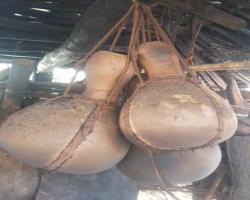
Tourism presents emerging opportunities, particularly in areas near national parks and cultural sites. Some Kalanga communities develop cultural tourism programs, sharing traditional practices with visitors while generating income. Craft sales to tourists provide markets for traditional pottery, basketry, and woodwork.
Agricultural modernization continues alongside traditional practices. Improved seeds, fertilizers, and farming techniques increase yields while maintaining cultural connections to the land. Cooperative farming initiatives help small-scale farmers access resources and markets more effectively.
The Kalanga people represent one of Africa’s most fascinating cultural groups, with deep historical roots that stretch back centuries. Their rich traditions show how communities can maintain their identity while adapting to modern challenges. From their complex social structures to their sophisticated language systems, the Kalanga demonstrate the incredible diversity that makes African cultures so unique and valuable.
What stands out most about the Kalanga is how they’ve managed to keep their spiritual beliefs and economic practices alive through generations of change. Their story reminds us that preserving cultural heritage isn’t just about looking backward – it’s about carrying forward the wisdom and practices that continue to serve communities today. Learning about groups like the Kalanga helps us appreciate the incredible cultural wealth that exists across Africa and the importance of supporting these communities as they navigate the future while honoring their past.
